
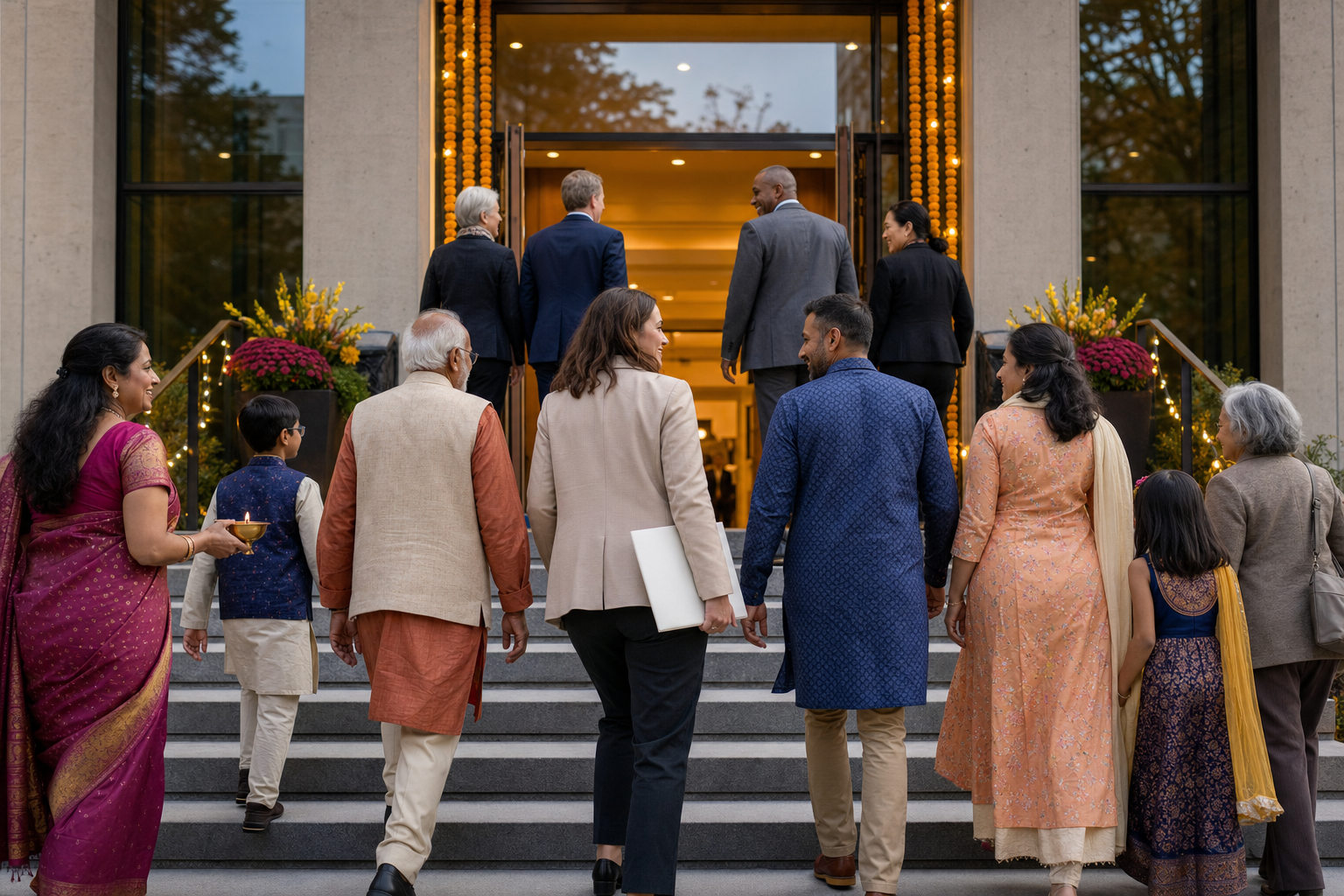
If your temple or Hindu association is visible during Diwali but absent from the ordinary life of city hall, asking for recognition is too vague. You need to decide what you want the municipality to do, who can authorize it, and what should remain after the ceremony.
Two outcomes matter: cultural participation and protection from targeted hostility. In October 2025, Wainwright, Alberta, became the first Canadian municipality to issue a proclamation condemning Hinduphobia and anti-Hindu bigotry. That same month, Atlanta held its third annual City Hall Diwali celebration and presented a Diwali proclamation. One model gives public language to a neglected form of prejudice; the other gives Hindu civic life a recurring place inside a public institution. A serious local campaign should understand both.
Choose the municipal action before requesting a meeting

Start with the change you want to see. A signed proclamation, a council resolution, a City Hall celebration, and an administrative reporting practice are different outcomes. They may involve different officials, procedures, and levels of authority.
| Desired outcome | Likely municipal tool | Precise request | Evidence of completion |
|---|---|---|---|
| Public acknowledgement | Mayoral proclamation | Name Diwali, Hindu Heritage Month, or the rejection of anti-Hindu bigotry | Signed text, public presentation, and permanent city webpage |
| Formal council position | Resolution or motion | Condemn anti-Hindu bigotry and affirm equal civic treatment | Adopted text and meeting record |
| Visible civic participation | City-hosted or co-hosted observance | Provide a public venue, official participation, and calendar listing | Published program, community attendance, and designated organizer |
| Operational follow-through | Administrative commitments | Identify a liaison, clarify incident-routing channels, and include Hindu institutions in outreach | Named contacts, accessible guidance, and recurring engagement |
These labels are not uniform. A mayor may issue proclamations directly in one municipality, while another requires sponsorship, an application, or council approval. Before drafting anything substantial, ask the clerk’s office:
- Does the municipality accept proclamation requests from resident community organizations?
- Who approves them: the mayor, the council, or municipal staff?
- Is there a required template, word limit, or submission window?
- Must a councillor sponsor a resolution or motion?
- Can the proclamation be presented publicly rather than mailed privately?
- Can the city publish the final text and place the observance on its public calendar?
Ask for the written policy or an email confirming the process. This prevents a well-written request from reaching the wrong office or missing an internal deadline.
Then lead with one formal decision. For a Diwali initiative, that might be a mayoral proclamation naming the festival and the local Hindu community, accompanied by a public presentation. For an anti-Hindu inclusion initiative, it might be a resolution or proclamation that explicitly rejects hostility toward Hindu people, temples, sacred symbols, and practices. Treat the event, publication, and liaison as follow-through attached to that primary decision, not as a loose collection of unrelated requests.
Build a city-ready case from local facts and careful language
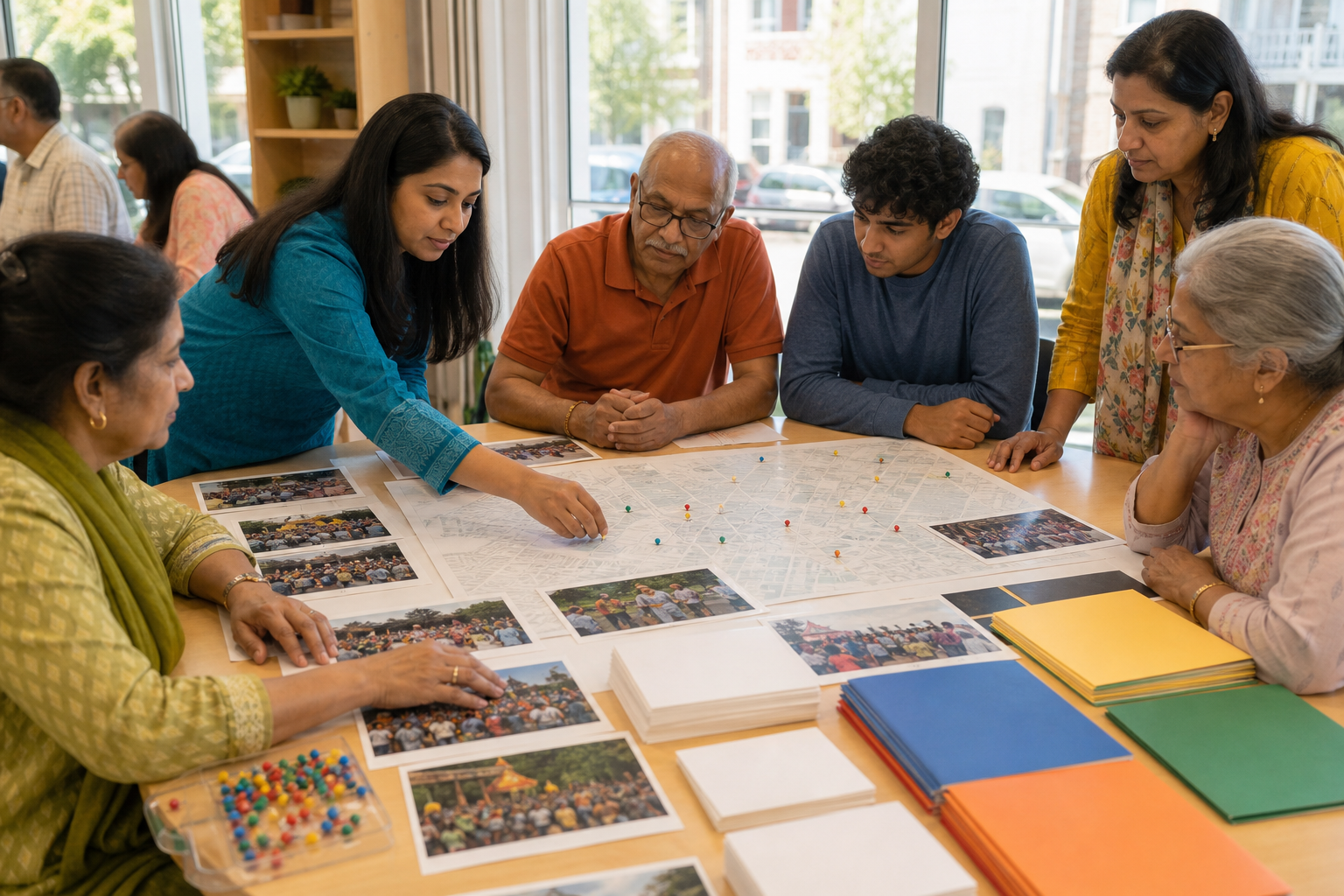
City officials do not need a civilizational survey before they can act. They need a decision-ready packet that connects Hindu inclusion to residents, public safety, equal participation, and the municipality’s stated commitments.
- Open with one sentence stating exactly what you want the municipality to issue, adopt, host, or change.
- Establish local standing. Name participating temples and associations, their public addresses, the neighbourhoods they serve, and recurring public events. Use attendance figures only when an organizer can verify them.
- Explain the civic purpose. Focus on belonging, accurate public understanding, equal access to municipal life, and a clear response to targeted hostility.
- Separate local evidence from broader context. Dates, public incident records, photographs, and institutional statements belong in one section; regional or national patterns belong in another.
- Attach draft wording that staff can edit. Do not force the clerk to infer the requested language from a long letter.
- Name the people who will deliver the project: a principal contact, an alternate, proposed speakers, participating institutions, and the person responsible for event logistics.
Use broader data with discipline. The Institute for Strategic Dialogue found that police-reported hate crimes against South Asians in Canada rose 227 percent between 2019 and 2023. That category is broader than Hindu identity, so it cannot be relabelled as a Hindu-only count. The same organization found the Hinduphobic slur pajeet in 26,600 posts connected to Canadian contexts between May 2023 and April 2025. That is a count of posts, not unique offenders, victims, crimes, or incidents in your town. Rutgers University documented rising online anti-Hindu discrimination in 2021 and warned about its potential movement into real-world harm. Potential is the important word; the finding does not prove that every hostile post produces violence.
Those distinctions strengthen your case. They show officials that you are not inflating one community’s experience or converting every South Asian incident into a Hindu claim. If a local temple, student, resident, or sacred symbol has been targeted, label the material accurately: reported incident, documented vandalism, public threat, allegation, or confirmed finding. Preserve original records, and do not publish a victim’s name or identifiable image without consent.
Municipal precedent can answer the objection that religious discrimination falls outside local concern. Wainwright acted at the town level in 2025, while Forsyth County, Georgia, had already become the first United States jurisdiction to pass a bipartisan resolution condemning anti-Hindu bigotry in 2023. Neither action turns a municipality into a court or creates a new criminal offence. It does demonstrate that a local government can name a specific prejudice while affirming a general commitment to equal treatment.
A practical advocacy draft should cover five points:
- Identity: name Hindus and, where appropriate, Hinduism or Sanatana Dharma accurately.
- Conduct: identify prejudice, dehumanizing slurs, harassment, discrimination, vandalism, or hostility directed at Hindu people and institutions.
- Boundary: make clear that opposing anti-Hindu bigotry does not suppress peaceful debate, scholarship, or good-faith criticism of religious ideas.
- Principle: connect the request to equal dignity, freedom of religion, public safety, and participation in civic life.
- Action: state whether the municipality is condemning conduct, recognizing an observance, encouraging incident reporting, creating educational engagement, or designating a contact.
Treat that as advocacy language, not final legal drafting. Municipal staff should review formal wording under the laws and policies that apply locally. If officials prefer the term anti-Hindu bigotry to Hinduphobia, discuss the conduct each term is meant to cover before allowing a dispute over labels to stop the initiative.
Community contributions provide useful context, but protection must not depend on a model-minority resume. Hinduism is practiced by more than 1.2 billion people across over 100 countries, while Hindus contribute to Canadian public service, the armed forces, medicine, technology, academia, business, and community life. Yoga, Ayurveda, meditation, music, and cuisine have also shaped the wider culture. Include a concise account of those connections, but keep the moral order clear: Hindus deserve equal civic dignity because they are residents and human beings, not because they have first proved their economic usefulness.
Pair the formal recognition with a public civic moment
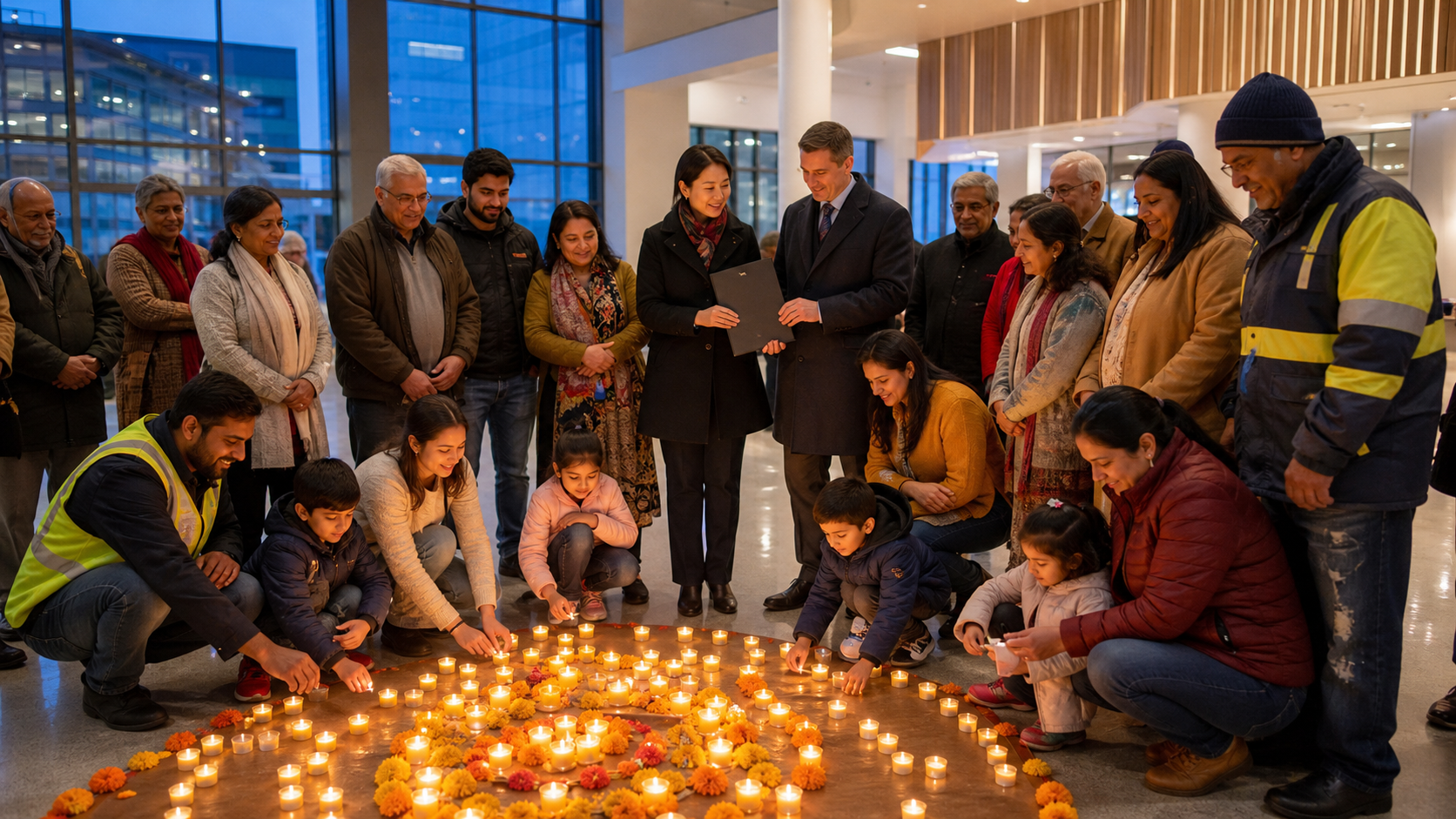
A signed page can disappear into an office archive. A public presentation makes the municipality’s position visible, gives residents a shared memory, and creates working relationships between officials and community institutions.
Atlanta offers a useful event pattern. Its third annual celebration brought the mayor, state lawmakers, India’s consul general, educators, entrepreneurs, diplomats, and community leaders into City Hall. The program combined a Diwali lamp lighting, a formal proclamation, civic remarks, classical dance and music, and a reception. The breadth mattered: Hindu tradition was present in its own voice, but the occasion was unmistakably part of Atlanta’s public life.
You can adapt that pattern without copying its scale:
- Begin with the municipality’s welcome and any local protocol required for the venue.
- Let a Hindu community representative explain the observance in plain language. Do not assume every official knows what the lamp, festival, or sacred vocabulary means.
- Conduct the ceremonial act only after confirming venue and fire-safety requirements. A symbolic lamp should not become a last-minute facilities dispute.
- Have the mayor or council representative read and present the formal recognition. Supply pronunciation notes for Sanskrit and community names in advance.
- Include a short civic segment explaining what residents should do if they encounter vandalism, threats, harassment, or exclusion.
- Use dance, music, food, or an exhibit to reveal a living tradition rather than reducing Hindu identity to speeches about prejudice.
- Close by naming the municipal and community contacts responsible for the next step.
Diwali can support wider Dharmic participation, but inclusion must not flatten differences. Atlanta framed the festival’s themes of light, knowledge, and ethical victory across Hindu, Buddhist, Jain, and Sikh traditions. If you invite those communities, ask each one to describe its own relationship to the observance. Do not announce that distinct traditions share one theology or identical rituals merely to make the program sound unified.
The same rule applies within Hindu society. Invite more than the best-connected organization to review the program. Regional, linguistic, sectarian, generational, and temple differences need not all appear on stage, but the planning process should not silently treat one group as the sole voice of every Hindu resident. A municipality needs reliable partners, not an artificial gatekeeper.
Plan the public record as carefully as the room. Confirm the spelling and titles used in captions. Obtain permission for photographs where required. Ask the city to publish the proclamation, event description, and accessible images on its own channels. Give local media a factual summary and named contacts instead of expecting reporters to reconstruct Hindu terminology from the ceremony.
Atlanta’s third annual observance also reveals why repetition matters. A recurring civic event moves the relationship beyond a single mayor, election, or burst of volunteer energy. Before the gathering ends, identify who will open planning for the next observance and where that responsibility will be recorded.
Turn ceremonial recognition into durable civic inclusion
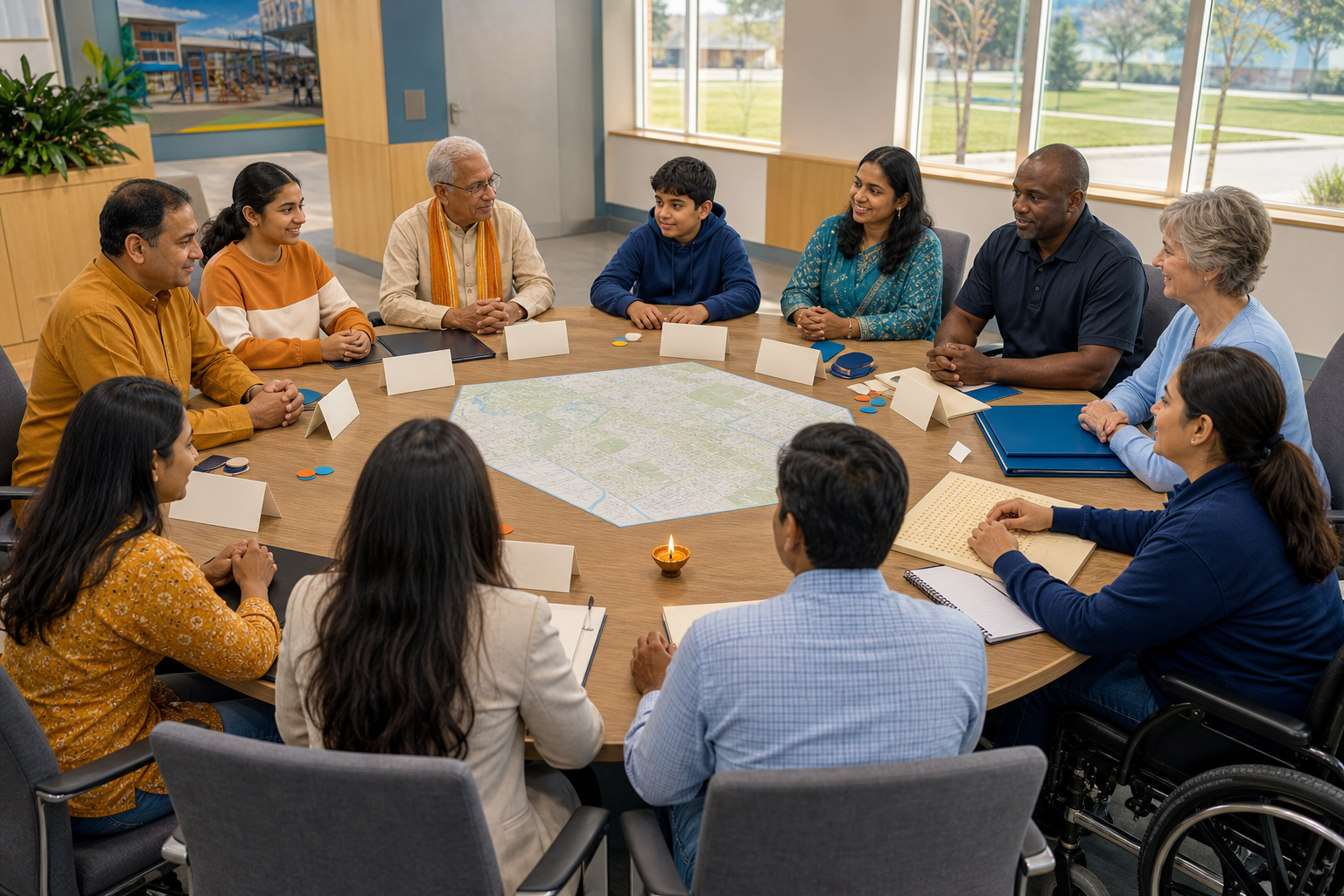
A proclamation is useful public language, but it is not a hate-crime classification, an investigation, or a legal remedy. If vandalism, a credible threat, assault, or other potentially unlawful conduct occurs, report it through the applicable police, school, employer, or civil-rights channel and preserve the evidence. Do not wait for a ceremonial initiative to resolve an urgent incident.
The municipality can still make its commitment discoverable and usable. Ask for a modest year-round inclusion plan:
- Archive the signed recognition on a permanent municipal page rather than only on a temporary social-media post.
- List a current city liaison and a community contact, with a process for replacing either person when roles change.
- Create a simple routing note that tells residents where to take reports involving threats, vandalism, school issues, workplace discrimination, or municipal services. The responsible institution may differ by issue.
- Ask whether existing incident-intake systems can identify anti-Hindu targeting instead of placing every complaint in an undifferentiated miscellaneous category.
- Include temples and Hindu associations in relevant public-safety, cultural, library, newcomer, and interfaith outreach.
- Place the next civic observance on the planning calendar and record which office owns the relationship.
- Review public educational material with practitioners who can catch mistranslations, confused symbols, and the tendency to present Hindu traditions only through an outsider’s lens.
Measure visible outputs, not goodwill. Can a resident find the city’s statement without already knowing the organizer? Does a temple have a current staff contact? Do front-line officials know where to route an anti-Hindu complaint? Has the next civic observance acquired an owner? Did the municipality publish accurate language after the event? These questions expose the difference between a photograph and an inclusion practice.
Specific recognition and universal opposition to hatred are compatible. A city can stand against every form of prejudice while naming Hindus when Hindus are the people being targeted. Generic diversity language is not always sufficient: if it leaves residents, educators, law enforcement, or civic staff unable to recognize anti-Hindu conduct, it has not supplied the clarity the campaign was seeking.
Key takeaways
- Choose the municipal instrument before writing the campaign: proclamation, resolution, public observance, or administrative follow-through.
- Use a paired strategy. Celebration creates participation and familiarity; explicit opposition to anti-Hindu bigotry creates clarity when hostility occurs.
- Submit a decision-ready packet with one exact ask, verifiable local standing, carefully labelled evidence, editable wording, and responsible contacts.
- Do not convert South Asian hate-crime data, online-post counts, allegations, or regional patterns into claims they cannot support.
- Make the civic event recognizably Hindu while allowing Jain, Sikh, Buddhist, interfaith, and internal Hindu participants to describe themselves accurately.
- Judge success by the public record, reporting routes, continuing relationships, and recurring civic participation that remain after the presentation.
Your next move is to complete one sentence: We ask the City of [name] to [issue, adopt, or co-host] [the specific instrument or event] because [the local civic need], with [the follow-through that should remain]. Send that sentence to the clerk’s office with the process questions above. Once the correct authority and procedure are confirmed, every page in your packet should help that official make the same clearly defined decision.
References
- CoHNA – CoHNA Welcomes Canada’s First Municipal Proclamation Condemning Hinduphobia
- CoHNA – Third Annual Diwali Celebration by Atlanta Mayor and CoHNA Brings a Festive Tone to City Hall
