
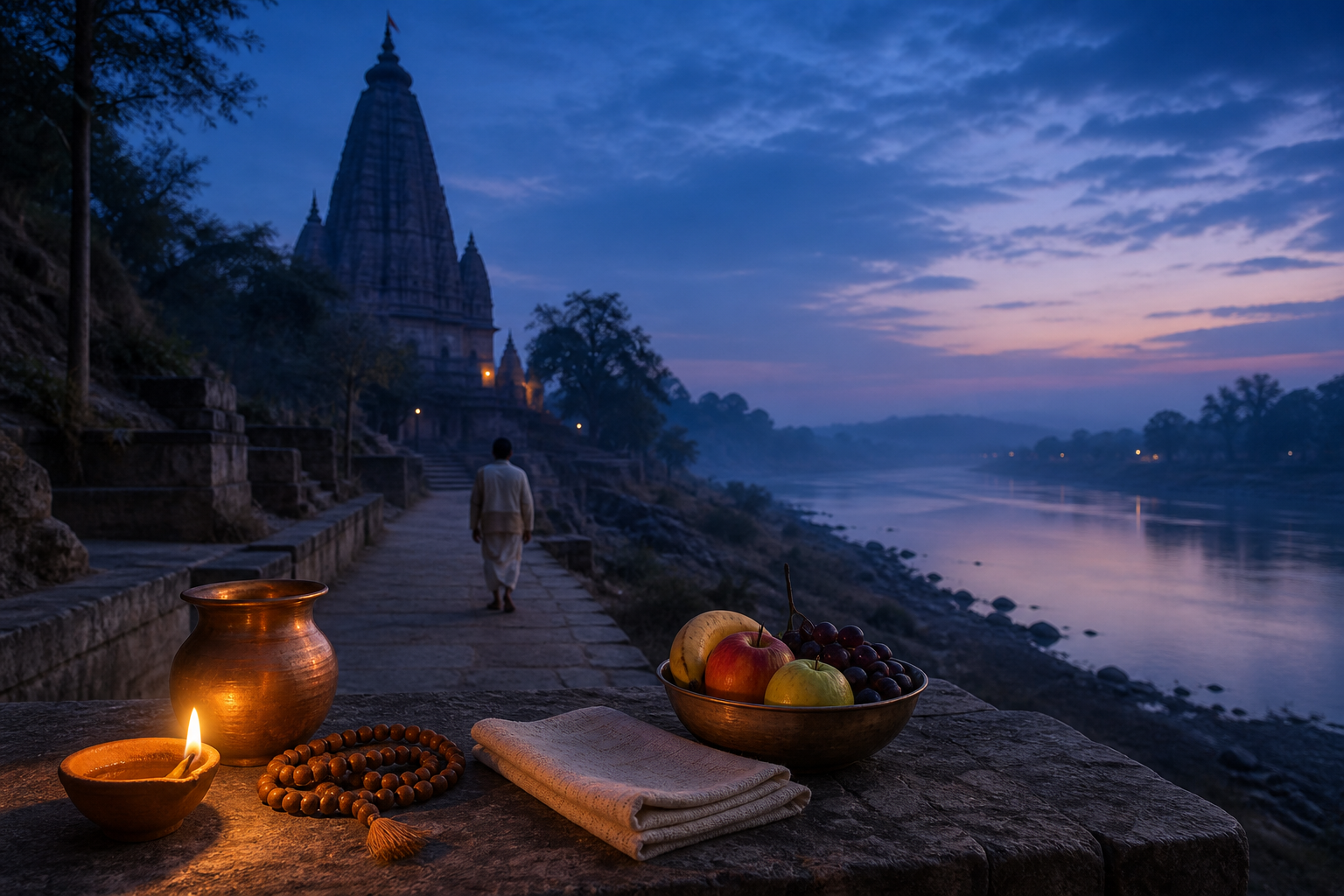
You may want to observe Kartik seriously without knowing how much to undertake. A month-long vrata, daily lamps, fasting days, temple visits, and pilgrimage can quickly become a crowded programme that is difficult to sustain.
Start smaller and make the parts serve one another. Let the vrata order your habits, let deep daan renew the intention each evening, and let pilgrimage deepen a practice already underway. The aim is not maximum difficulty. It is steady devotion without neglecting health, safety, family duties, or the sanctity of the place you visit.
Begin with one sankalpa, not a crowded ritual calendar
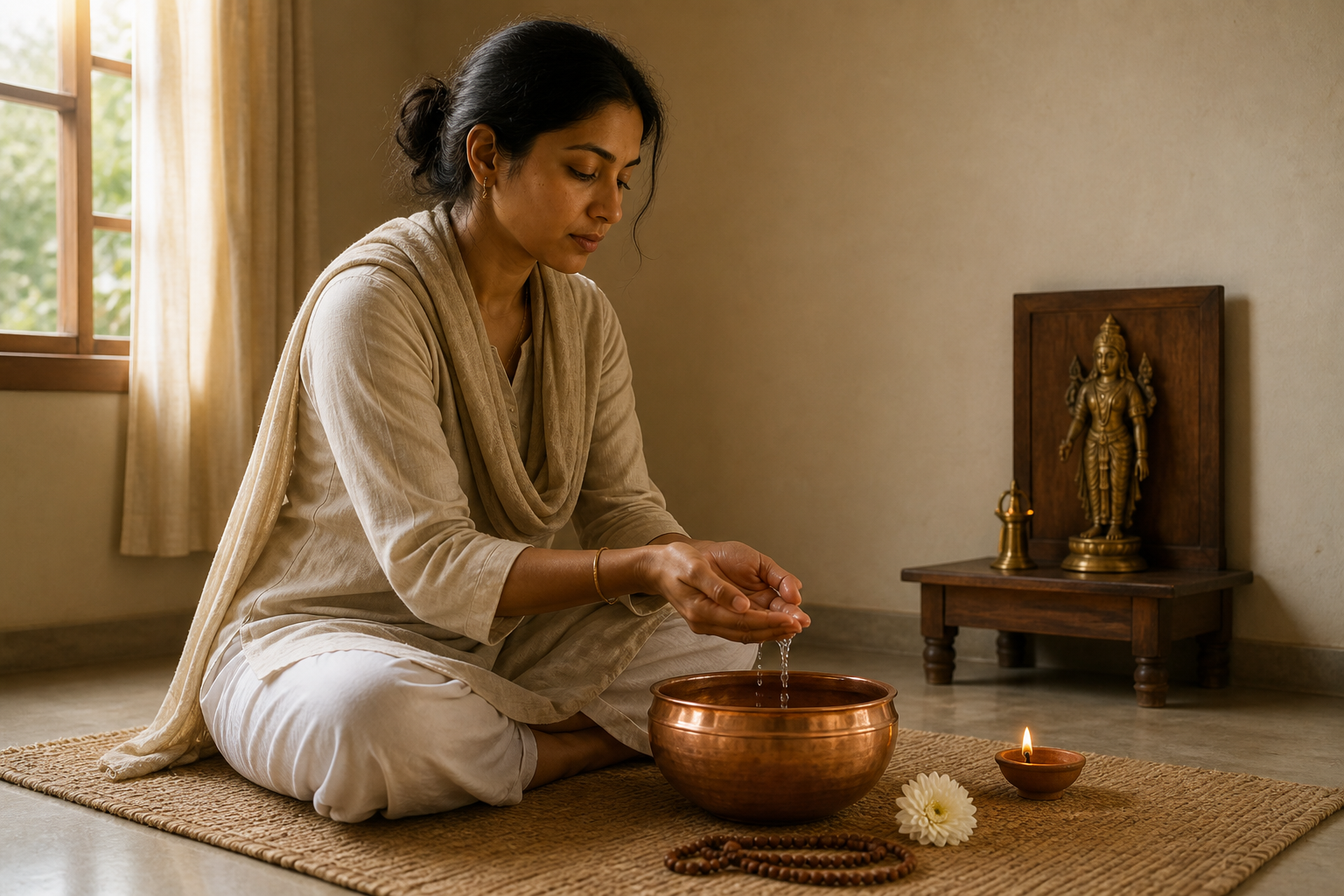
A useful sankalpa answers three questions: which calendar are you following, how long are you committing, and what exactly will you do? If any answer remains vague, the observance will be renegotiated whenever the day becomes inconvenient.
Settle the calendar first. Kartik Purnima concludes Kartik in North Indian Hindu calendars, while regional observances across Karthika masam may be reckoned differently. Tithi transitions also depend on location. Use a reliable local panchangam rather than copying a date published for another city or year.
Vaikunth Chaturdashi shows why that precision matters. The festival is associated with Kartik Shukla Paksha Chaturdashi, but its Upvaas is observed on the preceding day. Because the relevant tithi and sunrise relationship can vary locally, the fasting date must be checked against the local transition. A correct festival name with the wrong local date is not careful observance.
- Choose the period: the full Kartik observance, a particular vrata day, or the days leading to a pilgrimage. Do not promise a month if your real commitment covers one tithi.
- Name the daily anchor: evening deep daan, japa, a familiar stotra, or another practice received through your family or sampradaya.
- Name the restraint: a suitable fast, phalahar, simple sattvic eating, quieter speech, or another clearly defined discipline.
- Name the outward act: temple seva, food or clothing dana, help for pilgrims, or support for people who maintain a sacred site.
Write the result in one sentence. For example, your plan may be to light one diya each evening, repeat the mantra you already follow, maintain sattvic meals, and undertake a defined act of seva before Kartik Purnima. This is a personal planning statement, not a replacement for a formal sankalpa or the paddhati taught by your guru, family, or temple.
Keep inter-sampradaya respect equally precise. Traditional accounts connected with Kashi describe Vishnu offering bilva to Shiva and Shiva offering tulsi to Vishnu. The exchange presents Vaishnava-Shaiva harmony without requiring you to invent a hybrid puja. Follow the ritual form entrusted to you, and carry the account into daily life as a refusal to turn devotion into sectarian rivalry.
Choose a fasting discipline your body and duties can sustain
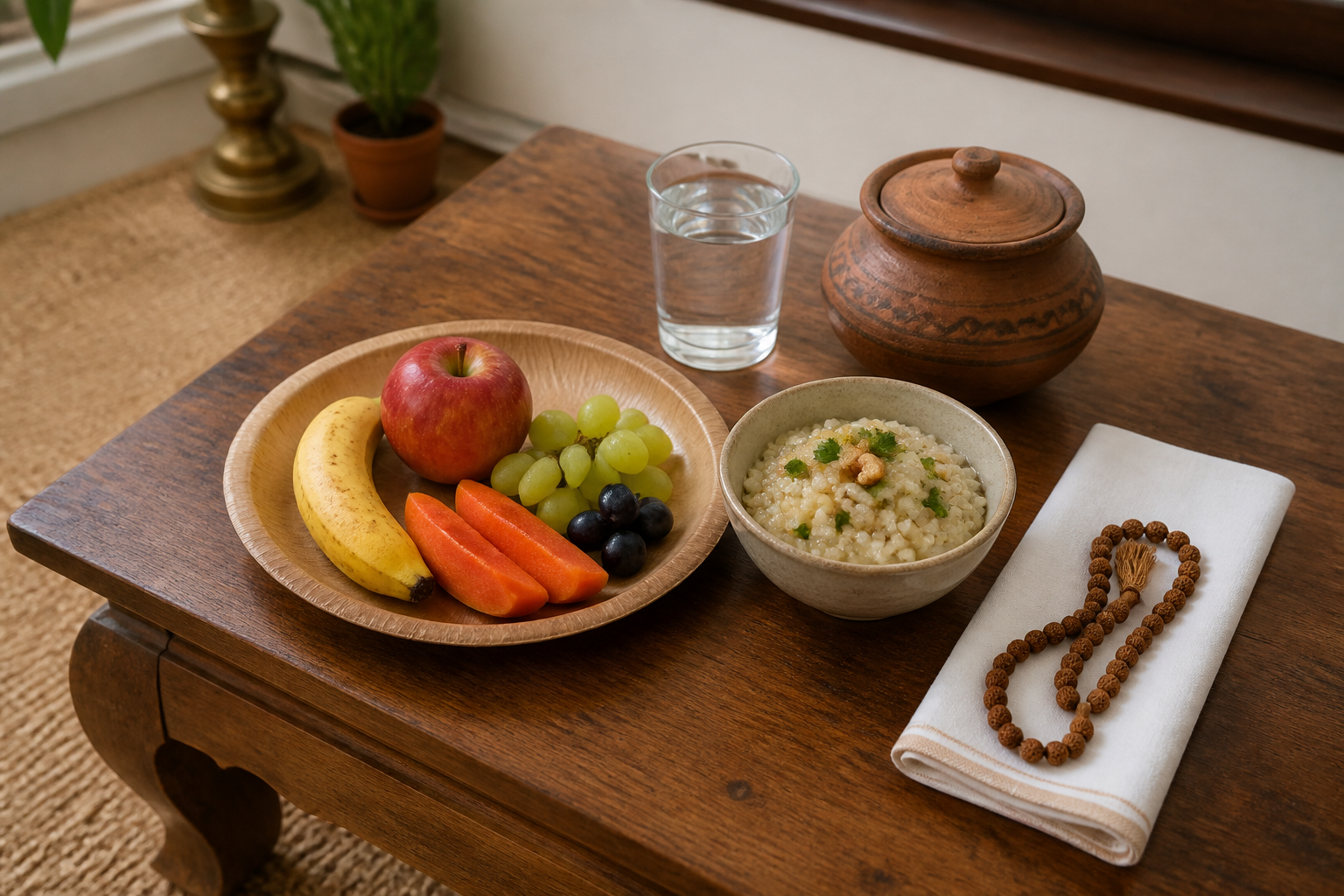
A vrata is not measured by hunger alone. Food restraint supports attention, remembrance, and self-command; it ceases to serve those purposes when it makes you careless, unwell, or unable to meet unavoidable responsibilities.
Use a simple decision ladder rather than choosing the harshest form out of enthusiasm:
- A stricter fast: consider it only where your health permits and where it accords with the vrata you are actually following.
- Phalahar: choose fruit and other foods permitted within your tradition when complete abstention is unsuitable but meaningful food discipline remains possible.
- Simple sattvic meals: if fasting is not safe or appropriate, keep the devotional structure through uncomplicated food, japa, deep daan, study, and seva. Do not pretend that every form is ritually identical; make an honest commitment you can keep.
If you have a health condition, must take food with prescribed medicine, or have been told not to fast, do not improvise a strict food restriction. Seek appropriate medical guidance and ask a trusted dharmic teacher how to preserve the vrata’s devotional intention safely. If you become unwell during a fast, end the restriction and obtain appropriate help. Physical warning signs are not a test of bhakti.
Prepare the food side before the vrata begins. Arrange simple sattvic nourishment for before and after the fast, and plan hydration for forms of fasting that permit it. Do not casually turn a food fast into an unsafe water restriction. If the vrata falls on a working or travel day, decide beforehand which duties cannot be moved and choose the level of austerity accordingly.
Protect the inner content of the day as deliberately as the menu. A workable sequence is a sunrise sankalpa, quiet japa such as Om Namo Narayanaya or Om Namah Shivaya where appropriate to your practice, reduced distraction during the day, and evening deep daan. Vishnu Sahasranama, a Shiva stotra, temple seva, or humble dana can give the fast a positive object. Otherwise, the day can become an exercise in waiting for the next meal.
If one day goes poorly, do not abandon the rest of Kartik. Correct what made the plan unrealistic, resume at the next appropriate observance, and avoid making a new dramatic promise to compensate. Steadiness is more useful than alternating excess and withdrawal.
Make deep daan an offering rather than a spectacle
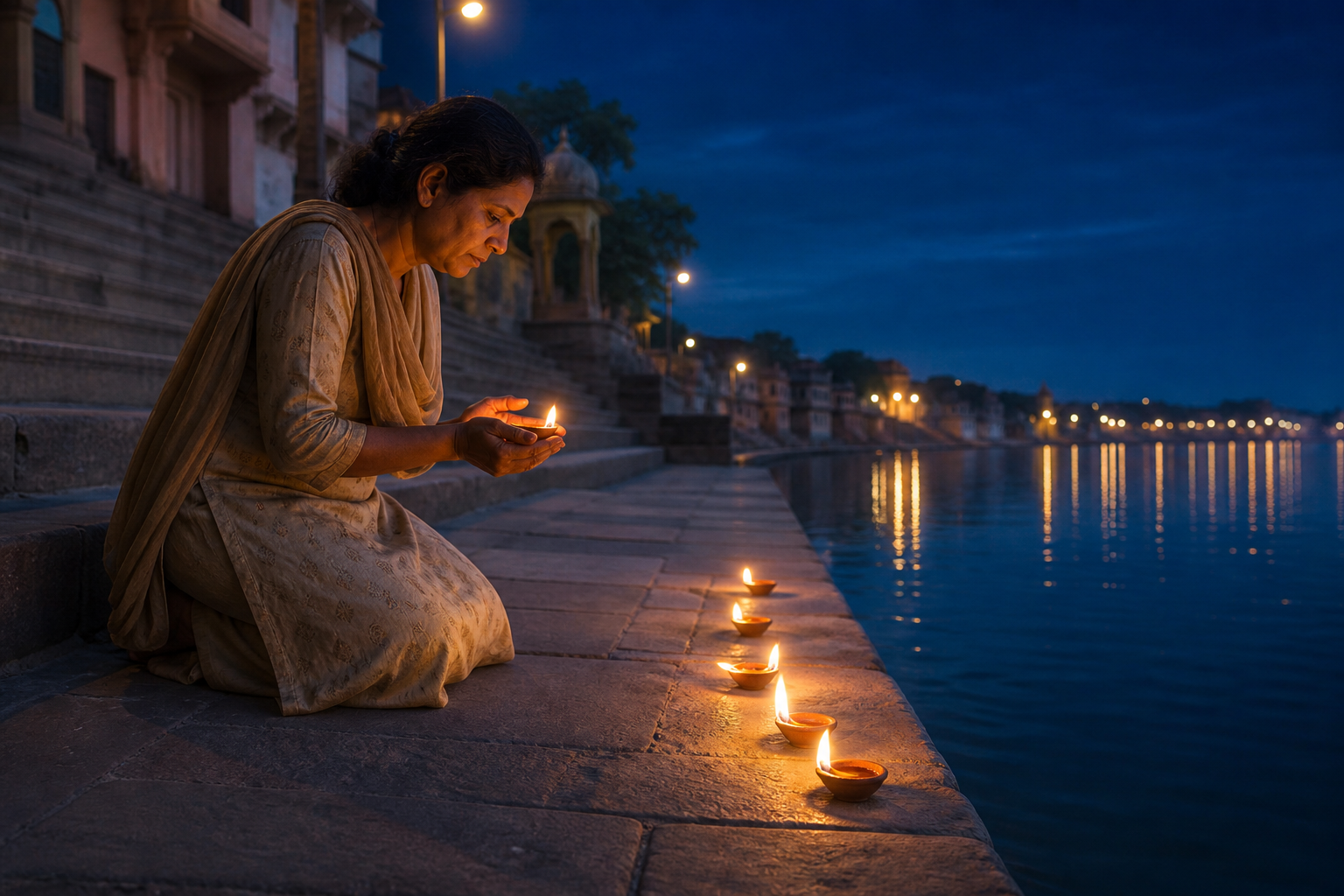
Deep daan gives the month a visible rhythm. The lamp is small enough to offer daily, yet concrete enough to interrupt an ordinary evening. Its purpose is easily lost, however, when arranging, photographing, or multiplying lamps becomes more important than remembrance.
Use the same deliberate sequence whether you offer a lamp at home, in a temple, or at a ghat:
- Prepare before lighting: choose a clay diya, natural oil, and biodegradable offerings where these accord with local practice. Remove plastic wrapping and other waste from the ritual area.
- Choose a safe place: use a stable, fire-safe surface away from loose cloth and congested walkways. At a temple or riverfront, place lamps only where the custodians permit them.
- Become quiet first: pause before touching the flame. Recall the sankalpa so that lighting the lamp is the expression of the vrata, not an isolated decorative act.
- Offer with your established practice: recite the mantra, stotra, or prayer appropriate to your lineage. No invented performance is required.
- Remain responsible afterward: supervise children closely, protect the flame without creating danger, and ensure that it can burn safely. Leave no plastic, foil, packaging, or other non-biodegradable residue behind.
At a river, reverence for water must include care for the water. Clay diyas, natural oils, and biodegradable materials reduce the contradiction between sacred intention and polluted surroundings. Follow local directions even when they limit where or how lamps may be offered. A restriction intended to protect a ghat or river does not diminish the offering.
Collective deep daan can strengthen this discipline. In Sri Dham Mayapur, hundreds of lamps have illuminated temple courtyards during Damodar month, accompanied by chanting, shared silence, and guidance passed from elders to children. The scale matters less than the relationship it reveals: individual offerings become a community’s repeated act of remembrance.
Digital darshan can help a distant devotee remember the time and join the devotional atmosphere, but it need not leave you as a passive viewer. If you cannot travel, prepare one safe local diya, put the phone aside after the broadcast has served its purpose, and complete the prayer where you are. Do not claim that every mode of participation is ritually equivalent; use available media to support attention rather than replace it.
Seva completes the offering. At a large gathering, the most dharmic task may be distributing prasad, helping an elder move safely, contributing food or clothing, or assisting with cleanup after the lamps have gone out. Light that produces work for someone else to clear is an unfinished offering.
Plan pilgrimage around one non-negotiable sacred act
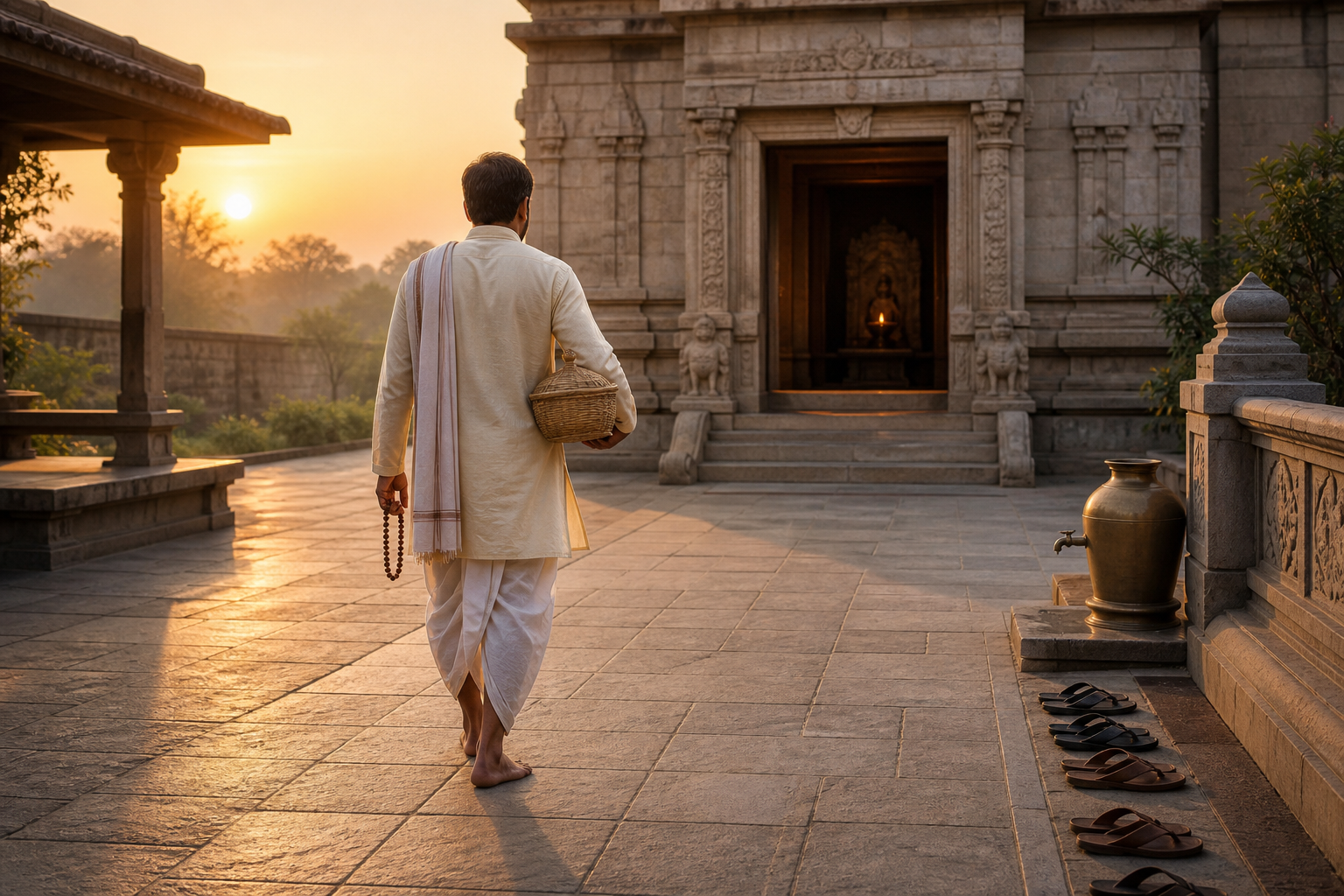
A Kartik pilgrimage becomes exhausting when every famous ritual, shrine, viewpoint, and photograph is treated as compulsory. Decide what the yatra is for before arranging the journey. One primary act, completed with attention, should govern the itinerary.
For Kartik Purnima in Varanasi, that primary act may be pre-dawn Ganga snan, darshan, deep daan, or participation in the evening observance. The city brings these practices together: devotees gather before sunrise for snan, visit shrines such as Kashi Vishwanath, and return to the illuminated ghats for Dev Deepawali and Ganga Aarti. You are not required to turn all of them into a race.
- Before travel: verify the local tithi, current civic directions, and the ghat or temple access relevant to your central practice. Choose a designated ghat rather than leaving the decision to the densest moment of the crowd.
- At dawn: allow enough margin to move patiently. Sunrise is one of the busiest periods. Keep companions together, and do not enter the water where access is closed or conditions are unsafe. If snan is not physically safe for you, seek appropriate guidance at the site instead of taking a risk to imitate others.
- After snan or arrival: protect a quiet interval for japa or prayer before adding sightseeing. If darshan is your priority, let temple access determine the rest of the day.
- During the day: make dana concrete. Food distribution, clothing donations, and support for the people who care for the ghats connect personal purification with responsibility toward the pilgrimage community.
- In the evening: expect the heaviest crowds around Dev Deepawali and the special Ganga Aarti. Follow local crowd directions and accept that a safe, respectful position is better than forcing access to a preferred view.
Boat viewing is popular during the illumination, but it is optional. If you choose it, follow local safety and capacity instructions. The riverfront is not made more sacred by seeing every lamp at once, and no viewpoint justifies ignoring a restriction.
Mayapur offers a different emphasis. A devotee whose Kartik practice centres on Damodar bhakti, kirtan, collective deep daan, and temple community may find that setting more coherent than assembling a generic pilgrimage checklist. Choose the sacred geography that supports your sadhana, not merely the image most familiar on social media.
If travel would strain your health, safety, finances, or essential family duties, do not confuse distance with devotion. Keep the vrata through a local temple, home practice, and seva, then plan a future yatra properly. Pilgrimage should intensify dharma, not leave avoidable disorder behind.
Key takeaways for a coherent Kartik observance
Kartik practices can remain distinctly Hindu while cultivating generous relations across the wider dharmic family. Restraint, nonviolence, mindfulness, compassion, truthfulness, and seva are recognizable ethical commitments in Hindu, Buddhist, Jain, and Sikh life, but the rituals and theological meanings are not interchangeable. Honour common ground without speaking as though the traditions are identical.
- Check the tithi in a reliable local panchangam; never reuse another city’s or another year’s date without verification.
- Write one sustainable sankalpa that names the period, daily practice, restraint, and act of seva.
- Choose strict fasting only where health and duties permit; phalahar or simple sattvic eating can preserve discipline without false bravado.
- Make deep daan safe and ecologically responsible through clay diyas, natural materials, supervised flames, and complete cleanup.
- Give a pilgrimage one primary sacred act, then arrange darshan, dana, aarti, and sightseeing around it.
- Follow your own paddhati faithfully while treating other sampradayas and dharmic paths with informed respect.
Your next step is simple: open the local panchangam, write the sankalpa in one sentence, place the diya supplies and chosen text together, and decide whether pilgrimage belongs to this Kartik or a future one. When the observance begins, you should be ready to practise rather than negotiate with yourself.
References
- DharmaRenaissance Blog – Vaikunth Chaturdasi Upvaas 2025: The Complete Guide to Fasting, Dates, and Dharmic Harmony
- DharmaRenaissance Blog – Discover Varanasi’s Kartik Purnima: Complete Guide to Ganga Snan, Dev Deepawali, and Pilgrimage
- Dandavats – Discover the Sacred Glow: A Complete, Insightful Look at Mayapur’s Kartik Deep Daan Day 17
