
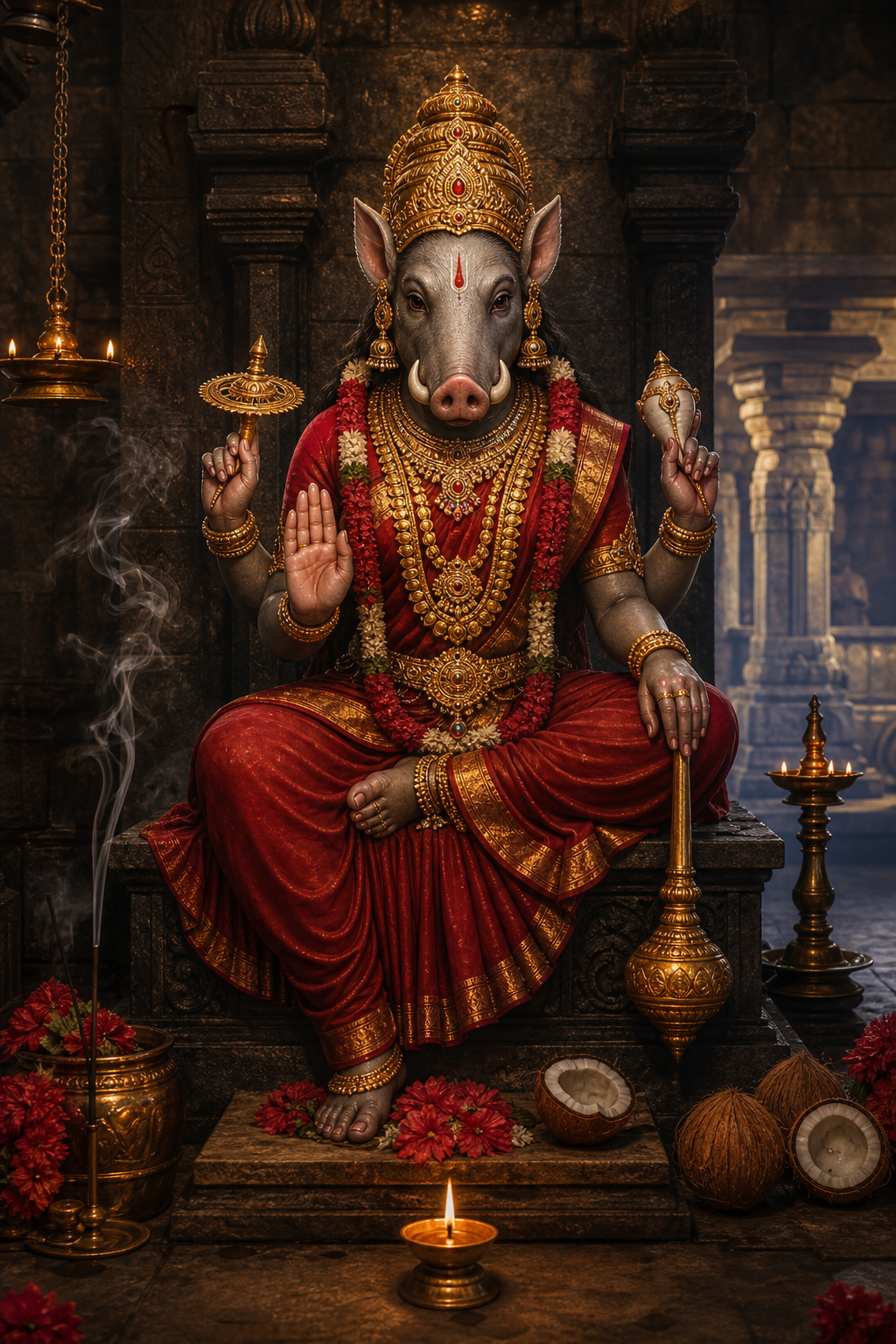
You want to visit a Varahi temple in Tamil Nadu, but you may be unsure how to approach the Goddess, what to ask for, or which shrine should anchor the journey. Begin with a clear intention rather than a complicated ritual plan.
Varahi worship is especially meaningful when fear, indecision, or a demanding responsibility has disturbed your inner balance. The pilgrimage can help you turn toward courage and disciplined action, provided you don’t treat darshan as a substitute for the action your situation requires.
Understand Varahi before you enter the sanctum
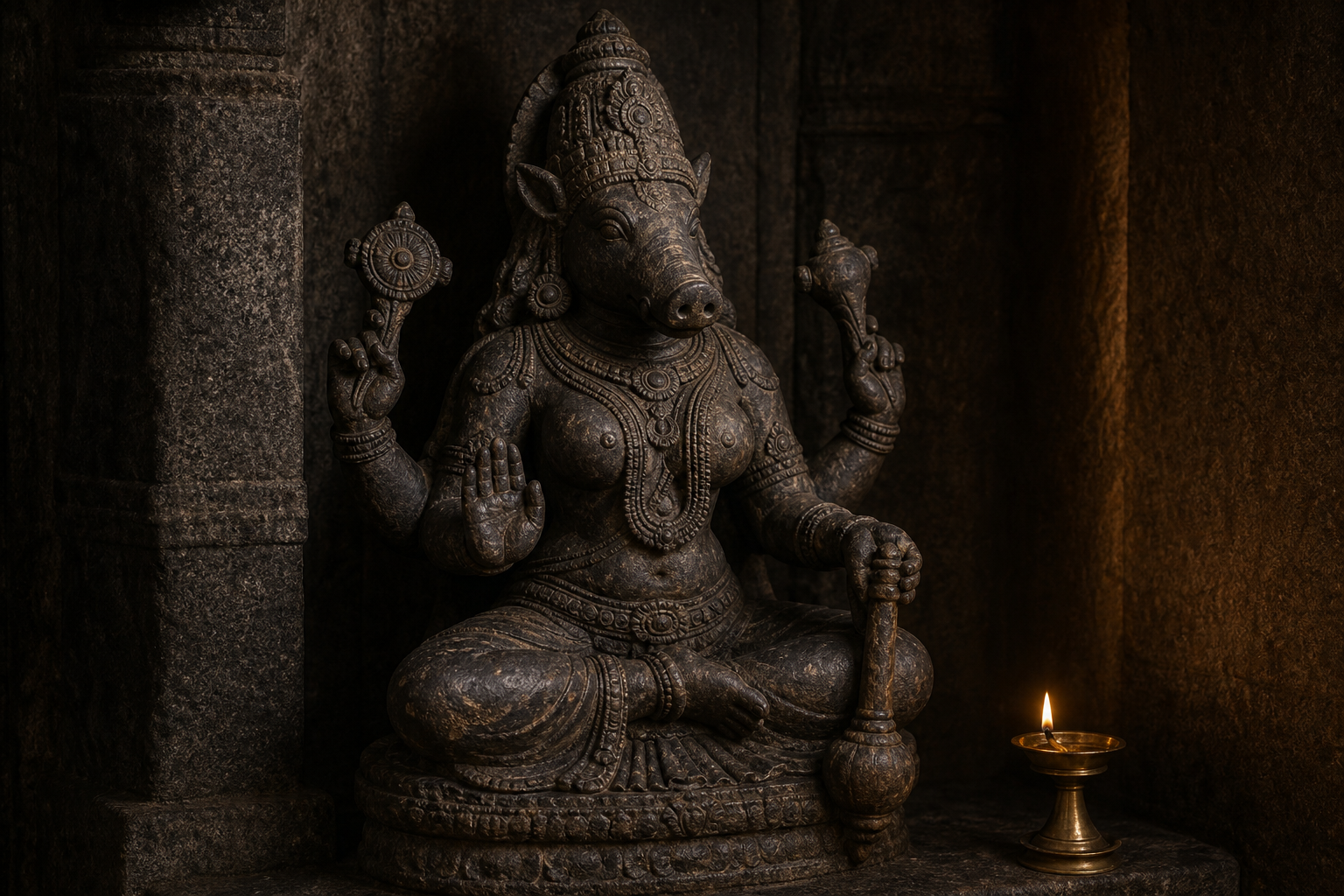
Varahi is the boar-headed manifestation of Shakti and one of the Sapta Matrikas. Her form conveys force, vigilance, and the capacity to confront what cannot be resolved through hesitation alone.
That makes her worship particularly relevant when you need protection, courage, wisdom, or clarity in a difficult decision. These are not disconnected blessings. Protection gives you room to think, clarity reveals what must be done, and courage allows you to do it. Varahi therefore represents protective intelligence as much as protective power.
Keep that distinction in mind when you pray. Asking only for an obstacle to disappear can leave your own duty unexamined. A more purposeful prayer asks for the discernment to recognise the right course, the steadiness to accept its cost, and the strength to follow through.
Why Uthirakosamangai is a strong starting point
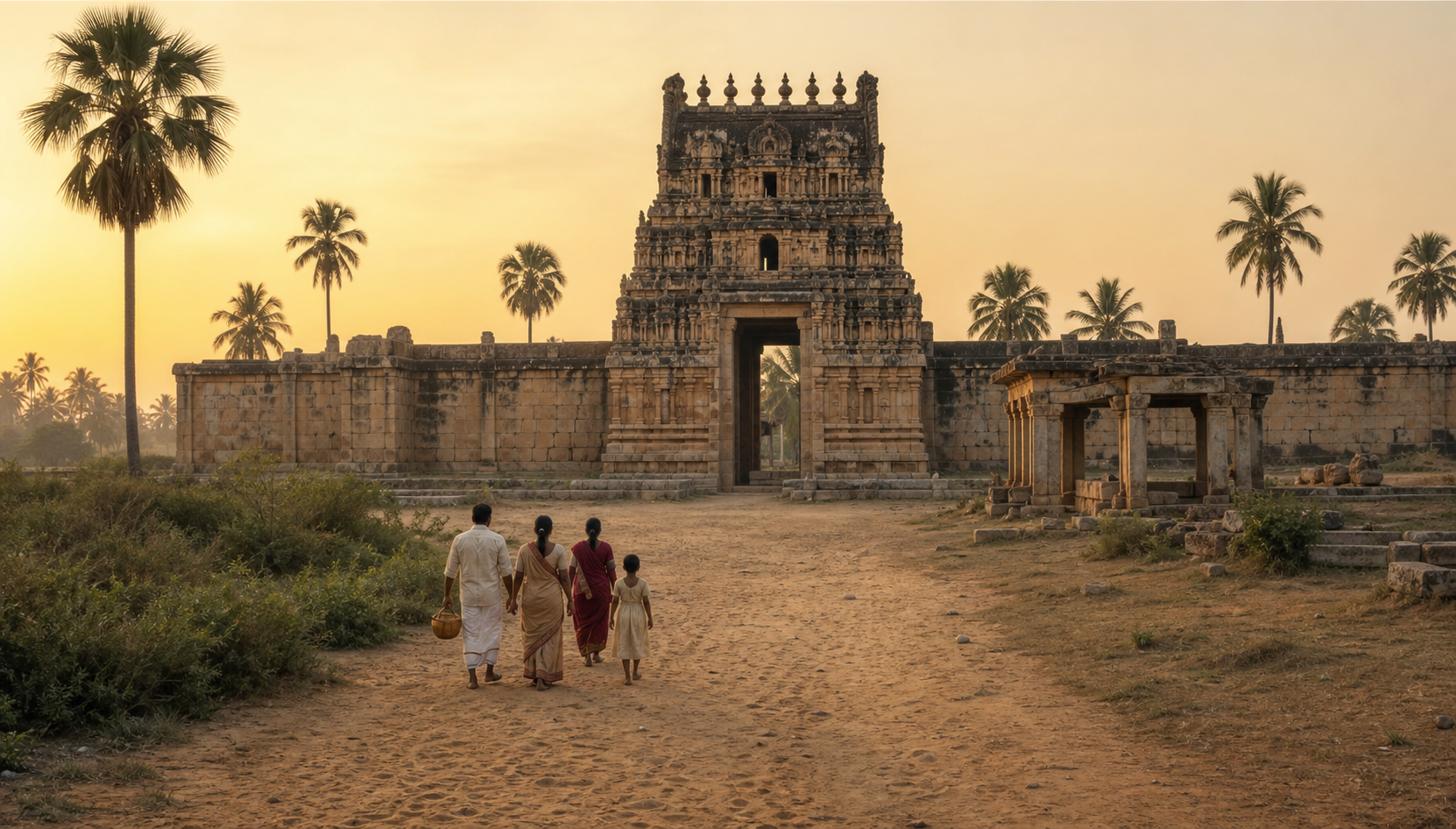
The Suyambu Varahi Amman Temple at Uthirakosamangai in Ramanathapuram District offers a natural focus for a first Varahi pilgrimage. Its defining feature is the revered swayambhu image of the Goddess. In devotional understanding, swayambhu means self-manifested rather than merely fashioned and installed as an ordinary image.
This distinction should shape the pace of your visit. A self-manifested form is approached as the sacred presence around which worship developed, not simply as an object to inspect. Give the sanctum your full attention. You don’t need to master an elaborate theological explanation before darshan; you do need enough quietness to receive the encounter without turning it into a sightseeing stop.
Uthirakosamangai can also sit within a wider Ramanathapuram pilgrimage circuit. If you plan to combine several sacred places, resist packing the day so tightly that every darshan becomes a race back to the vehicle. Confirm current temple access and local arrangements before travelling, then preserve enough space in the schedule to remain unhurried at the Varahi shrine.
Make your Varahi darshan purposeful
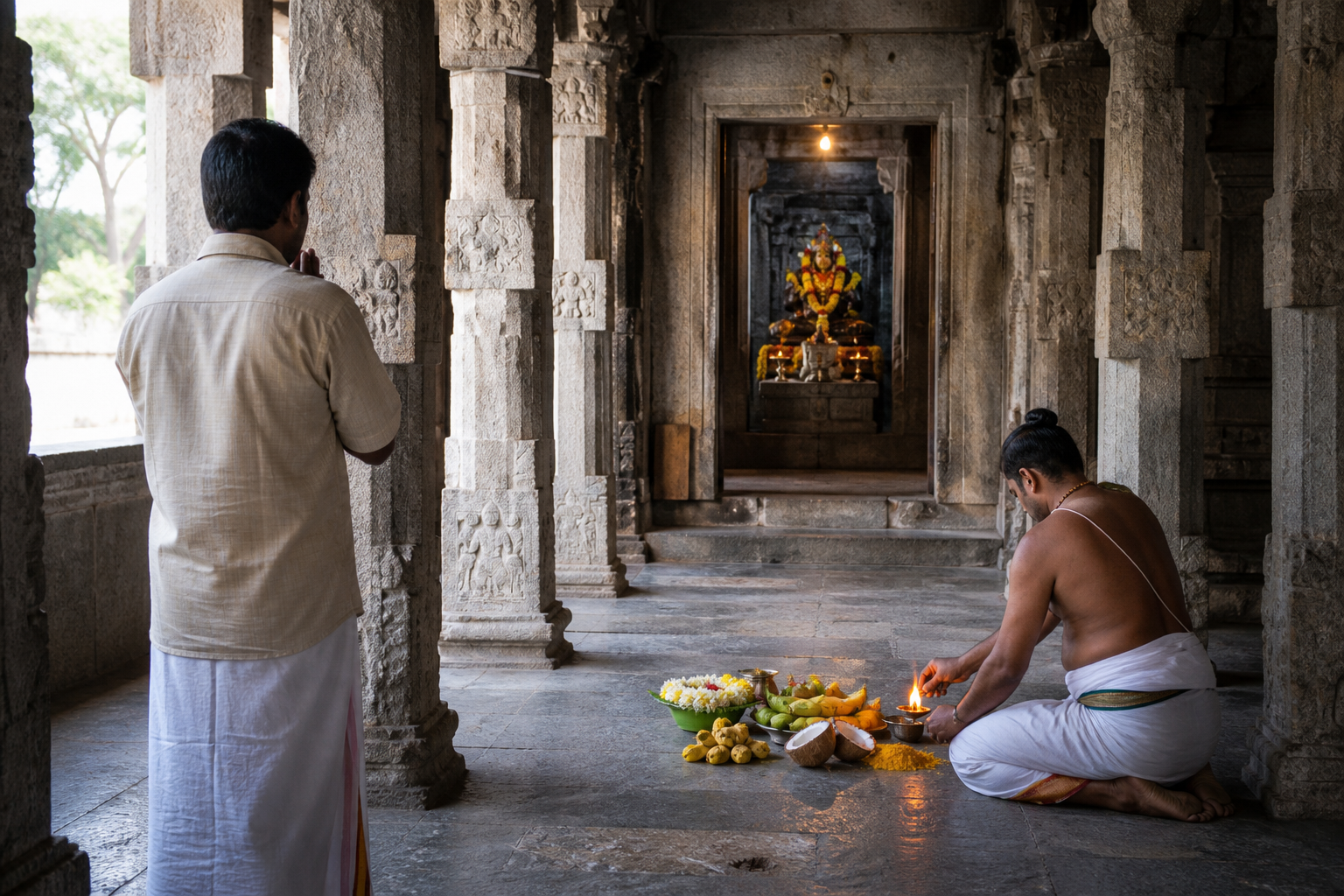
You don’t need to arrive with a long list of requests. A single, honestly stated concern gives the pilgrimage a clearer centre. Use this simple preparation:
- Name the difficulty in one sentence. Is the real issue fear, confusion, avoidance, or lack of resolve? Don’t hide the central problem beneath many smaller wishes.
- Choose the quality you need. Ask for courage, wisdom, clarity, protection, or steadiness. This shifts your attention from controlling every outcome to becoming capable of meeting it.
- Carry the intention quietly into darshan. You don’t need to rehearse it repeatedly while watching everyone else. Let your attention rest on the Goddess.
- Follow the temple’s living custom. Respectful dress, orderly participation, and attention to local guidance matter more than a ritual checklist gathered from elsewhere. Ask the temple attendants before making an unfamiliar offering or entering an area whose use is unclear.
- Leave with one concrete duty. After darshan, identify the next honest action that is already yours to take. It may be a decision, a conversation, a boundary, or a responsibility you have postponed.
This final step prevents devotion from becoming passive wish-making. Varahi’s symbolism points toward decisive action, but decisiveness is not the same as haste. The action you choose should arise from a clearer mind, not from the emotional intensity of the moment.
Notice the living Shakta tradition around you
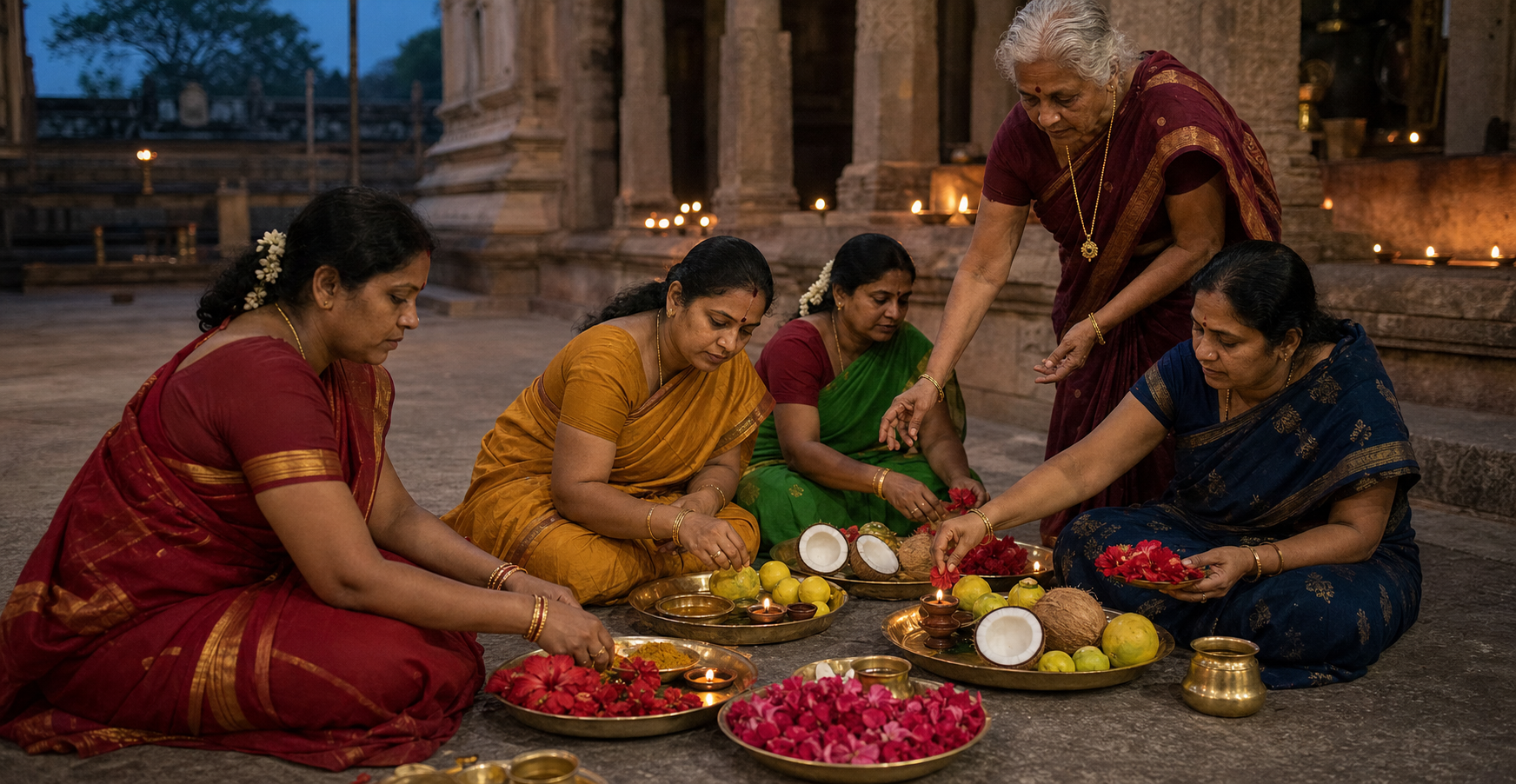
A temple teaches through more than its iconography. The sound of a conch around dawn, the fragrance of flowers and lamps, the movement of worshippers, and the hush near the sanctum all help direct attention away from ordinary distraction. Notice these elements without demanding that the visit reproduce someone else’s experience.
Also watch how the community sustains the sacred place. Waiting without pushing, keeping conversation subdued, accepting local instructions, and avoiding obstruction during worship are not peripheral courtesies. They are forms of discipline that protect the atmosphere every pilgrim has come to enter.
Varahi’s fierce form also corrects a common misunderstanding of divine compassion. Compassion does not always appear as softness. It can take the form of vigilance, restraint, protection, or the strength to confront disorder. Shakta worship holds these dimensions together: the Mother nurtures life, but she also guards the conditions under which life and dharma can flourish.
This balance makes the pilgrimage intelligible across the wider Dharmic family. Hindu, Buddhist, Jain, and Sikh traditions remain distinct in doctrine and practice, and those differences should not be erased. Yet discipline, compassion, self-knowledge, and moral courage provide genuine points of recognition. You honour that kinship best by noticing shared ethical concerns without pretending that every form or theology is interchangeable.
Key takeaways
- Approach Varahi as the Shakti of protective intelligence, courage, clarity, and decisive action, not merely as a means of obtaining a desired result.
- Use the Suyambu Varahi Amman Temple at Uthirakosamangai in Ramanathapuram District as a focused starting point for exploring Tamil Nadu’s living Varahi tradition.
- Enter darshan with one clearly named concern and one quality you seek to cultivate.
- Let local temple guidance determine appropriate conduct and ritual participation; don’t impose a generic practice gathered elsewhere.
- Complete the pilgrimage by choosing one responsible action that reflects the clarity or courage for which you prayed.
Before you set out, write your intention in one sentence and verify the temple’s current local arrangements. Then go without trying to force an extraordinary experience. Attend carefully, receive darshan, and bring Varahi’s call to steady action back into the decision waiting for you at home.
References
