
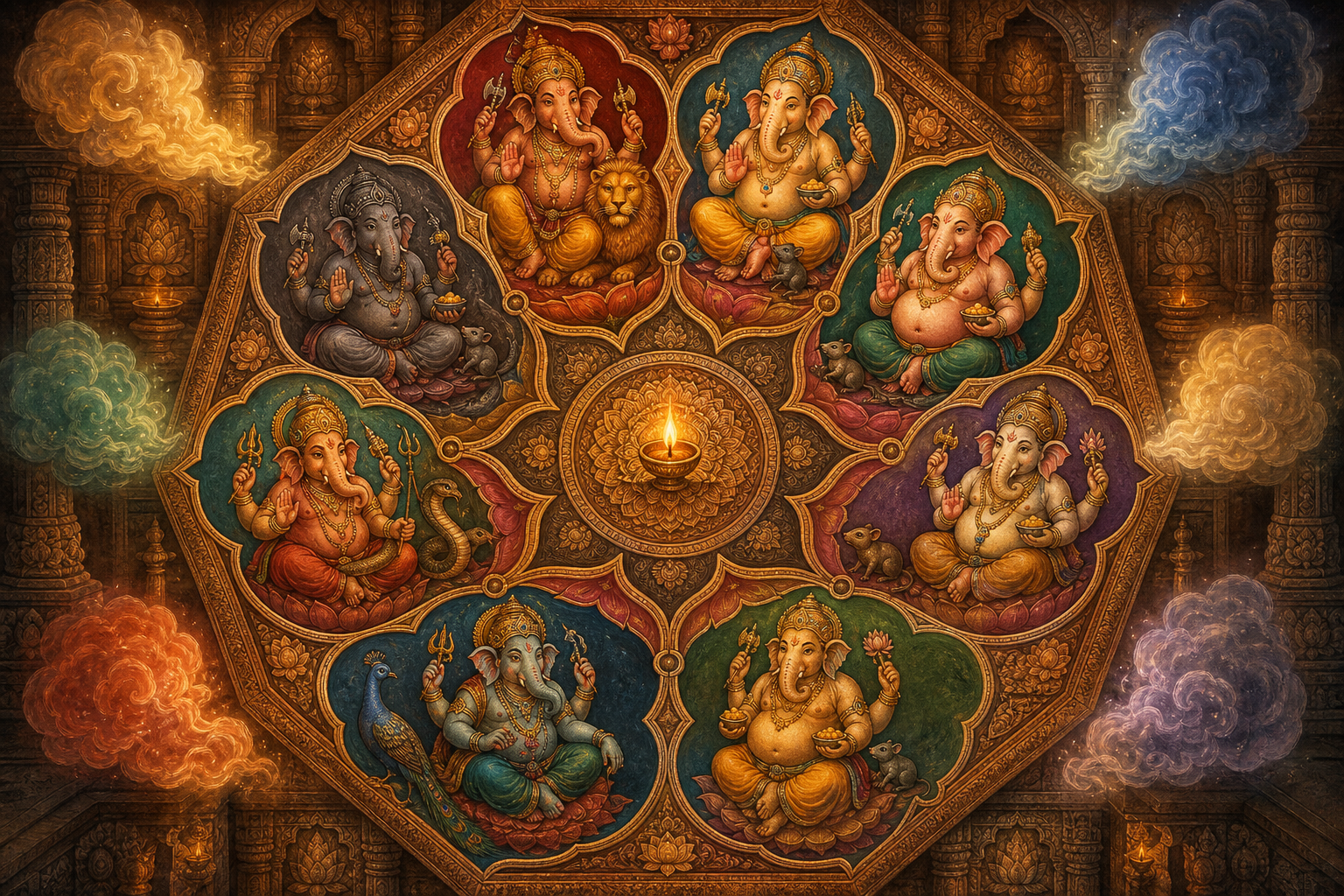
You may know Ganesha as Vighneshvara, the remover of obstacles, and still wonder why eight incarnations are needed. The practical answer begins with a difficult observation: not every obstacle stands outside you. Comparison, self-importance, confusion, appetite, anger, desire, possessiveness, and pride can obstruct right action before circumstances do.
Ganesha’s eight forms give you a disciplined way to identify those inner obstructions. Once you understand which tendency each form confronts, the names stop being a list to memorize. They become a framework for reflection, worship, and conduct.
Read the eight forms as one ethical map

For historical orientation, scholars generally place the compilation and redaction of this Sanskrit Upapurana between the 13th and 16th centuries CE. You are dealing with a distinct Ganesha-centred work, not a section of the Skanda Purana. Its focused theology has made it an important reference for doctrine, sacred narrative, ritual, and symbolism within the Ganapatya tradition.
Within this framework, each incarnation overcomes an asuric force corresponding to a recognisable human vice. That does not reduce a sacred avatara to a psychological label. It gives you an ethical doorway into the narrative: the cosmic victory can also become a pattern for overcoming disorder in your own thought and action.
| Incarnation | Inner obstacle | What you should notice | A practical counter-movement |
|---|---|---|---|
| Vakratunda | Jealousy | Another person’s success feels like your loss, even when it takes nothing from you. | Name the comparison and perform one sincere act of support instead of feeding resentment. |
| Ekadanta | Arrogance | Correction feels insulting because you assume your position, knowledge, or status places you above it. | Ask what evidence could change your mind, then listen without preparing a defence. |
| Mahodara | Delusion | You protect a preferred story after facts, consequences, or trusted counsel have begun to contradict it. | Separate what you know, what you infer, and what you merely want to be true. |
| Gajavaktra | Greed | Your definition of enough moves each time you obtain what you previously sought. | Set a limit before appetite begins negotiating, then redirect the surplus toward a worthy use. |
| Lambodara | Anger | Injury or frustration hands control of your speech and action to the immediate reaction. | Refuse to reply while retaliation is setting the terms; return when you can state the issue without cruelty. |
| Vikata | Desire | A wanted object, experience, or outcome begins to outrank duty and sound judgement. | Name the duty first, then decide whether the desire supports it, can wait, or should be relinquished. |
| Vighnaraja | Possessiveness | You treat a person, role, achievement, or outcome as an extension of yourself that must remain under your control. | Release one unnecessary claim by sharing credit, returning agency, or accepting an outcome you cannot own. |
| Dhumravarna | Pride | Your identity depends on recognition, and right action loses its attraction when nobody will notice it. | Do one necessary act of service without display, announcement, or demand for acknowledgement. |
Arrogance and pride can look identical in ordinary speech, so use a practical distinction. Arrogance places you above correction; pride makes your self-image dependent on status or recognition. Jealousy and greed also differ: jealousy is disturbed by another person’s good, while greed keeps moving the boundary of enough. These distinctions help you identify the mechanism instead of condemning yourself with a vague label.
Do not turn the table outward and assign an incarnation to each difficult relative, colleague, or opponent. That preserves your own blind spot while giving it religious language. Begin with the vice you least want to admit in yourself. Resistance often tells you where the work is.
Turn the cycle into eight rounds of sadhana
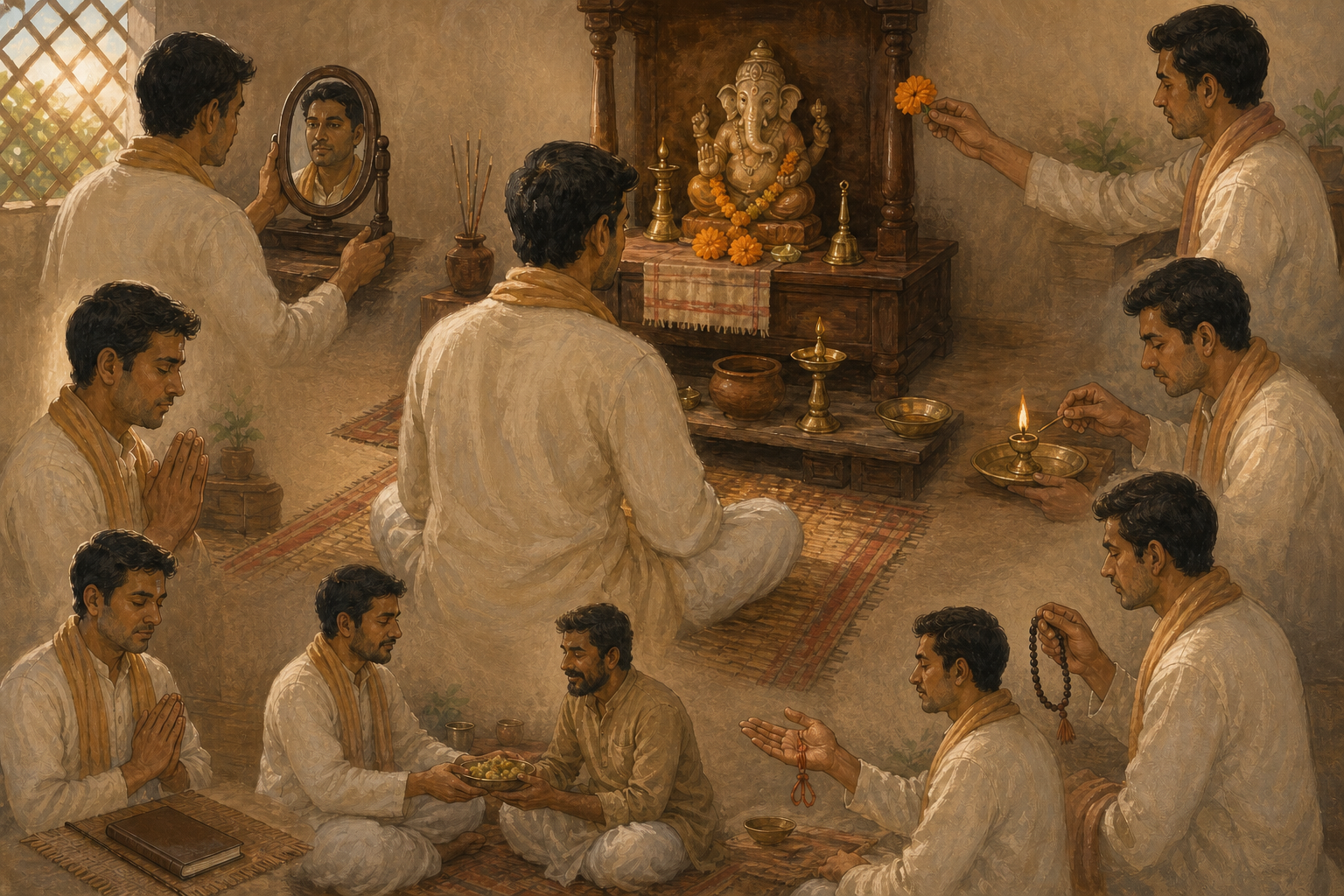
The most useful reading rhythm follows three movements: shravana, attentive reception; manana, deliberate reflection; and abhyasa, repeated application. Hearing without reflection can leave you with an attractive story. Reflection without practice can produce polished self-knowledge that changes nothing. Practice connects understanding to dharma.
- Take one incarnation at a time. Read or hear its full avatara narrative when you have access to it. A name-and-vice pairing is an orientation, not a substitute for the katha.
- Record one recent trigger. Choose an actual event rather than a general claim about your personality. Write what happened, what you told yourself, what you did, and what followed.
- Test the explanation. Ask what you would call the same conduct if another person had done it. This often exposes the respectable name you have given your own vice.
- Select one observable counter-practice. Replace a broad intention such as being humbler with an action you can verify, such as inviting correction and repeating it accurately before responding.
- Join the effort to devotion. Use a mantra, stotra, or prayer already established in your family, temple, or lineage. Ask not only for a preferred outcome but for the discernment and discipline needed to act rightly.
- Review conduct before moving on. Do not ask whether you felt spiritual. Ask whether the vice lost control of one decision, conversation, or habit.
Suppose you are working with Lambodara and anger. A vague resolution to remain calm cannot be examined. A concrete practice can: when criticism provokes fantasies of retaliation, you will postpone the reply until you can describe the disagreement without insult. At the review, you can see whether you followed the commitment, where it failed, and what triggered the failure.
Use the same precision with Mahodara. Instead of declaring yourself free from delusion, divide a page into three parts: fact, interpretation, and desire. Place each belief about the disputed situation into one column. The exercise is simple, but it prevents a hoped-for result from quietly disguising itself as knowledge.
You do not have to force the cycle into eight consecutive days. Choose a cadence you can sustain, and remain with one form long enough to observe it in conduct. After all eight rounds, look for the obstacle that appeared under several disguises. That recurring pattern is usually more important than deciding which vice is your worst.
Let Ganesha’s iconography correct your idea of success
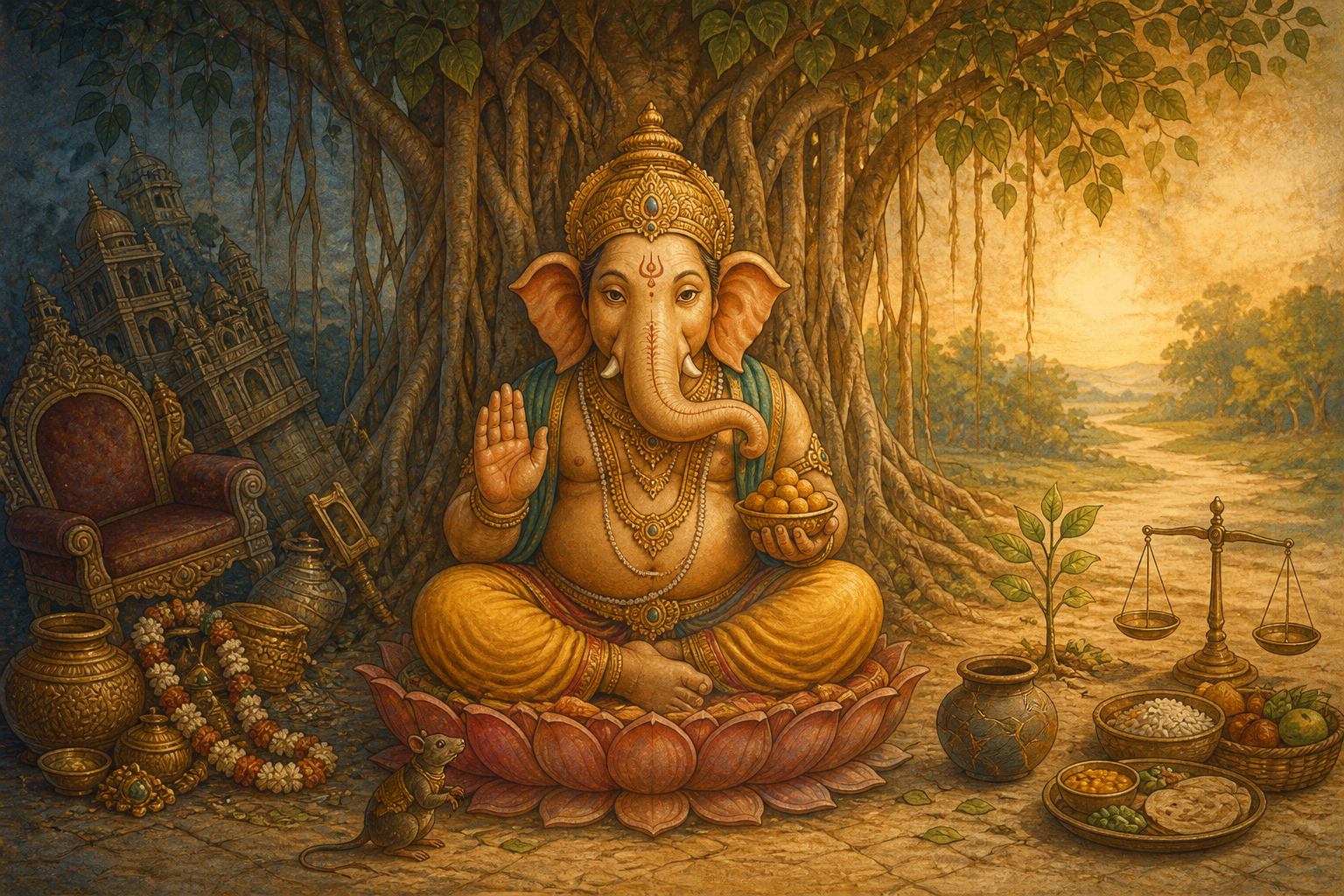
If you approach Ganesha only to make an unwanted circumstance disappear, you may miss half the theology. Vighneshvara removes obstacles, but Ganesha is also associated with knowledge, righteous action, and the movement toward moksha. Some obstructions prevent dharmic action and should be overcome. Others reveal the greed, anger, or pride that must be overcome within you.
Before asking for an obstacle to vanish, ask two questions. What good action is this obstruction preventing? What correction might I refuse to learn if it disappeared immediately? The first question protects you from passivity. The second protects devotion from becoming a demand that every event obey your preference.
- The elephant head signifies wisdom and attentive listening. Make that visible by listening long enough to state another person’s position fairly before you answer it.
- The large belly signifies forbearance. Use it as a reminder that discomfort does not have to be transferred instantly to somebody else through blame, impatience, or harsh speech.
- The broken tusk signifies sacrifice for knowledge. Ask which convenience, vanity, or cherished assumption you must surrender in order to learn what is true.
These symbols work best as ethical reminders, not decorative explanations. If wisdom does not improve your listening, forbearance does not steady your conduct, and sacrifice does not deepen learning, the symbolism has not yet entered practice.
The same ethical vocabulary can also help you recognise kinship across Dharmic traditions. Self-mastery, humility, right conduct, and service resonate with major concerns in Buddhism, Jainism, and Sikhism. Resonance does not make these traditions interchangeable; it gives practitioners a shared language for discussing disciplined freedom without erasing distinct teachings or lineages.
Choose a ritual level you can practise correctly
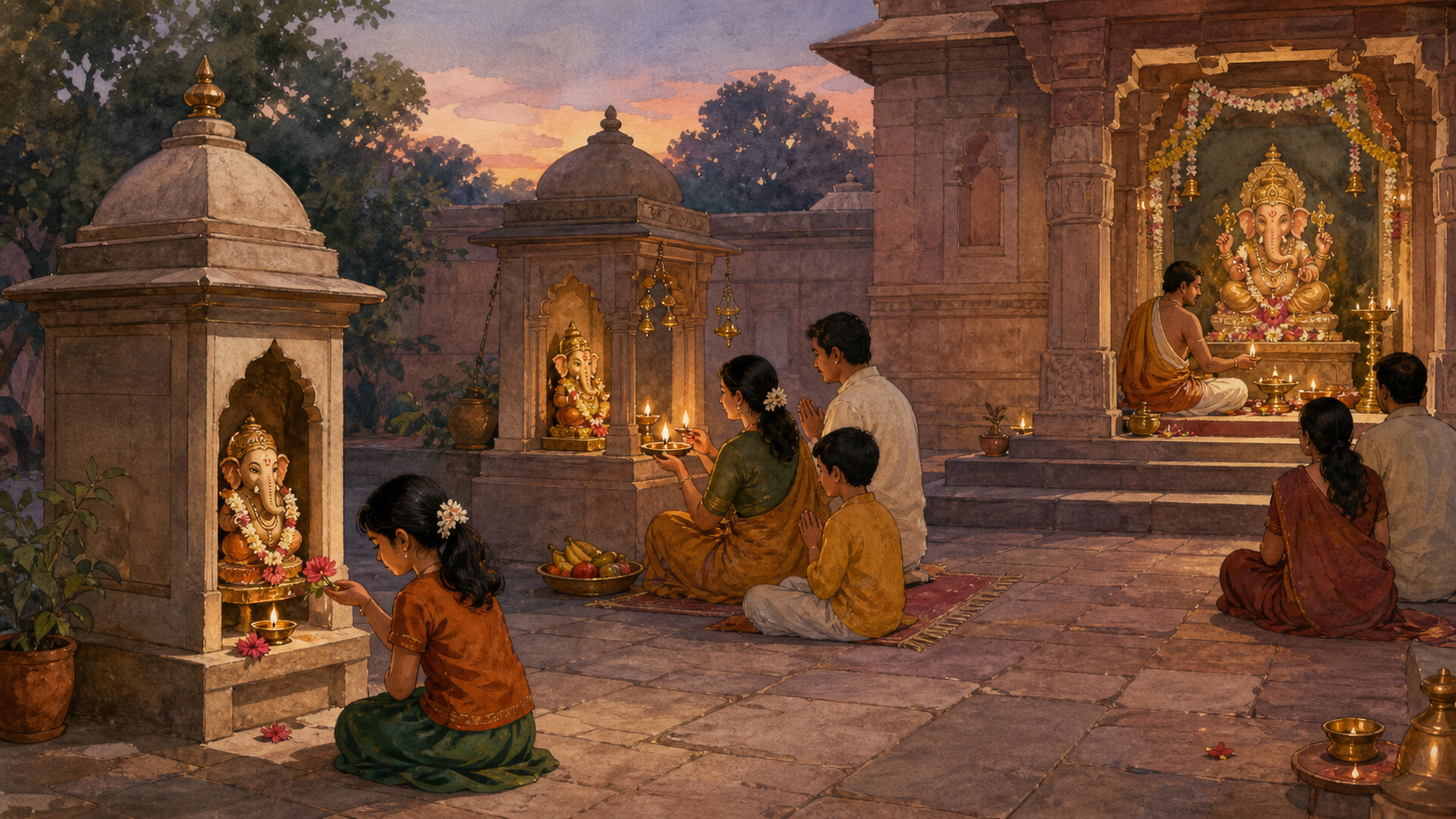
The devotional disciplines associated with this tradition include puja, vrata, homa, and the recitation of mantras and stotras. They support household worship as well as temple and community observance, including Ganesh Chaturthi. The right starting point depends on what you have actually been taught.
- For regular household devotion, use a familiar puja and an established mantra or stotra. Attach your chosen counter-practice to the worship so that the altar and the rest of the day do not become separate worlds.
- For a vrata, learn the recognised commitments, duration, opening, and completion before beginning. A vrata is a disciplined observance, not merely a private promise made in an emotional moment.
- For homa, seek competent ritual guidance rather than improvising a fire rite from isolated instructions. Correct sequence and inherited practice matter more than personal novelty.
- For temple or festival worship, follow the local liturgical order and participate in the community’s established form. Shared worship trains cooperation as well as individual devotion.
Do not invent eight mantras to match the eight vices or assume that a symbolic interpretation supplies a ritual procedure. Keep the two levels connected but distinct: the lineage or temple gives you the form of worship, while honest self-examination gives that worship ethical consequence.
A plain intention is enough to unite them: may you recognise the chosen obstacle clearly, refuse the conduct it produces, and act according to dharma. Then define the conduct you will practise. Without that final step, even a sincere intention remains difficult to test.
Key takeaways
- The eight incarnations form a precise sequence: Vakratunda confronts jealousy, Ekadanta arrogance, Mahodara delusion, Gajavaktra greed, Lambodara anger, Vikata desire, Vighnaraja possessiveness, and Dhumravarna pride.
- Scholars generally place the layered compilation and redaction of this Ganesha-centred Sanskrit Upapurana between the 13th and 16th centuries CE.
- The sacred narratives can guide self-examination without being reduced to psychological allegories.
- Shravana, manana, and abhyasa turn each avatara from information into attentive reception, reflection, and repeated conduct.
- Ganesha removes obstacles while also guiding the devotee toward knowledge, dharma, and moksha.
- Puja, vrata, homa, mantra, and stotra belong within established ritual guidance; personal reflection should deepen those practices rather than replace their inherited form.
At your next sitting, choose the vice you are most tempted to explain away. Receive the corresponding narrative, write down one recent trigger, and commit to one counter-action that another person could actually observe. Add the prayer you already know. When you return to the remaining forms with the same honesty, Ganesha’s eight incarnations will no longer sit at the edge of your life as names; they will begin to shape how you meet its obstacles.
References
