

If you are arranging a puja, vrata, temple visit, study period, or act of seva for November 6, the important detail is easy to miss: the civil date contains parts of two tithis. Your plan should follow the tithi boundary used for your location, not midnight on the clock.
Thursday, November 6, 2025 is associated with Krishna Paksha Pratipada until 4:55 PM, followed by Krishna Paksha Dwitiya. Treat 4:55 PM as the published reference for the day, not as a universal time for every city. Confirm the boundary in a regional Panchang before using it in a sankalpa or tithi-specific observance.
Key takeaways for November 6
- The civil date is Thursday, November 6, 2025.
- Krishna Paksha Pratipada occupies the earlier part of the day and is listed as ending at 4:55 PM.
- Krishna Paksha Dwitiya begins after that transition.
- The day falls within the waning, or dark, fortnight of the lunar cycle.
- The regional month may be identified as Kartik, Karthika masam, or Karthikai Month, depending on the calendar tradition.
- City-specific verification is necessary for the tithi boundary, nakshatra, rashi, and any shubh muhurta.
Why the tithi change matters more than the date alone
A Gregorian date runs from one midnight to the next. A tithi does not have to begin or end at midnight, so two tithis can fall within the same civil date. That is exactly what makes November 6 a planning question rather than a one-line calendar entry.
If a family custom, vrata, or temple instruction names Pratipada, the relevant part of November 6 is the period before the local transition. If it names Dwitiya, the relevant part begins after that boundary. The tithi named in the ritual instruction should lead your decision; the printed civil date is only the container.
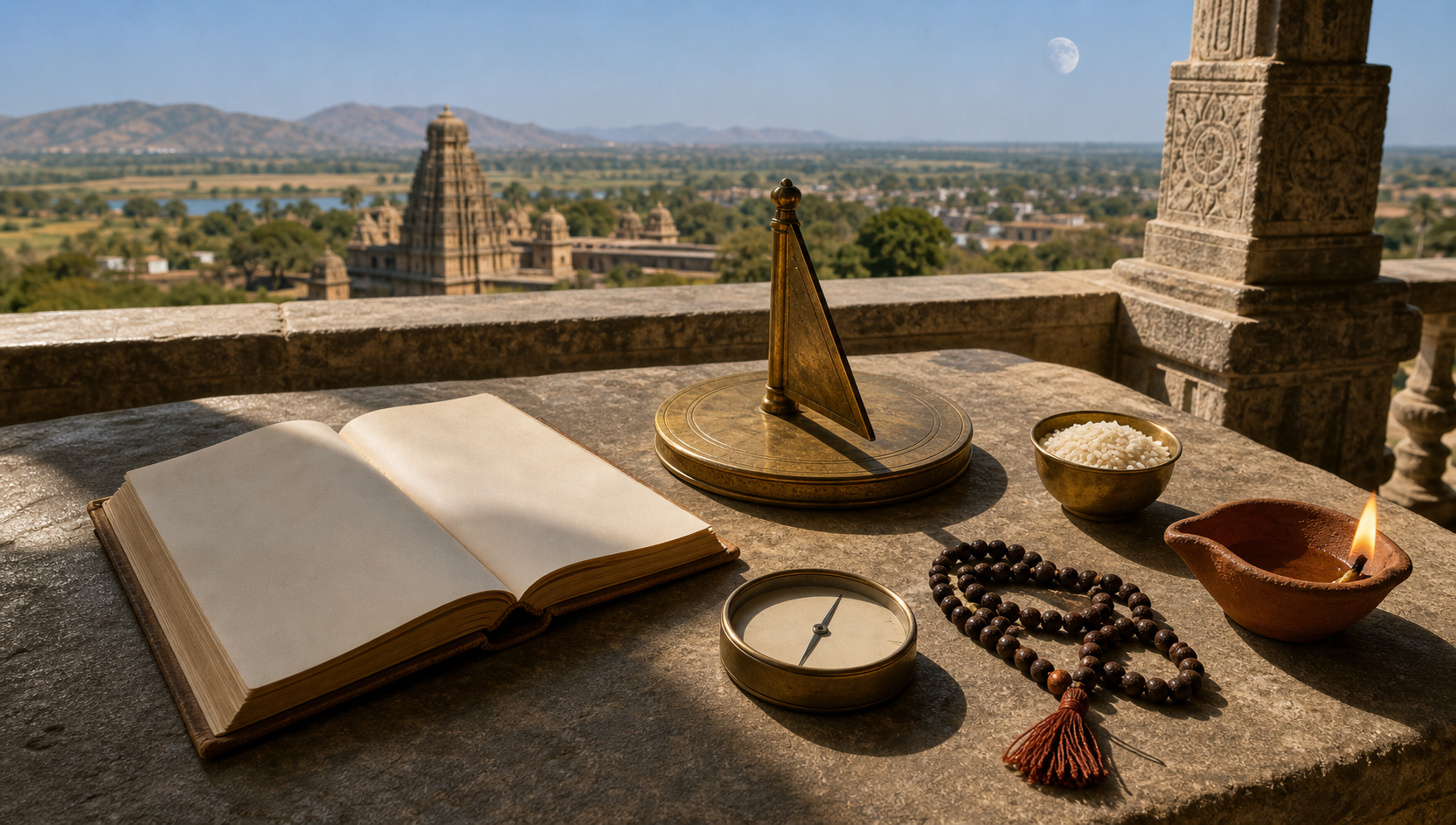
This distinction also prevents a common mistake: copying a Panchang time from a relative, social-media image, or temple in another city. Panchang calculations depend on regional coordinates, and local calendars may not display the boundary in exactly the same way. A time that is appropriate for one location should not automatically be transferred to another.
Before fixing a tithi-dependent activity, check these details in order:
- Select the city or region where the observance will actually take place.
- Find the Pratipada end time shown for November 6 in that local Panchang.
- Confirm whether your family or temple instruction requires Pratipada, Dwitiya, or merely a convenient devotional period.
- If the sankalpa includes nakshatra or rashi, copy those details from the same local Panchang rather than combining information from different calendars.
- For a temple program, use the temple’s announced schedule even when it differs from a general calendar, because the temple will follow its own established calculation and practice.
How to plan the Pratipada-to-Dwitiya transition
The two parts of the day need not compete with each other. Pratipada can be used to simplify, take stock, and set a disciplined intention. Dwitiya can carry that intention into steady action. This is a devotional framework, not a claim that every sampradaya prescribes the same ritual for these tithis.
| Part of the day | Tithi reference | Practical use |
|---|---|---|
| Before the local transition | Krishna Paksha Pratipada | Complete a simple puja, begin reflection, clarify an intention, or undertake quiet study and service. |
| At the transition | Pratipada gives way to Dwitiya | Avoid guessing. Check the local boundary if the timing determines ritual validity. |
| After the local transition | Krishna Paksha Dwitiya | Continue the intention through measured action, family duty, study, or seva. |
If your activity is not tied to a formal vrata, there is no need to turn the boundary into a source of anxiety. A regular evening prayer, scriptural reading, family remembrance, or act of service can still be meaningful. Precision becomes essential when a lineage, priest, temple, or family rule explicitly attaches the observance to a particular tithi.
Shubh muhurta requires a separate check. The tithi alone does not establish a universally auspicious window for every activity. If you are planning a formal ceremony, do not label the entire Pratipada or Dwitiya period auspicious merely because it appears in the Panchang. Use the muhurta calculated for the relevant place and purpose.
Kartik, Karthika, and Karthikai are regional calendar frames
You may encounter different month names for November 6 without anyone having made a mistake. Many calendars place the day in Kartik Krishna Paksha. Several South Indian traditions use Karthika masam, while Tamil calendars may refer to Karthikai Month. Eastern calendars, including Bengali almanac traditions, may use their own Kartik framework.
These names reflect living regional systems. They influence how households label the month, when temples announce programs, and which inherited customs receive emphasis. Do not replace the terminology used by your family or temple simply to make it match a calendar from another region.
When coordinating an observance across regions, record three items together: the civil date, the local tithi and its end time, and the regional month name. That small habit prevents most avoidable confusion. It is especially useful when relatives in different cities are arranging a shared recitation or when a community notice will be read by people from several linguistic traditions.
A simple home observance without inventing obligations
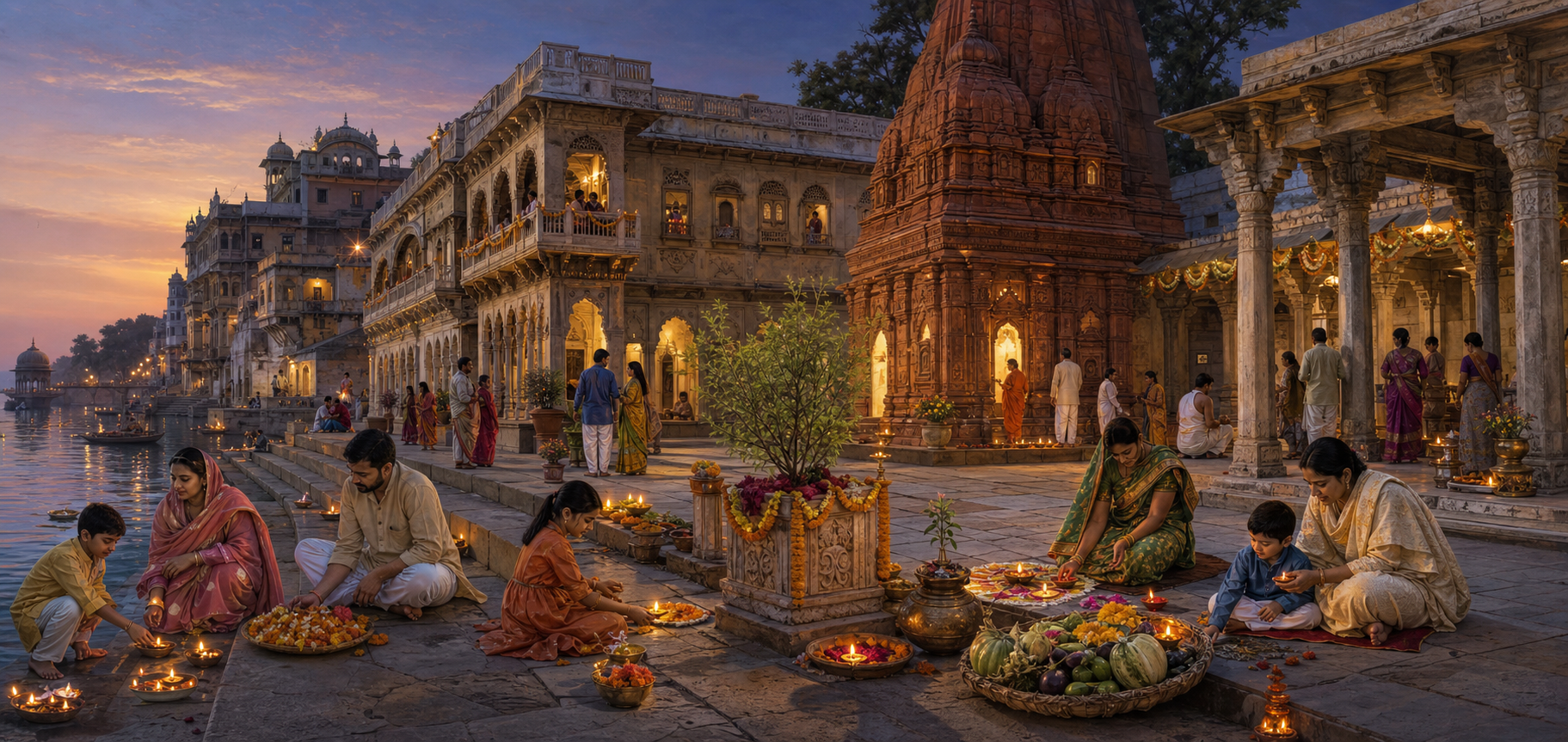
November 6 does not need an elaborate program to be spiritually coherent. Kartik’s atmosphere of restraint, contemplation, and service can be expressed through an observance appropriate to your own sampradaya and household capacity.
- Verify your city’s tithi boundary before making a time-specific sankalpa.
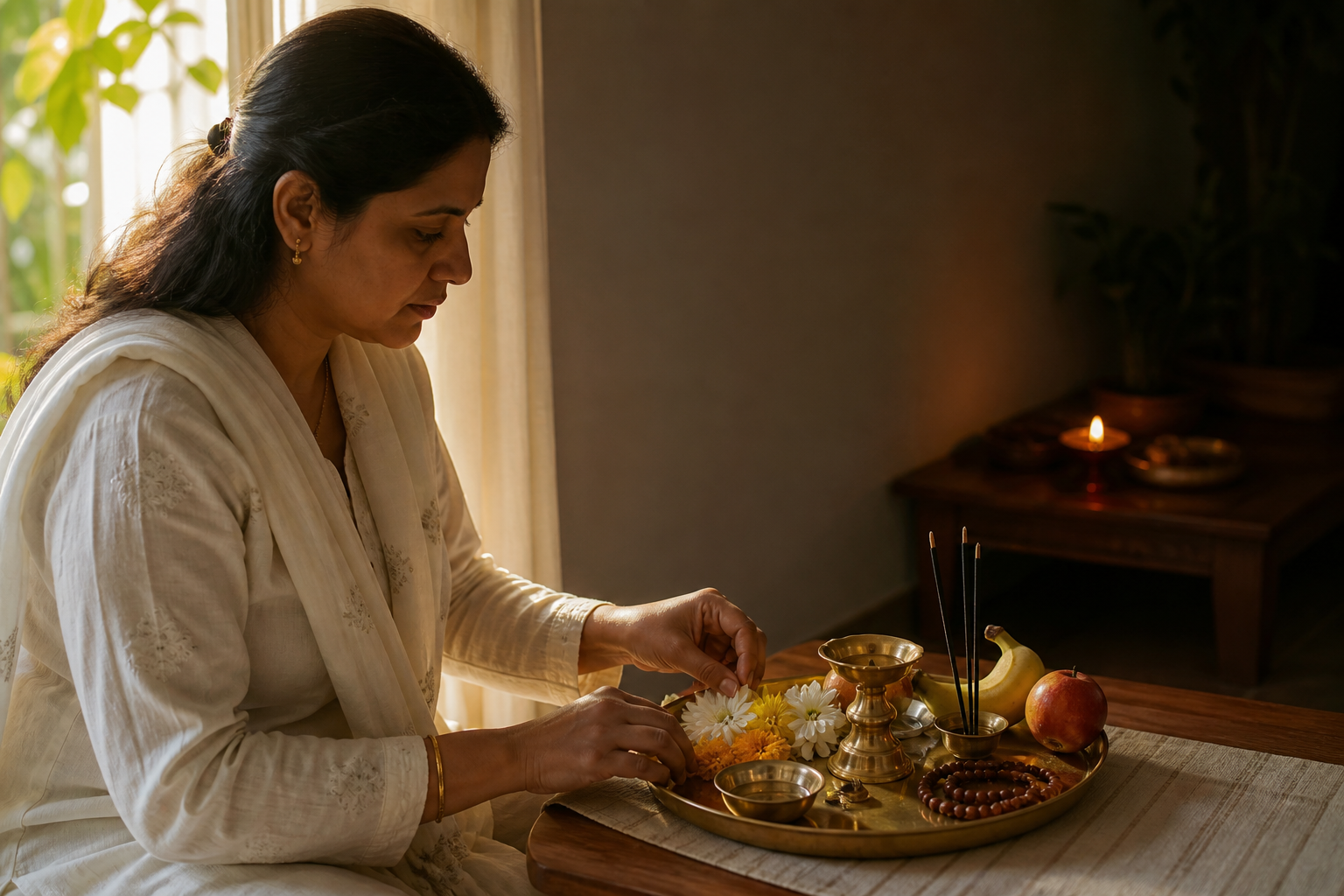
- Prepare the prayer space and choose a familiar practice from your lineage rather than assembling unfamiliar rites from unrelated calendars.
- During Pratipada, identify one habit, distraction, or unfinished duty that should be simplified.
- Offer your usual prayer, japa, recitation, meditation, or study according to family practice.
- Connect contemplation with seva by choosing one concrete act of help for your household, temple, or community.
- After Dwitiya begins, carry out that act instead of leaving the day’s intention at the level of thought.
This sequence gives the tithi transition practical meaning: reflection before the boundary, continuity after it. It does not impose a new vrata or claim scriptural necessity. If you already observe a prescribed vrata, its established rules take precedence over this optional routine.
Respect shared lunar awareness without flattening traditions
Lunar timekeeping belongs to the wider civilizational inheritance of Bharat, but Hindu, Buddhist, Jain, and Sikh communities do not turn every lunar marker into the same observance. Shared awareness of lunar rhythms should not be mistaken for an identical ritual calendar.
In a multi-tradition family or community gathering, describe November 6 accurately as a Pratipada-to-Dwitiya transition in the relevant Hindu Panchang. Then allow each tradition to name its own meaning and practice. Unity is better served by precise respect than by claiming that everyone observes the day in one way.
For your own plans, make one final check before November 6: save the local Panchang details you will use, note the city beside the timing, and confirm any temple-specific instruction. Once that is done, let the day move as its tithis do – from quiet reassessment into steady, deliberate action.

References
