
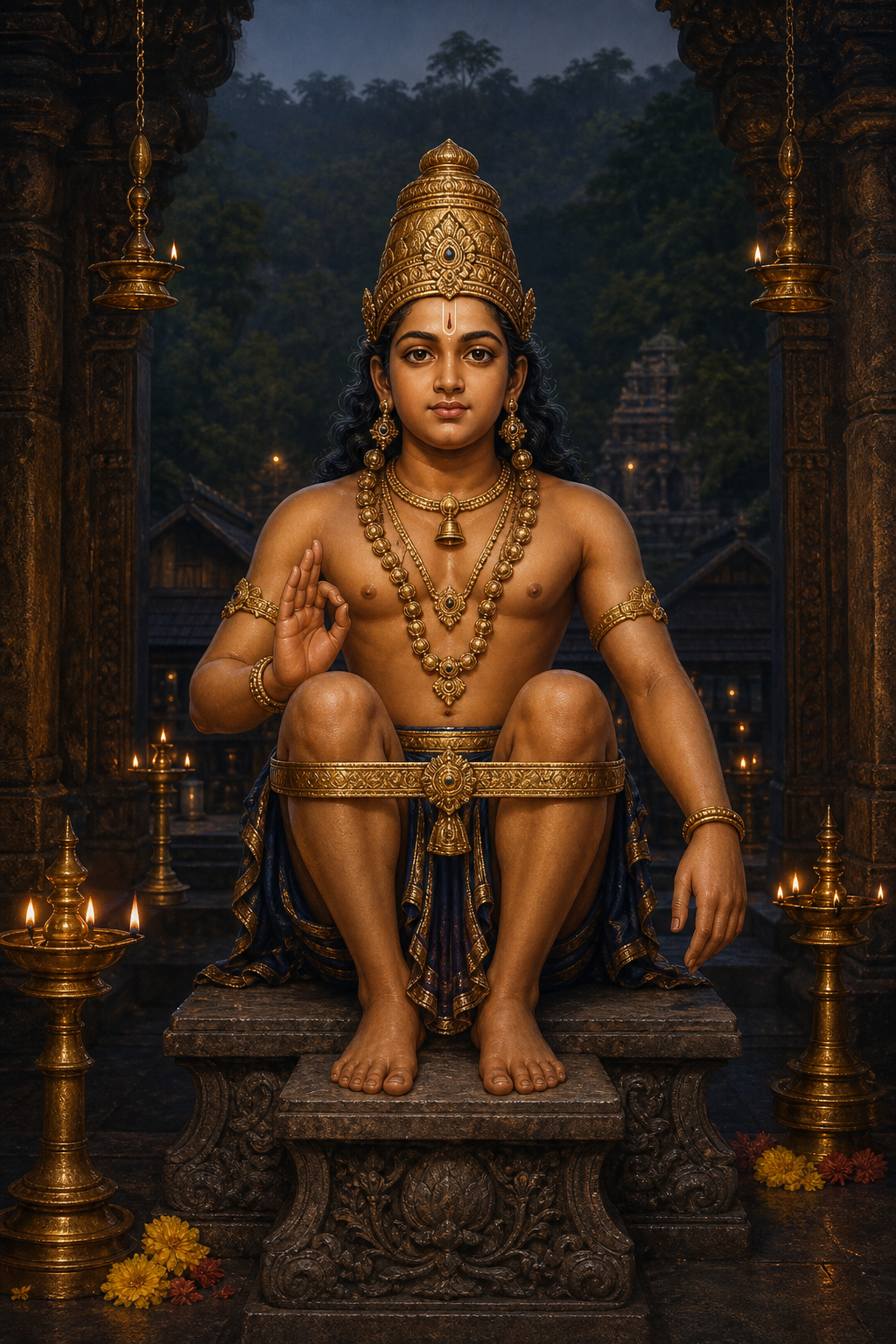
You may have stood before Lord Ayyappa’s image and wondered why he sits with his knees raised, his body compact, and a band holding the posture together. It looks like a difficult yogasana, but treating it merely as an unusual pose misses the instruction built into the form.
The posture gives you a practical sequence to follow: stabilize the body, gather the senses, steady the mind, and let that inner order shape your conduct. It joins yoga to bhakti, and personal discipline to compassionate action.
Read the whole posture before interpreting one detail
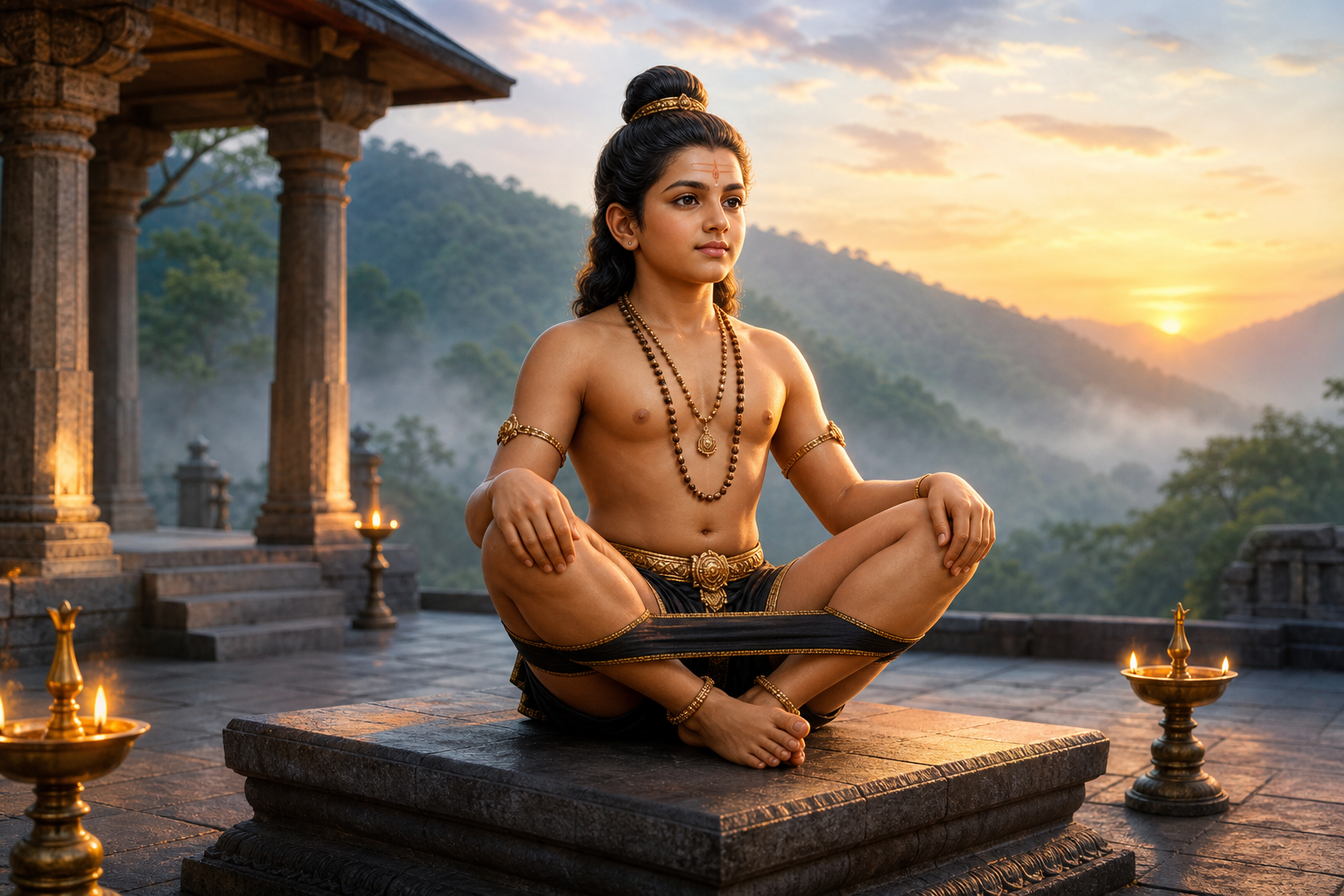
Lord Ayyappa is often shown in a compact meditative seat with the knees drawn upward and secured by a yogapatta, or meditation band. The posture is frequently called Yogapattasana. The band helps stabilize the torso and spine so that breath and attention can settle without constant bodily adjustment.
That physical function matters. The yogapatta is not simply an ornamental cord to which a symbolic meaning was attached later. It visibly supports the condition the image communicates: a body gathered into stillness, neither collapsed nor restless. The symbolism grows from that function. Discipline supports attention just as the band supports the seat.
When you look at the murti, notice how several details work together:
- The compact seat: The body is composed rather than sprawling. Read this as collected attention, not physical discomfort.
- The upright stability: Stillness does not mean dullness. The form remains alert, conveying mastery of the body rather than withdrawal from it.
- The yogapatta: A visible restraint makes sustained steadiness possible. It points toward chosen discipline, not coercion.
- The hands resting at the knees: Their contemplative placement directs the mind toward jnana, serenity, and equanimity rather than outward display.
- The composed expression: Discipline culminates in karuna, or compassion. The face does not communicate tension, pride, or severity.
This is also a guard against overreading the icon. You do not need to invent a separate esoteric meaning for every angle of every limb. Begin with the unmistakable composition: stable body, restrained senses, attentive mind, compassionate presence. The details reinforce that unified teaching.
The yogapatta turns restraint into a form of freedom
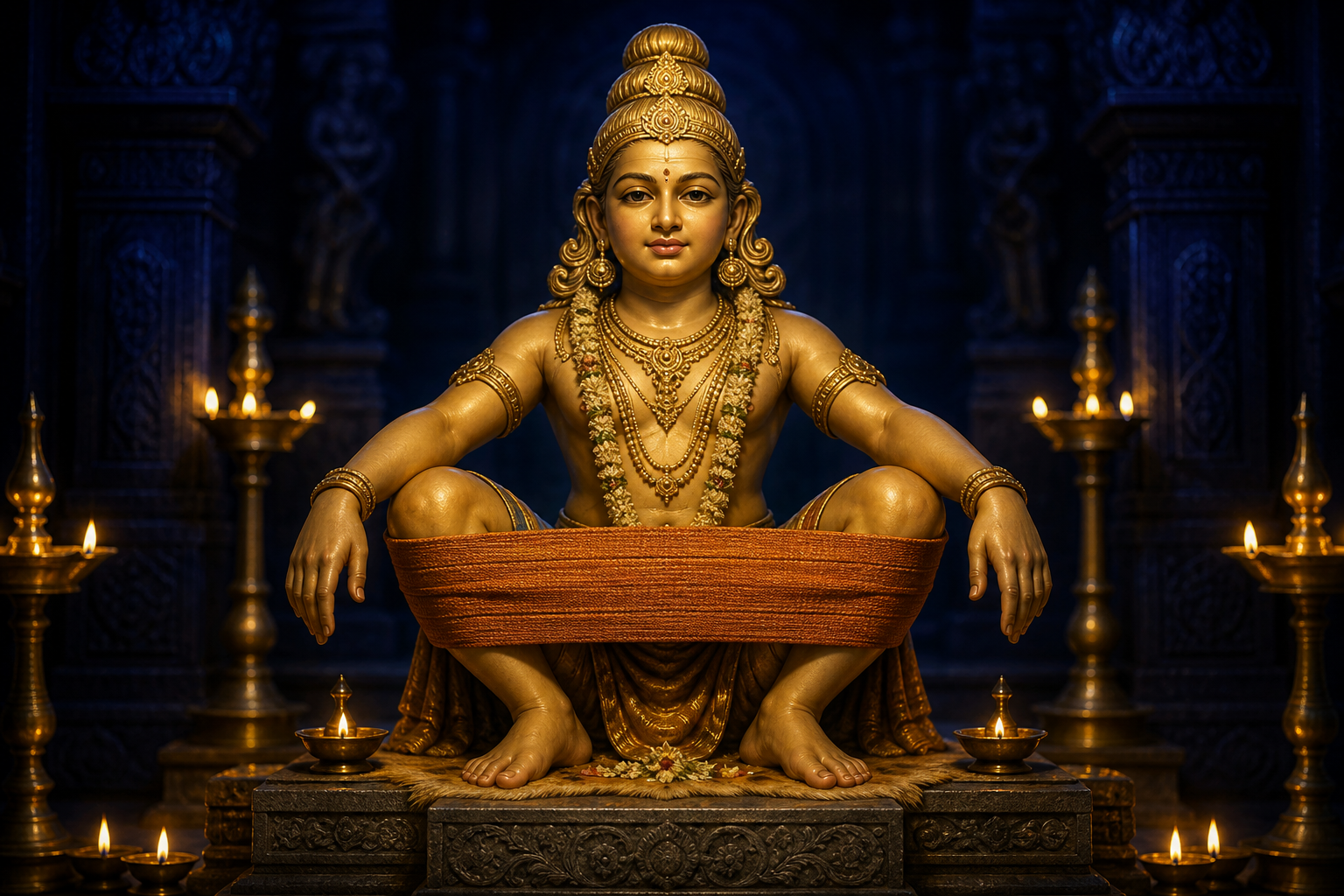
The band presents an apparent paradox. A restraint is being used, yet the result is ease. A vrata operates through the same logic. A clear vow limits some choices so that your energy is no longer scattered among every passing appetite, irritation, or convenience.
For pilgrims to Sabarimala, this meaning has an immediate connection with the 41-day vratham of restraint, simplicity, and service. The period is not incidental preparation before the supposedly important event at the temple. The preparation trains the pilgrim to approach darshan with a steadier body, a clearer intention, and conduct shaped by devotion.
The posture therefore corrects two common mistakes about discipline. The first is to treat a vow as punishment, as though spiritual seriousness were measured by misery. The second is to treat devotion as emotion alone, requiring no sustained change in habit. Ayyappa’s disciplined ease rejects both. Restraint has a purpose: it frees attention for worship, ethical clarity, and service.
If you are undertaking the traditional vratham, follow the discipline transmitted by the tradition guiding your pilgrimage. Do not replace it with a self-designed routine and call the two identical. If you are contemplating the posture outside a pilgrimage, however, you can still apply its logic honestly:
- State the restraint clearly. “I will be more disciplined” is too vague to guide a decision.
- Connect the restraint to its spiritual purpose. The point is not merely to deny an impulse, but to recover attention for remembrance, service, or measured conduct.
- Choose an observance you can recognize in the moment of decision. A vow becomes real where you would ordinarily act from habit.
- Pair inward restraint with an outward duty. If discipline makes you harsher toward other people, you have lost the compassion visible in Ayyappa’s form.
The band is useful precisely because it is firm and supportive at once. Let that be your test for discipline. It should hold you to your intention without turning spiritual practice into self-display or resentment.
Stillness, strength, effort, and grace belong together
Ayyappa’s seat is serene, but it is not passive. The body looks capable of strength while remaining completely composed. That balance matters because yoga is not escape from responsibility. Inner steadiness should make action clearer, not provide a spiritual excuse to avoid it.
As Dharma Shasta, Lord Ayyappa is revered as a bridge between Saiva and Vaishnava lineages. His posture expresses the same harmonizing movement without needing an argument: effort remains open to grace; inward concentration leads toward outward service; strength is governed by stillness; and discipline ripens into compassion.
This balance helps you distinguish equanimity from indifference. Equanimity means that a passing reaction does not immediately command your speech or action. Indifference means refusing to care. Ayyappa’s composed face, associated with karuna and inclusion, joins steadiness to concern for others. The mind is quiet enough to respond well, not too detached to respond at all.
The image also directs attention toward inner effort rather than social display or outer identity. That does not erase the distinct practices and obligations of the tradition. It means that genuine progress must appear in mastery of one’s own impulses, clarity of mind, and conduct toward others. Status cannot perform that work for you.
Related disciplines can be recognized across the broader Dharmic family without pretending that all traditions teach the same doctrine. Buddhist meditative forms emphasize mindfulness and compassion, Jain kayotsarga calls for unwavering self-restraint, and Sikh Naam Simran centers attention through remembrance. Their philosophies and methods remain distinct, but they share a practical insight: attention must be trained, restraint must shape conduct, and inward practice must not end in self-absorption.
Use that family resemblance carefully. It should deepen respect and sharpen practice, not flatten Hindu, Buddhist, Jain, and Sikh paths into interchangeable labels. The useful question is not whether every posture or term is equivalent. Ask what each tradition requires the practitioner to discipline, remember, and express through action.
Turn darshan into a practice you can carry home
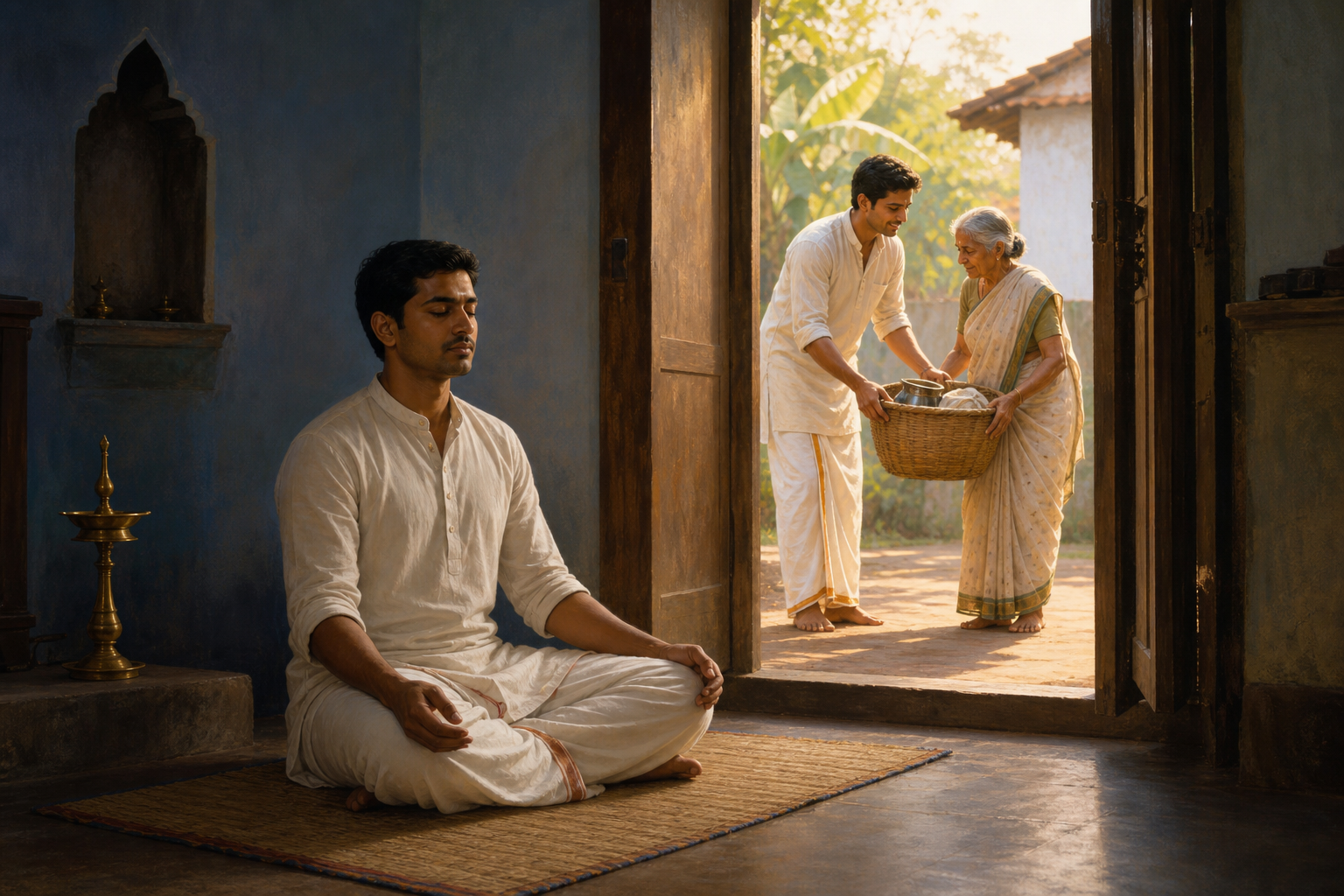
You do not need to reproduce the icon’s compact seat or fasten a band around your own body. A sacred image can instruct practice without serving as a literal exercise diagram. If the position is uncomfortable, use a stable seat that allows your spine and breath to remain unforced.
A simple contemplation can follow the order already visible in Ayyappa’s form:
- Establish the seat. Sit in a position you can maintain without forcing the knees or repeatedly adjusting the body. Physical steadiness is the foundation, not the goal.
- Release unnecessary effort. Let the torso remain supported and alert while the breath settles naturally. Do not confuse tension with concentration.
- Gather attention. When the mind runs after an unfinished task, memory, or irritation, return to the composed form of Ayyappa rather than arguing with every thought.
- Join remembrance to breath. Repeat Swamiye Saranam Ayyappa in a comfortable rhythm. The chant can settle naturally with the breath; there is no need to strain or force a dramatic breathing pattern.
- Name the conduct that follows. Before rising, identify the restraint or act of service through which your prayer will become visible.
The last step prevents meditation from becoming a sealed compartment in your day. If you leave the seat and immediately surrender to anger, careless speech, or self-importance, the stillness has not yet travelled far enough. Bring the posture to mind at the point where reaction usually outruns discernment.
You can evaluate the practice without chasing unusual sensations. Ask whether the body became less restless, the breath remained unforced, speech became more measured, and the next action reflected greater clarity or compassion. Those are modest tests, but they keep devotion connected to life.
Key takeaways
- Ayyappa’s Yogapattasana presents bodily stability, mental attention, and ethical discipline as one integrated path.
- The yogapatta is both a functional support and a metaphor for vrata: chosen restraint gathers energy that would otherwise be scattered.
- The 41-day Sabarimala vratham belongs to the meaning of pilgrimage, not merely to its logistical preparation.
- The posture balances effort with grace, stillness with strength, inward focus with service, and discipline with compassion.
- You can contemplate the image without mechanically copying the pose: sit stably, breathe without strain, remember Ayyappa, and carry one clear intention into conduct.
The next time you receive darshan, do not stop at asking why Ayyappa sits this way. Notice what in you is scattered, what needs a firm but purposeful boundary, and where greater steadiness should change your next action. Then carry the teaching out of the sanctum: ground the body, refine the breath, steady the mind, and let compassion decide what you do.
References
