

If a Ghar Wapsi ceremony is announced in your town, you may feel pulled between two legitimate concerns: welcoming people who wish to recover a Hindu identity, and preventing the occasion from deepening mistrust among neighbours. You do not have to abandon either concern. The sound response is to defend the return, when it is freely chosen, while demanding safeguards that make the freedom visible and credible.
That standard matters because public labels settle very little. At Sarangarh in Chhattisgarh, 140 people were reported to have rejoined Hindu traditions through a peaceful and voluntary ceremony. The report gives the event public significance, but the durable lesson lies in how any community should assess such an occasion: begin with the agency of each participant, speak accurately, and refuse to turn a spiritual decision into collective hostility.
Key takeaways
- Ghar Wapsi is consistent with religious freedom when each participant can choose, refuse, question, or withdraw without pressure.
- A return to Hindu tradition can be celebrated without insulting the faith a participant previously followed or treating neighbours as adversaries.
- Voluntariness should be demonstrated through privacy, clear information, independent assent, and freedom from threats or conditional benefits.
- Allegations of coercion require evidence and proper inquiry. A viral clip, partisan slogan, or organizer’s assurance cannot settle the facts by itself.
- Community harmony is protected most effectively when religious leaders defend the same freedom of conscience for everyone, including people whose choices they dislike.
The decisive question is whether each choice was free
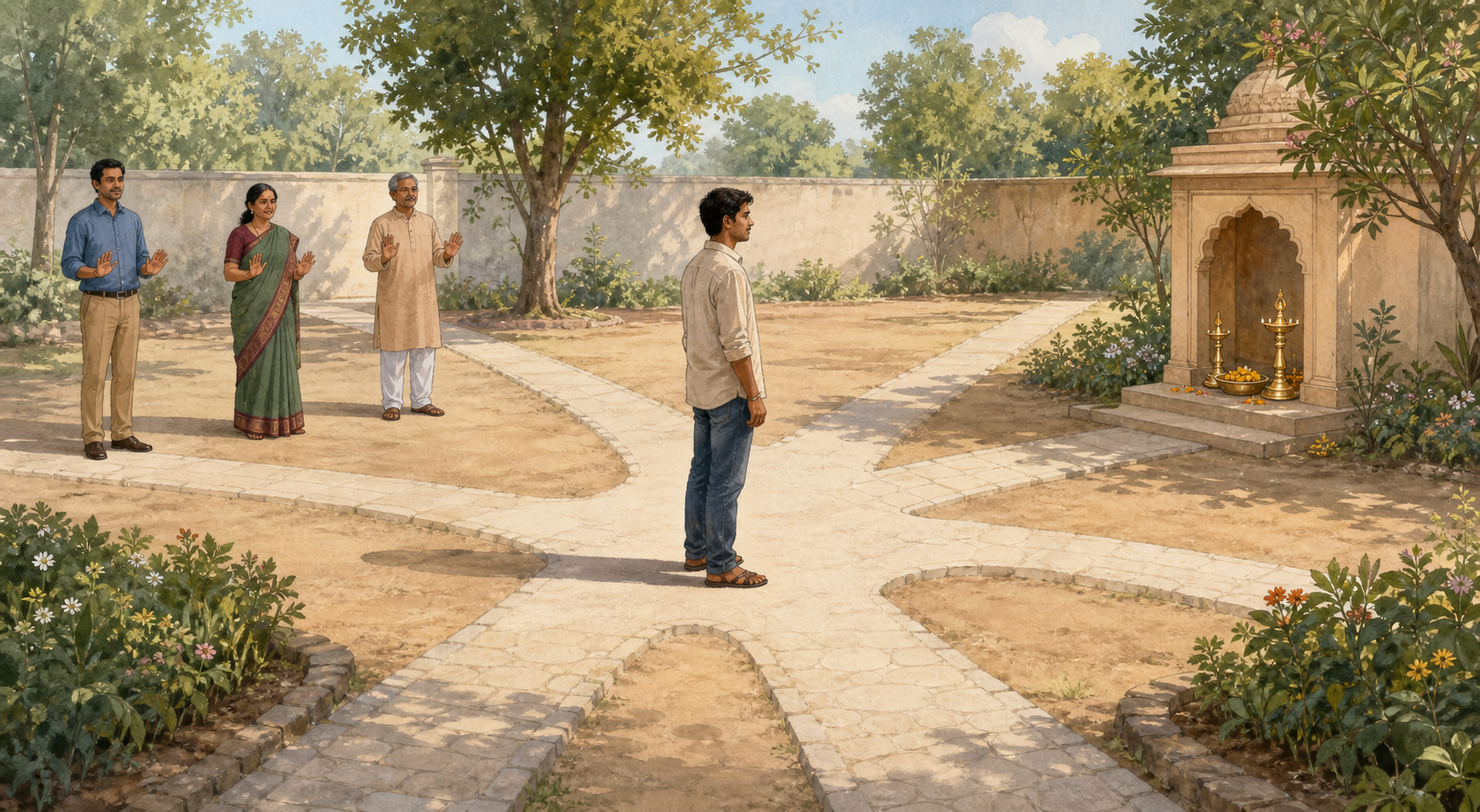
Freedom of conscience is not meaningful only when a person remains in the religion assigned at birth. It must also protect the freedom to return to an ancestral tradition, adopt another path, decline religious affiliation, or reconsider an earlier decision. The direction of the movement does not determine whether it is legitimate. The quality of the choice does.
This distinction keeps two common errors out of the discussion. The first is to assume that every Ghar Wapsi is coercive merely because it is organized. The second is to assume that every declared return is voluntary merely because a ceremony occurred. Organization does not prove compulsion, and ceremony does not prove consent. You have to look at the conditions surrounding the individual decision.
Before endorsing an event, organizing one, or condemning one, ask the following questions:
- Could each participant speak independently? A person should have an opportunity to express the decision away from organizers, influential relatives, employers, benefactors, and anyone else whose presence could shape the answer.
- Could the person refuse or leave? Consent is doubtful when refusal could bring a threat, loss of livelihood, denial of ordinary assistance, physical danger, or organized humiliation.
- Was the meaning of the ceremony explained? Participants should understand what they are publicly affirming, what rituals will occur, whether any record will be created, and how their names or images may be used.
- Were benefits separated from religious assent? Humanitarian help and ordinary community support should not depend on a particular declaration of faith. When assistance is conditional, the spiritual choice becomes difficult to distinguish from material pressure.
- Was privacy respected? Agreement to take part in a ritual is not automatic permission to circulate someone’s face, testimony, family history, or personal documents. Publicity requires its own consent.
- Could a concern be raised safely? Participants and neighbours need a calm way to report pressure, misunderstanding, or misconduct without being branded enemies of a community.
These questions are practical safeguards, not a substitute for a legal finding. If someone alleges threats, fraud, violence, or another legal breach, do not conduct a trial through forwarded messages. Preserve relevant information, avoid exposing the complainant, and seek advice from a qualified local lawyer or the appropriate authorities. Legal consequences can depend on facts and rules that a public ceremony does not reveal.
The same care is necessary when no allegation has been made. Organizers who sincerely believe an event is voluntary should welcome reasonable safeguards. A private opportunity to decline, a clear explanation of the ritual, and restrained use of photographs do not weaken Ghar Wapsi. They protect participants and make the event harder to misrepresent.
Keep spiritual return distinct from political spectacle

For a participant, Ghar Wapsi may mean recovering family memory, customary worship, a relationship with a local deity, participation in festivals, or a sense of belonging disrupted in an earlier generation. Those motives should not be collapsed into a campaign slogan. A person’s return is first that person’s religious and cultural decision.
A ceremony becomes socially combustible when its language changes from affirmation to conquest. Welcoming someone into Hindu practice does not require describing Muslims, Christians, or members of any other community as a defeated population. Nor does it require treating every neighbour from another faith as an agent of conversion. Such generalizations transfer suspicion from a disputed act to an entire group, including people who had nothing to do with it.
If you are speaking for an organizing committee, temple, social group, or local publication, use language that can survive scrutiny:
- Say that named or counted participants reported choosing to return when you have not independently examined every person’s circumstances.
- Describe the ritual and the participants’ stated reasons. Do not invent motives for them or claim to know the inner convictions of a whole group.
- Celebrate restored participation in Hindu traditions without mocking a former religious identity or inviting hostility toward its present followers.
- Do not convert an allegation into a fact merely because it supports your side. Identify what is known, what is claimed, and what still requires verification.
- Obtain specific permission before publishing identifiable photographs, personal histories, or statements about a participant’s earlier faith.
- Correct an inaccurate claim promptly. Quietly leaving a false number or accusation in circulation damages the credibility of every later statement.
This discipline is not timid. It is how cultural advocacy remains defensible. A confident Hindu society can welcome people who choose to return without needing to manufacture contempt for those who do not.
It also helps to separate three conversations that are often mixed together. Whether a particular person acted freely is a factual question. Whether Ghar Wapsi is spiritually meaningful is a religious and cultural question. Whether an organizer’s public rhetoric was responsible is a civic question. Evidence relevant to one does not automatically answer the others.
What to do when Ghar Wapsi reaches your community
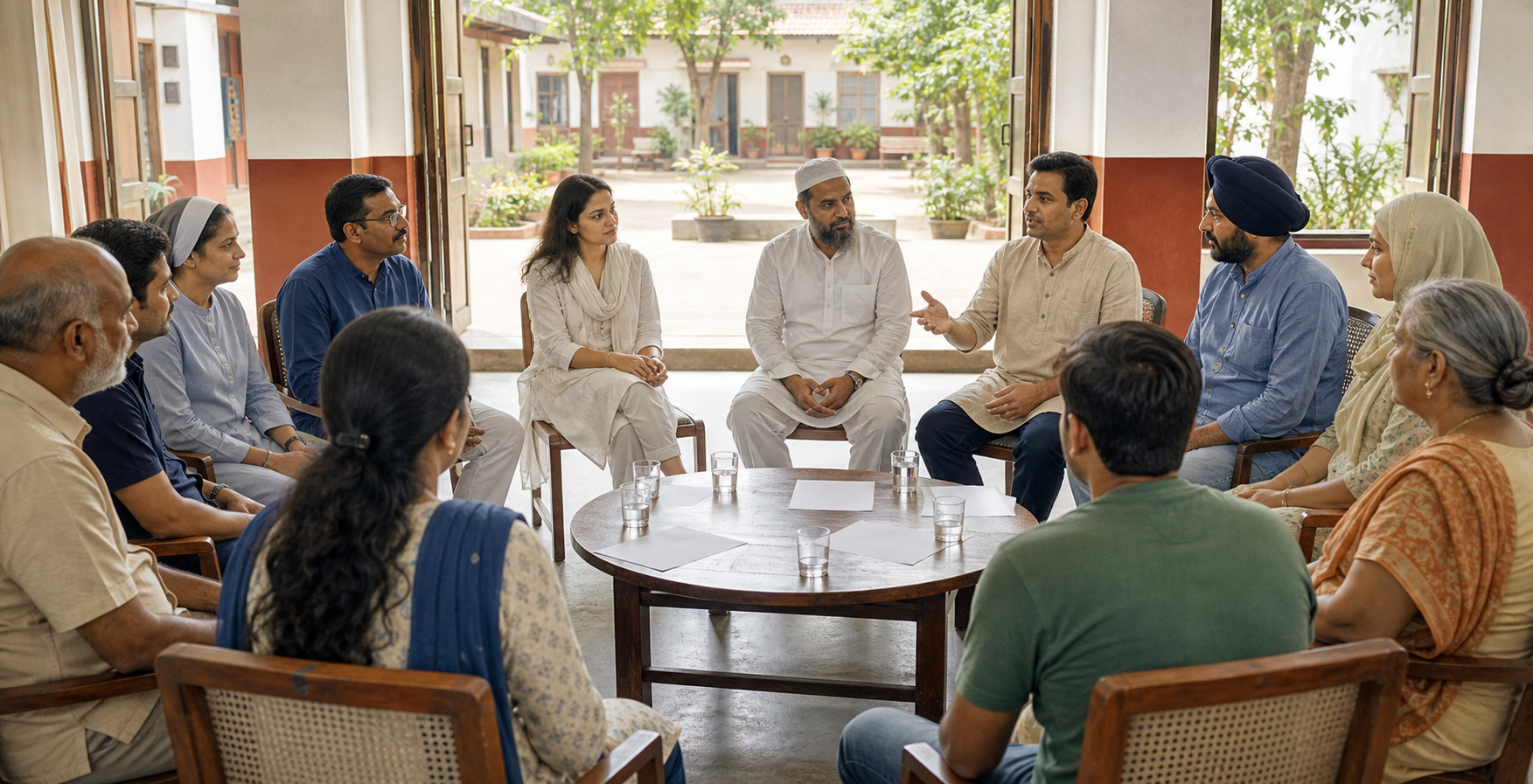
The first hours of a controversy often determine whether neighbours seek facts or retreat into camps. You can slow that escalation without suppressing the event or pretending that concerns do not exist.
- Verify before forwarding. Confirm the location, organizer, number of participants, stated purpose, and origin of any video or quotation. A short clip may show a ritual without showing how decisions were made beforehand.
- Listen to participants, not only representatives. An organizer can explain the process, but only participants can describe their own reasons and circumstances. Seek consent before asking personal questions, and do not pressure anyone to perform gratitude or grievance for an audience.
- Record uncertainty honestly. Use phrases such as reported voluntary or alleged pressure when that is the actual state of knowledge. Certainty should follow evidence, not precede it.
- Create a discreet channel for concerns. A trusted community elder, legal professional, or small cross-community group can receive concerns without turning every complaint into a public confrontation. The people handling reports should not be solely responsible for promoting the ceremony.
- Keep safety separate from debate. If a person fears retaliation or violence, address immediate safety first. Do not demand a public theological discussion as the price of receiving help.
- Hold dialogue at human scale. A small meeting among respected local figures is usually more useful than a rally designed to display numerical strength. Set a narrow purpose: clarify facts, prevent intimidation, and agree on responsible public language.
- Follow the ceremony with shared civic work. Neighbourhood service, assistance to vulnerable families, environmental work, and other common responsibilities allow people of different faiths to cooperate without asking anyone to dilute a religious conviction.
Your role determines the next practical move. If you are a participant, ask how your information will be used and whom you can contact if you change your mind about publicity. If you are an organizer, separate the consent process from the celebratory stage and designate someone outside the publicity team to receive concerns. If you are a neighbour, verify claims before repeating them. If you are a religious leader, state plainly that intimidation and retaliation are unacceptable regardless of who commits them. If you publish locally, distinguish participant testimony, organizer claims, allegations, and independently established facts.
Dialogue should not be mistaken for bargaining over a person’s conscience. No interfaith committee should decide which religion an adult must follow. Its proper work is narrower and more important: reduce fear, prevent collective blame, establish channels for complaints, and keep disagreement from becoming dehumanization.
A Dharmic standard must be strong enough to apply to everyone

Hinduism, Buddhism, Jainism, and Sikhism are distinct traditions, not interchangeable versions of one creed. Yet the Dharmic inheritance gives public life a useful vocabulary for this problem: many spiritual paths exist, moral agency matters, and ahimsa requires restraint not only in physical action but also in the way we speak about other people.
Plurality does not require you to believe that every doctrine is equally true. It requires you to distinguish disagreement from domination. You may argue for Hindu teachings, preserve Hindu institutions, investigate coercive proselytization, and help willing people reconnect with ancestral practices. At the same time, you should reject threats, forced declarations, and collective punishment. Cultural confidence and reciprocal freedom are not opposites.
Reciprocity is the hardest test because it asks us to protect conscience even when the resulting choice disappoints us. If freedom is invoked only when someone moves toward our community, it appears less like a principle than a tactical claim. A credible defence of Ghar Wapsi therefore includes a clear defence of every person’s right to say no to it.
Community harmony does not mean suppressing hard questions. Residents may ask whether a ceremony was voluntary. Hindus may raise concerns about past or present pressure to abandon inherited traditions. Participants may explain why returning matters to them. Members of other faiths may ask for protection from generalized accusations. Harmony begins when these claims can be heard without threats and judged without predetermined guilt.
A useful local standard can be stated in three questions: Can every participant say, without fear, that the choice was their own? Can every neighbour remain secure without being blamed for another person’s religious history? Can every organizer explain the safeguards without hiding behind slogans? When the answer to all three is yes, spiritual return and civic peace can reinforce one another.
If Ghar Wapsi comes to your community, begin there. Ask for credible consent safeguards, insist on accurate language, and invite respected neighbours into practical work after the ceremony. That approach honours Hindu continuity while ensuring that the freedom being celebrated is real.
References
