
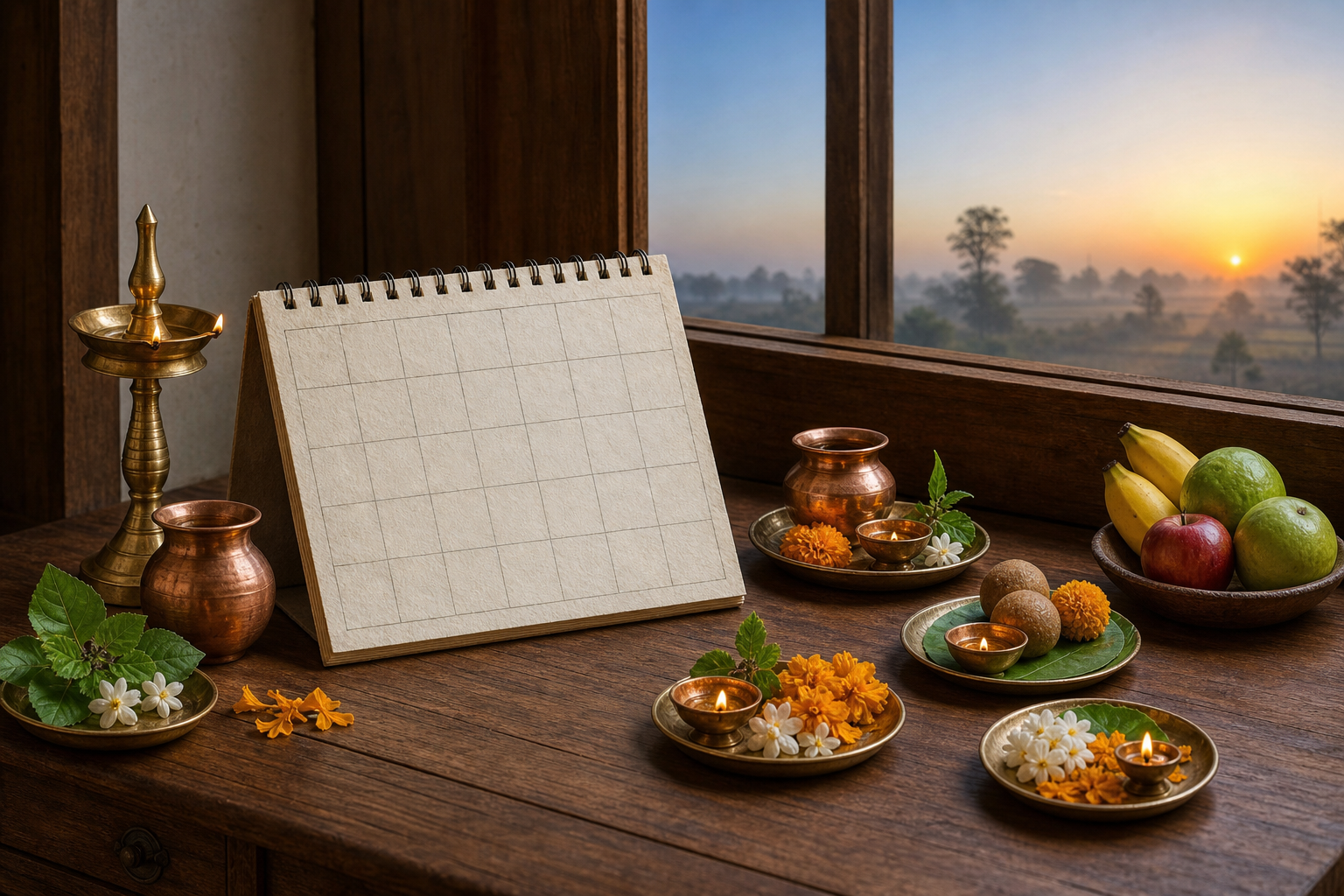
If your family calendar contains only a few bold festival dates, it is still incomplete. A late-2025 vrata plan also needs the local tithi, the correct fast-breaking window, the form of fasting you can actually sustain, and a clear purpose for each observance.
Four observances between mid-November and mid-December illustrate why this matters. Utpanna Ekadashi, Itu Puja, Gita Jayanti on Mokshada Ekadashi, and Triprayar Ekadashi belong to one sacred season, but they do not follow one interchangeable ritual template. Use the calendar below as your first layer, then complete it with your regional panchang, sampradaya, and temple schedule.
Start with the fixed dates, then localize the timings

| Observance | Late-2025 date or period | What determines the final plan |
|---|---|---|
| Utpanna Ekadashi | 15 November 2025 for both Smarta and Vaishnava observance | Local Ekadashi tithi and Dwadashi parana window |
| Itu Puja | Successive Sundays during Bengali Agrahayan, approximately mid-November to mid-December | Local Bengali Panchang and household or community custom |
| Gita Jayanti and Mokshada Ekadashi | 1 December 2025 | Local Ekadashi observance and Dwadashi parana timing |
| Triprayar Ekadashi | 15 December 2025 | Thriprayar Sri Rama Temple announcements and local tithi timings |
Do not treat a civil date as a complete muhurta. Lunar tithis do not begin and end at midnight, and the applicable observance can depend on location, sunrise, and lineage rules. This is why two relatives in different cities may need different parana times without either family being mistaken.
For every Ekadashi entry, write four details on the family calendar: your location, the vrata date followed by your sampradaya, the Ekadashi tithi interval, and the permitted Dwadashi parana window. Obtain them from one trusted local panchang or temple rather than combining a date from one calendar with a fast-breaking time from another. For Itu Puja, record the locally confirmed Sundays and morning-puja practice instead; Ekadashi parana rules do not govern this Bengali Sunday vrata.
Give each observance its own sankalpa
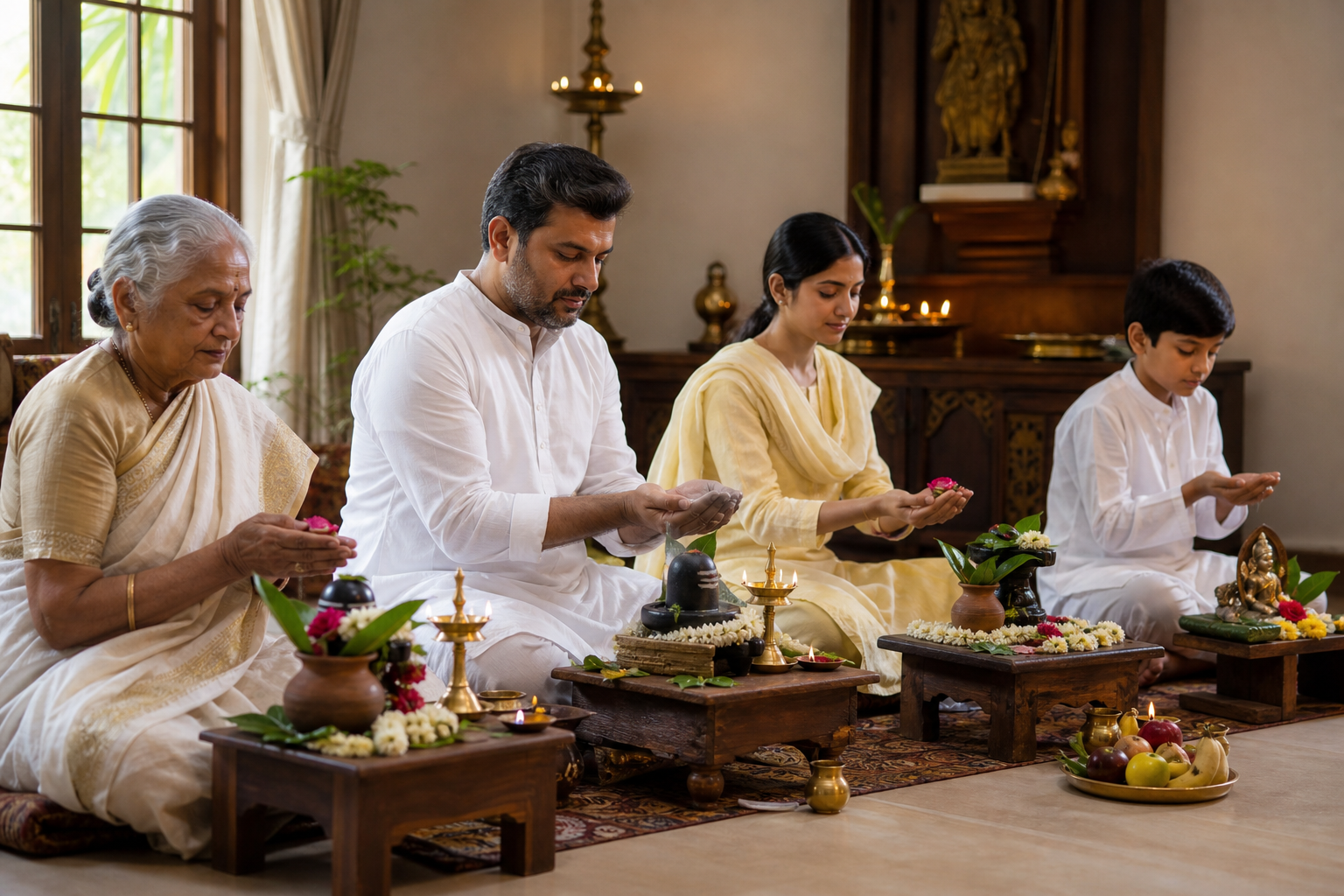
A crowded sacred calendar can become a checklist unless you decide what each vrata is training in you. The sankalpa need not be elaborate. One clear sentence, followed by a manageable discipline, is better than an ambitious promise abandoned halfway through the day.
Utpanna Ekadashi: vigilance before temptation
Utpanna Ekadashi is observed on Margashirsha Krishna Paksha Ekadashi. Its vrata katha recounts the defeat of Murasura and the manifestation of Ekadashi Devi as the force of divine resolve. The practical lesson is not merely that evil is conquered somewhere outside us. The vrata asks you to notice where sleepiness, distraction, appetite, or habit weakens a good intention.
Choose one fitting sankalpa: guard your speech, suspend an unhelpful indulgence, complete a neglected duty, or keep a fixed period for Vishnu-nama japa. At worship, light a lamp, offer Tulsi according to your tradition, recite Vishnu Sahasranama if that is part of your practice, and read or hear the vrata katha. If your household keeps jagran, let it remain devotional and quiet rather than turning wakefulness itself into a contest.
Itu Puja: continuity matters more than display
Itu Puja is a Bengali household vrata traditionally associated with family health, prosperity, harmonious relationships, and hopes for a worthy marriage. Its repeated Sunday rhythm is central. Missing that continuity while staging one elaborate ceremony misunderstands the discipline.
Once the Sundays are confirmed locally, keep the setup repeatable: bathe in the morning, clean the worship place near the home shrine or Tulsi plant, light a diya, make the sankalpa, and offer available sattvic items such as fruit, seasonal grain, flowers, or homemade pitha. Decide before the first Sunday who will obtain the offerings, prepare the space, and remember the concluding observance. That small division of responsibility prevents the vrata from becoming one person’s invisible household burden.
Gita Jayanti: convert recitation into one decision
Gita Jayanti falls with Mokshada Ekadashi on 1 December 2025. It commemorates Sri Krishna’s teaching to Arjuna at Kurukshetra, preserved in the eighteen chapters of the Bhagavad Gita. The day joins scriptural reflection with a vrata oriented toward moksha, so reading should lead to discernment rather than stop at ceremonial completion.
Select the scale before the day begins. A prepared group may undertake all eighteen chapters. A household with less time can study one chapter carefully, while a beginner can choose a small set of verses around karma, jnana, or bhakti. After reading, name one pending duty and ask three questions: What is actually mine to do? Which result am I trying to control? What would disciplined, compassionate action look like here? Write the answer and act on it after the vrata.
Triprayar Ekadashi: plan for a living temple tradition
Triprayar Ekadashi belongs to the Vrischikam observance at Thriprayar Sri Rama Temple near Thrissur. The wider celebration extends across fourteen days, with Ekadashi on 15 December 2025 as its spiritual high point. Rama-nama, stotra recitation, Vedic chanting, deepa-aradhana, bhajans, and special worship shape the devotional setting. The Sastha procession adds a distinctive expression of protection and dharmic guardianship to the Rama-centered temple tradition.
If you intend to attend, do not infer a procession hour from the festival date. Confirm the current temple program, dress and entry expectations, and the locally applicable tithi before travel. Arrive early, carry only permitted offerings, and choose modest, eco-conscious materials. A pilgrim who respects the temple’s working rhythm participates more fully than one who arrives with a rigid private itinerary.
Plan the fast around worship, not severity
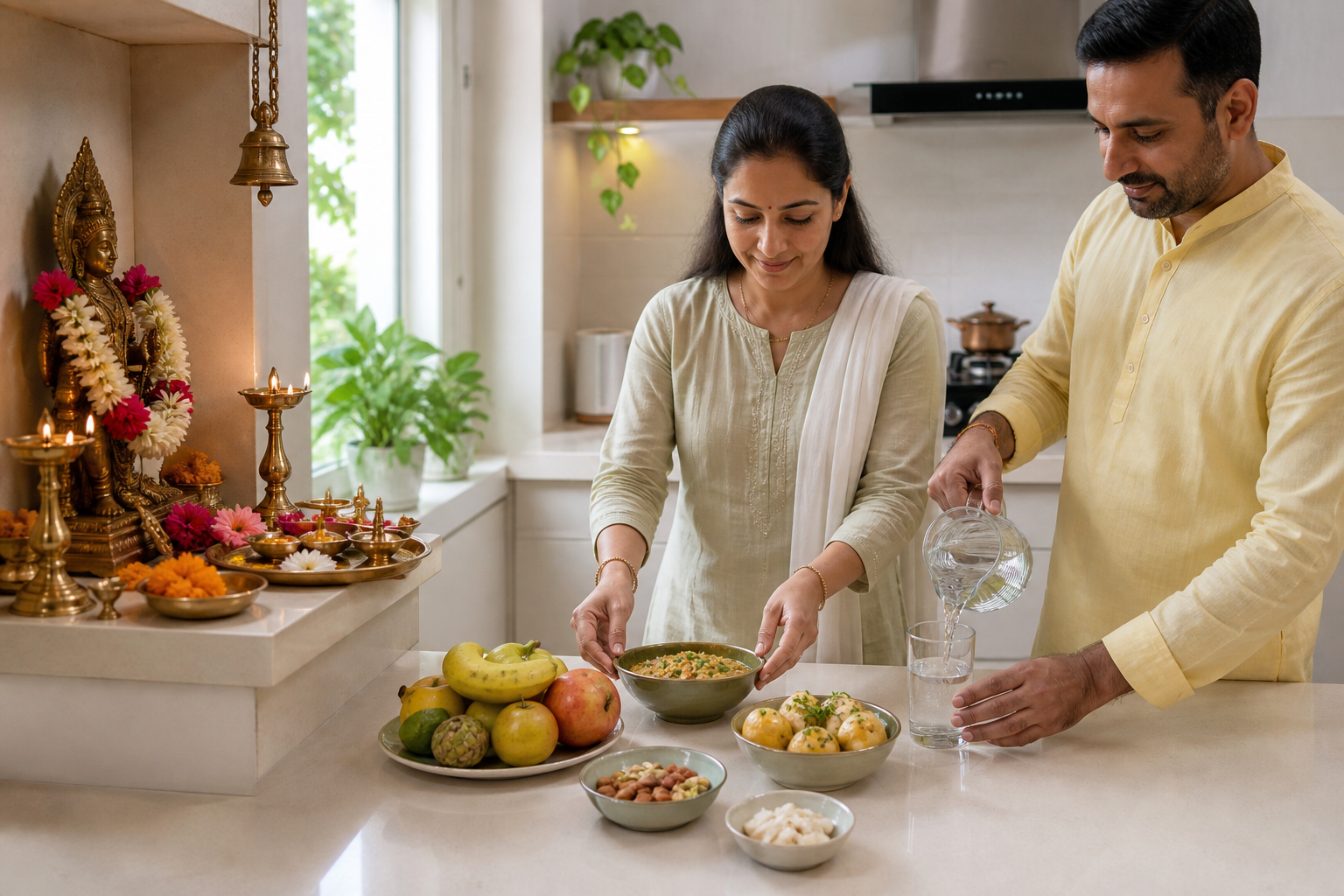
Utpanna and Mokshada Ekadashi may be observed through nirjala fasting, fruit-based phalahar, or a simple sattvic anukalpa, depending on health and tradition. These are not medals of spiritual rank. The right form is the one your sampradaya permits and you can keep honestly while remaining capable of prayer, self-restraint, and necessary duties.
Do not turn a religious vow into a medical risk. If water or food restriction conflicts with your health needs, medication, or professional medical advice, choose an appropriate dietary form and retain the devotional disciplines. A reckless fast that prevents safe functioning does not become wiser because it is severe.
- On the preceding evening, confirm the local date and parana window. Choose the fasting form, obtain the permitted food, and state a short sankalpa.
- After morning purification, establish the devotional center of the day: puja, nama-japa, scripture, meditation, or a combination your tradition recognizes.
- Reduce avoidable stimulation and argument. Fasting from food while feeding anger, gossip, or distraction leaves the deeper habit untouched.
- Use the evening for a lamp, katha, bhajan, kirtan, family discussion, or quiet recitation. Prepare the next day’s parana food before fatigue makes the household careless.
- On Dwadashi, break the Ekadashi fast after sunrise within the locally prescribed window. Do not postpone parana merely to make the fast appear longer.
That sequence applies to Ekadashi vrata. Itu Puja has its own repeated Sunday structure, while participation at Thriprayar must also follow the temple’s program. Similar language about restraint does not erase these ritual distinctions.
Build one household calendar without flattening traditions

The most reliable household tool is a one-page observance sheet. Give every date five lines: local timing, sankalpa, fasting or food rule, principal recitation, and one act of seva. Add a final line naming who needs to do what. This turns good intentions into visible commitments and makes it easier for children or relatives unfamiliar with the practice to participate without guessing.
Give younger family members concrete roles: clean the lamp, place flowers, read a short passage, prepare the book, or help serve the parana meal. Then explain the moral center in one sentence. Utpanna Ekadashi trains vigilance. Itu Puja trains sustained care for the household. Gita Jayanti joins discernment to action. Triprayar Ekadashi places personal devotion within a living temple community.
The wider dharmic family offers genuine ethical resonances without making every path identical. Hindu vrata, Buddhist fasting and meditation disciplines, Jain upvas rooted in tapas and ahimsa, and Sikh commitments to simran, seva, and truthful living all value forms of self-mastery and compassionate conduct. If you organize an inter-tradition gathering, describe these as shared ethical currents. Still name Itu Puja, Ekadashi, Gita Jayanti, and the Thriprayar festival as the particular Hindu observances they are.
Seva should also fit the observance rather than sit beside it as decoration. Gita study can lead to educational support; a household vrata can include care for an overlooked relative; temple pilgrimage can include disciplined conduct and responsible use of offerings. The useful test is simple: does the vow change how you treat another being after the lamp is extinguished?
Key takeaways for your late-2025 calendar
- Mark 15 November for Utpanna Ekadashi, 1 December for Gita Jayanti with Mokshada Ekadashi, and 15 December for Triprayar Ekadashi.
- Confirm Itu Puja’s successive Agrahayan Sundays through a Bengali Panchang, temple, or community calendar rather than guessing from the approximate season.
- For every Ekadashi, record the location-specific tithi and Dwadashi parana window as well as the civil date.
- Choose nirjala, phalahar, or anukalpa only as health and sampradaya permit; make worship and ethical restraint the center of the vrata.
- Keep the four observances distinct: a Vishnu vrata, a Bengali household sequence, a scripture-centered Mokshada Ekadashi, and a Kerala temple festival are not interchangeable.
- Give each observance one realistic sankalpa and one concrete act of seva so that sacred time changes conduct beyond the calendar.
Prepare the one-page sheet before the first observance: date, local timing, sankalpa, food discipline, recitation, seva, and parana where applicable. Once those seven decisions are visible, your family can enter the sacred season with attention instead of last-minute confusion.
References
- DharmaRenaissance Blog — Utpanna Ekadashi 2025: Comprehensive Guide to Date, Smarta/Vaishnava Vrat Vidhi and Katha
- DharmaRenaissance Blog — Itu Puja 2025 in Bengal: Timeless Dates, Rituals, and Heartfelt Prayers for Family Wellbeing
- DharmaRenaissance Blog — Triprayar Ekadashi 2025: Auspicious Date, Sacred Rituals, and Procession at Thriprayar Sri Rama
- DharmaRenaissance Blog — Gita Jayanti 2025: Date, Significance, and Inspired Observances on Mokshada Ekadashi
