
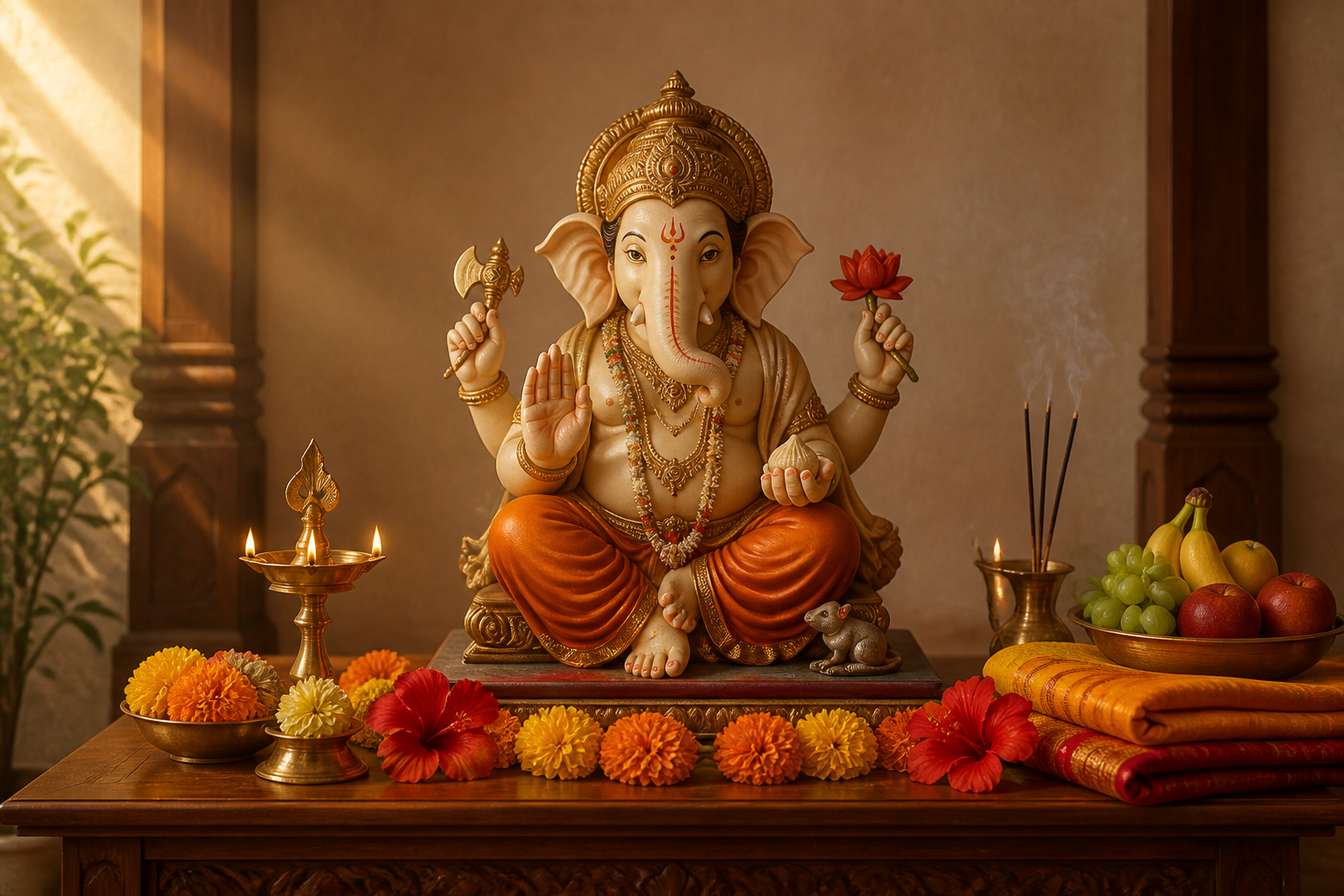
You may be deciding where to place a Ganesha image, whether a Ganesha-themed product is appropriate, or how to challenge a use that feels insulting. The same practical question settles all three: will the image be treated with reverence, or has it been placed on a surface meant to be walked on, dirtied, cleaned with, or casually discarded?
For devotees, Ganesha is not merely a decorative symbol. He is invoked for wisdom, learning, and auspicious beginnings. Respect therefore depends on more than whether an image looks attractive. You need to consider the function of the object, its placement, its normal contact with the body, and what will happen when it wears out.
Key takeaways
- Use Ganesha imagery in places where it can be kept clean, cared for, and approached with dignity.
- Do not place a sacred image on anything whose normal purpose involves feet, dirt, cleaning, or routine degradation.
- Respect does not require you to perform puja to every printed or digital image, but it does require you to avoid contexts that predictably demean the sacred form.
- Let devotion shape conduct: Ganesha worship should help you confront inner obstacles such as envy, pride, doubt, and indecision.
- When a business misuses sacred imagery, identify the precise problem, request a specific remedy, and keep the response firm without becoming abusive.
Let devotion determine where the image belongs
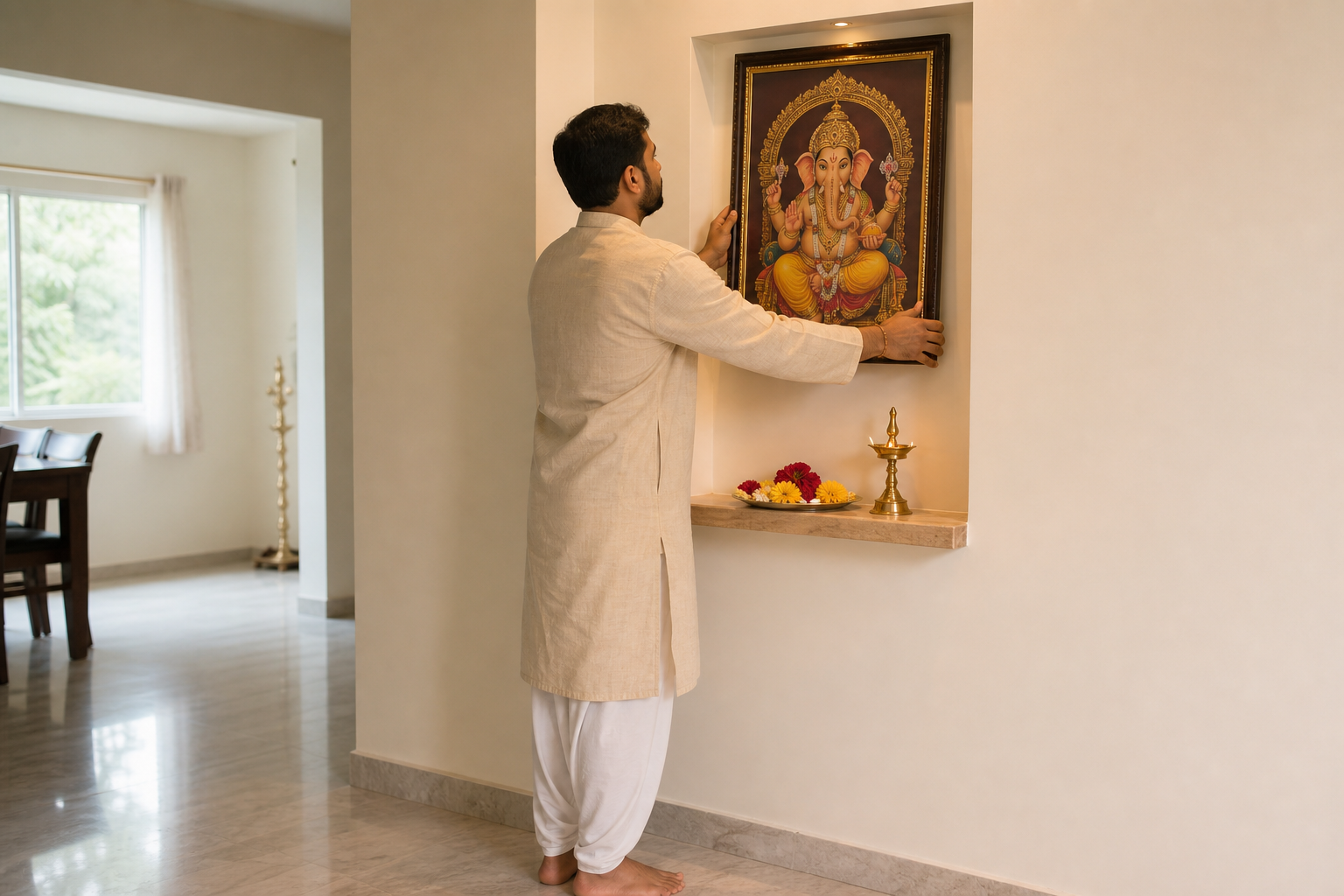
Two mistakes cause much of the confusion around sacred imagery. One is reducing a deity to a fashionable motif that can be printed anywhere. The other is assuming that every reproduction must be treated exactly like a consecrated temple murti. Context provides the sounder standard.
A murti on an altar, a framed image in a place of study, and a respectful festival display can support worship, remembrance, or learning. A doormat establishes the opposite relationship because stepping and wiping are built into its purpose. The objection is not that Ganesha has appeared outside a temple. It is that the sacred form has been joined to an inherently degrading use.
This distinction also helps you understand devotion as more than image management. Vakratunda, the curved-trunk form of Ganesha, represents the capacity to meet difficulty without being ruled by it. Within the Mudgala Purana tradition, Vakratunda is associated with overcoming matsara, or envy. The form consequently directs your attention toward the obstacles created by pride, comparison, fear, and doubt, not only the obstacles you blame on circumstances.
A home standard you can maintain
- Choose a dedicated place. Keep the image or murti on a clean, stable surface used for worship, contemplation, or sacred study. Avoid walkways and places where ordinary objects will be piled over it.
- Separate it from underfoot and cleaning uses. The image should not become part of a floor covering, footwear, wiping cloth, or another object designed to collect dirt.
- Care for the whole setting. Remove stale offerings before they spoil, keep the surface orderly, and repair a damaged frame instead of allowing neglect to become the normal condition of the shrine.
- Explain the boundary. If children, guests, or housemates use the space, tell them plainly that the image is sacred and should not be moved onto the floor or covered with household clutter.
- Plan for the image’s full life. Before buying another sacred object, consider whether you can care for it. If an image becomes damaged beyond use, set it apart from ordinary rubbish and ask your temple, family elders, or sampradaya how it should be respectfully retired. Customs differ, so local guidance is better than an improvised universal rule.
A digital image is not handled in the same physical way as a temple murti, but its context still communicates meaning. Before using Ganesha as a profile picture, sticker, advertisement, or reaction image, look at what surrounds it. Do not pair the sacred form with ridicule, demeaning captions, or products whose function would be unacceptable in the physical world.
Use a five-question placement test
When a product or display leaves you uncertain, ask:
- What is this object primarily made to do?
- Will the image normally come into contact with feet, dirt, cleaning, or waste?
- Can the object be kept in a clean and dignified location?
- Will the image be casually thrown away when the object is consumed or worn out?
- Would a devotee encounter the design as honouring Ganesha, or as making the deity part of a degrading function?
If ordinary use requires people to step on the image or clean dirt with it, you already have your answer: do not buy, make, sell, or continue using it. If you own such an item unknowingly, remove it from service and place it somewhere clean while you decide how to return it, contact the seller, or retire it respectfully.
Make the sacred image a center of sadhana
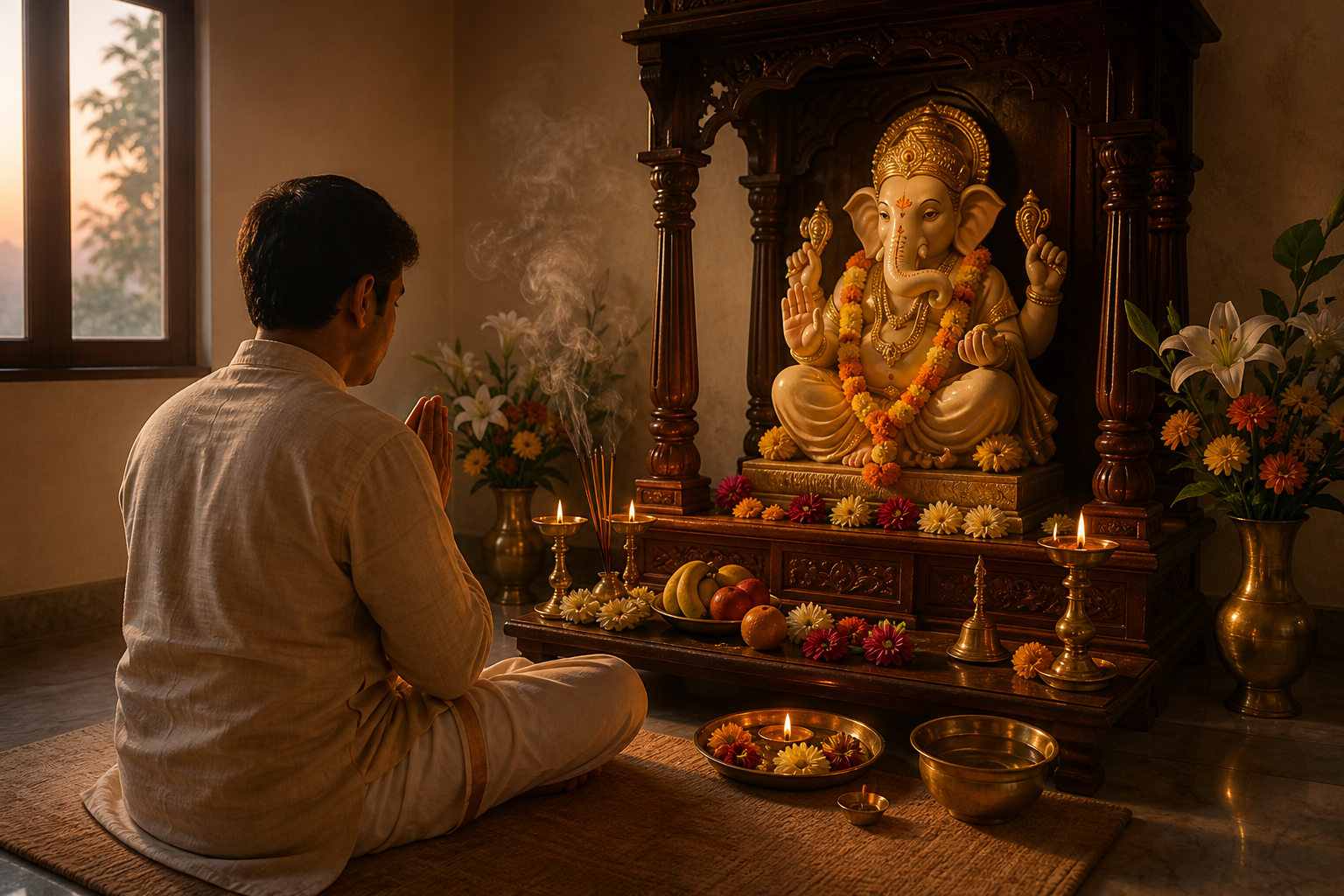
A list of prohibited placements can protect a boundary, but only practice reveals why the boundary matters. Sankashti Chaturthi offers a disciplined way to connect Ganesha’s image with remembrance, restraint, recitation, generosity, and honest self-examination.
A simple Sankashti observance
- Confirm the local timing. Consult a reliable Panchang or temple calendar for the relevant Chaturthi and local Chandrodaya, or moonrise. Moonrise varies by location, so a time copied from another region may not apply to you.
- Prepare a clean altar. Use a Ganesha murti or image and keep the arrangement simple enough that you can attend to it calmly.
- Undertake the vrata according to your tradition and capacity. A common observance maintains the fast until moonrise. If a full fast is unsafe for you, do not treat bodily risk as a test of devotion. Ask a trusted temple or family authority how the vrata may be adapted, and obtain appropriate health guidance when needed.
- Make the customary offerings. Durva grass, red flowers, and modak are among the offerings associated with the observance. Use clean, suitable offerings rather than pursuing an elaborate display you cannot maintain.
- Recite with attention. Ganesha Atharvashirsha, Sankata Nashana Ganesha Stotram, the Vakratunda Sankashti Vrat Katha, quiet japa, or a short period of meditation can form the heart of the practice.
- Add seva. A modest act of charity helps prevent the vrata from becoming self-absorbed. Choose something concrete that benefits another person or living being.
- Complete the observance at moonrise. The customary sequence includes offering arghya to Chandra, remembering Ganesha, sharing prasad, and breaking the fast with sattvic food.
These elements describe a widely followed pattern of altar worship, fasting, recitation, moonrise observance, prasad, and sattvic food. Regional and sampradaya customs are not identical. Follow the tradition you have received, and do not use minor ritual differences as a reason to question another devotee’s sincerity.
Turn one inner obstacle into one corrective action
Before the puja, name one obstacle without disguising it as somebody else’s fault. Then connect it to a visible behaviour:
- If the obstacle is envy, notice the comparison you keep repeating and offer sincere appreciation without redirecting attention to yourself.
- If it is pride, identify one correction you have resisted and receive it without immediately defending yourself.
- If it is doubt, choose the smallest delayed duty you can complete responsibly and finish it.
- If it is fear, distinguish the precaution you genuinely need from the excuse that keeps you motionless.
This turns the familiar description of Ganesha as remover of obstacles into a demand for participation. You are not merely asking for the road to be cleared; you are examining whether your own habits are blocking it.
Sankashti is traditionally associated with relief from difficulty, protection, well-placed desires, and prosperity understood as fuller well-being. Treat these as devotional aspirations, not as a guaranteed transaction. The immediate measure of the vrata is whether it leaves you more disciplined, truthful, compassionate, and capable of wise action.
Respond to commercial misuse with precision
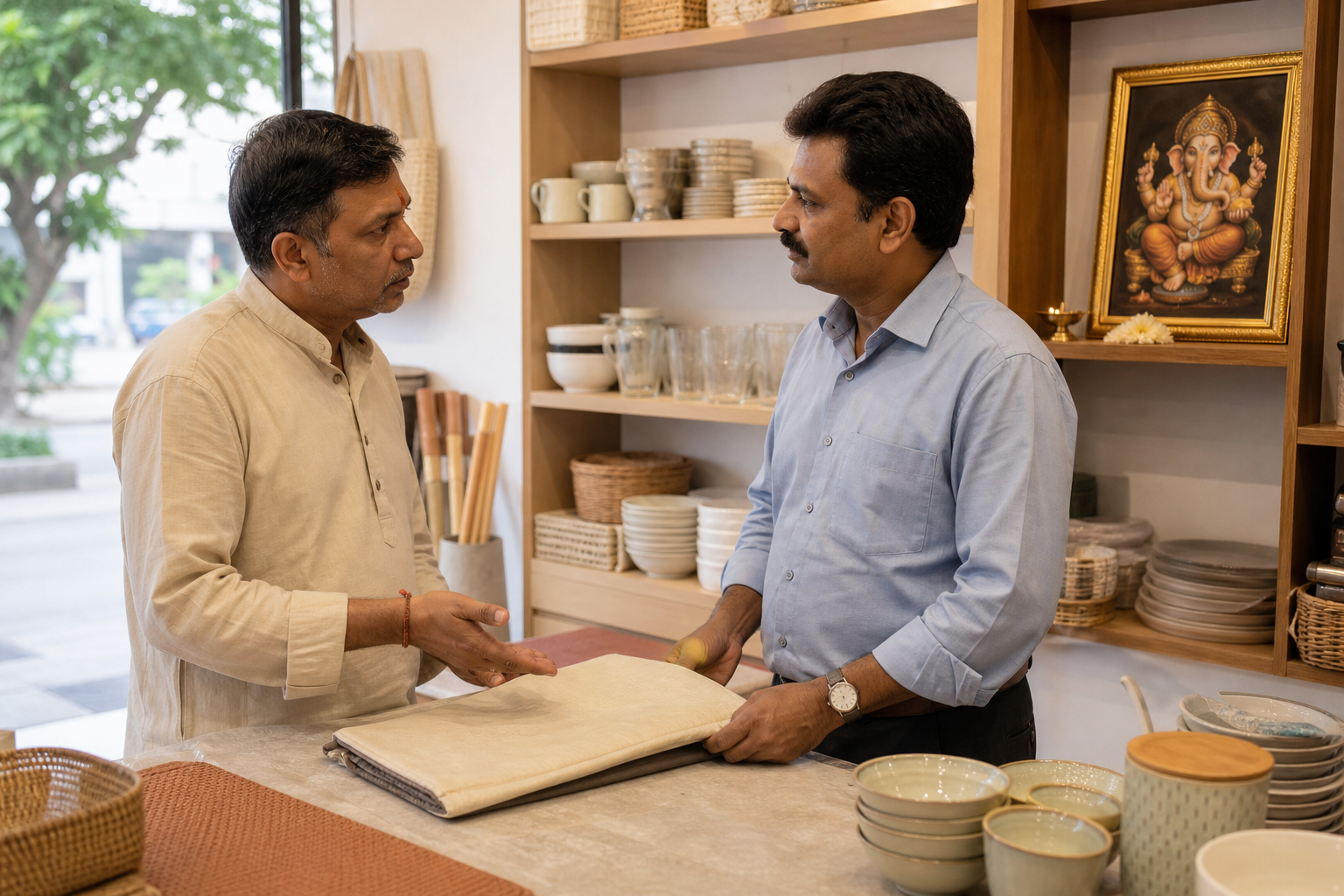
A Ganesha doormat illustrates why object function cannot be dismissed as a minor design detail. A doormat is made to be stepped on and to collect dirt. Placing a sacred image there creates the offence through normal use, regardless of whether the designer claims a positive intention. In such a case, withdrawal, an apology, and corrective safeguards are proportionate requests.
What to do when you find an offensive product
- Verify the listing. Record the exact product name, seller, web address, image, and date seen. Make sure you are responding to a real and current listing rather than an altered screenshot.
- Name the precise problem. Explain that Lord Ganesha is a revered Hindu deity and that the product’s normal use requires the sacred image to be stepped on or dirtied.
- Request a specific remedy. Ask the retailer to remove the listing, halt further sale, apologize to affected devotees, and review how the design passed approval.
- Use the company’s reporting channel first. A direct, documented complaint gives the business a clear opportunity to correct the problem. Public advocacy remains appropriate if the company ignores the issue or leaves the product on sale.
- Keep the language disciplined. Criticize the product and the decision. Do not threaten customer-service workers, insult unrelated communities, or make claims you cannot verify.
- Assess the correction. If the product is removed, acknowledge that fact while still asking what safeguard will prevent a repeat. If it remains available, share the verified information with community organisations and pursue a proportionate campaign.
Sample message: This product places an image of Lord Ganesha, a revered Hindu deity, on an object designed to be stepped upon and used to collect dirt. Please remove the product from sale, stop further distribution, issue a respectful apology, and explain what review process will prevent similar misuse.
A review process for retailers and designers
Businesses should not wait for a controversy to learn that religious literacy belongs in product review. A workable process includes:
- A prohibited-use rule for deities, scriptures, and sacred symbols on products intended for feet, dirt, or cleaning.
- A cultural review at the concept, mock-up, and product-listing stages, before manufacturing or global distribution makes correction harder.
- Consultation with practitioners or credible community representatives when a symbol’s status or acceptable context is unclear.
- Training for design, merchandising, marketing, and marketplace teams, since the mistake can enter at more than one stage.
- A rapid escalation path that can pause a listing while concerns are reviewed.
- A correction procedure covering removal, apology, customer communication, and a transparent explanation of what will change.
These safeguards are part of responsible cultural review and religious-literacy training. They also give employees a clear standard. Without one, a company may repeatedly depend on offended communities to identify mistakes after launch.
Keep reverence firm without turning it into hostility
Intent and impact are different questions. A person may misuse an image through ignorance, but the absence of malicious intent does not make the placement respectful. At the same time, ignorance followed by a prompt correction calls for a different response from deliberate mockery or repeated refusal.
- Ignorance followed by correction: explain the boundary, ask for the change, and recognise a sincere remedy when it occurs.
- Defensiveness after a clear explanation: document the exchange, restate the requested remedy, and involve community representatives if necessary.
- Deliberate or repeated degradation: preserve evidence, use retailer and platform procedures, and organise lawful public advocacy without harassment.
This discipline matters especially for diaspora families. Sacred images often help sustain worship, memory, and inherited identity far from ancestral places. An underfoot use can therefore feel not only tasteless but like an injury to faith and cultural dignity. Explaining that mechanism is more persuasive than merely declaring that people are offended.
Hindu, Buddhist, Jain, and Sikh practices are not interchangeable, and each community determines the handling of its own sacred forms. They nevertheless share a useful public principle: revered figures, scriptures, and symbols should not be placed in predictably degrading contexts. Dharmic solidarity is strongest when it respects those distinctions while defending the dignity of each tradition.
Begin with one concrete audit today. Look at the Ganesha images in one room, on one device, or in one product catalogue. Correct any placement tied to feet, dirt, cleaning, ridicule, or careless disposal. Then give at least one image its proper purpose through a clean space, a short prayer, and one action against the inner obstacle you are asking Ganesha to remove.
References
- DharmaRenaissance Blog – Respect Sacred Symbols: Hindus Urge Shein to Apologize, Withdraw Lord Ganesha Doormat
- DharmaRenaissance Blog – Vakratunda Sankashti Vrat Katha: Harness Ganesha’s Power in Kartik for Relief and Prosperity
