
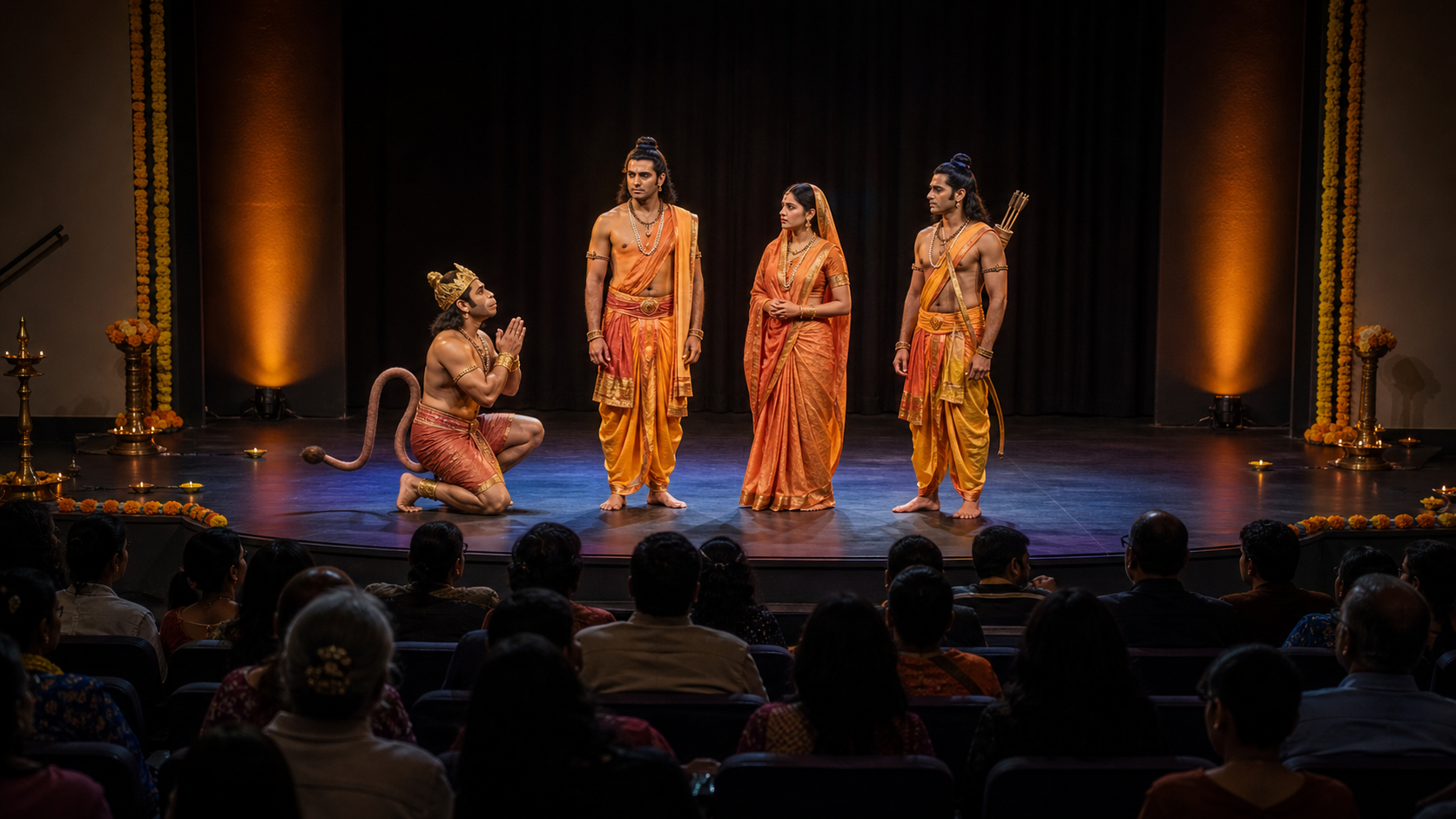
If you came to Basingstoke’s Diwali gathering hoping your child would meet the Ramayan as more than a set of names, the evening offered a useful answer: put dharma on a stage, inside a choice. The point was not simply to recognise Rama, Sita, Lakshmana and Hanuman. It was to notice what each character does when duty, loyalty, courage and service become demanding.
Local devotees and participants from Bhaktivedanta Manor gathered in the arts faculty at Queen Mary’s College for a performance by the Bhaktivedanta Players, whose 40th-anniversary celebrations gave the occasion an added sense of continuity. Yet the most useful lesson for a family or community organiser lies in the form of the evening: a familiar festival became an opportunity to think, speak and learn across generations.
The performance made dharma visible through choices
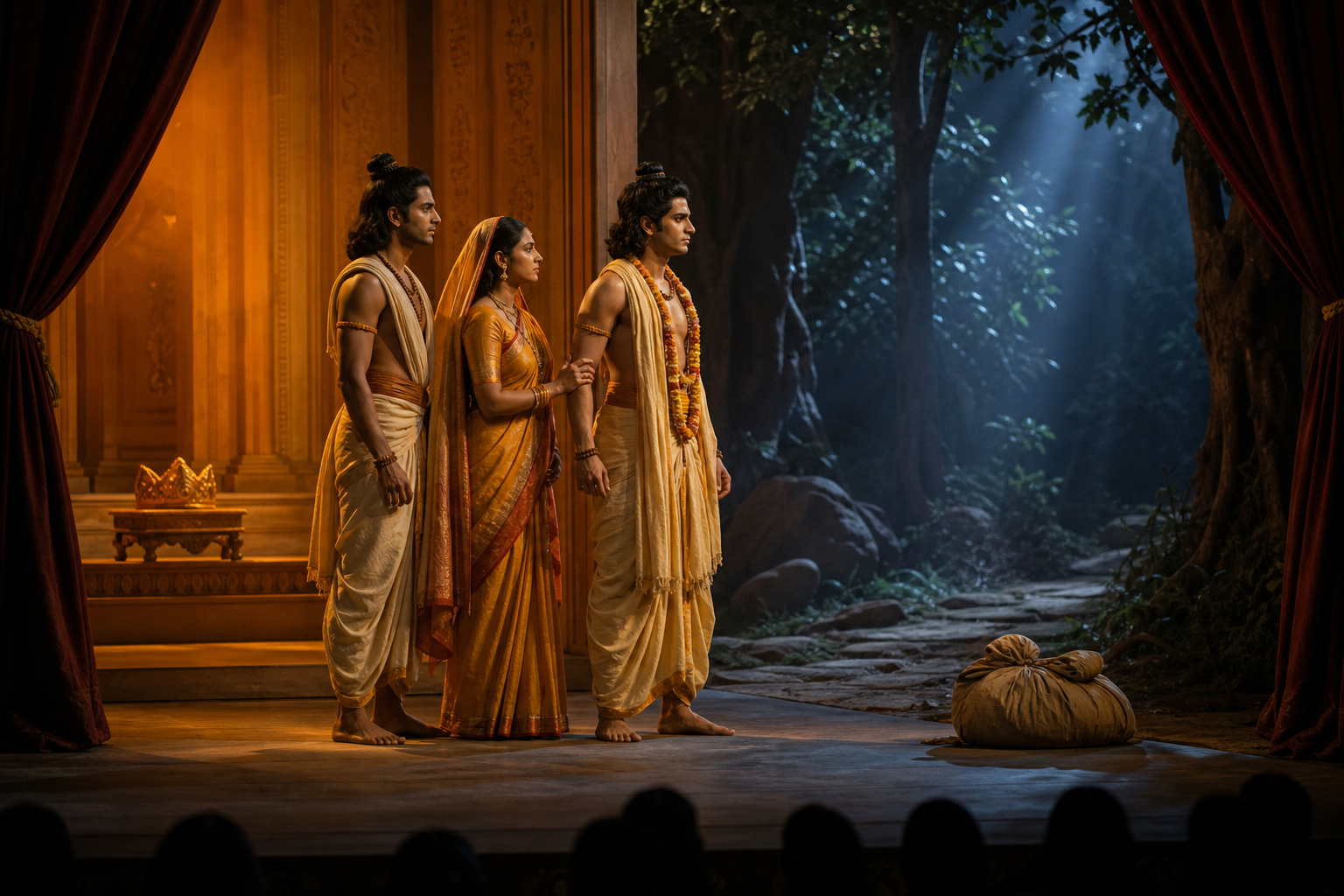
Words such as dharma, courage, compassion and seva become vague when separated from action. Theatre returns the verbs. A character must decide, speak, wait, protect, endure or serve, and the audience sees that every worthy principle makes a claim on conduct.
The Bhaktivedanta Players used selected episodes and measured pacing to keep attention on character and moral consequence rather than spectacle. That choice made the Ramayan approachable without making it shallow. A child could follow who acted and what happened; an adult could consider why the action mattered and what it cost.
If you discuss such a performance afterward, avoid stopping at, “Which character did you like?” That invites a preference but rarely opens the ethical core of the story. Ask questions that return attention to action:
- What obligation was the character trying to honour?
- What did that decision cost?
- Where did courage take the form of endurance, restraint or compassion rather than display?
- Who served, and what made that service more than passive obedience?
- What would you have chosen, and which responsibility might your choice have left unmet?
The final question matters because it prevents dharma from becoming a slogan. It does not ask you to sit in judgement over an epic figure after seeing a few scenes. It trains you to notice that moral decisions often involve several responsibilities at once. Reverence and reflection need not be opponents; careful attention can deepen both.
Give children a doorway and adults a second question
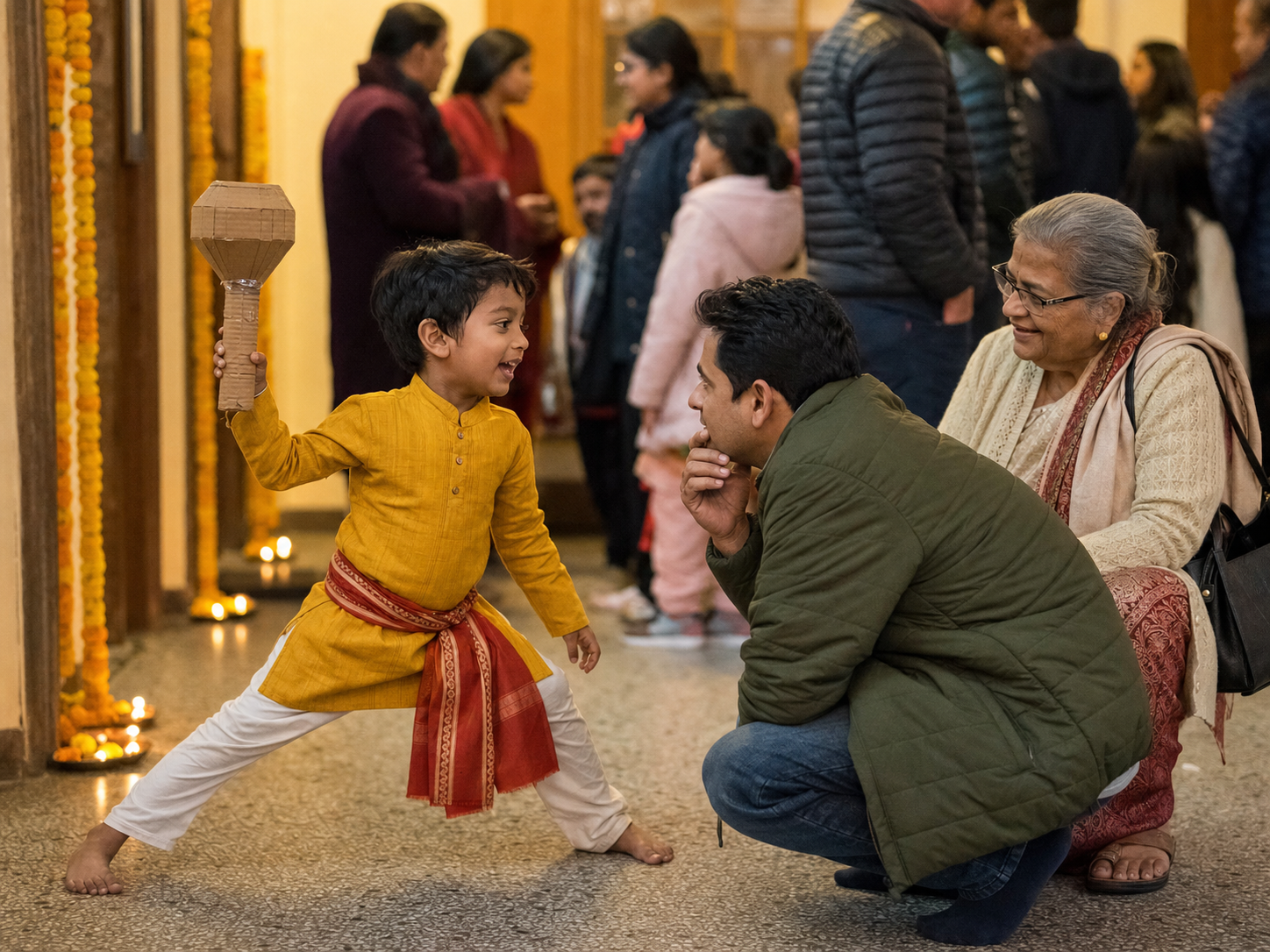
A successful family performance does not force every age group into the same conversation. In Basingstoke, the clarity of the storytelling gave younger viewers an accessible path into the narrative while preserving depth for adults. You can continue that layered approach at home.
- Let a younger child retell one scene from memory before correcting names or details. What the child remembers shows you where the story became meaningful or confusing.
- Help the child identify the turning point: the action after which the scene could no longer unfold in the same way.
- Ask an older child or teenager what competing duties were present. Move beyond deciding who was simply “good” or “bad” and examine motive, responsibility and consequence.
- Invite adults to connect the value with an ordinary situation at home, work or in the community. Keep the comparison proportionate; a routine disagreement should not be inflated into an epic ordeal.
- End with conduct. If the chosen value is seva, name one useful act that can be done without seeking attention. If it is compassion, identify one conflict in which the manner of response could change.
Younger children usually need sequence and consequence before abstraction. Older viewers can examine motives and trade-offs. Adults should be willing to face the harder question: whether the values admired on stage appear in their own habits. The same scene can therefore support several conversations without being reduced to either a children’s tale or an academic exercise.
Unity begins with a value, not a vague slogan
The evening also drew attention to ethical living, nonviolence, seva and communal harmony as values that resonate across Hindu, Buddhist, Jain and Sikh traditions. “Resonate” is the important word. Shared ethical concerns do not make distinct scriptures, practices or doctrines interchangeable.
If you are guiding a school or community discussion, ask, “How does your tradition understand service?” rather than announcing, “All dharmic religions teach exactly the same thing.” The first question permits kinship and difference. The second erases both by replacing living traditions with a generalisation.
- Begin with an action the audience has just witnessed rather than an abstract claim about unity.
- Name the value precisely: nonviolence, service, compassion, fidelity to duty or communal responsibility.
- Invite participants to explain how that value is expressed in their own tradition, including where vocabulary or emphasis differs.
- End with a shared practice that does not require artificial theological agreement, such as service to neighbours or more disciplined conduct in disagreement.
This method keeps inclusivity from becoming vagueness. It also allows the Ramayan to be presented confidently within its Hindu setting while opening an honest conversation with related dharmic paths.
Build diaspora events around transmission, not decoration
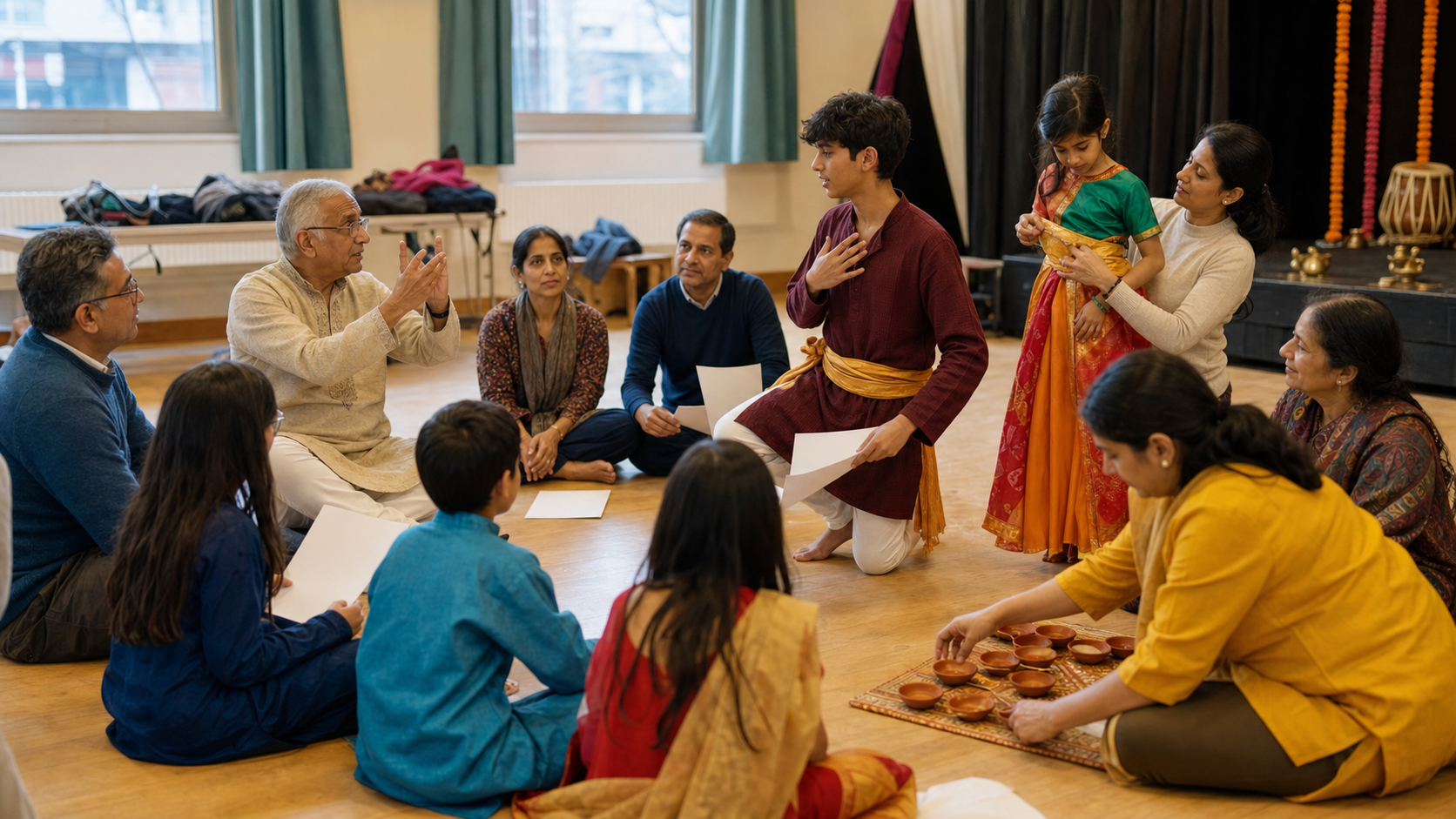
The collaboration between Basingstoke devotees, Bhaktivedanta Manor and the Bhaktivedanta Players placed a classical narrative inside a modern educational venue. That combination matters. Heritage was not confined to private memory, and the college was not merely a hired room; performance, fellowship and learning occupied the same space.
The troupe’s 40th-anniversary context also points to an easily overlooked truth about cultural continuity. Tradition survives in public because people repeatedly rehearse it, teach it, interpret it and make room for the next generation to participate. Anniversary celebrations honour the past, but their greater value lies in showing younger people that cultural work has a future.
If you are planning a Ramayan or Diwali program, build the educational purpose into the event rather than adding a lecture after everything else is settled:
- Start with the moral question you want the audience to carry home. Let that question guide the selection of scenes.
- Choose a coherent sequence instead of trying to represent every major episode. Fewer well-framed scenes can reveal more than a crowded procession of familiar moments.
- Give unfamiliar viewers enough context to understand relationships and stakes before the action begins. Do not make children depend on whispered explanations throughout the performance.
- Keep costumes, music and staging in service of speech, gesture and consequence. Visual richness should clarify the story rather than compete with it.
- Plan the follow-through while planning the stage. A discussion prompt, family reading, youth retelling or seva activity gives the audience somewhere to take the value next.
- Judge success by transmission as well as attendance. Can a child recount a decisive choice? Can an adult name the ethical tension? Does a family know what to explore afterward?
The range of responses in Basingstoke shows why this matters: families connected the evening with home and heritage, students recognised practical moral guidance, and educators saw value for social cohesion. One format could meet those different needs because the story remained clear while its ethical questions remained open.
Key takeaways for families and organisers
- Use the Ramayan to examine decisions, duties and consequences, not merely to test whether children remember names.
- Let younger viewers begin with what happened; invite older viewers to ask why it happened and which responsibilities were in tension.
- Turn an admired value into a proportionate action in family or community life.
- Speak of shared dharmic values precisely while respecting the distinct teachings and practices of Hinduism, Buddhism, Jainism and Sikhism.
- Design cultural events for what happens after the curtain falls. The next conversation, reading or act of seva is part of the program’s purpose.
If you attended the Basingstoke performance, choose one scene that remained with you and discuss the choice at its centre. Then act on one value before the memory becomes merely pleasant nostalgia. If you are organising the next community program, plan that follow-through at the same time as the performance. Cultural inheritance becomes durable when an audience is given a way to practise what it has witnessed.
References
