
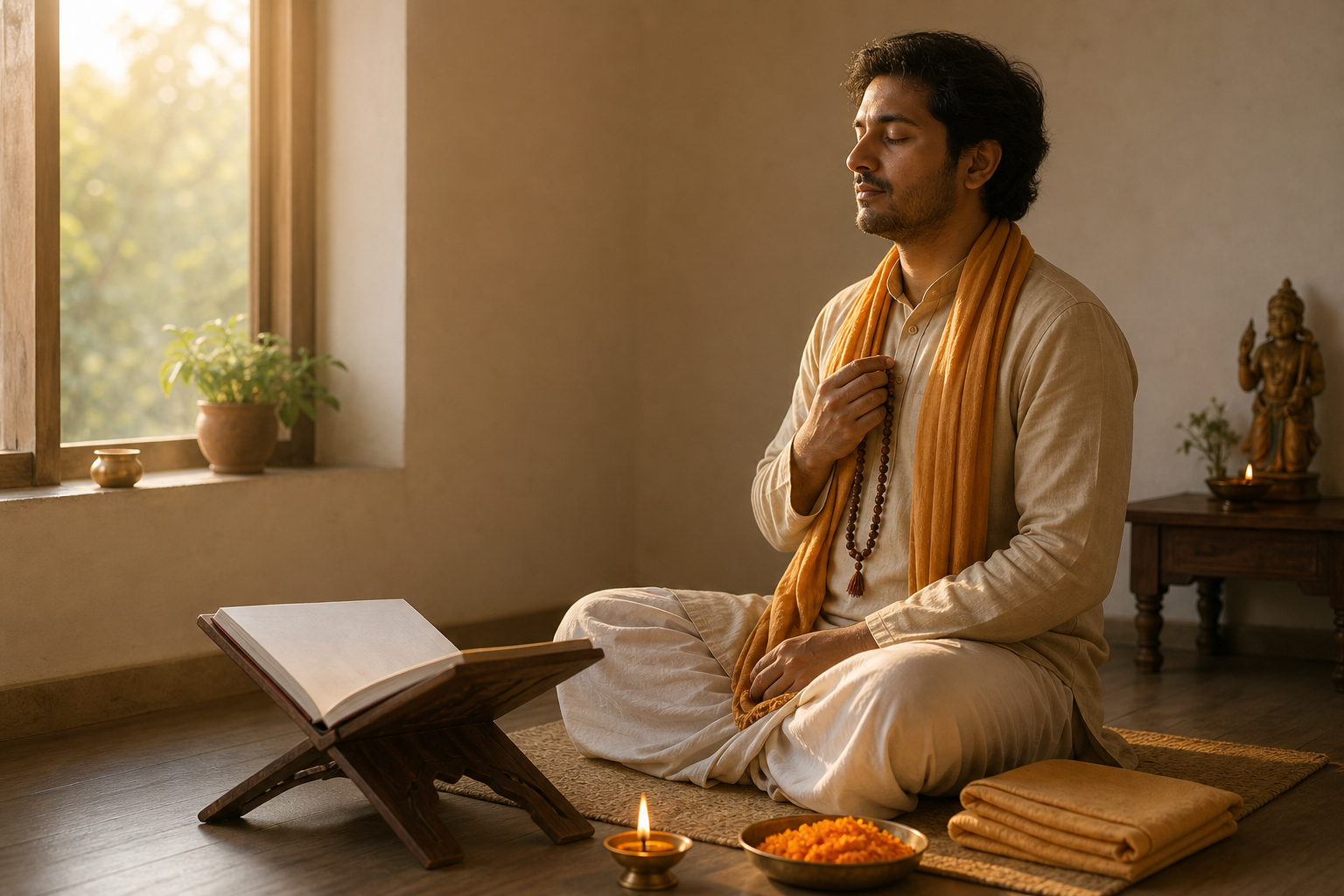
If you reached this page because a family problem, illness, examination, career decision, or persistent fear has unsettled you, you may be looking for the one Ramcharitmanas chaupai that will remove the crisis. Begin with a more useful question: what quality do you need in order to meet the crisis according to dharma?
You do not need an elaborate ritual or a collection of supposedly miraculous formulas. You need one complete and accurately learned chaupai, a clear sankalpa, a measured daily practice, and the willingness to act on the virtue you are invoking.
What chaupai japa can change during a crisis
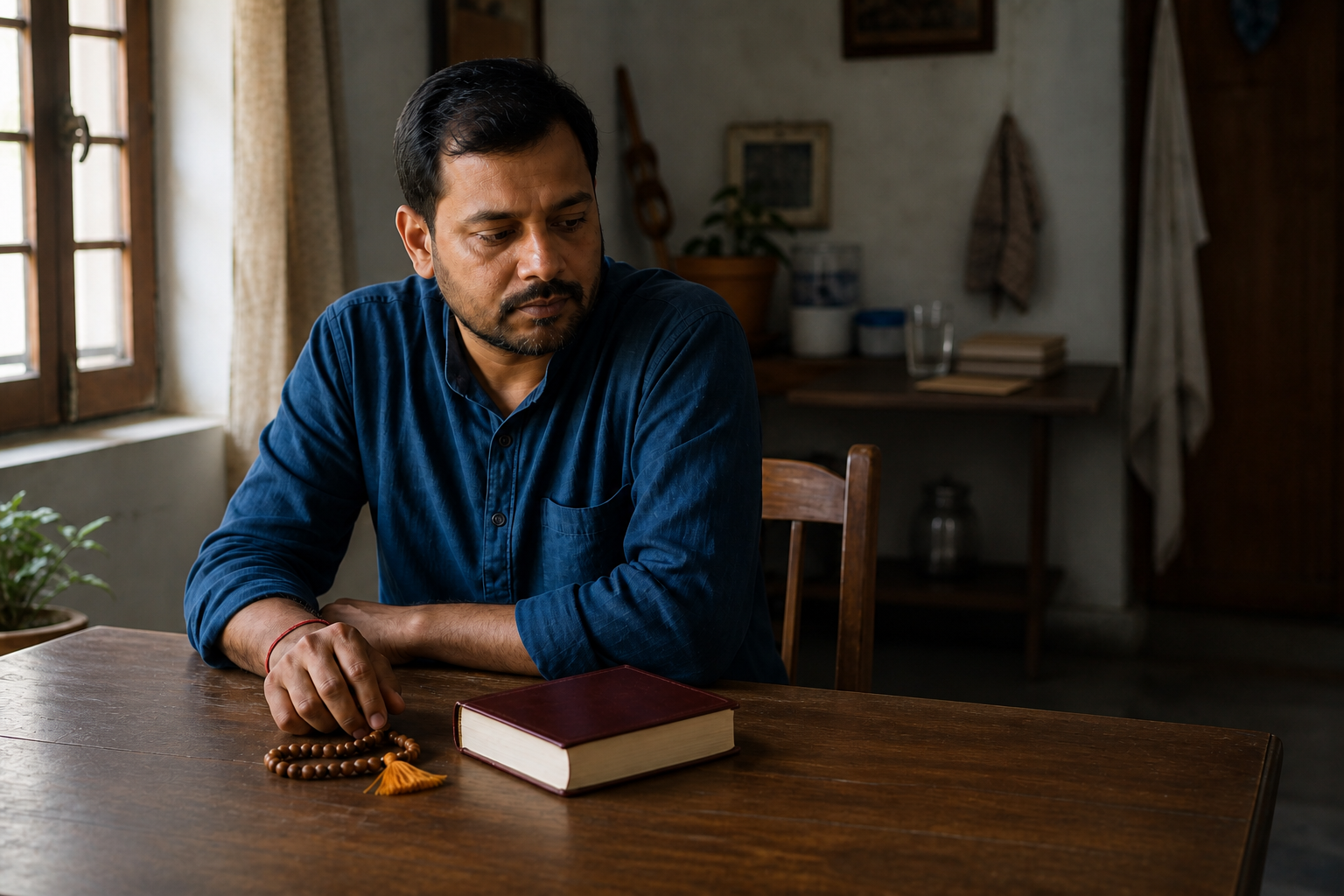
A crisis makes the mind rehearse the same fears while producing no better decision. Chaupai japa gives that repetition a disciplined form. A measured recitation gives your breathing a rhythm, places attention on one object, and repeatedly turns the mind toward the character of Shri Ram or the seva of Hanuman. This can support calmer attention, greater moral courage, and less reactive decision-making.
That is different from treating a chaupai as a charm that compels a desired outcome. Japa cannot guarantee that an examination, court matter, medical situation, or financial problem will end exactly as you want. Its immediate field of action is your own attention, speech, resolve, and conduct. The practical fruit appears when panic gives way to the next responsible step, anger gives way to truthful speech, or helplessness gives way to patient effort.
This distinction also clarifies the difference between japa and paath. In japa, you repeat a selected chaupai or small set of lines as an anchor. In paath, you move through a larger passage or kand. Use japa when you need a compact daily discipline. Add a longer paath when you have the time and attention to enter the wider narrative. Neither needs to compete with the other.
If the crisis involves urgent illness, danger, abuse, a legal deadline, or serious financial exposure, take the appropriate practical action at once. Contact the relevant doctor, emergency service, lawyer, counsellor, or financial professional. Continue japa alongside that action if it steadies you, but never use it to postpone necessary help.
Rhythmic remembrance has recognizable counterparts across the Dharmic family, including Naam remembrance, the Namokar Mantra, and Buddhist mantra practice. The common method of repetition, mindful breath, and ethical intention does not erase theological differences. In Ramcharitmanas chaupai japa, Shri Ram, the Ramayana tradition, and the virtues carried by the chosen words remain central.
Choose the chaupai by the virtue you need

Do not rank chaupais as though a more frightening problem requires a more powerful verbal formula. Choose by moral relevance. Ask what the situation requires from you: raksha as prudent protection, utsaha as courageous effort, shanti as steadiness, karuna as compassion, or maryada as disciplined restraint.
| Your situation | Qualities to look for in the chaupai | The action that should follow |
|---|---|---|
| Fear, insecurity, or the need for protective resolve | Raksha and utsaha; Shri Ram’s maryada; Hanuman’s unwavering seva | Identify the next safe and dutiful action, then take it without panic or recklessness. |
| Conflict at home or work | Compassion, humility, restraint, and truthful speech | Remove accusation from what you need to say, wait until you are calm, and begin one factual conversation. |
| Examination pressure, illness, career transition, or prolonged uncertainty | Shanti, patient effort, hope, and steadfastness; Sundara Kanda may accompany the daily japa | Separate the next controllable task from the outcome you cannot control, and complete that task while retaining any necessary professional support. |
Use a trusted copy of the Ramcharitmanas and select a complete chaupai rather than a clipped phrase circulating without context. Read the surrounding lines. Confirm the wording and pronunciation with a knowledgeable teacher, family elder, or established recitation tradition if you are uncertain. You should be able to explain the chaupai’s meaning in one plain sentence before making it your daily practice.
If your family already preserves a particular chaupai for difficult periods, you need not discard it in search of something novel. Learn what it asks you to remember. An inherited recitation becomes sadhana when its meaning shapes your response; without that connection, it can shrink into hurried sound.
Reject any interpretation that feeds hostility, fatalism, or a fantasy of invulnerability. A raksha-oriented chaupai should make you more attentive to danger and duty, not less. A courage-oriented chaupai should support responsible effort, not impulsive action. A peace-oriented chaupai should steady truthful engagement, not provide an excuse to avoid a necessary conversation.
A seven-to-ten-minute routine you can sustain
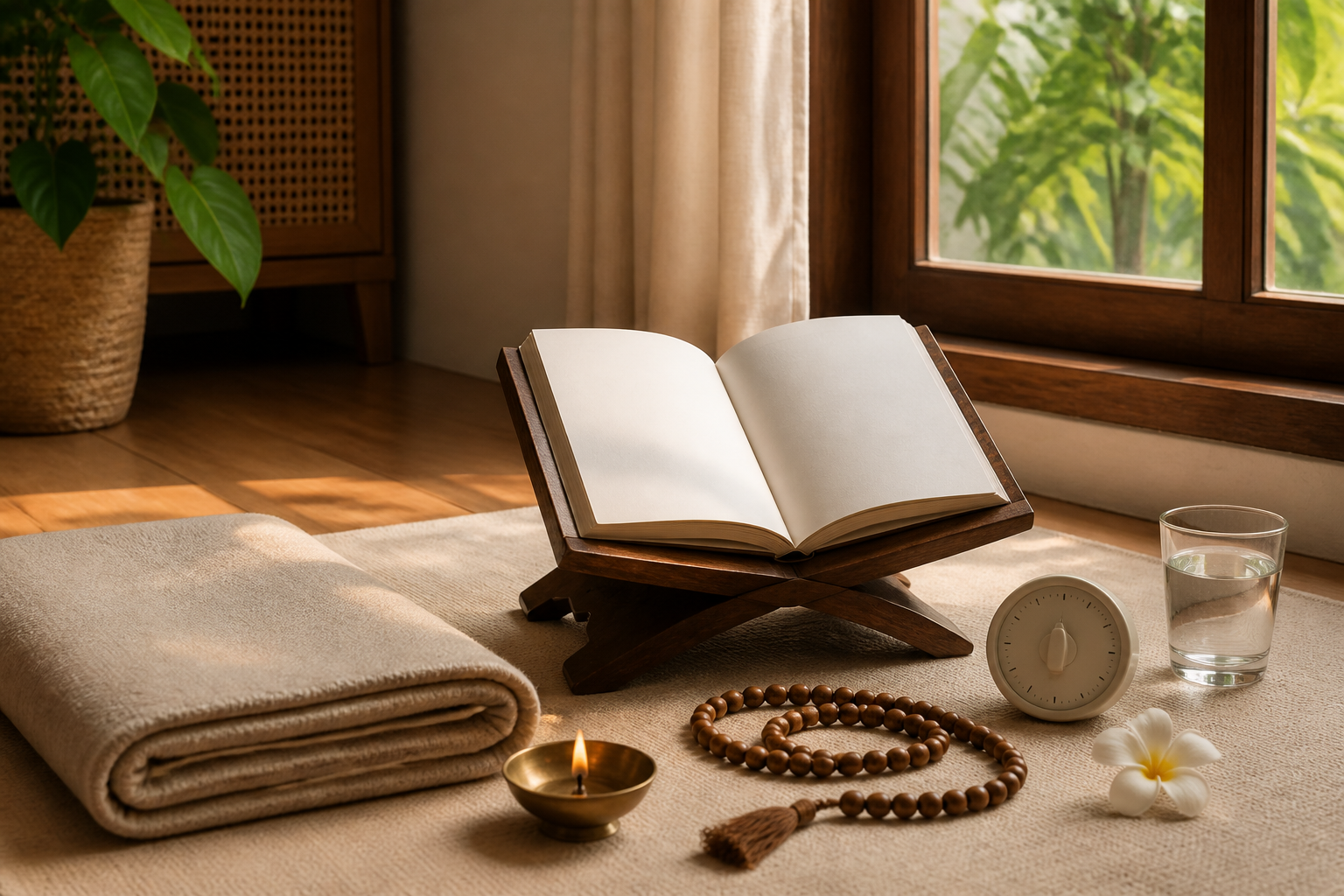
A complete practice can fit into seven to ten minutes at dawn or dusk. The purpose of the structure is not ritual complexity. It is to remove daily negotiation so that you can sit down and begin.
- Choose a repeatable window. Dawn or dusk is customary. If neither is workable, use a quieter time that you can actually protect. A modest practice you perform is more useful than an ideal schedule you continually postpone.
- Settle the body. Sit comfortably with the spine upright and the body free of unnecessary strain. A diya may mark the beginning if that belongs to your household practice, but it is not a barrier to beginning.
- Take three slow breaths. Do not hold or force the breath. Let the exhalation soften the urge to hurry.
- State one sankalpa. Keep it ethical and specific. A workable form is: For steadiness and dharmic action in this situation, I undertake this japa. Avoid wording the sankalpa as a bargain in which a fixed number of repetitions purchases an external result.
- Invoke Shri Ram and recite the complete chaupai. Use an unhurried pace at which every word remains clear. If pronunciation begins to collapse, slow down. Bhava is not measured by volume or speed.
- Count only if counting supports attention. You may use a mala, the natural rhythm of the breath, or simple mindful awareness. If using a mala, move one bead after each complete repetition. If counting makes you race, return to a fixed period of careful recitation instead.
- Close in silence. Rest briefly with the meaning of the chaupai. Name one action through which you will carry that meaning into the day, then conclude with an aspiration for peace and welfare beyond yourself.
The transition from the sixth step to the seventh is crucial. Repetition gathers the mind; reflection directs it. If you finish the count and immediately return to the same angry message, avoidable delay, or panicked habit, the sound has not yet crossed into conduct.
Do not turn a missed sitting into an omen. Resume at the next available window. Discipline means returning to the practice with sincerity, not creating another source of fear around it.
FAQ: decisions that keep chaupai japa workable
Can you perform the japa silently?
Yes. Manasik japa, or mental repetition, is suitable when you share a room, commute, wait in a public place, or cannot chant aloud. Silent practice is not permission to let the words blur. Recall the complete wording and keep attention on its meaning. For family prayer, a low voice can support a common rhythm; agree on the wording and pace before beginning so the group does not turn the chaupai into a race.
Must you use a mala or complete a fixed count?
No single counting method is necessary for this basic daily form. A mala helps when the mind wanders or when your lineage has given you a count. Breath-based repetition keeps the practice simple, provided you do not strain or hold the breath. A timed sitting works when counting becomes mechanical. Choose one method for the session and let clarity, steadiness, and bhava matter more than reaching a number quickly.
Where does Sundara Kanda recitation fit?
Sundara Kanda can support hope and steadfastness during prolonged uncertainty. Treat it as a broader recitation that can accompany your selected chaupai japa, not as a reason to abandon a short practice you can maintain. When time is limited, keep the daily chaupai steady and give the longer paath a separate, realistic place in your household rhythm.
How can you tell whether the practice is helping?
Look first at conduct rather than coincidence. After the japa, can you identify the next dharmic action more clearly? Is your speech less reactive? Are you more willing to ask for necessary help, complete an avoided duty, or accept the part of the outcome you cannot command? These are meaningful signs of movement from panic toward poise.
If nothing changes except the repetition count, slow the practice down. Revisit the meaning, correct the pronunciation, and reconsider whether the chosen chaupai addresses the virtue your situation actually requires. The aim is not to manufacture a special feeling during recitation. It is to make remembrance available when the difficult conversation, decision, or duty arrives.
At your next quiet dawn or dusk, verify one complete chaupai, write its meaning in your own words, set one ethical sankalpa, and sit with it for seven to ten minutes. Then take the practical step the virtue demands. That is how sacred sound becomes daily sadhana rather than a promise deferred to fate.
References
- DharmaRenaissance Blog — रामचरितमानस की चौपाइयों का जप: बड़े संकटों से मुक्ति और आत्मबल के सशक्त उपाय
