
If you are marking late-2025 vrata dates for your household, put two separate observances on the calendar: Krishna Paksha Ekadashi on November 15 and Akhanda Dwadashi on December 2. They belong to different fortnights and call for different preparation.
The dates are the starting point, not the entire instruction. Before you decide when to fast, worship, or conclude a vrata, confirm the local tithi and your family’s sampradaya. That one check prevents the most common calendar mistake: treating a lunar observance as though it begins everywhere at civil midnight.
Keep the two late-2025 observances distinct
| Civil date | Observance | What you need to confirm |
|---|---|---|
| Saturday, November 15, 2025 | Krishna Paksha Ekadashi, the eleventh tithi of the waning fortnight | The locally applicable Ekadashi timing and your lineage’s method of fasting and completion |
| December 2, 2025 | Akhanda Dwadashi during Shukla Paksha of Margashirsha | Whether your family treats it as a one-day vrata or as part of a longer devotional discipline |
December 2 is not the Dwadashi immediately continuing the November 15 Ekadashi. The November observance falls in Krishna Paksha, the dark or waning half of the lunar month. Akhanda Dwadashi is a separately named observance in Shukla Paksha, the bright or waxing half of Margashirsha. Do not combine their dates, sankalpas, or completion instructions.
Akhanda Dwadashi is also known in some traditions as Dwadasha Aditya Vratam or Margasira Dwadasi Vratam. These names may help when checking a regional calendar or asking a temple about its December schedule.
Confirm place and lineage before copying a time
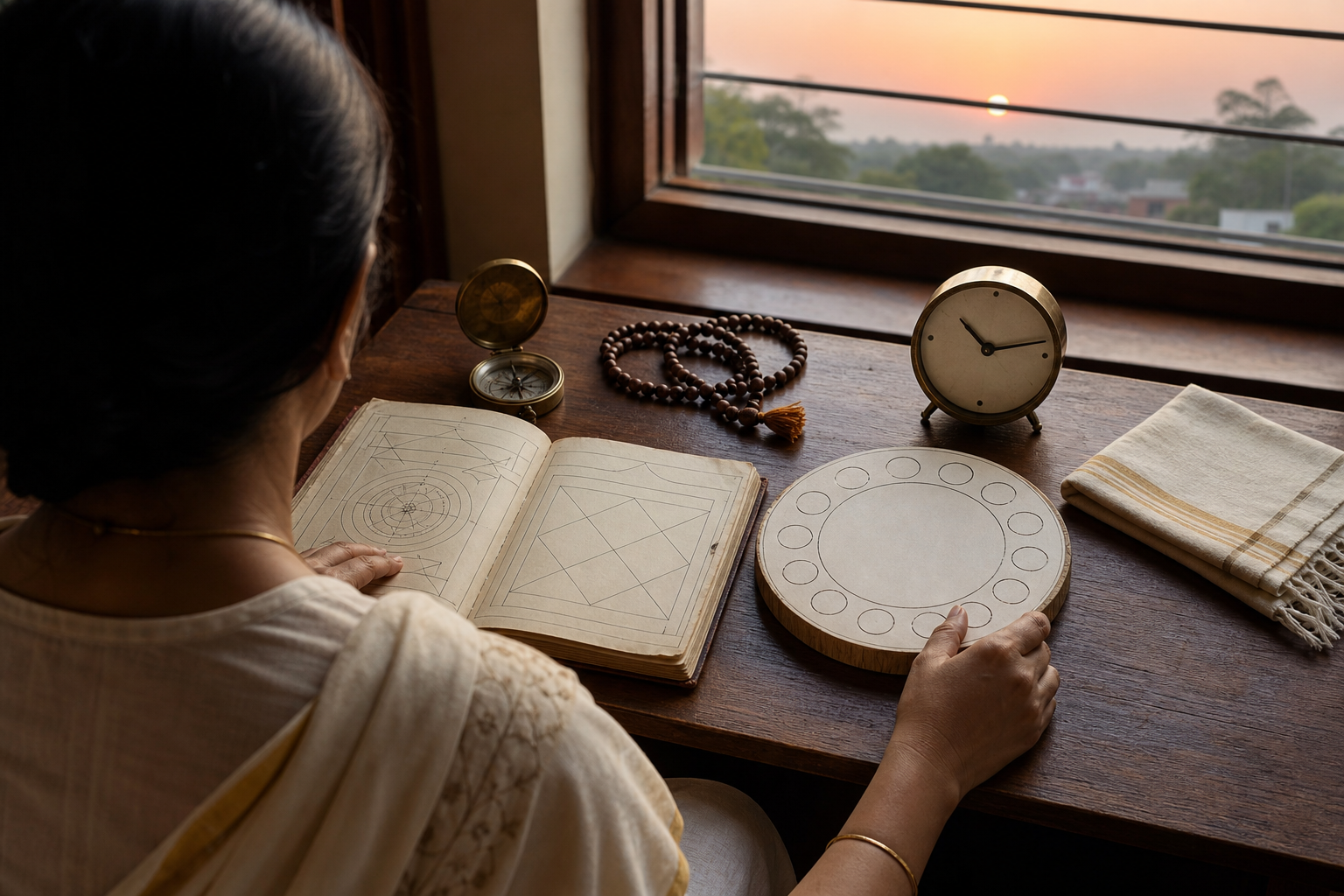
A tithi is a lunar interval, not a date box that invariably opens at midnight. Its beginning and end can fall during a civil day, and the applicable observance can therefore depend on location, time zone, calculation method, and lineage.
For November 15, Dashami continues until 3:47 AM in the stated local calculation, after which Ekadashi begins. Regional variation is possible. Do not copy 3:47 AM into a calendar for another city and assume it governs your vrata.
- Set the location in the Panchang to the city where you will actually observe the vrata, not your birthplace, family temple, or a convenient Indian time zone.
- Check whether your temple or sampradaya assigns the observance to the same civil date. Follow its established rule if you are observing within that lineage.
- Ask for the tithi span, the recommended fasting day, and the time for concluding or breaking the vrata. A date without the completion rule is an incomplete plan.
- If you are also arranging a puja or other auspicious activity, check Nakshatra, Rashi, and muhurta locally. Those details can vary with region, ayanamsa, and time zone.
This need not become an exercise in collecting several competing calendar screenshots. Choose one trustworthy local Panchang or temple notice that follows your tradition, record its instruction, and use it consistently.
Build a workable November 15 Ekadashi vrata
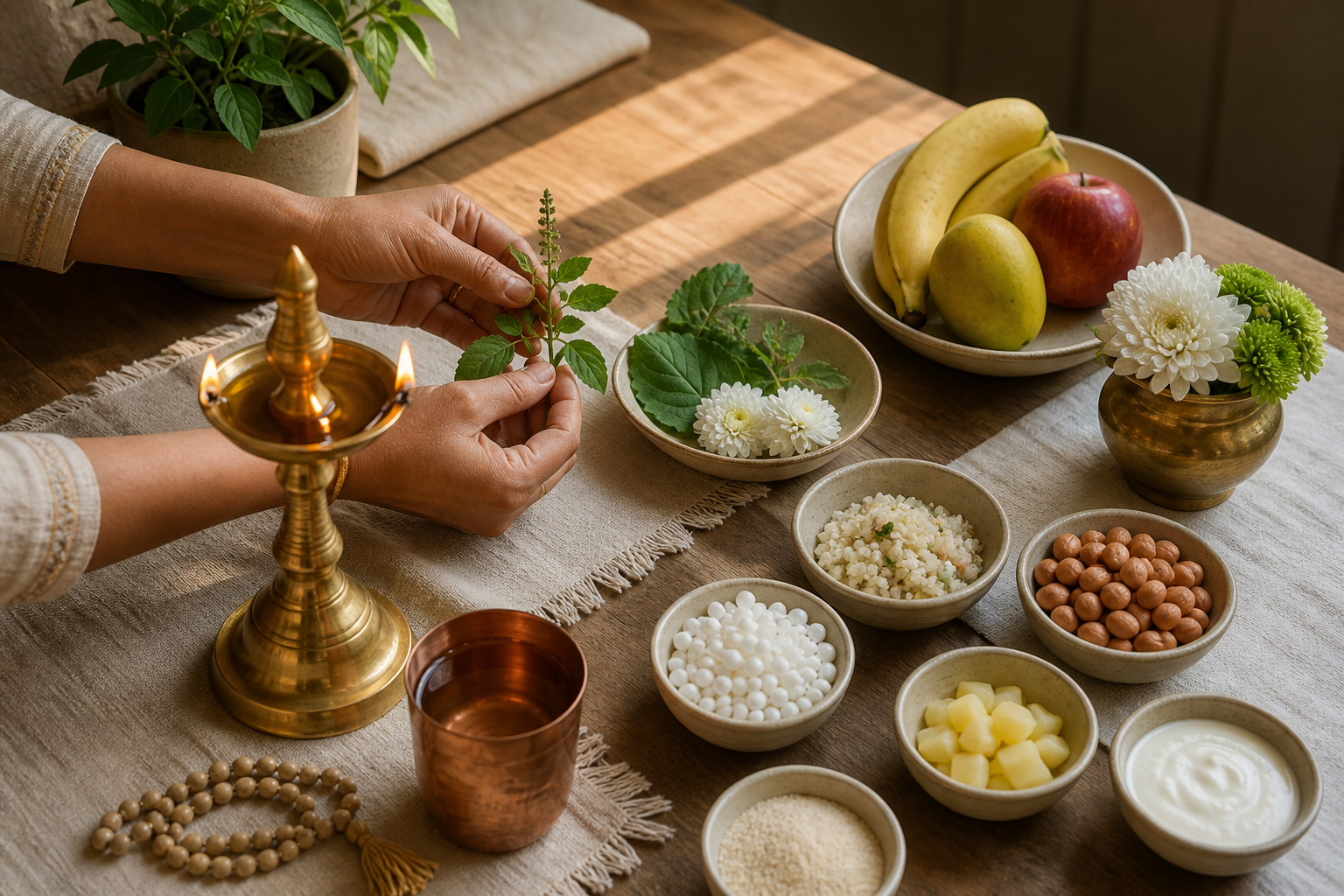
Ekadashi is especially important in Vaishnava practice, but a useful observance is not measured only by how little you eat. Food discipline should support remembrance, restraint, and clearer attention. If fasting leaves the entire day consumed by irritation, negotiation, or elaborate substitute foods, the practical form has overtaken the purpose.
- Decide the form before the day begins. Choose whether you will follow your customary fast, take simple satvika food, or keep a non-food discipline. Do not make stricter rules impulsively after the vrata has started.
- Write a short sankalpa you can keep. Name the practice plainly: a period of japa, quiet meditation, remembrance of Vishnu or Krishna, temple darshan, a bhajan at home, or reduced distraction during the day.
- Protect one undisturbed period. Put the phone away and give the chosen practice your full attention. A definite period of sincere remembrance is more useful than an ambitious schedule repeatedly abandoned.
- Join restraint to conduct. Watch speech, impatience, needless consumption, and avoidable conflict. The vrata should be visible in how you treat people, not only in what is absent from your plate.
- Add one concrete act of seva. Share suitable food, contribute to a community kitchen, assist someone who needs practical help, or quietly support a local charitable effort.
- Conclude according to local guidance. Obtain the applicable Dwadashi or parana instruction from your Panchang or temple rather than guessing from midnight or from another region’s timetable.
If abstaining from food could conflict with a medical condition, prescribed treatment, or medication, do not improvise a severe fast. Seek qualified medical guidance and use a safer form of vrata, such as satvika simplicity, reduced indulgence, japa, or seva. Spiritual discipline does not require you to disregard a known health risk.
Let Akhanda Dwadashi begin a practice you can continue
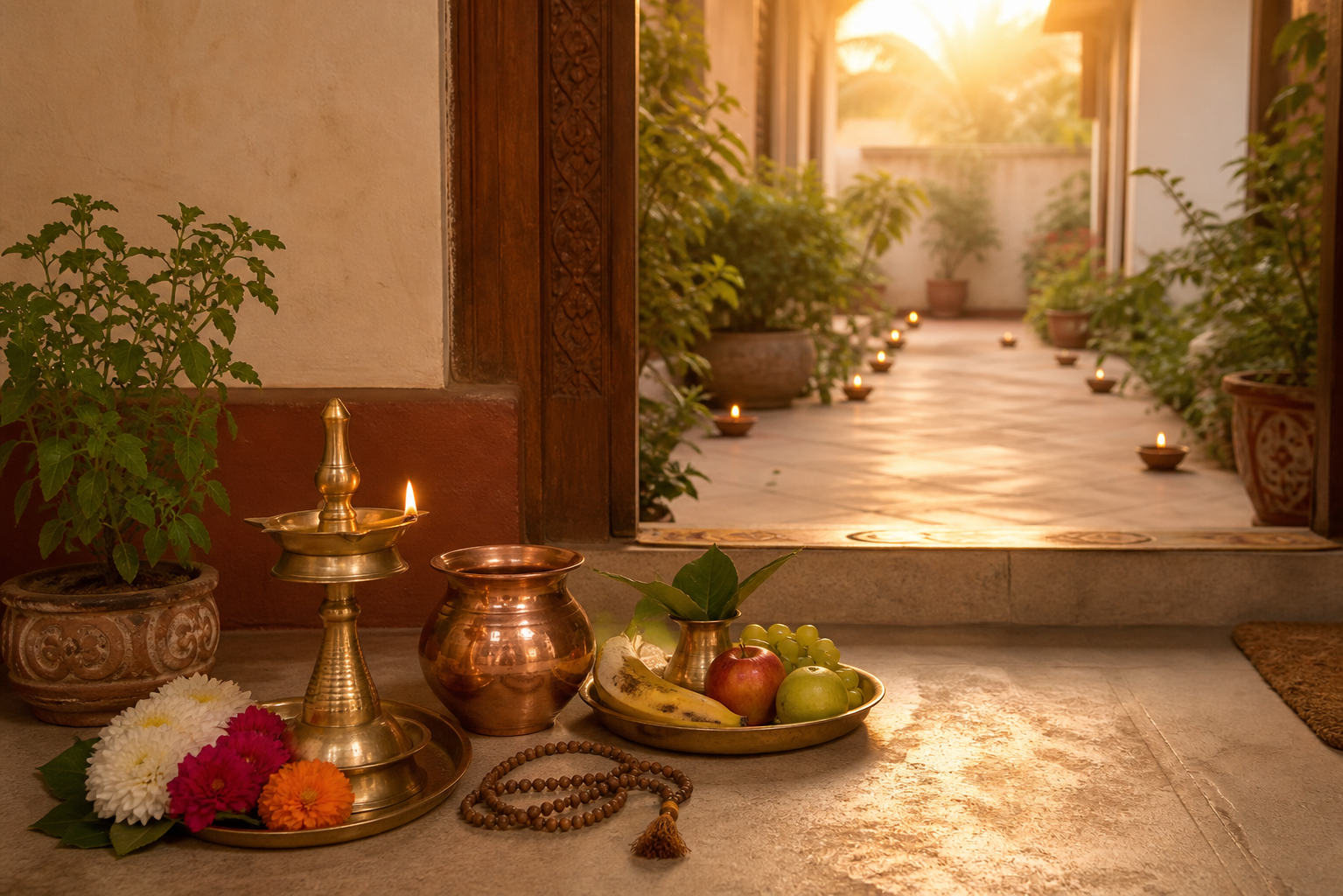
Akhanda conveys continuity: devotion that is not confined to the emotional peak of one festival day. The December 2 Akhanda Dwadashi is a Vaishnava vrata centered on Sri Krishna. Some lineages understand the observance through three phases extending across a year, while other households emphasize worship on the particular Dwadashi.
That difference matters before you make a sankalpa. If this is your first Akhanda Dwadashi, ask whether your family or temple follows a longer cycle. Do not unknowingly phrase a one-day intention as a year-long vow, and do not assume that a practice followed elsewhere is mandatory in your lineage.
- Confirm that your local calendar places Margashirsha Shukla Paksha Dwadashi on December 2.
- Ask whether your tradition prescribes upavasa, a simple satvika meal, temple darshan, home worship, or a combination of these.
- Prepare a simple Krishna puja if that is your household practice. Tulsi offerings, the recitation of divine names, lamp-lighting, contemplation, and bhajans are suitable devotional elements.
- Choose one modest practice that can continue after the date. It might be regular nama-japa, a recurring period of scripture reflection, more disciplined speech, or dependable seva.
- Attach the practice to an existing part of your routine. Continuity is easier when remembrance follows a stable cue, such as morning worship, evening lamp-lighting, or a regular community commitment.
The last two steps express the distinctive force of Akhanda. December 2 should not become an isolated burst of effort followed by neglect. Select a small discipline you can actually maintain, then review it with your family or teacher before expanding it.
Practical questions before you observe
Can I use November 15 if my local calendar shows another date?
Use the date assigned by a reliable Panchang for your location and tradition. November 15 applies across most regions in the supplied 2025 calculation, but the tithi transition is location-sensitive. A local temple notice should take precedence when you are joining that temple’s observance.
Does everyone have to keep the same food fast?
No. The appropriate form depends on lineage, household custom, ability, and health. Decide the form deliberately, avoid turning personal strictness into a test for other devotees, and preserve the vrata’s central disciplines of remembrance, self-restraint, and ethical conduct.
Can a family observe meaningfully without a long ritual?
Yes. A short period of attentive japa, a simple home puja, one bhajan, quiet reflection, and a definite act of seva can create a coherent observance. Keep the elements few enough that children, elders, and working family members can participate without pretending that every household must follow an identical ritual schedule.
The ethical themes of restraint, compassion, service, and self-awareness also resonate across Dharmic traditions. That does not make Ekadashi a required Buddhist, Jain, or Sikh rite. Honor the kinship of values without erasing the distinct calendars, disciplines, and identities of those traditions.
Put both dates into your calendar now, with a second reminder to verify local timings. For November 15, settle the fasting form and completion instruction. For December 2, determine whether your Akhanda Dwadashi belongs to a longer cycle. Then choose one devotional discipline and one act of seva that your household can perform without confusion or excess.
References
- DharmaRenaissance Blog – November 15, 2025 Panchang: Krishna Paksha Ekadashi Tithi, Timings, and Auspicious Observance Guide
- DharmaRenaissance Blog – Akhanda Dwadashi 2025: Date, Meaning, and Vaishnava Vratam Insights for Inner Peace
