

A medical-college result appears heavily concentrated in one religious community. A neighborhood shrine disappears during road work. A public figure calls for the word secular to be removed from the Constitution. If you care about Dharma, these events can seem to ask the same question: does the Indian state respect its civilizational inheritance?
They are not the same dispute, and treating them as one makes each harder to resolve. You need a method that distinguishes constitutional principle from political language, and both from the conduct of a particular institution. The practical test is simple: identify the rule, inspect the record, compare the treatment, and demand a remedy that matches the defect.
First identify which dispute you are actually having
Arguments about religion and the Indian state usually operate at three different levels. A speaker may move between them without warning, making a symbolic disagreement sound like proof of administrative discrimination. Before accepting the conclusion, classify the claim.
| Question | Evidence that can answer it | Appropriate remedy |
|---|---|---|
| Should the Constitution use the word secular? | Amendment history, constitutional doctrine, and a clearly defined alternative | Constitutional and parliamentary deliberation |
| Does a public policy discriminate by religion? | The policy text, eligibility criteria, classifications, and stated purpose | Amendment, withdrawal, or legal challenge to the policy |
| Did an institution apply a lawful rule unfairly? | Decision records, rankings, notices, reasons, comparable cases, and review history | Correction, audit, rehearing, relocation, or another case-specific remedy |
Do not let an answer at one level settle another. The fact that you dislike a constitutional term does not prove that an admissions list was manipulated. A formally neutral admissions rule does not prove that every allotment was error-free. A municipality’s power to clear an encroachment does not prove that it gave lawful notice or treated a sacred site with appropriate care.
Start by rewriting the grievance as one testable sentence without labels such as captured, hostile, appeasing, or anti-Hindu. Replace the claim that an admissions system is captured with a precise allegation: the institution has not published the category-wise merit list, round-wise cut-offs, or rule used for the disputed allotment. Replace the claim that a civic project is anti-Hindu with the allegation that identified shrines were removed without documented notice, consultation, or a consistent relocation process. A precise claim gives an official something concrete to answer.
The word in the Preamble is not the whole Constitution
The word secular was added to the Preamble through the 42nd Constitutional Amendment in 1976. That history matters, but it does not mean that every constitutional restraint on religious partiality began in 1976. The Constitution already contained commitments to equal citizenship, non-discrimination, and freedom of conscience.
Nor can the word be added or removed through a declaration, campaign, or ordinary administrative order. Article 368 governs constitutional amendment, generally requiring special parliamentary majorities and, for certain changes, ratification by at least half of the states. The basic-structure limitation emerged in Kesavananda Bharati in 1973, and secularism was subsequently affirmed as part of the constitutional architecture in S. R. Bommai in 1994. A procedurally successful amendment can therefore still face scrutiny if it damages the Constitution’s basic structure.
Sadguru Nilesh Singbal has advanced the contested position that the inserted term is unconstitutional, while also recognizing that its removal would require the Article 368 process and an ideological effort. The important distinction is between political advocacy and constitutional effect. An objection does not delete text, and changing the text would not by itself erase doctrines the Supreme Court has treated as intrinsic to the constitutional order.
If you favor removing secular, ask what precise constitutional arrangement should replace the present wording. Does it preserve freedom of conscience? Does it protect equal civil status? Does it prevent public eligibility from turning on religious identity? Does it leave every community with an impartial route to challenge state power? Unless those questions receive clear answers, a proposed deletion is a slogan rather than a constitutional program.
If you favor retaining secular, apply the same discipline. Repeating the word cannot excuse opaque admissions, careless demolition, selective enforcement, or unreasoned decisions. Constitutional fidelity is visible in what an office does when a citizen asks for the governing rule, the factual record, and a review.
A constructive dharmic understanding of Hindu Rashtra can describe a cultural and civilizational order shaped by the ethical streams of Hinduism, Buddhism, Jainism, and Sikhism rather than a state ruled by clergy. That is an interpretation, not an automatic legal definition. Its credibility depends on whether it protects plural paths, equal citizenship, and freedom of conscience. Sarva dharma sambhava is meaningful in public life when equal respect becomes an administrative discipline, not merely a ceremonial phrase.
A public institution earns trust through an auditable chain
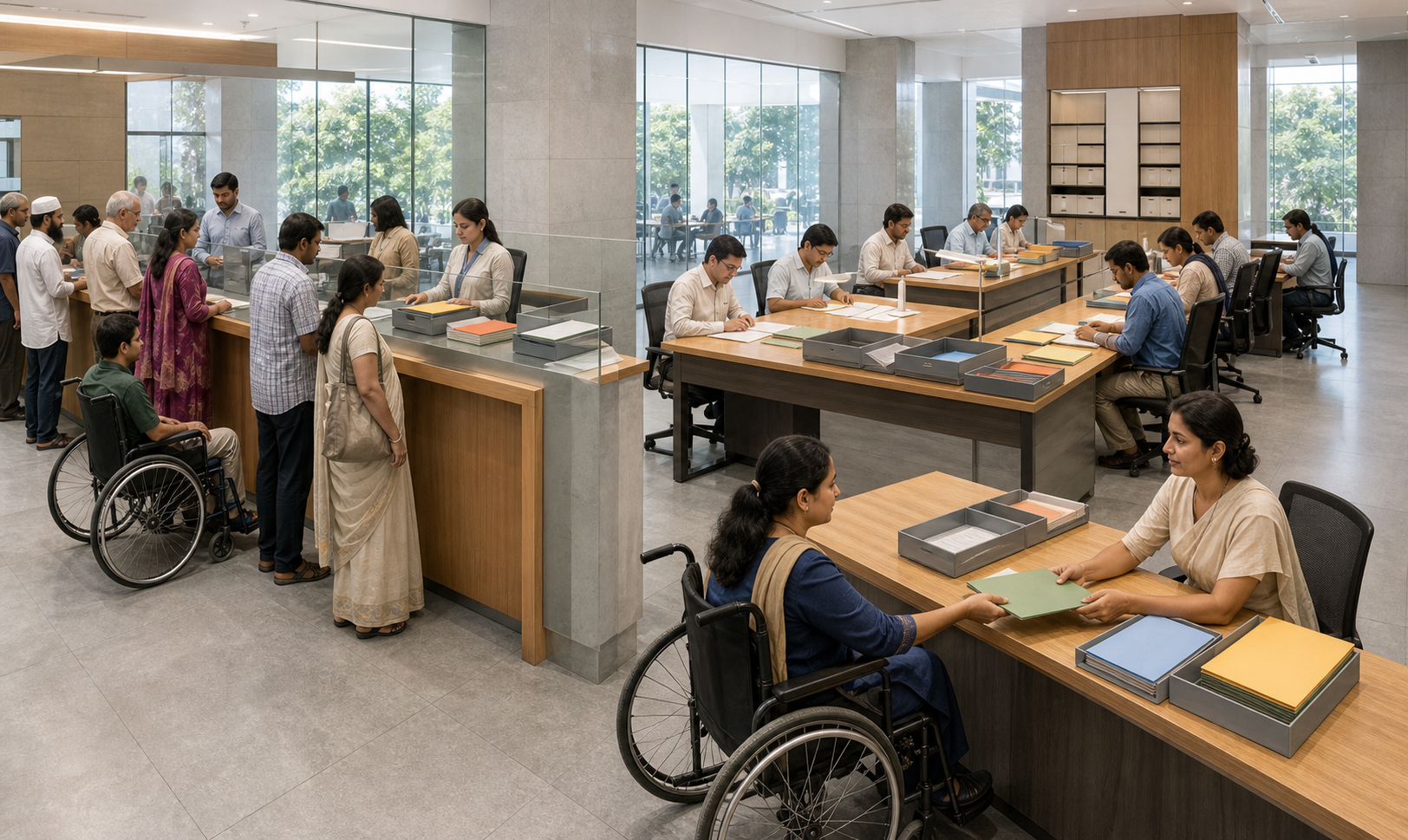
Public confidence does not come from an official saying that all rules were followed. It comes from showing how a rule produced a particular decision. Whether you are examining a university, counselling board, municipality, or temple administration department, look for six links in the chain.
- Authority: Which law, regulation, policy, order, or approved plan authorized the decision?
- Criteria: What factors could affect the outcome, and which factors were legally irrelevant?
- Inputs: Which ranks, categories, maps, surveys, safety findings, or site records were used?
- Application: How were the criteria applied to this applicant, property, or shrine?
- Notice and reasons: Who was informed, when were they informed, and what reasons were recorded?
- Review: Where can an affected person report an error, obtain a reasoned response, and escalate an unresolved grievance?
A broken link does not always prove religious discrimination. It may reveal poor administration, an inaccurate record, arbitrary implementation, or inadequate communication. That distinction matters because the remedy changes with the defect. Missing publication calls for disclosure. A calculation error calls for correction. An inconsistently applied criterion calls for review of comparable cases. A shrine removed without consultation may require a pause, a documented inquiry, relocation, or culturally appropriate re-consecration.
Ask for the minimum record needed to reproduce the decision, not an indiscriminate release of personal information. In an admissions matter, that usually means the governing seat matrix, category-wise merit position, round-wise cut-offs, vacancy movement, and the rule applied to the disputed seat. In a civic project, it means the works order or approved alignment, an inventory of affected sites, the criteria for removal, notices issued, recorded safety or encroachment findings, and the relocation protocol.
Consistency also requires care. Equal respect does not mean mechanically identical handling of every site. A consecrated shrine can require religiously informed relocation steps that an abandoned structure does not. Physical risk, land status, and project design can differ between locations. The institution should identify those relevant differences and show that they – rather than the community’s identity – explain the treatment.
Two controversies require two different proof burdens
A concentrated admissions outcome and the physical removal of sacred structures should not be evaluated by the same shortcut. The first requires reconstruction of a rule-bound selection process. The second requires scrutiny of the state’s exercise of physical and administrative power.
For admissions, audit the rule before judging the students
In one disputed MBBS allotment, circulating claims said that 42 of 50 seats at Shri Mata Vaishno Devi Medical College went to Muslim students. That numerical claim understandably prompted questions, but it does not establish the cause of the result.
Under the stated admissions framework, seats are assigned through NEET-UG merit, counselling conducted by the J&K Board of Professional Entrance Examinations, domicile rules, and constitutionally defined reservation categories. Religion is not an allocation category. A pronounced religious concentration can therefore arise from the rank distribution and category-wise seat matrix without any religious preference being built into the rule.
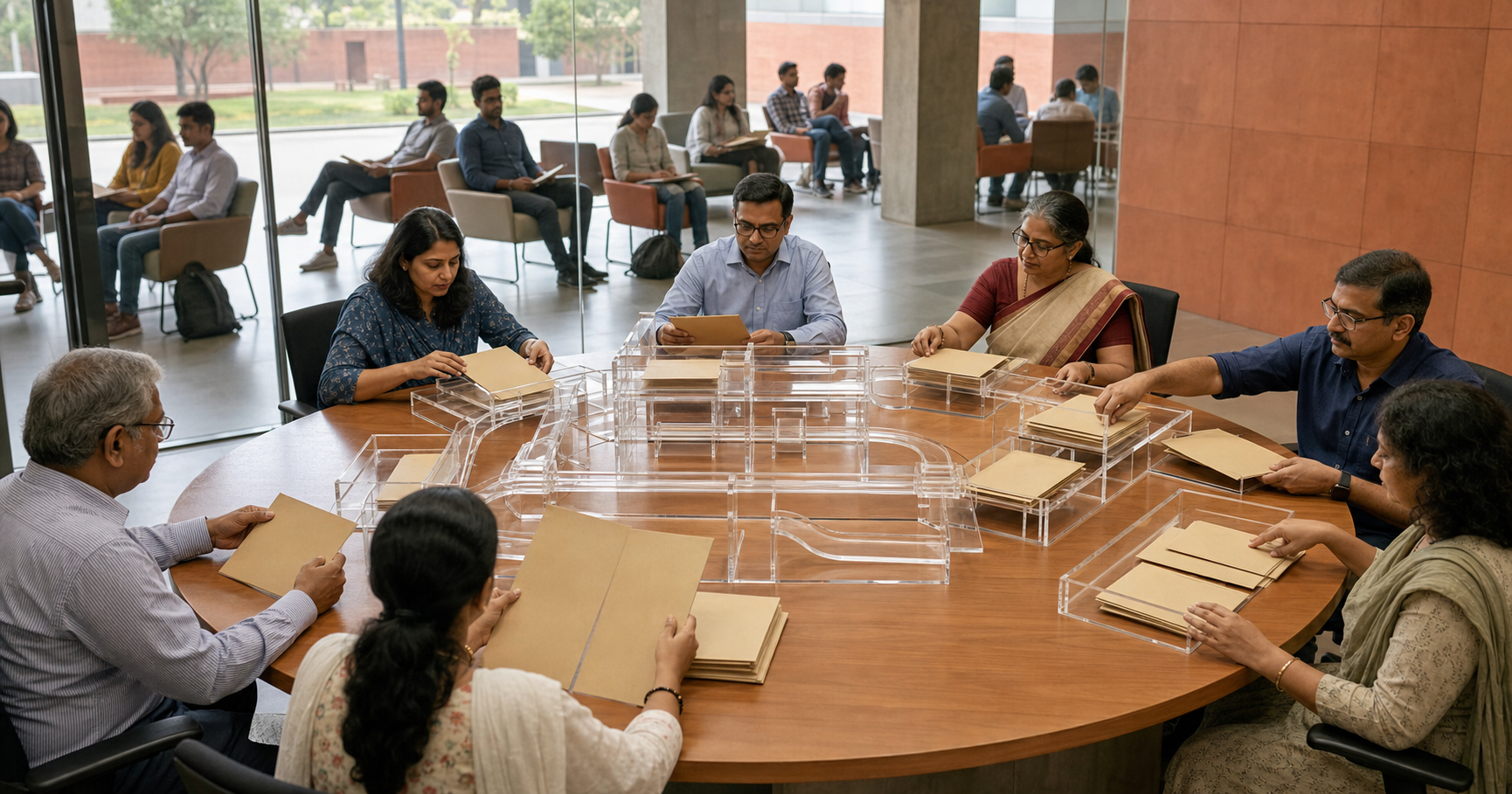
That possibility is not a reason to suppress scrutiny. It tells you what scrutiny must establish. Obtain the merit positions, categories, applicable cut-offs, vacancy status, and movement across counselling rounds. Then ask whether the selected candidates were the candidates the published rules required the board to select. If the records match, an unexpected demographic outcome is not evidence of manipulation. If they do not match, identify the exact seat, rule, and deviation.
Students should not be treated as proxies for an institution. Describing successful candidates as an aggressive community assigns collective intent without showing an administrative breach. It also distracts from the officials who can publish the data, explain the allotment, correct an error, or authorize an independent audit. Vigilance is justified; a verdict before the record is not.
For shrine removal, test necessity, notice, and cultural care
Local accounts in Ramagundam alleged that around 100 wayside Daari Maisamma structures were removed during road-widening and infrastructure work. Municipal reasons reportedly included encroachment, safety, and road alignment. Residents challenged not only the removals but also the adequacy of notice, consultation, alternatives, and respect for religious protocols.
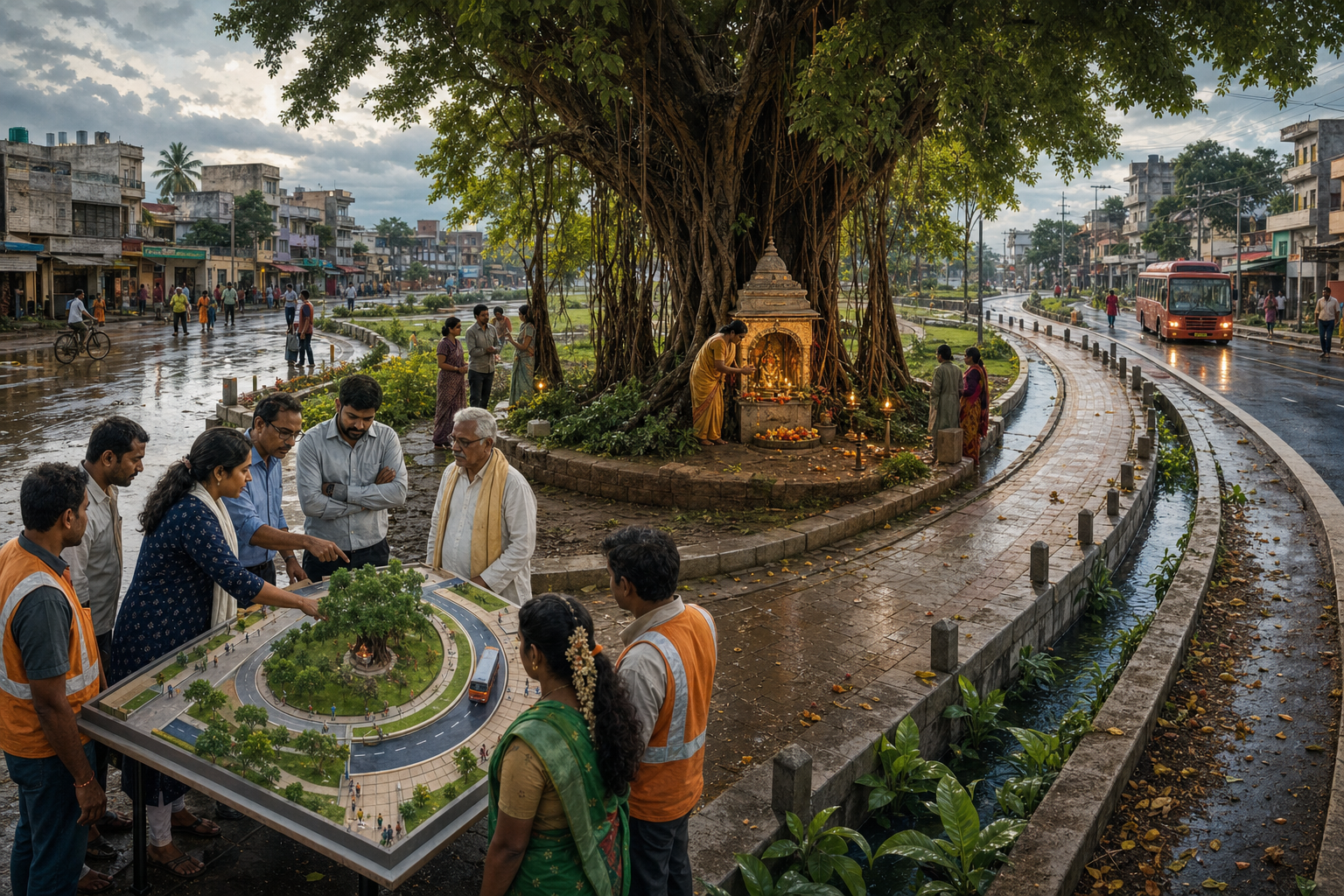
Here, a rank list cannot answer the dispute. A proper record should identify every affected shrine, its location and status, the legal or project authority used, the specific obstruction or safety concern, the notice given, and the alternatives considered. The authority should also explain whether nearby relocation was feasible and how the community would be involved in removal, restoration, or re-consecration.
Two absolutist positions should be rejected. Infrastructure need does not make a living sacred site culturally disposable. Sacred significance does not automatically defeat every safety, access, or lawful planning requirement. The administrative duty is to establish necessity, use consistent criteria, minimize avoidable harm, consult affected worshippers, and preserve continuity where relocation can achieve the civic objective.
A wayside shrine may be modest in size while carrying substantial religious and neighborhood meaning. Its daily worship, seasonal observances, and shared memories cannot be captured by land area alone. A heritage-sensitive process should therefore map sacred micro-sites before major work begins, consult before machinery arrives, and publish a relocation or restoration plan where removal cannot be avoided. This reduces conflict because the consequential decisions occur while alternatives are still available.
Make a Dharmic case that an administrator can answer
A dharmic response becomes stronger when civilizational values are translated into public duties. Satya requires verifying a claim before amplifying it. Ahimsa rejects language that punishes students or neighbors for an institution’s conduct. Karuna makes decision-makers confront the human and cultural impact of their actions. Seva directs advocacy toward a workable remedy. Equal respect requires consistent rules as well as reasonable attention to genuine religious practices.
This approach does not ask Hindus to become indifferent to Hindu institutions. It makes Hindu advocacy harder to dismiss. A documented allegation of inconsistent treatment, missing notice, or deviation from a published rule can be investigated. A generalized assertion about another community’s motives cannot.
Use the following sequence when a dispute reaches you:
- State one testable claim. Name the institution, decision, date or round where known, and the alleged defect.
- Classify the problem. Decide whether you are challenging constitutional language, the policy itself, or the implementation of a lawful policy.
- Preserve the record. Save the notice, allotment result, merit position, works order, photographs, representations, replies, and publication dates relevant to the decision.
- Request the decision chain. Ask for the authority, criteria, inputs, case-specific reasons, responsible officer, and review route.
- Compare like cases. Look for applicants under the same category and counselling round, or structures with similar land status, safety conditions, and project impact.
- Match the remedy to the defect. Seek publication for opacity, recalculation for an allotment error, an audit for systemic doubt, or consultation and relocation for an avoidable heritage loss.
- Describe people accurately. Criticize the decision-maker and documented conduct. Do not turn a numerical pattern or an official failure into collective guilt.
A useful written representation can be only one paragraph: Please provide the legal or policy authority, criteria applied, case-specific record, notice, reasons, and review route for the identified decision, and state when a reasoned reply will be issued. Attach the narrowest evidence that establishes your standing and concern. Keep proof of submission.
If a live admission, demolition, appeal, or court deadline affects you personally, public discussion is not a substitute for legal advice. Preserve the original records and consult a qualified Indian constitutional or administrative lawyer promptly; available remedies and filing requirements depend on the facts and forum.
Key takeaways
- The word secular entered the Preamble in 1976, but any amendment debate must also address Article 368, the basic-structure doctrine, equal citizenship, and freedom of conscience.
- A demographic concentration in admissions is a reason to inspect the merit and counselling record, not proof by itself of religious discrimination.
- A shrine-removal dispute turns on legal authority, necessity, consistent criteria, prior notice, consultation, and viable relocation or re-consecration.
- Dharmic advocacy is most effective when satya, ahimsa, karuna, and seva become verification, non-dehumanizing speech, attention to impact, and a practical remedy.
- For any disputed public decision, ask for five things: the rule, the inputs, the application, the reasons, and the route to review.
The next time such a controversy reaches your phone, do not begin by forwarding its strongest caption. Write the testable claim, obtain the governing record, and ask for a bounded remedy. That habit is neither passive secularism nor timid Dharma. It is how a civilizational society makes public power answerable.

References
- DharmaRenaissance Blog – Revisiting ‘Secular’ in India’s Constitution: Sadguru Nilesh Singbal’s Call for Dharmic Unity
- DharmaRenaissance Blog – SMVD Medical College MBBS Row: Facts, Transparency Demands, and Communal Harmony
- DharmaRenaissance Blog – Ramagundam Uproar: Daari Maisamma Temple Demolitions Spark Telangana Protest, Demand Redressal
