
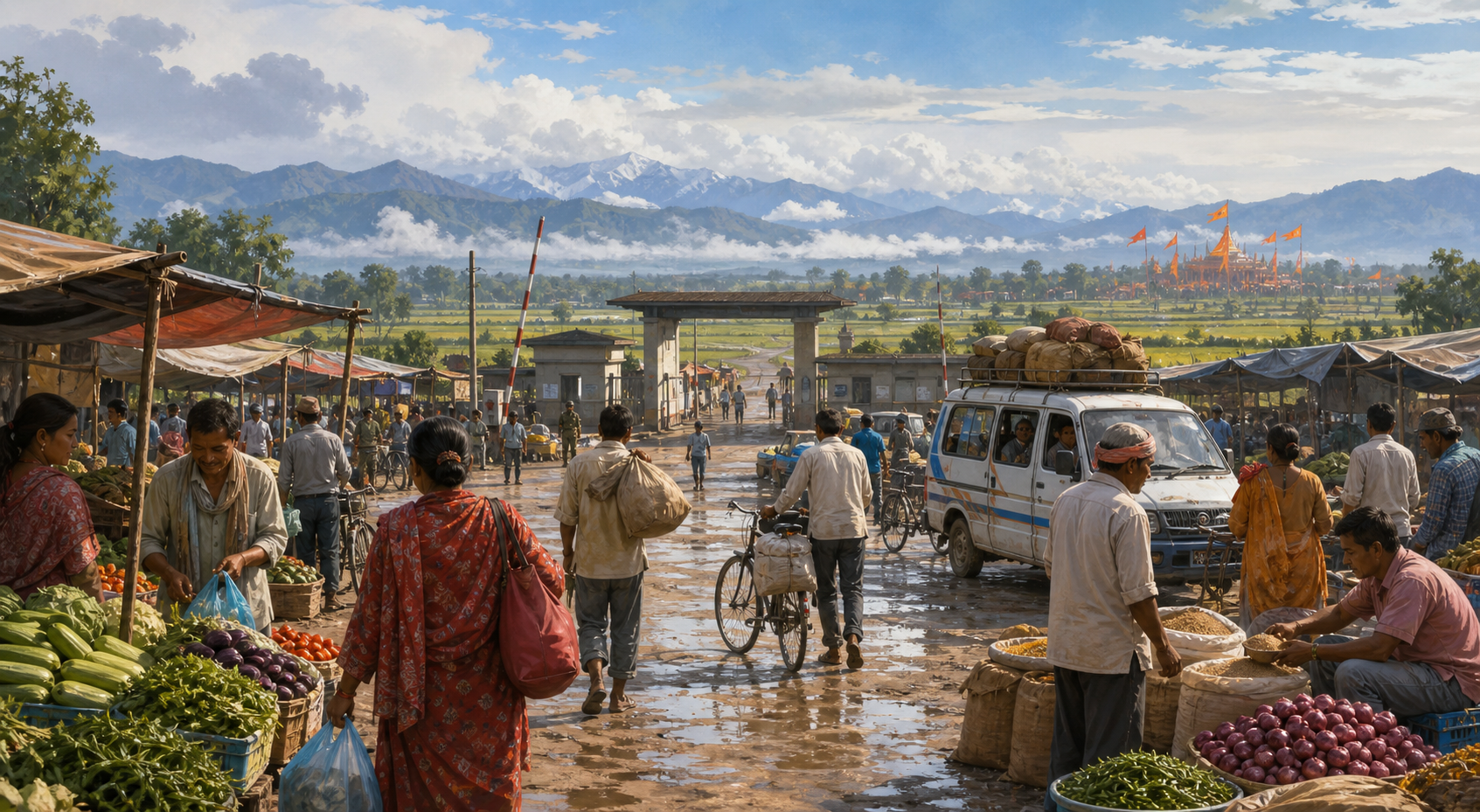
If you are seeing claims that Nepal’s Hindu-state agitation has reached Bharat’s border, do not treat that phrase as a verdict. As of 8 August 2026, the movement’s demands were being discussed in markets around Pilibhit, but its unrest reportedly had not taken hold in that adjoining border area. Those markets were still serving Nepali shoppers. That is a political echo across the border, not evidence that the border itself has broken down.
The harder question is what a pro-Hindu observer should support. The mobilisation combines a constitutional demand, allegations about murdered Hindu youths, demands concerning institutions described as illegal madrasas, and a call to expel Muslims. You should not accept or reject that entire bundle as though every part has the same moral or factual basis. A Dharmic response separates justice from vengeance, constitutional change from street coercion, and border facts from political rhetoric.
The Hindu-state slogan contains three different disputes
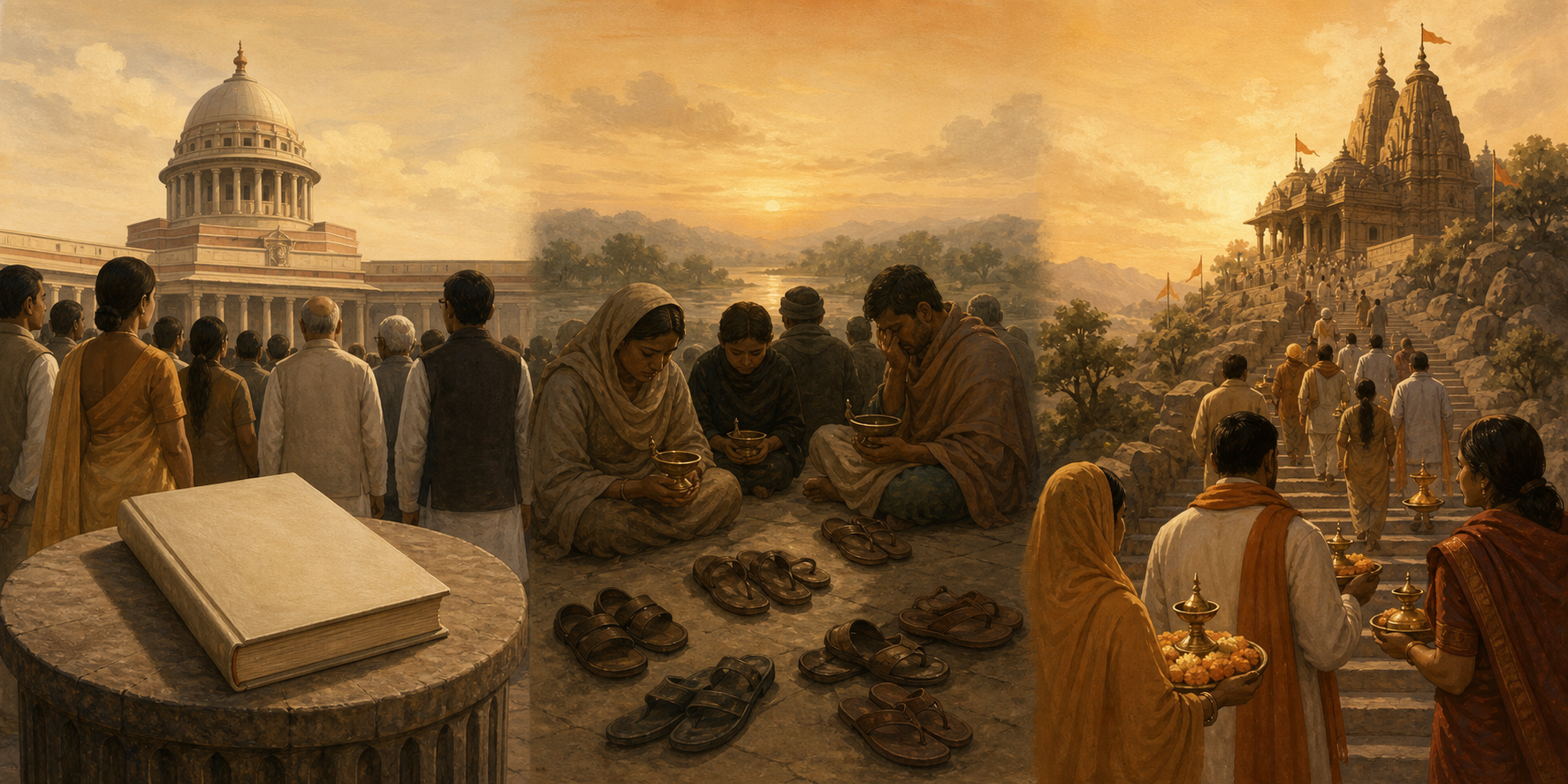
A joint mobilisation involving the Sanyukt Hindu Morcha, Hindu Samrat Sena and Rashtriya Prajatantra Party has linked the restoration of Hindu-state status to several immediate demands. Organisers are seeking action against people they blame for the killing of Hindu youths. They are also calling for the closure of madrasas they describe as illegal and for Muslims to be removed from Nepal.
These are not variations of one proposition. They are three separate political and moral questions:
- Constitutional identity: What would Hindu-state status actually change in Nepal’s governing text, institutions and treatment of citizens?
- Criminal justice: What offences occurred, who is accused, what evidence exists, and what action have police, prosecutors or courts taken?
- Religious regulation and collective punishment: Is an institution unlawful under a generally applicable rule, or is an entire community being targeted because of its identity?
A supporter may agree that Hindu civilisation deserves constitutional recognition without endorsing every demand advanced under that banner. Likewise, demanding a credible investigation into the killing of Hindu youths does not logically justify punishing people who had nothing to do with the alleged crime. The unit of criminal responsibility is the person who acted, aided or conspired, not everyone sharing a religious label.
Before you decide whether this is a workable Hindu-state programme, ask to see the proposed constitutional language. Does Hindu status remain symbolic, or does it alter citizenship, public office, education, religious freedom or the powers of the state? Which lawful process would enact it? A slogan can mobilise people before these questions are answered, but it cannot govern a country in their place.
A border echo is not a border breakdown
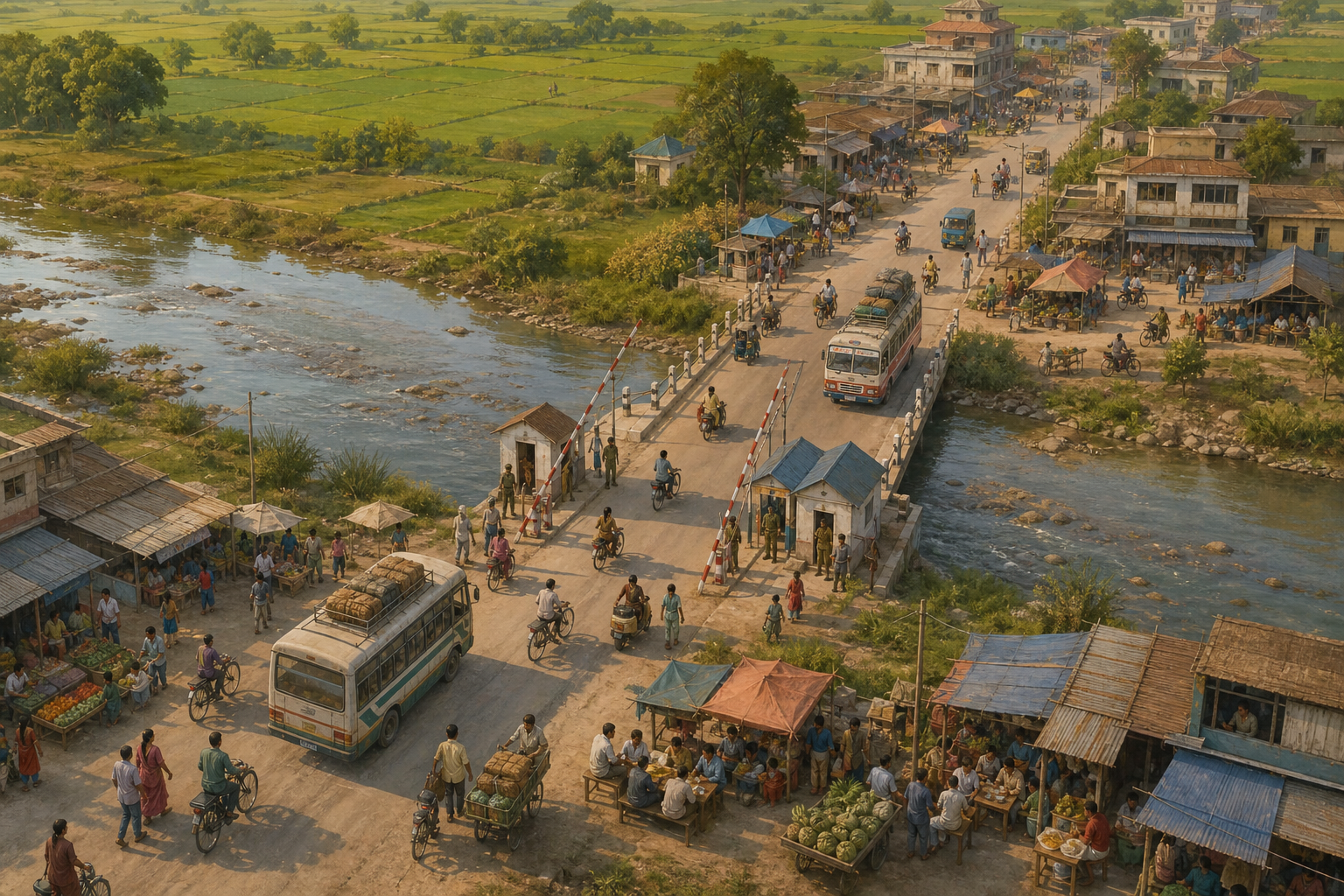
The word tension can describe very different conditions: anxious conversation, changed shopping patterns, a disrupted crossing, clashes at the frontier, or conflict between governments. Confusing those conditions makes a domestic protest look like an interstate crisis.
The Pilibhit picture supports a narrower conclusion. Nepal’s political agitation had become a subject of conversation in the border economy, while local markets continued to function as a practical support for Nepali customers. No comparable spread of the movement’s unrest into the adjoining area was reported. Commercial reliance and political concern can therefore exist at the same time.
| Claim you may encounter | What the known facts support | What they do not establish |
|---|---|---|
| The movement has reached Bharat | Its demands are being discussed in Pilibhit’s border markets. | Organised agitation or violence on the Bharatiya side. |
| The border is in crisis | Nepali shoppers are using Pilibhit markets amid tension inside Nepal. | Crossing closures, a halt to trade or a general supply breakdown. |
| Nepal and Bharat are confronting each other | Nepal’s domestic politics have social and commercial resonance near the border. | An interstate dispute between the two governments. |
| Active markets prove that everything is calm | Everyday cross-border commerce has shown resilience in this locality. | Calm across Nepal or uninterrupted conditions at every crossing. |
If you live near the border, trade across it, or are deciding whether to travel, watch operational signals rather than slogans. Look for official restrictions at crossings, transport interruptions, market closures, demonstrations at border points, and notices from local civil or police authorities. A video from Kathmandu does not establish conditions in Pilibhit. An active market in Pilibhit does not establish conditions throughout Nepal either.
A Hindu-state case must pass a Dharmic test
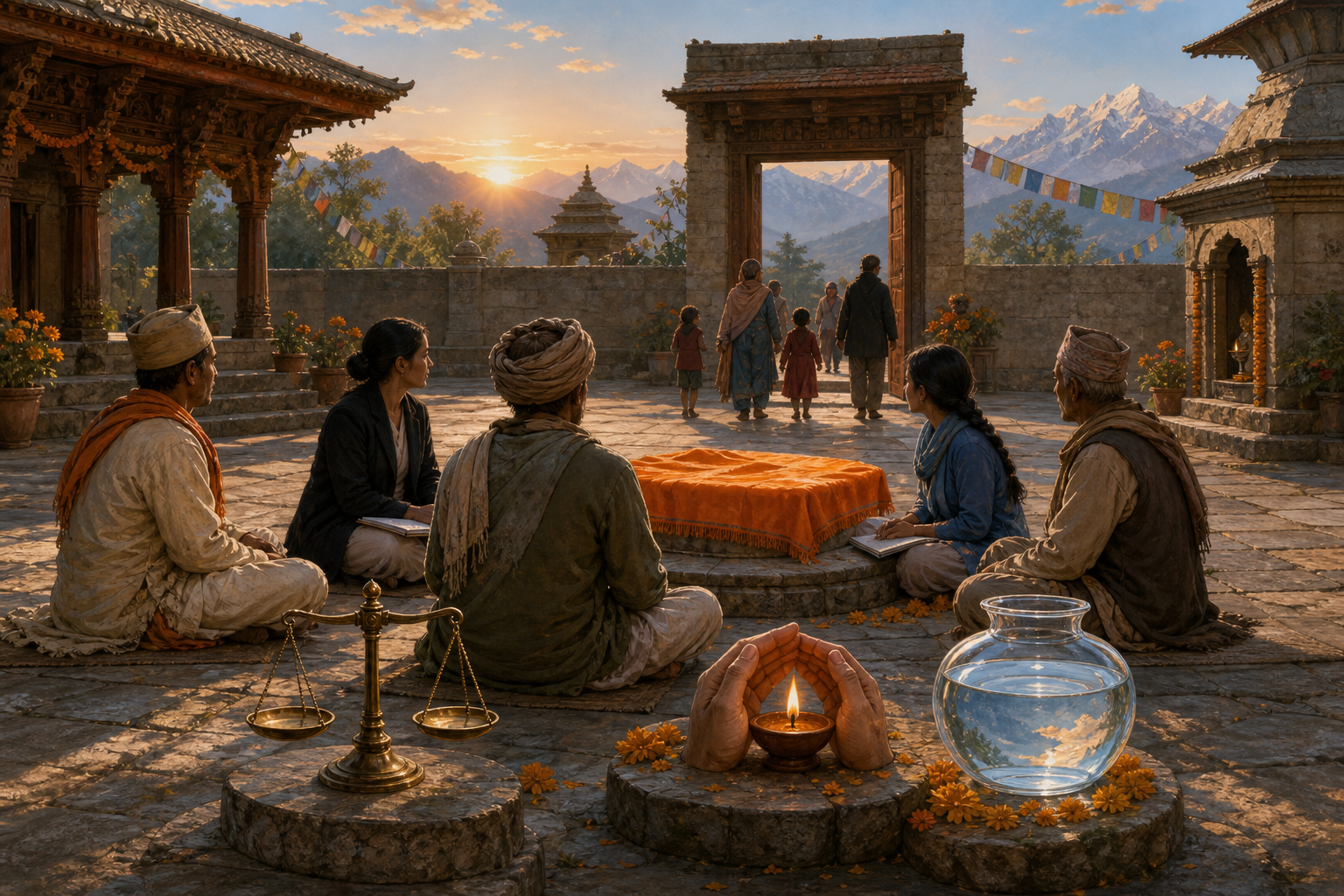
A Hindu state cannot be judged only by whether it places the word Hindu in a constitution. It must also be judged by how power behaves. A basic Dharmic test is whether the state distinguishes the wrongdoer from the innocent, restrains vengeance, protects public order and applies rules without convenient exceptions.
That test produces clear distinctions. Allegations that Hindu youths were brutally killed warrant a credible investigation. If evidence identifies offenders, prosecution through due process is compatible with both justice and social peace. Political pressure may properly demand that authorities act rather than neglect a case. It cannot substitute a crowd’s accusation for proof.
The same standard applies to institutions described as illegal madrasas. If a school, religious institution or funding arrangement violates the law, authorities should identify the rule, disclose the evidence, provide review and enforce the same standard against comparable violations elsewhere. The adjective illegal must be demonstrated; it cannot do the work of an investigation.
Expelling Muslims merely because they are Muslims fails that distinction. It converts allegations against particular people or institutions into collective punishment. It also lets actual offenders disappear into a communal category instead of forcing the state to prove who did what. Rejecting collective expulsion is not indifference to anti-Hindu violence. It is an insistence that justice reach the guilty without manufacturing new victims.
Method matters as much as stated purpose. Violent protests were reported in areas around Kathmandu. Violence may demonstrate anger and create urgency, but it does not prove constitutional legitimacy, factual accuracy or national consent. A movement asking the state to embody Dharma weakens its own case when coercion replaces persuasion.
You can test the seriousness of any Hindu-state proposal by asking five concrete questions:
- What exact constitutional provisions would change?
- Would citizenship and criminal law continue to judge individuals by conduct rather than religious identity?
- How would freedom of worship and the rights of other faiths and Dharmic traditions be protected?
- Would religious institutions face transparent, generally applicable regulation and independent review?
- Will change proceed through a defined constitutional and electoral path rather than indefinite street pressure?
If organisers cannot answer those questions, they have presented an identity marker, not a governing settlement.
Read political signals for what they prove, not more

The participation of three organisations shows coordination and gives the agitation multiple channels of mobilisation. It does not, by itself, demonstrate majority support across Nepal. That would require evidence of public consent through a credible constitutional or electoral process.
Representatives have also held talks with Nepal’s home minister. A ministerial meeting means the movement has gained access to the government and that officials regard the situation as requiring engagement. It does not mean the government accepted the movement’s account, approved its demands or committed to restoring Hindu-state status.
The next developments worth your attention are therefore institutional, not merely rhetorical:
- A published constitutional proposal that defines Hindu-state status.
- Verifiable police, prosecutorial or court action concerning the alleged killings.
- A clear separation between demands for individual accountability and calls for religious expulsion.
- Sustained nonviolent discipline, or further violence, during later mobilisation.
- Official notices showing whether crossings, transport or trade are actually being restricted.
These signals answer different questions. A criminal-case update can clarify the justice claim but cannot establish public support for constitutional change. A constitutional draft can clarify the political project but cannot vindicate violence. A border notice can establish an operational disruption but cannot tell you whether the Hindu-state demand is popular. Keep each piece of evidence attached to the claim it can actually prove.
Key takeaways
- As of 8 August 2026, unrest was reported around Kathmandu, while the adjoining Pilibhit area reportedly had not absorbed the movement’s agitation.
- Pilibhit markets serving Nepali shoppers indicate continuing cross-border dependence and resilience, not political endorsement or proof of calm everywhere.
- The Hindu-state demand, the alleged killing of Hindu youths, regulation of allegedly unlawful institutions and expulsion of Muslims are separate questions. Do not accept them as one indivisible package.
- Talks with Nepal’s home minister show political access, not government agreement or constitutional victory.
- A pro-Dharma position can demand justice for Hindu victims, insist on a lawful constitutional process and reject collective guilt at the same time.
- Before calling this a border crisis, look for verified changes at crossings, in transport, in markets or in official security measures.
The most accurate formulation for now is simple: Nepal is facing domestic Hindu-state agitation, with violent unrest reported around Kathmandu; its rhetoric is audible near Pilibhit, where markets remained a support for Nepali shoppers and local spillover had not been reported as of 8 August 2026.
Use that precise description when you speak or share material. Then wait for the evidence that could change it: a formal constitutional text, verified action in the alleged murder cases, a clear position on collective expulsion, or official disruption at the border. Supporting Hindu civilisational renewal does not require surrendering factual discipline. It requires more of it.
References
