

If you are visiting Ghati Subramanya Temple for the first time, your main question may be simple: how do you honour its traditions without importing assumptions from another shrine? Begin with what makes this temple distinctive, keep your offering uncomplicated, and allow the living customs of the temple to guide you.
Ghati is not merely a convenient stop near Bengaluru. It brings together a Swayambhu form of Lord Subramanya and the presence of Lord Lakshmi Narasimha in one sacred complex. Your visit becomes more meaningful when you recognise both presences rather than treating the temple as a generic Subramanya shrine.
Key takeaways for your visit
- Approach Lord Subramanya as a Swayambhu sacred presence, not primarily as an object of artistic or historical inspection.
- Remember that Lord Lakshmi Narasimha is integral to the spiritual character of the temple. Seek darshan of both deities when the current temple route permits it.
- Do not assume that customs followed at another Subramanya temple automatically apply at Ghati. Observe signs and ask before presenting an offering or joining a ritual.
- Simple worship is entirely appropriate. You do not need to invent an elaborate ceremony if you have come for ordinary darshan.
- Confirm current details directly before travelling for a particular observance, seva, or family vow. Names, dates, access arrangements, and participation rules should not be guessed.
- Leave enough time for an unhurried visit. Ghati can be reached as a day pilgrimage from Bengaluru, but darshan should not be squeezed between inflexible appointments.
Honour the temple’s two sacred presences
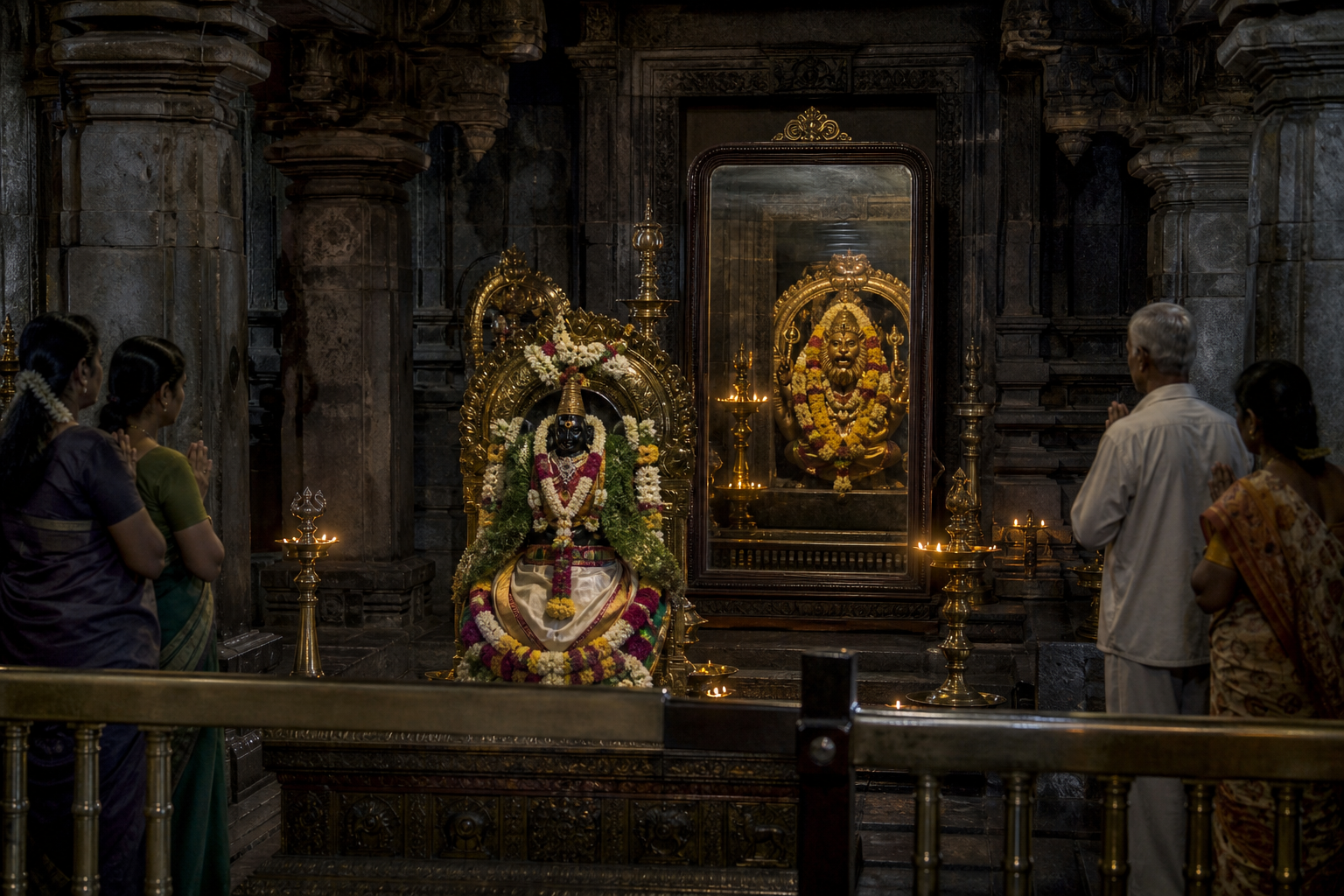
The defining feature of Ghati is not Subramanya alone. Lord Lakshmi Narasimha is also enshrined in the sacred complex. This conjunction gives the pilgrimage a layered character: you encounter two powerful forms of divine protection, courage, and compassion within one devotional setting.
That does not mean you should invent a symbolic theory or prescribe your own sequence of worship. The practical response is more restrained. Enter knowing that both deities matter, then follow the route and directions in force at the temple. If access allows darshan of both, do not hurry past one because your personal prayer is addressed primarily to the other.
This distinction is especially useful if you arrive with a specific wish. A personal purpose may bring you to the temple, but it need not narrow your attention. Offer that concern to Lord Subramanya, receive the presence of Lakshmi Narasimha with equal reverence, and resist turning darshan into a transaction in which one ritual is expected to produce one guaranteed result.
If you are accompanying relatives whose devotional emphasis differs from yours, the shared complex also gives you a practical lesson in Hindu worship. Unity does not require sameness. Each person can hold a distinct prayer while the group honours the full sacred character of the temple.
Let the Swayambhu tradition shape your darshan
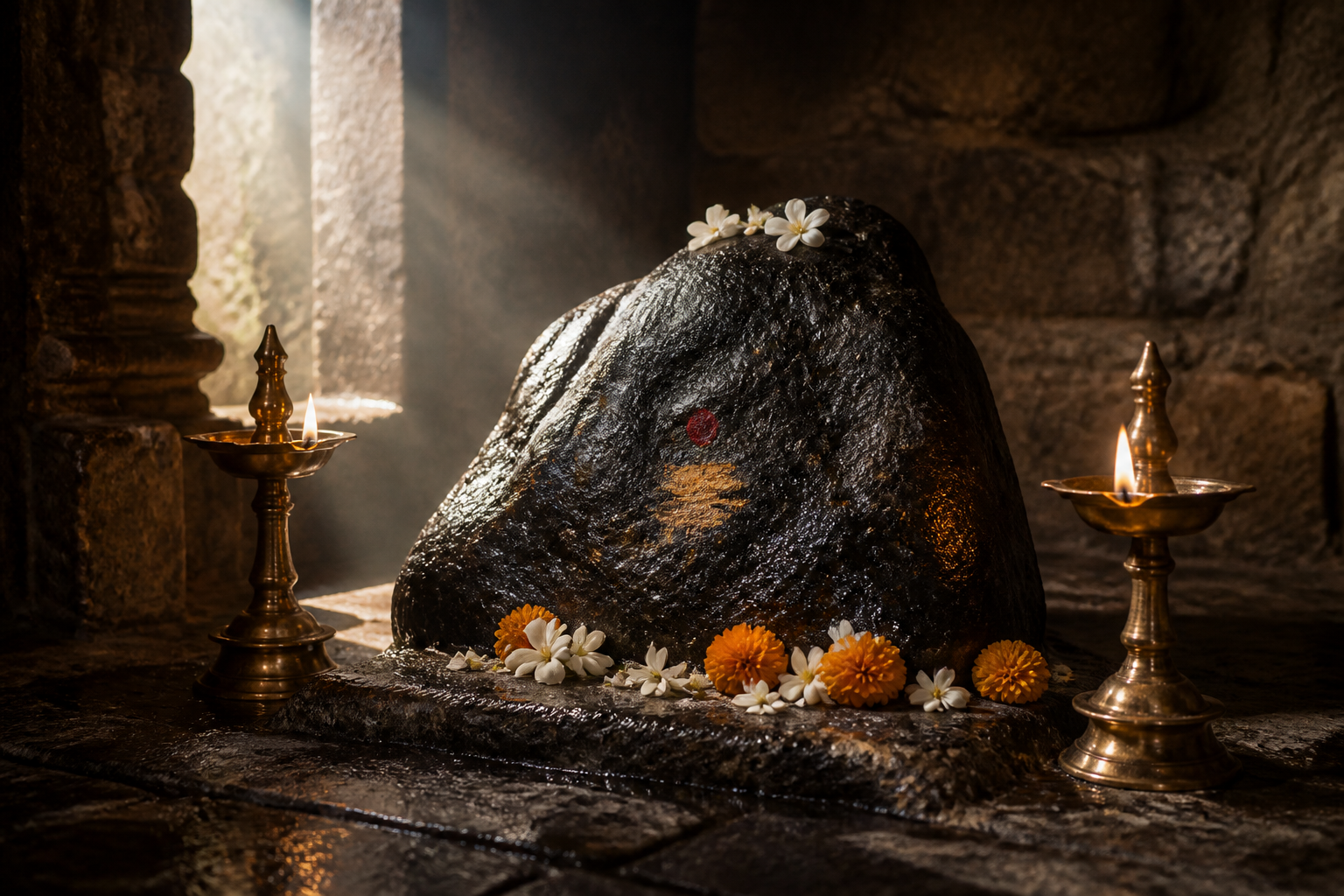
Local tradition reveres the Subramanya murti at Ghati as Swayambhu. In ordinary Hindu usage, Swayambhu identifies a sacred form believed to be self-manifested rather than merely conceived and fashioned as a human commission. The term concerns the mode of divine presence; it is not simply another way of saying that a murti is old, rare, or artistically valuable.
That understanding should change the posture with which you enter. Darshan is not a close inspection of an exhibit. You place yourself attentively before the deity, receive the sight permitted by the shrine, and respect the physical boundaries around the sacred form. If photography, touching, or close access is restricted, accepting that boundary is part of the worship rather than an inconvenience surrounding it.
You also do not need to fill every moment with words. If you know a prayer or mantra used in your family practice, recite it as appropriate. If you do not, join your palms, steady your attention, and state your prayer inwardly and plainly. Silence is better than improvising a ritual and then worrying whether you performed it correctly.
A useful inner sequence is intention, darshan, and response. Know why you have come. Stand before the deity without mentally bargaining over the outcome. Then decide what discipline you will carry away. The sacredness of a Swayambhu shrine is honoured not only by what you ask there but also by how you live after leaving it.
Keep offerings simple and let local custom lead
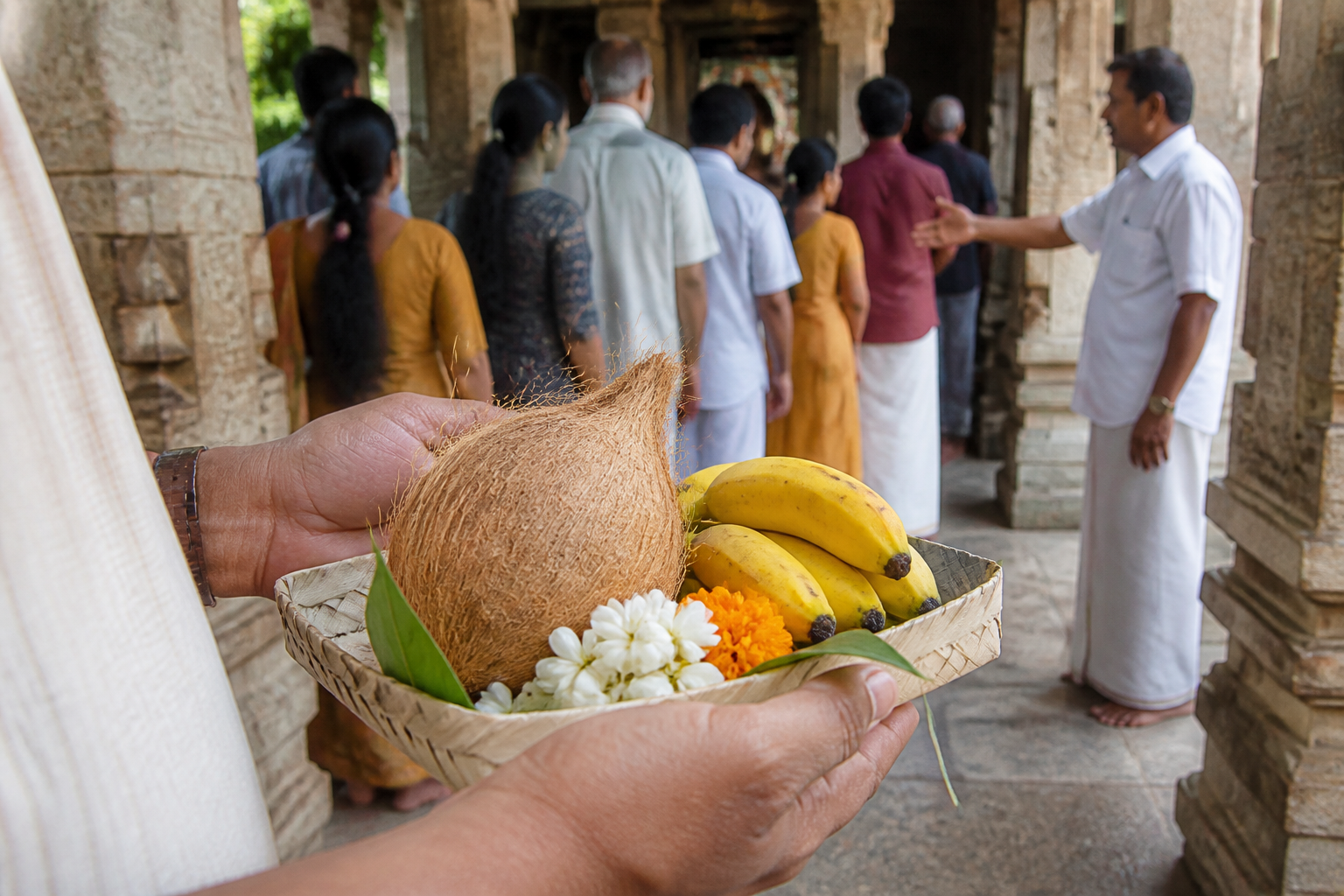
Ghati’s devotional atmosphere is associated with simple offerings, regular observances, and an unhurried experience of darshan. This is reassuring if you are coming without an elaborate ritual plan. Attention and humility matter more than performing complexity for its own sake.
The important word, however, is local. Hindu temples are living institutions with their own procedures. An offering accepted at one Subramanya shrine may be handled differently at another. A remembered family custom may remain meaningful to you without automatically becoming the temple’s public procedure.
When you arrive, look for posted directions before entering a queue or approaching an offering point. If anything remains unclear, ask a focused question: Is this offering accepted here? Where should it be presented? Is there a prescribed queue or counter? May visitors sit in this area after darshan? A precise question is easier for temple personnel to answer than a broad request to explain every custom.
If your purpose is a named seva, vrata, festival observance, or family ceremony, verify the current arrangement before you set out. Confirm the exact name of the observance, when participants must arrive, whether advance registration is required, what the temple provides, and what devotees may bring. Do not build a journey around an unofficial timetable or assume that ordinary darshan and participation in a special observance follow the same process.
Families, students, and travellers all come to this shrine. Shared space therefore requires small acts of discipline: keep the queue moving, avoid blocking another person’s view, lower your voice, and use only designated places for waiting or reflection. These actions may look procedural, but they protect the devotional atmosphere for everyone.
Give the pilgrimage enough time to work on you
Ghati Subramanya Temple stands near Doddaballapur, approximately 60 kilometres from Bengaluru. Its road approach through Doddaballapur makes it suitable for a day pilgrimage. Distance alone, however, does not tell you how long the visit will take. Road conditions, the temple calendar, and on-site arrangements can vary, so verify current practical details instead of treating an approximate distance as a journey-time promise.
A rushed itinerary weakens one of Ghati’s most valuable qualities. The movement from Bengaluru toward the rural surroundings near Doddaballapur creates a natural transition from daily urgency to devotional attention. Use it deliberately. Set aside work calls, reduce casual phone use, and decide what concern you want to place before the deities before you reach the temple entrance.
Do not schedule your return so tightly that an ordinary delay turns darshan into a race. Leave room to follow the actual queue, receive the presence of both Subramanya and Lakshmi Narasimha, and sit quietly afterward if the temple permits it. The point is not to manufacture a dramatic spiritual experience. It is to make enough inward space to notice what disciplined worship asks of you.
The temple’s quiet routines also express values recognised across Bharat’s Dharmic traditions: devotion, discipline, and compassion. Hindu, Buddhist, Jain, and Sikh paths are not interchangeable, and their theological differences should not be erased. Yet these virtues provide a genuine ethical meeting ground. At Ghati, you can practise them concretely by attending fully, respecting the community around you, and refusing to make your own convenience the measure of sacred custom.
Before leaving home, decide whether you are making an ordinary darshan visit or travelling for a specific observance. For ordinary darshan, keep your plan simple and your time generous. For a special observance, confirm its present requirements directly. Then arrive ready to honour both sacred presences, listen to local guidance, and carry one chosen discipline back into daily life.
References
