
If you are arranging a November vrata, temple visit, or family puja, a festival date alone is not enough. You also need to know whether the observance follows a fixed temple schedule, spans several lunar days, or depends on a tithi boundary that can shift with location.
Three anchors make the month easier to plan: Tiruchanoor’s rites on November 16, the six-day Champa Sashti observance from November 21 to 26, and the Tritiya-to-Chaturthi transition on November 23. Put those dates into your civil calendar first, then verify the local Panchang details before making a sankalpa or choosing a muhurta.
The November dates to place on your calendar
| Date | Observance or Panchang condition | What you can plan now | What still needs local confirmation |
|---|---|---|---|
| November 16, 2025 | Laksha Kumkumarchana at Tiruchanoor from 8:00 AM, followed by Ankurarpanam in the evening | Temple travel, attendance plans, modest clothing, and a quiet devotional routine | Entry arrangements, reporting time, access rules, and the detailed evening schedule |
| November 21-26, 2025 | Champa Sashti from Shukla Paksha Pratipada through Sashti | A sustainable six-day vrata, daily worship, bhajans, seva, and a possible visit to a Khandoba temple | Daily tithi boundaries, temple programs, and rules followed by your family or sampradaya |
| November 23, 2025 | Shukla Paksha Tritiya until 4:56 PM, followed by Shukla Paksha Chaturthi | Tritiya-oriented constructive work earlier in the day and Ganesha worship after the transition | The boundary in your city, Nakshatra, Moon Rashi, Rahu Kalam, and any activity-specific muhurta |
Key takeaways
- Reserve November 16 if you intend to attend the Tiruchanoor rites; 8:00 AM is the ritual start given for Laksha Kumkumarchana, not automatically your arrival or entry time.
- Treat November 21-26 as one continuous Champa Sashti vrata rather than six unrelated festival dates.
- On November 23, do not label the entire civil day as either Tritiya or Chaturthi. The stated change occurs at 4:56 PM.
- Never copy a tithi time into a sankalpa without checking the city and regional Panchang to which that time applies.
Read the Panchang in layers, not as a list of dates

Your Gregorian calendar tells you when to take leave or arrange transport. The Panchang tells you the lunar and ritual character of the time in which an action occurs. Confusion begins when those two functions are treated as interchangeable.
A tithi is not locked to midnight. It can end in the morning, afternoon, or evening, so one Gregorian date may contain portions of two tithis. November 23 demonstrates the point clearly: Tritiya occupies the earlier part of the stated day, while Chaturthi begins after 4:56 PM. If your observance requires a particular tithi, the boundary matters more than the date printed at the top of the page.
Location matters as well. Tithi boundaries, Nakshatra and Moon Rashi readings are ordinarily checked through local time, longitude, latitude, and sunrise calculations. A time copied from a calendar prepared for another city is useful as an early planning clue, but it is not sufficient for a precise ritual decision.
- Start with the observance. Decide whether you are following a temple program, a household vrata, or a daily Panchang condition.
- Write down the place. Use the city where the ritual will actually occur, not the location of the person organizing it from elsewhere.
- Check the tithi window. Record both the tithi and its ending time rather than copying only the name of the lunar day.
- Add Nakshatra and Moon Rashi only from the same local Panchang. Mixing values from different cities can create a calendar that appears precise but is internally inconsistent.
- Apply muhurta filters last. A suitable tithi does not make every minute suitable. Check Rahu Kalam, Abhijit Muhurat where relevant, and the rules attached to the activity you intend to perform.
- Let family practice govern the sankalpa. If your household or temple follows a particular regional almanac, do not replace it casually with a generic online calendar.
This layered method also prevents a common mistake: assuming that every observance occurring in the same week must follow the same calendrical logic. Tiruchanoor’s November 16 rites have announced temple timings. Champa Sashti unfolds across a six-day vrata. November 23 requires attention to an intra-day tithi change. Each calls for a different kind of preparation.
November 16: prepare properly for Tiruchanoor’s sacred prelude
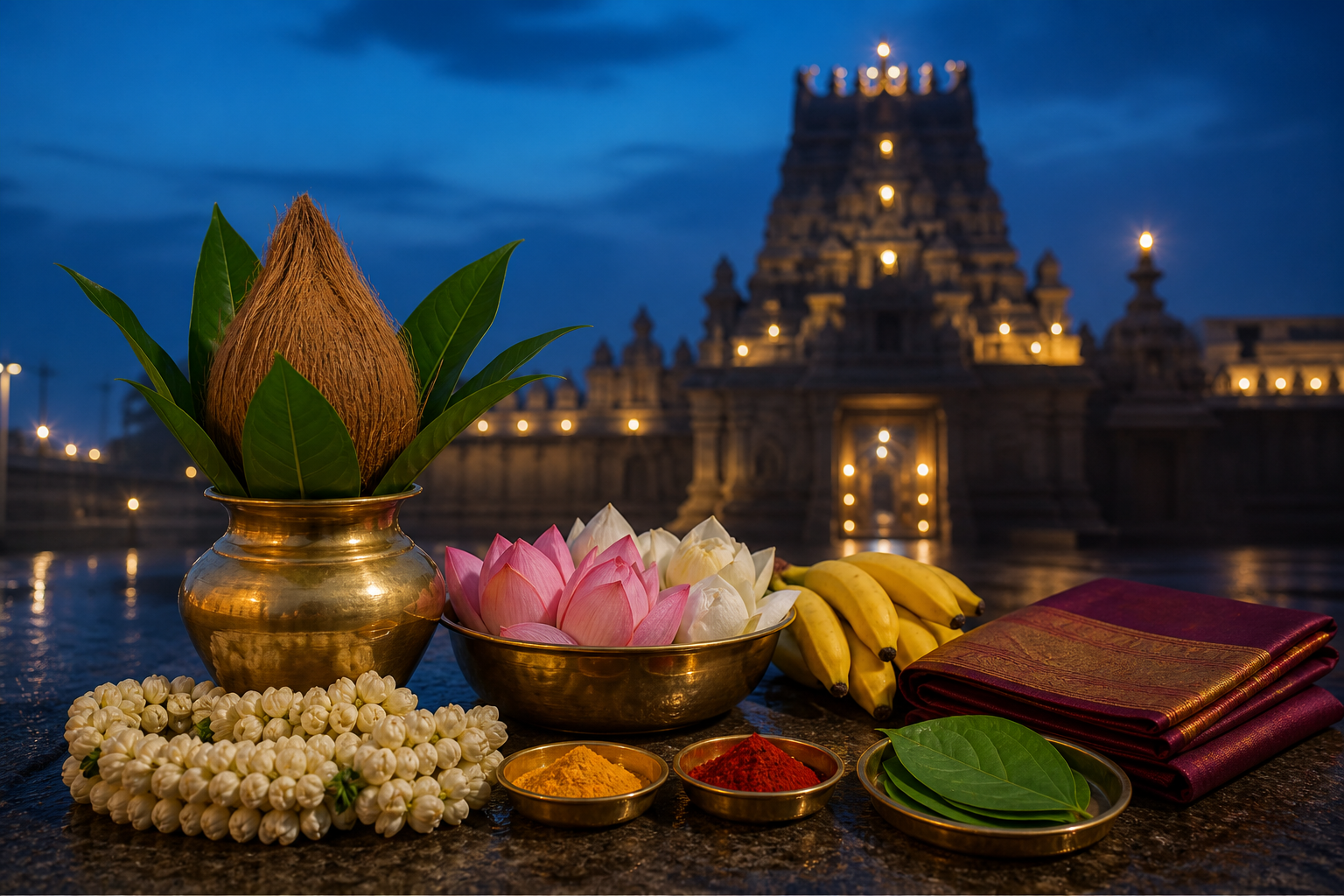
At Sri Padmavathi Ammavari Temple in Tiruchanoor, Laksha Kumkumarchana is scheduled to begin at 8:00 AM on November 16. Kumkum is offered one lakh times to Padmavathi Ammavaru, who is revered in association with the grace and auspiciousness of Goddess Lakshmi. The repeated archana is the heart of the rite; it is not simply a large ceremonial display.
Ankurarpanam follows in the evening. The ceremonial sowing of seeds marks a sacred beginning and serves as the prelude to the annual Padmavathi Brahmotsavams. Its imagery is practical as well as devotional: growth is invoked by planting something that must subsequently be nurtured. The day’s two rites therefore move from concentrated worship in the morning to preparation, renewal, and collective welfare in the evening.
If you plan to attend, distinguish the announced ritual time from the arrangements a pilgrim needs. Confirm admission procedures and reporting time with the temple, dress modestly, and preserve quiet during mantra recitation. Do not assume that arriving at 8:00 AM will be sufficient merely because the archana begins then.
If you will observe from home, you do not need to imitate the scale of the temple ceremony. Follow the archana method permitted by your family tradition, keep the number of offerings manageable, and give full attention to each name or mantra. A small, disciplined observance is more coherent than claiming a laksha-scale practice that you cannot complete properly.
The rites occur during Karthika Masam and lead into the Brahmotsavams. That context should shape your intention: November 16 is not an isolated auspicious date, but a day of preparation for a larger sacred cycle.
November 21-26: make Champa Sashti a sustainable vrata
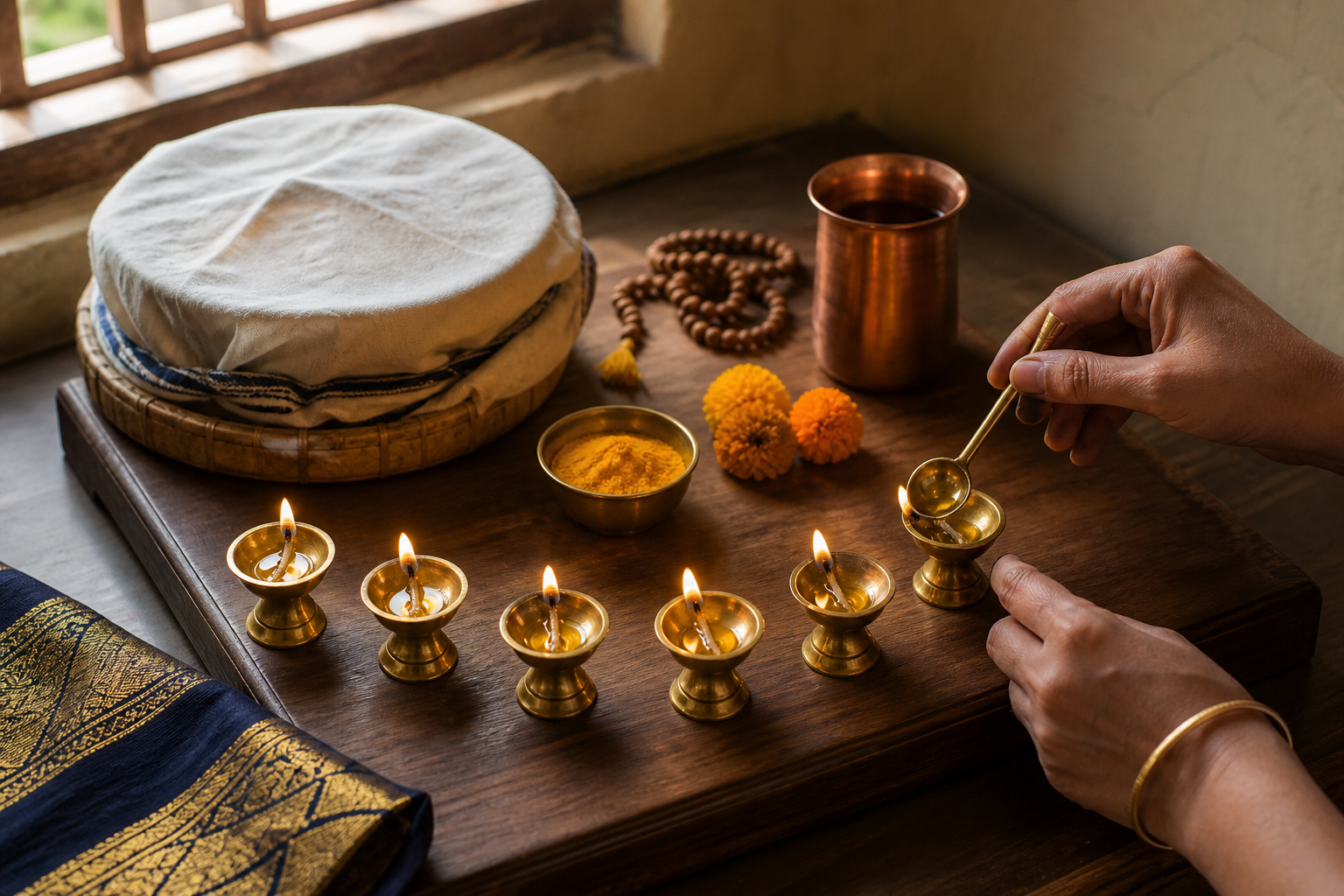
Champa Sashti, also known as Malhari Sashti, begins on November 21 and concludes on November 26. The observance runs from Pratipada to Sashti in the bright fortnight of Margashirsha. Its six-day structure matters. You are entering a vrata with a beginning, a daily rhythm, and a deliberate conclusion, not merely waiting for the final festival day.
The deity is Khandoba, or Malhari Martanda, revered as a form of Shiva and especially beloved in Maharashtra. His victory over Mani and Malla expresses the triumph of dharma over adharma. The useful question for your vrata is therefore not only what you will abstain from, but what disorder you will actively correct through discipline, truthfulness, service, or steadier conduct.
Decide your rule before Pratipada begins. Many devotees undertake fasting or partial dietary restraint, while households and temples maintain daily puja, abhisheka, and bhajans. Choose a form that you can sustain through Sashti. A vrata is not improved by harming your health; if dietary restriction is unsafe for you, use an appropriate devotional restraint agreed with your family tradition and, where health is involved, your clinician.
- November 21: state the vrata clearly. Keep the sankalpa specific enough that you know what you are undertaking and when it ends.
- During the six days: maintain a repeatable daily core such as puja, abhisheka where customary, Khandoba nama-japa, or bhajans. Consistency is more important than adding a different elaborate practice every day.
- Add seva: connect the discipline to another person’s welfare through anna-dana, a temple service opportunity, or practical help within your community.
- November 26: complete the vrata consciously on Sashti with the concluding worship or archana followed in your household or temple. Do not allow the observance simply to fade after the final meal restriction.
Jejuri is a major center of Khandoba worship and a natural destination for devotees during this period. If you plan a pilgrimage, check the temple’s program, transport, and crowd arrangements before departure. Use offerings that are permitted locally, avoid leaving ritual material as waste, and treat crowd discipline as part of seva rather than as an inconvenience outside the vrata.
November 23: work with the Tritiya-to-Chaturthi change
Sunday, November 23 sits inside the Champa Sashti period, but it also has its own daily Panchang character. Shukla Paksha Tritiya continues until 4:56 PM, after which Shukla Paksha Chaturthi begins.
- Before the verified transition: Tritiya is traditionally associated with gentle beginnings and growth-oriented activity. This is the more natural portion for study, orderly preparation, devotional practice, or a modest constructive beginning.
- After the verified transition: Shukla Chaturthi turns attention toward Sri Ganesha. A simple Ganesha puja or nama-japa can mark the change and place the removal of obstacles within a devotional discipline.
- Across the day: the waxing fortnight is broadly supportive of constructive, sattvic activity, but that broad quality does not replace an activity-specific muhurta.
Do not mistake 4:56 PM for a universal auspicious time. It is a tithi boundary stated in local-time terms, and exact timing can vary by place. It tells you when the lunar day changes in the relevant calculation; it does not tell you that every activity should begin at that minute.
The same caution applies to Nakshatra and Moon Rashi. A responsible answer requires the location and the relevant local calculation. If you are planning travel, a new initiation, or a formal ritual, consult your regional Panchang or temple almanac rather than filling those fields from an unrelated city. Check Rahu Kalam and any applicable Abhijit Muhurat only after confirming the local tithi window.
A ten-minute setup for the month
- Create a November 16 entry for Tiruchanoor and label 8:00 AM as the archana start, not your assumed arrival time.
- Block November 21-26 as a single Champa Sashti observance and write your chosen daily vrata rule into the first entry.
- Add a November 23 reminder before 4:56 PM stating, “Verify this tithi boundary for the ritual city.”
- Keep fixed temple schedules and calculated Panchang windows in separate calendar fields so that one is not mistaken for the other.
- On the preceding day, confirm the local tithi, Nakshatra, Moon Rashi, Rahu Kalam, and temple notices relevant to what you will actually do.
Make those three calendar entries before you close this page. Once the civil dates, vrata structure, and local-time checks are separated, November becomes much easier to observe with both devotion and calendrical care.
References
- DharmaRenaissance Blog — November 23, 2025 Panchang: Precise Tithi (Tritiya to Chaturthi), Nakshatra & Rashi Guide
- Hindu Pad — Champa Sashti 2025: Dates, Sacred Meaning, and Maharashtra Traditions Honoring Khandoba
- Hindu Pad — Tiruchanoor Laksha Kumkumarchana, 16 Nov 2025: Sacred Prelude to Padmavathi Brahmotsavams
