
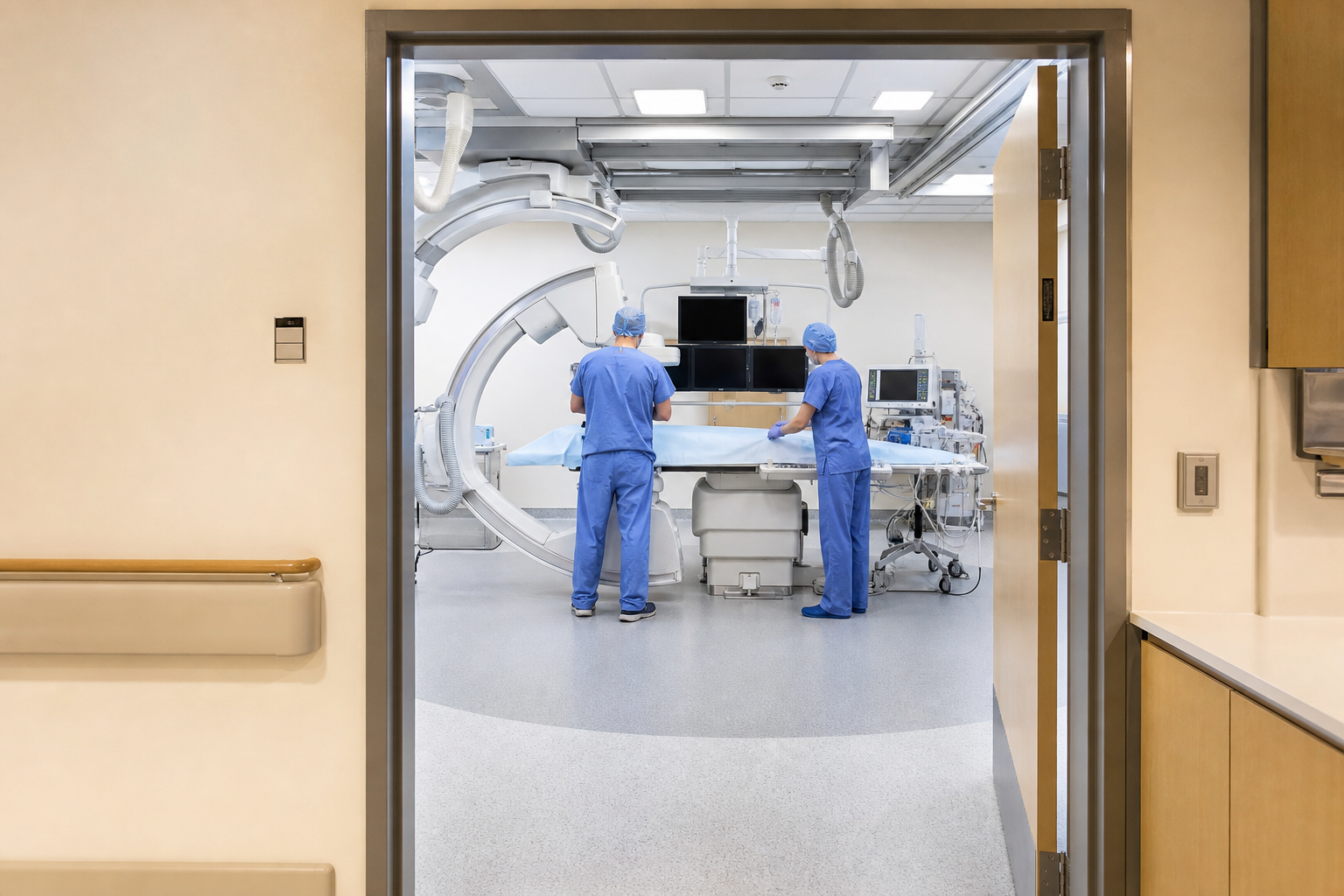
If you came here after seeing worried messages about HH Niranjana Swami, hold on to one essential distinction: the confirmed information concerns a planned angioplasty, not a completed postoperative outcome.
HH Niranjana Swami is scheduled for a minimally invasive angioplasty expected to take approximately 2 to 2.5 hours. It is not open-heart surgery. Local anesthesia is planned, he is expected to remain conscious and able to speak with the physicians, and Srila Prabhupada chanting will be audible during the procedure. No result or individualized recovery timetable has been confirmed in the information presently available.
Key takeaways
- The confirmed status is scheduled, not completed.
- The planned procedure is a minimally invasive angioplasty, not open-heart surgery.
- The expected procedure time is approximately 2 to 2.5 hours. That is not a promised completion, discharge, or recovery time.
- Local anesthesia is planned, allowing HH Niranjana Swami to remain conscious and communicate with the medical team.
- Srila Prabhupada chanting will be audible, providing a familiar devotional atmosphere alongside clinical care.
- Routine monitoring and observation are expected afterward, but individual outcomes and recovery needs can vary.
- Devotees should preserve the exact status when sharing the news and wait for an appropriate channel to confirm any outcome.
Why the distinction from open-heart surgery matters

Angioplasty and open-heart surgery are not interchangeable descriptions. Calling the planned intervention open-heart surgery would needlessly magnify fear and would be factually wrong. Angioplasty is less invasive, ordinarily places less physiological stress on the patient, and generally follows a more streamlined recovery pathway than open-heart surgery.
Less invasive does not mean trivial or risk-free. This remains a cardiac procedure intended to address a specific blockage, and it requires skilled physicians, monitoring, and decisions based on the individual patient. The useful middle ground is accuracy: you need not imagine an open-chest operation, but you also should not turn a reassuring procedural distinction into a guarantee about the result.
The anesthesia plan is another point that can easily be misunderstood. Remaining conscious does not indicate that the condition is either mild or severe; it describes how this procedure is planned. Local anesthesia allows HH Niranjana Swami to stay aware, communicate discomfort or other needs, and converse with the medical team while they monitor him.
What the 2 to 2.5-hour window does and does not tell you

The stated 2 to 2.5 hours is an approximate procedure duration. It should not be treated as a countdown after which devotees can assume the angioplasty is finished. Preparation, clinical judgment during the intervention, and observation afterward are separate parts of the care pathway.
Routine post-procedure monitoring and measured observation should therefore be expected. A quiet period after the anticipated procedure window is not, by itself, evidence of a complication. It may simply mean that the medical and care teams are concentrating on observation before any wider communication.
There is presently no confirmed discharge time, activity schedule, visitor plan, or recovery milestone to pass along. Those details depend on the outcome and the physicians’ assessment. If a later message supplies them, treat that message as a new stage of the update rather than filling the present gaps with what usually happens to another patient.
How to share the update without feeding rumor
Health news travels quickly through temple groups, private chats, and social media. A small change of tense can turn a planned procedure into an invented outcome. Before you forward anything, use this five-part check:
- Preserve the status. Scheduled, underway, completed, and recovering are four different claims. Use only the one that has been confirmed.
- Keep the procedure details together. Say angioplasty, local anesthesia, approximately 2 to 2.5 hours, and not open-heart surgery. Leaving out the distinction can create unnecessary alarm.
- Mark the boundary of what is known. Do not add a result, discharge expectation, or prognosis when none has been provided.
- Avoid amateur medical interpretation. The choice of angioplasty, the use of local anesthesia, or the length of the planned procedure does not give an outsider enough information to judge his overall condition.
- Wait for the appropriate channel. Repeated private requests for updates can burden the very people supporting his care. Let them communicate when reliable information is ready.
A responsible message can be this simple: HH Niranjana Swami is scheduled for a minimally invasive angioplasty under local anesthesia. It is not open-heart surgery; he is expected to remain conscious, and further information should be awaited through the appropriate channel.
If you administer a community group, add the time at which you received any future bulletin and replace outdated wording when the status changes. That prevents an old scheduled notice from circulating after newer information becomes available.
Let devotional support strengthen care, not compete with it
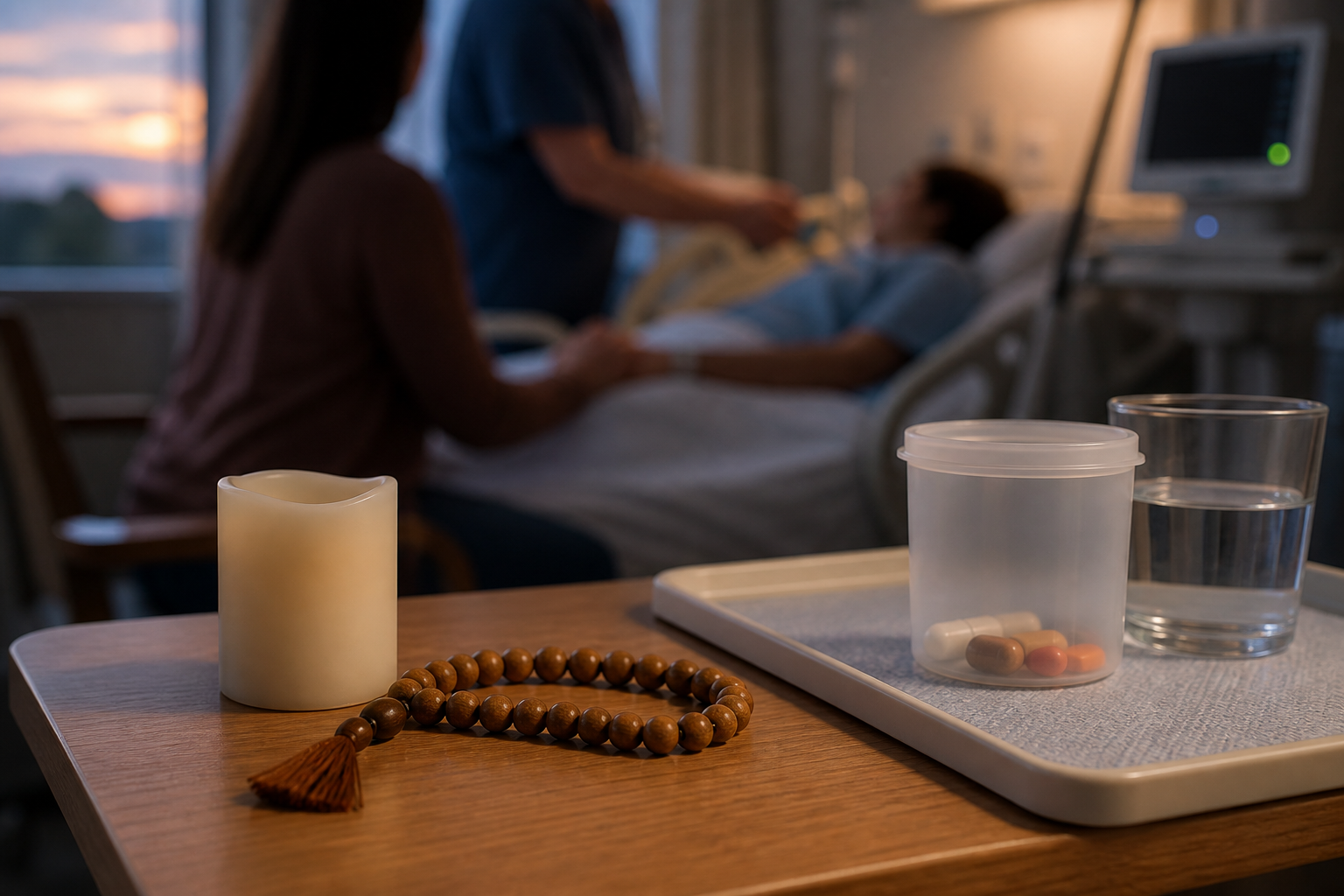
Srila Prabhupada chanting is planned to remain audible throughout the angioplasty. For a devotee, familiar sacred sound can steady attention and preserve a devotional orientation in an unfamiliar clinical setting. HH Niranjana Swami’s ability to remain conscious and communicate also means that this spiritual support can accompany active contact with the physicians.
The boundary is straightforward: sacred sound supports the person, while the medical team directs the procedure. Chanting, japa, meditation, and prayer should never be presented as substitutes for cardiac treatment or as guarantees of a particular outcome.
You can offer meaningful support without seeking access to private medical details. Set aside time for japa or prayer, keep messages brief, refrain from forwarding speculation, and help others use precise language. Dharmic solidarity is expressed not only through prayer but also through truthful speech, restraint, and respect for the dignity of the person receiving care.
The next meaningful communication will be one that confirms whether the procedure has taken place and shares whatever outcome is appropriate to disclose. Until then, keep planned as planned. Share the verified facts, offer your prayers, and allow the physicians and those close to HH Niranjana Swami the space needed for attentive care.
References
