
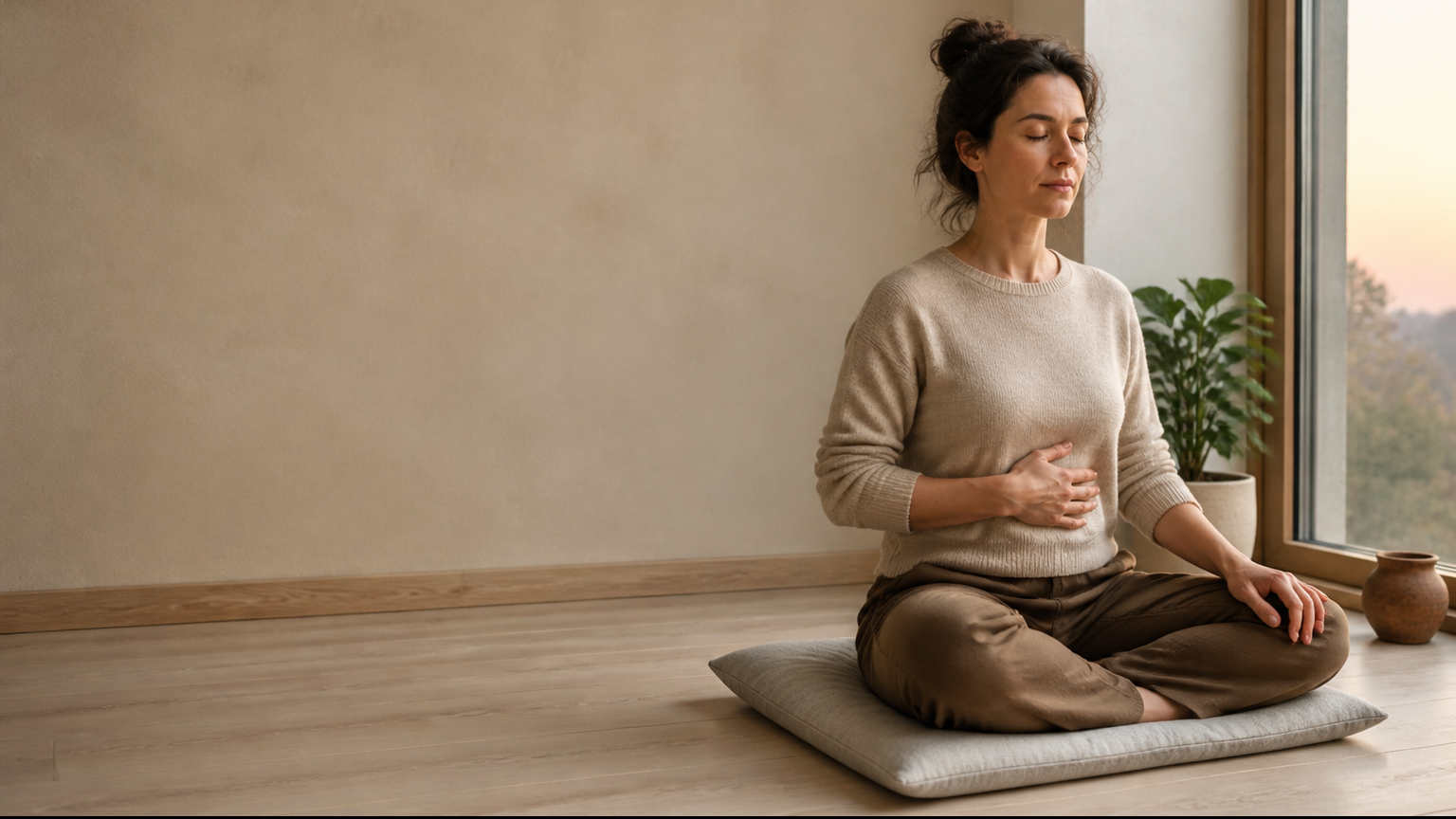
Your mind often becomes noisiest just before you need it most: before a difficult conversation, after an upsetting message, or while trying to sleep with an unfinished day still circling in your thoughts. At such moments, an elaborate spiritual routine can feel like one more demand.
A breath-centered practice gives you a smaller doorway. You do not have to suppress emotion, force a special state, or pretend that a real problem has disappeared. You give attention one steady place to return, creating enough space between impulse and action for discernment to reappear.
Choose one form of breath practice before you begin
Breath awareness and formal pranayama are not always the same undertaking. Pranayama may include deliberately regulated rhythms, ratios, or retentions. The introductory practice below uses none of those. It keeps respiration natural and trains attention through repetition.
Choose the form that gives your wandering mind the clearest route back:
- Bare breath awareness: Feel the breath at the nostrils, chest, or abdomen without adding words. This is the cleanest starting point if mantra is not part of your practice or if mental sound feels distracting.
- Soham remembrance: Hear So inwardly as you inhale and Ham as you exhale. In Vedantic use, Soham points toward the recognition expressed as I am He: the individual self is not ultimately separate from universal reality. Some lineages reverse the syllables, so follow the form given by your teacher rather than trying to standardize every tradition.
- Breath-led movement: If bodily restlessness makes sitting difficult, begin with gentle asana coordinated with unforced breathing. Then sit while the body is quieter. Mindful movement can release muscular tightness and prepare attention for stillness.
Do not rotate among all three during one sitting. The mind settles more readily when it has one clear task. Pick the form that reliably brings you back, not the one that sounds most advanced.
A precise five-minute practice you can repeat daily
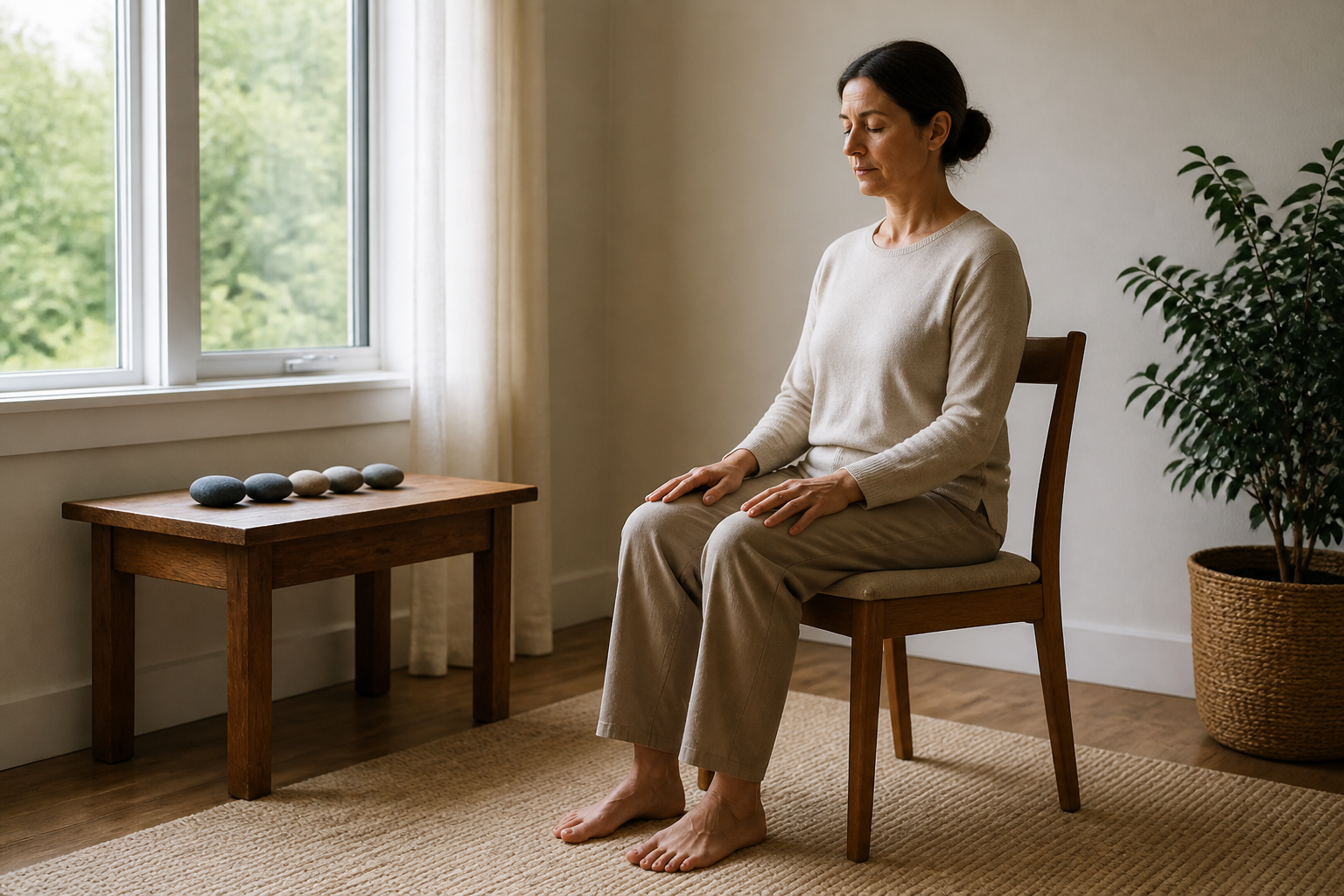
Five minutes is long enough to establish a real period of attention and short enough to fit into an ordinary morning. Its main advantage is repeatability. A modest daily discipline is more useful than an ambitious session you keep postponing.
- Set a timer for five minutes. Silence other alerts. Decide that nothing else needs to be accomplished during this interval.
- Sit in a stable position. Use a chair, cushion, or another seat that does not require strain. Keep the spine aligned without making the body rigid. Rest your hands and soften your gaze or close your eyes.
- Let breathing find its own rhythm. Do not take a ceremonial deep breath. Do not hold the breath or force it to become slower. First notice how respiration is already moving.
- Select one place to feel it. Stay with the touch of air near the nostrils, the movement of the chest, or the rise and fall of the abdomen. Changing locations every few breaths gives the mind another way to wander.
- Add Soham only if you chose the mantra form. Let So accompany the inhalation and Ham accompany the exhalation inwardly. Do not chant aloud or squeeze the syllables into the breath. The breath itself can carry this unforced ajapa-japa, or spontaneous remembrance.
- Return without argument. When a thought, sound, memory, or feeling captures attention, notice that attention has moved and place it back on the next breath. Do not spend the remaining session judging the distraction.
- Pause when the timer ends. Notice the condition of the body and mind before reaching for a device or standing. Choose the next action deliberately.
Success does not mean maintaining an empty mind for five uninterrupted minutes. The essential movement is noticing that attention wandered and returning it. That return is abhyasa, practice through repetition. Consistency, gentleness, and nonjudgment matter more here than intensity.
If the exhalation naturally becomes softer and more even, allow it. Do not push air out to make the practice look calm. Formal breath retention, forceful pranayama, or prescribed ratios belong to a different level of instruction and should not be improvised from a basic awareness exercise.
This is a contemplative discipline, not a substitute for medical or psychological care. If focusing on respiration causes dizziness, marked breathlessness, panic, or escalating distress, stop trying to regulate it. Open your eyes, feel your feet against the ground, and let breathing return to normal. Persistent or serious symptoms warrant help from an appropriate health professional; acute difficulty breathing requires urgent care, not an attempt to meditate through it.
Put the practice where reactivity actually begins

A peaceful sitting can remain isolated from the rest of life unless you connect it to the moments when speech and judgment become hurried. Keep the five-minute session as your foundation, then use a few natural breaths at predictable points of friction.
- Before a difficult conversation: Feel one complete inhalation and exhalation before speaking. Use Soham if it is already familiar. The purpose is not to make yourself agree; it is to hear the sentence you are about to say before another person has to receive it.
- Before an important decision: Step away from messages and arguments long enough to feel several unforced breaths. Then identify the actual choice in one sentence. Breath steadies attention, but clear wording prevents a vague fear from masquerading as a decision.
- After an emotional trigger: Let the breath interrupt the immediate reaction. Address the substance after the first surge has softened. Do not use breathing to deny anger, excuse another person’s conduct, or avoid a necessary boundary.
- At a daily transition: Attach the practice to waking, dawn, dusk, or the close of work. Transitions provide natural bridges from activity to stillness, so you do not have to depend on remembering at a random time.
- After gentle movement: If sitting begins with agitation, use a brief sequence of comfortable asana first. Stop moving, take your seat, and keep the same breath awareness for five minutes.
Inner peace is not passivity. A calmer mind can still refuse harm, correct falsehood, defend a boundary, or take firm dharmic action. The practical test is whether your response becomes clearer and less governed by the first impulse, not whether you become agreeable in every situation.
Join a quieter breath to clearer conduct
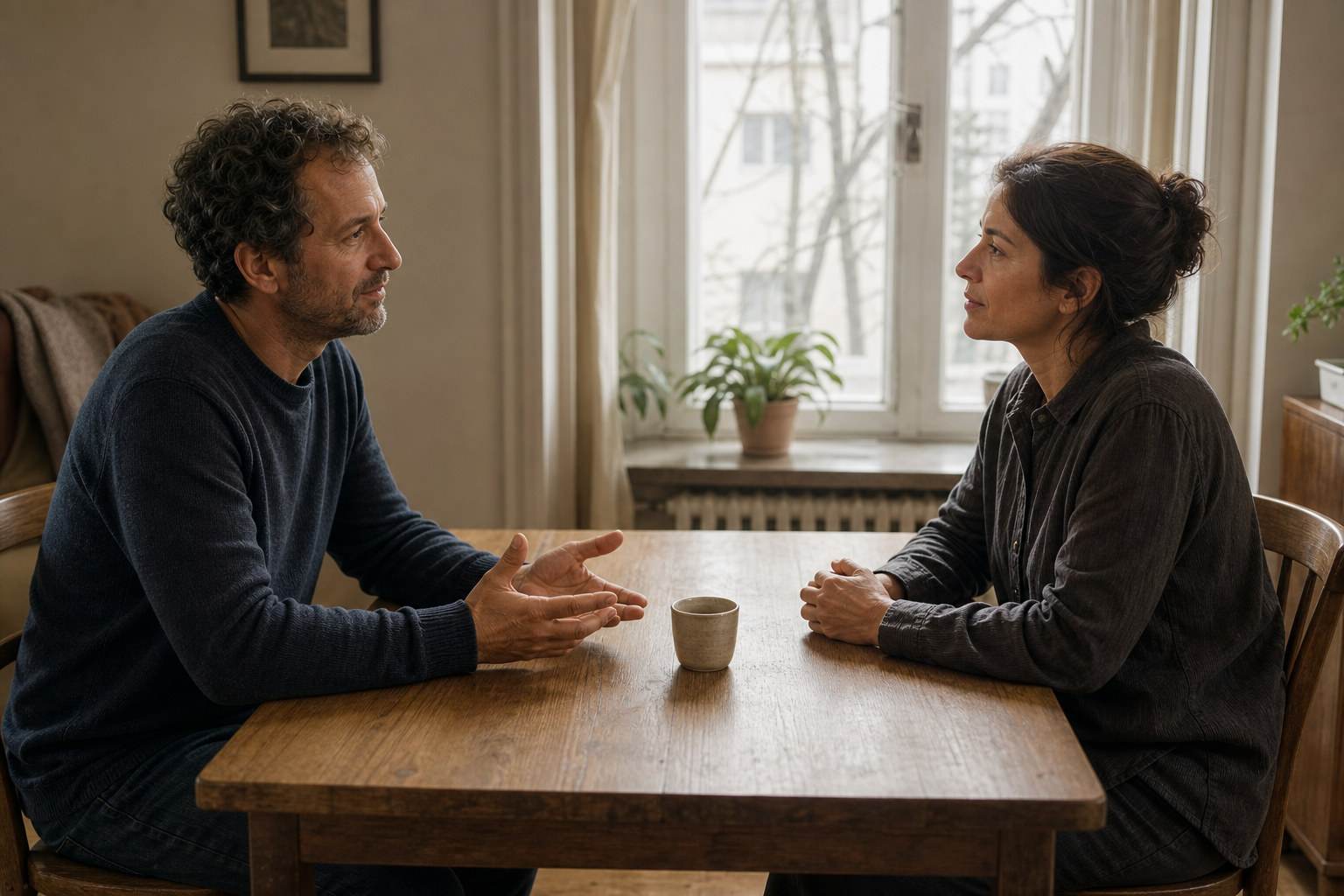
Turn temporary calm into an ethical practice
Breathing can settle a reactive moment, but it cannot make a dishonest or harmful pattern peaceful. Yoga therefore places practice beside yama and niyama. Nonviolence, truthfulness, moderation, contentment, and self-study reduce the conflicts that repeatedly disturb the mind.
At the end of your five minutes, ask one practical question: What am I about to do that will make the mind harder to sit with tomorrow? Then choose one correction while it is still possible:
- If a cutting reply is forming, let ahimsa govern its timing and wording.
- If you exaggerated or concealed something, correct it instead of rehearsing a defense.
- If repeated consumption is feeding agitation, practice moderation at the next opportunity rather than making a grand future promise.
- If comparison is dominating attention, name what is already sufficient before pursuing what is missing.
- If the same trigger returns every day, use self-study to identify the expectation beneath it.
This is where inner peace becomes more than a private sensation. The pause protects speech; truthful speech reduces later turmoil; reduced turmoil makes the next sitting more honest. Breath and conduct begin to reinforce each other.
Respect the distinct meanings carried by Dharmic traditions
Breath-centered disciplines appear across Dharmic paths, but their philosophical meanings should not be flattened into a single doctrine. Shared methods can support mutual respect without erasing important differences.
- In Hindu practice, breath awareness may support concentration, meditation, and citta-shuddhi, or purification and clarification of mind. In an Advaita setting, Soham reaches beyond temporary relaxation toward nondual recognition: the witness of changing thoughts and sensations is not confined to the identities passing through awareness.
- In Buddhist practice, anapanasati uses mindfulness of breathing to cultivate steadiness, clarity, and compassionate awareness. Its framework of anatta is not simply another name for the Vedantic teaching of atman, even when the practical experience of reduced reactivity appears similar.
- In Jain practice, samayik cultivates equanimity and strengthens ahimsa in thought, word, and deed. The breath can support collected attention, but ethical restraint remains indispensable.
- In Sikh practice, simran and Naam jap gather attention in remembrance of the One. Breath and sacred sound can soften self-centered reaction while keeping remembrance connected to conduct and service.
If you belong to a sampradaya or have received instruction from a teacher, use that lineage’s mantra, sequence, and interpretation. If you have not, bare awareness of natural breathing is a complete place to begin. You do not need to borrow a metaphysical claim you have not examined in order to practice attention sincerely.
Key takeaways
- Begin with five minutes at a repeatable daily transition rather than waiting for an ideal mood or a large opening in your schedule.
- Keep the introductory breath natural. Do not add force, retention, or ratios to make the exercise seem more advanced.
- Choose bare awareness, Soham remembrance, or gentle breath-led movement according to what helps attention return.
- Use a few conscious breaths before speech and decisions, but do not confuse calmness with agreement, passivity, or avoidance.
- Pair the practice with ahimsa, truthfulness, moderation, contentment, and self-study so that peace is supported by the way you live.
- Measure progress in ordinary life: notice whether you recover attention sooner, listen more fully, and make fewer replies that require repair.
Choose your next natural transition and reserve five minutes now. When it arrives, sit down, let the breath remain ordinary, and practice returning. Tomorrow, return again.
References
- DharmaRenaissance Blog — Soham Hamsah Explained: The Transformative Mantra of Oneness, Breath, and Inner Peace
- DharmaRenaissance Blog — Yoga and Inner Peace: How Breath, Mindfulness, and Movement Dissolve Daily Stress
