
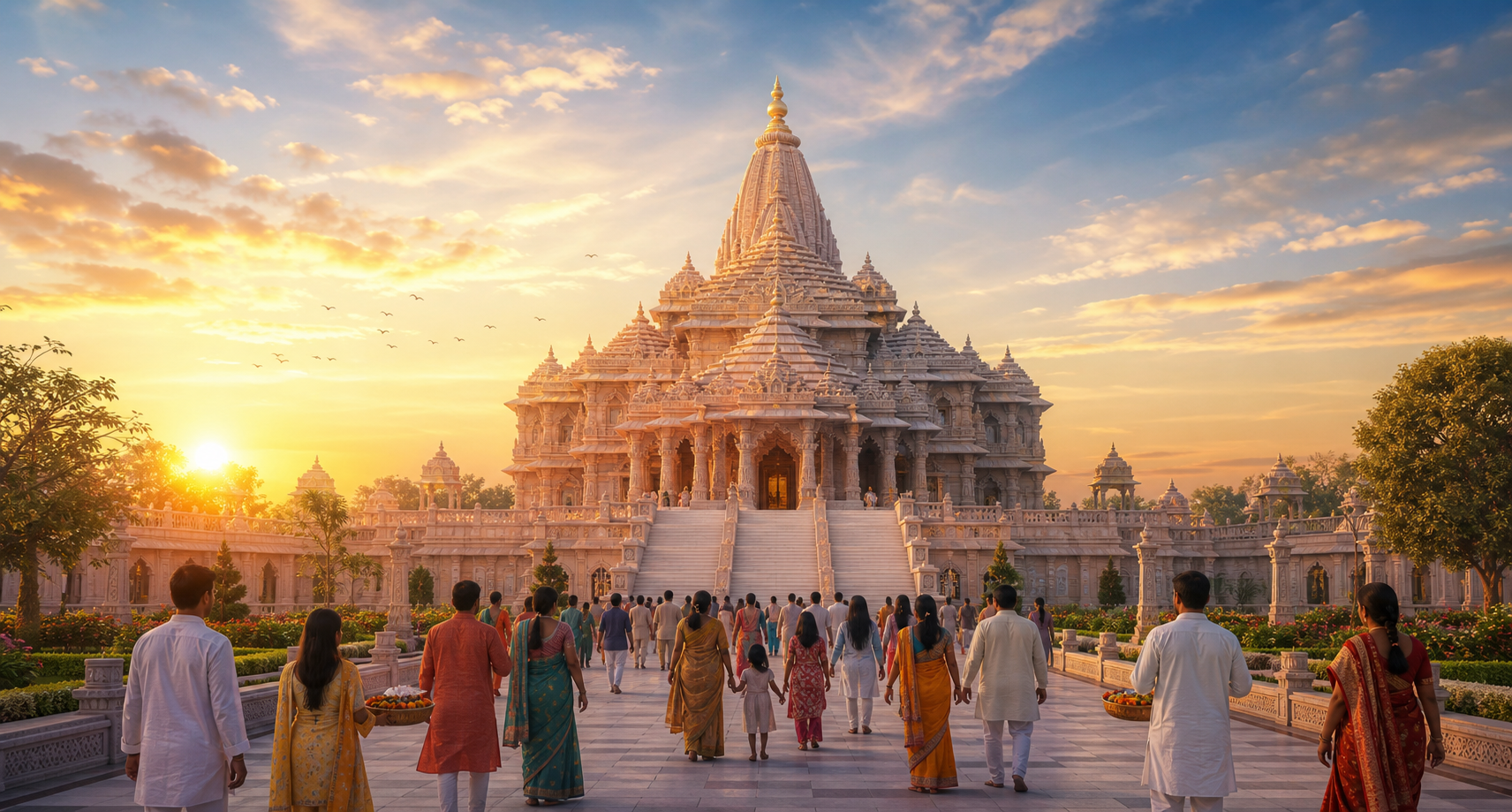
If the Ram Mandir fills you with gratitude, you may still wonder what reconciliation now asks of you. It does not ask you to dilute devotion, forget history, or apologize for treating Ayodhya as sacred. It asks a harder question: what will this civilizational achievement produce in your conduct?
A temple can preserve memory, anchor worship, and strengthen cultural confidence. Reconciliation begins when that confidence becomes disciplined enough to produce service, truthful speech, fair dealing, and respect for people who do not share every part of your account.
Healing begins with memory, not amnesia
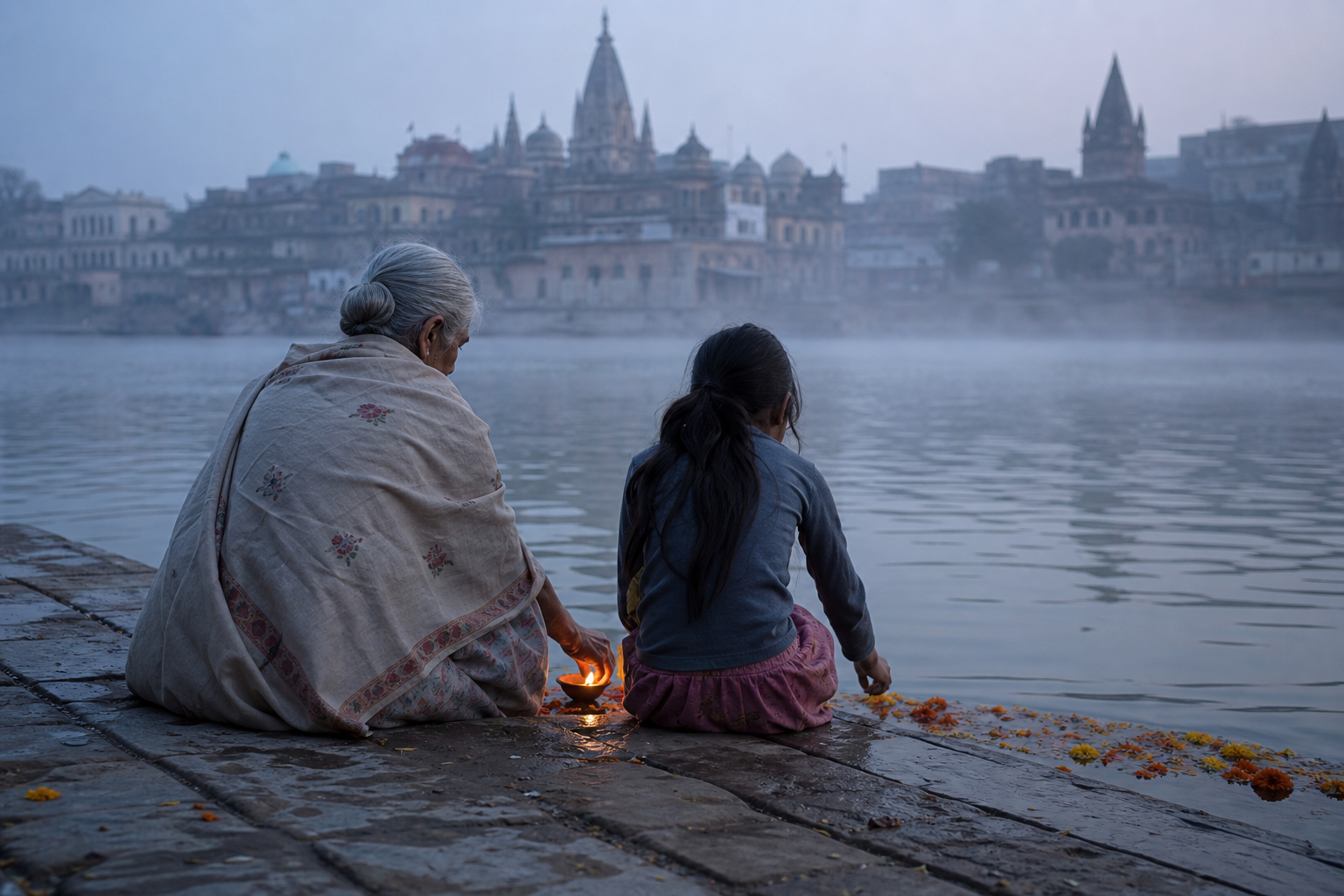
On 25 November 2025, Prime Minister Narendra Modi hoisted the saffron flag during the Ayodhya Dhwaj Arohan ceremony and spoke of "centuries-old pain" being put to rest. For devotees, the occasion carried more than ceremonial importance. It marked continuity at Shri Ram Janmabhoomi and invited a transition from inherited grievance to responsible remembrance.
That transition must not be confused with forgetting. A society that suppresses sacred memory does not reconcile; it merely postpones conflict. Hindus should be able to explain why Ayodhya matters, transmit that memory to their children, celebrate the mandir without embarrassment, and defend cultural inheritance through lawful means.
But memory and permanent mobilization are different things. Once every conversation is organized around injury, the wound becomes an identity that cannot be allowed to close. The past then stops instructing the present and starts consuming it.
- Remembrance says that the sacred significance of Shri Ram Janmabhoomi must not be erased.
- Closure says that a lawful outcome should create room for worship, rebuilding, and ordinary civic life.
- Reconciliation says that remembered injustice cannot become a standing license to degrade people living now.
This distinction protects Hindu memory from two opposite errors. One error demands silence in the name of harmony. The other turns celebration into humiliation. The first makes reconciliation depend on Hindu self-erasure; the second makes it depend on someone else’s submission. Neither reflects dharmic restraint.
Before you repeat a slogan, publish an image, or argue about Ayodhya, ask three questions. Does this honor Shri Ram, or does it merely insult an opponent? Does it distinguish a historical dispute from people alive today? Will it make truthful coexistence easier tomorrow? If the answer to the last two questions is no, revise the message without weakening the conviction behind it.
Dharmic reconciliation has an inward and an outward circle
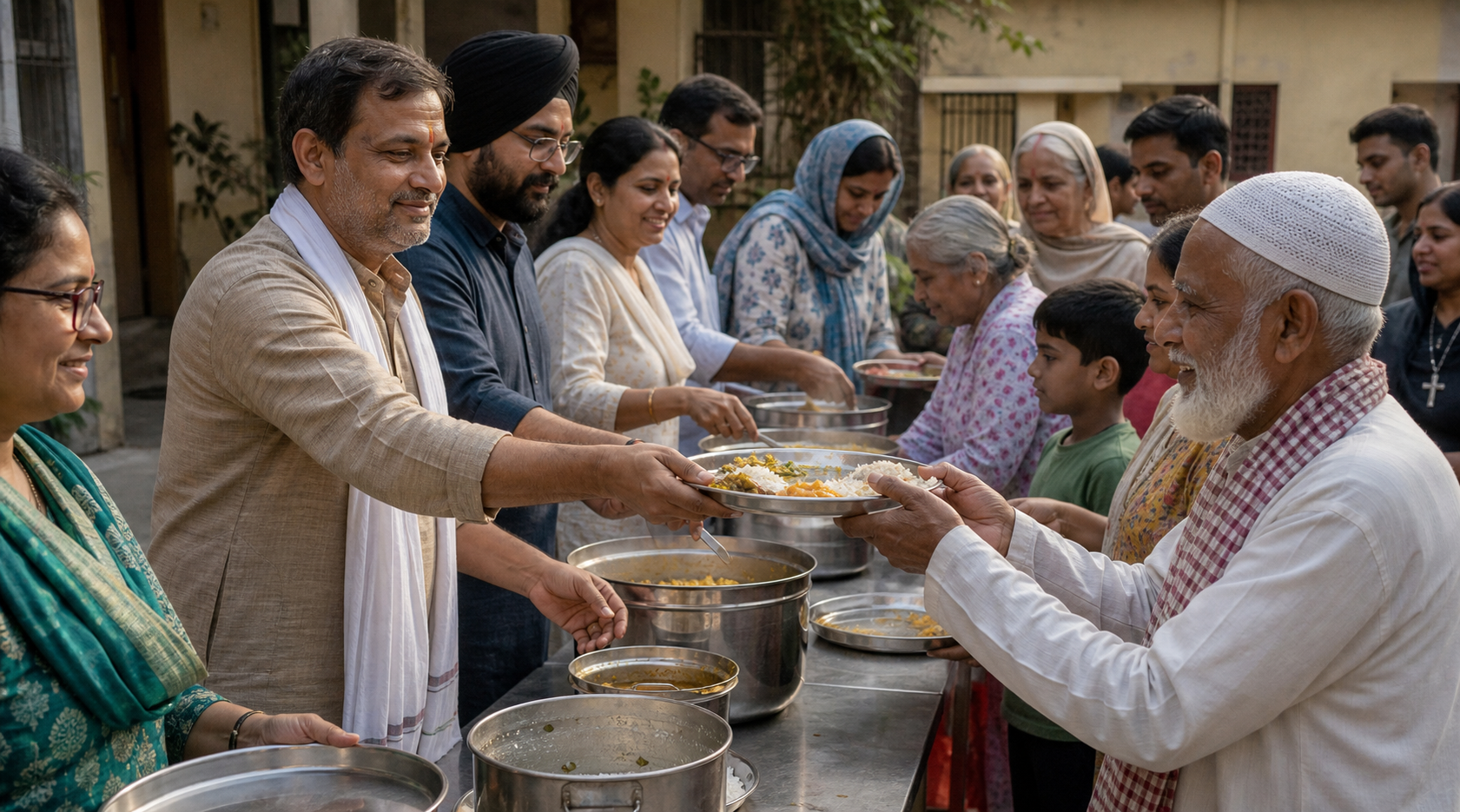
The inward circle concerns relations among Hindu, Buddhist, Jain, and Sikh communities. Unity here does not require a synthetic religion or the claim that all traditions teach identical doctrines. Each has its own texts, disciplines, institutions, memories, and theological boundaries. Pretending those distinctions do not exist produces ceremonial togetherness, not trust.
A more durable fellowship begins with an ethical vocabulary of ahimsa, karuna, daya, and seva. These values need not carry precisely the same emphasis in every tradition to guide shared conduct. They can still establish practical boundaries against cruelty, contempt, coercion, and indifference.
- Ahimsa asks whether your speech needlessly injures or dehumanizes.
- Karuna asks whether you can recognize another person’s vulnerability without surrendering your own convictions.
- Daya asks whether strength remains answerable to compassion.
- Seva asks what concrete good follows from devotion and public celebration.
The outward circle concerns India’s plural civic life. The Ram Mandir can remain unmistakably Hindu while the society around it respects the dignity of citizens of every faith. These commitments are not rivals. Cultural confidence becomes more credible, not less, when it no longer needs hostility to prove its authenticity.
A reconciliation effort therefore fails in either of two conditions: when non-Hindus are expected to affirm Hindu theology as the price of civic belonging, or when Hindus are expected to minimize the sacred meaning of Janmabhoomi as the price of social peace. The workable compact is narrower and more honest. No one must surrender belief, but everyone must observe boundaries of dignity, nonviolence, lawful conduct, and reciprocal citizenship.
If you organize a local Dharmic gathering around Ayodhya, give it a purpose more specific than "unity." A useful format has five parts:
- State plainly why Ayodhya and the Ram Mandir are sacred within Hindu tradition.
- Invite Buddhist, Jain, and Sikh participants to speak from their own traditions rather than endorsing a script written for them.
- Choose one shared ethical question, such as responsible speech, protection of sacred places, or service to pilgrims.
- Agree on one bounded seva effort with a named task, responsible volunteers, and a completion date.
- Meet again to review what was actually done, not merely how harmonious the first gathering appeared.
This structure avoids vague interfaith symbolism. It allows real differences to remain visible while cooperation grows through work that people can verify.
Make the mandir’s moral meaning visible in daily life
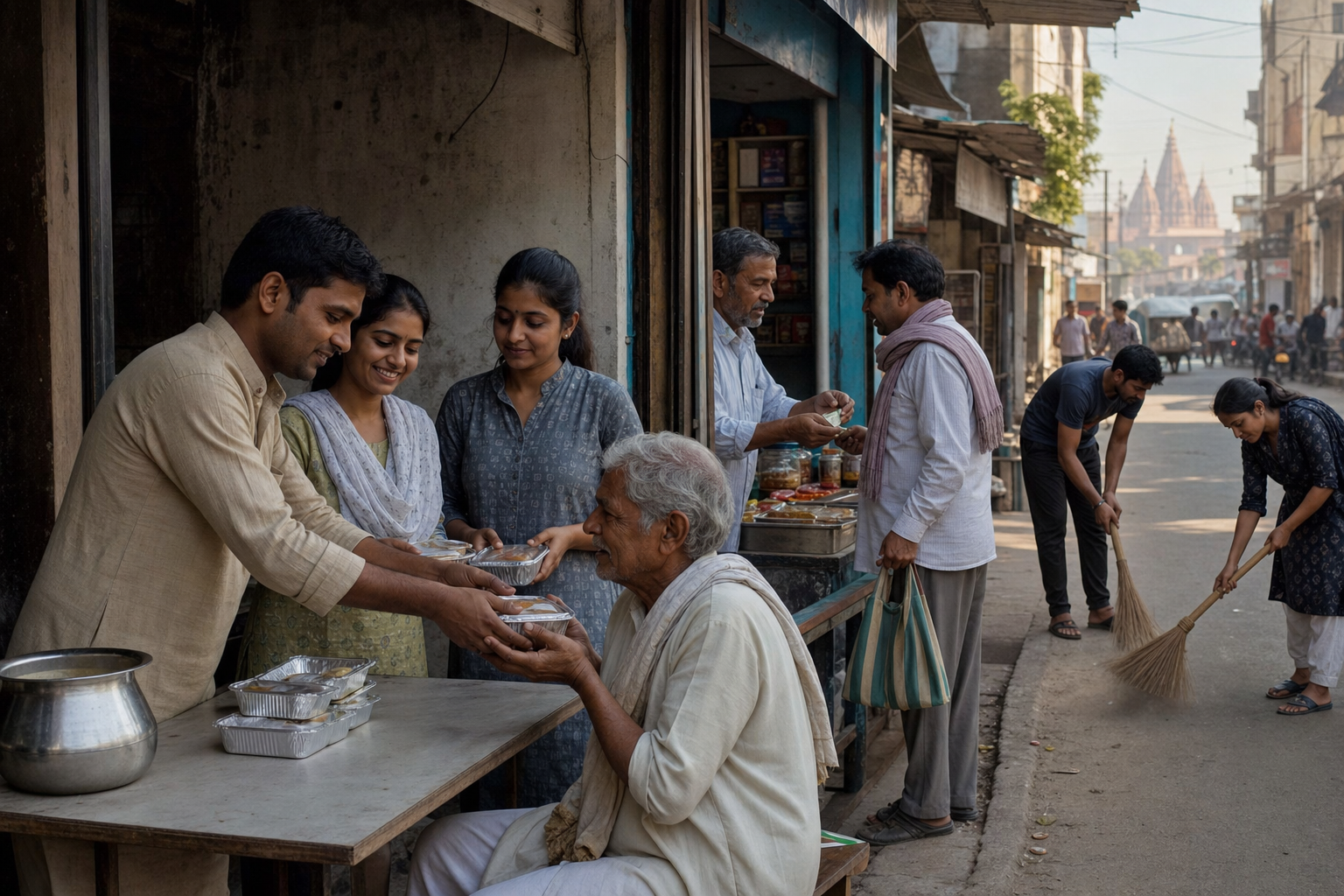
In temple tradition, Dhwaj Arohan signifies consecration, auspiciousness, and vigilance. The saffron flag carries associations of courage, sacrifice, and service. Those meanings set a standard for what happens after the flag is raised. A symbol of sacrifice becomes thin when public behavior is dominated by entitlement; a symbol of vigilance is incomplete if it watches only adversaries and never examines one’s own conduct.
The strongest evidence of reconciliation will therefore appear in ordinary experiences: how pilgrims are treated, what children are taught, whether public facilities remain accessible, how donations become service, and whether the sacred atmosphere survives rapid development.
- If you are a pilgrim: treat queue workers, cleaners, drivers, vendors, security personnel, and other pilgrims as participants in the sacred environment. Follow local arrangements, reduce waste, and leave shared spaces cleaner than you found them. Darshan does not excuse discourtesy on the way to darshan.
- If you are taking children: prepare them before the visit. Explain what Janmabhoomi means, why the mandir inspires gratitude, and what conduct devotion to Maryada Purushottam requires. Give them one question to carry home: how should strength behave after it has prevailed?
- If you teach history or culture: separate three kinds of statement. Identify what is a documented event, what is a theological conviction, and what is a moral lesson you are drawing. This prevents devotion from being presented as a footnote and opinion from being disguised as fact.
- If you organize temple or civic services: publish clear information about walking routes, accessibility, water, sanitation, waste, and assistance for people who need help. Inclusion is not a dilution of sacred purpose; thoughtful hospitality is part of it.
- If you donate or volunteer: ask what task will be funded, who can access the benefit, and how completion will be reported. A modest service with visible responsibility builds more trust than an ambitious promise with no accountable owner.
- If you speak publicly: connect heritage with duty. Applause is easy during a ceremony; the meaningful test is whether your language lowers needless hostility and your decisions improve the life surrounding the sacred site.
Ayodhya can become a living institution of prayer, learning, pilgrimage, and public good. That requires more than construction. Heritage-led development can strengthen social cohesion when accessibility, inclusion, community services, and environmental stewardship guide it. Without those disciplines, development may enlarge the destination while diminishing the experience.
You can judge progress through visible questions. Can an elderly or disabled visitor find reliable assistance? Are instructions clear before a pilgrim reaches a crowded point? Are common spaces treated as sacred rather than disposable? Do cultural programs teach devotion and history without manufacturing contempt? Can a person benefit from seva without passing an identity test? These are practical measures of whether symbolism has entered institutional life.
Speak about Ayodhya with accuracy, restraint, and courage
Reconciliation does not require euphemism. You do not need to pretend that contestation never occurred or that the mandir’s completion carries no civilizational meaning. You do need to speak precisely enough that history does not become collective accusation.
The most dangerous word in an argument about inherited conflict is often "they." It can merge different rulers, institutions, communities, periods, and living individuals into one timeless offender. Once that happens, no person can escape liability through conduct, and no amount of present-day goodwill can matter.
Use this editing discipline before you publish or forward an Ayodhya message:
- Name the kind of claim. Is it historical, theological, legal, political, or ethical? Do not slide from one category to another without showing the transition.
- Replace collective pronouns with exact nouns. If you mean a particular historical actor, institution, decision, or period, name it only when you can substantiate it. Do not transfer responsibility to an entire living population.
- Separate affirmation from accusation. "This place is sacred to us" is a complete statement. It does not require an insult to become forceful.
- Remove humiliation as entertainment. Delete the meme, image, or phrase if its only function is to make another community feel defeated. It adds heat without adding truth.
- Pair heritage with obligation. After stating what has been restored or honored, state what devotees should now protect, teach, build, or serve.
The same discipline helps in face-to-face conversation. To a young Hindu, you can say that Ayodhya shows how sacred memory can endure and that recovered confidence must answer to dharma. To another devotee, you can defend wholehearted celebration while refusing to make degradation part of worship. To a skeptical fellow citizen, you can explain that agreement with Hindu theology is not required for mutual commitments to lawful institutions, dignity, and peace.
Hard disagreements will remain. Reconciliation is not unanimous memory, compulsory emotion, or a ban on criticism. It is a behavioral settlement: disagreement will not be treated as permanent permission for contempt, and devotion will not be treated as evidence of civic disloyalty.
Key takeaways
- Healing does not require Hindus to forget Ayodhya; it requires memory to stop functioning as a weapon against people living now.
- The Ram Mandir’s civilizational meaning will be judged partly by what follows it: disciplined speech, dignified pilgrimage, cultural education, seva, and responsible development.
- Dharmic unity should be built through shared ethical work while preserving the distinct identities of Hindu, Buddhist, Jain, and Sikh traditions.
- Respect for citizens of other faiths does not weaken the mandir’s Hindu character. It demonstrates that cultural confidence can coexist with plural civic dignity.
- Before speaking about Ayodhya, distinguish fact, belief, and moral inference; replace collective blame with precise language; and connect every celebration to a duty.
Your next contribution can be small and concrete. In the next Ayodhya conversation, state the sacred conviction clearly, reject collective blame, and propose one act of seva or cultural education. If the raised flag signifies vigilance, that vigilance must now include attention to our own speech and conduct. A healed wound is not one that is never mentioned. It is one that is no longer used as a weapon.
References
