
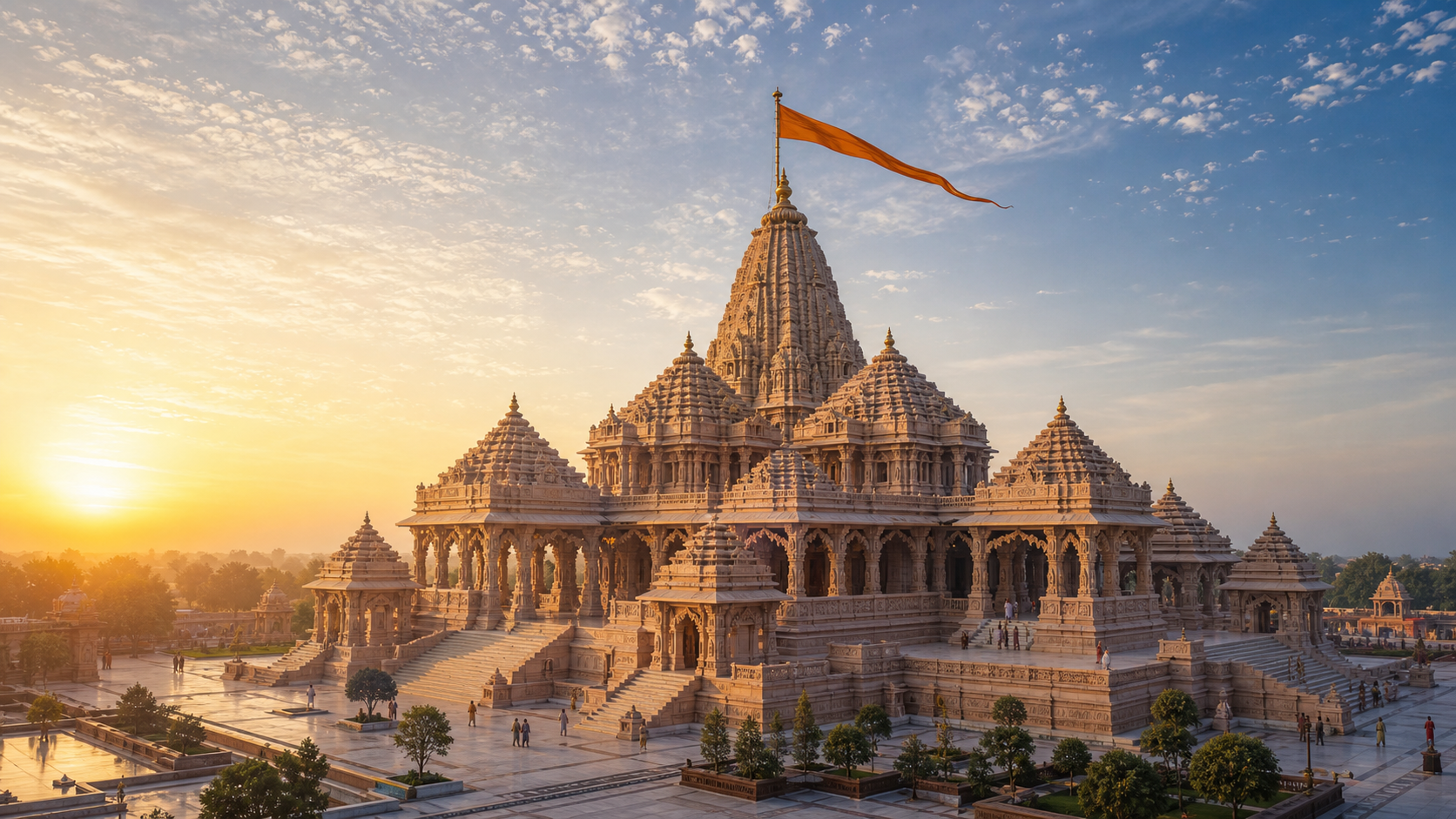
When Prime Minister Narendra Modi raised the saffron Dharma Dhwaj atop the Ayodhya Ram Mandir, many people saw far more than a flag being placed on a temple. The ceremony brought devotion, civilizational continuity, and family memory into one public moment.
If you are trying to understand why it mattered, explain it to your children, or honor it without reducing it to a slogan, begin with what the dhwaj asks of you. Its deepest meaning lies not in spectacle, but in renunciation, courage, service, tapas, and the responsibilities that follow from them.
Why the ceremony carries civilizational weight
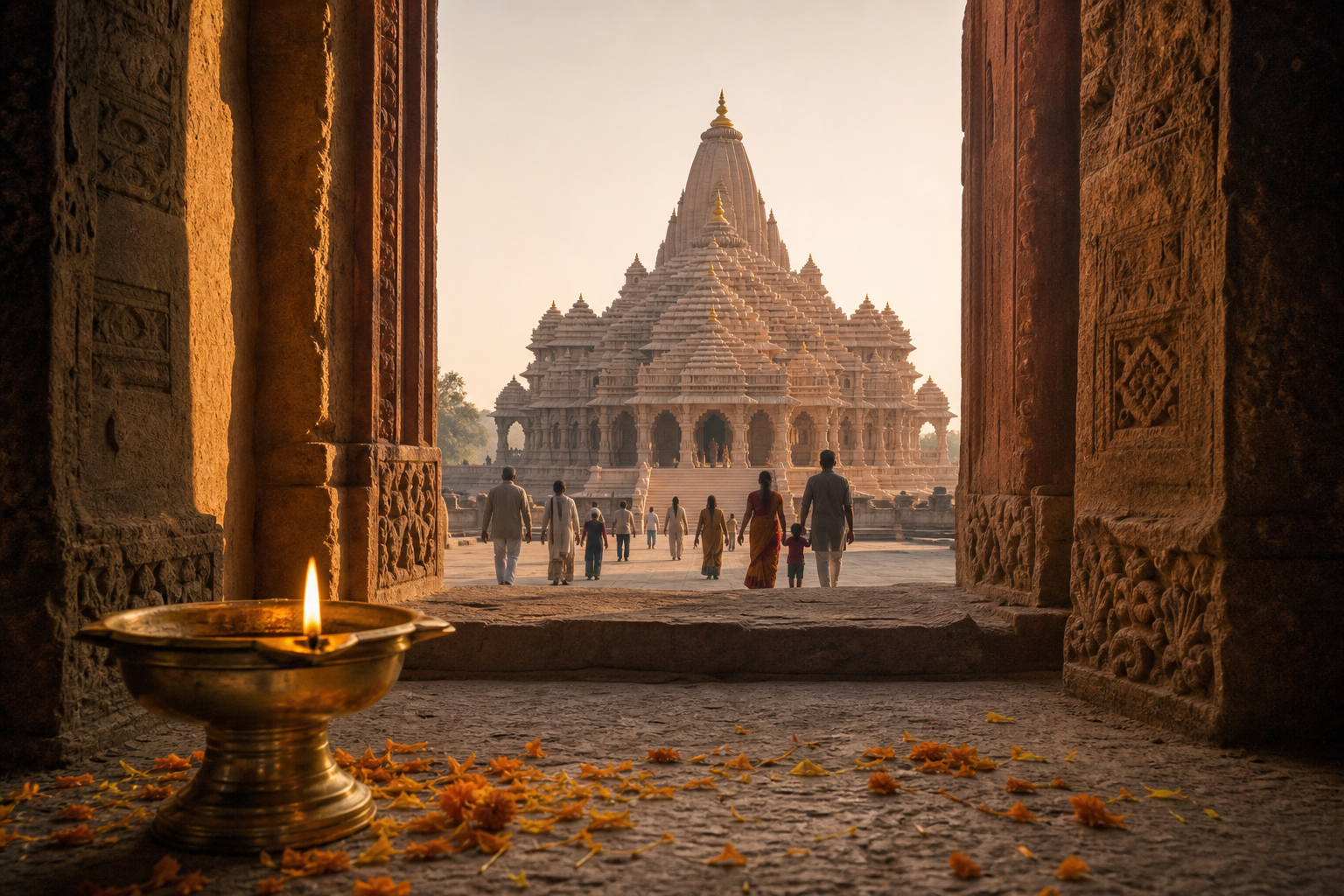
For many Hindus, the ceremony was the culmination of a wait described in terms of five centuries. That language expresses more than elapsed time. It points to a collective memory that survived through worship, storytelling, pilgrimage, family practice, and attachment to Ayodhya across generations.
That is why a purely political explanation is incomplete. A prime minister performed the public act, but the meaning of the Dharma Dhwaj does not originate in a political office. It comes from a sacred vocabulary older and wider than any government: dharma, sacrifice, discipline, duty, and devotion to Shri Ram.
A useful explanation separates three dimensions without forcing them into one:
- The devotional dimension: the dhwaj belongs to a temple dedicated to Shri Ram and must first be understood as a sacred Hindu symbol.
- The historical dimension: its raising marks continuity after a prolonged period in which the memory of Ayodhya remained alive among devotees.
- The ethical dimension: a Dharma Dhwaj does not merely announce belonging. It places the conduct of those who honor it under the standard of dharma.
This three-part frame helps you explain the ceremony without shrinking it into either a photo opportunity or a claim about the past alone. The event looked backward through memory, upward through worship, and forward through duty.
The saffron flag is an ethical test, not mere decoration
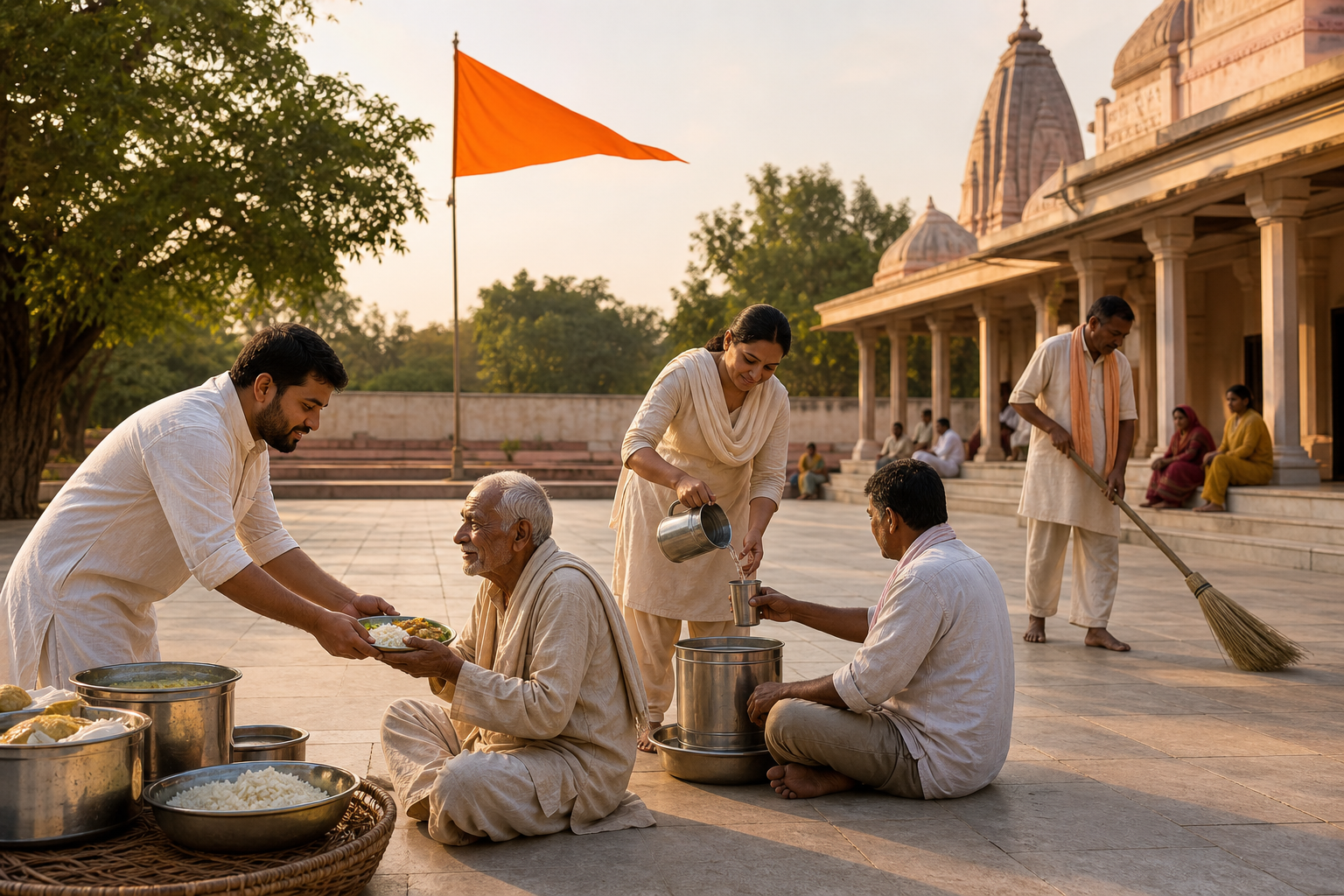
The Dharma Dhwaj’s saffron color represents renunciation, courage, selfless service, and tapas. These are demanding virtues. They turn the flag from an object you admire into a standard against which you can examine your own choices.
- Renunciation: identify one attachment that repeatedly pulls you away from duty. It may be the need to win every argument, consume without restraint, or seek recognition for service. Renunciation begins when you stop feeding it.
- Courage: name a responsibility you have been avoiding because it is inconvenient. Dharmic courage is not aggression; it is the steadiness to do what is right when comfort points elsewhere.
- Selfless service: perform one useful act whose benefit does not return to you as status. Help maintain a temple, teach a child, support an elder, feed someone, or give time to a community need.
- Tapas: choose a discipline you can sustain. A regular period of prayer, study, restraint, physical work, or service is more faithful to tapas than a dramatic promise abandoned within days.
This is the most practical way to receive the ceremony. Do not ask only, “What did the flag-raising complete?” Ask, “What discipline does the flag now require from me?” If our celebration produces pride without truthfulness, service, or restraint, we have kept the symbol and discarded its instruction.
Turn inherited memory into a family practice
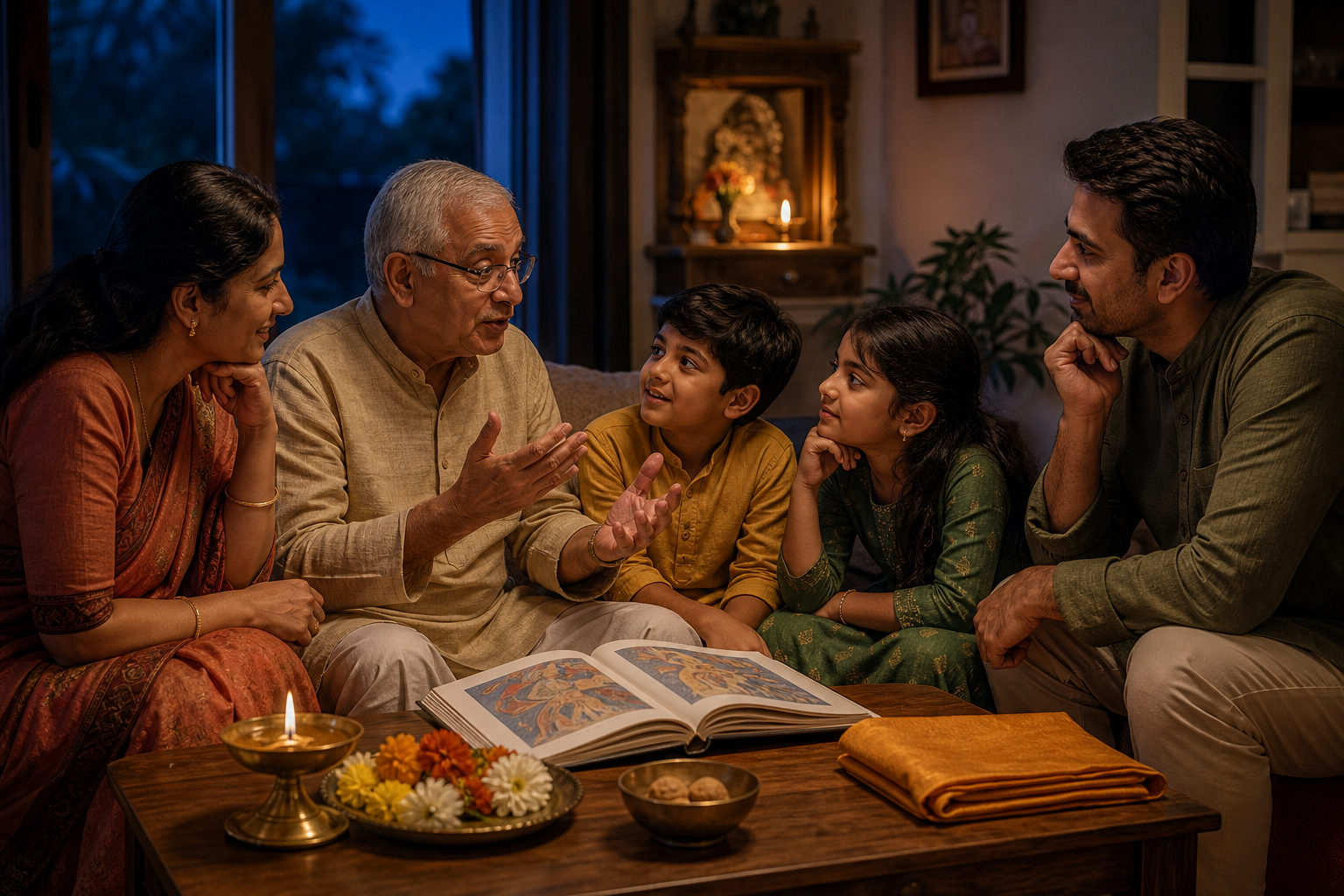
The ceremony carried particular force because Ayodhya has lived in family memory. Grandparents’ stories, shared viewing of the ceremony, and the responses of families in India and the diaspora show how sacred history is transmitted outside formal institutions.
You can preserve that inheritance without asking younger relatives to imitate an emotion they do not yet understand. Give them names, context, and a chance to ask questions. A simple family conversation is often more durable than a stream of ceremonial images.
- Ask an elder what Ayodhya and Shri Ram meant in the family’s life before this ceremony.
- Ask which prayer, story, pilgrimage, festival, or household practice carried that connection.
- Record the answer in the elder’s own words, with their permission.
- Mark clearly which parts are personal recollection, devotional interpretation, and historically verified fact.
- Share the memory with younger family members and invite questions instead of demanding agreement or a prescribed reaction.
The fourth step matters. Family testimony is valuable because it reveals how people lived and remembered their dharma; it does not automatically settle every historical question. Treating memory honestly protects both affection and credibility.
This practice is especially useful for families outside Bharat. A child may be far from Ayodhya geographically, but a named story, a remembered prayer, and an explained symbol create a concrete connection. Heritage becomes something received and examined, not merely displayed.
Speak about Ayodhya with confidence and discipline

The Dharma Dhwaj stands on a Hindu temple dedicated to Shri Ram. That identity should be stated plainly. At the same time, the virtues associated with the saffron flag have recognizable parallels across Hindu, Buddhist, Jain, and Sikh traditions, particularly in their regard for restraint, courage, compassion, discipline, duty, and service.
Shared ethical ground does not mean that all Dharmic religions hold identical theology, scripture, ritual, or understandings of the sacred. You do not have to erase real differences to recognize a family resemblance among Dharmic values. The careful position affirms the Hindu particularity of the Ram Mandir while inviting respectful conversation across traditions.
Before speaking publicly or posting about the ceremony, apply four tests:
- The positive-meaning test: can you explain what the Dharma Dhwaj stands for without defining it through hostility toward another community?
- The accuracy test: have you separated documented facts from devotional interpretation, family memory, and circulating social-media claims?
- The conduct test: does your language reflect the restraint and dignity you associate with dharma?
- The service test: is your pride leading to stewardship, study, charity, or better treatment of others, or does it end with posting an image?
This is not a request to dilute Hindu conviction. It is a way to make that conviction credible. A sacred symbol becomes stronger, not weaker, when its defenders can describe it accurately, reject needless contempt, and embody the values they invoke.
The Ayodhya Ram Mandir is also becoming a pilgrimage destination and cultural landmark. That creates practical obligations. If you visit, treat the temple as a sacred space before treating it as a backdrop. Follow local instructions, protect cleanliness, respect worshippers, and learn about the architecture and ritual life with patience. If you discuss its history, distinguish evidence from assertion. Responsible stewardship is part of the ceremony’s legacy.
Practical questions about honoring the moment
What does the Dharma Dhwaj symbolize?
In the context of the Ayodhya Ram Mandir, the saffron Dharma Dhwaj signifies sacred continuity and an allegiance to dharma. Its stated virtues are renunciation, courage, selfless service, and tapas. The clearest way to honor it is to translate at least one of those virtues into a regular practice.
Does its wider Dharmic meaning make it less specifically Hindu?
No. The flag stands atop the Ram Mandir and therefore has an unmistakably Hindu devotional setting. Recognizing related values in Buddhism, Jainism, and Sikhism does not remove that identity. It identifies ethical affinities without claiming that the traditions are interchangeable.
How can you observe the occasion if you cannot visit Ayodhya?
Offer a simple prayer to Shri Ram, explain the four virtues of the saffron flag to your family, listen to an elder’s Ayodhya memory, and complete one act of service without seeking recognition. These acts connect devotion, memory, and conduct without pretending that a home observance reproduces the temple ceremony.
What should you avoid when sharing the ceremony online?
Avoid unverified quotations, unsupported historical details, contemptuous language, and images detached from their real context. A post about dharma should not require you to suspend truthfulness or self-restraint. If a claim cannot be verified, leave it out and share the meaning you can explain responsibly.
Choose one response that will remain after the ceremonial images fade: begin a discipline, perform an unadvertised act of service, preserve an elder’s memory, or prepare for a respectful pilgrimage. The Dharma Dhwaj will have entered your life meaningfully when it changes what you do next.
References
