
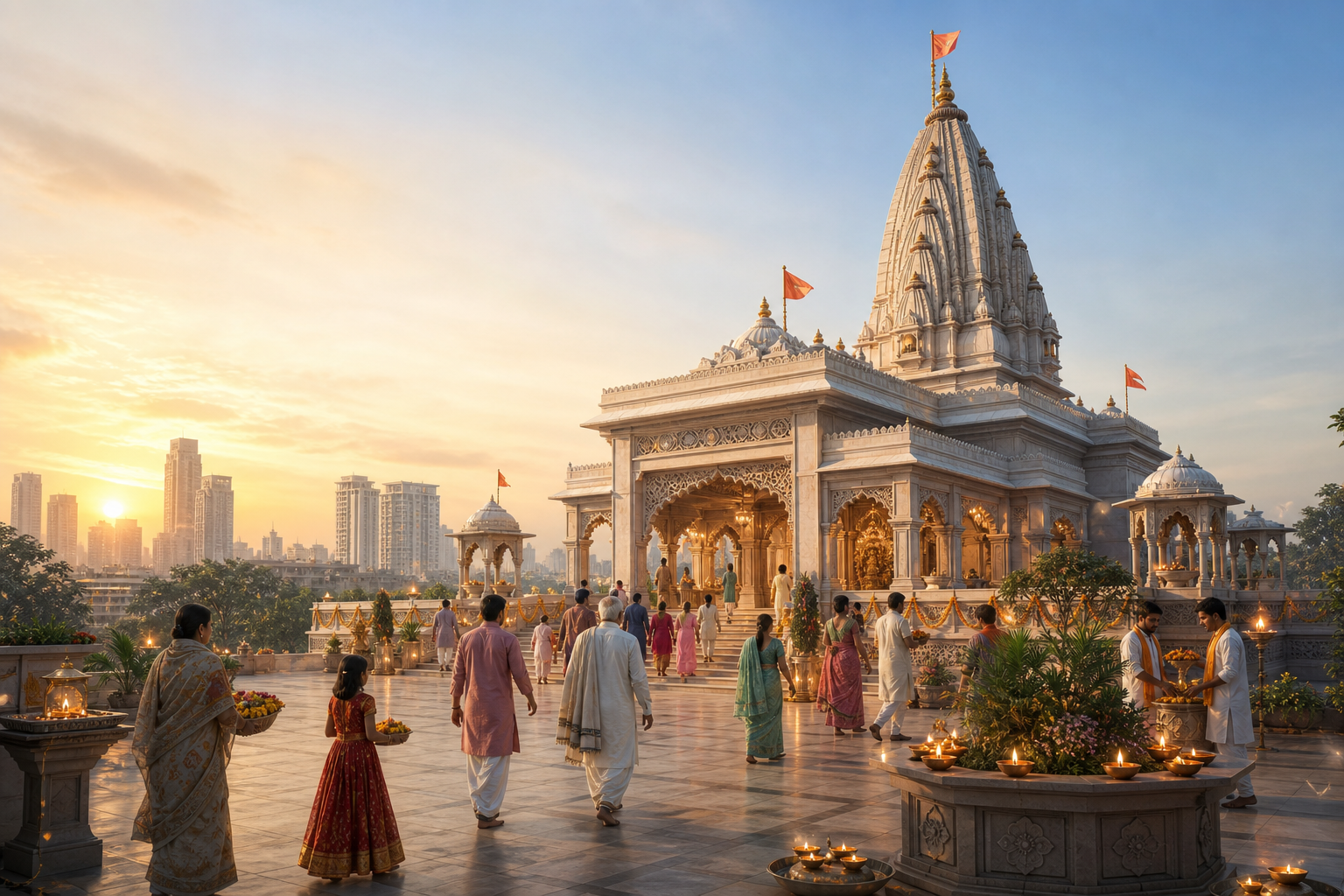
If you found this temple while looking for a place of darshan in Gurugram, there is something worth understanding before you look for directions or timings: its meaning begins with a promise. The consecration fulfilled a vow made to HH Gopal Krishna Goswami, giving a devotional commitment an enduring communal form.
That changes how you should approach the temple. It is not merely a structure bearing a revered teacher’s name. It asks whether remembrance of the guru can become worship, disciplined learning, selfless service, and responsibility shared across generations.
A sacred promise made public
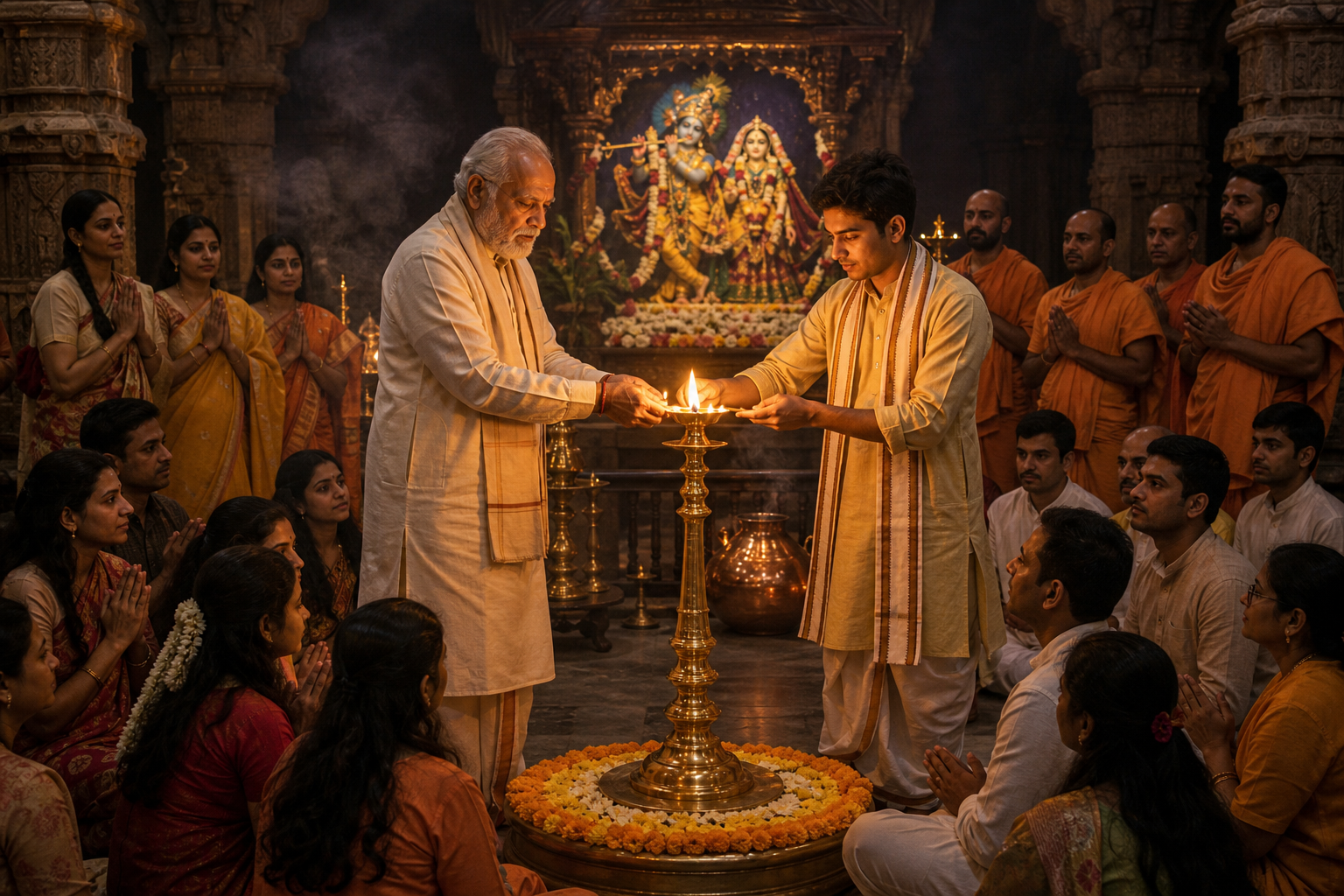
A vrata is more than a strong intention or an emotional promise. Within Hindu Dharma, it is a commitment that binds conviction to conduct. Seva completes that movement: gratitude is expressed through work whose purpose is larger than personal recognition.
The temple in Gurugram brings these principles together. A vow to HH Gopal Krishna Goswami was not left as a private memory. Devotees carried it into collective service and ultimately into a consecrated sanctuary. What began in the bond between guru and disciple thereby became available to a wider community.
This is the first practical lesson to take from the temple. A guru is not adequately honored by praise alone. The meaningful tribute is the discipline that continues after the ceremony: regular worship, careful transmission of teachings, service to people, and responsible care for the institution created in the guru’s name.
Consecration therefore marks both fulfillment and beginning. The promise to establish the temple has been kept; the continuing promise is to keep its devotional purpose alive. If you want to support it, ask what work sustains that purpose now rather than assuming that the building itself completes the offering.
Why Gurugram gives the dedication added meaning

Gurugram, formerly known as Gurgaon, carries an old association with the relationship between teacher and disciple. Its name is commonly understood as the “village of the Guru,” recalling Guru Dronacharya, teacher of the Pandavas and Kauravas in the Mahabharata. A well-known tradition holds that King Dhritarashtra offered this land to Dronacharya.
That account should be handled as cultural memory rather than converted into an unsupported claim about every detail of the modern city’s documented history. Its importance here is the value the tradition preserves: a society marks its gratitude to a teacher not only with words, but by giving that gratitude a place in communal life.
It is also important not to merge two distinct associations. The new temple honors HH Gopal Krishna Goswami. Gurugram’s connection with Dronacharya supplies a wider cultural setting; it does not imply that the two teachers belong to the same lineage or historical period. The connection is thematic: the city remembered as belonging to a guru now contains another enduring expression of guru-bhakti.
This resonance matters in a rapidly changing urban setting. Development can alter skylines and livelihoods quickly, while inherited meanings become harder to see. A functioning temple can keep those meanings present through repeated practice. People do not encounter tradition only as a story about the past; they encounter it through worship, music, study, service, and obligations undertaken together.
How to recognize a living tribute to a guru
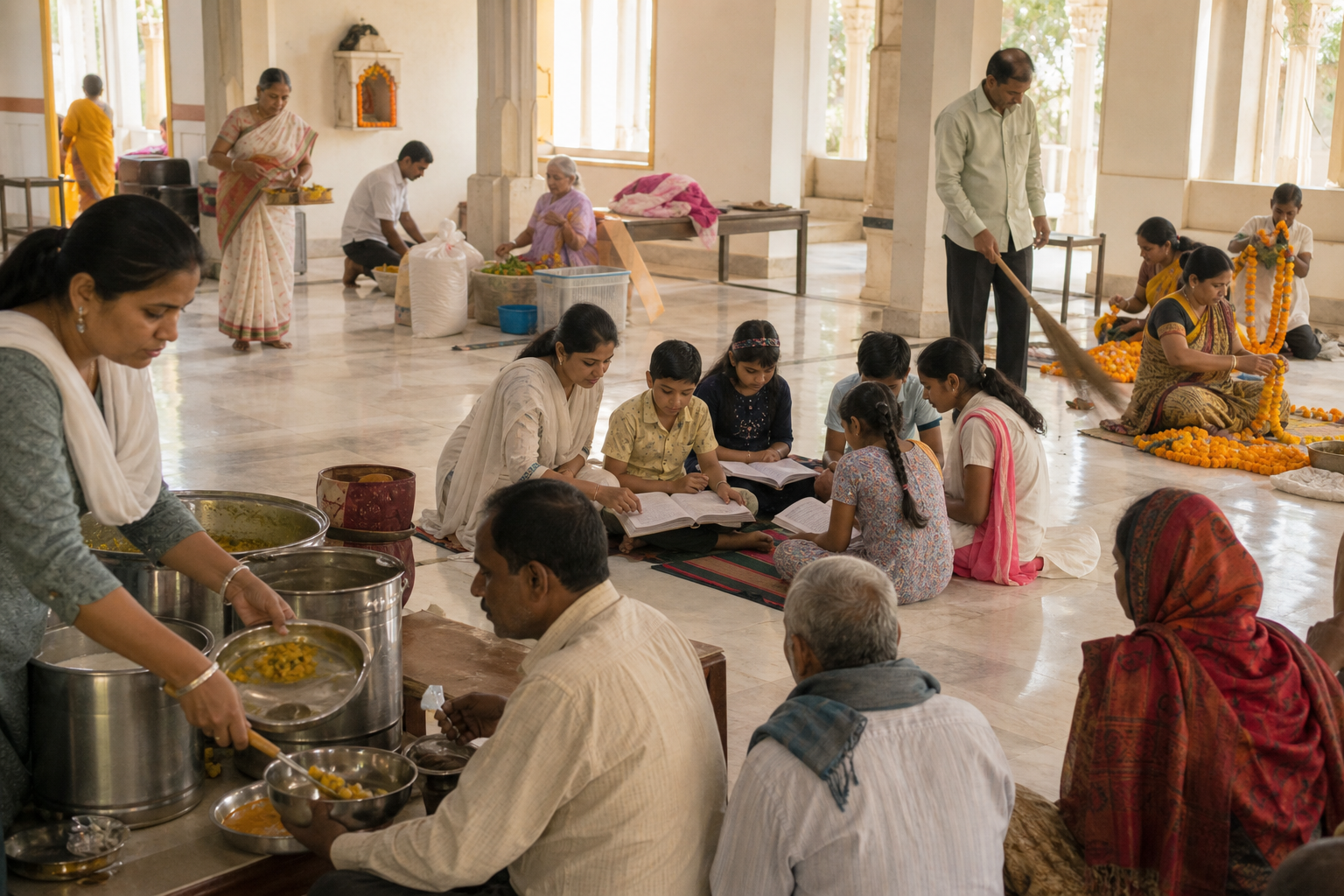
Indian temples have historically served purposes extending beyond individual prayer. They have supported learning, sacred music, meditation, cultural transmission, and forms of social welfare. In Gurugram, kirtan, study, collective remembrance, and community initiatives are the practical channels through which this temple’s purpose can be expressed.
If you are deciding how to participate, look for four signs of living continuity:
- Practice: Find out when worship, kirtan, meditation, or other devotional activities are open to visitors. Participation is more faithful to the temple’s purpose than treating it only as a sightseeing stop.
- Learning: Ask how the guru’s teachings and the wider bhakti tradition are being studied and explained. A name on a building preserves memory; teaching preserves understanding.
- Seva: Ask organizers what help is currently needed. Event support, hospitality, cleaning, educational assistance, or community work may be useful, but only if the temple actually requests them.
- Stewardship: Use official channels when volunteering or donating. Sustainable support is transparent, accountable, and matched to the institution’s real priorities.
These tests also guard against a common misunderstanding of guru-bhakti. Reverence for a spiritual teacher is not meant to end in personality-centered admiration. Within the guru-shishya relationship, gratitude should mature into sadhana, ethical restraint, compassion, service, and fidelity to what was taught. The temple succeeds as a tribute when it repeatedly directs attention from the guru’s honored memory toward those responsibilities.
Respect for teachers, disciplined conduct, and community uplift also have resonances in Buddhism, Jainism, and Sikhism. This does not make the traditions interchangeable, and it should not erase their distinct doctrines or institutions. It identifies a shared dharmic conviction: wisdom carries an obligation to shape conduct. Religious harmony becomes more substantial when difference is respected while such ethical affinities are recognized.
Practical questions before you visit or offer seva
Is this only a memorial to HH Gopal Krishna Goswami?
No. It honors HH Gopal Krishna Goswami, but its consecration and devotional purpose place it within the continuing life of a temple. Kirtan, study, remembrance, and service are not decorative additions to that purpose; they are ways a commemorative intention becomes active spiritual practice.
What should you confirm before travelling?
Confirm the precise map location, current darshan hours, festival or special-event access, and a working contact through an official temple channel or a known local organizer. Those operational details are not established here, and they can change. Do not plan a journey around an unverified directory entry or assume that ordinary access arrangements apply during a major observance.
How should a first-time visitor approach the temple?
Wear modest clothing, silence your phone, remove footwear where directed, follow the local queue and seating arrangements, and ask before taking photographs. During worship or kirtan, follow the congregation without forcing yourself into a role you do not understand. If you have a question, wait for an appropriate pause and ask a volunteer or regular devotee respectfully.
What is the most useful way to serve?
Begin by asking what is needed, not by arriving with a project of your own. A small duty performed reliably is usually more useful than a large promise that cannot be sustained. If you donate, verify the official payment channel and request the appropriate acknowledgment or receipt. If you volunteer, clarify the task, timing, responsible coordinator, and whether the commitment is for one event or an ongoing activity.
Whether you go for darshan, kirtan, study, or seva, let the vow behind the temple set your standard. Arrive prepared, pay attention to the community’s actual needs, and leave with one discipline you can continue after the visit. That is how a sacred promise made in Gurugram can become part of your own practice rather than remaining someone else’s achievement.
References
