

If you searched for the December 2025 observances at Kanchi Kamakoti Peetham, you probably want to identify a puja, place a pilgrimage in its proper calendar context, or preserve a family observance accurately. Start with the calendar. The same period carries different month names across Indian traditions, and a month name alone does not establish an exact civil date.
December 2025 brought Visesha Pujas and temple events to the Peetham in Kanchipuram, Tamil Nadu, within a devotional frame spanning several regional calendars. What can be established is the monthly framework and the kinds of participation it supported. A day-by-day timetable is not available in the record cited here, so you should not assign a particular puja, anushthana, or alankaram to a December date without a dated notice or another reliable record.
Key takeaways for the December 2025 record
- December 2025 was observed at Kanchi Kamakoti Peetham through Visesha Pujas and associated temple events.
- The month corresponded to Margashirsha and Poush in North Indian Hindi calendars; Karthika and Margashira in Telugu, Kannada, Marathi, and Gujarati calendars; Agrahan and Poush in the Bengali Panjika; and Karthigai in the Tamil calendar.
- A masa, tithi, nakshatra, and muhurta are different calendar markers. Do not use one as a substitute for another when identifying an observance.
- Prayer, seva, learning, meditation, and japa provide a practical framework for participating in or remembering the month.
- If you need an exact historical date, verify it from a dated event notice, invitation, receipt, photograph, or family entry rather than reconstructing it from the month name alone.
Translate the month before identifying the observance

A Gregorian month and an Indian lunar month are not interchangeable units. December can overlap more than one lunar month, while regional calendars can use different names for corresponding portions of the period. This is why two devotees may describe a December observance differently without necessarily disagreeing about when it happened.
| Calendar tradition | Month names associated with December 2025 | How to use the information |
|---|---|---|
| North Indian Hindi calendars | Margashirsha Maas and Poush Maas | Preserve whichever name appears in the original family, temple, or vrata record. |
| Telugu, Kannada, Marathi, and Gujarati calendars | Karthika and Margashira | Use the regional name to orient the observance, then verify its tithi or civil date separately. |
| Bengali Panjika | Agrahan Mash and Poush Mash | Do not replace the Bengali designation merely to make it match another regional calendar. |
| Tamil calendar | Karthigai | Use Karthigai as the Tamil calendar context supplied for the Peetham’s December observances. |
These correspondences are a translation aid, not an event schedule. They do not tell you the boundary date on which one regional month ended and another began, nor do they identify the tithi or nakshatra of a particular puja. If an old note says only “Margashirsha puja” or “Karthigai visit,” retain that wording and mark the exact date as unconfirmed.
Know which calendar marker answers your question
Confusion usually begins when several traditional calendar terms are treated as synonyms. Each answers a different question:
- Masa gives the broader lunar-month setting. It helps you place an observance within a seasonal devotional rhythm.
- Tithi identifies a lunar day. It is often more useful than the month name when distinguishing one vrata or special worship day from another.
- Nakshatra identifies the lunar mansion relevant to the time being observed. Record it separately if it appears on a notice or sankalpa entry.
- Shubh Muhurat is an auspicious time window selected for an act. It is narrower than a month or tithi and should not be inferred merely from either one.
- Gregorian date is the civil date needed for travel records, photographs, receipts, and historical filing.
For a dependable entry, pair the civil date with the traditional marker that was actually used: for example, a recorded date plus its stated tithi. If only one is known, write only one. An honest partial record is more valuable than a precise-looking reconstruction built from assumptions.
What the December observance frame included
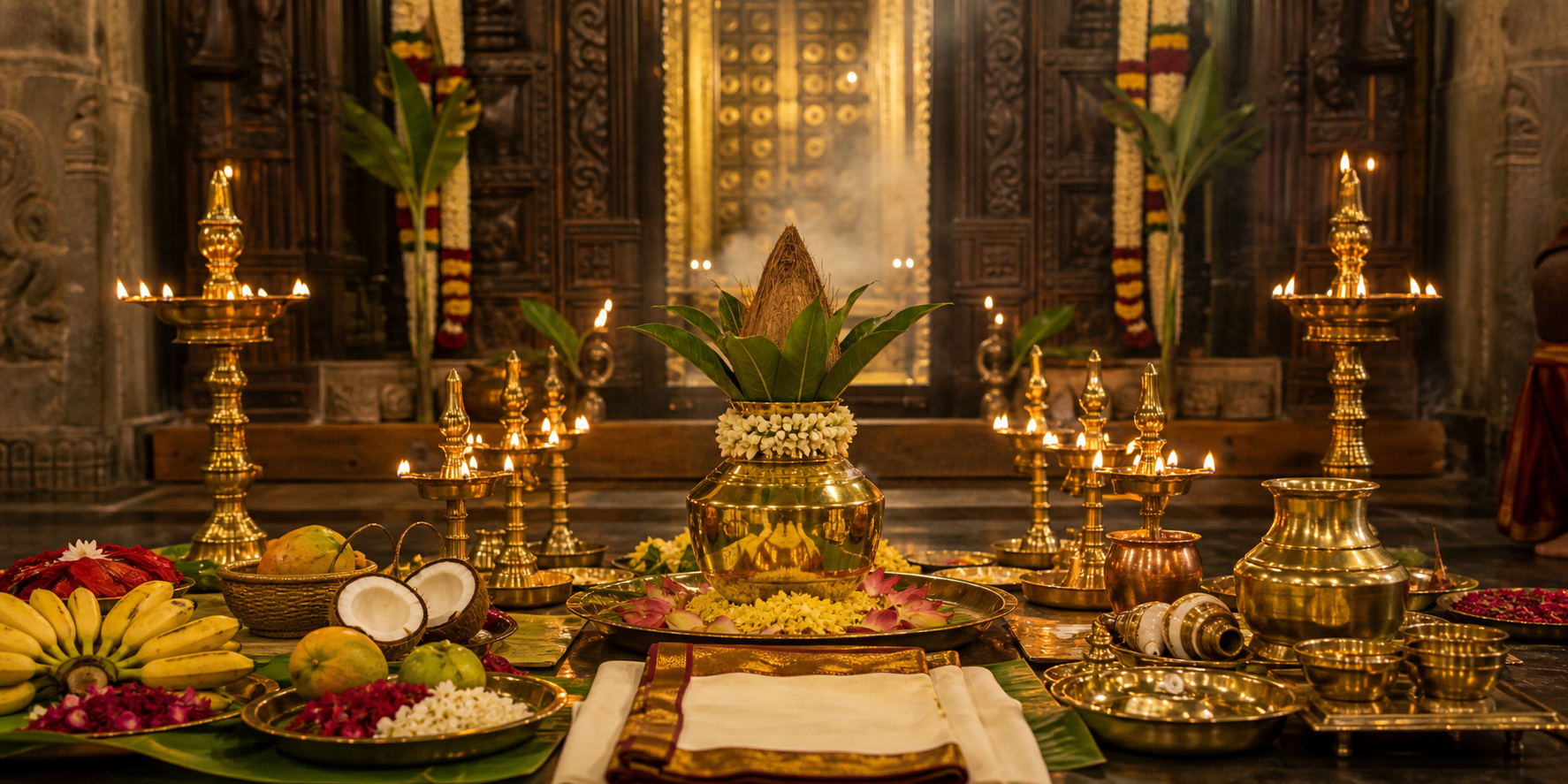
The month was not simply a collection of isolated appointments. Its devotional cadence joined Visesha Puja with temple events and encouraged devotees to organize personal practice around relevant tithis, nakshatras, auspicious windows, anushthanas, and alankarams.
- Visesha Puja means special worship distinguished from the ordinary daily rhythm. To identify one accurately, look for its stated occasion or calendar anchor.
- Anushthana is disciplined religious observance. Its importance lies not only in attending a ceremony but also in following the practice with steadiness.
- Alankaram is sacred adornment that gives an observance a distinct devotional and visual focus. A photograph may help identify it, but it should not be used to guess a date without supporting evidence.
- Temple events create a collective setting for worship. When preserving a memory, distinguish attendance at a public event from a separately arranged personal sankalpa or puja.
Kanchipuram’s sacred setting and the Peetham’s emphasis on lineage, learning, continuity, and practical guidance also matter. If you reduce the visit to a muhurta on a timetable, you miss part of its purpose. The fuller pattern is prayer, seva, and learning: worship with attention, service without display, and study that carries the encounter into daily conduct.
Build a record your family can understand later
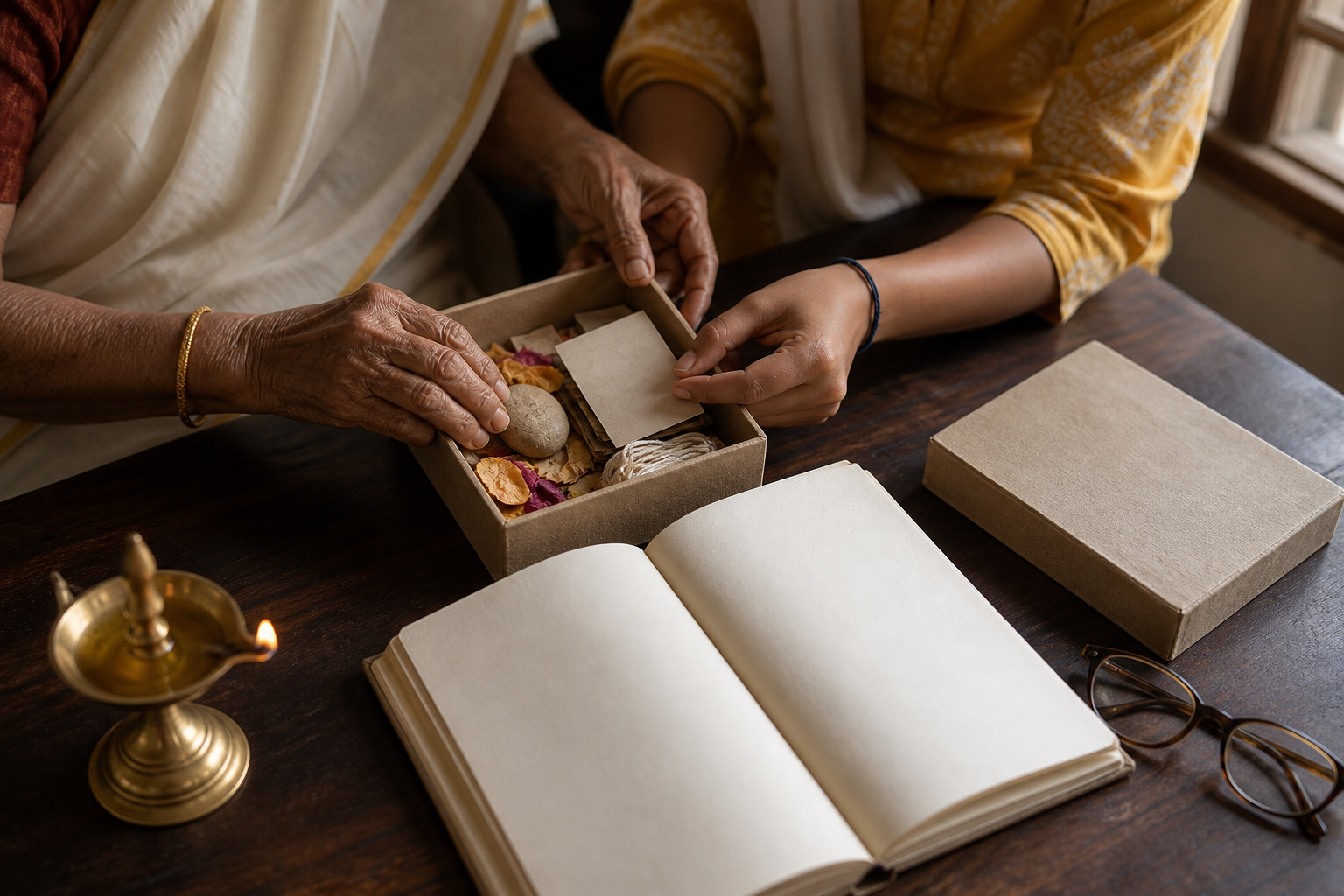
If you are documenting a December 2025 pilgrimage or puja now, use a simple evidence-first method. It prevents regional vocabulary from being flattened and keeps uncertain details visibly uncertain.
- Write the civil date if you have it. Use the date on a contemporaneous notice, receipt, invitation, or entry. If none survives, write “December 2025; exact date unconfirmed.”
- Name the place precisely. Record Kanchi Kamakoti Peetham and Kanchipuram, Tamil Nadu, rather than using only a general label such as “Kanchi visit.”
- Preserve the original calendar language. If the family note says Karthigai, Margashirsha, Karthika, or Agrahan, retain it. You can add an equivalent in parentheses without erasing the original term.
- Separate masa, tithi, nakshatra, and muhurta. Give each its own field. Leave a field blank when the information is unavailable.
- State what the person actually did. Distinguish darshan, participation in a Visesha Puja, a personal sankalpa, seva, japa, meditation, or study. Do not upgrade general attendance into sponsorship or ritual participation unless a record supports it.
- Attach the evidence. Keep the dated notice, invitation, receipt, photograph, or handwritten entry with the record. Add a brief note explaining any later calendar translation.
This method is equally useful when two relatives remember the observance differently. First compare their calendar vocabulary. One may remember the Tamil month while another remembers a tithi or Gregorian date. Resolve the type of marker before deciding that one recollection must be wrong.
Carry the observance beyond the calendar entry

Auspicious timing can orient a sankalpa, but the calendar is not the whole practice. December’s devotional rhythm offered several ways to give intention a concrete form: prayer for family welfare, disciplined study, meditation or japa, seva, and reflection before a new beginning. Choose the form that matches the intention instead of trying to reproduce every possible observance.
A practical pattern has three parts. State the sankalpa in one clear sentence. Connect it to a confirmed observance or a steady personal discipline. Then carry one part of that discipline into ordinary life after the sacred occasion has passed. A prayer for study can be followed by regular learning; concern for family welfare can be joined to patient service; a new beginning can be marked by a commitment you are prepared to maintain.
This union of devotion, discipline, compassion, and community well-being also belongs to a wider dharmic moral vocabulary visible across Hindu, Buddhist, Jain, and Sikh traditions. That common ground does not make their doctrines identical. It shows why worship joined to learning and service can strengthen both personal practice and social harmony.
If you are completing a December 2025 record, enter only what you can establish and mark the rest as unknown. If you are using the month as a model for a future visit, begin with the regional calendar, confirm the exact tithi and event timing, and decide beforehand which practice you will continue after returning home.
References
