
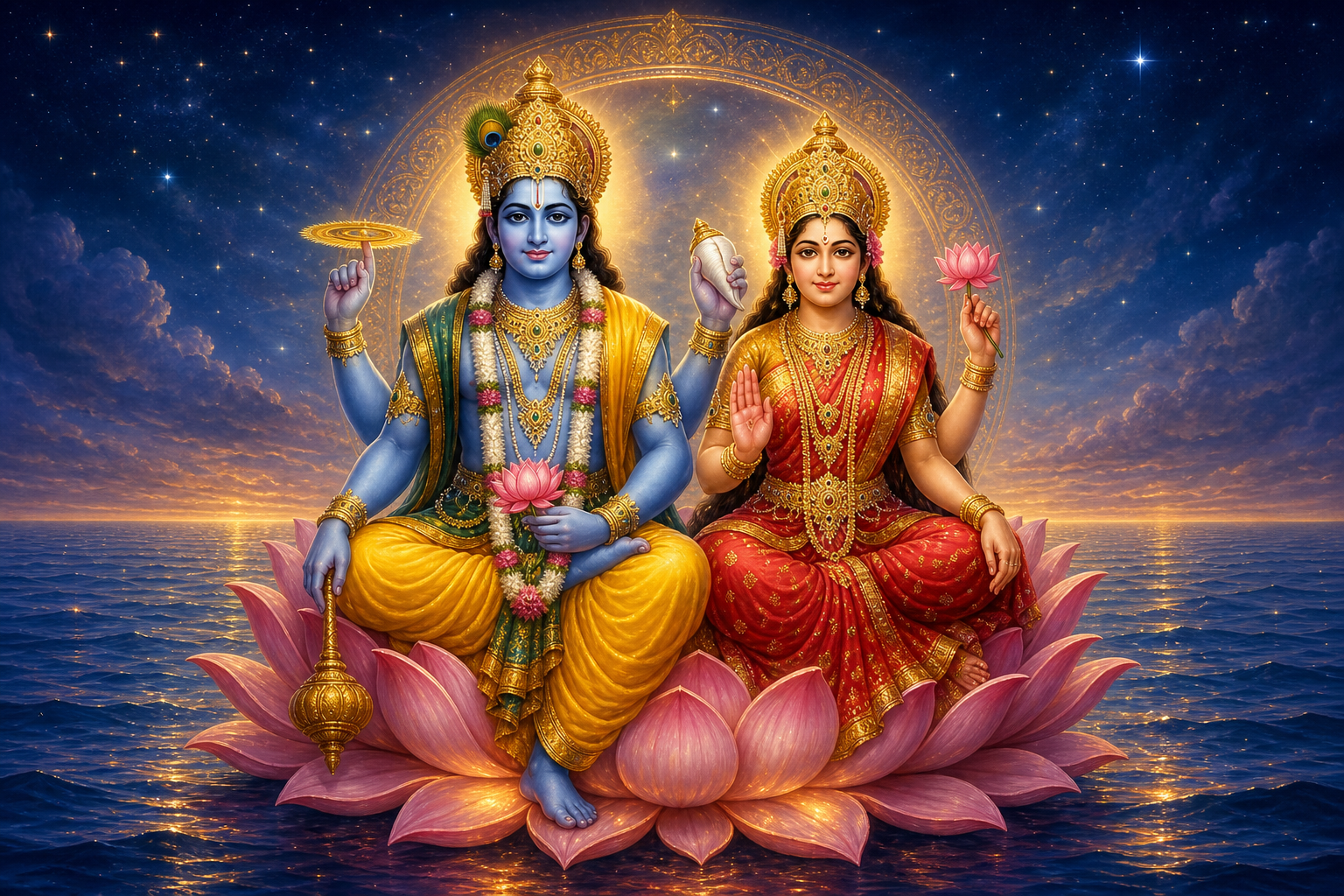
You wake with a vivid memory of Vishnu, Lakshmi, or both. The darshan felt unusually clear, and now you want to know whether it was a blessing, a warning, a promise of prosperity, or simply the mind arranging familiar sacred images.
Do not rush to predict an event. A more useful interpretation asks what the dream reveals about your duties, resources, relationships, and state of mind. When read through dharma, the vision can guide a real decision without turning faith into superstition.
Start with the dream’s moral direction, not its predicted outcome
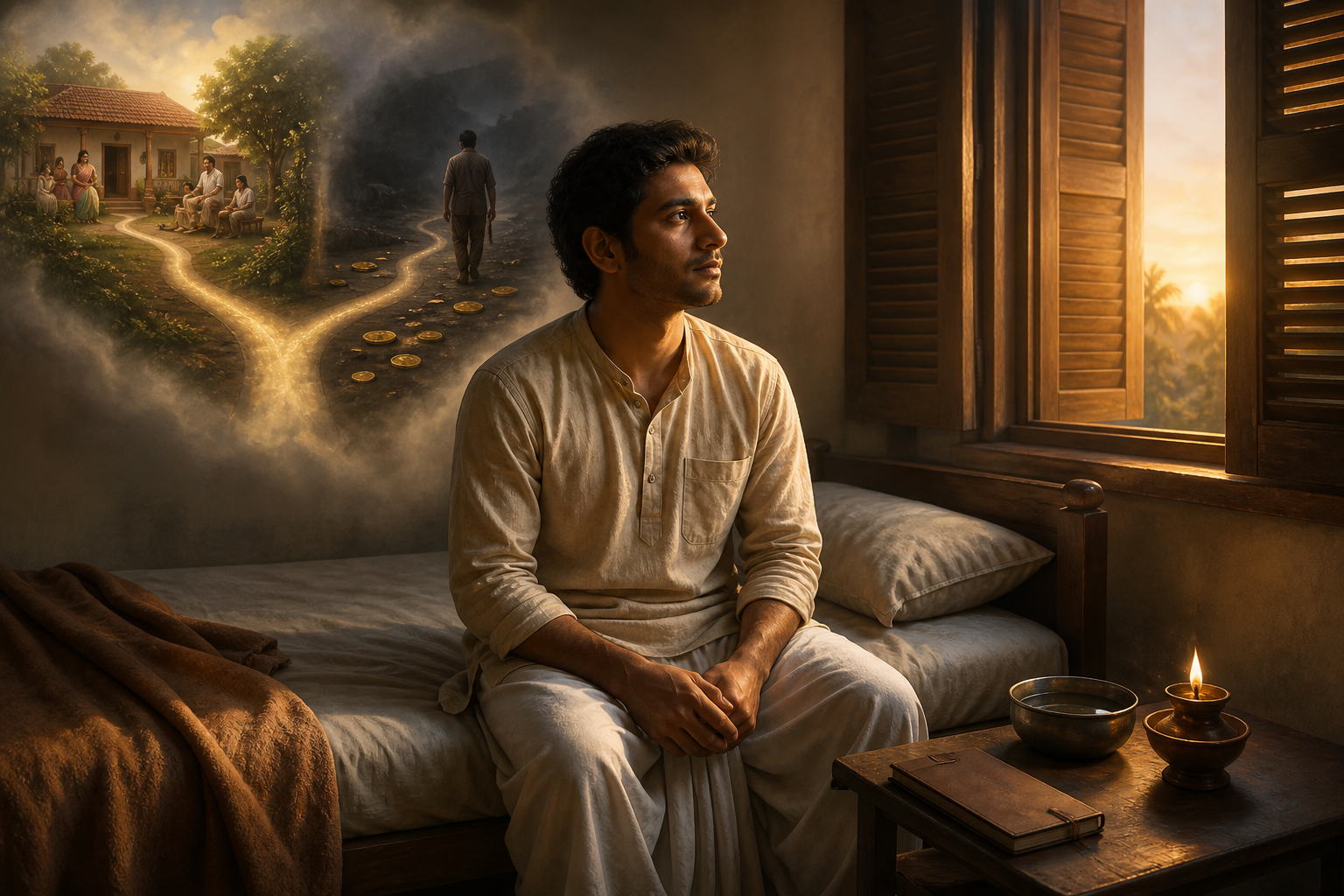
Hindu dream interpretation is symbolic rather than mechanical. A deity, object, color, location, and emotion may work together, but no isolated image has one compulsory meaning. Your temperament and present circumstances matter. A peaceful temple darshan during a family conflict may speak differently from the same temple appearing while you are neglecting a spiritual practice.
The governing distinction is simple: a sacred dream may offer direction, but it does not remove free will. Vishnu is associated with preservation, protection, and cosmic order, while Lakshmi embodies abundance, beauty, and auspiciousness. Their presence therefore points first toward qualities you can embody. It does not guarantee that a particular event will happen.
Use four layers when you examine the dream:
- Image: Record who and what appeared. Note the deity’s form, objects, colors, setting, words, and gestures without interpreting them yet.
- Emotional tone: Name the strongest feeling during the dream and immediately after waking. Peace, relief, fear, longing, confusion, and awe lead to different readings.
- Present context: Identify the duty, conflict, financial pressure, relationship, or spiritual question already occupying you.
- Dharmic response: Choose the interpretation that calls for honesty, steadiness, generosity, restraint, service, or renewed devotion.
This sequence matters. If you begin with a desired outcome, you can make almost any symbol confirm it. If you begin with the remembered scene and your actual responsibilities, the dream becomes a mirror for discernment.
A sound interpretation should make you more responsible, not more entitled. Be suspicious of any reading that excuses harmful behavior, promises effortless wealth, encourages fear of an unavoidable calamity, or tells you to abandon ordinary judgment. Sacred meaning and practical reason should support one another.
Read Vishnu as a call to preserve what is right
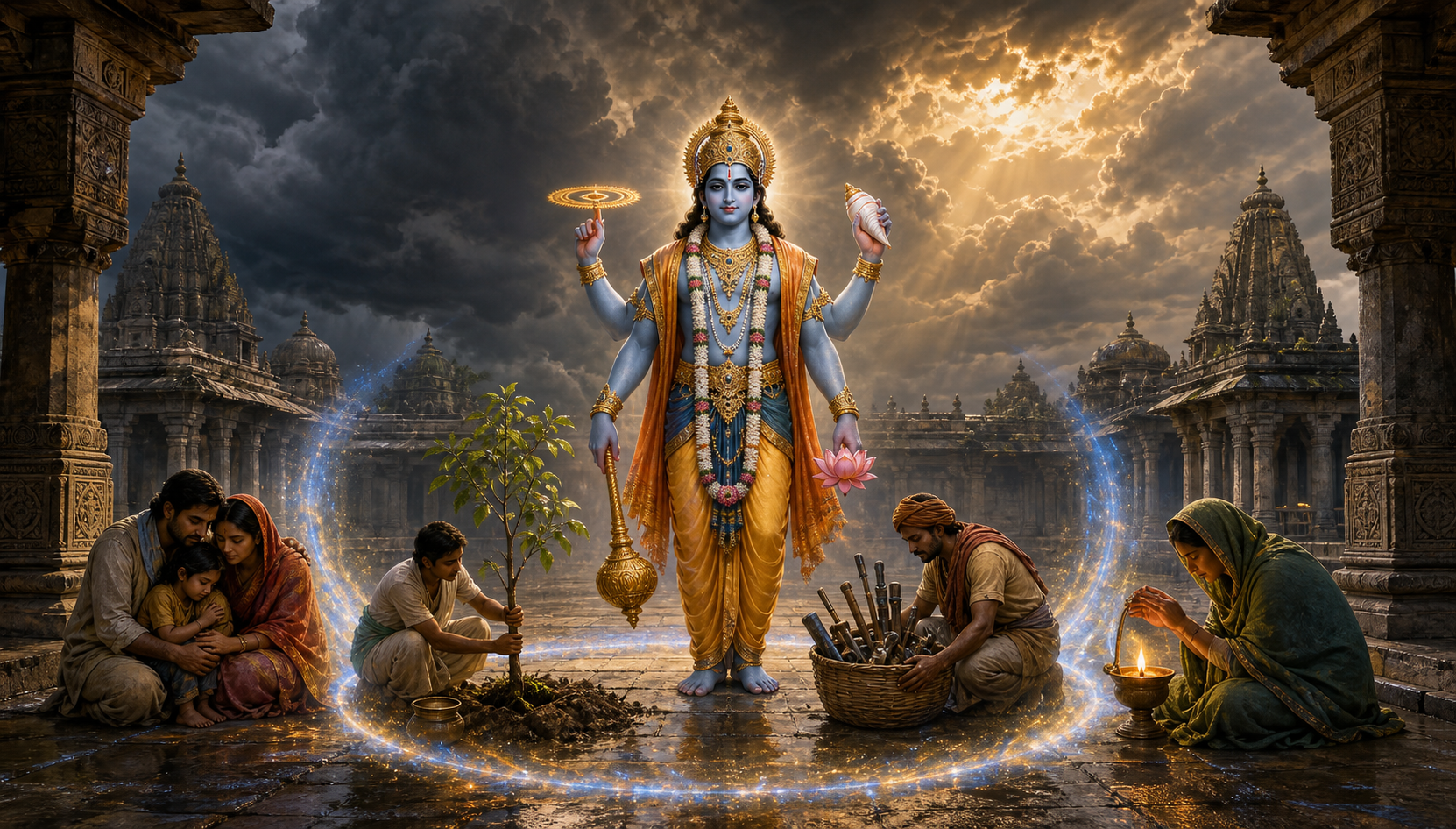
Vishnu’s presence points toward steadiness and order
A dream of Vishnu commonly brings the question of preservation to the foreground. What in your life deserves protection? Which responsibility must be maintained through change? Where has disorder entered because you have delayed a necessary decision?
Preservation does not mean resisting every change. It means protecting the dharmic center while circumstances move around it. You may need to preserve trust while changing an arrangement, protect a household while revising a budget, or uphold truth while resolving a disagreement without humiliation or retaliation.
Particular Vishnu motifs sharpen that inquiry. Vishnu upon Ananta Shesha can suggest deep support, patience, and stability. The Sudarshana Chakra can point toward protection, clear judgment, and the correction of imbalance. Darshan in a temple can carry reassurance while inviting you to renew a neglected devotional commitment. None of these images gives you permission to act rashly. Each turns your attention toward orderly, courageous conduct.
If the dream came during conflict, ask whether you are protecting dharma or merely protecting pride. If it came while you were overwhelmed by change, identify one duty that should remain stable even if everything else must be reorganized. That one distinction often makes the symbolism practical.
Lakshmi’s presence asks how you receive and use abundance
Do not reduce Lakshmi to a forecast of money. Her abundance includes material resources, but it can also appear as peace in the home, supportive relationships, gratitude, beauty, confidence, and the ability to use what you possess wisely.
A lotus, elephants pouring water, or a gentle field of light can reinforce an auspicious reading. Gold and white can suggest purity and grace. Yet the decisive question is not simply whether prosperity is coming. Ask whether you are prepared to receive prosperity without greed and maintain it without injustice.
That question produces concrete tests. Is your way of earning ethical? Are you caring for the relationships that make a household prosperous? Are you wasting a useful resource because you fail to value it? Can some portion of what you have become dana, support, hospitality, or service?
A Lakshmi dream should not by itself trigger a purchase, investment, loan, career move, or other consequential financial choice. Treat the dream as a prompt to examine stewardship. Make the decision using reliable information and ordinary financial judgment. The spiritual question is how wealth will be acquired and used, not whether a symbolic vision guarantees a return.
Use this table as a starting point rather than a fixed code:
| Dream detail | Possible emphasis | Question to ask | Grounded response |
|---|---|---|---|
| Vishnu upon Ananta Shesha | Stability, patience, enduring support | Which duty requires steadiness rather than force? | Keep one essential commitment while allowing nonessential plans to change. |
| Sudarshana Chakra | Protection, clarity, correction of disorder | What unresolved matter needs a clean and ethical decision? | Address one avoided issue calmly and directly. |
| Lakshmi with a lotus | Holistic prosperity, gratitude, auspiciousness | Which form of abundance have I overlooked or mishandled? | Care for a relationship, skill, or resource and pair gratitude with generosity. |
| Elephants pouring water or gentle light | Flourishing and auspicious grace | Can I welcome support without clinging to it? | Receive help responsibly, protect what grows, and share where appropriate. |
| Vishnu and Lakshmi together | Harmony between dharma and artha | Does the prosperity I seek rest on right conduct? | Choose the path that protects both household stability and integrity. |
| Temple darshan, prasada, or mantra | Assurance, purification, healing, renewed devotion | Which spiritual rhythm needs to be restored? | Resume one sustainable practice instead of making an elaborate vow. |
When Vishnu and Lakshmi appear together, examine dharma and artha together
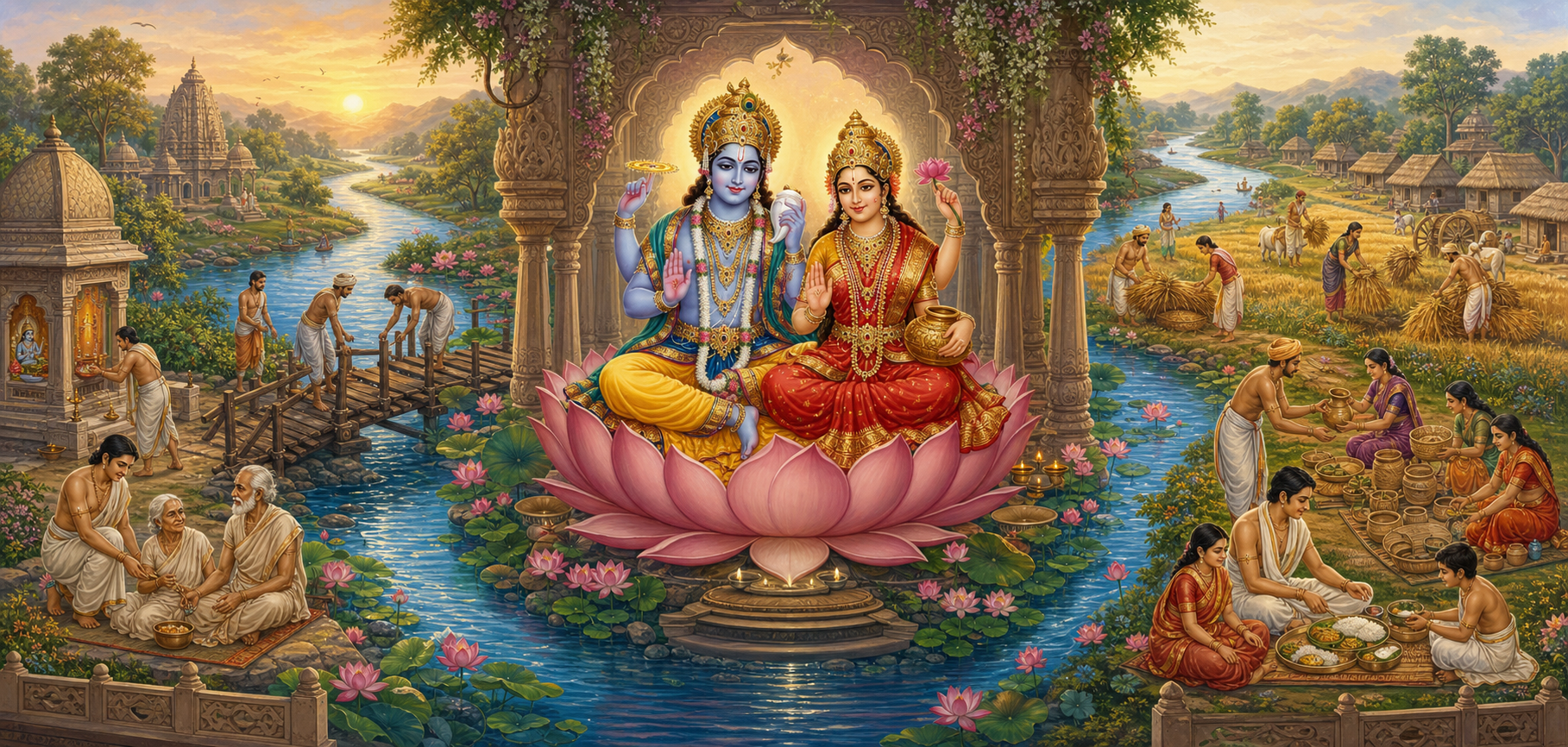
The combined appearance of Vishnu and Lakshmi brings two concerns into one frame: what must be preserved and what should be allowed to flourish. In the life of a householder, these concerns cannot be separated for long. Resources sustain duties, while dharma determines how resources are earned, protected, shared, and enjoyed.
This makes the dream especially relevant when you are weighing a question about work, marriage, family obligations, property, business, or household stability. Do not ask only whether the dream approves your preferred choice. Ask whether the choice creates durable well-being without violating your responsibilities.
For example, an opportunity may promise more income but weaken the trust or care on which your household depends. Another choice may feel dutiful but reject every form of comfort, rest, or material security as spiritually suspect. The joint darshan corrects both imbalances. Prosperity needs an ethical foundation, and duty needs adequate support.
This is the practical meaning of bringing dharma and artha into harmony. Artha is not rejected; it is ordered. Wealth, influence, time, knowledge, and social support become auspicious when they protect life, fulfill legitimate duties, and make generosity possible.
The surrounding scene can change the emphasis:
- A temple: Read the dream through devotion and recommitment. It may be time to restore a practice that has become irregular.
- Receiving prasada: Consider blessing together with purification. Ask what you must receive gratefully and what habit or attitude must be cleaned up.
- Hearing Om Namo Narayanaya: Give attention to reassurance, remembrance, and the easing of anxiety. If the mantra stays with you, it can become the focus of a simple daily practice.
- Receiving a lotus from Lakshmi: Look for inner healing and a gentler relationship with prosperity, rather than only an external gain.
- The Kshira Sagara: Emphasize depth, patience, and support that is not always immediately visible. Do not force a quick answer merely because uncertainty is uncomfortable.
- Deep blue: Give greater weight to Vishnu’s protective vastness. Gold or white shifts the emphasis toward purity and auspicious grace.
Emotional tone remains the best safeguard against crude symbol matching. Peace, clarity, and relief strengthen an auspicious interpretation. Fear does not automatically turn every sacred image into a bad omen. It may show that your own exhaustion, anxiety, or unresolved pressure entered the dream. Attend to that condition before constructing an elaborate supernatural explanation.
Use a disciplined morning practice to turn the dream into action
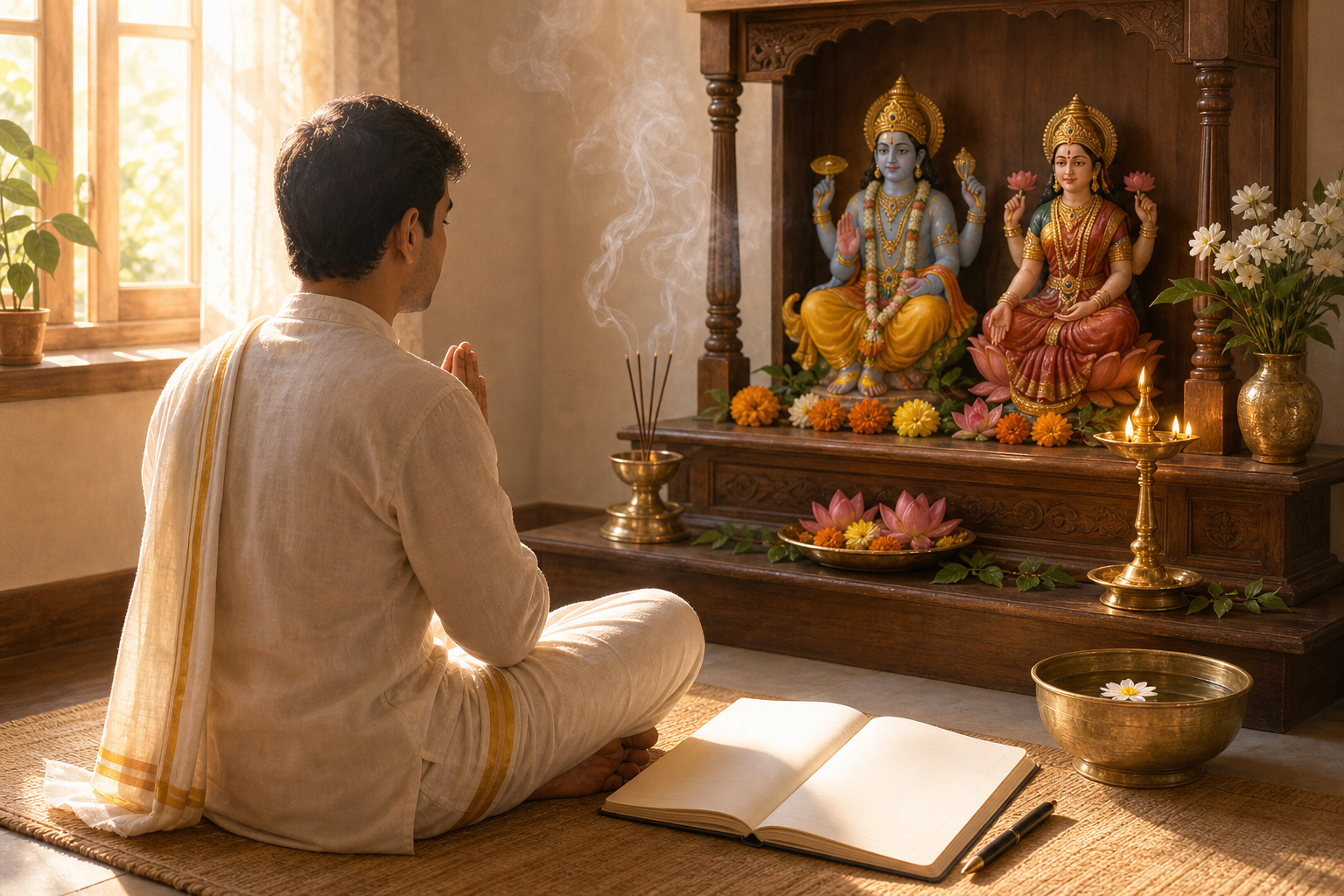
Interpret the dream before conversation, online searches, or wishful retelling add details that were not present. You do not need a complicated ritual. You need a short record and one proportionate response.
- Write the scene in plain language. Record the place, figures, objects, colors, words, movement, and ending. Separate what you saw from what you think it means.
- Name the dominant emotion. Choose the most accurate word. Peace and relief are not the same as excitement; reverence is not the same as fear.
- Write the waking-life pressure beside it. Name the decision, neglected duty, strained relationship, financial concern, or devotional longing already present in your life.
- Connect the symbol to a dharmic principle. For Vishnu, test preservation, protection, order, patience, and clarity. For Lakshmi, test gratitude, ethical prosperity, stewardship, generosity, and harmony.
- Select one action you can complete. Repair one conversation, fulfill one postponed duty, review one use of money, make one act of dana, or restore one devotional practice.
- Close without demanding certainty. Light a lamp, sit with gentle breath awareness, chant a chosen mantra, or read a small passage from a sacred text. Then return to your responsibilities.
A useful journal entry can fit under five labels: image, feeling, current situation, dharmic principle, next action. Repeating that format lets you notice patterns without treating every unusual dream as a command.
Test the interpretation against conduct
Suppose you saw Vishnu with the Sudarshana Chakra while a family disagreement remains unresolved. If the dream felt calm, the practical reading may be to correct disorder with clarity and restraint. Your action is not to announce that the deity has taken your side. It is to prepare an honest conversation that protects the relationship without avoiding the issue.
If Lakshmi appeared with a lotus while you were worried about income, relief in the dream may invite gratitude and better stewardship. Review your resources, distinguish needs from anxious impulses, and choose a modest act of generosity that does not neglect your obligations. Do not interpret the lotus as proof that a windfall is imminent.
If Vishnu and Lakshmi appeared together in a home while work is consuming family life, test whether your present pursuit of artha is actually sustaining grihastha dharma. The response might be a firmer boundary, a repaired commitment, or a more honest household conversation. The correct action depends on your circumstances; the principle is that prosperity should protect the home rather than hollow it out.
Know when not to intensify the interpretation
Three errors make dream interpretation less dharmic. The first is prediction: assuming an auspicious image guarantees wealth, marriage, success, or rescue. The second is surrendering agency: asking the dream to make a decision that still requires evidence and judgment. The third is spiritual inflation: treating a private dream as proof of superiority, special status, or authority over someone else.
If the meaning remains uncertain, speak with a knowledgeable elder or teacher who understands the symbolism and your tradition. Bring the exact dream record rather than a polished version. Good counsel should return you to humility, ethical action, and proportionate practice.
A distressing dream also deserves a different response from a serene darshan. Rest, reflection, and supportive conversation may be more appropriate than symbolic analysis. If nightmares recur, disrupt sleep, or impair daily functioning, seek help from a qualified health professional. Devotional practice can accompany that care, but a dream interpretation should not replace it.
Key takeaways
- Read Vishnu through preservation, protection, order, patience, and ethical clarity.
- Read Lakshmi through holistic prosperity, gratitude, harmony, generosity, and responsible stewardship.
- When they appear together, examine whether your pursuit of artha is grounded in dharma and supports the household.
- Interpret the deity, surrounding symbols, emotional tone, and waking-life context as one scene.
- Accept interpretations that produce steadier and more compassionate conduct; reject those that encourage fear, entitlement, passivity, or reckless decisions.
- Translate the dream into one modest action, then let sustained conduct reveal whether your reading was fruitful.
If the dream still feels sacred after the emotion settles, honor it quietly today. Record it, choose one duty to perform with greater care, and let any promise of prosperity be measured by the generosity and integrity it produces in you.
References
