
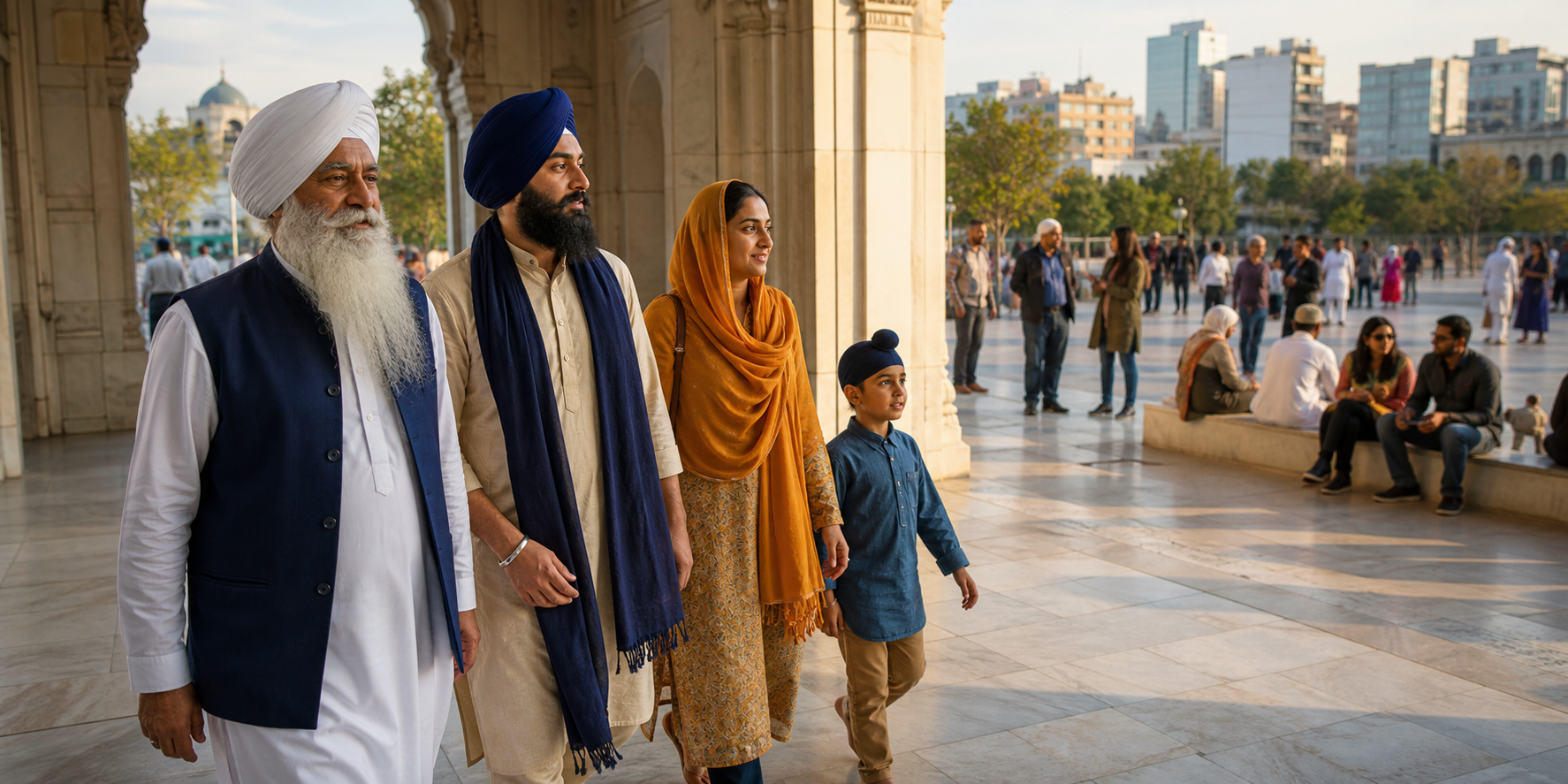
You may be trying to answer a question that appears simple but is not: how can a Sikh remain visibly, confidently Sikh while living among people of many religions? The question can arise when a child is asked about unshorn hair, when a workplace treats religious discipline as an inconvenience, or when an interfaith event quietly expects everyone to blur their differences.
You do not have to choose between rooted identity and peaceful coexistence. Sikh pluralism is strongest when it begins with discipline, not dilution. It knows what must be preserved, what can be shared, and what responsibility a Sikh carries toward people beyond the community.
Begin with the right distinction: a boundary is not hostility
A religious boundary tells you what a tradition asks of its adherents. Hostility tells you to treat outsiders as lesser people. Confusing the two produces opposite errors: identity is either hidden to avoid offence, or defended by turning every encounter into a contest.
Sikh teaching offers a more coherent structure. Ik Onkar affirms oneness, seva turns humility into service, and sarbat da bhala directs goodwill toward all. These commitments do not erase Sikh distinctiveness. They give that distinctiveness an outward moral purpose.
When you face a decision about identity, separate it into three questions:
- Conviction: What does Sikh teaching affirm here? Begin with the Guru’s orientation toward the Divine rather than with social approval.
- Discipline: What practice keeps that conviction present in ordinary life? Simran, seva, Kesh, and adherence to Rehat cannot be reduced to festival-day symbols.
- Responsibility: How should this identity affect the treatment of another person? The test is not merely whether Sikh identity remains visible, but whether it produces courage, justice, humility, and service.
This distinction is practical. A school may accommodate Sikh practice without teaching Sikh doctrine as its own. A gurdwara may welcome visitors without redesigning Sikh worship around visitors’ expectations. Sikh volunteers may work beside Christians, Hindus, Buddhists, Jains, or people of no religion without pretending that every tradition makes identical theological claims.
Pluralism requires distinct participants. If difference must disappear before cooperation can begin, the result is conformity, not unity.
Kesh shows how conviction becomes a daily discipline

If you are explaining Kesh, do not begin with what Sikhs refuse to do. Begin with what they commit to carry. Within Khalsa discipline, Kesh belongs to the Five Ks associated with Guru Gobind Singh and aligns daily practice with the Sikh Rehat Maryada. It is observed by women as well as men.
Kesh joins three ideas that are often separated in modern discussions of religion:
- Discipline: Caring for unshorn hair creates a recurring practice of constancy. The commitment remains present before prayer, during work, and in public life. It is not switched on only when a person enters a sacred building.
- Honor: The body is received as a sacred trust rather than treated as material that must always be altered to satisfy fashion or social pressure. Kesh expresses gratitude for the human form through which remembrance, service, and righteous action become possible.
- Remembrance: A visible and tactile practice can call attention back to Vaheguru amid distraction. The body itself becomes part of the discipline of remembering.
This is also why Kesh cannot be dismissed as costume. A costume is worn for an occasion and removed when the occasion ends. Kesh accompanies the Sikh through ordinary routines, difficult choices, and encounters with strangers. Its visibility can create accountability: if you are publicly recognizable as Sikh, your conduct inevitably communicates something about the Panth.
That insight changes how Kesh should be taught and discussed. Parents can explain the purpose of the discipline while teaching its routine, rather than offering only a prohibition. Educators and employers can ask what practical accommodation is needed without demanding that a Sikh repeatedly defend the legitimacy of the practice. Fellow Sikhs can uphold the importance of Kesh without using it to humiliate someone whose present level of observance differs.
Comparison across Dharmic traditions can help, provided that comparison does not become equivalence. Hindu ascetics may retain jata, Buddhist monastics shave the head, and Jain mendicant disciplines connect hair with rigorous non-attachment. The forms point in different directions within their respective paths, yet each shows that spiritual training can be carried through the body. Use the resemblance to open understanding, not to claim that the vows mean the same thing.
Pluralism should produce service, not staged agreement
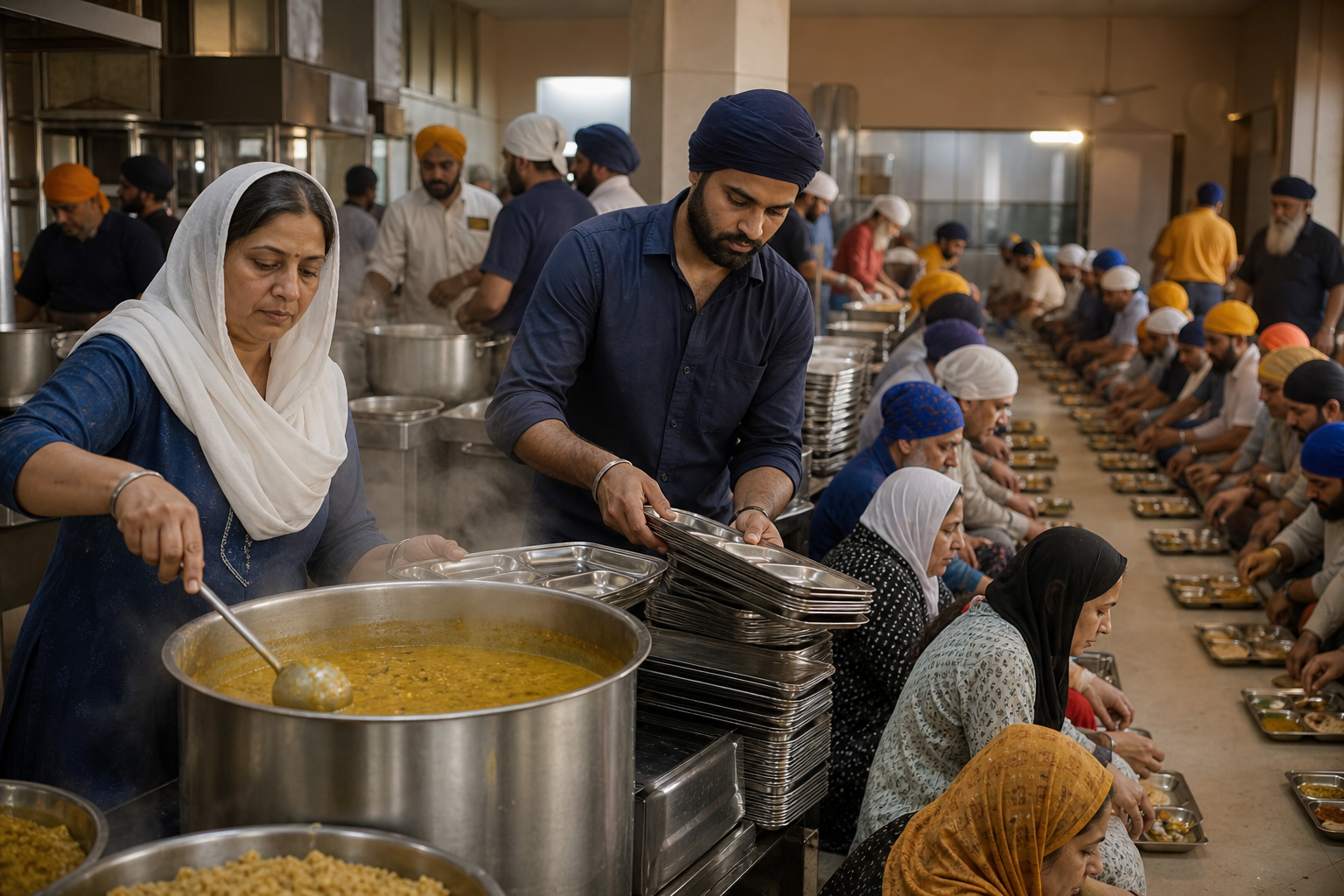
The clearest Sikh contribution to plural society is not a slogan about tolerance. It is a practice in which another person is treated with dignity. Langar makes that principle visible by welcoming people without distinctions of social standing or religious belonging. Seva moves the relationship beyond polite conversation and into shared responsibility.
This gives you a reliable way to judge an interfaith initiative. Ask what changes for the vulnerable person after the gathering ends. A ceremonial photograph may create visibility for organizers, but a community meal, blood donation camp, disaster-relief effort, neighborhood care project, or sustained food program creates a relationship through useful work.
A sound collaboration can follow this sequence:
- Choose a need before choosing a theme. Hunger, isolation, environmental neglect, or emergency relief gives participants a definite responsibility.
- Let each tradition name its motivation honestly. A Sikh may speak of seva and sarbat da bhala. A Catholic partner may speak of the common good. Dharmic collaborators may speak through ahimsa, karuna, or dana. Cooperation does not require a blended creed.
- Assign real work. Cooking, transport, supplies, welcoming guests, cleanup, and follow-through should be shared. Service builds trust because people become dependable to one another.
- Protect religious integrity. Music, prayer, and reflection should be identified accurately. No participant should be pressured to perform another tradition’s worship or to conceal a distinctive practice.
- Examine the result. Ask whether people were served with dignity, whether volunteers learned one another’s actual beliefs, and whether the relationship can continue beyond a single event.
Joint kitchens, charitable outreach, study circles, youth projects, and neighborhood service work because they join moral speech to a visible obligation. They also expose shallow pluralism. If an initiative celebrates diversity while treating Sikh discipline as an embarrassment, it has failed its own stated purpose.
For a Dharmic reader, the lesson is not that Hindu, Buddhist, Jain, and Sikh paths are interchangeable. Their practices and teachings retain their own integrity. The civilizational strength lies in learning how disciplined communities can recognize ethical resonances, cooperate where conscience permits, and disagree without denying one another’s dignity.
Protect identity where memory is being pushed from view
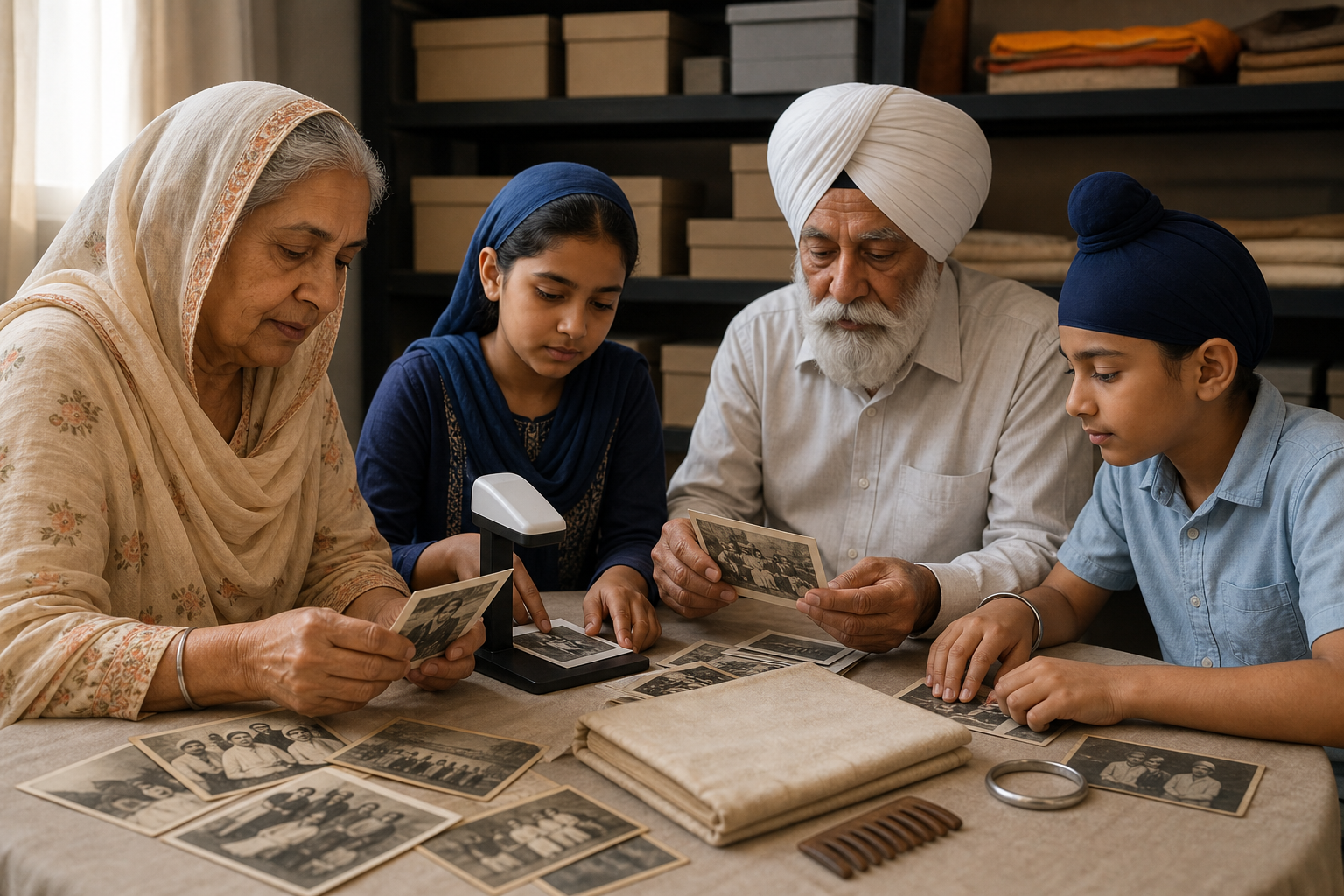
Pluralism also depends on who is remembered. A community can be physically present yet disappear from the way a place narrates its history. This is especially important for smaller Sikh populations whose experiences may be absorbed into larger political or religious stories.
Sikh identity in Kashmir has been sustained through language, ritual, seva, music, education, gurdwaras, family memory, and neighborhood networks. These are not decorative additions to identity. They are the means through which a community remains intelligible to its children and visible to its neighbors.
If your family or institution is responsible for cultural preservation, do not begin with a grand public display. Begin by finding what could disappear quietly:
- Map the custodians of memory. Identify elders, families, granthis, teachers, musicians, volunteers, and local institutions that hold knowledge not yet preserved elsewhere.
- Record oral histories with consent and context. Preserve names, places, pronunciations, practices, and the circumstances surrounding a memory. A detached quotation is less useful than an account whose setting is known.
- Connect archives to education. Use language, music, and community history in youth learning. An archive that younger Sikhs never encounter becomes storage rather than transmission.
- Attach heritage to seva. Let young people learn community history while participating in the institutions and service practices that carry it forward.
- Build reciprocal networks. Connect local Sikhs with wider Kashmiri and diasporic communities, while keeping Sikh voices responsible for telling Sikh experience.
- Invite neighbors into accurate remembrance. Cross-community cultural programs can widen recognition, but inclusion should not transfer authority over a community’s identity to outsiders.
Preservation and participation must work together. A record without a living community can become an exhibit about the past. Activity without a record forces every generation to recover what the previous generation knew. Language education, oral history, seva, music, and institutional stewardship create continuity when they reinforce one another.
Key takeaways for the next decision you face
- Test an identity decision through conviction, discipline, and responsibility. Social comfort alone is not a sufficient measure.
- Explain Kesh as a commitment involving discipline, honor, remembrance, and accountable visibility, not merely as a rule about hair.
- Do not confuse pluralism with theological sameness. Cooperation is more trustworthy when every participant can speak accurately from within a distinct tradition.
- Judge interfaith work by the dignity and practical service it produces after the ceremony is over.
- Pair cultural preservation with youth participation. Records safeguard memory; lived practice carries it forward.
- Use similarities among Dharmic traditions as bridges for understanding while preserving the different meaning of each discipline.
Choose the setting where this tension is real for you: a family conversation, a school request, a workplace policy, a gurdwara program, or a community partnership. Write down what must remain intact, what can be shared, and whom the decision should serve. Then take a concrete next step: explain Kesh through its purpose, request the needed accommodation, plan a seva project, or preserve a community memory before it is lost.
Sikh identity does not become generous by becoming indistinct. It becomes generous when disciplined remembrance produces the courage to remain visible and the humility to serve.
References
- SikhNet – Two Faiths, One Vision: Pope Leo’s Unity Call Resonates with Timeless Sikh Values
- SikhNet – Unseen in the Valley: Powerful Insights into Reclaiming Sikh Identity in Kashmir
- SikhNet – Why Sikhs Keep Unshorn Hair: The Discipline, Honor, and Spiritual Power of Kesh in Daily Life
