
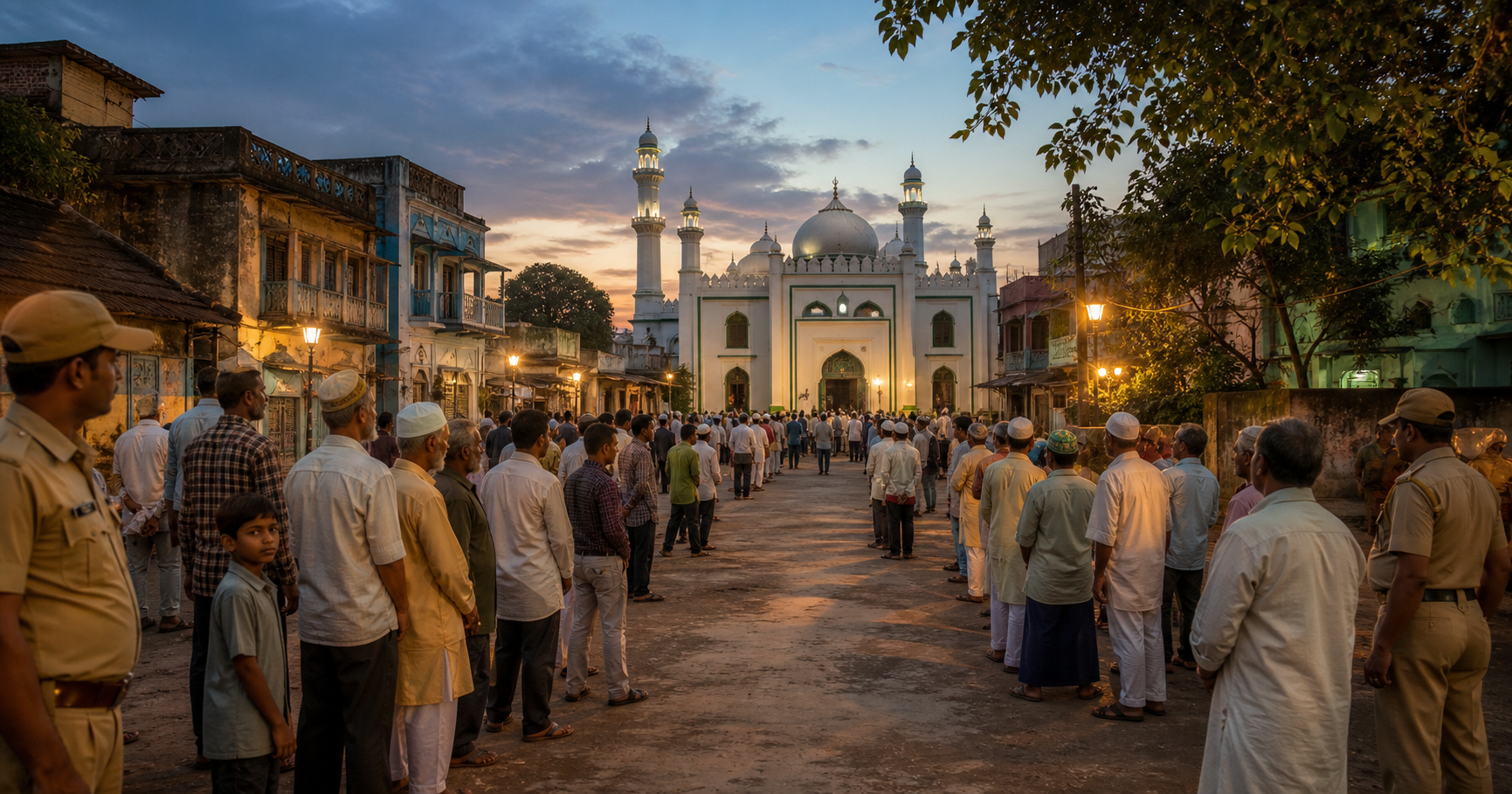
If the Beldanga gathering has left you wondering whether court permission settles the wider dispute, or whether speaking plainly about history must now give way to silence, the answer is no on both counts. You can defend historical memory, constitutional order, and the safety of your neighbours at the same time. The discipline lies in keeping those responsibilities distinct.
On 5 December 2025, the Calcutta High Court permitted a mosque-related gathering in Beldanga, Murshidabad, under strict security arrangements. For you, the practical question is not which slogan wins. It is how to protect a community’s right to speak without allowing rumours, provocation, or collective blame to determine what happens next.
What the High Court permission settled – and what it did not

A court’s permission for a gathering is not a theological endorsement, a judgment on civilizational history, or approval of every statement that may be made at the event. It addresses a narrower legal problem: whether constitutional freedom can be exercised under conditions that also protect public order.
That distinction matters because arguments about Beldanga can easily collapse three separate questions into one:
- The legal question: May the gathering proceed, and which security and conduct conditions govern it?
- The historical question: How should contested events, rulers, symbols, and inherited memories be understood?
- The civic question: How should present-day neighbours behave toward one another while that disagreement continues?
None of these questions automatically answers the other two. Court permission does not prove a historical claim. Historical grievance does not create a private exemption from a lawful security condition. A call for civic peace does not require Hindus to abandon serious discussion of history.
Whenever you encounter an argument about the event, identify which question it actually addresses. If someone uses the court order as proof that all historical objections are invalid, the argument has crossed from law into history without doing the necessary work. If someone uses a historical objection to justify ignoring public-order rules, the same error has occurred in the opposite direction.
This separation gives Hindu voices firmer ground. Civilizational concerns can be expressed precisely, lawfully, and without intimidation. That is more credible than allowing anger to turn a specific historical argument into hostility toward an entire living community.
Historical memory needs dharmic discipline

Shankaracharya Avimukteshwaranand Saraswati brought civilizational memory into the discussion while emphasizing nonviolence, dignity, and dialogue. That combination deserves attention. Historical memory matters to Hindus, but memory becomes useful guidance only when it is governed by dharma.
Hindu, Buddhist, Jain, and Sikh traditions do not articulate every virtue in an identical way. Yet ahimsa, satya, and karuna offer a shared discipline for moments of tension. They are not decorative words for a peace statement. Each changes how you should act.
- Ahimsa: Refuse physical harm, threats, humiliation, and incitement. Ahimsa does not forbid criticism. It requires criticism to remain under moral control.
- Satya: Separate confirmed facts from interpretation. State what the court decided, what you believe it means, and what remains unverified as three different things.
- Karuna: Do not treat a present-day neighbour as a proxy for a medieval ruler, institution, or army. Challenge a person’s words and actions without assigning inherited guilt.
- Seva: After a tense public episode, rebuild practical trust through service. Cooperation around an ordinary local need can restore contact that political rhetoric has damaged.
These principles also guard against two false choices. You do not have to erase history in order to reject collective blame. You do not have to approve of a gathering’s symbolism in order to insist that it proceed without violence. Restraint is not surrender when it preserves your ability to state a case clearly and keeps innocent people out of danger.
Before making a public statement, apply a simple test: does it identify a particular event, decision, speaker, or claim, or does it turn a whole community into one undifferentiated target? The first form can support honest debate. The second replaces historical precision with communal accusation.
Use a verification-and-restraint protocol

If you are discussing the event in a family group, neighbourhood association, temple circle, or social-media feed, use the following sequence. It is especially important when you are not physically present, because distance gives you less context even when a message makes you feel certain.
- Establish the confirmed base. Begin with what is actually known: the court permitted the gathering under security arrangements. Do not add an alleged crowd size, route, speech, motive, or incident unless you can verify it.
- Label interpretation as interpretation. The sentence the court permitted the gathering is a factual claim. The sentence the decision will improve or damage communal relations is a judgment. Do not present the second as if it were contained in the first.
- Recover the missing context. Check the date, original upload, full clip, and surrounding words before forwarding an inflammatory image or quotation. A cropped screenshot may show real words while concealing who said them, when they were said, or what followed.
- Do not amplify a threat in order to condemn it. Preserve the relevant material privately and report a credible threat to the appropriate authorities or platform. Reposting it with an angry caption can spread the same intimidation to a much larger audience.
- Follow event-specific directions. If you attend or organize locally, comply with the route, entry, timing, venue, speech, and security conditions communicated by the responsible authorities. Disagreement with the event’s meaning does not justify improvising around safety rules.
- Correct misinformation from your own side. A false claim does not become useful because it favours your preferred conclusion. Correcting it protects the credibility of legitimate Hindu concerns and deprives opponents of an easy reason to dismiss them.
What organizers and peace committees should settle beforehand
Calls for harmony fail when nobody knows who can make a decision once tension begins. Local organizers, community representatives, religious leaders, and security officials need an operational agreement, not merely a ceremonial appeal for peace.
- Name a liaison for each participating organization and identify the person authorized to speak with security officials.
- Put venue and speech rules in writing, including who may address the gathering and what happens when a speaker breaches the agreed code of conduct.
- Create one rapid fact-checking channel through which a rumour about the venue, procession, speech, or security response can be confirmed or denied.
- Monitor the venue consistently. A rule enforced only against one side will deepen mistrust even when the rule itself is reasonable.
- Agree on an escalation path: who pauses proceedings, who communicates with the crowd, and who records the reason for the intervention.
- Issue a short factual communication after the event so that speculation does not fill an information vacuum.
These controls do not eliminate disagreement. They prevent disagreement from being hijacked by an unscheduled speech, an unverified message, or an avoidable confrontation. Transparency also makes accountability possible: everyone knows the rules before anyone is accused of breaking them.
Questions to answer before you react
Does permission mean the court endorsed the gathering’s religious or historical message?
No. The permission concerns the exercise of rights under public-order safeguards. You can respect the judicial decision while retaining a different view of the event’s symbolism, historical associations, or rhetoric.
Does communal harmony require Hindus to stop discussing painful history?
No. Harmony built on enforced forgetting will not create trust. Discuss history with specificity: name the period, actor, institution, policy, structure, or event you mean. Then distinguish those past actors from present citizens. Precision protects both historical truth and innocent neighbours.
What should you do when provocative language begins circulating?
Pause before reacting. Verify the exact words and their context. Respond to the claim rather than attacking the speaker’s entire religious community. If the language contains a credible threat, preserve it and report it through lawful channels instead of recruiting an online crowd to retaliate.
Make the calm last beyond the gathering
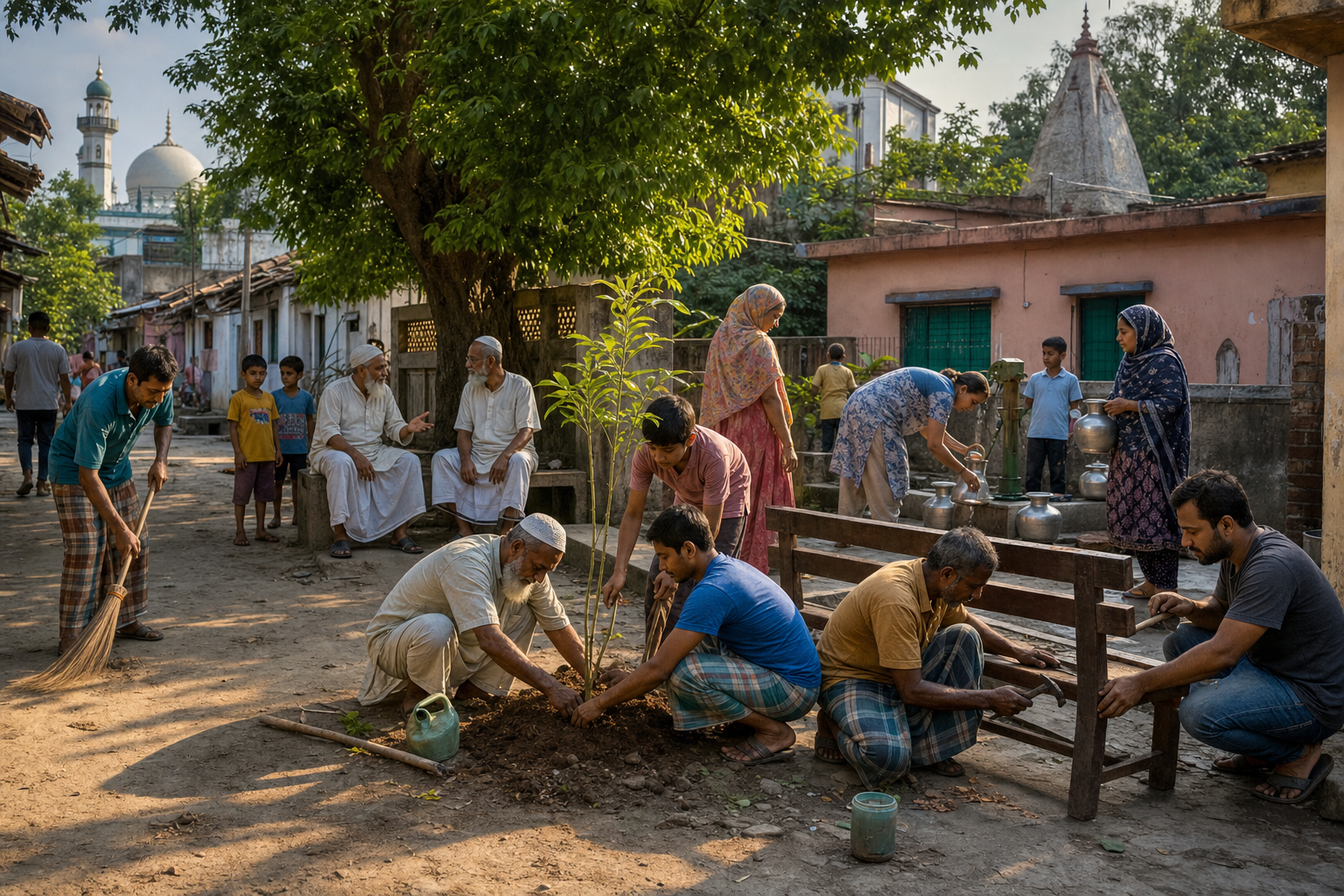
A peaceful conclusion to one event is useful, but durable harmony depends on what communities do afterward. As soon as the gathering is over, organizers should record confirmed outcomes, correct remaining rumours, and identify any complaint that still needs a lawful forum.
Local peace committees should also review where communication failed. If a false claim circulated widely, determine why residents trusted it and which recognized contact could answer faster next time. If a speech rule was ambiguous, rewrite it before the next gathering. If enforcement appeared unequal, document the concern and address the process rather than letting resentment harden into communal suspicion.
Religious and civic groups can then choose one modest seva activity tied to a shared local need. The aim is not a staged display of unity or a demand that differences disappear. It is to restore ordinary cooperation between people who may continue to disagree. Trust grows when neighbours can work together without first settling every question of history and identity.
If you are about to publish or forward something about Murshidabad, make it do at least one useful thing: verify a fact, lower the risk of harm, or direct people toward a lawful channel. If it does none of those, do not send it. Beldanga does not need amnesia or appeasement. It needs disciplined memory, equal application of the law, and citizens who refuse to become instruments of someone else’s provocation.
References
