
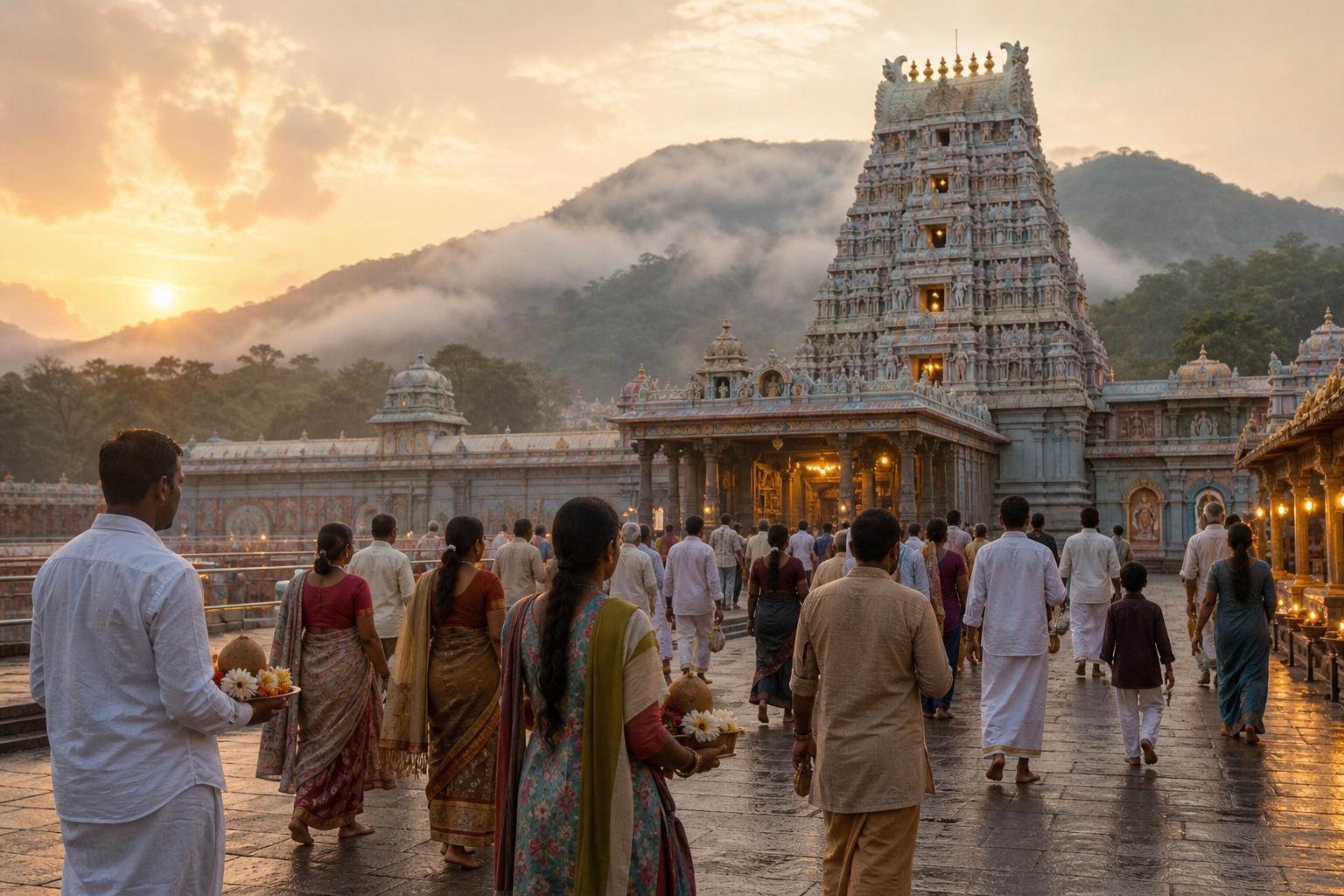
The main difficulty in reading the December 2025 TTD calendar is not finding an observance. It is deciding which shrine will anchor your day. On December 5 alone, devotional programmes were scheduled at Appalayagunta, Tirupati and Tiruchanoor. At the end of the month, Tiruchanoor’s Vaikuntha observances coincided with the multi-day float festival at Sri Kapileswara Swamy Temple.
This guide preserves the announced December 2025 programme and separates firm timings from details that still required confirmation. Only two event times were specified: 8:00 AM on December 2 and 6:00 PM on December 4. Where no time appears below, treat that as something to verify with the temple or TTD, not as a blank you can safely fill by assumption. These dates belong to 2025 and should not be carried into another year’s pilgrimage calendar.
The December 2025 observance calendar at a glance

The calendar covered several distinct temple traditions: lotus-petal worship and Friday sevas at Appalayagunta, lamps and Alwar remembrance at Sri Govindarajaswamy Temple, a month-long devotional sequence for Padmavathi Devi at Tiruchanoor, and Masa Shivaratri followed by Theppotsavam at Sri Kapileswara Swamy Temple. Reading these as one undifferentiated festival list makes planning harder. Start with the temple, then the observance, and only then the date.
| Date | Temple | Observance | Confirmed time or planning note |
|---|---|---|---|
| Tuesday, December 2 | Sri Prasanna Venkateswara Swamy Temple, Appalayagunta | Ashtadala Pada Padmaradhana Seva | 8:00 AM |
| Thursday, December 4 | Sri Govindarajaswamy Temple, Tirupati | Karthika Deepotsavam | 6:00 PM; arriving before the announced start was advised |
| Thursday, December 4 | Sri Govindarajaswamy Temple, Tirupati | Sri Tirumangai Alwar Sattumora | Timing was not specified |
| Friday, December 5 | Sri Govindarajaswamy Temple, Tirupati | Rohini Nakshatram observance connected with Sri Parthasarathi Swamy | Programme details and timing required confirmation |
| Fridays, December 5, 12, 19 and 26 | Sri Prasanna Venkateswara Swamy Temple, Appalayagunta | Abhishekam and Vastra Alankarana Seva | Friday schedule; exact timings were not specified |
| Fridays, December 5, 12, 19 and 26 | Sri Padmavathi Ammavari Temple, Tiruchanoor | Tiruchi Utsavam | Exact timings were not specified |
| Monday, December 22 | Sri Padmavathi Ammavari Temple, Tiruchanoor | Gaja Vahanam associated with the advent of Uttarashada star | Exact timing was not specified |
| Sunday, December 28 | Sri Kapileswara Swamy Temple, Tirupati | Masa Shivaratri | Exact programme timing was not specified |
| December 29 to January 2 | Sri Kapileswara Swamy Temple, Tirupati | Theppotsavam, or Float Festival | A five-day festival extending into January; daily timings were not specified |
| Tuesday, December 30 | Sri Padmavathi Ammavari Temple, Tiruchanoor | Vaikuntha Ekadasi | Major observance; queue and darshan details required confirmation |
| Wednesday, December 31 | Sri Padmavathi Ammavari Temple, Tiruchanoor | Vaikuntha Dwadasi | Continuation of the Ekadasi observance; timing was not specified |
Sri Venkateswara Swamy Temple at Venkatapalem in Amaravati also had special December celebrations in its announced programme, but no individual dates or event details were supplied. That makes it unsuitable as the fixed point of a date-specific itinerary unless a separate official notification fills in the missing information.
Choose the observance that matches your devotional purpose
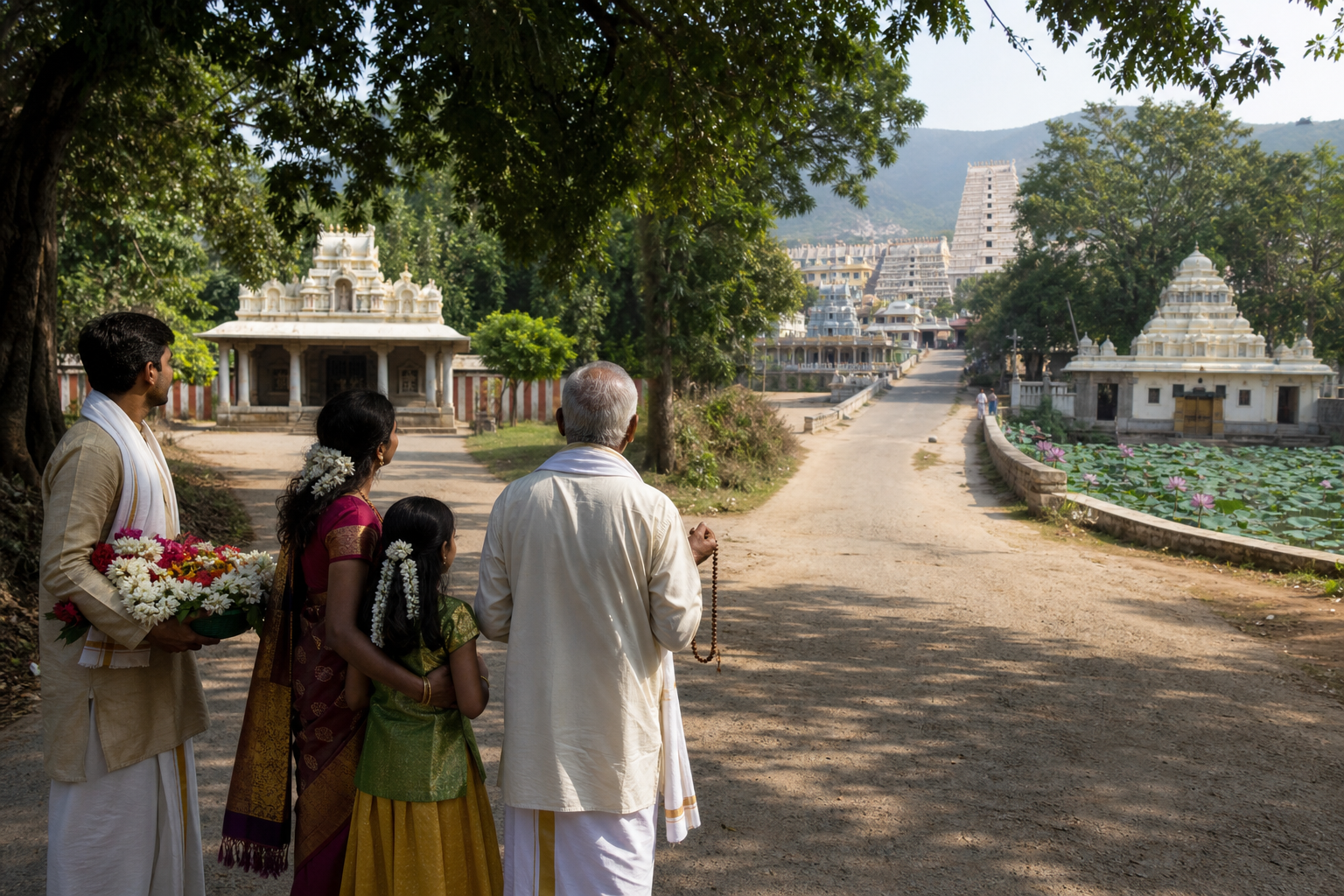
A long calendar can tempt you to collect events. A pilgrimage becomes more coherent when you choose one form of worship that matters most to you and allow everything else to remain optional. December 2025 offered four clear devotional paths.
For a precisely ordered seva: Appalayagunta on December 2
Ashtadala Pada Padmaradhana places careful lotus-petal offering and liturgical order at the centre of worship. It suits a devotee seeking a concentrated seva rather than a large festival atmosphere. The announced 8:00 AM start is unusually specific, but it should not be mistaken for an entry or reporting time. A serious plan would separately confirm when participants must arrive, where they must report and whether access conditions apply to the seva.
If Tuesday did not fit, Appalayagunta’s Friday rhythm offered another form of focused worship. Abhishekam emphasises sacred bathing and purification; Vastra Alankarana centres ceremonial vesting and adornment. The four December Fridays gave families a choice of dates, but the absence of published times meant that choosing the date was only the first half of the plan.
For light, recitation and Krishna-linked worship: December 4 and 5
Karthika Deepotsavam at Sri Govindarajaswamy Temple was the clearest choice for devotees drawn to collective lamp worship. Its 6:00 PM start made it the easiest event to place on a clock, while the lamps expressed the movement from ignorance toward inner clarity. Because the ceremony was expected to draw visitors, reaching the temple before 6:00 PM made more sense than treating 6:00 PM as an arrival target.
The same temple observed Sri Tirumangai Alwar Sattumora on December 4. This commemoration belongs to the living Sri Vaishnava practice of preserving the Alwars’ devotional legacy through recitation, remembrance and offering. A devotee interested in both observances still needed to confirm whether their timings and access arrangements allowed them to be experienced as one continuous temple visit.
Rohini Nakshatram followed on December 5 with worship connected to Sri Parthasarathi Swamy. Rohini’s devotional association with Sri Krishna makes this the more natural choice for someone whose sankalpa centres on Krishna or Parthasarathi. The programme did not provide a precise time, so the nakshatra’s significance should guide the choice of day, while the temple’s confirmed schedule should guide the hour.
For a Padmavathi-centred sequence: Fridays through Vaikuntha Dwadasi
Tiruchanoor offered the strongest month-long arc. The Tiruchi Utsavams on December 5, 12, 19 and 26 established a weekly discipline of worship around Padmavathi Devi. Gaja Vahanam on December 22 introduced the symbolism of strength, abundance and auspiciousness, while also inviting reflection on humility and protective grace.
The sequence culminated with Vaikuntha Ekadasi on December 30 and Vaikuntha Dwadasi on December 31. Ekadasi foregrounds restraint, prayer and inner purification. Dwadasi matters because it prevents the observance from being reduced to one intense day: worship continues through prayer, charity and responsible conduct. If you were choosing only one Tiruchanoor date, the decision was therefore between the regularity of a Friday utsavam, the vahana symbolism of December 22, and the greater devotional concentration expected around December 30 and 31.
For contemplation followed by celebration: Kapileswara at month-end
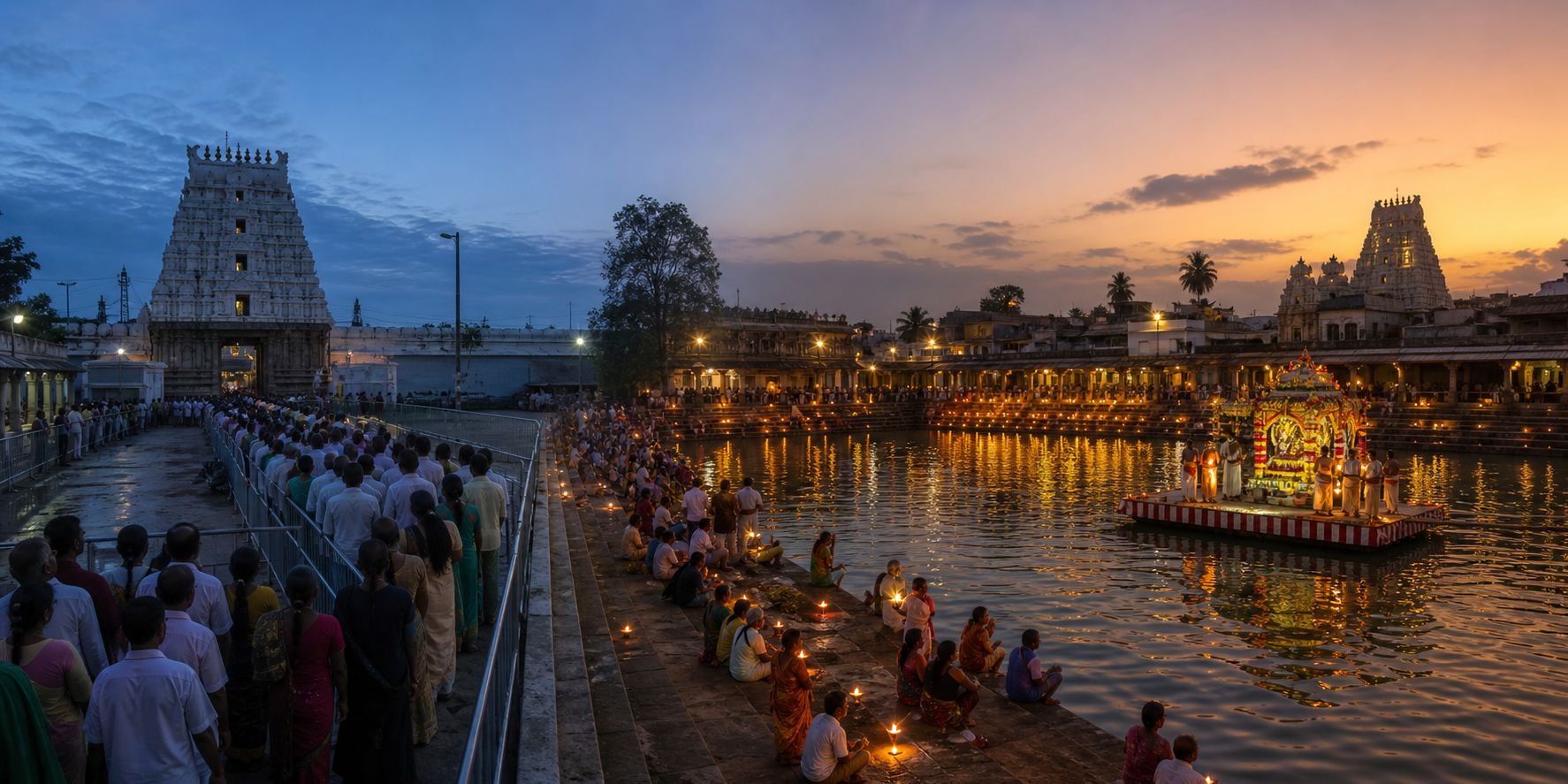
Masa Shivaratri at Sri Kapileswara Swamy Temple on December 28 emphasised vrata, contemplation and quiet devotion. The mood then shifted as Theppotsavam began on December 29. During the float festival, the deities’ procession on the temple tank brought light, music, movement and congregational worship together.
This made the Kapileswara sequence especially suitable for a devotee seeking both inward practice and a public festival experience. It also required attention to the calendar boundary: Theppotsavam continued through January 2. A journey ending on December 31 would cover only the first three days of that five-day span.
The dates that require a real itinerary decision
Four scheduling points deserve more attention than the rest. These are where an attractive list of observances can become an unrealistic route.
- December 5 involves three separate temple choices. Rohini Nakshatram was marked at Sri Govindarajaswamy Temple, Friday Abhishekam and Vastra Alankarana were scheduled at Appalayagunta, and Tiruchi Utsavam took place at Tiruchanoor. With no exact timings for these programmes, you cannot responsibly assume that all three will fit. Pick one as your non-negotiable darshan and add another only after the day’s temple timings are confirmed.
- December 4 has two observances at one temple, but only one stated time. Karthika Deepotsavam was set for 6:00 PM; Sri Tirumangai Alwar Sattumora had no stated hour. Sharing a date and venue does not prove that the same queue, access arrangement or attendance window covers both.
- December 30 and 31 create an overlap between Tiruchanoor and Kapileswara. Vaikuntha Ekadasi and Dwadasi occurred during the five-day Theppotsavam. If both traditions mattered to you, the calendar itself supplied a cleaner option: anchor December 30 and 31 at Tiruchanoor, then consider Kapileswara on December 29, January 1 or January 2 after checking the daily float-festival schedule.
- Venkatapalem cannot anchor a dated plan without another notice. Special celebrations were expected there, but the available programme did not name their dates or timings. Keep the temple as a possible addition rather than building transport or accommodation around an unspecified event.
Before setting out, confirm five items for your chosen observance: the exact temple and deity, the ritual’s start time, any required reporting time, the applicable darshan or queue procedure, and whether a revised notice has changed the programme. A festival date tells you when worship is scheduled. It does not, by itself, tell you when access begins or how participation is managed.
Participate in the ritual instead of merely collecting it
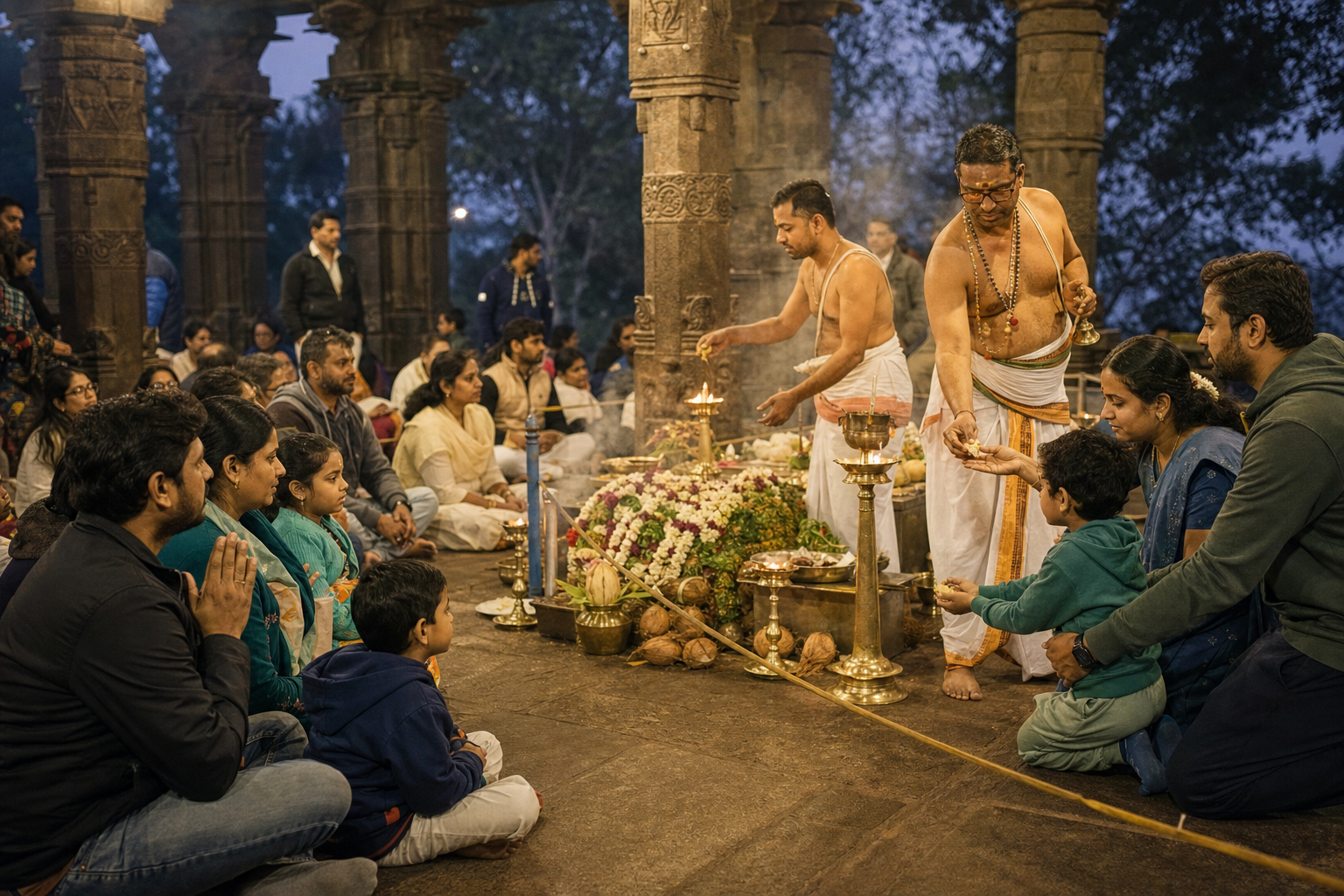
The most useful preparation is not an overfilled route. It is knowing what the observance asks you to notice. At Ashtadala Pada Padmaradhana, attend to precision and reverence. At Abhishekam and Vastra Alankarana, contemplate purification followed by auspicious presentation. During Deepotsavam, let the visible lamp become a prompt to examine what still clouds your own judgement.
Alwar Sattumora asks you to recognise memory and recitation as forms of cultural continuity. Rohini worship directs attention toward Sri Krishna as Parthasarathi. Gaja Vahanam holds strength and abundance together with humility. Vaikuntha Ekadasi and Dwadasi place discipline beside continuity: a vrata has greater meaning when its clarity survives into generosity and conduct. Masa Shivaratri turns inward, while Theppotsavam returns devotion to a shared, visible celebration.
These rites remain distinctly Vaishnava or Shaiva in form, and respecting those forms matters. Their underlying disciplines can still speak across the wider dharmic family. Mindful conduct, compassion, self-restraint, service and reverence for sacred space are recognisable to Hindus, Buddhists, Jains and Sikhs without pretending that their rituals are interchangeable. Unity becomes stronger when difference is understood rather than erased.
Temple etiquette is part of the observance, not an administrative interruption to it. Follow the local queue and darshan instructions, make room for elders and families without creating a competing rule of your own, and keep patience when a programme changes. If you choose offerings, favour what the temple permits and what does not burden the sacred environment. The aim is to leave the temple’s order and sanctity intact for the devotee behind you.
Key takeaways
- The only specified event times in the announced programme were 8:00 AM for Ashtadala Pada Padmaradhana on December 2 and 6:00 PM for Karthika Deepotsavam on December 4.
- December 5 required choosing among separate observances at Sri Govindarajaswamy Temple, Appalayagunta and Tiruchanoor; the missing timings made a three-temple plan unreliable.
- Tiruchanoor’s month-long arc ran from four Friday Tiruchi Utsavams through Gaja Vahanam to Vaikuntha Ekadasi and Dwadasi.
- Kapileswara’s Theppotsavam began on December 29 and continued through January 2, so it should be planned as a five-day festival crossing the year boundary.
- Use the date as the starting point, then verify the start time, reporting time, access procedure and any schedule revision directly with the temple or TTD.
- Do not reuse these Gregorian dates for a later year; lunar, nakshatra and temple calendars require a fresh current-year schedule.
If you are preserving a record of a December 2025 pilgrimage, match each visit to its temple-specific observance rather than labelling the whole journey simply as a TTD festival trip. If you are planning a future December visit, carry forward the method, not the dates: choose one anchor shrine, confirm the live temple notice, and leave enough space in the day to worship without racing the calendar.
References
- DharmaRenaissance Blog — Appalayagunta Sri Prasanna Venkateswara Temple: Unmissable December 2025 Sevas and Festivities
- DharmaRenaissance Blog — December 2025 Festivals at Tirupati’s Sri Govindarajaswamy Temple: Dates, Timings, Significance
- DharmaRenaissance Blog — Tiruchanoor Padmavathi Temple Dec 2025: Vaikuntha Ekadasi, Gaja Vahanam and Friday Utsavams
- DharmaRenaissance Blog — Experience Sacred December 2025 TTD Festivals: Masa Shivaratri and Mesmerizing Theppotsavam
