
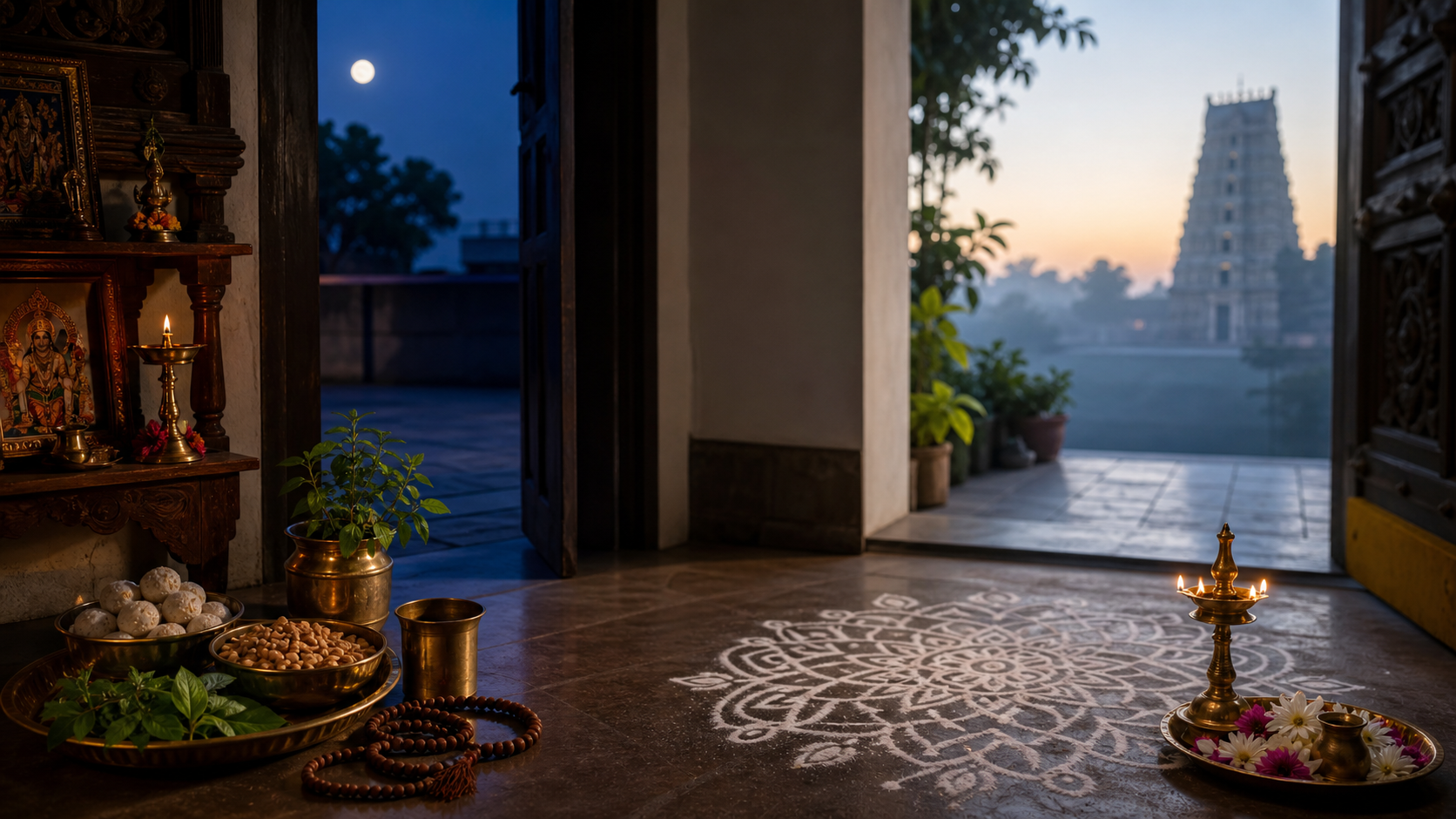
You may have several December dates in front of you and still be unsure what belongs on your actual vrata calendar. The practical issue is not remembering more names. It is separating the lunar tithi change on December 14 from the solar opening of Dhanurmasam on December 16, then checking local timing before you fast or travel.
For December 2025, these two transitions give you a workable structure: prepare for Ekadashi as Dashami ends, then begin a sustainable Margazhi routine two days later. Here is how to turn those dates into a home, temple, and family plan without pretending that one timetable fits every sampradaya or location.
The December dates to put on your calendar
| Date or period | Sacred-calendar movement | What you should plan |
|---|---|---|
| December 14, before 8:46 PM | Krishna Paksha Dashami remains in effect. | Complete routine duties, prepare any vrata food, and settle household logistics before the evening transition. |
| December 14, from 8:46 PM | Krishna Paksha Ekadashi begins. | Turn toward prayer, mantra-japa, quiet study, meditation, and restraint. Use your local rule to determine the formal fasting schedule. |
| December 16 | Dhanurmasam, or Margazhi, begins with Dhanur Sankramanam. | Start the early-morning devotional routine you intend to maintain through the sacred month. |
| December 16, 2025 to January 14, 2026 | The full Dhanurmasam observance window. | Plan sustained dawn worship, Tiruppavai recitation where appropriate, temple participation, seva, or a simpler daily discipline. |
| Date to confirm locally | Vaikuntha Ekadashi is traditionally observed within Dhanurmasam. | Do not assign it a civil date from the Dhanurmasam range alone. Check your temple notice and local Panchang before arranging darshan or a vrata. |
This is deliberately a focused calendar, not a claim that these are December’s only sacred occasions. Your regional or sampradaya calendar may carry additional observances. Add those from a trusted local Panchang or temple schedule rather than filling gaps with remembered dates from another year.
Also notice what the table does not provide: a location-specific Nakshatra, Rashi position, vrata-ending time, or temple program. Those details should not be guessed from the civil date. A festival name tells you what to prepare for; the local Panchang tells you when your community observes it.
Treat December 14 as a transition, not a midnight box
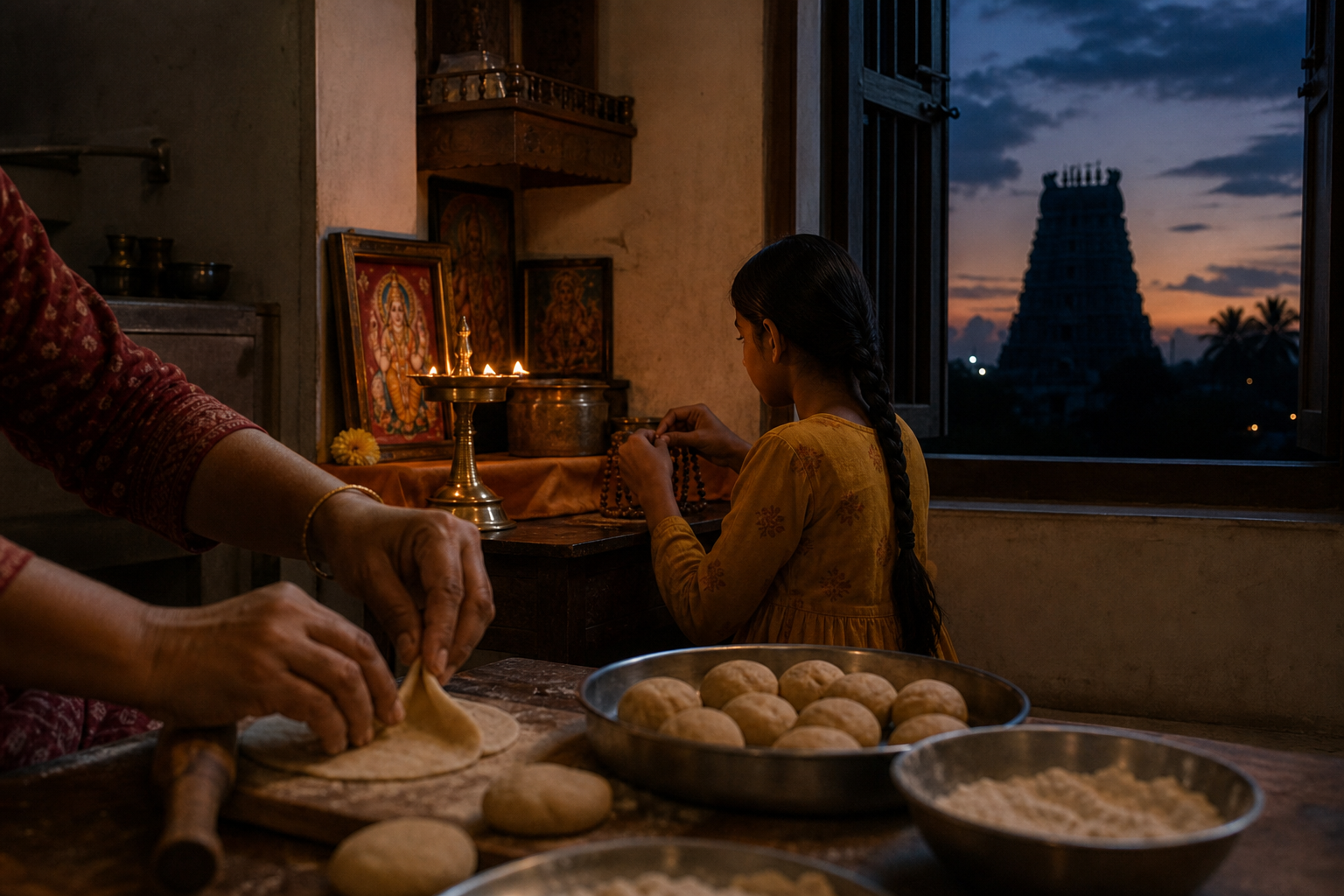
A civil date changes at midnight, but a tithi can change during the morning, afternoon, or evening. That distinction matters on December 14. Dashami continues through most of the day, and Ekadashi begins at 8:46 PM. Writing only “Ekadashi – December 14” on a calendar hides the very information you need for practice.
Dashami is a useful period for completing ordinary responsibilities and preparing for restraint. Ekadashi turns attention toward upavasa, mantra-japa, prayer, scriptural reflection, and a quieter use of time. The evening change therefore offers a natural sequence rather than a conflict between worldly duties and sadhana.
- Use the Dashami hours to remove practical friction. Complete shopping, necessary cooking, messages, and demanding household tasks. If your family follows a particular Ekadashi diet, prepare it before the evening becomes hurried.
- Choose the scope of your observance before 8:46 PM. Decide whether you are following a food vrata under your tradition, maintaining a sattvic diet, increasing japa, reducing entertainment, studying scripture, or combining these practices. Do not improvise the entire vrata after the tithi has begun.
- Mark the transition simply. After 8:46 PM, wash, arrange the altar, light a lamp if that belongs to your household practice, make a brief sankalpa, and begin the prayer or recitation you selected. A simple home observance does not need an elaborate muhurta search when the tithi transition already gives the evening its structure.
- Check the next morning separately. Some households organize Ekadashi around the actual tithi onset, while others apply sunrise-based rules. Follow the Panchang and tradition used by your temple or family, especially for the formal fast and its completion.
Do not copy 8:46 PM into a calendar for another city without verification. Panchang timings are location-sensitive, and a useful vrata plan must be attached to the place where you will actually observe it. This matters even more if you are travelling, crossing time zones, or coordinating with a temple in Bharat while living elsewhere.
Food restriction is not a test of recklessness. If fasting could interfere with your health or prescribed medicines, do not treat a sacred-calendar entry as medical instruction. Seek individual guidance from a qualified clinician and, where needed, from a knowledgeable priest or teacher. Prayer, japa, seva, simplicity, and restraint from harmful habits can preserve the vrata’s inward purpose without ignoring a genuine health need.
Build a Dhanurmasam practice you can sustain
Dhanurmasam begins on December 16, when the Sun enters Dhanu Rashi at Dhanur Sankramanam, and continues until January 14, 2026. In the Tamil calendar the period is known as Margazhi. This is a solar-month framework, so do not confuse its starting date with the lunar Ekadashi transition two evenings earlier.
The value of Dhanurmasam lies in repetition. One unusually elaborate morning followed by weeks of abandonment is less useful than a clear devotional sequence you can return to each day. Decide the sequence before December 16 and remove the small obstacles that usually defeat an early-morning intention.
- Prepare the night before. Place the text, mala, lamp supplies, and clean clothing where you will use them. Choose the recitation in advance. This keeps dawn from becoming a search for missing objects.
- Give the first attention of the morning to sadhana. Brahma muhurta and early-morning worship are central to the devotional character of this season. Begin before messages, news, and routine work claim the mind.
- Use a tradition-appropriate core practice. In a Vaishnava home, this can include Vishnu worship, Tiruppavai recitation, and aradhana. If your lineage prescribes another sequence, keep that sequence rather than assembling unrelated rituals from the internet.
- Add silence after recitation. Sit briefly with the meaning of what you have chanted. Let the morning produce a concrete ethical intention, such as patience in speech, honest work, compassion, or restraint.
- Carry devotion into seva. Plan temple assistance, annadanam, charitable giving, or direct help to someone in need. Put the action on the calendar; a vague intention is easily postponed.
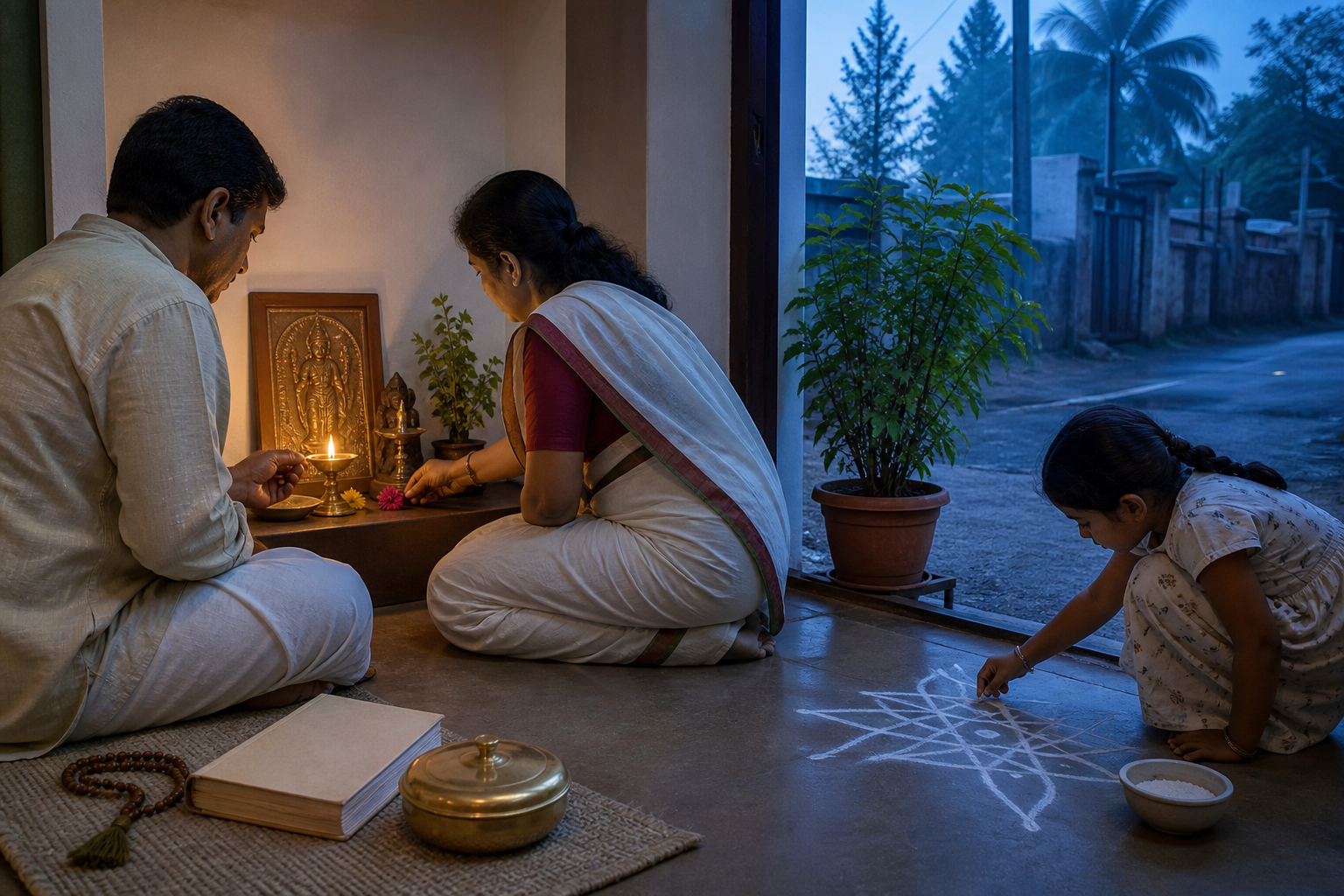
In Tamil households, a dawn kolam can make the sacred rhythm visible at the threshold of the home. Bhajans, lamps, and shared recitation can also turn Margazhi into an intergenerational practice. Give each family member a real role: preparing the worship space, drawing the kolam, leading a verse, selecting the seva, or checking the temple schedule.
If your work, caregiving, or physical capacity makes a full dawn routine unrealistic, establish a modest core that survives difficult days. Keep the longer aradhana for mornings when it is possible, but protect one non-negotiable act of remembrance. The point is disciplined devotion, not a schedule that collapses after its first disruption.
Vaikuntha Ekadashi deserves its own reminder inside this Dhanurmasam plan, but the sacred month alone does not supply its exact civil date. Temple programs can also follow regional Panchang calculations. Confirm both the vrata date and the darshan schedule before arranging leave, transport, or family travel.
Quick answers before you finalize the month
Does the Ekadashi fast automatically begin at 8:46 PM?
The Ekadashi tithi begins at that stated time on December 14, but the formal vrata rule may depend on sunrise and your tradition’s Panchang method. Treat the tithi onset and the household fasting rule as related questions, not identical ones.
Is Dhanurmasam the whole month of December?
No. The 2025-2026 period begins on December 16 and ends on January 14. Your plan therefore needs a January continuation; stopping on December 31 would cut the observance short.
Must every Dharmic family adopt Vaishnava Margazhi rites?
No. Vishnu aradhana and Tiruppavai recitation belong especially to Vaishnava and Tamil devotional settings. Buddhists, Jains, Sikhs, and Hindus of other sampradayas can recognize shared commitments to discipline, compassion, meditation, seva, and ethical conduct without erasing the distinctions between their paths.
What should you verify before visiting a temple?
Check the temple’s date, local tithi timing, sunrise-based vrata rule, opening hours, aradhana schedule, and any special instructions for Vaikuntha Ekadashi. A national or online calendar can orient you, but the institution conducting the worship should determine your visit plan.
Put the local Panchang beside this outline now. Mark the December 14 evening transition, decide your Ekadashi discipline, and prepare the objects needed for your December 16 dawn practice. When the calendar and the routine are settled together, the sacred month becomes something you can live rather than another list of dates you intended to follow.
References
- DharmaRenaissance Blog – December 14, 2025 Panchang: Precise Tithi Timing, Ekadashi Onset, and Sacred Guidance
- DharmaRenaissance Blog – Dhanurmasam 2025-2026 Dates: Sacred Margazhi Guide to Rituals, Meaning, and Auspicious Practices
