
If you have seen Japan’s Muslim burial dispute framed as a choice between defending Japanese culture and surrendering to religious demands, pause before choosing a side. That framing hides the question you actually need answered: can a cremation-centred, land-constrained society make room for burial without creating a separate civic system?
Start with the narrow fact. A proposal for separate Muslim cemeteries was declined, with Japanese funerary tradition and scarce land given as central constraints. That does not, by itself, establish a nationwide prohibition on every Muslim burial or rule out accommodation inside existing cemeteries. The difference between rejecting one institutional model and rejecting a religious community is the key to judging this dispute responsibly.
Separate the religious need from the demand for a separate cemetery
For Muslim families, burial rather than cremation is not a decorative cultural preference. It is central to the treatment of the deceased. Any proposal that begins by asking Muslims simply to accept cremation has therefore missed the religious problem.
Japan’s difficulty is also real. Cremation is deeply embedded in its funerary customs and municipal arrangements. Urban land is scarce, cemetery space must be planned and regulated, and any new burial ground creates continuing responsibilities for access, maintenance and environmental compliance. Recognising the Muslim need does not make those constraints disappear.
The mistake is to treat a dedicated Muslim cemetery as the only possible bridge between these realities. A separate cemetery is one institutional form. Access to religiously acceptable burial is the underlying need. Once you distinguish the two, several practical questions become visible:
- Is burial available anywhere within the relevant municipality or surrounding region?
- Could an existing cemetery designate a section for Muslim graves while remaining a shared civic facility?
- Are the barriers physical capacity, zoning, environmental requirements or administrative practice?
- Could neighbouring municipalities cooperate instead of each creating a small, separate facility?
- Were alternatives evaluated before the separate-cemetery proposal was rejected?
A refusal of one proposal answers only the first proposal. It does not logically answer all five questions. You should therefore be wary of both sweeping claims: that Japan has rejected Muslims as such, or that land scarcity automatically ends the discussion.
Test the workable options before declaring an impasse
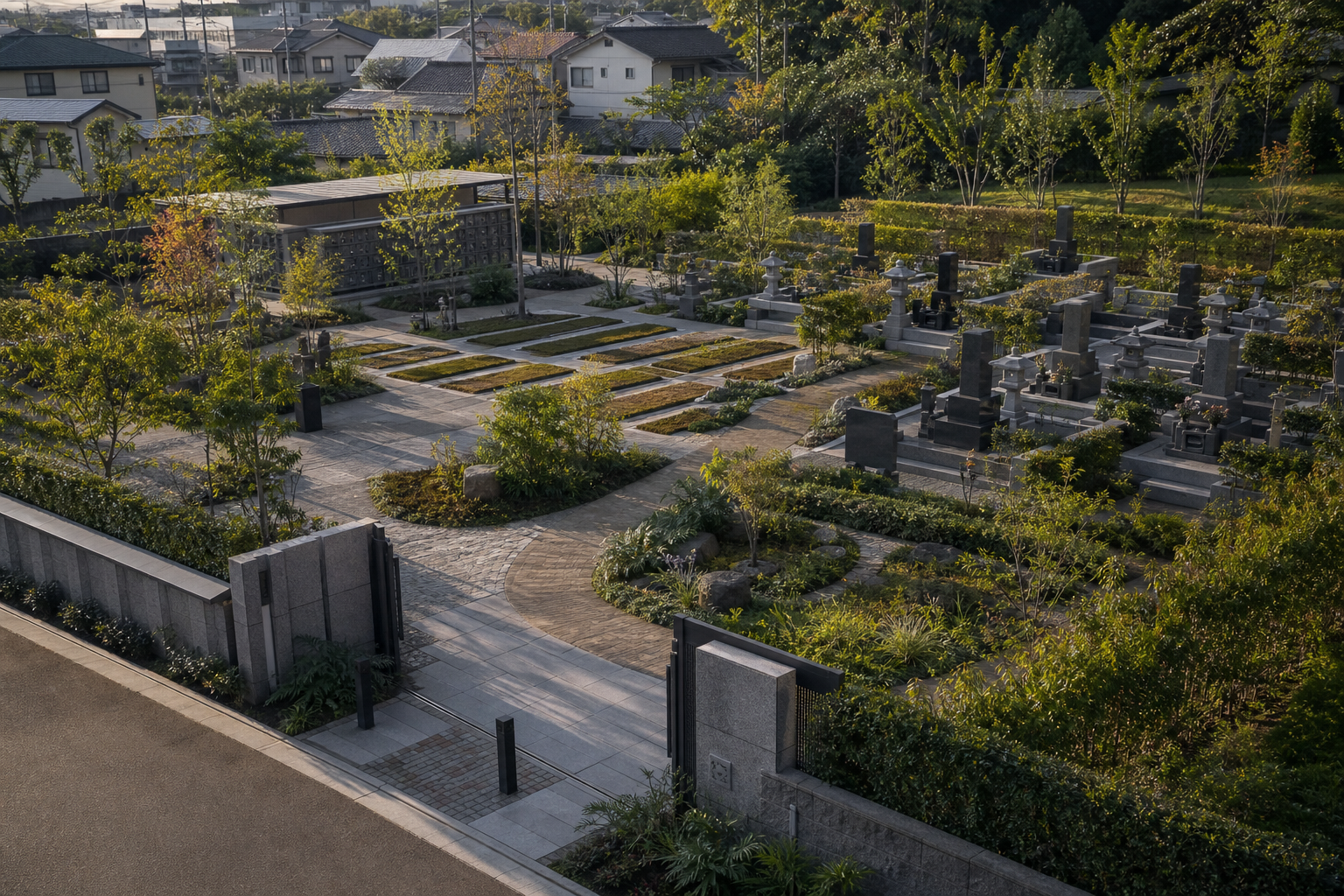
Religious accommodation becomes more realistic when an abstract demand is converted into a site plan, an operating protocol and a capacity calculation. The following sequence gives municipal authorities and Muslim representatives something concrete to evaluate.
- Map capacity inside existing cemeteries. Before seeking new land, identify facilities that already permit burial and determine whether unused or reconfigurable space exists. This keeps the first request within an established cemetery system.
- Examine a designated section in a shared facility. A defined Muslim section can protect the relevant funeral practices without requiring separate ownership, separate administration or an entirely new cemetery. Shared infrastructure also reduces duplicated maintenance and oversight.
- Write the funeral protocol before debating symbolism. The proposal should state which religious practices must be protected, how burial timing will be handled, who coordinates with the cemetery, and which operational rules apply equally to everyone. Ambiguity creates delays precisely when a bereaved family has the least room for them.
- Pool demand across municipal boundaries. Where one municipality lacks sufficient land, an inter-municipal arrangement may be more workable than several small faith-specific sites. The agreement should identify who may use the facility, how capacity is allocated and which authority remains responsible for administration.
- Use a limited green-burial pilot where appropriate. A pilot within an existing cemetery can test actual demand, land use, maintenance and environmental conditions before authorities commit to a permanent expansion. Its approval criteria, duration and review process should be published in advance.
Environmental review should be a genuine test, not a vague phrase used to close the conversation. The same is true of land scarcity. Authorities should explain what space is available, why a proposed site fails and whether a smaller shared-cemetery model would pass. Muslim representatives, in turn, should show how their plan fits neutral rules rather than asking for an exemption from every local condition.
If you are directly involved, do not purchase land or publicly promise a burial site on the strength of an informal conversation. Cemetery approval, land use and operating requirements can expose a community to irreversible expense. Obtain written guidance from the relevant local authority and qualified local legal advice before making a financial commitment.
Apply a Dharmic standard of equal regard, not forced sameness
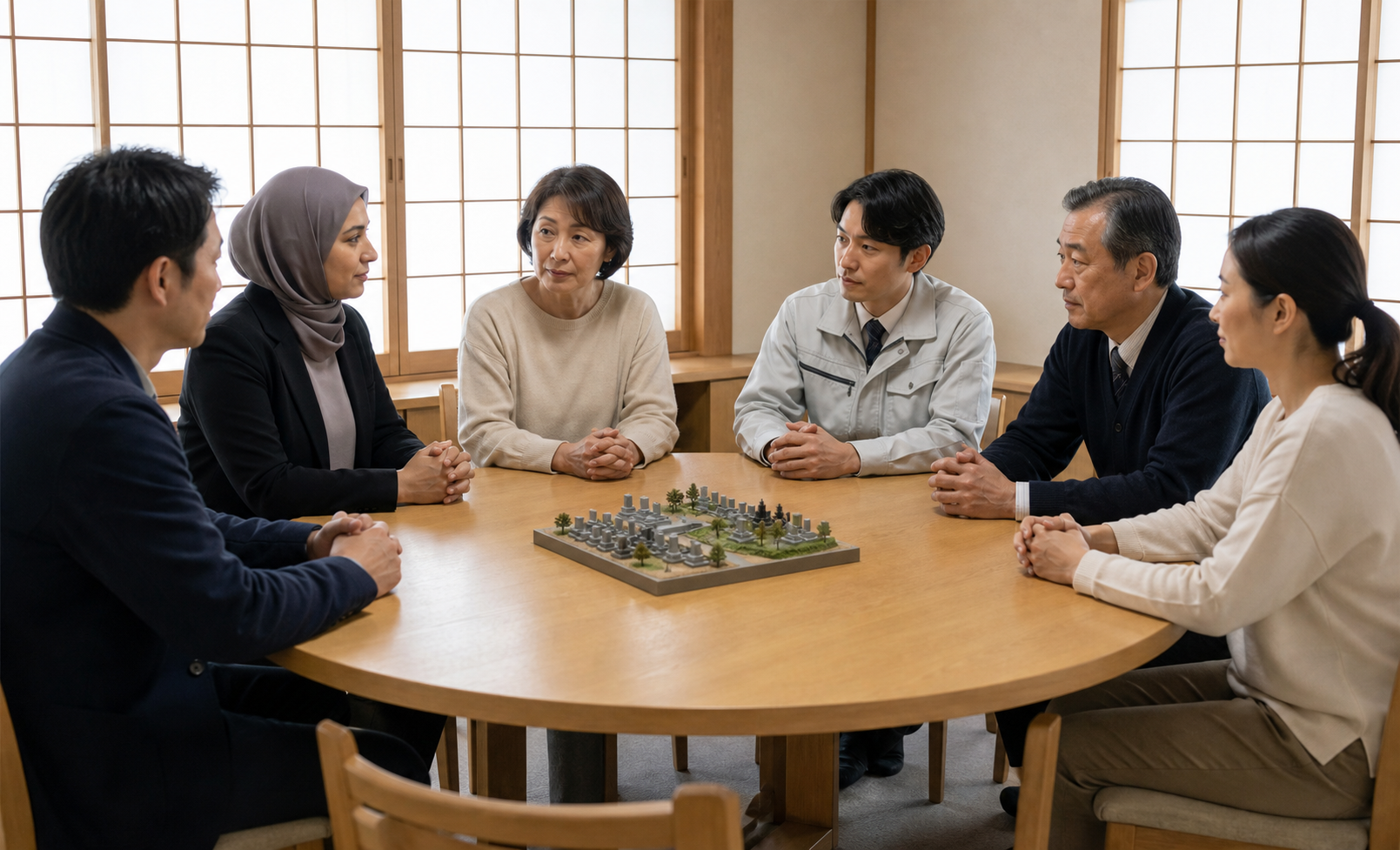
Sarva-dharma-samabhava, equal regard for different paths, does not require a society to pretend that all funeral rites are identical. It asks for something more demanding: take another community’s sacred obligation seriously while applying civic rules fairly.
This matters to a Dharmic audience. Hindu communities living outside Bharat often seek access to cremation facilities and enough procedural flexibility to perform their own rites with dignity. We cannot consistently ask host societies to understand the importance of Hindu funerary practice while dismissing Muslim burial as an inconvenience. Reciprocity does not erase religious differences; it disciplines how we respond to them.
A sound Dharmic judgement can use four tests:
- Dignity: Does the arrangement allow the deceased to be treated in a manner the family can accept religiously?
- Proportionality: Is the requested accommodation no larger or more administratively complex than necessary?
- Stewardship: Does it respect land, environmental conditions and the continuing obligations attached to a burial ground?
- Cohesion: Does it place communities within a shared civic framework, or needlessly build permanent institutional separation?
On those tests, neither extreme holds up. Compelling cremation would deny the core Muslim requirement. Reserving unlimited land without regard to Japanese conditions would deny legitimate civic constraints. A designated section within a shared cemetery, supported by clear rules and regional cooperation, is the kind of proportionate middle course that deserves to be tested.
Dharmic confidence does not require contempt for another community’s rites. Nor does compassion require Japan to abandon its cremation-centred culture. A mature civilisation can preserve its norm while making a limited exception or shared-space arrangement where a serious religious need cannot otherwise be met.
Ask for evidence before repeating claims about Japan

The language surrounding this dispute can outrun the known facts. Before you share a claim that Japan has either banned Muslim burial or capitulated to a separatist demand, ask what decision was actually made.
If you are judging a public claim
- Identify the decision-maker. Was the decision national, municipal or connected to one cemetery operator?
- Identify the object of refusal. Was burial itself refused, or was a particular site, zoning request or separate-cemetery model rejected?
- Look for the stated constraint. Land capacity, environmental suitability and administration require different remedies.
- Check whether shared-space alternatives were considered. A dedicated section in an existing cemetery is materially different from a wholly separate cemetery.
- Distinguish a present decision from a permanent rule. Rejection of one plan does not prove that every smaller or differently structured proposal would receive the same answer.
If those details are missing, narrow your language. Say that a proposal was declined, not that an entire country has permanently prohibited a religious practice. Precision prevents a land-use dispute from becoming ammunition for hostility between communities.
If you are preparing an accommodation request
Bring authorities a one-page operational proposal rather than a general appeal for tolerance. It should identify:
- the existing cemetery or geographic area being considered;
- whether the request is for a shared section, a pilot or a new facility;
- the religious practices that cannot be replaced by cremation;
- the party responsible for coordination, records and maintenance;
- the expected method for managing limited capacity;
- the environmental and zoning questions requiring formal review;
- the neighbouring municipalities or civil-society partners willing to cooperate; and
- a review point at which the arrangement can be assessed against published criteria.
This format does not guarantee approval. It does reveal whether the obstacle is genuinely physical and regulatory or whether officials are unwilling to examine accommodation at all. That is a far more useful result than another round of slogans.
Key takeaways
- Muslim burial is the religious need; a wholly separate Muslim cemetery is only one possible way of meeting it.
- Japan’s cremation-centred custom, limited urban land and municipal requirements are legitimate constraints, but they should be tested against specific options rather than invoked abstractly.
- The strongest near-term model is a designated section within an existing shared cemetery, supported where necessary by inter-municipal cooperation.
- A credible proposal should include funeral procedures, capacity management, maintenance responsibility, environmental review and a defined pilot or review process.
- A Dharmic response should defend reciprocity: respect another community’s essential rite while expecting it to comply with neutral civic rules.
The next responsible move is modest and concrete: request a written assessment of shared-cemetery capacity and place one limited accommodation model before the relevant authorities. If that option fails, the written reasons will show what must change. If it works, Japan can protect its traditions without turning a practical burial question into a permanent civilisational quarrel.
References
