
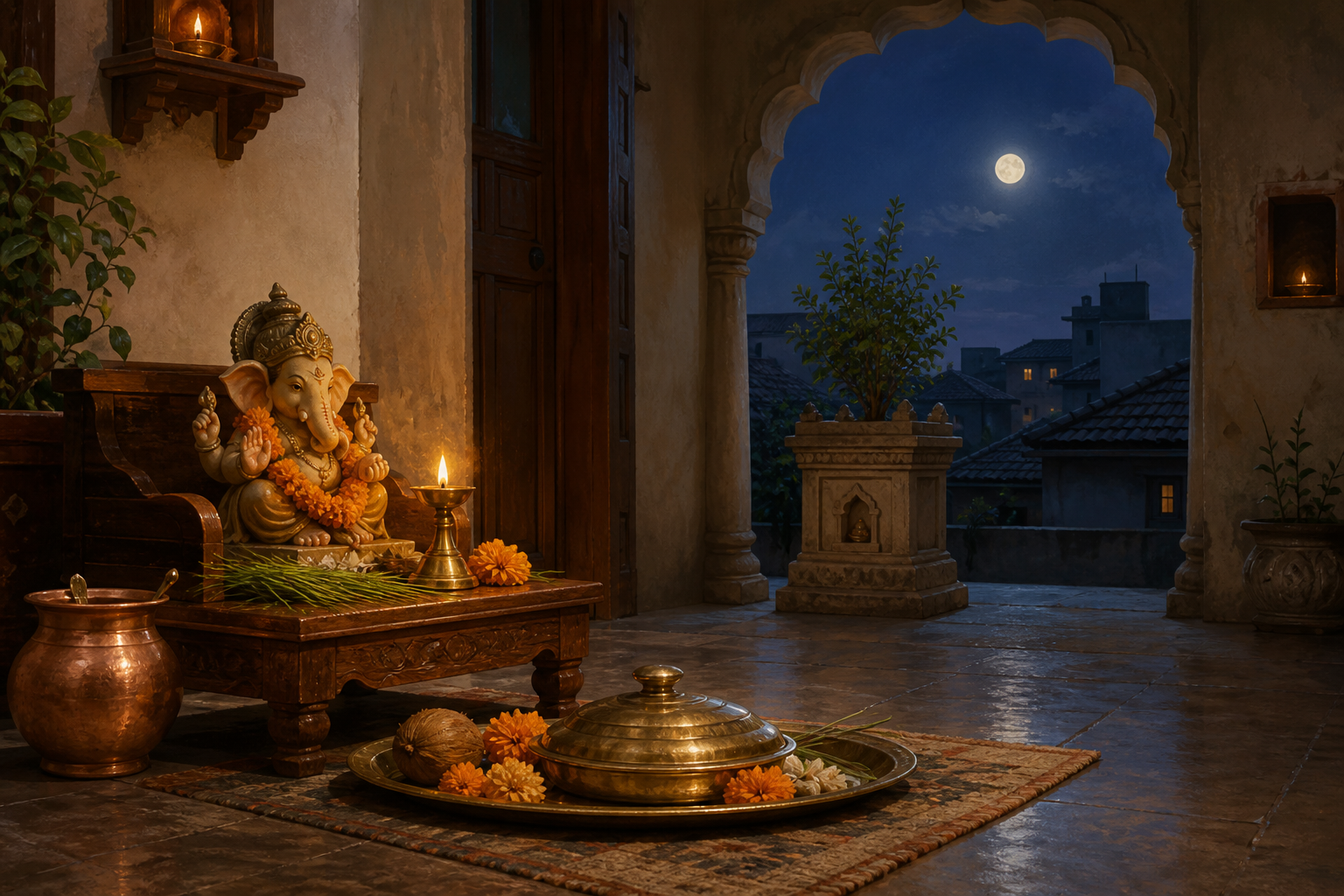
You can put December 7, 8 and 16 into your calendar and still perform the ritual at the wrong time. A civil date tells you when to keep the day free; it does not tell you which tithi is active at moonrise, when to complete a vrata, or whether a muhurat calculated for another city applies to you.
Two December 2025 observances require particular care. Sankashti Chaturthi extends across December 7 and 8, while moonrise determines the evening worship. In most regions, Krishna Paksha Dwadashi continues through December 16 until 12:17 AM on December 17. Here is how to turn those facts into a reliable household plan.
Key takeaways
- Do not choose December 7 or 8 for Sankashti merely because one date is more convenient. Check which evening your local panchang assigns to the vrata and record that city’s moonrise.
- Keep the Sankashti fast according to your capacity and family practice, perform the evening worship at the prescribed moonrise, and break the fast only after the puja and Chandra darshan.
- Tuesday, December 16 is Krishna Paksha Dwadashi in most regions. The tithi lasts until 12:17 AM on December 17, when Trayodashi begins.
- The Dwadashi endpoint is not automatically your Ekadashi parana time. Obtain the local parana window separately.
- Moonrise, sunrise, Abhijit Muhurat, Rahu Kalam, Nakshatra and Rashi details should all come from a panchang calculated for the same location.
Read the tithi before you commit to the civil date
A tithi is a lunar division, so it can begin on one civil date and end on another. Hindu observances then apply an appropriate anchor such as sunrise, moonrise or a prescribed parana period. That is why a monthly calendar should be treated as a planning map rather than a complete ritual instruction.
| Observance | December 2025 date | Timing anchor | Your decision |
|---|---|---|---|
| Sankashti Chaturthi | Sunday, December 7, or Monday, December 8, depending on location and calendar | Local moonrise during the relevant Chaturthi observance | Confirm the date and moonrise in a city-specific panchang before beginning the fast |
| Krishna Paksha Dwadashi | Tuesday, December 16; in most regions it ends at 12:17 AM on December 17 | Local parana guidance for completing an Ekadashi vrata; other muhurtas require their own calculations | Record the prescribed parana period instead of using the tithi endpoint as a substitute |
Month names can also vary without changing the devotional purpose. The December Sankashti falls in Poush under the North Indian calendar, while regional calendars may place it under Margashirsha, Margazhi or an adjacent period. Use the month name followed by your family or temple, but settle the actual date through the local tithi and moonrise details.
When two almanacs disagree by a few minutes or place the observance on different dates, do not average their times. Calculation methods and geographic inputs can differ. Use one coherent local panchang, preferably the one followed by your temple, priest or family tradition, and take all related timings from that same system.
Let local moonrise decide the Sankashti evening
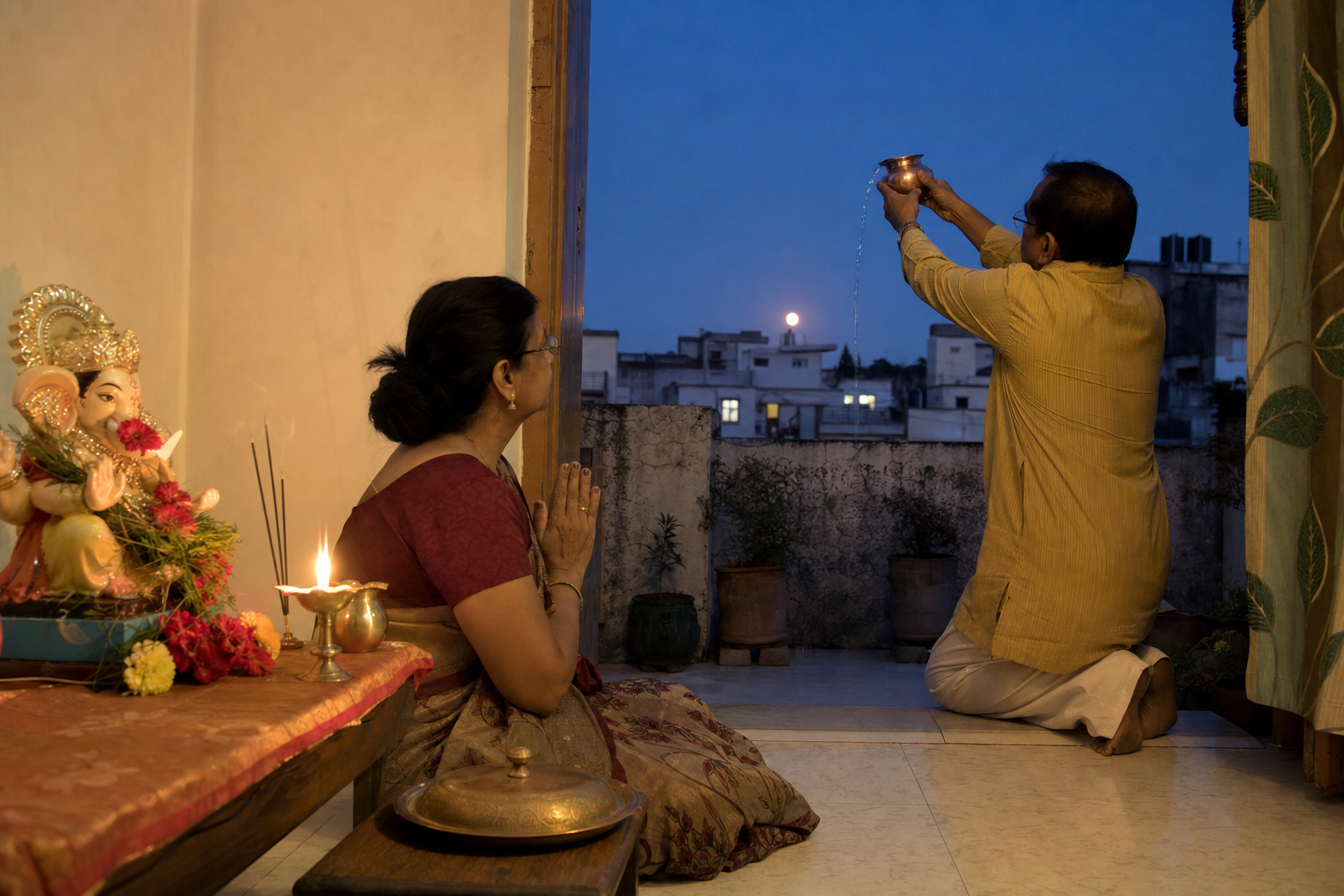
Sankashti Chaturthi is observed on Krishna Paksha Chaturthi and centres on Shri Ganesha as Vighneshwara, the remover of obstacles. In December 2025, the tithi’s movement across two civil dates creates the practical question: should your household observe on Sunday the 7th or Monday the 8th? The answer cannot be made universal because moonrise and the applicable observance date vary by place.
Complete this check before the vrata day:
- Select the city where you will actually perform the puja. Do not use the moonrise of your hometown if you will be travelling.
- Open a panchang calculated for that city and record the Krishna Paksha Chaturthi interval covering December 7 and 8.
- Confirm which evening that panchang assigns to Sankashti and write down the local moonrise time.
- If your family follows a particular sampradaya or temple calendar, confirm that its date agrees before making work, travel or meal arrangements.
- Set a reminder before moonrise so the altar, offerings and recitations are ready rather than being assembled during the ritual window.
A simple home observance can remain complete without becoming elaborate. Clean the worship space and place Shri Ganesha at the centre. Prepare durva grass, flowers, fruit and modak or laddoo according to availability and family practice. Keep the lamp, water and other regular puja materials ready. During the evening worship, you may recite the Sankashtanashana Ganapati Stotra and the month’s Sankashti vrata katha. Offer arati and naivedya, take Chandra darshan at the appropriate time, and only then break the fast.
The date ambiguity should not become an excuse to choose whichever day fits the social calendar. If your local observance falls on Monday, prepare offerings on Sunday and arrange the workday around the fast and evening puja. If it falls on Sunday, confirm the time before planning a meal or journey that would conflict with moonrise worship.
Fasting should follow both your tradition and your physical capacity. If a complete fast is medically inappropriate for you, do not turn avoidable physical risk into a test of devotion. Follow relevant medical guidance and ask your priest or temple how your customary vrata may be adapted while retaining prayer, restraint, dana and seva.
Treat December 16 as a day of completion
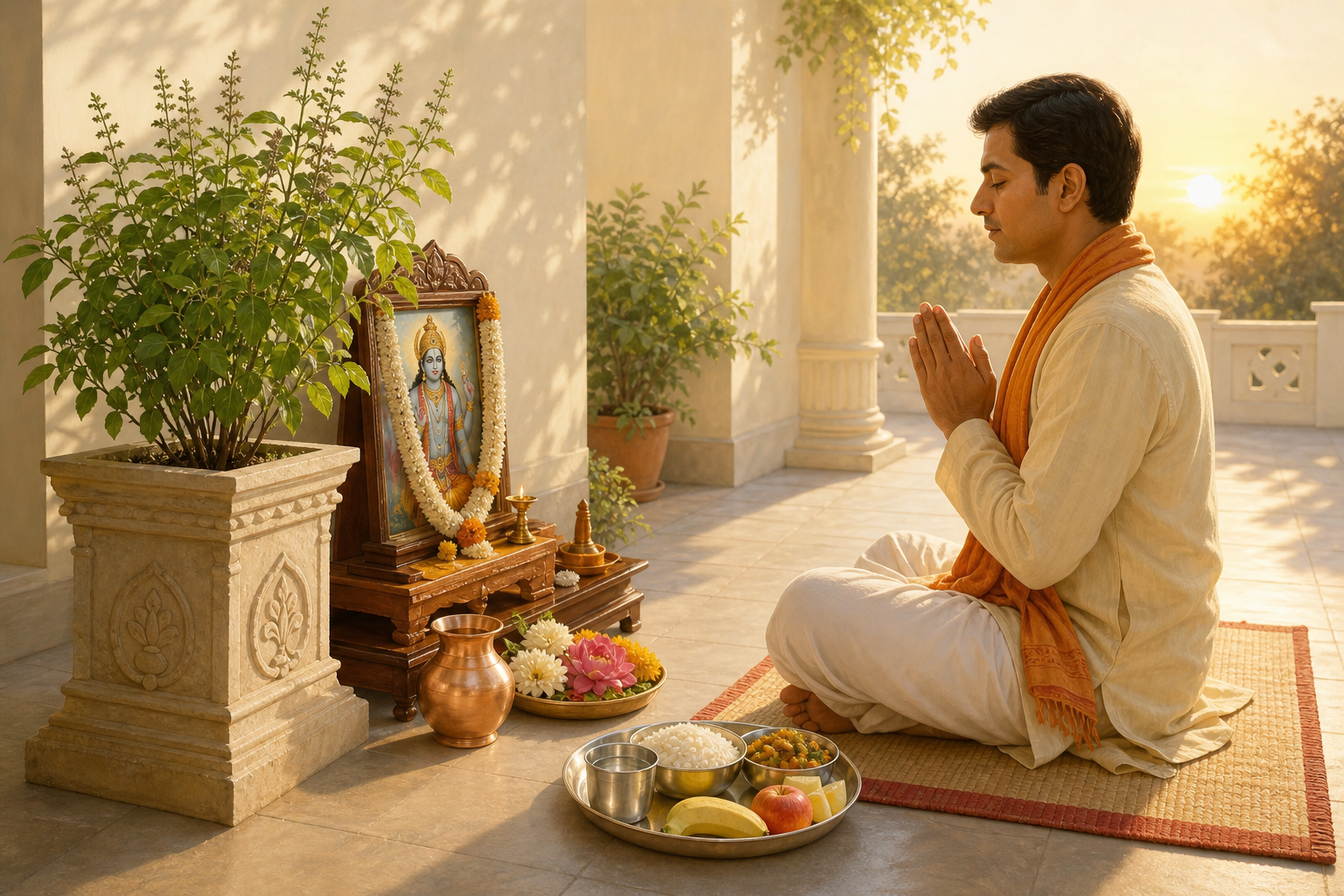
Tuesday, December 16 carries Krishna Paksha Dwadashi through the day in most regions. It remains active until 12:17 AM on December 17, after which Trayodashi begins. For households that observed Ekadashi, Dwadashi is often the day for parana: the disciplined and timely completion of the fast.
The important distinction is between a tithi endpoint and a ritual window. The 12:17 AM transition tells you when Dwadashi gives way to Trayodashi in the general timing supplied here. It does not, by itself, establish the correct parana period for your location or sampradaya. Sunrise and other local conditions matter, so obtain the exact parana instructions from the regional panchang you follow.
Plan the morning in this order:
- Record your city’s sunrise and the designated Ekadashi parana window before December 16.
- Prepare the simple satvik food required for breaking the fast before that window begins, especially if the household morning is busy.
- Complete the customary prayer, offering and expression of gratitude before parana.
- Break the fast within the period prescribed by your tradition rather than postponing it casually until a convenient meal.
- Use the remainder of Dwadashi for measured conduct, japa, study, temple worship or dana according to capacity.
If you also want an auspicious period for a simple puja, charitable act or low-risk personal beginning, calculate that separately. Abhijit Muhurat follows local solar noon; it is not a single clock time that can be copied across cities. Nakshatra, Rashi and Rahu Kalam details likewise require local verification. Do not attach a city-specific muhurat from a social media image to a tithi time taken from a different calendar.
Make the observance manageable without hollowing it out
The most reliable December plan is one written before the household becomes busy. For each vrata, make a one-page note containing the location, tithi, ritual date, timing anchor, exact local time, food arrangement, puja materials and the family or temple calendar being followed. That small record prevents the common last-minute mistake of mixing a national festival date with a moonrise or sunrise taken from another city.
Keep the ritual’s core intact when time is limited. A clean altar, attentive worship, the customary offering, a short stotra or katha, and correct completion at moonrise or parana are more coherent than an elaborate setup that misses the prescribed time. If children are participating, give them one concrete role: arranging flowers, placing fruit, reading a brief katha passage or distributing prasad.
Extend the vrata beyond the altar through an act that can actually be completed. Share prasad with a neighbour, offer food or clothing according to your means, support education, or volunteer in the community. For Sankashti, this carries discipline into compassionate action. For Dwadashi, it turns the completion of restraint into gratitude and service.
Before December begins, settle the one fact that cannot be repaired at the last minute: which local calendar your household will follow. Then save the correct Sankashti moonrise and Dwadashi parana details beside the dates. Once those anchors are fixed, the rest of the observance can remain simple, steady and free of avoidable confusion.
References
- DharmaRenaissance Blog – Sankashti Chaturthi December 2025: Dates, Moonrise Puja Vidhi, and Auspicious Poush Guide
- DharmaRenaissance Blog – Dec 16, 2025 Panchang: Krishna Paksha Dwadashi Timings, Auspicious Muhurat, Ritual Insights
