
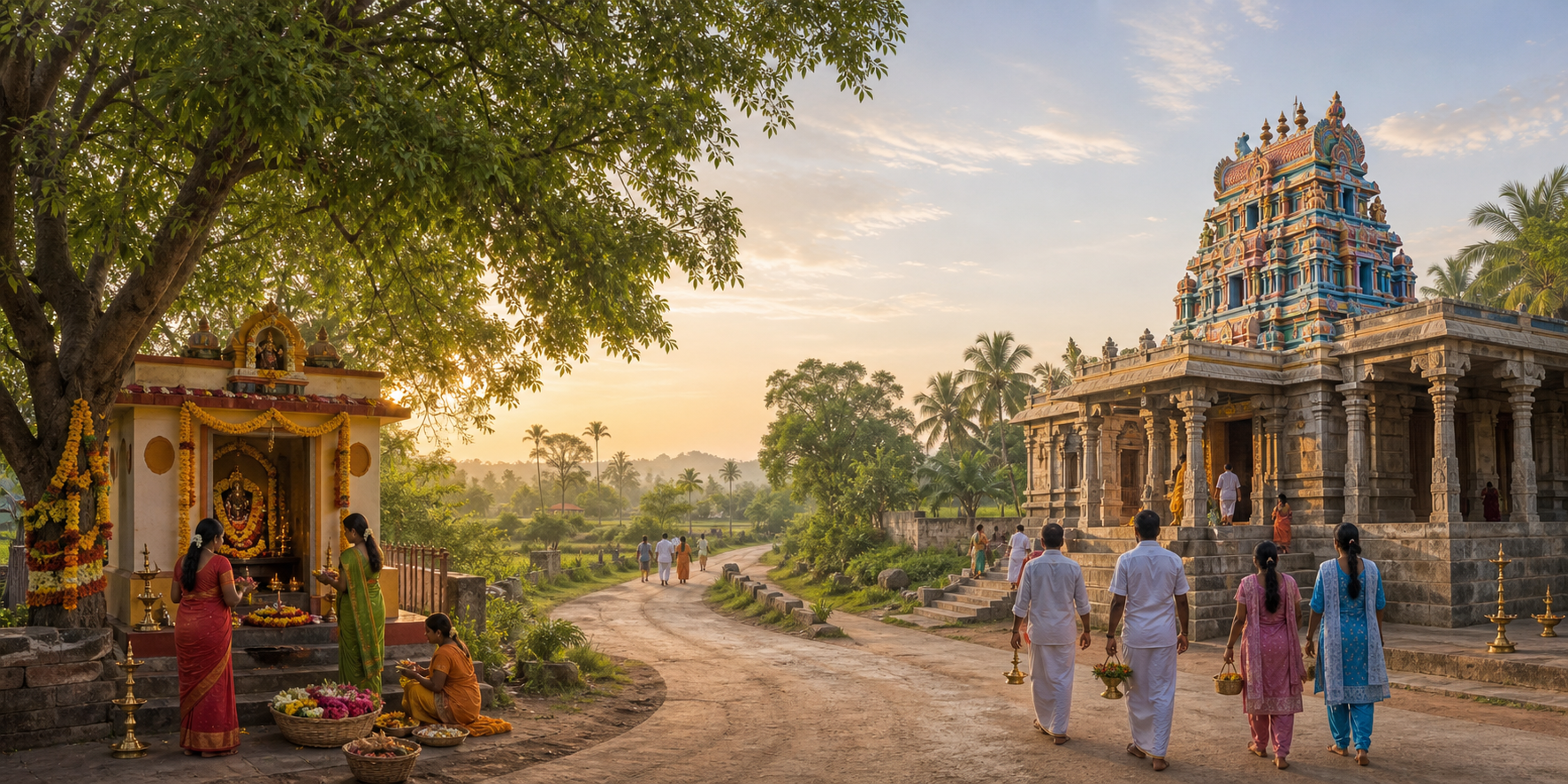
You may know Angalamman and Bhadrakali as forms of Devi and still feel unsure about visiting their temples. Are the names interchangeable? Should you expect the same kind of worship at every shrine? What must you check before travelling?
The most useful approach is to hold two truths together: these forms belong within the wider worship of Shakti, and every temple has a distinct local identity. Recognise the theological relationship, but let the particular shrine determine how you prepare, behave and understand what you see.
Approach each shrine as a distinct home of Shakti
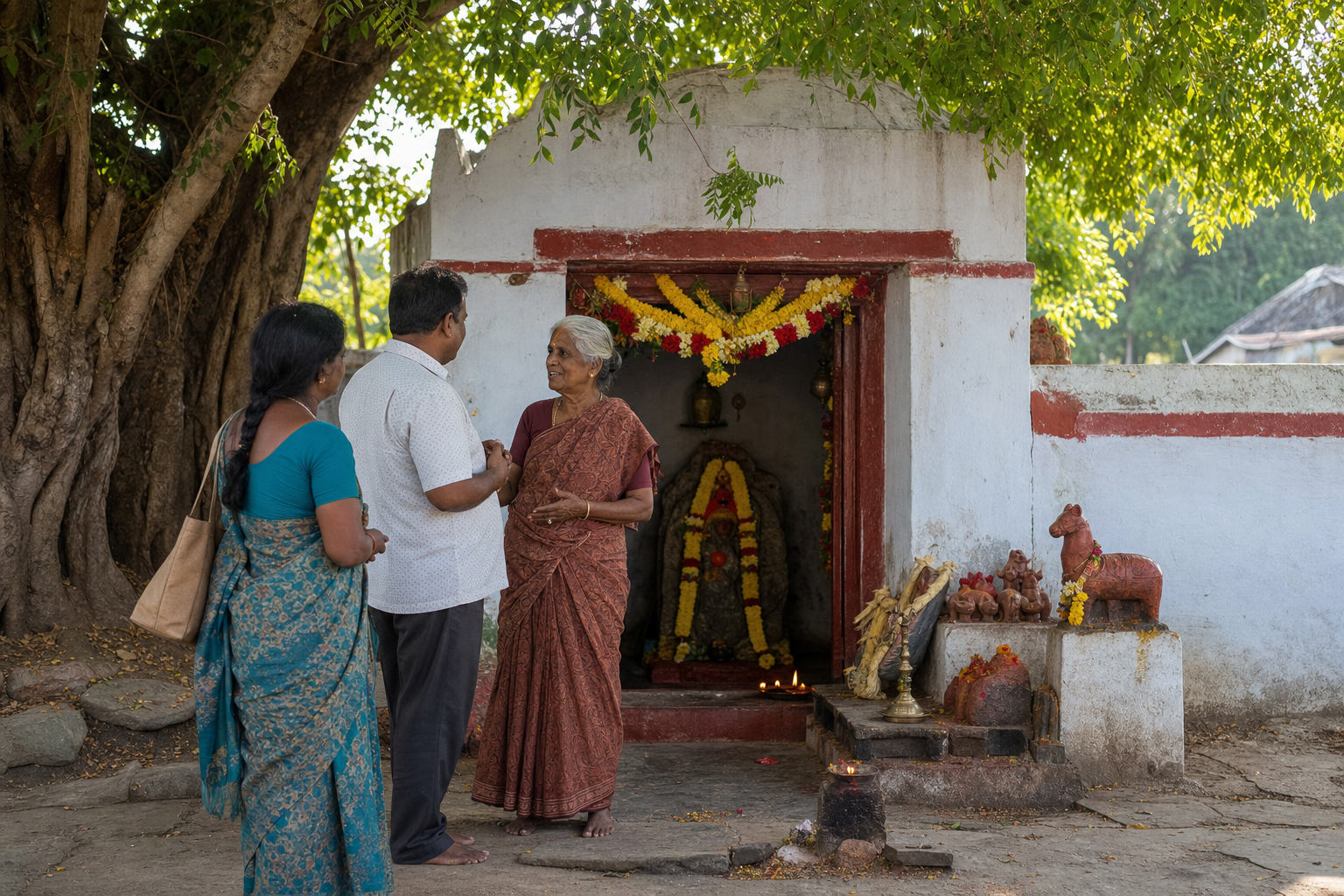
Angalamman is worshipped as an aspect of Ma Adhiparashakthi and as a form of Kali. Her temples are found across Tamil Nadu, including the named Angalamman temple at Erode. That relationship with Kali gives you a broad theological frame, but it does not turn every Angalamman temple into a generic Kali shrine.
The same principle applies when you visit the Madapuram Bhadrakali Amman Temple. A recognisable divine name does not erase the importance of the place, the temple’s own murti, its customary forms of worship or the relationship local devotees have maintained with the deity.
A useful rule is this: theology tells you why divine forms can be related; the temple tells you how this particular form is approached here. Do not use the first truth to flatten the second.
- If your family tradition names a particular Amman, begin with that relationship rather than selecting a temple solely by fame.
- If you are making a general pilgrimage, choose a shrine whose identity and practical details you can verify before leaving.
- If you want to understand Angalamman and Bhadrakali comparatively, visit them separately. Record the exact deity name, local practice and explanation at each temple before drawing broader conclusions.
Verify the visit before you begin the journey
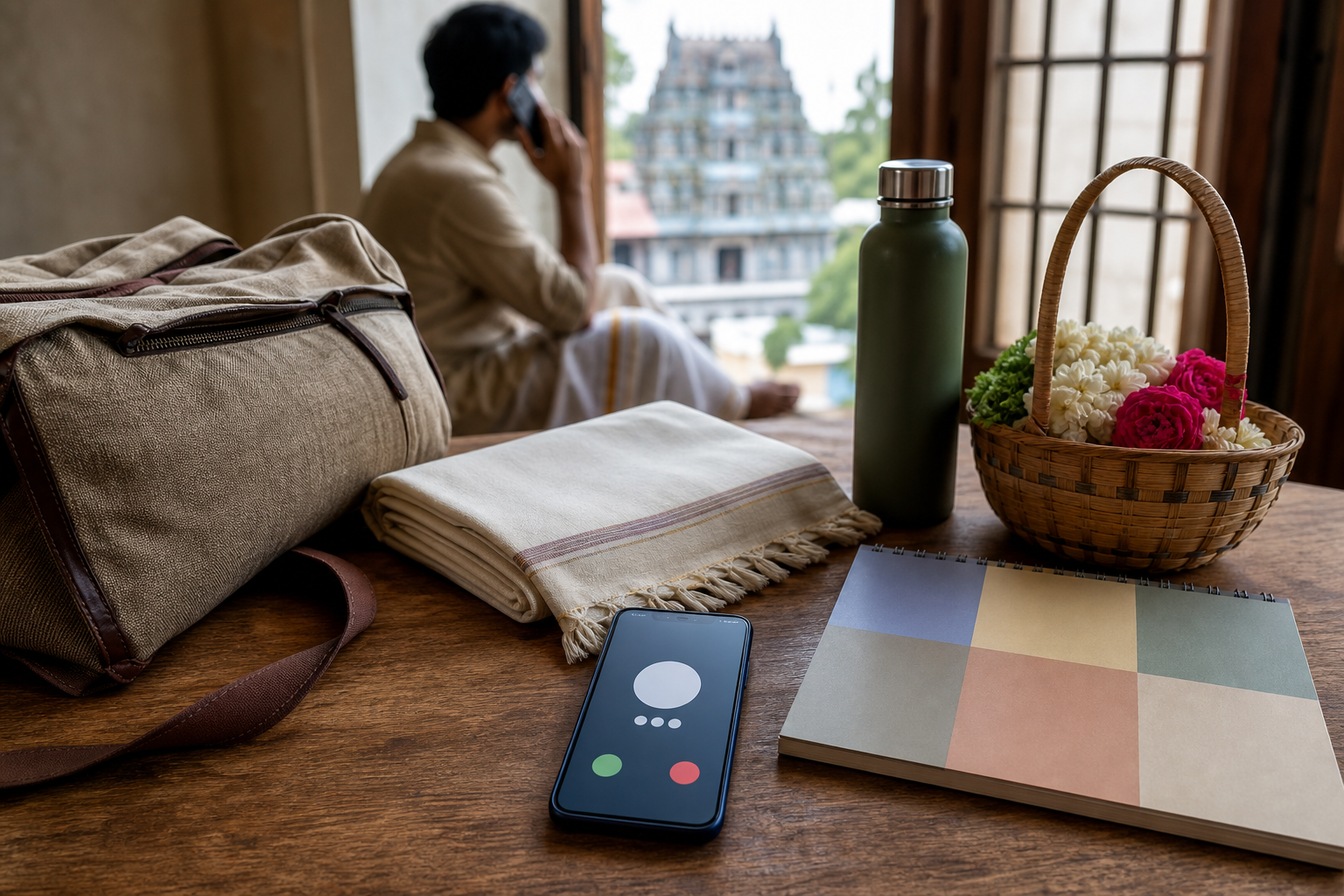
A temple name alone is not enough for travel planning. Similar names can be used in different places, while opening periods, ritual arrangements and visitor access can vary by shrine and occasion. Confirm the following details for the exact day of your visit:
- Exact identity: Write down the full temple name and its town, village or district. Do not rely on the deity name by itself when asking for directions.
- Opening periods: Confirm when devotees may enter and whether the temple closes between periods of worship. Recheck if you are travelling a long distance.
- Special observances: Ask whether your chosen day has a festival, vow fulfilment or other observance that may affect crowds and access.
- Offerings: Find out what the temple accepts before buying anything. A familiar offering at one Amman shrine should not automatically be carried into another.
- Practical access: Check the final stretch of the journey, footwear arrangements and any needs involving children, older relatives or limited mobility.
- Photography: Treat permission as something to ask for, not something implied by possession of a phone.
You can begin with available visitor information for Madapuram or with an overview of an Erode Angalamman pilgrimage. Use such information to identify the temple, then seek direct local confirmation for details that can change. A plan copied without checking is most likely to fail at the temple gate, after the longest part of your journey is already over.
Travel lightly until you know the local procedure. Carrying a large assortment of offerings can create pressure to use items that the shrine does not customarily receive. It is better to arrive with reverence, ask one clear question and obtain the appropriate offering nearby if needed.
Let the temple teach you how to participate
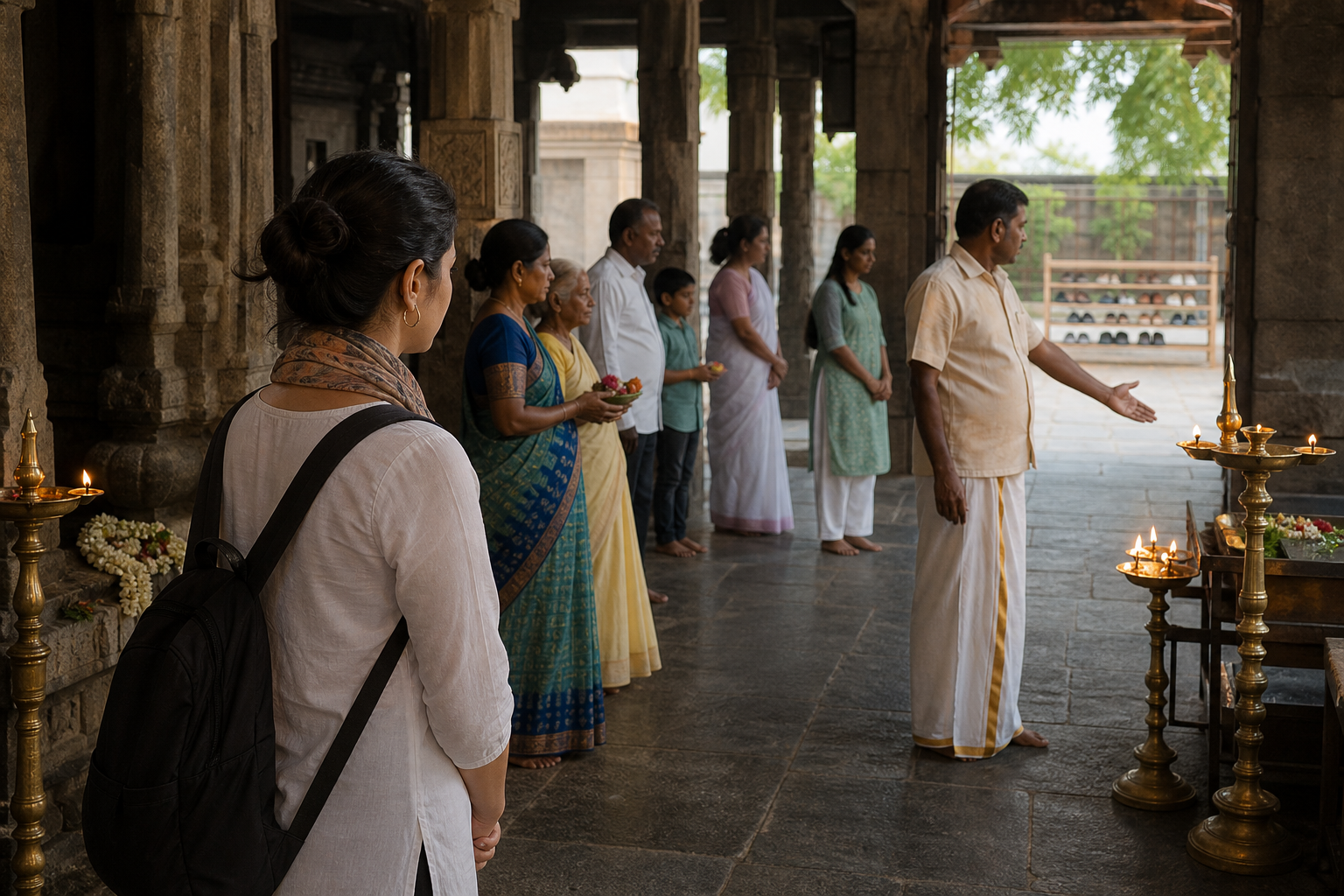
You do not need to know every local custom before entering. You do need enough humility to observe before acting. The following sequence works well when a temple is unfamiliar:
- Pause at the entrance. Read any instructions, notice where devotees leave footwear and follow the temple’s arrangements.
- Ask before presenting an offering. A priest, attendant or regular devotee can tell you where it belongs and whether it should remain wrapped or open.
- Follow the actual queue. Do not move toward an inner area merely because another person has entered it. Access may depend on a role or local arrangement that is not visible to you.
- Keep your prayer clear. Offer your namaskara and hold one sincere intention rather than rushing through many requests while others wait.
- Receive without demanding. Prasada, sacred substances and other forms of blessing should be received according to the manner in which they are given.
- Ask one focused question afterward. If you want to learn, ask the deity’s exact local name or the meaning of one practice you observed. A specific question is more likely to receive a useful answer than a request for the temple’s entire history.
Do not touch the murti, altar or ritual objects unless you are explicitly invited to do so. Do not photograph worshippers during private acts of prayer or vow fulfilment. Respect also means refusing to turn another person’s devotion into spectacle.
The familiar question of why anyone should visit a temple if the Divine already dwells within creates a false choice. Inward remembrance gives continuity to devotion. Temple worship gives that devotion a shared discipline, a sacred focus and a living relationship with an inherited community of practice. You can cultivate the first without dismissing the second.
Do not confuse a fierce form with an evil presence
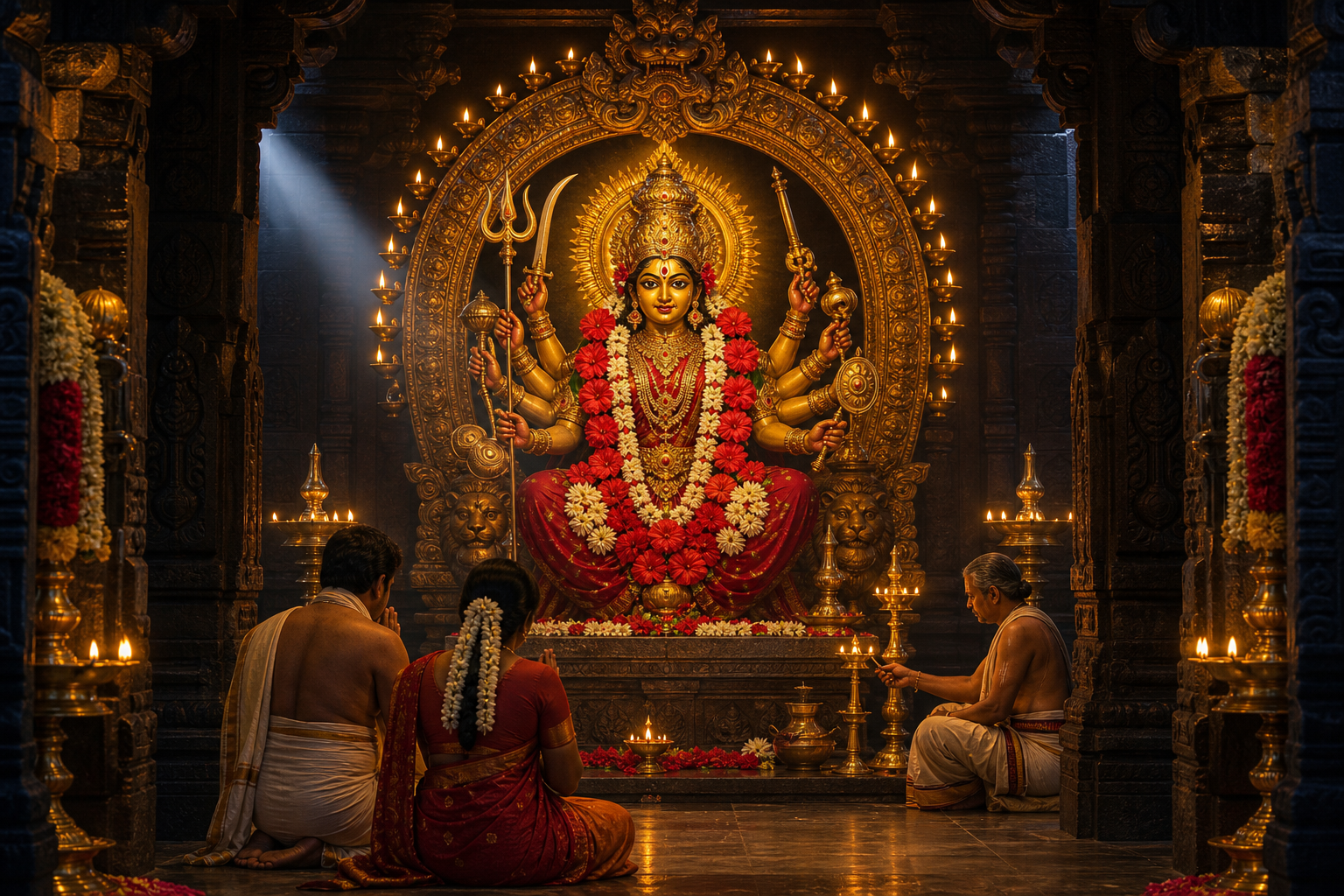
People approaching Kali-related worship for the first time sometimes interpret divine intensity through categories borrowed from horror or popular entertainment. That produces a basic misreading. Within Devi worship, maternal tenderness and forceful protection need not be opposites.
Angalamman can be presented as soft and gentle even while being understood in relation to Kali. This should stop you from assuming that a theological association dictates one fixed facial expression, emotional mood or experience of worship.
When the iconography is unfamiliar, interpret it in the right order. First identify the deity by the temple’s own name. Then observe the murti and surrounding forms without hurried conclusions. Next ask how local worshippers understand what you have seen. Only after that should you compare it with wider ideas about Kali or Shakti.
This order protects two things at once. It protects you from mistaking intensity for malevolence, and it protects the temple’s local identity from being dissolved into a vague category called “the fierce goddess.” Angalamman should be encountered as Angalamman; Bhadrakali should be encountered as Bhadrakali. Their relationships within Shakti worship become more meaningful when their distinctions are allowed to remain visible.
Key takeaways for your temple visit
- Recognise Angalamman and Bhadrakali within the wider sacred reality of Shakti, but do not treat their temples as interchangeable.
- Confirm the exact shrine, opening periods, special observances, accepted offerings and practical access for the day you intend to visit.
- Observe the local procedure before acting; ask rather than copying a practice whose meaning you do not know.
- Do not mistake forceful or unfamiliar iconography for evil. Learn how the temple’s own community understands the deity.
- If you are comparing traditions, record each shrine’s exact name and practices separately before applying a general theological label.
Choose one temple, confirm its current details and go with one clear intention, or sankalpa. After returning, write down the exact name of the deity, one practice you observed and one teaching you understood. If you later visit another Angalamman or Bhadrakali shrine, give it the same undivided attention. Comparison becomes useful only after each temple has first been allowed to speak in its own sacred grammar.
References
