
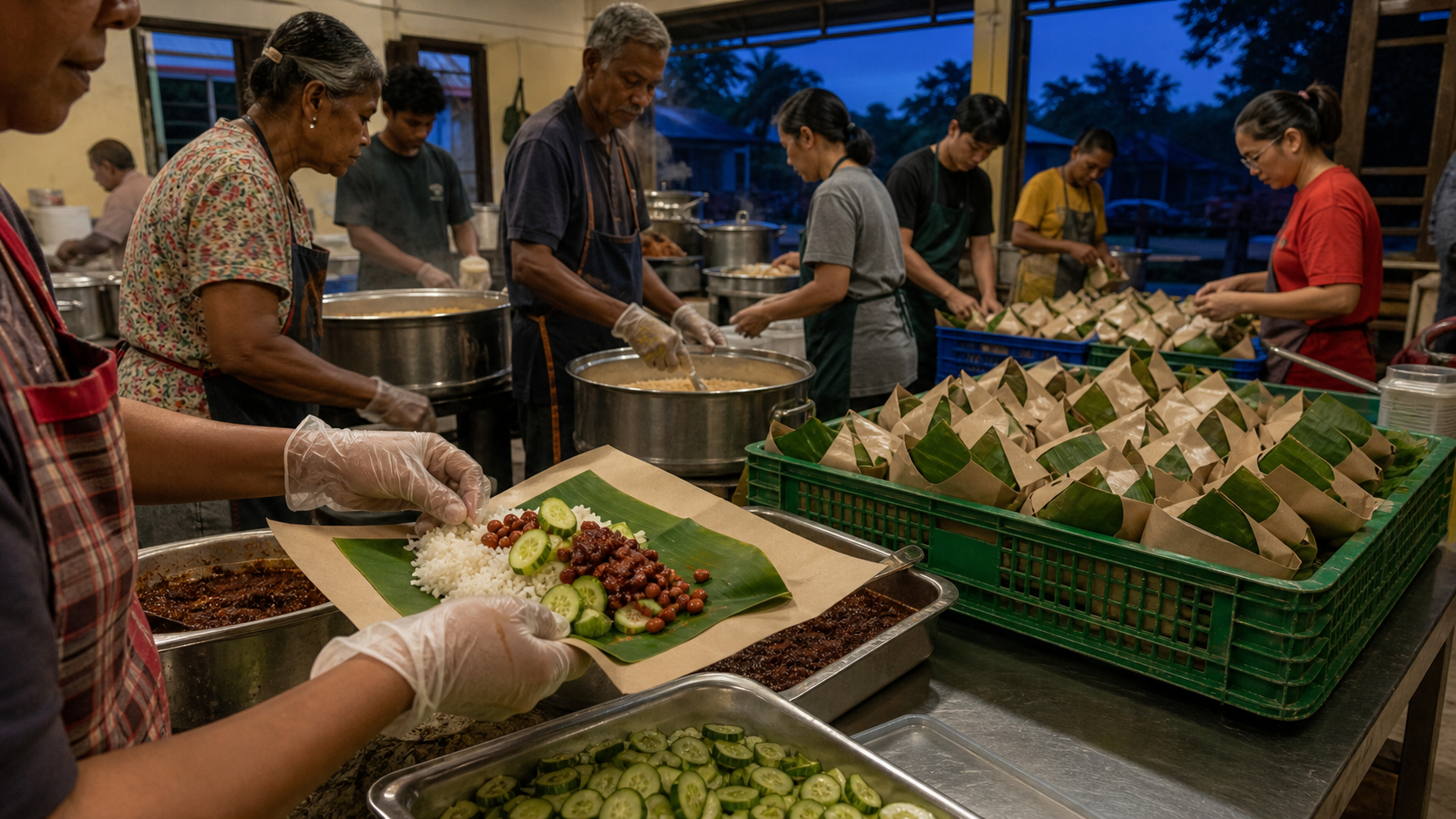
If you are trying to decide whether ISKCON’s sixtieth anniversary marks a living institution or merely a famous past, look beyond the gala stage for a moment. In Batu Kitang, Sarawak, volunteers started cooking vegetarian nasi lemak at 4 am and began distributing about 500 packets at 9 am on August 2. That early-morning chain from devotion to cooking to public service gives the anniversary its sharpest meaning.
Six decades test whether a founder’s teaching can survive distance, generational change and ordinary routine. For you, the useful question is not simply how large ISKCON became. It is which parts of its model keep Sanatana Dharma intelligible, practised and socially present – and how you can recognise or strengthen those parts in your own city.
Sixty years is a test of transmission, not just expansion
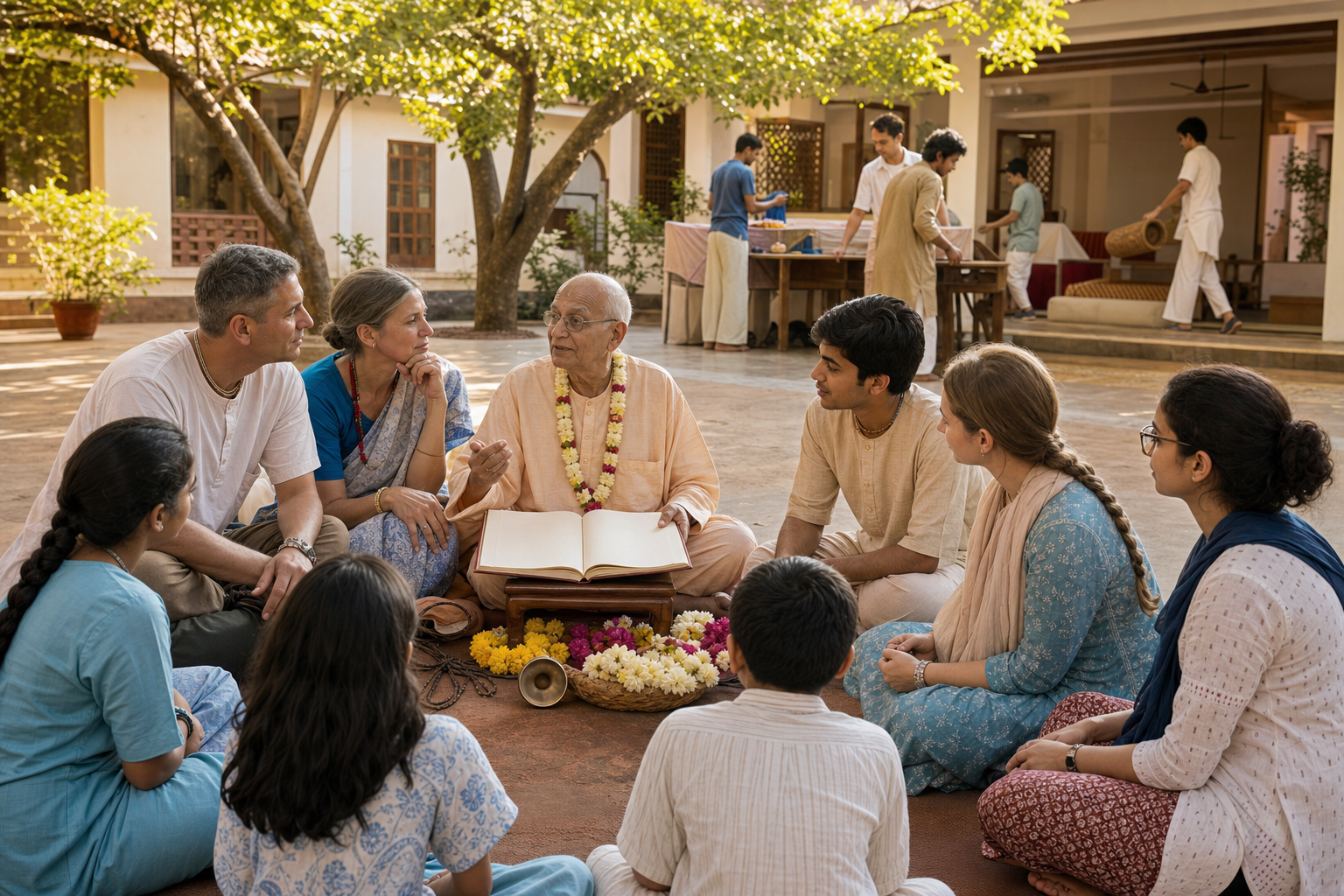
A.C. Bhaktivedanta Swami Prabhupada founded ISKCON in New York City in July 1966. What began in a small storefront on Manhattan’s Lower East Side developed into an international Vaishnava Hindu movement. Its Diamond Jubilee opened with a New York gathering on July 31, 2026, followed by anniversary observances planned in cities including London, Los Angeles, Toronto, Nairobi, Durban, Melbourne, Kolkata and Mumbai.
The scale is substantial. ISKCON reports nearly 1,000 temples and communities across six continents, with a presence in more than 100 countries. It also reports distributing more than 600 million books and magazines in over 85 languages. Its food-relief network is said to serve more than one million schoolchildren in India each day.
Those are organisational figures, so they establish declared reach rather than providing a complete audit of spiritual or institutional health. Reach still matters. A tradition cannot become globally accessible without teachers, translators, books, kitchens, places of worship, volunteer systems and communities able to function after the founding generation is gone.
Scale and depth must therefore be read together. The worldwide network tells you that Prabhupada’s mission became institutionally reproducible. The character of an ordinary local centre tells you whether that inheritance remains spiritually coherent and socially useful.
Key takeaways
- ISKCON’s central global achievement is repeatability: Krishna-centred teaching, communal practice and service have continued far beyond one teacher and one city.
- Large totals establish reach, not spiritual depth. Judge the movement’s present health through the regular life of its local communities.
- Vegetarian food relief is most meaningful when it belongs to a wider rhythm of devotion, study, hospitality and selfless service.
- You can honour the anniversary through a recurring act: attend a regular teaching programme, help with a community kitchen or support a clearly defined local need.
ISKCON made a specific Vaishnava path accessible worldwide
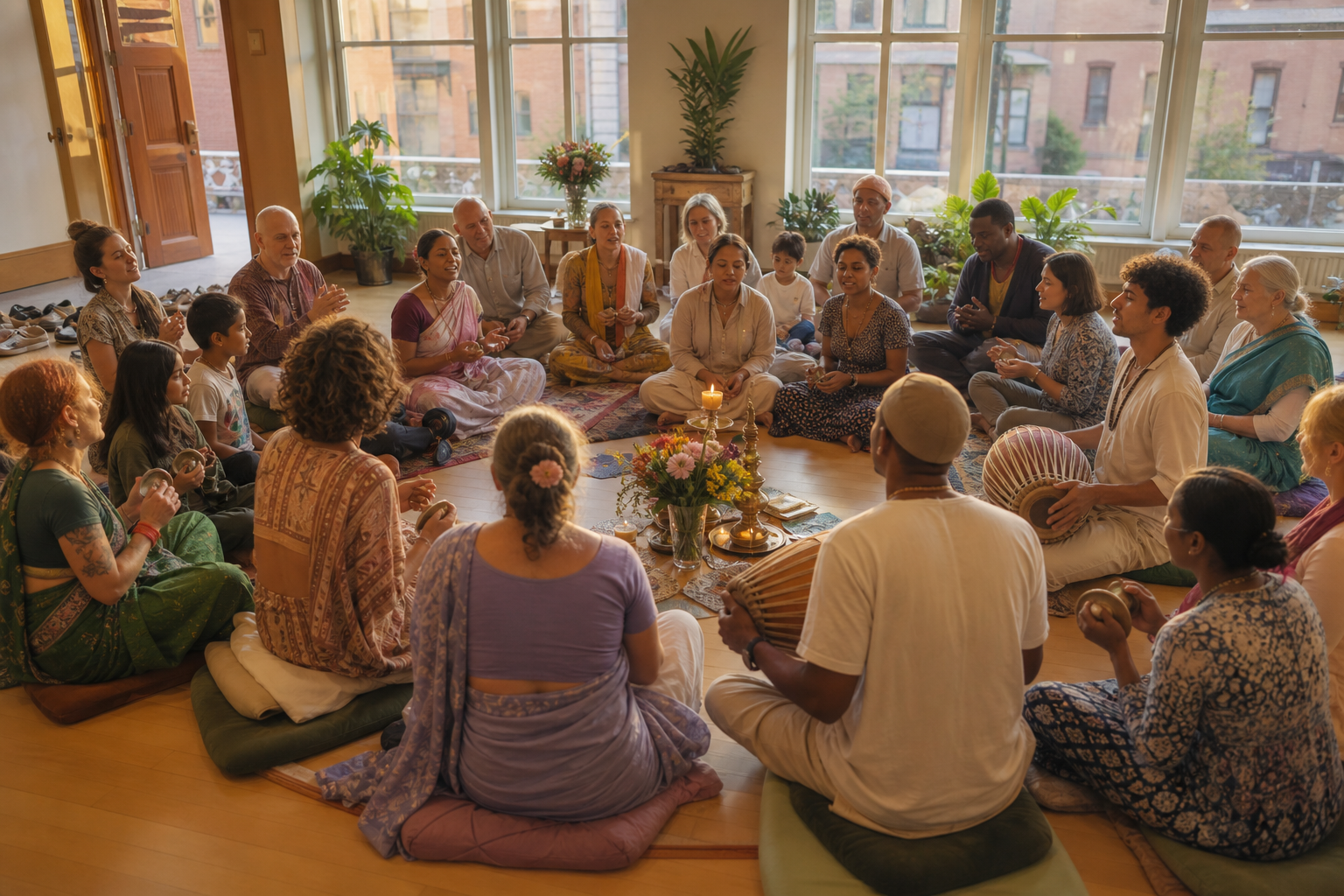
ISKCON did not travel by offering a vague idea of Eastern spirituality. Its identity remained centred on Lord Krishna, the Bhagavad-gita and a recognisable Vaishnava discipline. Its public life brought together spiritual education, meditation, devotional music, cultural programmes and selfless service. That combination gave newcomers several doors through which to enter without making the tradition itself anonymous.
A person might first encounter the movement through music, dance or a vegetarian meal. Another might begin with the Bhagavad-gita, meditation or a temple visit. The entry points differ, but they can lead toward the same centre: a disciplined relationship with Krishna expressed through learning, devotion, community and seva.
The language effort is especially important. Hundreds of millions of publications in more than 85 languages represent more than a large publishing operation. Translation lets a reader encounter a Dharmic teaching in a familiar language while retaining its philosophical centre. It creates the possibility of understanding rather than asking people to admire an exotic culture from a distance.
Physical communities complete that work. A translated book can cross a border, but a centre gives the reader somewhere to ask questions, worship, learn a practice, meet other seekers and take responsibility. The temple turns transmission from a one-way delivery of information into a relationship.
ISKCON’s Vaishnava confidence has also allowed it to meet other communities in public. The New York jubilee included representatives of the Greek Orthodox Archdiocese of America and the New York City Mayor’s Office alongside Hindu leaders, diplomats and members of the movement. Interfaith participation need not require a tradition to soften its identity. A Dharmic institution can state what it believes, treat other people generously and cooperate in service without pretending all paths are identical.
If you are visiting an ISKCON centre for the first time, listen for three clear answers. What does the community actually teach? What regular practice can a newcomer learn? What service can a person perform without needing social status or insider connections? A healthy centre should be able to answer all three without turning the encounter into either a sales pitch or a cultural performance.
The community kitchen turns philosophy into a public good
Global statistics can feel remote. A local kitchen shows the mechanism. In Batu Kitang, an ISKCON community that grew from a small house into a larger place of worship and community gathering runs a monthly vegetarian meal programme. The work depends on public donations, and members prepare, pack and distribute the food themselves.
This model is modest enough to understand and disciplined enough to copy. It does not require a grand institution to begin. It requires a recurring schedule, an appropriate meal, donated resources, an organised team and a public place where the food reaches people.
Cadence matters more than spectacle. A large anniversary distribution can attract attention, but a monthly programme creates responsibility. Volunteers know that another cooking day is coming. Donors can see whether their support sustains an ongoing service. The community learns how to improve through repetition.
Local form carries a stable ethic. The Batu Kitang volunteers distribute vegetarian nasi lemak rather than an unfamiliar ceremonial menu. The food belongs to the place, while the vegetarian form expresses restraint and compassion. That is cultural adaptation without the loss of a Dharmic moral centre.
Ownership of the whole chain builds capacity. The same community cooks, packs and distributes the meals. That creates more opportunities to serve than writing a cheque alone. It also means that someone must coordinate ingredients, preparation, packing, transport and the early-morning volunteer roster.
Growth must follow operational reality. After distributing about 500 packets in August, the temple planned to prepare 1,000 packets for the following month’s programme. A larger target is encouraging, but doubling output also increases the need for ingredients, cooking space, packing materials, transport and dependable labour. If you want to help such a programme, ask which of those constraints is limiting the next distribution. A useful contribution removes a real bottleneck.
Food service should not be separated from the spiritual life that sustains it. Teaching without service can leave compassion at the level of discourse. Service without a deeper discipline can become dependent on enthusiasm that fades. When prayer, study, communal responsibility and food relief reinforce one another, seva becomes both an offering and a durable public good.
How to recognise a living legacy at your local centre
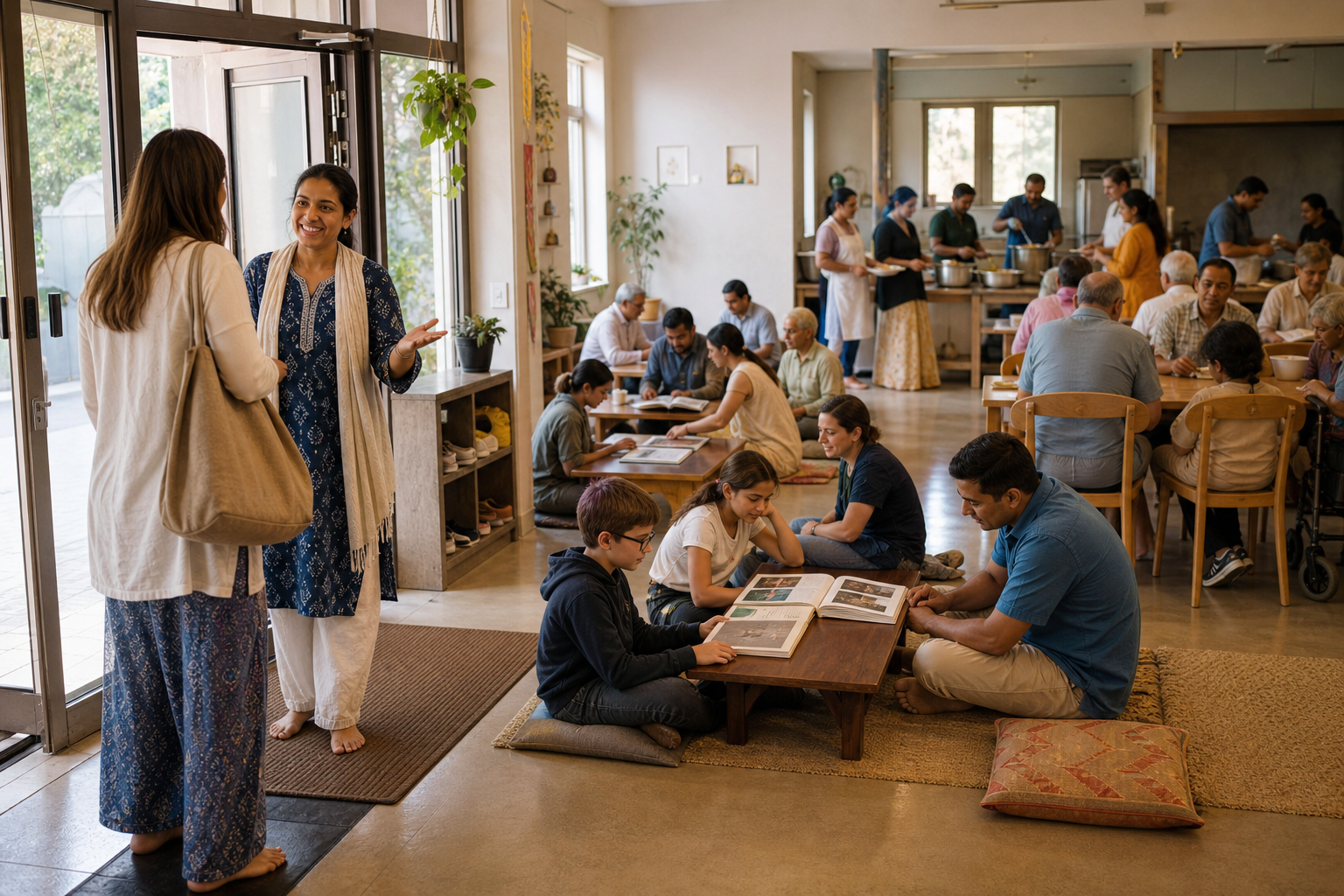
A gala shows how a movement remembers itself. An ordinary week shows how it lives. If you are considering attending, volunteering or donating, use the following tests at the particular centre in front of you.
- Visit outside a major festival. Notice whether worship, teaching and hospitality remain attentive when there are no dignitaries, large crowds or anniversary cameras.
- Follow the line from teaching to practice. A discussion of the Bhagavad-gita should lead to a practice that can be explained and undertaken, not remain a collection of attractive quotations.
- Ask for the service rhythm. Find out whether food distribution, youth engagement or community outreach happens on a stated schedule. Regularity is stronger evidence of capacity than an isolated large event.
- Look for a path into responsibility. A newcomer should be able to move from attending to learning and then to a suitable service role. The centre remains alive when people are formed into dependable participants, not kept as spectators.
- Check the balance between local adaptation and Vaishnava identity. Language, food and outreach can reflect the surrounding society while the centre remains clear about Krishna, its teachings and the purpose of seva.
A worldwide network will inevitably vary from centre to centre. Do not treat a single pleasant encounter as proof that every community is healthy, or a single poor encounter as a complete judgement on an international tradition. Evaluate the local leadership, teaching and service honestly. Then decide whether the right response is deeper participation, constructive questions or support for a specific programme that is already doing sound work.
If you choose to participate, make the commitment repeatable. A monthly kitchen shift, regular attendance at a Bhagavad-gita discussion or responsibility for a defined logistical need will teach you more than occasional festival attendance. Repetition is how admiration becomes seva and how a community discovers that it can depend on you.
The seventh decade must keep devotion, learning and service together
ISKCON enters its seventh decade with enough geographical reach to be recognised almost anywhere, but recognition creates its own test. Publishing, festivals, temples, cultural events and food relief can become separate departments whose numbers rise while their relationship weakens. The movement’s distinctive strength lies in keeping them connected.
Spiritual depth must accompany reach. More centres and publications matter when they help people understand and practise the tradition. The most useful local question is not how many people passed through an event, but how many found a continuing path of learning, devotion and responsibility.
Youth engagement must include responsibility. ISKCON’s anniversary account identifies youth engagement as part of its international work. The next generation needs more than programmes arranged for it. Young participants need serious learning, meaningful service and room to become trustworthy organisers and teachers.
Community service needs transparent local detail. Global food-relief totals can inspire, but a volunteer or donor acts locally. Centres should make it easy to understand how often a programme runs, what work is required, where the food goes and what currently prevents the team from serving more people.
Hospitality must grow from identity rather than replace it. The movement can welcome different cultures and cooperate across faiths precisely because it has something definite to bring: a Krishna-centred Vaishnava tradition in which spiritual practice and compassionate action belong together.
If you want to mark ISKCON’s sixty years, visit a nearby centre when nothing ceremonial is happening. Sit with the teaching long enough to understand what it asks of a practitioner. Then take on a recurring act of service that the community genuinely needs. The next decade will be built less by anniversary applause than by people willing to return, learn and serve.
References
- Dandavats – ISKCON Marks 60 Years with Diamond Jubilee Gala in New York
- Dandavats – ISKCON Keeps Compassion Alive Through Monthly Free Meal Programme
