

You have made the call, completed the work, offered the apology, or begun the practice. Nothing more can be forced today. Yet your mind keeps checking, rehearsing, bargaining, and trying to finish the future in advance.
You do not have to choose between gripping the outcome and giving up on it. Dharma offers a harder and more liberating discipline: participate fully, remain patient with time, and stop making your peace dependent on what happens next.
Find the demand hidden inside your desire
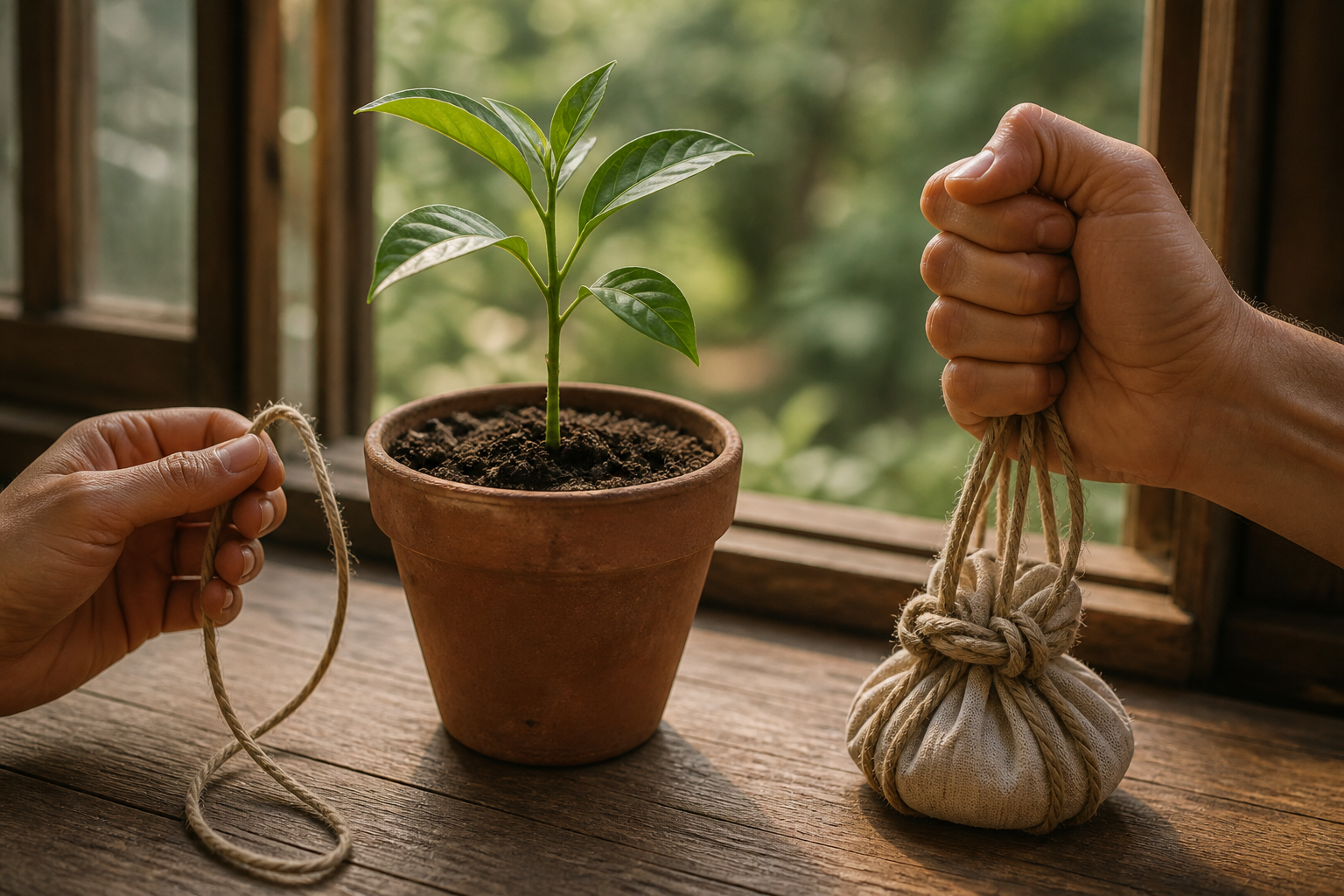
A desire is not automatically an attachment. You may want meaningful work, financial stability, reconciliation, recognition, or progress in sadhana. These aims can be legitimate. Bondage begins when preference becomes an inner command: this must happen, it must happen on my timetable, and its failure will diminish who I am.
That distinction matters because abandoning every goal is neither practical nor Dharmic. The householder still has duties. The leader still has responsibilities. The seeker still has to practise. Non-attachment changes your relationship to action; it does not erase the need for action.
The contrast between Indra’s crown and a beggar’s bowl makes this visible. A person surrounded by power may be inwardly bound by fear of loss, while someone with few possessions may remain consumed by craving. Wealth is therefore not proof of bondage, and poverty is not proof of freedom. The decisive question is what your identity has fastened itself to.
Attachment often announces itself through mental maintenance. You repeatedly inspect a result that has not changed. You conduct imaginary arguments with someone who is absent. You compare your standing with that of other people. You cannot enjoy what is present because attention has been pledged to the next acquisition, reply, promotion, experience, or sign of approval.
When you notice that pattern, write four plain statements:
- What I want: Name the result without pretending you do not care.
- What Dharma asks of me: Identify the honest, competent, compassionate, or courageous action that belongs to you.
- What is not mine to command: Name the other person’s decision, the final result, the past, or the pace at which circumstances change.
- What I have made this result mean: Complete the sentence, “If this does not happen, I fear it proves that…”
The fourth statement usually reveals the deepest knot. You may discover that you are not merely seeking an outcome; you are asking it to certify your worth, security, intelligence, devotion, or place in the world. Once that identity claim is visible, you can challenge it without denying the practical importance of the situation.
The Upanishadic orientation toward atman cuts through this confusion. Anything dependent on a role, possession, reputation, or passing condition can be altered or lost. If you build identity entirely upon it, anxiety accompanies even success. Inner freedom begins when you stop asking impermanent conditions to tell you what you ultimately are.
Practise engaged patience, not spiritual postponement
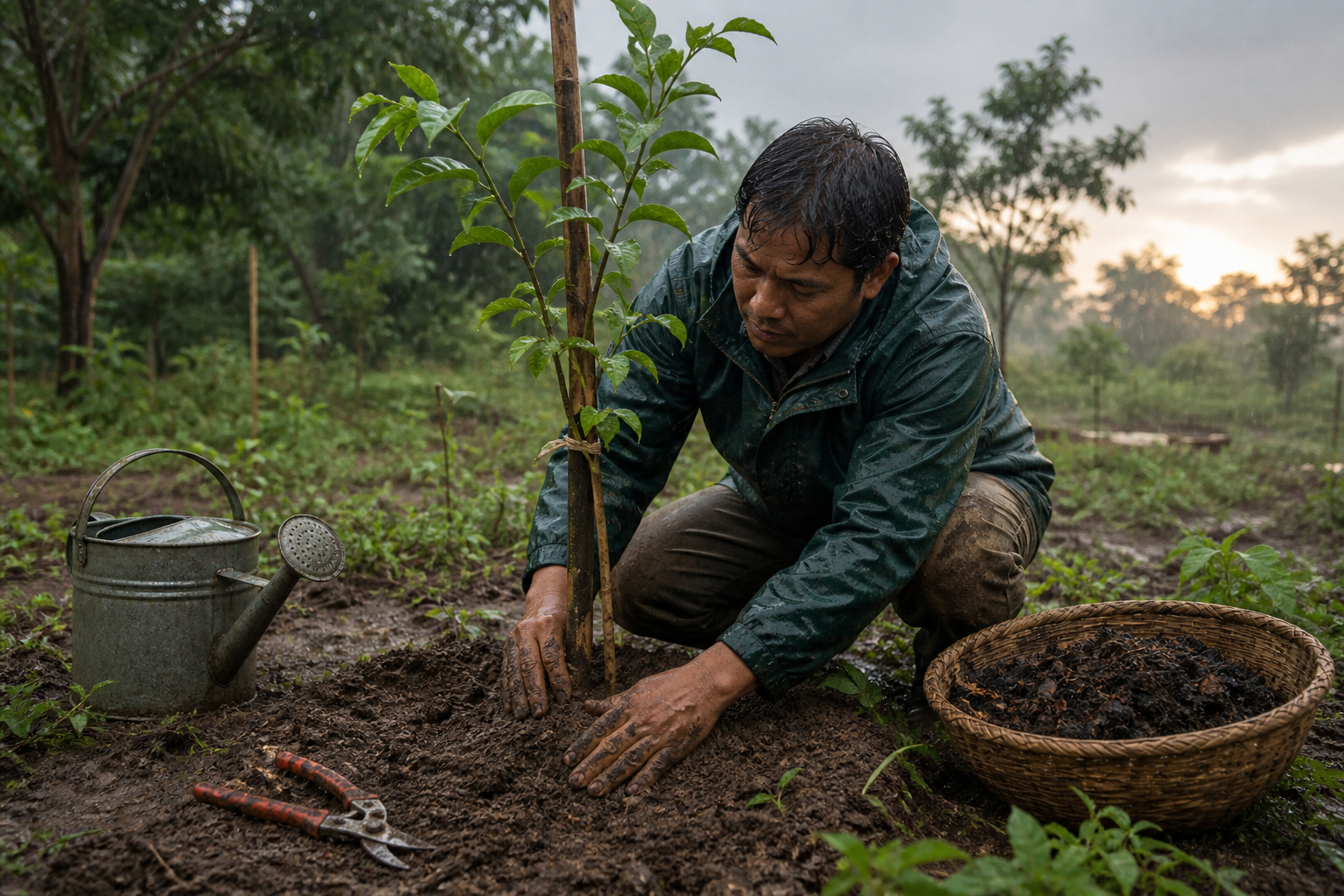
Impatience says that reality must ripen at the speed of your anxiety. Fatalism makes the opposite mistake: it hands your responsibility to time. Dharmic patience rejects both errors.
Sankhya Karika verse 50 places kāla, time, among the forms of tuṣṭi, or contentment. Trust in time can settle agitation and allow understanding to mature. It can also become a hiding place if you decide that time will do the work of discrimination and practice for you. The useful form of kāla as tuṣṭi is composed readiness: you do what can be done, remain attentive, and permit what cannot be hurried to unfold.
Use three tests whenever you are tempted to call inaction “patience”:
- Ethical action: Are you still doing the duty that is actually yours?
- Honest inquiry: Are you learning, observing, and changing your view when reality contradicts it?
- Consistent practice: Are you continuing the discipline that prepares the mind, even when it produces no dramatic experience?
If all three remain alive, waiting can be a form of strength. If they have disappeared, waiting may be avoidance dressed in spiritual language.
A simple decision rule helps. If a necessary and Dharmic action is available, take it. If the way forward is unclear, investigate rather than guess. If no action is available now, stop manufacturing mental action through worry. Rumination feels busy because it consumes energy, but it does not become useful merely by repeating itself.
At work, you can prepare carefully, communicate clearly, correct an error, and submit what is required. You cannot enter another person’s mind and compel a decision. In a relationship, you can speak truthfully, listen, apologise where needed, and uphold a boundary. You cannot manufacture trust or dictate another person’s response. In sadhana, you can sit, study, remember, and return attention when it wanders. You cannot order insight to appear as proof that the practice is working.
This boundary is not an excuse to lower your standards. It tells you where high standards are useful. Apply discipline to the quality of your conduct, not to an imagined ability to control every consequence.
Release the fruit before, during, and after action

Karma Yoga is sometimes reduced to a comforting instruction not to worry about results. Its demand is sharper. You must act with care while refusing to possess the fruit psychologically. That requires practice at every stage of action, not a hurried attempt to detach after events go against you.
- Before acting, purify the intention. Name the result you prefer, then name the value that will guide you even if the result changes. You might choose truthfulness, competence, compassion, courage, restraint, or service. This keeps the goal visible without placing it on the throne.
- While acting, return to the task. Notice when attention leaves the work and begins bargaining with the future. Come back to the sentence being written, the person speaking, the breath moving, or the duty immediately in front of you. One-pointed attention is non-attachment in working clothes.
- After acting, close the inner transaction. Review whether your conduct was sound and whether a correction is needed. If nothing remains to be done, release the demand for immediate reassurance. Do not keep reopening a completed action merely to soothe uncertainty.
The closing step is where many sincere people get trapped. They complete the external duty but continue performing it internally. The email has been sent, but they rewrite it in memory. The conversation has ended, but they argue with a mental version of the other person. The decision has been made, but they repeatedly put themselves back on trial.
Create a clear end to the action. State, “The next duty is complete,” or, “A correction is needed, and this is the correction.” Then move attention to the next real responsibility. The purpose is not to suppress thought. It is to stop treating repetitive thought as evidence of care.
Different forms of sadhana address different kinds of clinging. Choose the one that matches the mechanism binding you:
- If sensory stimulation keeps reigniting desire, practise pratyāhāra by reducing the input that repeatedly pulls you back. A deliberate digital fast can expose how often checking has replaced action.
- If agitation is mainly bodily and reactive, use gentle prāṇāyāma or attentive breathing to create space before responding. The aim is a steadier response, not a forced emotional performance.
- If attention cannot stay with one object, use dhyāna to practise returning without self-condemnation. Each return weakens the assumption that every impulse deserves obedience.
- If ownership has become burdensome, apply aparigraha to one concrete area. Remove what you neither use nor responsibly steward, and stop acquiring merely to regulate status or mood.
- If self-concern dominates the situation, perform seva without turning the service into a bid for recognition. Let useful action widen the field beyond your private outcome.
- If you follow the Sikh path, Naam Simran can return attention to what is deeper than the restless ego, while seva and life as a grihastha keep that remembrance joined to responsibility.
Do not adopt every discipline at once. A complicated programme can become another possession for the ego to manage. Select the practice closest to your actual attachment and repeat it whenever that attachment becomes active.
Questions that prevent the most common mistakes
Does non-attachment mean that you should stop caring?
No. Indifference withdraws care from the quality of action. Non-attachment withdraws the demand that a preferred result must secure your identity or peace. A non-attached person may work intensely, protect a family, build an institution, oppose injustice, or preserve a tradition. The difference appears when circumstances change: can that person remain truthful and discerning, or does fear of loss take command?
How can you tell whether acceptance has become passivity?
Ask whether acceptance has made your next duty clearer or has helped you evade it. Genuine acceptance begins with an accurate acknowledgment of what is already true. It does not declare every condition good, permanent, or beyond challenge. You can accept that harm occurred and still seek repair. You can accept that a plan failed and still design another. You can accept another person’s refusal without surrendering your own boundary.
Passivity says, “Nothing can be done,” before examining what is possible. Attachment says, “Everything depends on me,” even where control is impossible. Wisdom identifies the part that is yours and gives that part undivided effort.
Must you give away possessions to become inwardly free?
Not necessarily. Aparigraha is not a command to neglect dependants, abandon useful resources, or romanticise deprivation. It asks whether possession serves Dharma or whether your life has been organised around acquiring, guarding, displaying, and fearing the loss of things.
Test stewardship rather than appearance. Can you use resources without making them the measure of a person? Can you share where sharing is appropriate? Can you release what no longer serves a legitimate purpose? Can you endure a change in status without treating it as the destruction of the self? A full house and a light mind can coexist; so can an empty room and relentless craving.
Let each Dharmic path sharpen the same practical test
Hinduism, Buddhism, Jainism, and Sikhism should not be flattened into interchangeable systems. They differ in their accounts of self, liberation, reality, discipline, and authority. Their distinct vocabularies nevertheless illuminate a practical problem shared by human beings: the mind tries to possess objects, outcomes, identities, and even spiritual progress.
Karma Yoga asks whether you can perform action without claiming ownership of its fruit. The Upanishadic orientation asks whether you have confused the changing contents of life with the deepest Self. Buddhism examines the craving and clinging through which dukkha is sustained, while anatta unsettles the possessive identity that says, “This is mine; this is what I am.” Jain aparigraha makes non-possession an ethical discipline, restraining accumulation so that intention and attention can become clearer. Sikh wisdom places the grihastha within hukam and cultivates sehaj through remembrance and service, showing that inner sovereignty need not depend on retreat from society.
Use these teachings as tests, not decorations. During your next period of uncertainty, notice whether you can do four things:
- Act promptly when a genuine duty becomes clear.
- Rest from mental interference when no action is available.
- Revise your approach when honest inquiry reveals an error.
- Receive success or disappointment without turning either into a final verdict on who you are.
That is a more reliable measure of inner freedom than how spiritual your circumstances appear. A crown can be held as a responsibility rather than an identity. A simple life can be lived without resentment toward those who possess more. Patience can remain alert. Ambition can serve Dharma without becoming a private demand that the world provide reassurance.
Choose one unresolved outcome today. Write down the duty, the demand, and the part that time must carry. Do the duty cleanly. Question the demand honestly. Then let the unfinished future remain unfinished until reality presents the next action.
References
- DharmaRenaissance Blog — Indra’s Crown vs. a Beggar’s Freedom: The Astonishing Dharma Paradox of Real Happiness
- DharmaRenaissance Blog — Trusting Time: kāla as tuṣṭi in Sankhya Karika to cultivate calm, patience, and mukti
