
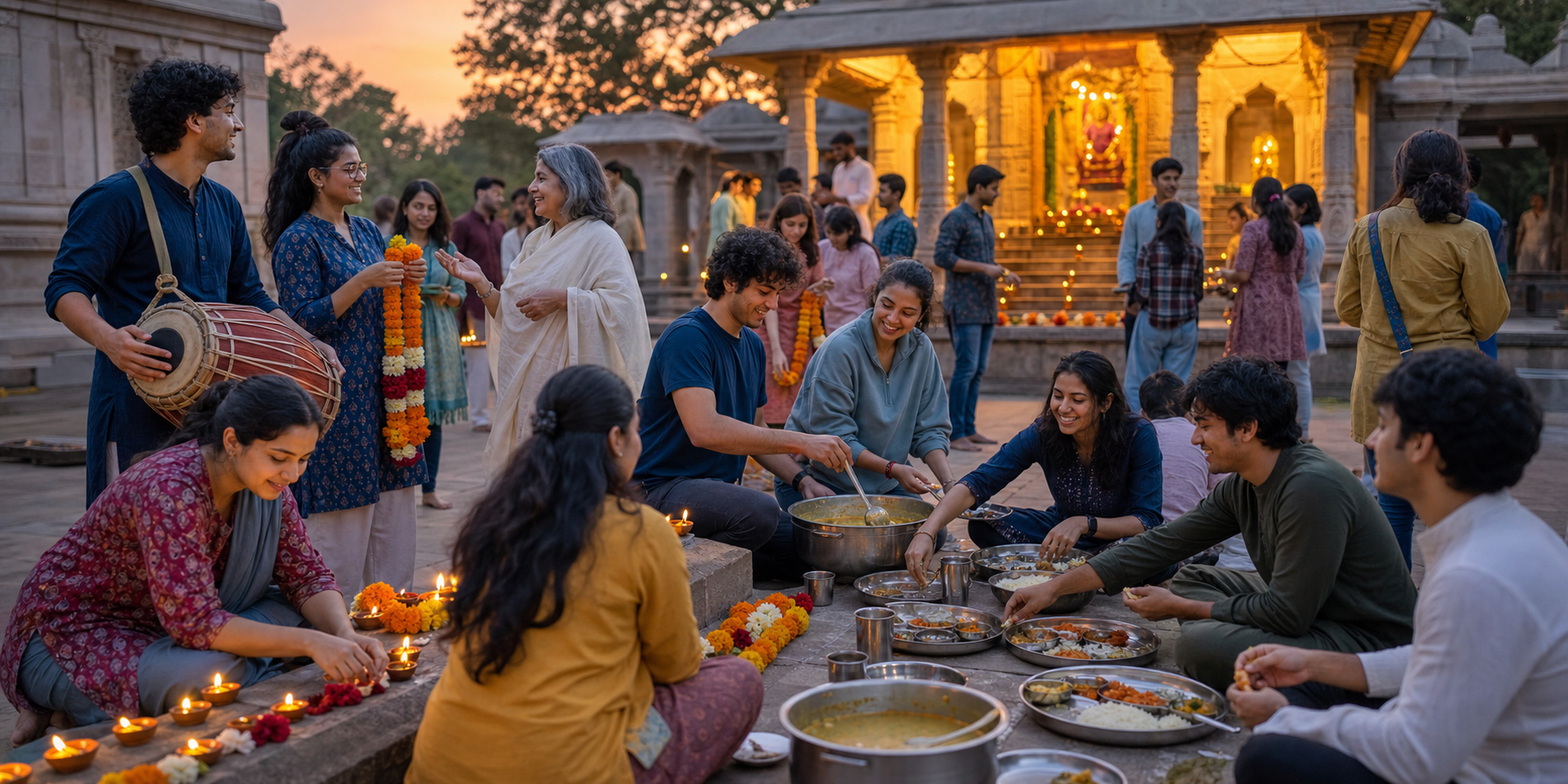
Your feed may be full of bhajans, temple journeys, meditation clips, heritage clothing, and unapologetic expressions of dharmic identity. If you are drawn to that energy but unsure whether it represents a renaissance or another passing aesthetic, ask a more useful question: what would make your own participation durable?
A cultural revival becomes meaningful when expression leads to practice, practice leads to understanding, and understanding produces service. You do not have to choose between being contemporary and being rooted. You do need to decide what you will carry after the music stops and the image leaves the screen.
The aesthetic is a doorway, not the destination
The vocabulary of this revival already includes bhajan-centred gatherings, ethnic clothing, pilgrimage, meditation, yoga, and community seva. These forms matter. They make dharmic culture publicly visible and allow young people to approach it without first adopting the cultural anxieties of earlier generations.
Visibility, however, is not the same as depth. Attending a bhajan rave does not by itself teach you what the bhajan means. Wearing a traditional textile does not tell you where it came from or when it is appropriate. Visiting Mathura as sacred geography is different from using it as a background for photographs. A symbol becomes part of a living tradition only when it connects you to meaning, discipline, people, and responsibility.
You can test any cultural trend with three questions:
- Will you return? Novelty attracts attention. Practice begins when you return after the novelty has faded.
- Can you be corrected? Cultural confidence without the willingness to learn becomes performance. A living lineage includes teachers, elders, texts, practitioners, and communities capable of correcting mistakes.
- What will you contribute? If your participation consumes music, images, clothing, hospitality, or sacred spaces without supporting the people who sustain them, it remains incomplete.
Attach one deeper action to whatever first attracted you. If it was music, learn the words, meaning, devotional setting, and lineage of a composition. If it was clothing, learn the textile tradition, support its makers, and understand its ritual or regional context. If it was pilgrimage, study the sacred geography and local norms before you arrive. If it was meditation or yoga, identify the tradition’s purpose instead of treating the practice as a technique detached from its philosophy.
This does not make contemporary experimentation illegitimate. It gives experimentation roots. New music, visual language, travel culture, and digital communities can carry tradition forward, but they should open a path into the tradition rather than replace it.
Build your revival around practice, not identity claims
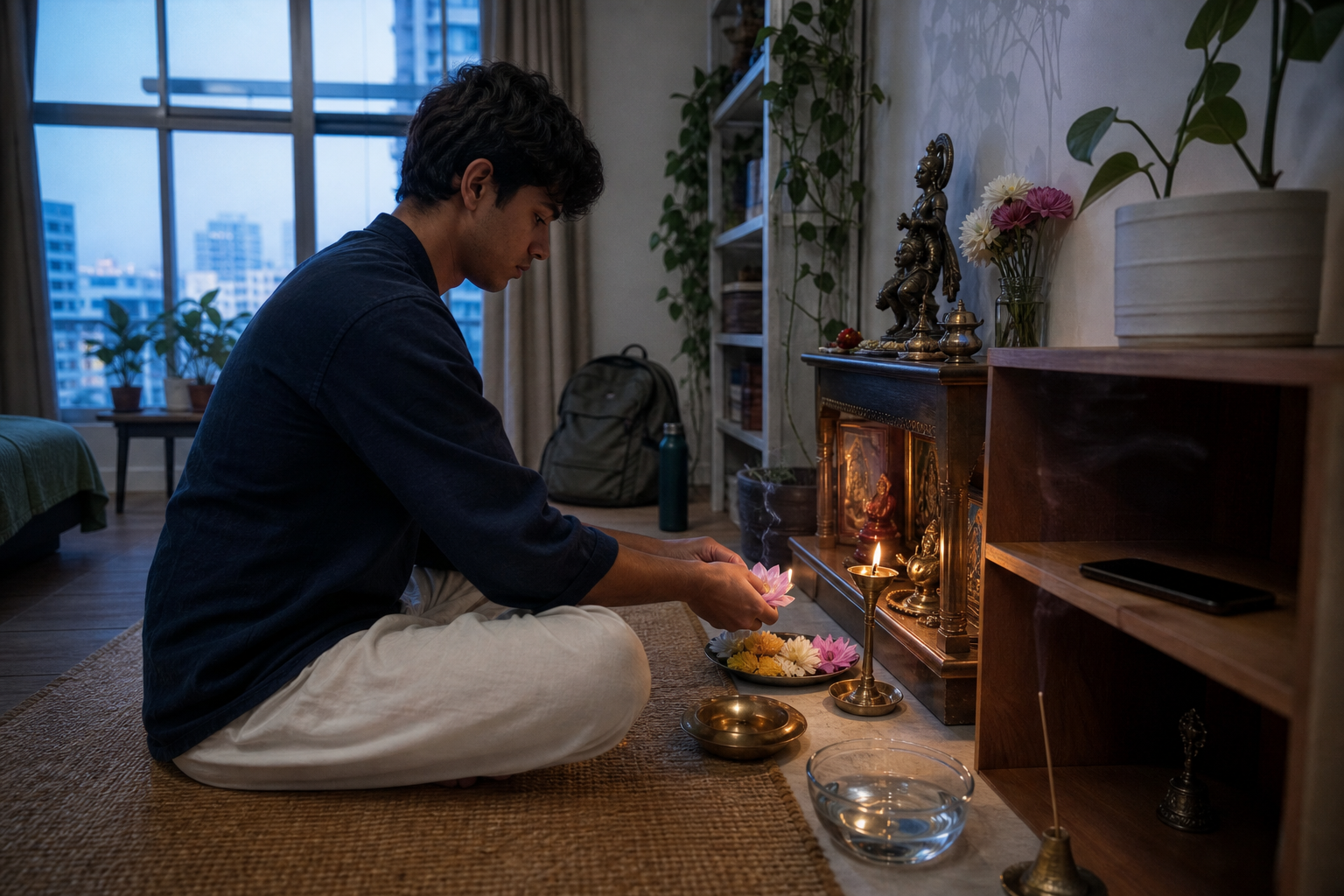
Calling yourself dharmic is easy. Letting dharma shape how you speak, work, consume, disagree, and serve is harder. That harder work is where cultural recovery becomes personal formation.
Dharma, ahimsa, seva, and shraddha offer a useful shared scaffold for cooperation across Hindu, Buddhist, Jain, and Sikh communities. They do not mean exactly the same thing in every lineage, and they should not be used to manufacture a blended religion. They can still help you examine whether your cultural pride is changing your conduct.
- Dharma: Ask what duties accompany the identity you claim. Consider your obligations to family, community, teachers, sacred places, inherited knowledge, and those who will come after you.
- Ahimsa: Examine your speech as seriously as your diet, ritual, or public symbolism. Online humiliation carried out in defence of dharma still trains you in humiliation.
- Seva: Choose a contribution that answers a real need. Help maintain a place of worship, teach a skill, support an archive, assist at a community kitchen, or give reliable time to a local initiative.
- Shraddha: Cultivate reverence strong enough to sustain attention. Shraddha is not an excuse to stop asking questions; it is a reason to ask them carefully and remain present for the answers.
Abhyasa, repeated practice, is the bridge between admiration and formation. Build a personal rule that contains a practice you can repeat, a teaching stream you can study, a form of service you can sustain, and a community in which somebody is permitted to correct you. Start within your inherited or chosen lineage rather than assembling an internet average of all dharmic traditions.
A Hindu may begin with the sampradaya, deity tradition, or temple life available to them. A Buddhist should ask which vehicle, school, and teacher frame a meditation practice. A Jain should learn how a principle is understood within the relevant community and discipline. A Sikh should approach Sikh teaching through its own vocabulary, institutions, and authoritative tradition. Respectful learning begins by allowing each path to speak in its own voice.
Learn deeply without flattening tradition or suspending judgement

Many young people want to decolonise their understanding of Bharat and its traditions. That work is necessary, but it can be misunderstood in two opposite ways. It does not require rejecting every modern academic method because it came through a Western institution. It also does not require accepting every inherited or viral claim merely because it sounds civilisationally affirming.
A better approach begins with the tradition’s own categories, languages, questions, and standards of knowledge. It then distinguishes primary teaching from commentary, commentary from local custom, local custom from family memory, and all of these from modern internet interpretation. Each may be valuable, but they do different jobs.
Before repeating a claim about a scripture, ritual, historical event, teacher, or community, make a small verification card:
- Term: What is the exact Sanskrit, Pali, Prakrit, Punjabi, or regional term? Are you relying on a translation that hides an important distinction?
- Location: Does the teaching occur in a primary text, a commentary, an oral account, a local practice, or a recent interpretation?
- Lineage: Which school or community holds this position? Is it presented as universal when it is actually regional or sectarian?
- Context: Was the statement descriptive, philosophical, ritual, poetic, or polemical? A line removed from its setting can be made to carry a claim it never made.
- Variation: Do other dharmic schools interpret the matter differently? Record the disagreement instead of erasing it.
- Evidence: What would qualify the claim? Cultural advocacy becomes more credible when it can acknowledge uncertainty and correct errors in public.
Family memory deserves respect, especially when institutions failed to preserve local experience. It should still be labelled as family or community testimony rather than silently promoted into a universal rule. Traditional teachers can supply philosophical and ritual context. Practitioners can explain lived discipline. Historical scholarship can test chronology, transmission, and material claims. You learn more when you let each form of knowledge answer the kind of question it is equipped to answer.
This is also how you avoid a common trap in cultural debate: replacing an old caricature of dharmic traditions with a flattering new caricature. Confidence does not require exaggeration. A civilisation with philosophical depth, internal debate, regional variety, and long institutional memory can survive careful questions.
Replace intergenerational gatekeeping with defined roles
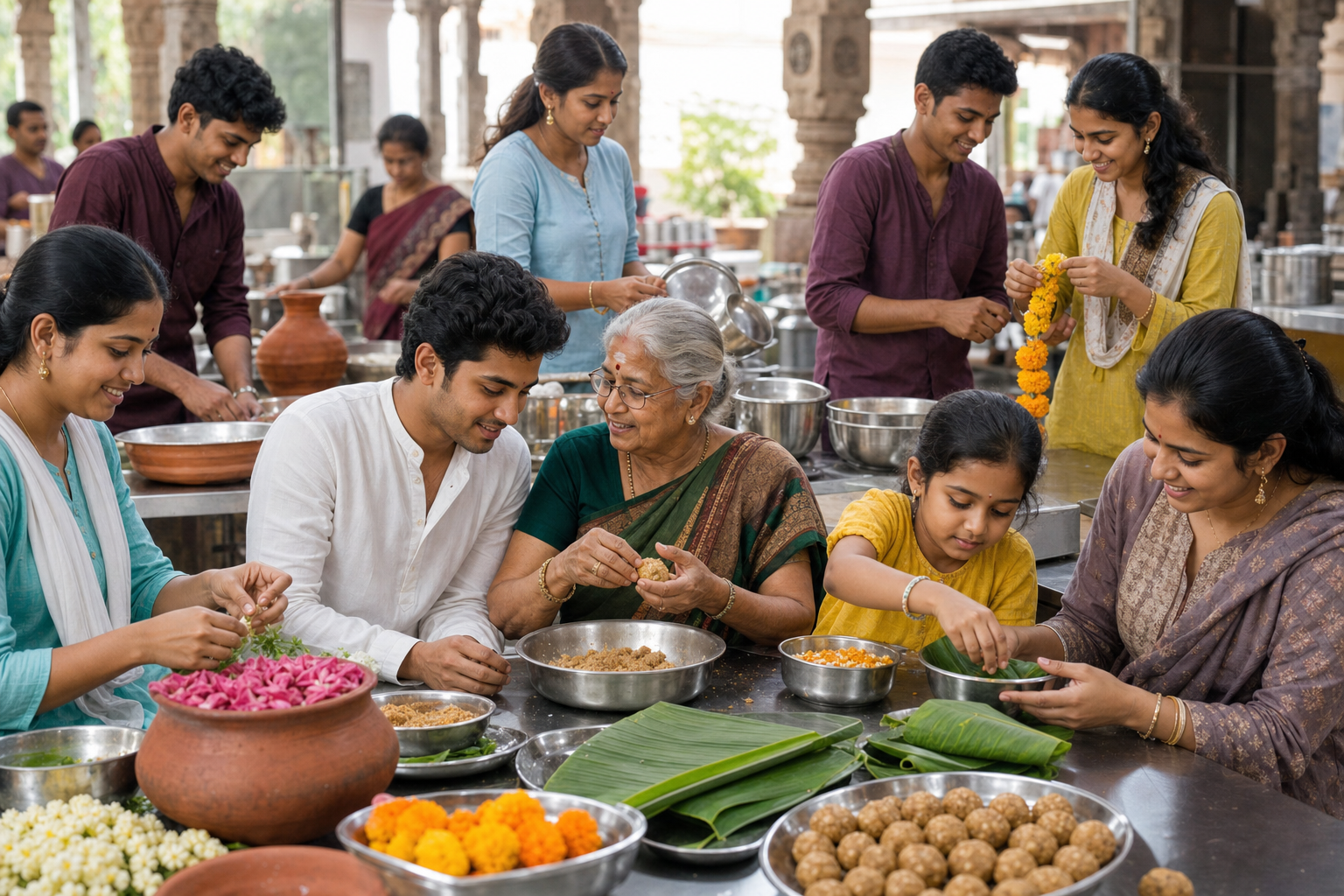
Some older Indians learned to preserve culture while navigating Western-shaped curricula, limited institutional support, reductive public narratives, and the pressure of economic survival. Their caution often protected continuity. It could also make ritual form feel fixed and turn unfamiliar expression into a threat.
Gen Z brings a different strength: less willingness to apologise for an Indian cultural identity and more comfort combining inherited forms with contemporary media. That confidence can renew community life. It can also become dismissive if every correction is labelled repression and every inherited boundary is treated as meaningless.
The practical answer is not to decide which generation owns culture. Give each generation a defined role:
- Young participants can bring questions, new formats, technical skills, distribution, and the willingness to make dharmic culture visible.
- Elders can contribute memory, vocabulary, family records, community relationships, and knowledge of how practices changed across place and time.
- Teachers and serious practitioners can distinguish doctrine from custom, explain discipline, identify mistranslations, and name legitimate differences between lineages.
- Researchers and archivists can preserve material with consent, record provenance, compare accounts, and make the result usable by people beyond the original gathering.
If you want to begin an intergenerational conversation, avoid asking an elder to explain an entire religion. Ask concrete questions: What did your household practise? Who taught you? Which words were used in the original language? What differed in another family or region? Which practices were not explained to you? What changed when your family moved?
Record uncertainty as carefully as certainty. An elder saying, “I remember the practice but not its reason,” has given you useful information. It separates memory from interpretation and creates a precise research question. Obtain permission before recording or publishing personal accounts, credit the knowledge holder, and preserve the language in which the memory was shared.
Elders do not need to approve every new musical or visual format before young people can create. Young people do not need to pretend that all boundaries are arbitrary before they can innovate. The relationship works when mentorship protects depth and experimentation protects vitality.
Turn cultural energy into institutions people can inherit
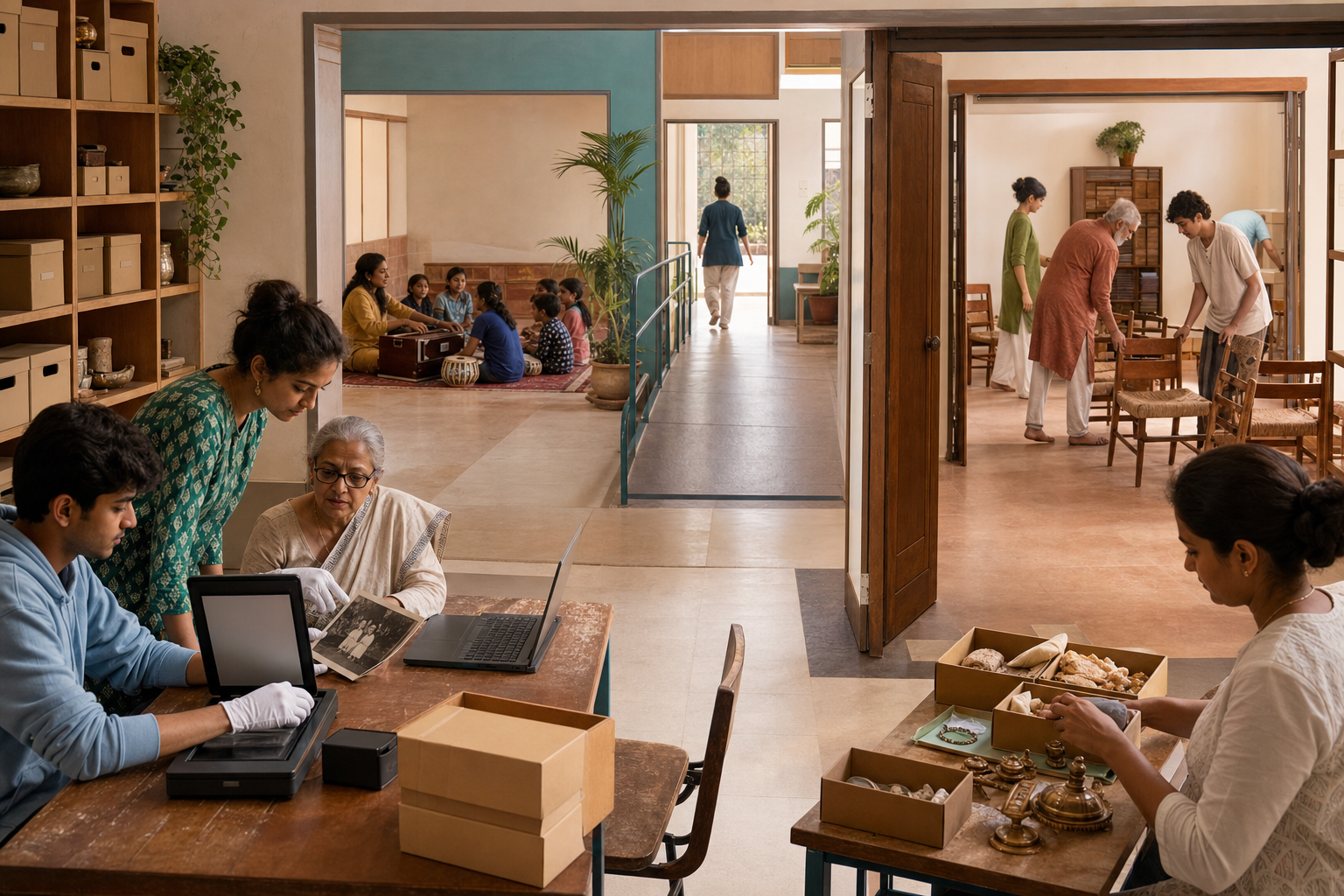
An event can create enthusiasm. An institution preserves knowledge, corrects mistakes, trains successors, and gives people a place to return. If Gen Z’s revival is to outlast a trend cycle, its energy must produce reusable community assets.
Choose one practical output rather than launching a vague initiative:
- A community sabha: Give each session a defined question, invite competent voices, circulate preparatory material, and publish a record of what was learned and what remains disputed.
- An oral-history archive: Preserve consent, the speaker’s name, language, place, community context, and relationship to the practice being described. Keep the original recording alongside any transcript or translation.
- A translation circle: Work from an identified edition, retain important original terms, compare interpretations, and mark places where no English equivalent carries the full meaning.
- A pilgrimage dossier: Prepare the sacred narrative, geography, expected conduct, important vocabulary, and local contacts before the journey. Add reflections and corrections afterwards so the next visitor begins with better knowledge.
- A seva network: Define the need, the responsible institution, the work volunteers will actually perform, and how continuity will be maintained when the first burst of enthusiasm passes.
- A heritage directory: Document practitioners, musicians, translators, artisans, teachers, libraries, and community spaces with their permission. A searchable path to living knowledge is more useful than another general declaration that heritage matters.
Plurality needs structure here. Hinduism, Buddhism, Jainism, and Sikhism have distinct histories, authorities, practices, and truth claims. Shared commitments can support cooperation without proving sameness. At a cross-dharmic gathering, let each community describe itself in its own terms. Label genuine agreement, preserve genuine disagreement, and resist inventing a composite ritual merely to make the event look unified.
Measure the work by what it leaves behind: people who return, knowledge whose provenance is recorded, corrections that are incorporated, service that reaches its intended community, and younger participants who can eventually teach or organise without depending on the founders. Attendance and online reach can be encouraging, but neither tells you whether continuity has been created.
Key takeaways
- Treat music, clothing, pilgrimage, and digital expression as entry points; connect each one to study, discipline, community, and contribution.
- Use dharma, ahimsa, seva, and shraddha as questions for your conduct, not as decorative labels.
- Learn within a specific lineage before making broad claims about all dharmic traditions.
- Give young people, elders, teachers, practitioners, and researchers distinct roles so that confidence and correction can coexist.
- Build archives, sabhas, translation circles, pilgrimage resources, and seva networks that others can use and improve.
Your next step can be modest and concrete. Take the expression of dharmic identity that already matters to you and connect it to one competent teacher, one repeatable practice, one act of service, or one carefully documented community resource. Cultural confidence becomes a renaissance when another person can receive something trustworthy from the work you began.
References
