

You may have seen a priest or family elder place a small grass ring on the hand before worship and wondered whether you should do the same. The common answer—use the right ring finger—is only a starting point. Hindu lineages differ, and copying a visible action without its ritual context can create more confusion than clarity.
You can approach the pavitra correctly by answering three questions: Which rite are you performing? Which tradition governs it? What preparation has that tradition prescribed? Once those are clear, the ring becomes what it is meant to be: a quiet aid to purity, attention, and disciplined participation in sacred action.
What the pavitra changes before a ritual begins
A pavitra, also called a pavitram or kusha ring, is traditionally formed from kusha or darbha grass, Desmostachya bipinnata. It is a ritual implement rather than ordinary jewellery. Putting it on marks a transition from everyday activity to consecrated action.
That transition matters because a Hindu ritual asks more of you than the correct arrangement of lamps, water, flowers, or offerings. Your intention, speech, posture, and actions are supposed to move in the same direction. The pavitra gives that inner alignment a physical form.
- It marks a boundary. Wearing it tells you that ordinary handling has given way to mindful ritual conduct.
- It supports sankalpa. Each time you notice the ring, you can return to the purpose for which the rite is being performed.
- It reinforces śuddhi. Cleanliness of the body and ritual setting is joined to care in speech, attention, and intention.
- It steadies participation. Its physical presence can keep your hands and mind from slipping into automatic, distracted movement.
Traditional language also associates kusha with protection. This should be understood within the ritual setting, not as a promise that a ring mechanically prevents every difficulty. The pavitra does not cancel careless conduct, replace preparation, or compensate for an insincere sankalpa. Its purpose is to help you uphold the discipline the rite already requires.
Kusha serves the same larger discipline in other forms. It may be used for a ritual seat, around sacred implements, or to help define a consecrated boundary. The ring belongs to this wider practice of using a simple natural material to make sacred order tangible.
First identify the rite and the authority you follow

The most important practical rule is also the easiest to overlook: do not separate the pavitra from the rite in which it is being used. A rule followed during Sandhyavandanam may not automatically govern a wedding, a homa, or an offering to the pitṛs.
A pavitra may appear in daily duties, puja, archana, homa, yajna, mantra-japa, vrata, samskaras, tarpana, and śrāddha. Its presence across so many settings does not mean every setting uses it identically. Before acting, locate the authority closest to the ritual:
- For Sandhyavandanam or another learned nitya-karma: follow the sequence taught in your family, Vedic śākhā, or guru-paramparā.
- For a regular home puja: retain the household custom you have received rather than assembling instructions from unrelated traditions.
- For a homa or yajna: follow the officiating ritvik or acharya, especially when you are the yajamāna.
- For upanayana, vivaha, or another samskara: ask the officiating priest before the rite begins. Samskaras commonly preserve lineage-specific details.
- For tarpana or śrāddha: avoid improvisation. Pitṛ-karmas place particular weight on ritual precision, so confirm the hand, finger, timing, and accompanying procedure.
- For mantra-japa or meditation: use the pavitra if it belongs to the discipline you have received. Do not add it merely because it appears in a different practice.
If two instructions conflict, the question is not which one looks more ancient on the internet. Ask which instruction belongs to your actual sampradaya, family practice, teacher, and present rite. Fidelity to the tradition you are performing is more meaningful than forcing every Hindu observance into one universal template.
You may also encounter the word pavitra in a Vaishnava temple festival rather than as a hand-worn ring. During Pavitrotsavam, pavitra garlands can be offered in a communal act of consecration and atonement for ritual lapses. The object and scale differ, but the underlying concern is related: restoring carefulness and purity in sacred service.
How to prepare and wear a pavitra without inventing a rule
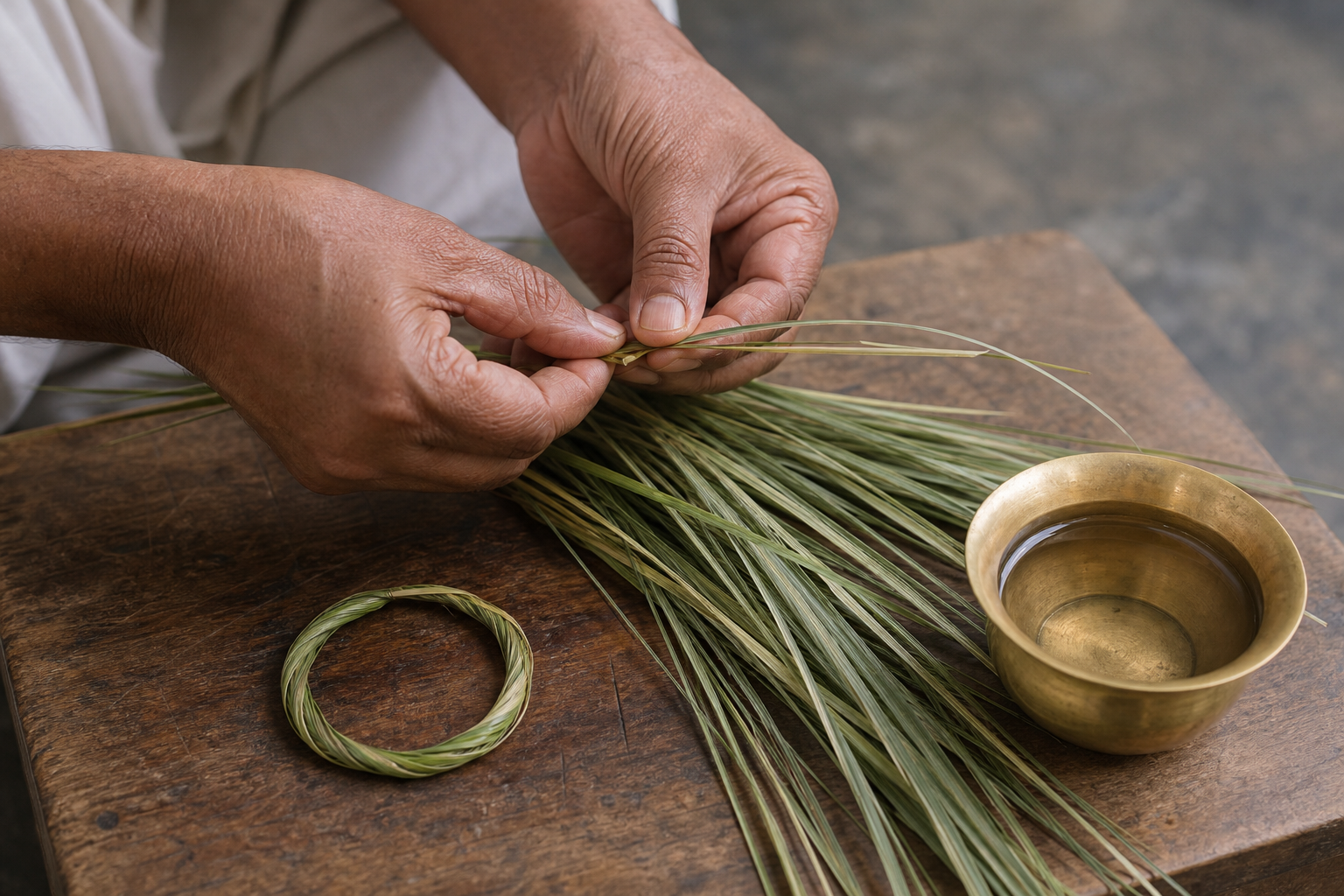
When you have received a definite procedure, follow it as taught. When you are still learning, use this sequence to discover what must be confirmed rather than treating it as a substitute for lineage-specific instruction.
- Begin with cleanliness. Wash your hands and complete whatever bodily and ritual purification your practice requires. The pavitra should enter an already mindful preparation, not become a shortcut around it.
- Use clean kusha prepared for sacred use. The customary form is made by twisting fresh darbha into a ring. If you have not been taught the method used by your tradition, ask someone who has rather than guessing from appearance alone.
- Sanctify it as prescribed. Purified water and a purification mantra may be used. The mantra beginning apavitraḥ pavitro vā is frequent in this setting, but its use should follow the ritual sequence you have received.
- Confirm the hand and finger. The anāmikā, or ring finger, of the right hand is common. Some traditions prescribe the left hand or another finger for particular rites. Common does not mean universal.
- Reconnect it to the sankalpa. As you put the ring on, recollect what you are about to do, for whom it is being done, and the devotional or dharmic intention behind it.
- Remain attentive after it is worn. Treat the pavitra as a ritual implement. Let noticing it bring your mind back when attention wanders instead of allowing it to become an unnoticed accessory.
The fourth step prevents the most common practical mistake. A person observes a right-hand custom in one ceremony and assumes that every pavitra must always be worn that way. Hindu ritual practice is structured by context. The correct hand or finger is therefore the one prescribed for your rite, not necessarily the one seen most often elsewhere.
The fifth step prevents a subtler mistake. The ring is not the sankalpa itself. You can wear the material correctly while remaining distracted, impatient, or careless in speech. When that happens, the outer sign has been retained but its disciplinary purpose has been missed. Use the touch of the grass as a prompt to return to steadiness.
When kusha is unavailable, do not assume a substitute
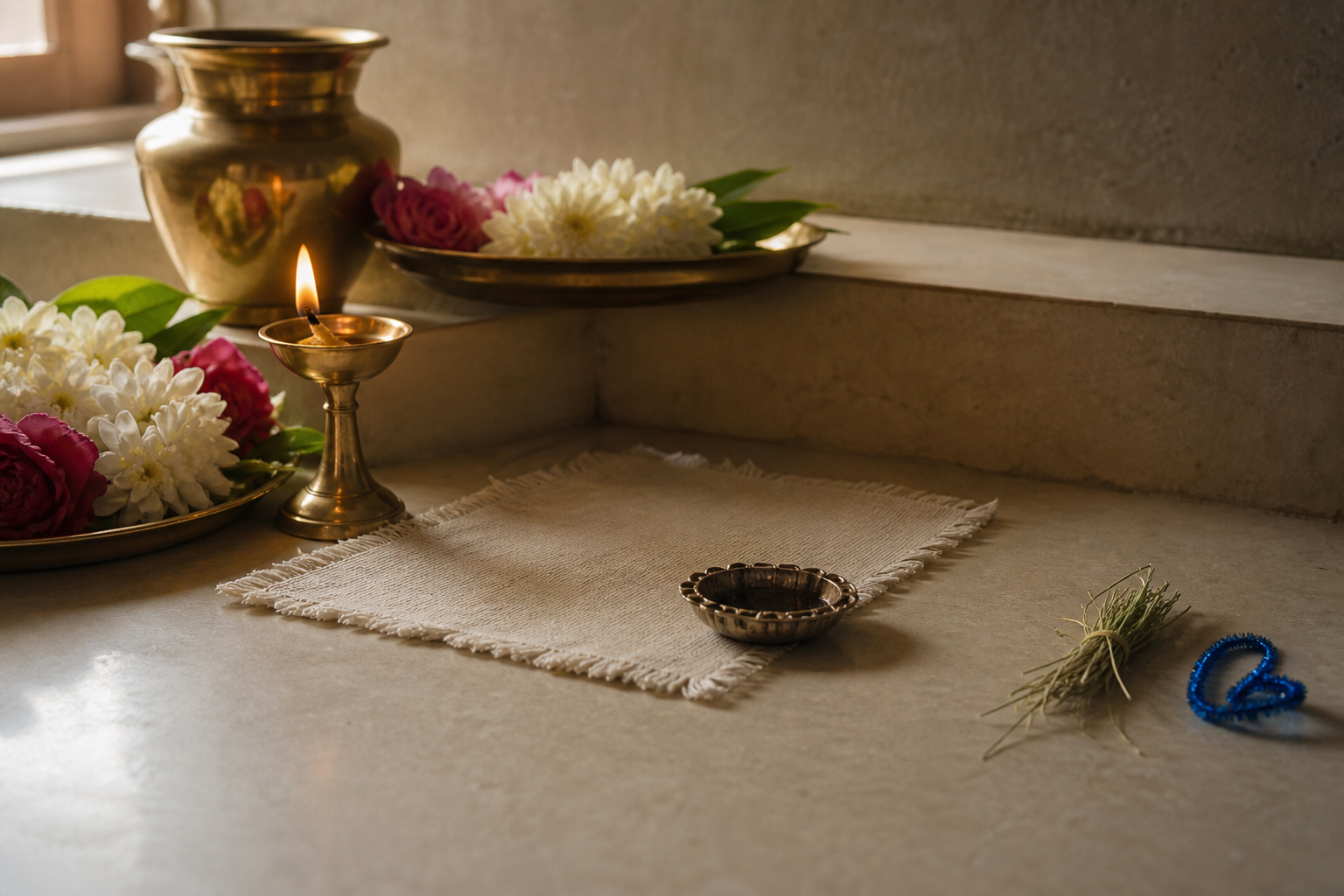
Access to clean kusha is not equally easy in every household or country. Some lineages permit a clean cotton thread or a purified metal ring as a temporary substitute. That allowance belongs to those lineages; it is not automatic permission to replace darbha in every ritual.
Use the following order of decision:
- Ask whether your family, guru, or officiating priest permits a substitute for this specific rite.
- If a substitute is allowed, confirm which material and purification procedure are expected.
- If the rite is formal, ancestral, or officiated, obtain an answer before it begins rather than making a silent change midway.
- If no instruction is available, do not declare another object ritually equivalent on your own. Preserve cleanliness and sincerity, then obtain proper kusha and guidance for the next observance.
This distinction protects both adaptability and continuity. A tradition can make a practical accommodation without teaching that material, method, and lineage no longer matter. Intention is central, but sincere intention includes the humility to ask how a received practice is actually performed.
Key takeaways for your next ritual
- A pavitra is a ritual aid made traditionally from kusha or darbha, not an ornamental ring or independent talisman.
- Its practical work is to mark sacred attention, reinforce śuddhi, and keep your sankalpa present through the rite.
- The right anāmikā is common, but your sampradaya or the particular ritual may prescribe another hand or finger.
- Daily worship, homa, samskaras, and pitṛ-karmas should not be assumed to share one identical procedure.
- Cotton thread or a purified metal ring is acceptable only where the governing tradition permits that substitution.
- When uncertain, ask the person responsible for transmitting or officiating the rite before copying a rule from another lineage.
Before your next ritual, make one concrete check: ask exactly which hand, finger, preparation, and mantra your tradition requires. That brief act of clarification is already part of the pavitra’s discipline. It replaces guesswork with attention and turns a small ring of grass into a conscious commitment to perform sacred action well.
References
