
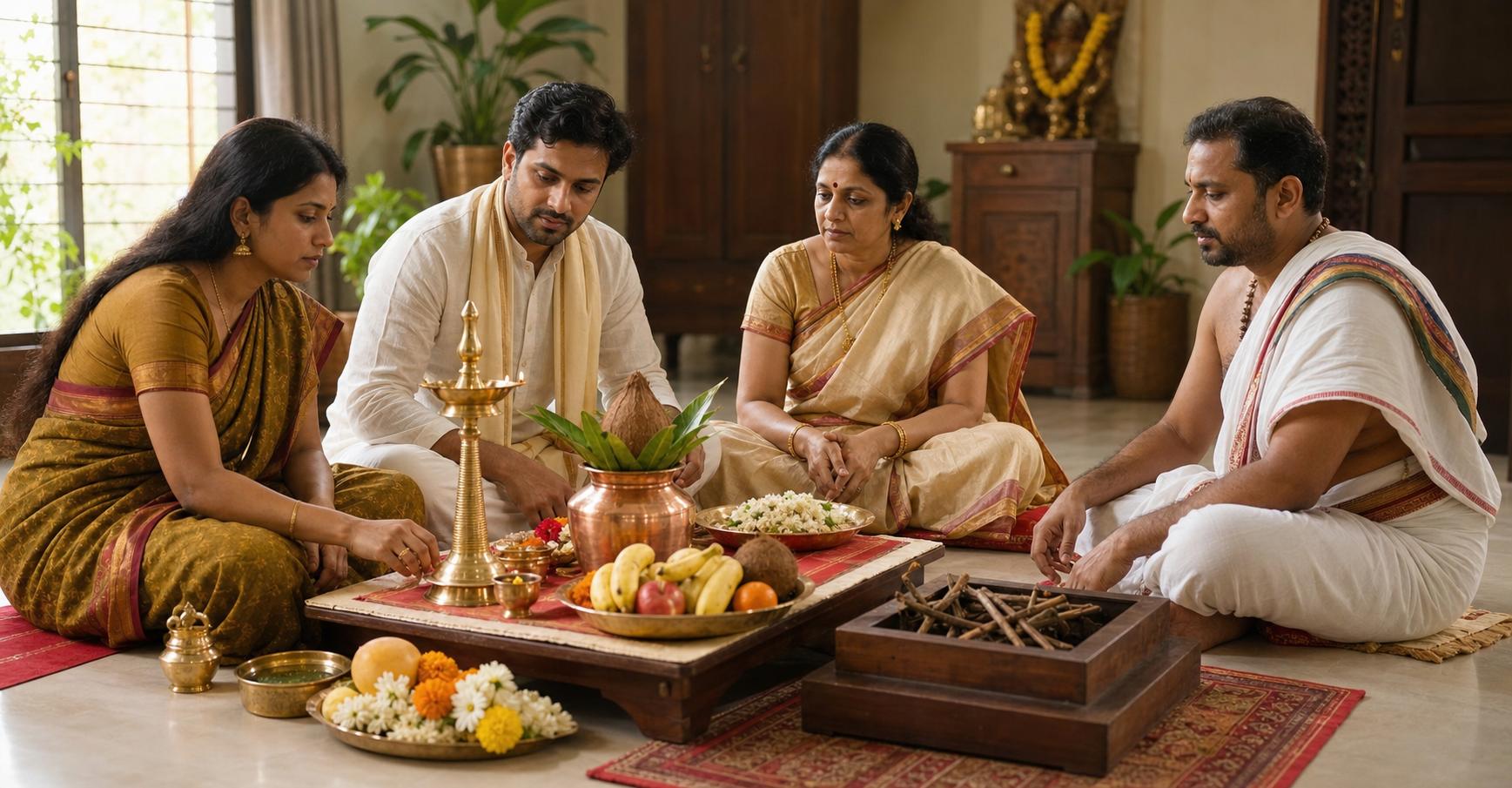
You may have a defined wish, a family concern, or an uneasy sense that worship has become careless. Someone recommends a puja, homa, vrata, or temple observance. The first question is not simply which ceremony to perform. It is what the rite is for, whether its intention is dharmic, and what responsibility you will accept once the final offering is made.
Hindu ritual holds purpose, purification, and ethics together. Purpose gives the rite direction. Purification prepares the participants and repairs inadvertent lapses. Ethics prevents sacred practice from becoming a transaction for getting whatever the mind happens to want. Keeping all three in view will help you frame a sound sankalpa, speak clearly with an officiating priest, and carry the worship into daily conduct.
Choose the rite by its purpose, not by its popularity

Begin by identifying what kind of obligation or intention brought you to the ritual. A recurring duty is not the same as an occasional observance, and neither is identical to a desire-oriented sacrifice. Classical ritual language distinguishes among three useful categories:
- Nitya: recurring or obligatory worship. Its purpose is faithful continuity, not the pursuit of a special result.
- Naimittika: an observance undertaken because a particular occasion or circumstance has arisen.
- Kamya: a voluntarily chosen rite directed toward a defined aspiration. Kamyeshti, also written Kameshti, belongs to this desire-oriented field and may be associated with aspirations such as progeny, health, prosperity, clarity of mind, or spiritual progress.
These categories are not interchangeable menu labels. If your concern is an omission in established temple worship, a new prosperity ceremony may not address it. If you are fulfilling a daily responsibility, you should not judge the worship as unsuccessful merely because it did not produce an extraordinary event. If you seek a particular outcome, hiding that desire beneath vague spiritual language prevents the sankalpa from doing its work of examining and refining the desire.
Names, procedures, and boundaries can differ across sampradayas, regions, and Shrauta, Grihya, or Agamic settings. Do not select a complex rite from a generic online checklist and then search for someone willing to perform it. Describe the occasion, your family tradition, and your actual concern to a qualified priest or acharya first. Let the ritual form follow the purpose and lineage.
Turn a wish into a defensible sankalpa
Sankalpa is more than announcing the result you want. It places the desire within sacred order and makes you responsible for the manner in which you pursue it. Before the formal wording is prepared, write the intention in ordinary language and test it with four questions:
- What am I asking for? State one intelligible aim rather than a cloud of unrelated wishes.
- Who could be affected? Include the dignity and welfare of family members, colleagues, neighbors, and other beings.
- What rightful effort belongs to me? Name the work, care, restraint, study, conversation, or service that must accompany the prayer.
- What if the desired result does not arrive in the form I expect? A dharmic vow cannot depend on abandoning truth, worship, or duty when the outcome remains uncertain.
A request for professional advancement, for example, should not silently include the humiliation of a colleague or permission to deceive. It can be framed around honest work, suitable responsibility, useful service, and livelihood obtained without injury or fraud. A rite concerning childbearing must protect the consent and dignity of those most affected; sacred longing must never become a reason to blame or coerce a spouse. A health-related observance may support prayer, courage, and steadiness, but it should not delay examination or treatment by a qualified health professional.
The officiant will determine the appropriate liturgical formula. Your task is to understand the intention well enough that the Sanskrit words do not become a substitute for moral clarity.
Purification means preparation, accuracy, and honest repair
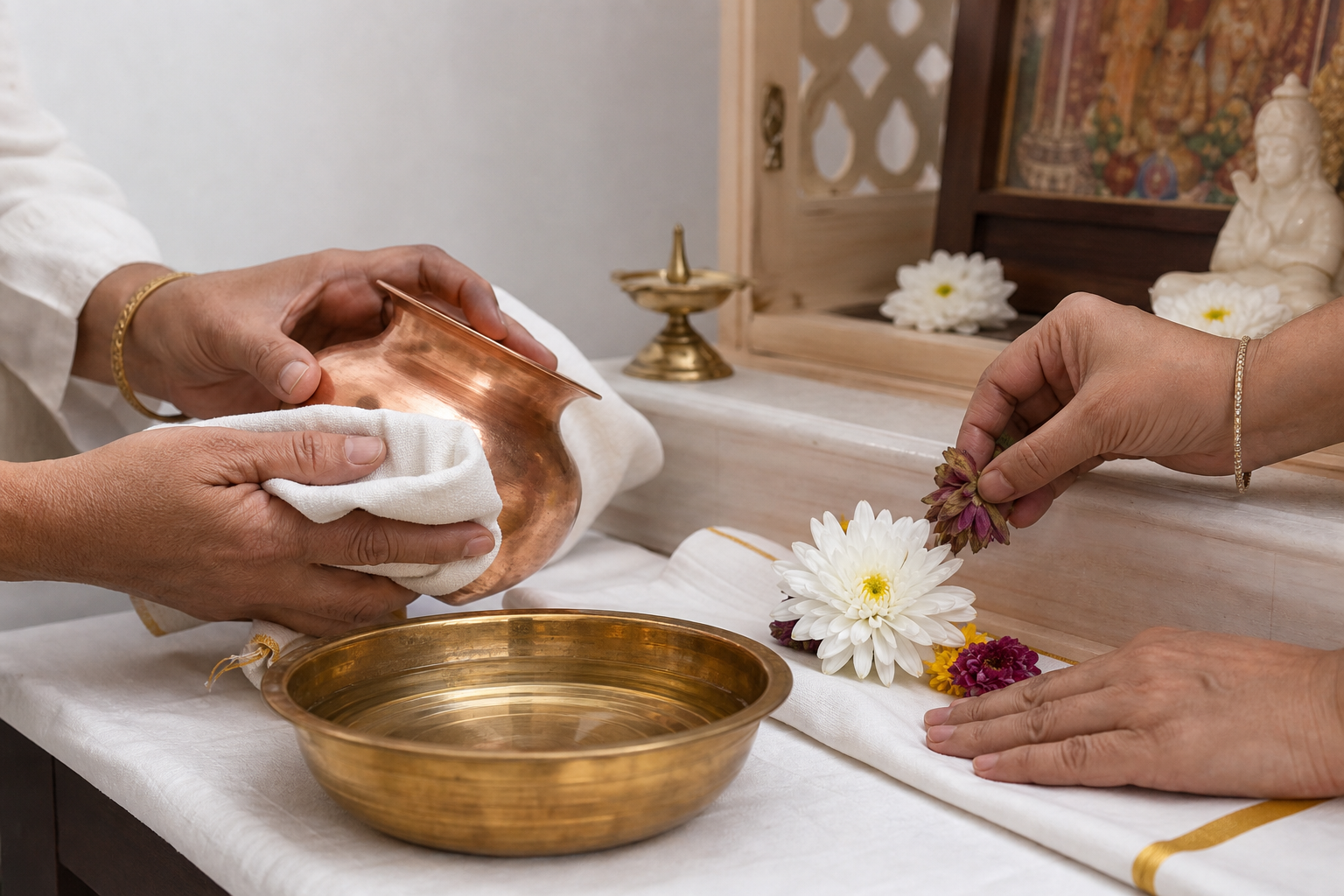
Purification is sometimes reduced to bathing, clean clothing, or an orderly altar. Those things matter, but ritual purity has a wider practical structure. It includes preparing the participants and space, handling the prescribed materials properly, maintaining attention during recitation and offering, and acknowledging mistakes when they occur.
A household homa and a major temple observance will not use identical procedures. Depending on the tradition, preliminary acts may include ritual bathing, space purification, a kalasha, mantra-japa, and the preparation of an authorized fire offering. A Kamyeshti sequence may include sankalpa, purificatory acts, mantra recitation, oblations into the havan kund, and dakshina for the officiating ritviks. Ghee, grains, and herbs are among the materials commonly used, but that does not authorize participants to add unprescribed substances to the fire. Ask what is required and why before buying or bringing anything.
Accuracy matters because ritual is received discipline, not improvised symbolism. Pronunciation, timing, the order of acts, the roles of participants, and the handling of offerings may all carry lineage-specific requirements. At the same time, Hindu ritual culture recognizes a basic human fact: even attentive worshippers and trained officiants can make inadvertent errors.
Pavitraropana Vrata provides a formal pattern of expiation and renewal for omissions or defects that may have entered temple or household worship. Often observed annually and frequently associated with Shravana, though local calendars vary, it centers on a pavitra: a cotton or wool cord consecrated through mantra and homa and then invested upon the murti and, in many settings, related temple icons. The wider observance may include preliminary purification, kalasha establishment, purificatory mantras, homa for dosha-nivarana, adornment of the deity, prasada, and dana.
The significance of correction is easy to misunderstand. Prayaschitta is not permission to be negligent because a later ceremony can supposedly erase every problem. It is disciplined recognition that a lapse occurred and that sacred order requires restoration. A temple can therefore use an annual purification observance as a checkpoint: Were daily services performed consistently? Did recurring mistakes reveal a need for training, better preparation, or clearer responsibility? If nothing changes after the ceremony, the opportunity for renewal has been only partly accepted.
You should also distinguish ritual defects from injuries done to people. A corrective rite may address an inadvertent omission, mispronunciation, or procedural fault. It does not replace admitting a lie, returning what was taken, apologizing to someone harmed, or changing conduct that continues to cause injury. External purification and ethical restitution can support one another, but they are not interchangeable.
Use five ethical tests before making the offering
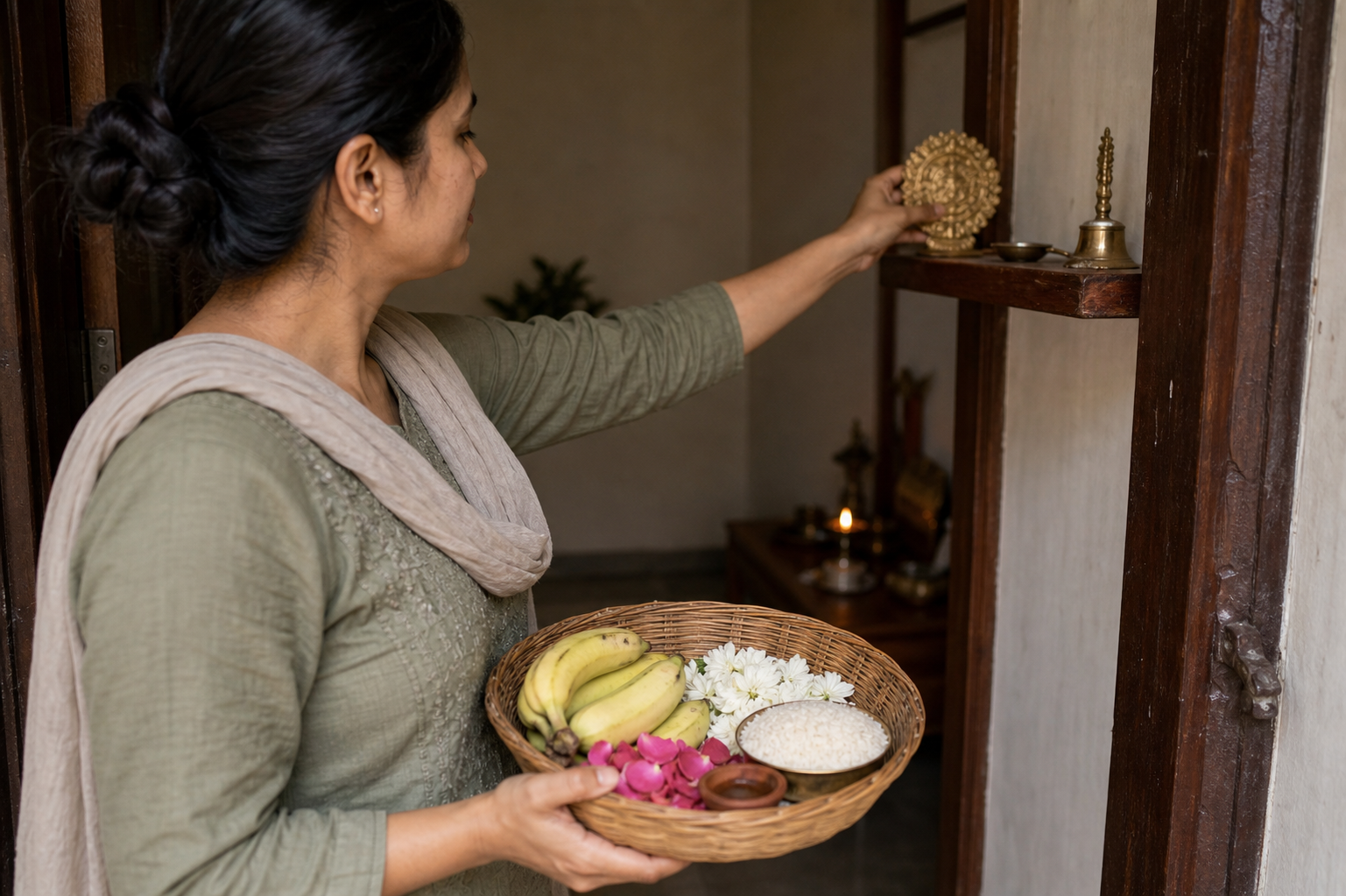
Desire itself is not treated as a disqualification from sacred life. The householder has real responsibilities involving family, livelihood, health, education, and community. Kamya ritual acknowledges these concerns while requiring that desire submit to dharma. The crucial question is not merely whether you want something intensely. It is whether the intention, the means, and the conduct surrounding it can withstand ethical examination.
- The dharma test: Would attaining this result require falsehood, exploitation, betrayal of duty, or another form of adharma? A ritual cannot make a wrongful means righteous.
- The ahimsa test: Have harm and waste been reduced within the requirements of the tradition? Many contemporary observances favor plant-based oblations, environmentally responsible materials, and a sattvic intention. If a requested material troubles you, discuss it before the ceremony rather than interrupting the rite or silently violating your conscience.
- The welfare test: Does the wish consider more than private gain? Lokasangraha directs attention toward social well-being and the maintenance of a livable moral order. A desire that transfers serious harm to others needs refinement, even when it promises an advantage to you.
- The attachment test: Can you perform the rite faithfully without treating the deity as a party to a bargain? You may ask sincerely for a result while remaining obligated to right conduct if events unfold differently.
- The accountability test: What visible duty will accompany the offering? Dana, seva, restraint, truthful speech, study, or repaired relationships should be connected to the sankalpa rather than added later as decoration.
Dakshina and dana deserve clarity as well. Dakshina recognizes the work and ritual responsibility of officiating priests; dana extends generosity beyond the immediate exchange. Ask in advance about the expected materials, honorarium, and charitable component. A family should not be pressured into unmanageable debt or made to believe that a more expensive ceremony guarantees a stronger result. Sacred precision and financial opacity are not the same thing.
The same ethical movement from acknowledgment to recommitment appears in distinct forms across the dharmic family. Buddhist Uposatha emphasizes ethical renewal, Jain Pratikraman joins reflection with repentance and correction, and Sikh Ardas is carried into humility and seva. These practices are not theologically identical to Hindu prayaschitta or yajna. Their kinship lies in refusing to separate sacred observance from the discipline of conduct.
Plan the ritual and its aftermath as one undertaking
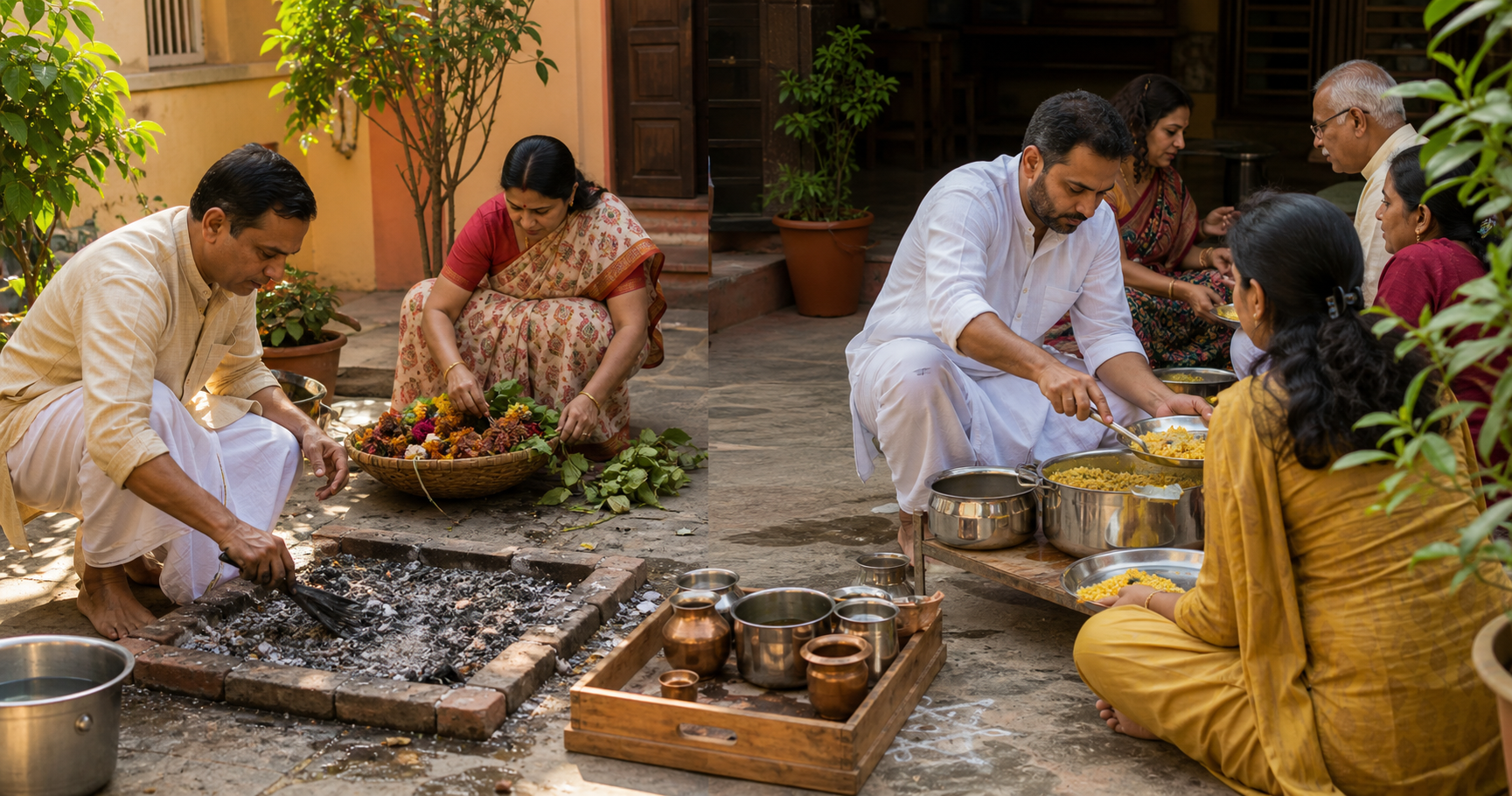
A ceremony is easier to organize when you separate what must be decided by the tradition from what must be decided by you. The priest determines the authorized liturgical form. You remain responsible for an honest intention, informed participation, practical preparation, and the actions that follow.
- Describe the situation before naming a solution. Tell the priest whether this concerns a recurring duty, a particular occasion, a desired result, or a suspected lapse in worship.
- Identify the governing tradition. Clarify the family’s sampradaya and whether the rite belongs to a household, Grihya, Shrauta, Agamic, or temple context. Do not combine procedures merely because they look similar.
- Request the full sequence. Ask which preliminary disciplines, mantras, offerings, participants, and concluding acts are required. Find out what you may recite or offer and what must be performed by trained ritviks.
- Review materials and logistics. Confirm quantities with the officiant, use only approved offerings, learn how remnants will be handled, and agree on dakshina and dana before the day of worship.
- Write the intention plainly. Reduce it to a specific aim, the people affected, the rightful effort you will make, and the ethical boundary you will not cross.
- Choose one corresponding discipline. Link the sankalpa to a concrete act of truthfulness, restraint, charity, service, study, or restitution. Make it proportionate enough to be kept rather than impressive enough to be abandoned.
- Act promptly after completion. Take the first ordinary step that belongs to the prayer. Submit the honest application connected with a livelihood rite, follow qualified care connected with a health prayer, begin the promised study connected with a request for clarity, or make the apology connected with reconciliation.
During the ceremony, attention is part of participation. Silence unnecessary devices, understand the broad movement of the rite beforehand, and listen for the moment when your sankalpa is formally made. If you do not understand an instruction, ask before the rite begins rather than copying another participant mechanically.
Afterward, do not measure the whole event only by whether the desired outcome appeared quickly. For a devotee, yajna, puja, and vrata are encounters with the sacred, not techniques reducible to self-help. Yet their ethical fruit should still become visible. Look for greater steadiness, humility, precision in duty, and willingness to serve. If the ritual leaves greed, blame, or negligence untouched, return to the sankalpa and ask which responsibility was omitted.
For a temple committee, the corresponding action is institutional. Record recurring procedural difficulties, clarify roles, replenish proper materials, support priestly discipline, and correct conditions that produced avoidable lapses. Pavitraropana is most meaningful when the visible renewal of the deity’s adornment is accompanied by renewed care for nitya-kainkarya.
Key takeaways
- Identify whether you are fulfilling a recurring duty, observing a particular occasion, seeking a defined result, or correcting a ritual lapse before selecting the ceremony.
- Make the sankalpa precise enough to expose who benefits, who could be harmed, and what rightful effort belongs to you.
- Treat purification as preparation, procedural care, and truthful correction, not as a claim that human error never occurs.
- Do not use prayaschitta to avoid apology, restitution, retraining, or another practical repair demanded by the lapse.
- Test every desire against dharma, ahimsa, shared welfare, non-attachment, and accountability.
- Connect worship to one concrete act of dana, seva, restraint, study, care, or repaired conduct, and begin it without waiting for a sign.
Before arranging your next rite, write four lines: the purpose, the people affected, the ethical limit, and the action you will take afterward. Bring those lines to the officiant. A clear conversation at that stage can turn ritual from a search for control into disciplined participation in dharma.
References
- DharmaRenaissance Blog — Kamyeshti (Kameshti) in Hinduism: A Sacred Guide to Vedic Desire-Rituals and Their Ethics
- DharmaRenaissance Blog — Pavitraropana Vrata: A Powerful Temple Ritual of Purification, Renewal, and Unity
