
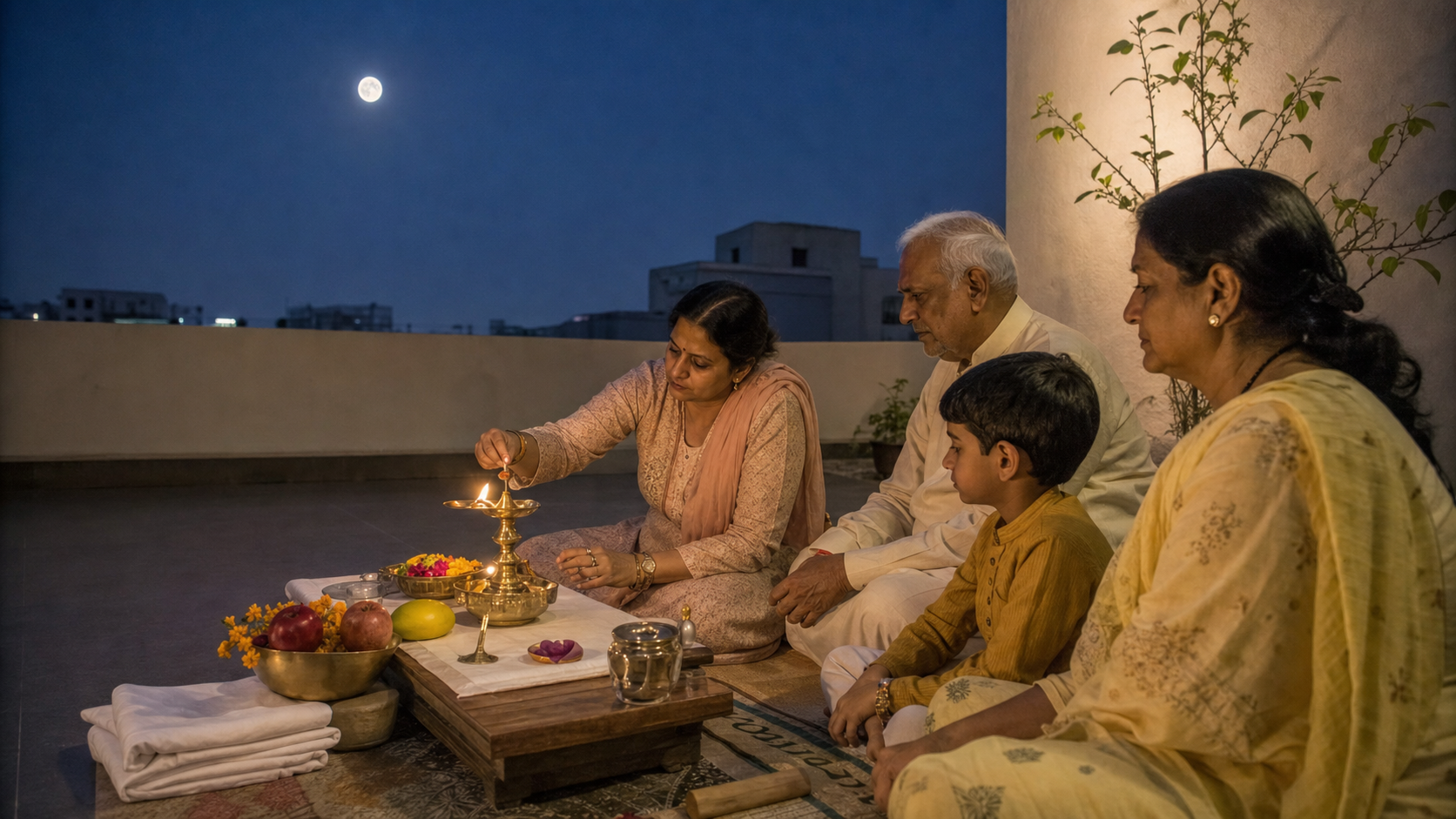
You are probably not wondering whether Purnima matters. You are trying to decide which evening to reserve, whether to fast, what to do at home, and which calendar to trust. Those decisions belong together because the correct civil date depends on your location and the observance rule followed by your family or temple.
The most reliable approach for 2026 is to build one local calendar, choose a sustainable monthly practice, and prepare separately for the major Purnimas. That gives you a rhythm you can actually keep instead of twelve last-minute searches.
The correct Purnima date depends on your location
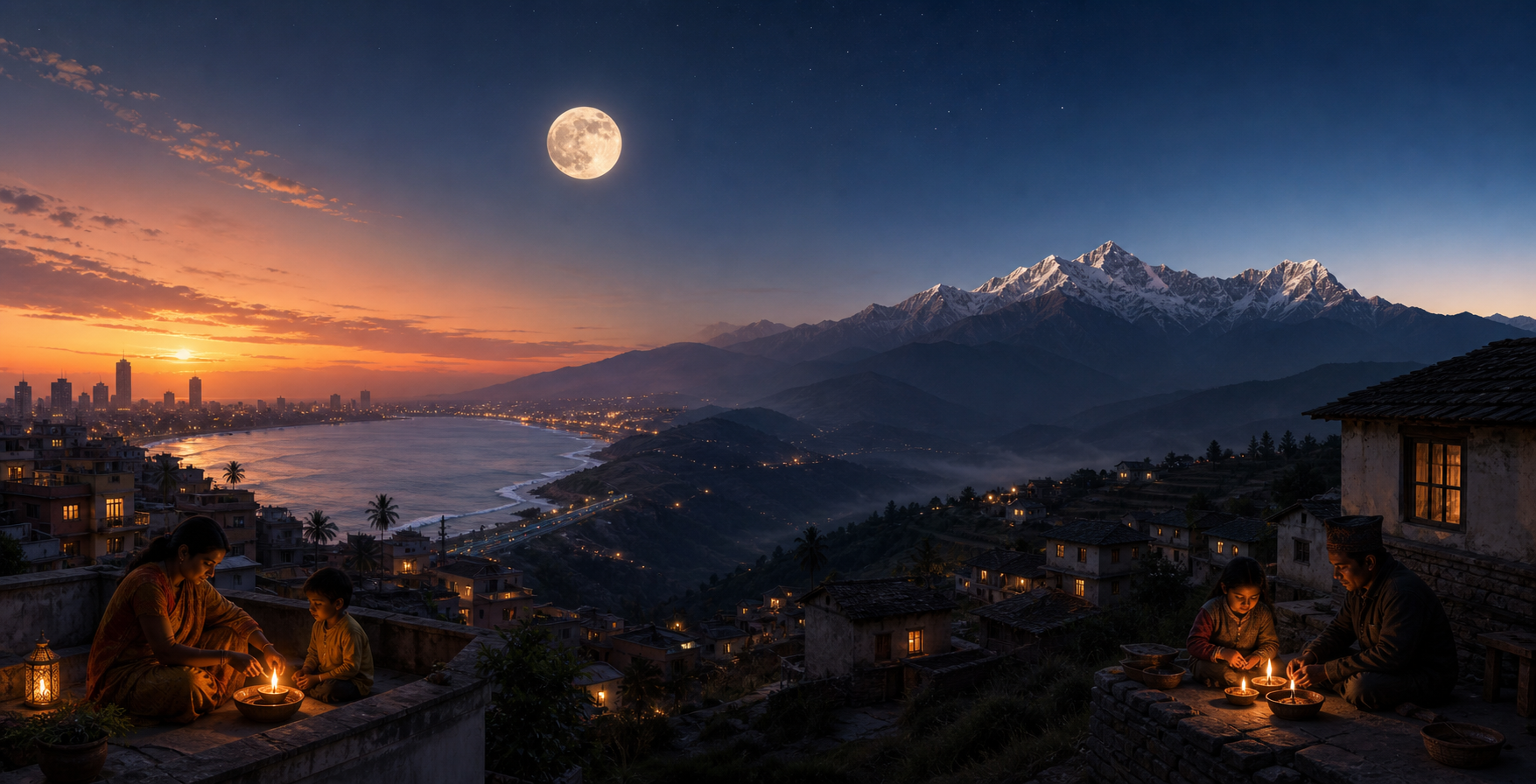
Purnima is the fifteenth tithi of Shukla Paksha, the waxing half of the Hindu lunar month. The observance is therefore tied to a lunar tithi, not merely to the date beside a full-moon symbol on a general-purpose calendar.
This distinction matters because a Purnima tithi may begin on one civil date and end on the next. Local sunrise, sunset, moonrise, time zone, and Panchang conventions can affect the day chosen for the vrat or evening worship. A date copied from a calendar prepared for another city may therefore be unsuitable for your household.
Communities also do not all apply the same observance rule. Some follow the formal tithi boundaries closely. Others emphasize the evening on which Chandra darshan is possible. A temple may schedule Satyanarayana Puja according to its established regional tradition. These choices are not necessarily errors; they reflect different ways of applying the lunar calendar.
Before entering any 2026 date in your calendar, answer three questions:
- For which city and time zone was the Panchang calculated?
- When does Purnima tithi begin and end locally?
- Does your family or temple follow the tithi at a particular time, the evening of moonrise, or another inherited convention?
Use one trusted regional Panchang or temple calendar consistently. Do not combine a tithi beginning time from one almanac, a civil date from another, and moonrise from a third without confirming that all three use the same location. If you will be travelling, check the calendar for the place where you will actually observe the vrat.
You may encounter the same observance under names such as Pournami, Puranmashi, Poonam, Veluthu Vavu, and Hunnime. When contacting a local temple, using the familiar regional name can make it easier to confirm the schedule and customary vidhi.
Build your 2026 Purnima calendar only once
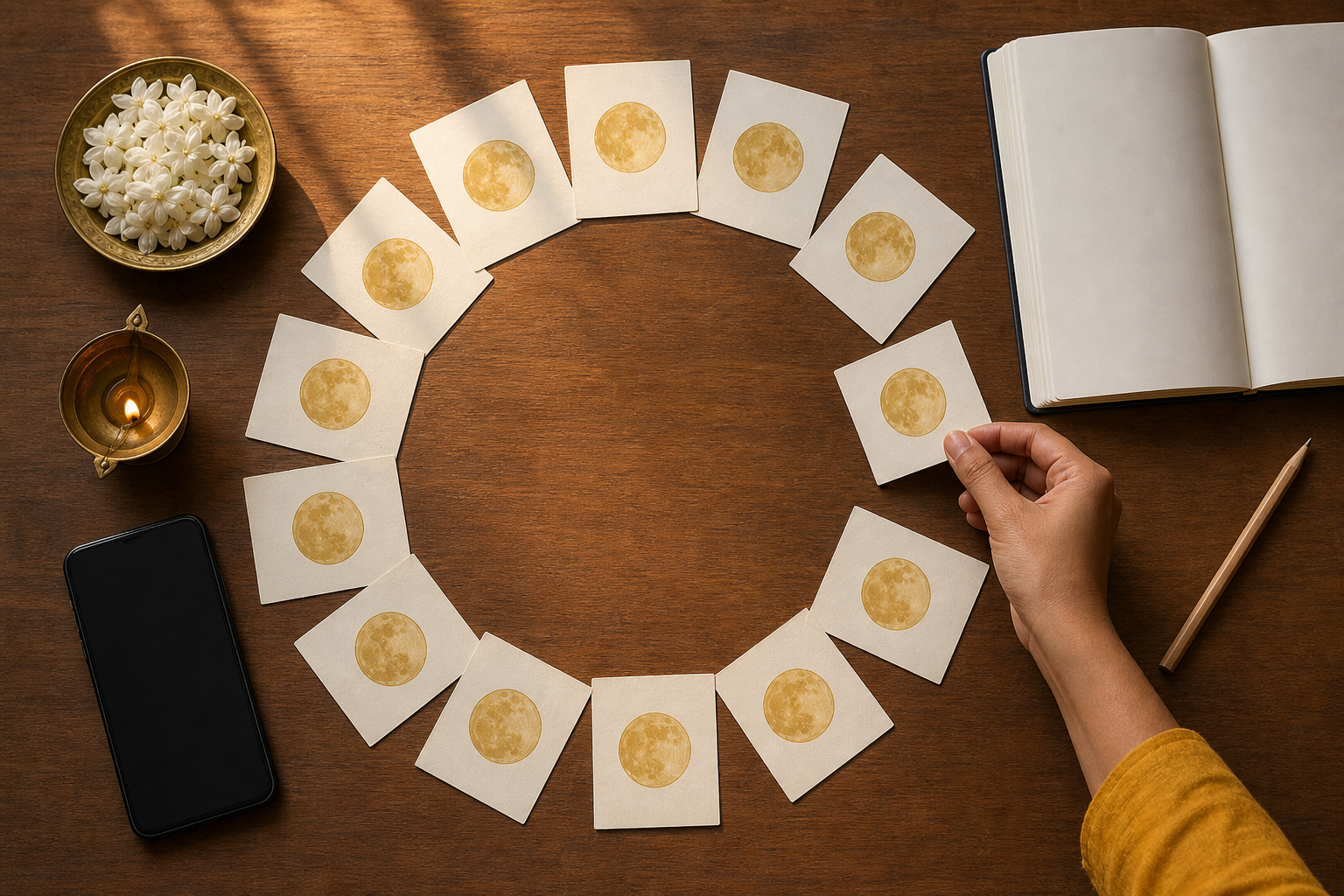
Most Panchang traditions show twelve Purnima tithis across the lunar year. The normal month-wise sequence is Paush, Magha, Phalguna, Chaitra, Vaishakha, Jyeshtha, Ashadha, Shravana, Bhadrapada, Ashwin, Kartik, and Margashirsha. Treat that sequence as your planning framework, but obtain the corresponding civil dates from your local Panchang.
A useful personal calendar records more than the word “Purnima.” Capture the information that will govern what you actually do:
| Calendar field | Why it matters |
|---|---|
| Hindu lunar month | Identifies the monthly Purnima and any special observance attached to it. |
| Local civil date | Shows the day on which your household will keep the vrat or puja. |
| Tithi beginning and ending times | Explains why two calendars may appear to select different dates. |
| Local moonrise | Helps when Chandra darshan forms part of your observance. |
| Temple programme | Prevents a private calendar from conflicting with a community Satyanarayana Puja, satsang, or kirtan. |
| Your chosen practice | Turns the date into a commitment: fasting, parayanam, puja, meditation, or daan. |
Set up the year in this order:
- Select a Panchang calculated for your location and tradition.
- Enter each lunar month, its local observance date, and the tithi limits.
- Add moonrise only if Chandra darshan or evening worship is part of your practice.
- Check the local temple calendar for collective pujas and readings.
- Mark the previous evening as your preparation point for food, offerings, reading materials, and charity.
- Recheck the entry before each observance in case the temple has issued a more specific local schedule.
Intercalation is another reason not to rely on a generic list. A Hindu lunar year can occasionally include an adhika masa and an additional Full Moon associated with it. Do not assume that an extra observance applies, or that it does not, without checking the regional Panchang you have chosen.
Use a Purnima routine you can sustain every month
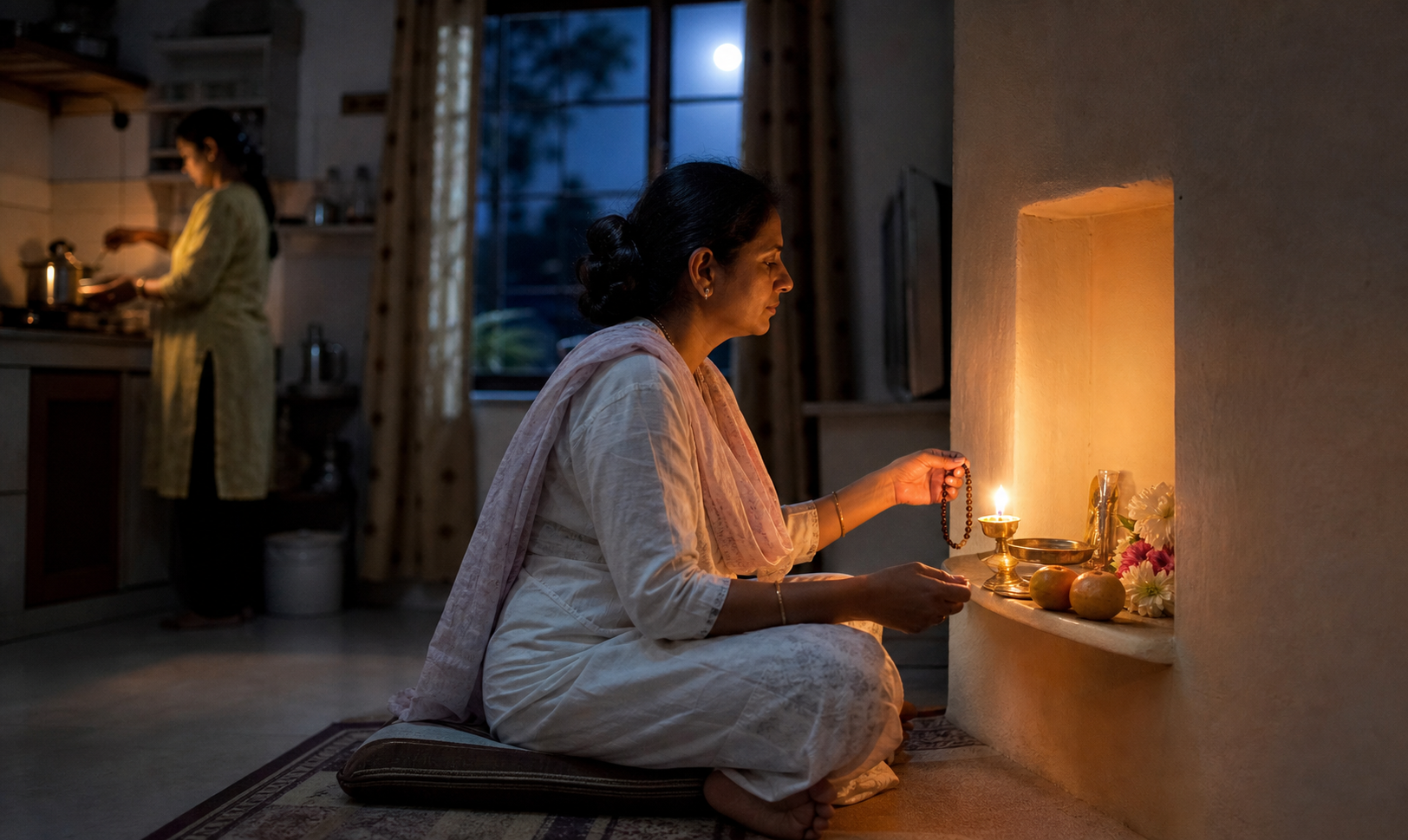
A monthly vrata works best when the core practice is clear before the day begins. Elaborate worship may be appropriate for your family, but complexity is not the measure of sincerity. Establish a minimum observance that remains possible during work, travel, caregiving, or periods of poor health.
A traditional home sequence can be arranged as follows:
- Begin with snan and sankalpa. Bathe, prepare a clean worship space, and state the resolve you are undertaking. Make the sankalpa specific enough to keep: fasting according to your capacity, completing a chosen recitation, offering puja, or performing daan.
- Keep the day sattvic. Follow the form of fasting accepted in your household, or take simple sattvic food when a stricter fast is inappropriate. Restrain speech and conduct as deliberately as food; the vrata loses much of its meaning if dietary control is paired with anger or carelessness.
- Choose one sustained devotional practice. Vishnu Sahasranama, a reading from the Bhagavad Gita, mantra japa, or another established family parayanam gives the day a centre. Select the practice in advance rather than collecting several texts you will not finish.
- Gather for evening worship. Households that keep Satyanarayana Puja should follow their inherited procedure or the direction of a qualified temple or purohit. Others may light a lamp, offer prayer, attend satsang or kirtan, meditate quietly, and undertake Chandra darshan when local conditions and tradition permit.
- Complete the observance with daan or seva. Food, grains, clothing, or direct service can carry the vrata beyond the worship room. Decide on the recipient before Purnima so that charity is not reduced to a vague intention.
If the full sequence is not possible, keep a smaller but coherent observance: clean the worship space, light a lamp, make a short sankalpa, complete one chosen recitation or period of japa, and perform one act of charity. It is better to keep this faithfully than to abandon Purnima because an elaborate arrangement cannot be completed.
Fasting should not become a test of physical endurance. If it conflicts with your health needs or prescribed care, retain the devotional discipline while using suitable sattvic meals. When you are unsure whether fasting is safe for you, seek guidance from an appropriate clinician and adapt the vrata rather than neglecting necessary care.
Give the major Purnimas a distinct intention
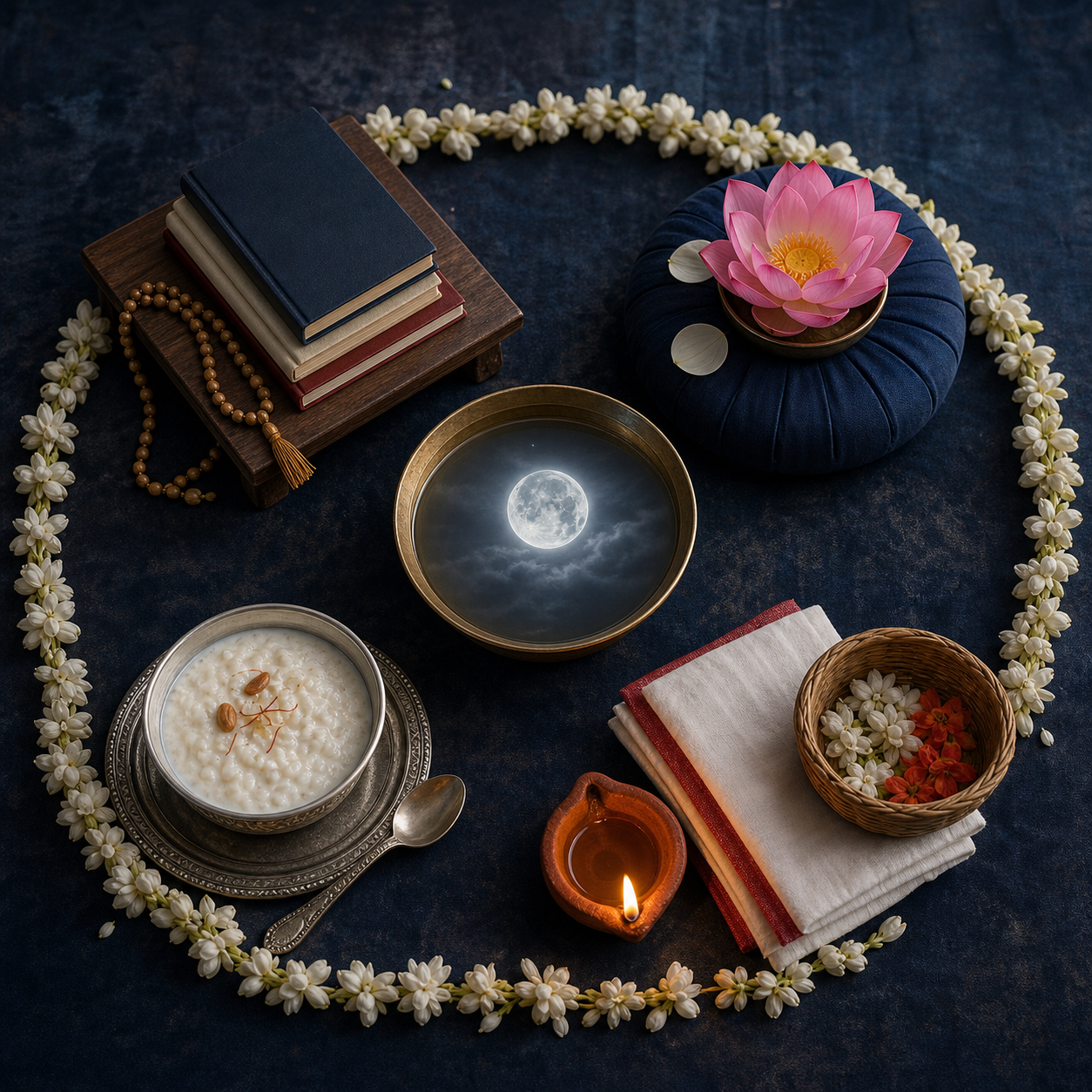
Keeping the same foundation each month creates continuity. The major Full Moon observances can then receive an additional emphasis without forcing every Purnima into an elaborate festival.
- Guru Purnima: Honour the guru, teachers, and lineage through which knowledge has reached you. Offer gratitude, renew a neglected discipline, or resume the serious study of a text instead of limiting the day to a ceremonial greeting.
- Sharad Purnima: Centre the evening on divine love, inward quiet, and the traditional association with cool moonlight. Let the contemplative mood shape the observance rather than turning moonlight itself into an unsupported medical remedy.
- Kartik Purnima: Emphasize purity, pilgrimage where appropriate, temple worship, and lamp offerings. If travel is not practical, a carefully prepared home or temple lamp offering still gives the day a definite form.
- Magha Purnima: Give particular attention to sacred bathing and charity. Prepare the act of giving beforehand so that the recipient and gift are both suitable.
- Vaishakha Full Moon: Buddhist communities observe Vesak on this Full Moon. Respect the occasion through the tradition in which you stand, and allow its emphasis on contemplation and compassion to deepen mutual understanding.
- Jain Full Moon practice: Full Moon days can support vrata, pratikraman, and scriptural study within Jain traditions. These disciplines should be honoured on their own terms rather than folded into a generic composite ritual.
The dharmic family shares a lunar rhythm, but it does not require every community to perform the same liturgy. Hindu, Buddhist, and Jain observances can illuminate related values such as discipline, compassion, study, and service while retaining their distinct forms. That is a stronger basis for unity than erasing the differences.
Key takeaways for your 2026 observances
- Purnima is governed by the local lunar tithi, so a universal civil-date list is not sufficient for every city.
- Choose one regional Panchang and record the observance date, tithi limits, moonrise when relevant, and temple schedule.
- Keep a repeatable core of snan, sankalpa, sattvic discipline, prayer or recitation, evening worship, and daan.
- Adapt fasting when health or prescribed care requires it; the vrata need not depend on physical severity.
- Prepare separately for Guru, Sharad, Kartik, Magha, and Vaishakha Full Moons rather than treating every Purnima identically.
- Respect the shared lunar rhythm of dharmic traditions without blending their distinct observances into one invented practice.
Your next step is simple: open the Panchang used by your local temple, enter the remaining 2026 Purnimas with their tithi limits, and write one achievable practice beside each date. Once that decision is made in advance, Purnima becomes a lived monthly discipline rather than another notification you notice too late.
References
