

If you are arranging puja, japa, a family prayer, or a temple visit on January 1, the decisive detail is not whether the whole date carries one fixed character. The tithi changes during the evening.
On Thursday, January 1, 2026, Shukla Paksha Trayodashi prevails until 8:29 PM, followed by Shukla Paksha Chaturdashi. That gives you a simple working plan: complete a Trayodashi observance before the transition, or begin a Chaturdashi-focused practice after it. If the tithi must be exact for a formal vrata or temple ritual, confirm the cutoff in a Panchang calculated for your location.
Read the date as two periods, not one label
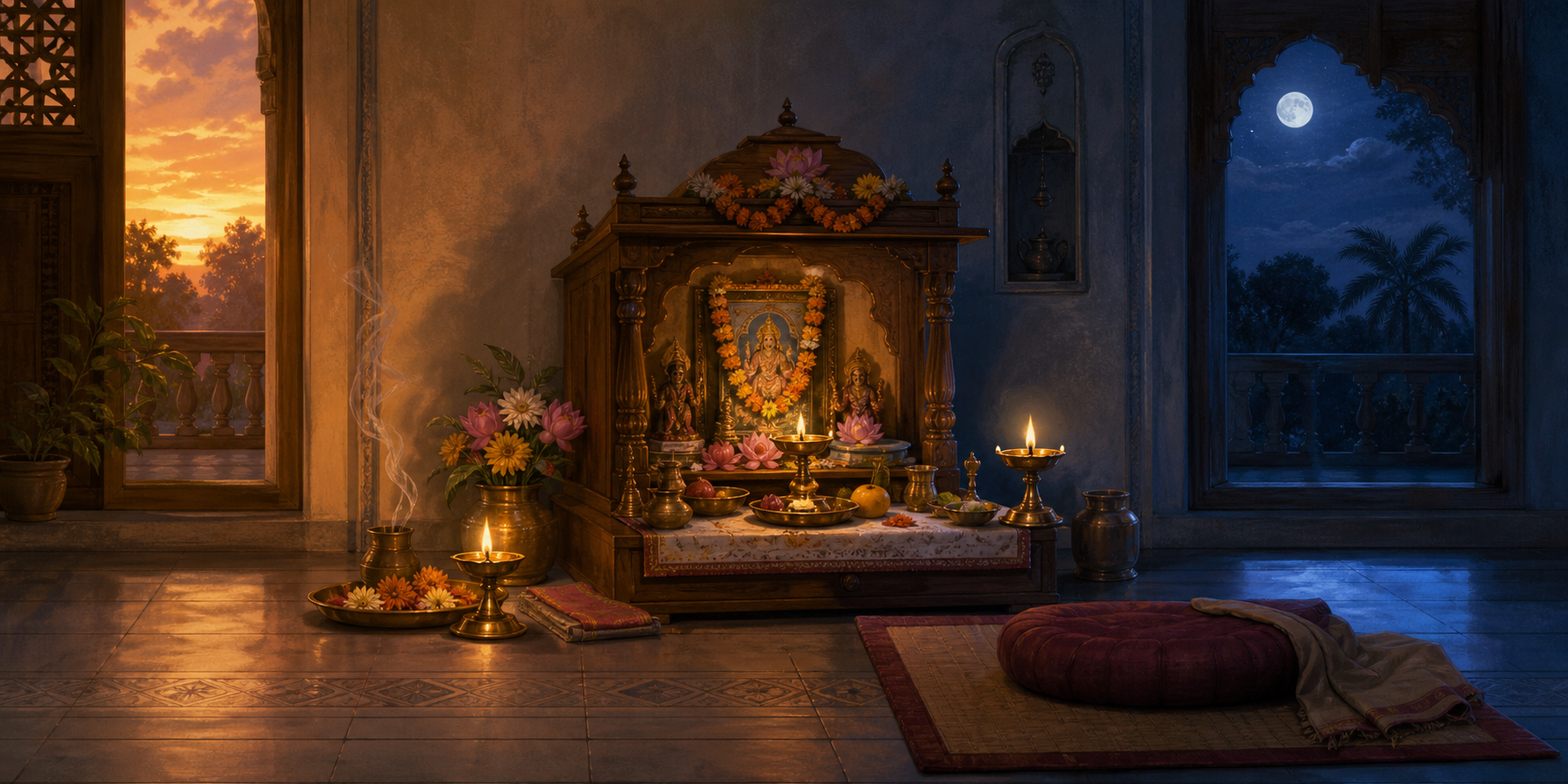
A civil date begins and ends at midnight. A tithi does not follow that boundary. It reflects the changing angular relationship between the Sun and Moon, so one civil date can contain parts of two tithis. This is why simply writing “Trayodashi” beside January 1 is incomplete.
Shukla Paksha is the waxing half of the lunar cycle. On this date, its thirteenth tithi gives way to its fourteenth. The transition, rather than midnight, is the practical dividing line for your observance.
| Period on January 1 | Prevailing tithi | Practical devotional emphasis |
|---|---|---|
| Before 8:29 PM | Shukla Paksha Trayodashi | Regular worship, disciplined work, seva, and an evening prayer of gratitude |
| After 8:29 PM | Shukla Paksha Chaturdashi | Quiet contemplation, firmer intention-setting, and preparation for the approach of Purnima |
These are useful devotional emphases, not universal ritual rulings. Your sampradaya, family practice, temple calendar, or vrata procedure may prescribe something more specific.
A workable observance schedule for the day
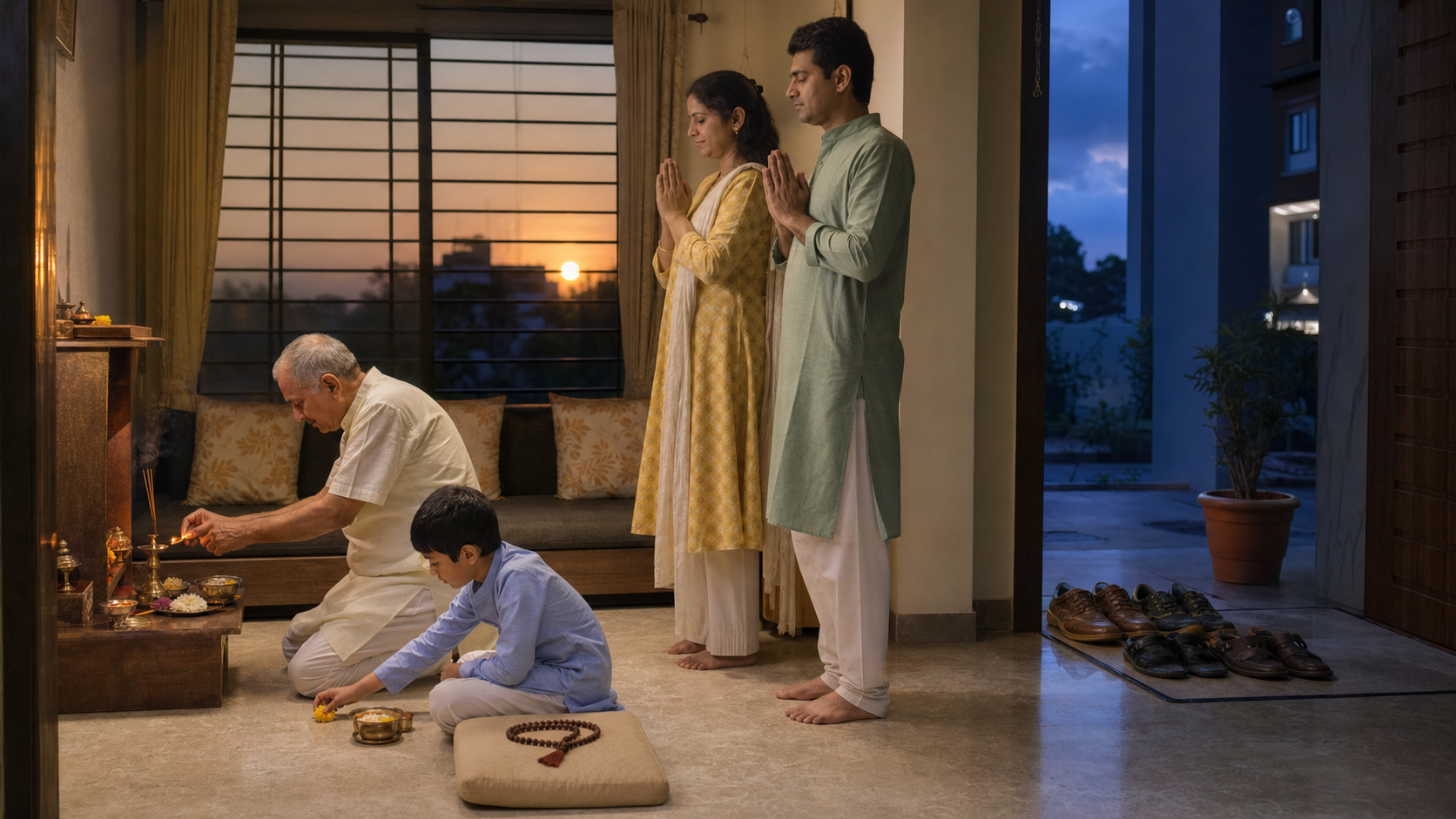
You do not need to fill every hour with ritual. A well-kept daily discipline, placed on the correct side of the tithi transition, is more coherent than an elaborate schedule assembled from unrelated customs.
- Begin with your established morning practice. Morning sandhya, puja, japa, scriptural reading, or silent meditation all take place during Trayodashi under the stated timing. Keep the form appropriate to your own tradition rather than borrowing a ceremony merely because the civil year has changed.
- Give the daytime a disciplined purpose. Treat work, study, household duties, and service as part of the day’s vrata-like order. Choose one duty that you have postponed and complete it without display. This turns the waxing fortnight’s association with growth into conduct rather than sentiment.
- Hold the main family prayer before 8:29 PM if you intend it for Trayodashi. Do not schedule it at the final minute. Gather earlier, light the lamp according to household custom, complete your usual prayers, and leave enough time for interruptions.
- Use the evening boundary consciously. Before the transition, offer gratitude for what has been completed. After it, if you maintain a night practice, sit briefly with the more resolute and contemplative character associated here with Chaturdashi.
- Record one sustainable sankalpa. A daily recitation, a fixed period of study, a service commitment, or restraint in speech is easier to carry forward than a long list of civil New Year resolutions. Make the commitment measurable enough that you will know whether you kept it.
If several relatives are participating from different cities, do not assume that one person’s displayed time automatically governs everyone. Either observe locally or agree in advance that the gathering will follow the host temple’s or host household’s Panchang.
The 8:29 PM transition is not a complete shubh muhurat
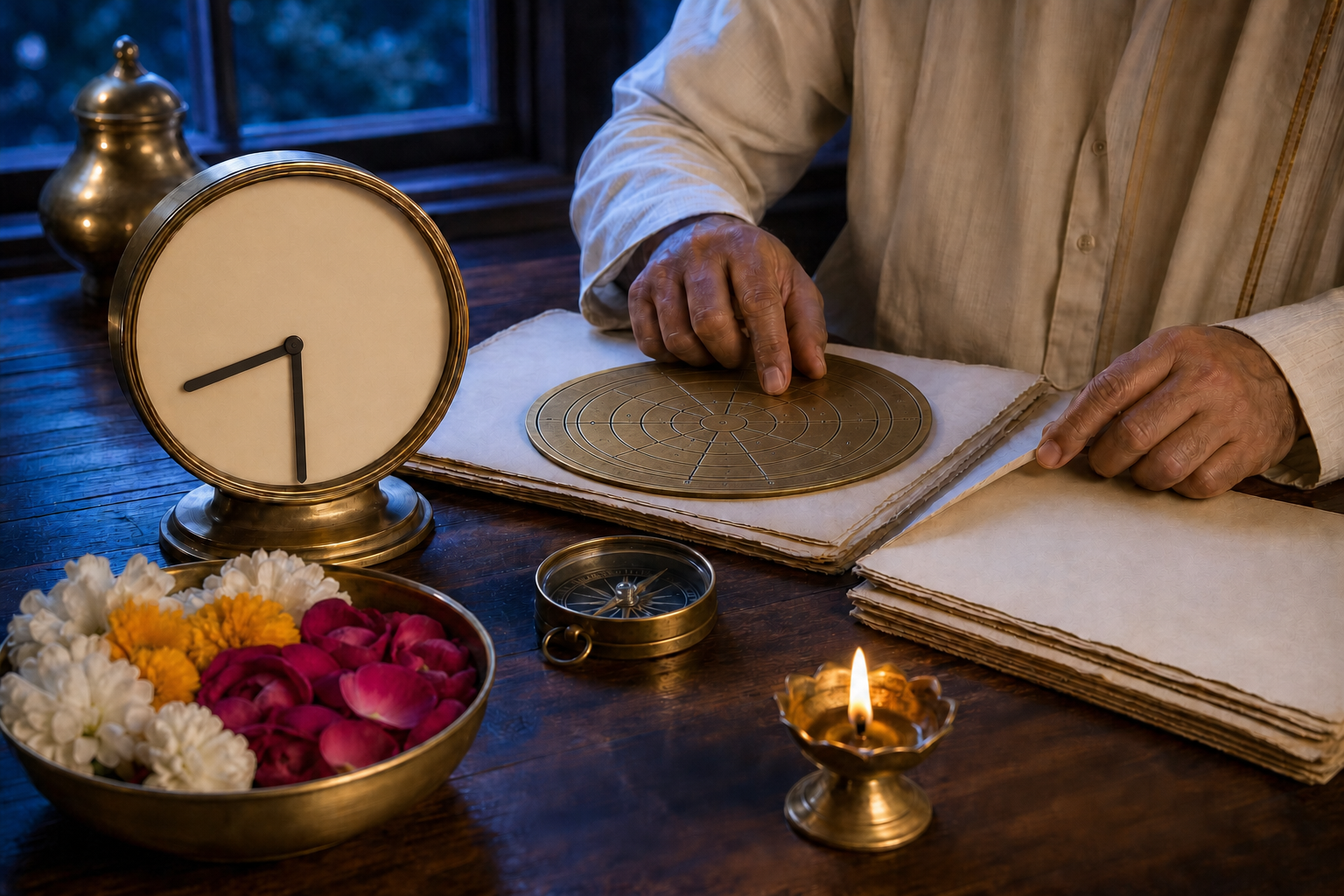
The tithi tells you which lunar day is active. It does not, by itself, prove that every minute before or after the change is auspicious for every purpose. Nakshatra, Rashi, regional calculation standards, and the nature of the intended rite may also matter.
For personal prayer, reflection, japa, or seva, the two-part schedule above is a practical way to use the available information. For a formal ceremony whose validity depends on a prescribed muhurat, take three details to a trusted regional Panchang, temple, priest, or community astrologer:
- Your exact city or locality, not merely the country.
- The ritual or observance you intend to perform.
- Whether it must occur during Trayodashi, during Chaturdashi, or simply on the civil date of January 1.
Group organizers should choose one local calculation standard and state it clearly in the invitation. Write the tithi, cutoff time, location, and time zone together. That prevents the common mistake of combining a tithi from one calendar with supporting details from another.
Let the civil New Year serve dharmic continuity
January 1 may prompt you to think about beginnings, but the Panchang places that impulse inside a living lunar rhythm. The day is already well advanced in Shukla Paksha: Trayodashi moves toward Chaturdashi, and Chaturdashi in turn prepares for Purnima. The useful question is therefore not only, “What should I begin?” It is also, “What should I bring closer to completion?”
You might finish a pending act of seva, restore consistency to nitya practice, reconcile a neglected household responsibility, or resume serious study. These choices respect the day’s movement without inventing a universal festival or compulsory observance for January 1.
Different Hindu communities will express this discipline differently, and other Dharmic traditions maintain their own calendars and observances. Shared respect for sacred time does not require us to flatten those distinctions. Follow your actual lineage or community practice while allowing the calendar to sharpen attention, ethical conduct, and steadiness.
Key takeaways
- Thursday, January 1, 2026 begins under Shukla Paksha Trayodashi.
- Trayodashi lasts until 8:29 PM in the stated calculation; Shukla Paksha Chaturdashi follows.
- Complete a specifically Trayodashi observance before the transition, leaving a reasonable time margin.
- After the transition, shift toward Chaturdashi-oriented contemplation and preparation for Purnima.
- Do not treat the tithi cutoff as an all-purpose shubh muhurat.
- Verify location-specific Panchang details when timing a formal vrata, temple ritual, or group observance.
Choose your local Panchang now, mark 8:29 PM as a provisional boundary, and decide which one practice you will complete before it. That small act of preparation will make the day an observance rather than another date passed in good intentions.
References
