
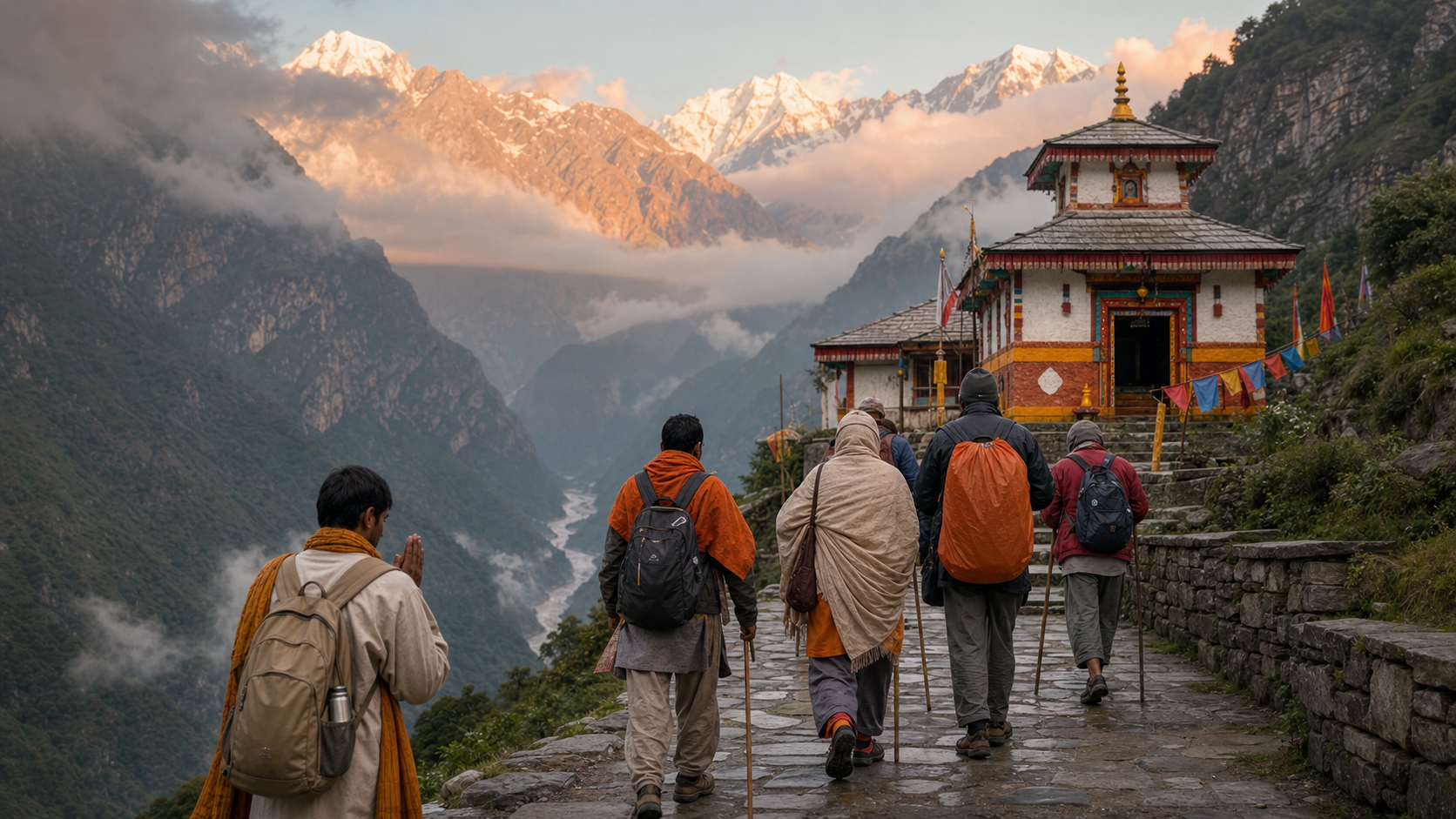
If you are considering the Sapta Badri Yatra, the difficult question is not whether seven temples can be fitted into an itinerary. It is whether the journey will remain a pilgrimage when mountain conditions, temple rhythms, fatigue, and transport begin to dictate your pace.
You need a plan that respects both Vaishnava sacred geography and the realities of the Himalayas. That means knowing what makes this circuit distinct, allowing the route to change, developing a simple practice for every shrine, and treating care for the land as part of your dharma.
Understand the yatra before trying to complete it
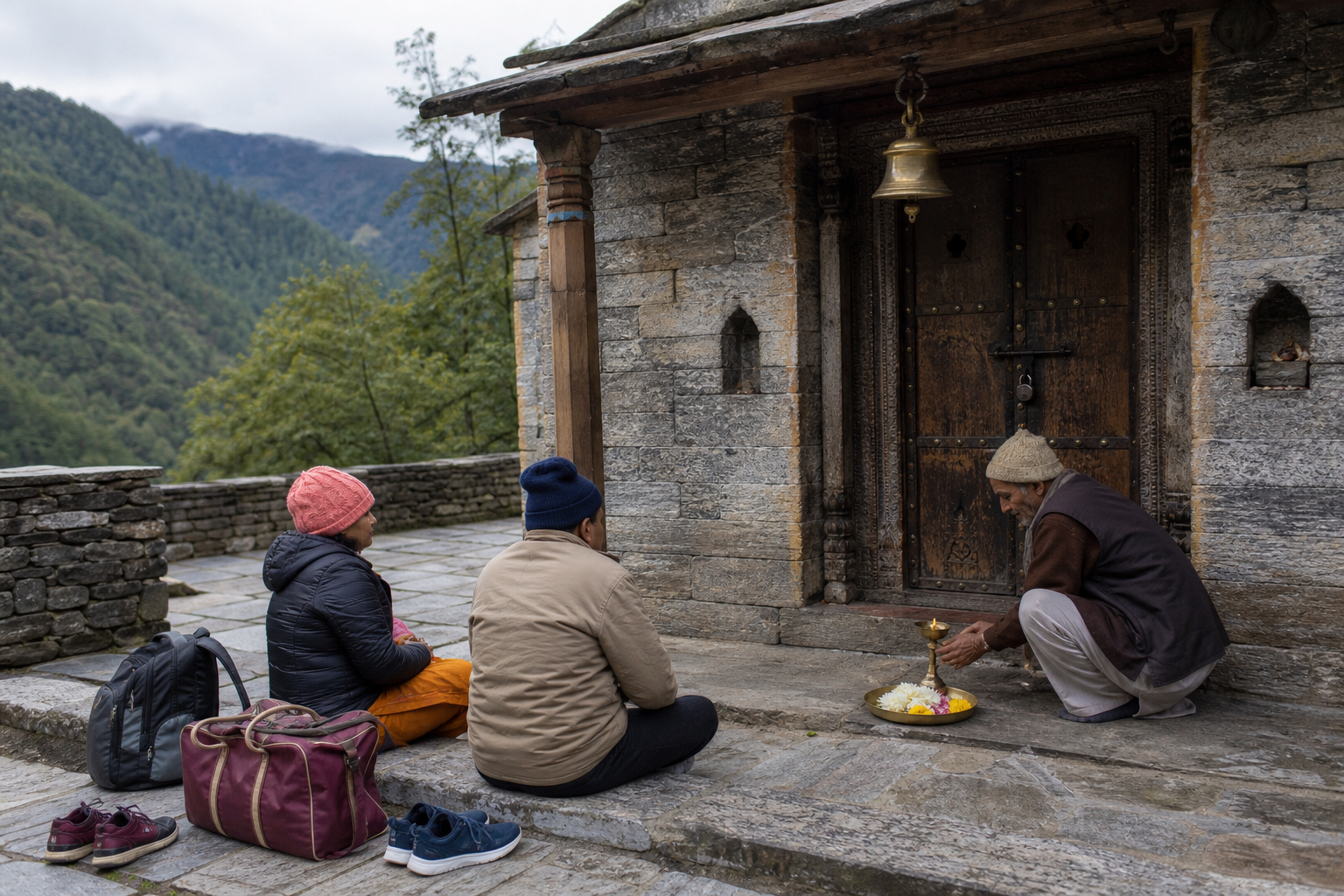
The Sapta Badri tradition brings together seven sacred abodes of Vishnu in Uttarakhand’s Garhwal Himalayas. Each shrine presents Vishnu through its own sacred setting, form of worship, local memory, and relationship with the surrounding landscape.
This is why the circuit should not be treated as another name for the Char Dham Yatra. The two can complement one another, but Sapta Badri has a distinct devotional logic: you encounter the sustaining presence of Vishnu across several places rather than reducing the journey to one principal destination.
That distinction changes how you should travel. A checklist asks how quickly you can collect seven visits. A tirtha-yatra asks whether you have become attentive enough to receive seven different encounters with the sacred. If you rush through a temple only to preserve a schedule, the timetable has displaced the purpose of the journey.
The arrangement of the shrines across lower temple clusters and higher reaches near the Badrinath axis also gives the journey a natural sense of progression. You can use that progression as a framework for sadhana. At the beginning, establish your intention. As the route rises and becomes less predictable, practise patience and restraint. At the principal high-altitude stage, let darshan be the focus rather than the achievement of having arrived.
The number seven can invite reflection on completeness, stages, or thresholds, but you do not need to force every temple into an invented hierarchy. Let each place disclose its own emphasis. Unity in the circuit does not require uniformity among its shrines.
Build a route that can bend with the Himalayas
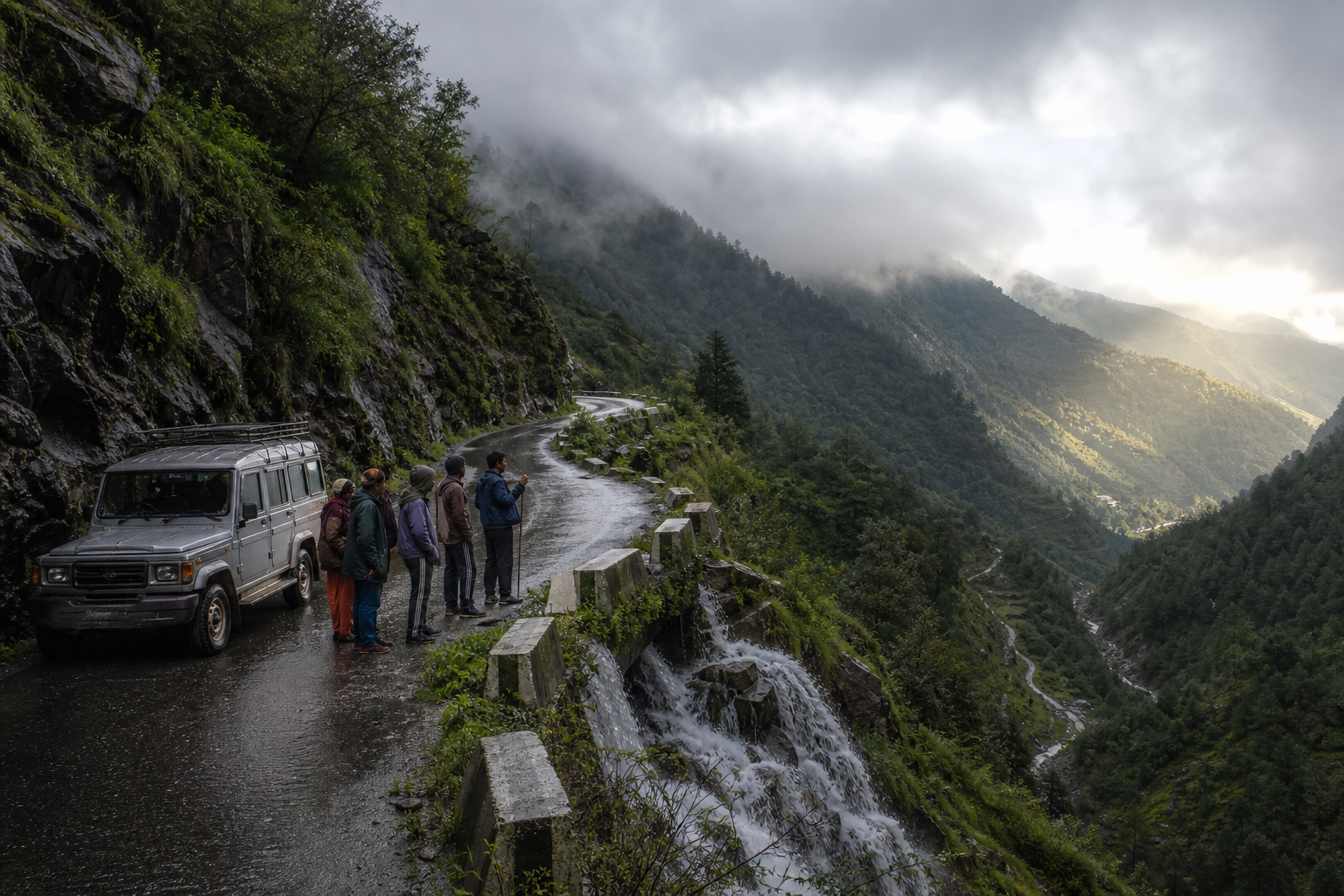
The usual pilgrimage window runs from late spring into early autumn, when Himalayan routes are generally more accessible. This is a seasonal pattern, not a promise that every road and shrine will be available on the date printed in your plan. Conditions can change, so verify access and worship arrangements close to departure and again as you move through the region.
A workable plan should separate spiritual intention from logistical rigidity. Use this sequence:
- Define the scope honestly. Decide whether you are attempting the complete seven-shrine circuit or visiting the sites that are accessible within your season and available time. A partial pilgrimage can still be sincere, but it should not be represented as a completed Sapta Badri circuit.
- Arrange the journey from lower areas toward the upper Badrinath axis. This broadly follows the geography of the tradition and helps the devotional journey develop gradually. It also prevents the principal destination from making the smaller village shrines feel like afterthoughts.
- Check every shrine separately. Do not assume that access to one temple proves access to the others. Confirm the route, opening status, and local worship arrangements for each intended stop.
- Protect an unscheduled margin. Do not allocate every available hour to driving or darshan. The buffer is what allows you to obey a closure, rest when necessary, or remain longer at a shrine without turning the rest of the yatra into a race.
- Choose what you will omit if conditions change. Make this decision before pressure and sunk costs begin to influence you. No booking, photograph, or claim of completion is worth ignoring a local closure or unsafe condition.
- Plan for worship, not only transport. A route that reaches a temple but leaves no quiet time for darshan, puja, or reflection is logistically complete and spiritually thin.
Winter closure in the upper Himalayas does not mean that worship simply ceases. The tradition maintains continuity in accessible places such as Joshimath. If you are travelling outside the main season, ask where worship is being conducted rather than assuming that a closed upper shrine leaves you with nothing to undertake.
The higher reaches also require humility about physical limits. If you have a health condition that could be affected by altitude, exertion, or cold, obtain individual medical advice before committing to the upper route. Continuing against physical warning signs is not a demonstration of bhakti. A pilgrimage should discipline the ego, not give it a religious excuse to take unnecessary risks.
Give every shrine the same deliberate attention
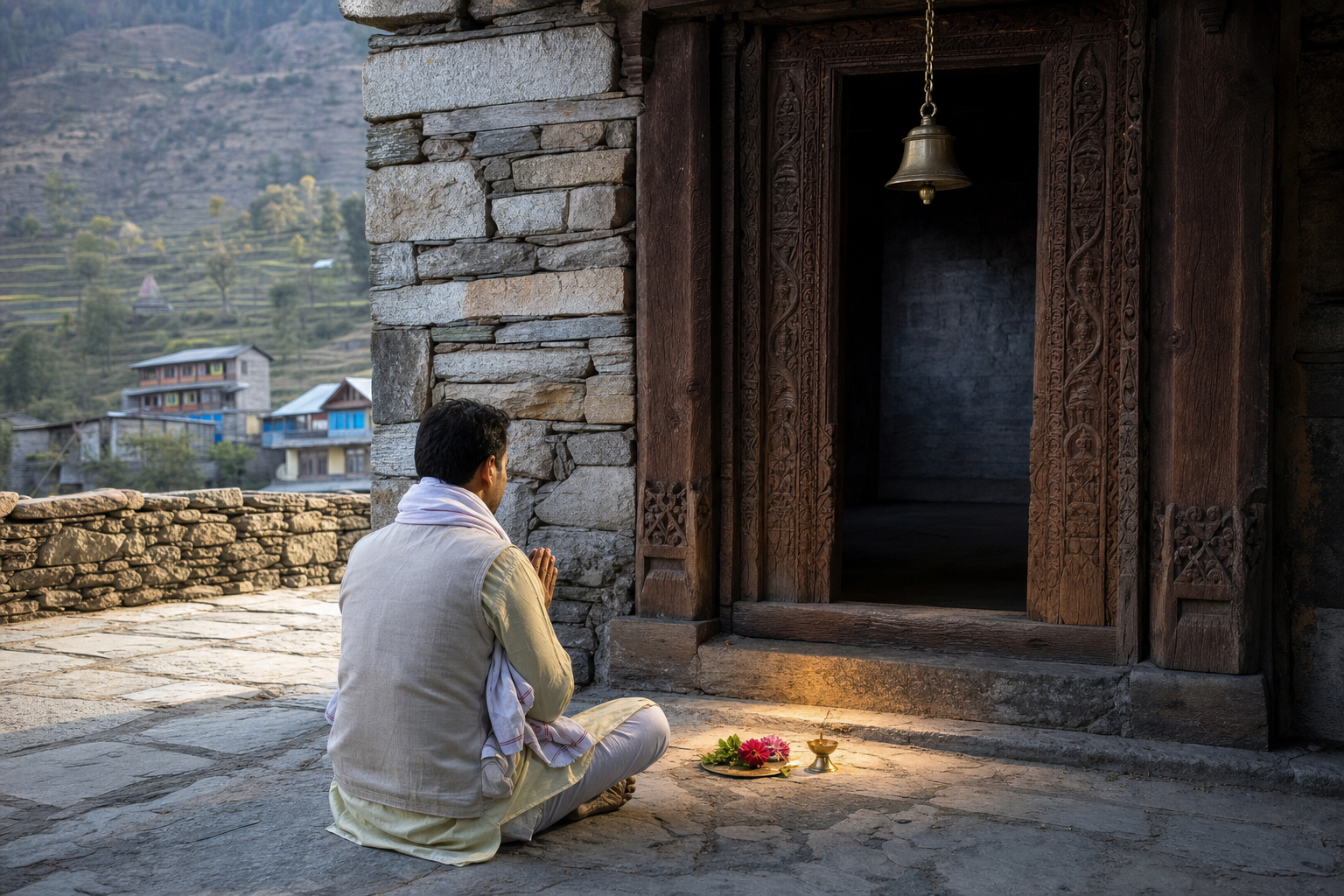
A common mistake is to reserve devotion for the most famous temple and treat the other shrines as supporting stops. Sapta Badri reverses that habit. The circuit matters because Vishnu is approached through distinct forms and places; the quieter shrine is not spiritually disposable because it lacks the scale or recognition of Badrinath.
Use one simple rhythm at every temple. Repeating the rhythm gives your mind continuity while leaving room for each shrine’s local character:
- Pause before entering. Put away the phone, settle your breathing, and notice the settlement, river valley, path, or mountain enclosure through which you have approached. The sacred geography is part of the encounter, not scenery outside it.
- Learn whom you are meeting. Attend to the particular manifestation of Vishnu and the way the local community worships there. Do not assume that every shrine must reproduce the ritual atmosphere of Badrinath.
- Follow the temple’s practice. Observe local instructions concerning entry, offerings, photography, and puja. If something is unclear, ask respectfully instead of importing a habit from another temple.
- Receive darshan without staging it. Let the central act be seeing and being present before the deity. Photographs, travel records, and social posts should never obstruct worship or turn the sanctum into a backdrop.
- Reflect before leaving. Vishnu is revered as the protector and sustainer. Ask what you are responsible for sustaining in your family, community, work, or inner discipline. Record one concrete answer rather than a page of general impressions.
This practice prevents the journey from dissolving into long stretches of transport interrupted by brief temple visits. It also makes local differences spiritually useful. Stone architecture, village memory, seasonal ritual, and the sound and pace of worship show how Sanatana Dharma remains continuous without becoming mechanically identical everywhere.
If a shrine is crowded, simplify rather than compete. If it is quiet, do not fill the silence. If a local tradition differs from what you expected, notice the difference before judging it. The yatra teaches steadiness precisely because you cannot control every setting in which darshan occurs.
Make ecological care part of your sankalpa
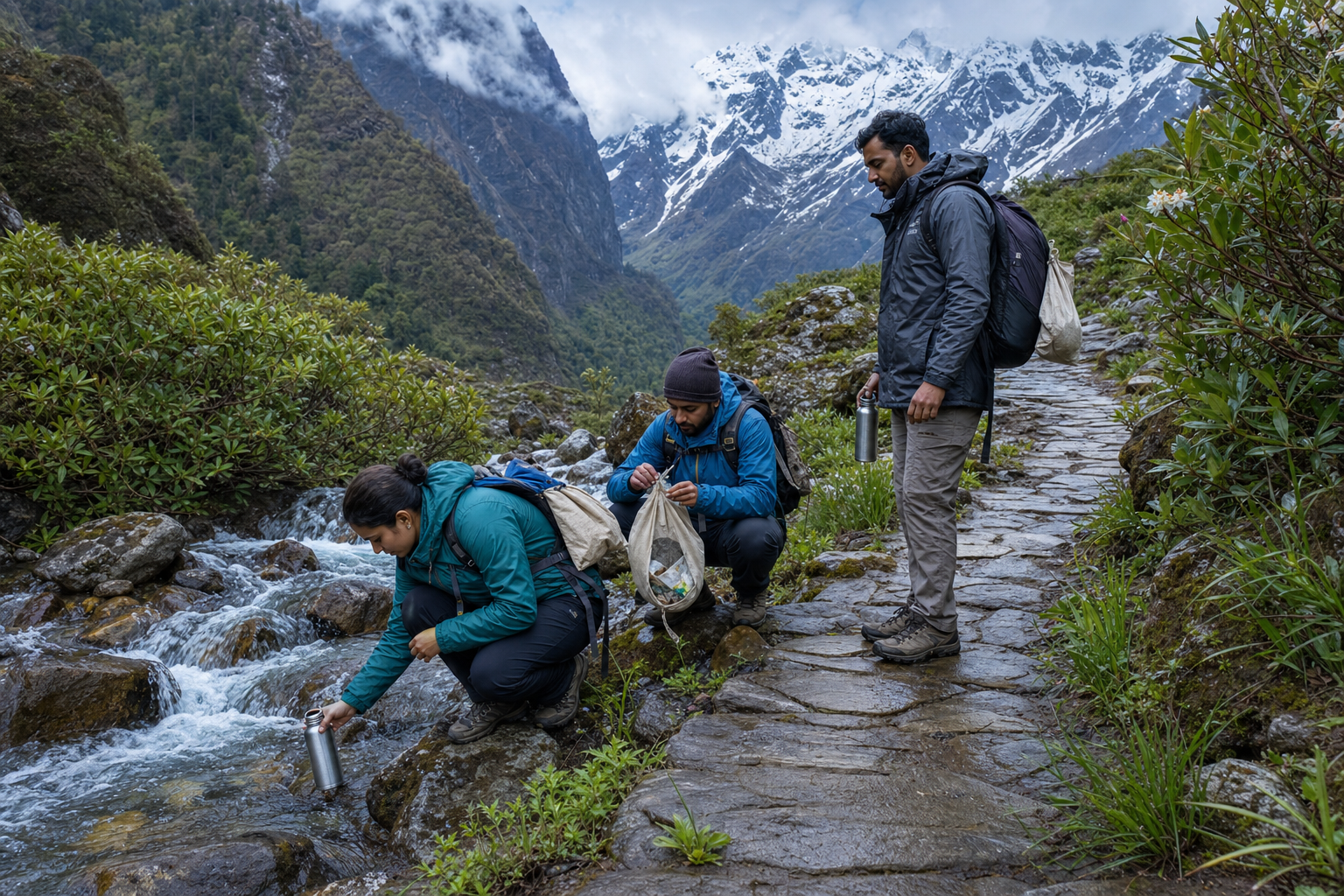
The Alaknanda and its tributaries do more than mark a route on the map. Their valleys sustain settlements, movement, and sacred places throughout the pilgrimage landscape. Reverence for a Himalayan temple is incomplete if your manner of reaching it degrades the water, paths, or communities that keep its tradition alive.
Turn that principle into visible conduct:
- Carry your waste until you reach an appropriate disposal point. Do not leave packaging, food, or devotional material beside a path or water source on the assumption that someone else will remove it.
- Keep offerings free of unnecessary plastic. A religious object does not stop being litter when it is abandoned outside a temple.
- Respect water sources as shared and sacred. Do not use a riverbank as a place to discard travel waste or unwanted offerings.
- Use local lodging, food, transport, and other services where practical. Supporting livelihoods helps the communities that sustain worship and assist pilgrims through the seasonal cycle.
- Deal fairly with local workers and vendors. Reverence inside the sanctum should be visible in your conduct outside it, including how you speak, wait, pay, and respond to inconvenience.
- Keep noise and photography subordinate to worship. A village shrine is a living sacred space, not an attraction arranged for visitors.
These are not optional additions for the environmentally minded pilgrim. Ahimsa, restraint, generosity, and self-discipline belong to the wider dharmic inheritance shared across Hindu, Buddhist, Jain, and Sikh traditions. In the fragile Himalayas, those values acquire immediate practical meaning.
Key takeaways before you leave
- Sapta Badri is a distinct Vishnu pilgrimage through seven sacred settings, not a shorthand name for the Char Dham circuit.
- Plan the route from lower areas toward the higher Badrinath axis, but leave enough flexibility to accept changes in access and conditions.
- Check each shrine individually instead of assuming that the entire circuit shares one opening or access status.
- Treat a closed route as a boundary, not a challenge to your faith. Winter worship continues through accessible sacred locations such as Joshimath.
- Give quieter shrines the same deliberate attention as the most prominent destination.
- Make darshan, local temple practice, ecological restraint, and support for Himalayan communities part of the pilgrimage itself.
Before making bookings, write a short sankalpa in your own words: you will seek darshan rather than a certificate of completion, accept the route that is responsibly available, and leave the water, paths, temples, and settlements no worse for your visit. This is a personal commitment, not a prescribed ritual formula.
Then take the first practical step: choose your season, identify which shrines you intend to reach, verify their accessibility, and leave space in the plan for the mountains to answer differently. A flexible itinerary does not weaken the yatra. It creates room for the humility the yatra is meant to cultivate.
References
