
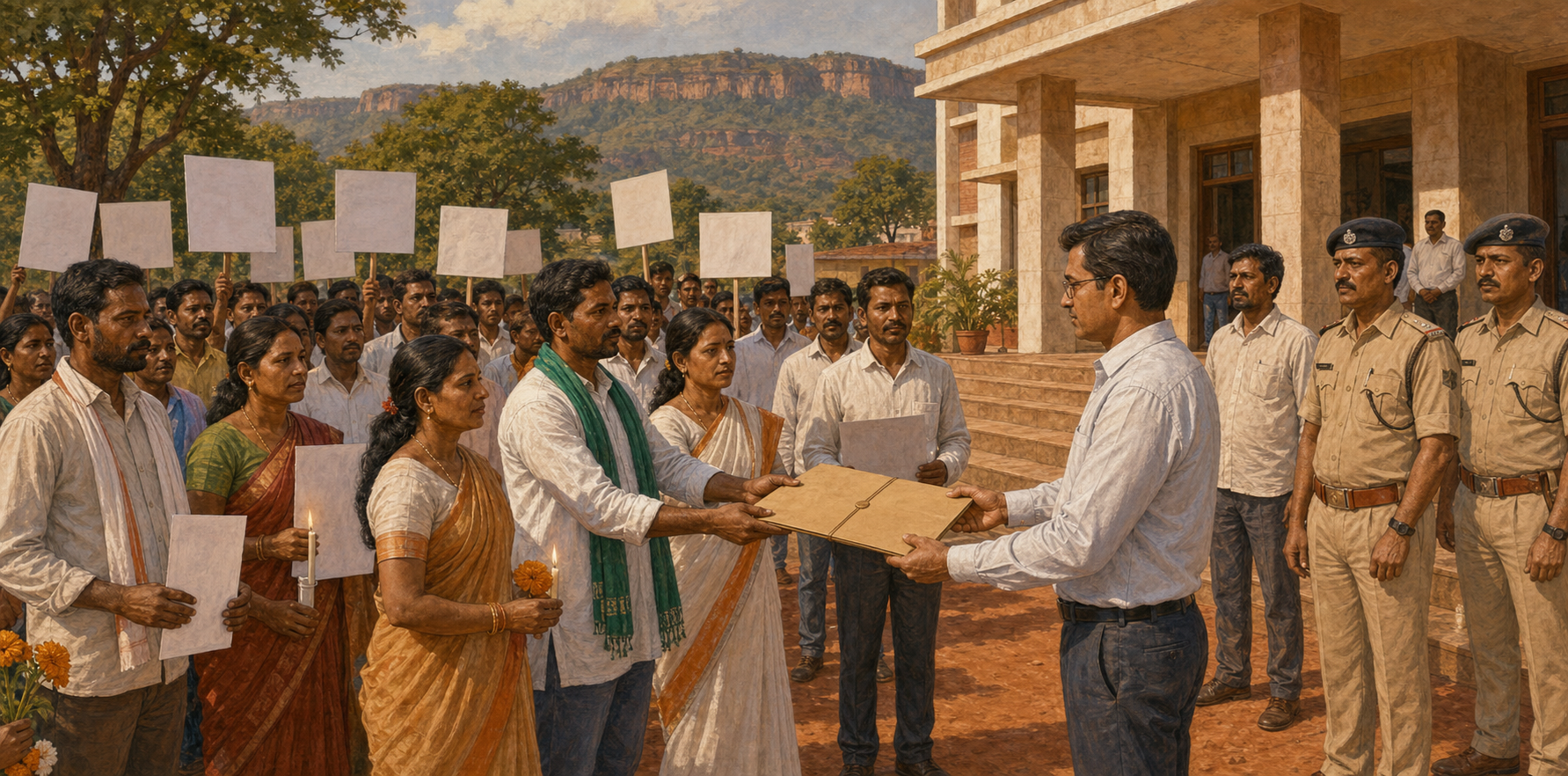
If you saw the Jharkhand rallies and are deciding whether to support them, start with the concrete demand. This is not a call for retaliation. It is a call to make the reported killing of a Hindu in Bangladesh answerable through investigation, protection and diplomacy.
Across Jharkhand, Hindu Janajagruti Samiti and several Hindu organisations held peaceful demonstrations and submitted memoranda to district administrations after reports that a Hindu youth, widely identified as Dipu Chandra Das, had been lynched in Bangladesh. The useful test now is whether public concern produces a credible inquiry, protection for vulnerable communities and sustained official follow-through.
What the Jharkhand mobilisation is actually demanding
A district administration cannot investigate a killing in another sovereign country. Submitting a memorandum there serves a different purpose: it creates a domestic record of concern and asks Indian authorities to carry that concern into India-Bangladesh diplomacy. The rally is the visible moment; the memorandum and its follow-up are the instruments that can move through government.
The demands operate at four distinct levels:
- Justice in the reported case: seek an independent, credible investigation and lawful accountability for those responsible.
- Protection before another attack occurs: improve security around places of worship, educational settings and other parts of community life where vulnerable minorities may be exposed.
- Working bilateral channels: maintain high-level dialogue, strengthen consular support and improve cross-border information sharing instead of relying on occasional expressions of concern.
- Continuing scrutiny: establish structured human-rights discussions, regular monitoring and transparent reporting so that incidents, official responses and case progress do not disappear from view.
If you participate in such a campaign, ask to see the exact memorandum. Check which office received it, whether receipt was acknowledged, where it was forwarded and when organisers will request an update. A representation that cannot be read or tracked is difficult to use for accountability. A public copy and a simple follow-up log turn a demonstration into an ongoing civic process.
Non-violent discipline protects the Hindu case
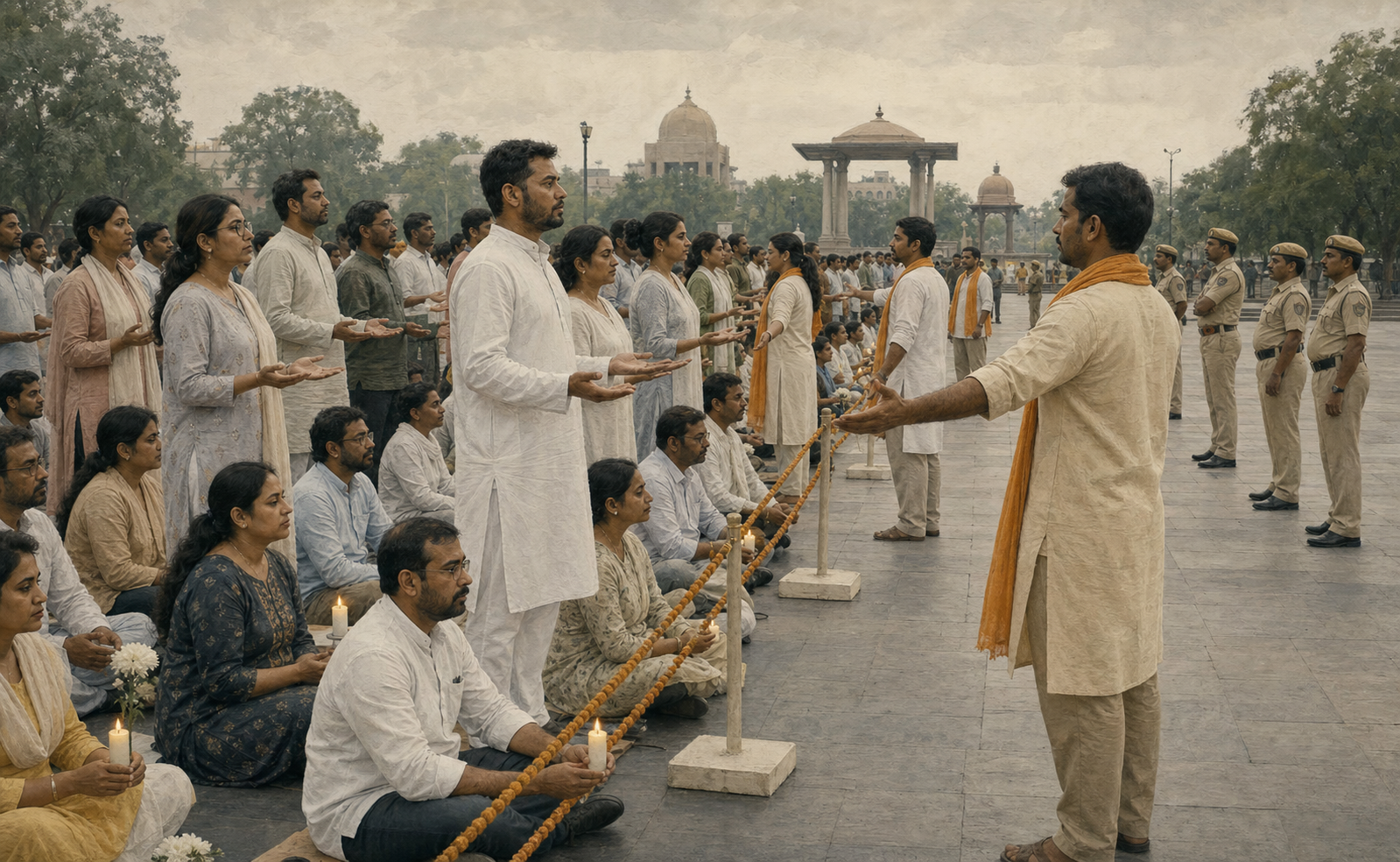
For a Hindu mobilisation, peaceful and constitutional conduct is more than good optics. It keeps attention on the victim, prevents an appeal for justice from becoming collective hostility and gives officials less room to dismiss the campaign as a public-order problem.
Precision matters just as much as restraint. The available claim is that reports identified Dipu Chandra Das as a Hindu youth who was lynched. Unless a credible public record establishes more, do not add an attacker identity, motive, sequence of events, number of incidents or official conclusion. Use words such as reported where verification remains incomplete. That discipline is not timidity; a claim that survives scrutiny is harder to deny or discredit.
- Demand responsibility from institutions and alleged offenders, not from an entire religious or national population.
- Do not circulate graphic images merely to intensify emotion. They can violate a victim’s dignity without establishing what happened.
- Correct a false date, location, caption or identity in the same channel where you shared it.
- Keep placards, speeches and messages focused on investigation, minority protection, due process and measurable diplomatic action.
Solidarity among Hindus, Buddhists, Jains and Sikhs strengthens this approach. It does not dilute the specifically Hindu concern raised by the reported killing. It places that concern within a wider Dharmic commitment to ahimsa, dignity and protection of the vulnerable. The same standard should defend every threatened minority while remaining honest about who the reported victim was.
How to recognise meaningful diplomatic follow-through
A strongly worded statement is not the same as a result. When officials announce action, you can judge it against the demands that prompted the mobilisation.
| Demand | Evidence of progress | What is insufficient |
|---|---|---|
| Independent investigation | A credible process, a transparent account of the findings and lawful action where responsibility is established | A general assurance with no public follow-up |
| Protection of vulnerable minorities | Documented safeguards around worship, education and community life, supported by a functioning response process | A temporary security display after publicity fades |
| India-Bangladesh engagement | Sustained bilateral discussion, consular coordination and relevant information sharing | A single meeting or press remark treated as closure |
| Monitoring and accountability | Regular, credible reporting that tracks incidents, institutional responses and case progress | Promises that leave no record the public can examine |
One reported killing can justify urgent case-level action, but it cannot by itself establish the full scale or trend of anti-Hindu violence. That is precisely why regular monitoring matters. Reliable incident records can show whether violence is recurring, where institutions are failing and whether announced protections are working.
India cannot replace Bangladesh’s police, courts or constitutional institutions. Durable justice therefore requires Bangladeshi authorities to investigate crimes and protect minorities, while New Delhi uses dialogue, consular channels and diplomatic pressure to insist on transparency. Firm diplomacy and respect for sovereignty are not opposites; the practical task is to press for outcomes that Bangladeshi institutions must deliver.
How you can support the cause without spreading rumours

Your most useful contribution is a precise action that another person can verify. Choose one or two of the following rather than forwarding every emotional message that reaches you.
- Verify before amplifying. Look for the original uploader of an image or video, its date and location, and corroboration that is independent of copied captions. If you cannot verify the media, share the documented demand rather than the clip.
- Separate the case from the wider claim. You can demand justice for Dipu Chandra Das while also asking for evidence-based monitoring of violence against Hindus and other minorities. Do not use one incident as a substitute for reliable trend data.
- Make a bounded request. Ask whether the memorandum was acknowledged, forwarded to the appropriate Union authorities and answered. A question with a trackable administrative action is more useful than a general demand that somebody do something.
- Preserve the record. Keep the memorandum, acknowledgement, public response and follow-up correspondence together. This makes it possible to compare what was requested with what authorities eventually did.
- Return after the rally. Ask organisers for an update and share the response, including an honest statement when no response has arrived. Silence is itself worth documenting, but it should not be embellished.
A concise message you can send
Subject: Follow-up on the reported killing of Dipu Chandra Das. I request acknowledgement of representations concerning reports that Hindu youth Dipu Chandra Das was lynched in Bangladesh. Please state whether this concern has been forwarded to the appropriate Union authorities and whether India is seeking a credible investigation, lawful accountability, protection for vulnerable minorities and transparent bilateral follow-up. Please share any response that can lawfully be made public.
If you are in Jharkhand, direct that request to the office that received the local memorandum. Elsewhere, you can adapt it for your elected representative. Keep the reported status of the case intact, ask for a specific administrative response and retain a copy of what you send.
Key takeaways
- The Jharkhand demonstrations used peaceful protest and memoranda to seek action over the reported lynching of Dipu Chandra Das in Bangladesh.
- The demands extend beyond condemnation to investigation, accountability, minority protection, consular coordination and regular monitoring.
- Meaningful progress requires public, trackable outcomes; a meeting or assurance without follow-up is not enough.
- You can help by preserving uncertainty, rejecting collective blame, requesting an administrative response and following the representation after the rally ends.
If you support the cause, choose one concrete step now: obtain the memorandum, send a precise representation or request documented follow-up. A movement for Hindu safety becomes harder to ignore when its facts are careful, its conduct is disciplined and its demands remain on the public record after the crowd has gone home.
References
