
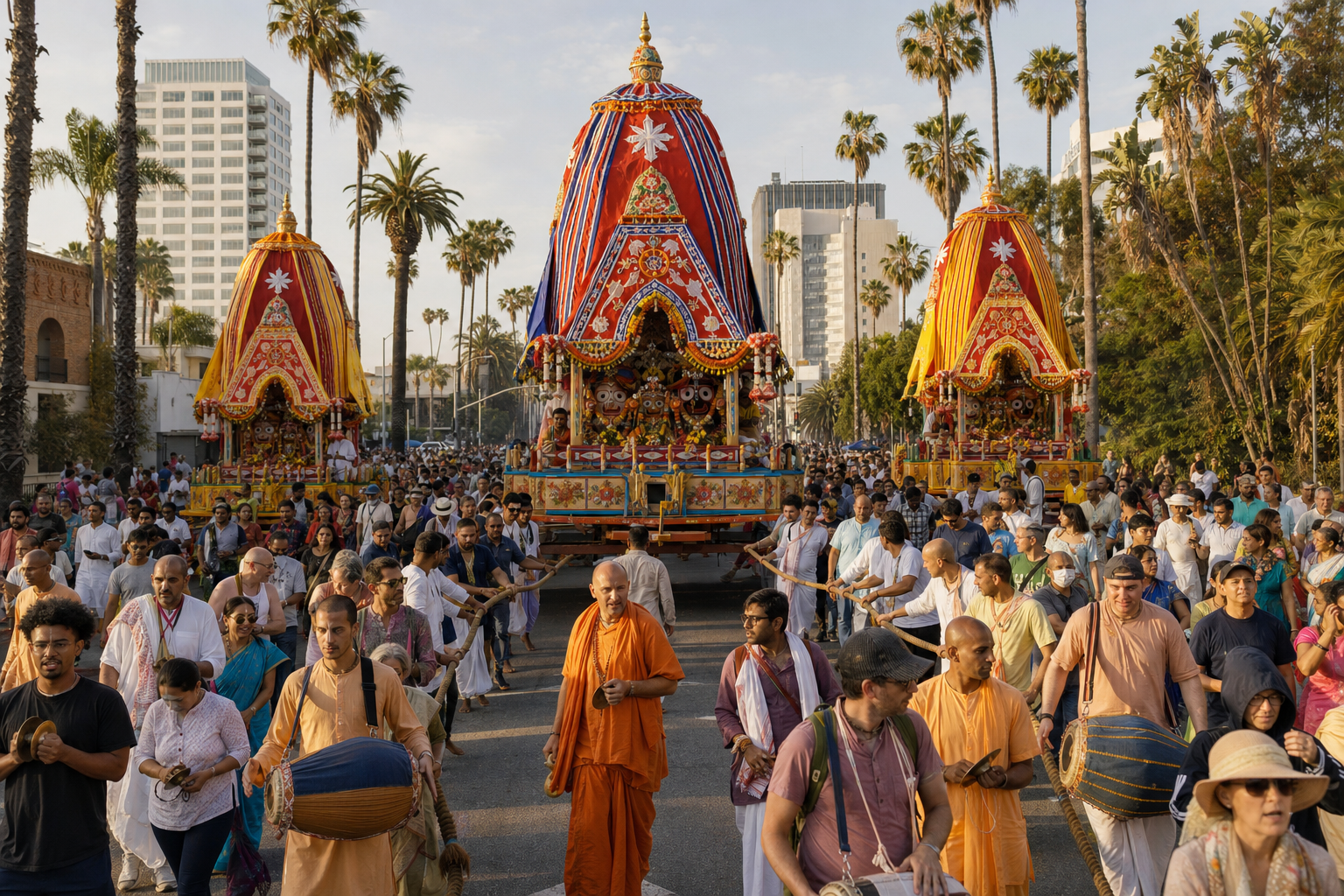
You may see photographs from Los Angeles and wonder what a chariot procession there can really tell us about the continuity of Dharma outside Bharat. The fiftieth annual Rathyatra gives a clear answer: continuity is not proved by preserving an image of the past. It is proved when worship is renewed in public, year after year, until a new generation can inherit it as a living practice.
The 2026 celebration brought together thousands of people for kirtan, a colorful procession and devotion to Lord Jagannath. If you are deciding whether to understand the occasion as a cultural exhibition, a community reunion or an act of worship, the order matters: it was worship first. The reunion and cultural witness grew from that devotional center.
Fifty years changes how the festival should be read
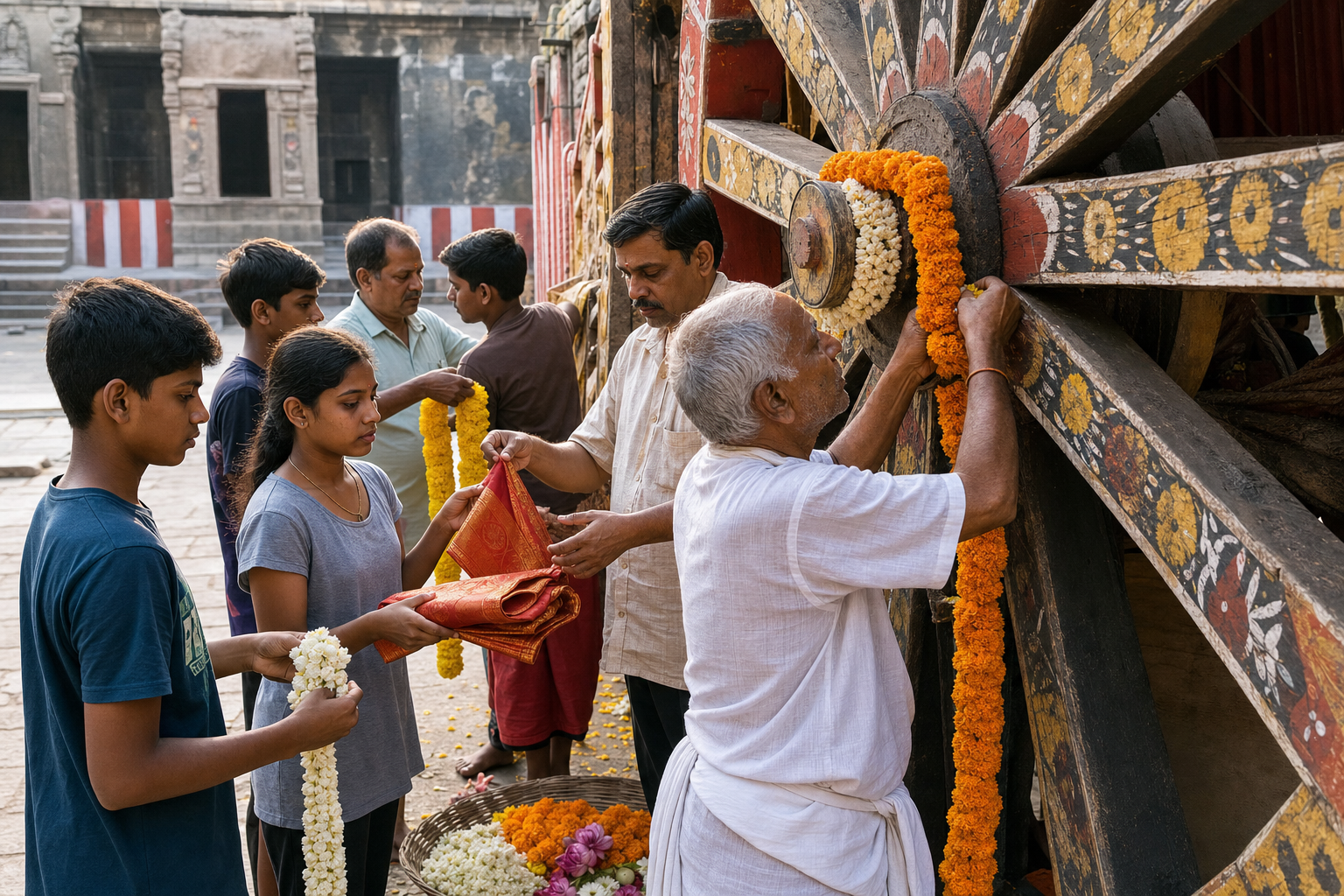
A first festival can be an experiment. A fiftieth annual celebration represents something more demanding: a practice has been repeated, remembered and handed forward across five decades. The significance lies not simply in reaching a large anniversary but in sustaining the reasons for gathering.
The golden milestone also brought living memory into the same space. Devotees arrived from around the world, including people connected with the festival for decades. That makes the anniversary more than a date on a banner. Long-time participants carry knowledge that photographs cannot preserve: how the devotional mood was maintained, what responsibilities had to be assumed and which practices remained central as circumstances changed.
When you assess the strength of any diaspora festival, use three questions. Who is being honored? What sacred practice are people performing together? What memory is being transmitted to those arriving later? Crowd size can show reach, but it cannot answer those questions by itself. In Los Angeles, Lord Jagannath remained the object of devotion, kirtan remained a shared practice, and the procession brought both into public view.
This distinction protects the event from a common misreading. A religious festival may have music, color and a striking visual presence without becoming mere ethnic pageantry. Its cultural importance comes precisely from the fact that its inner purpose has not been replaced by performance for spectators.
How a procession makes public space sacred
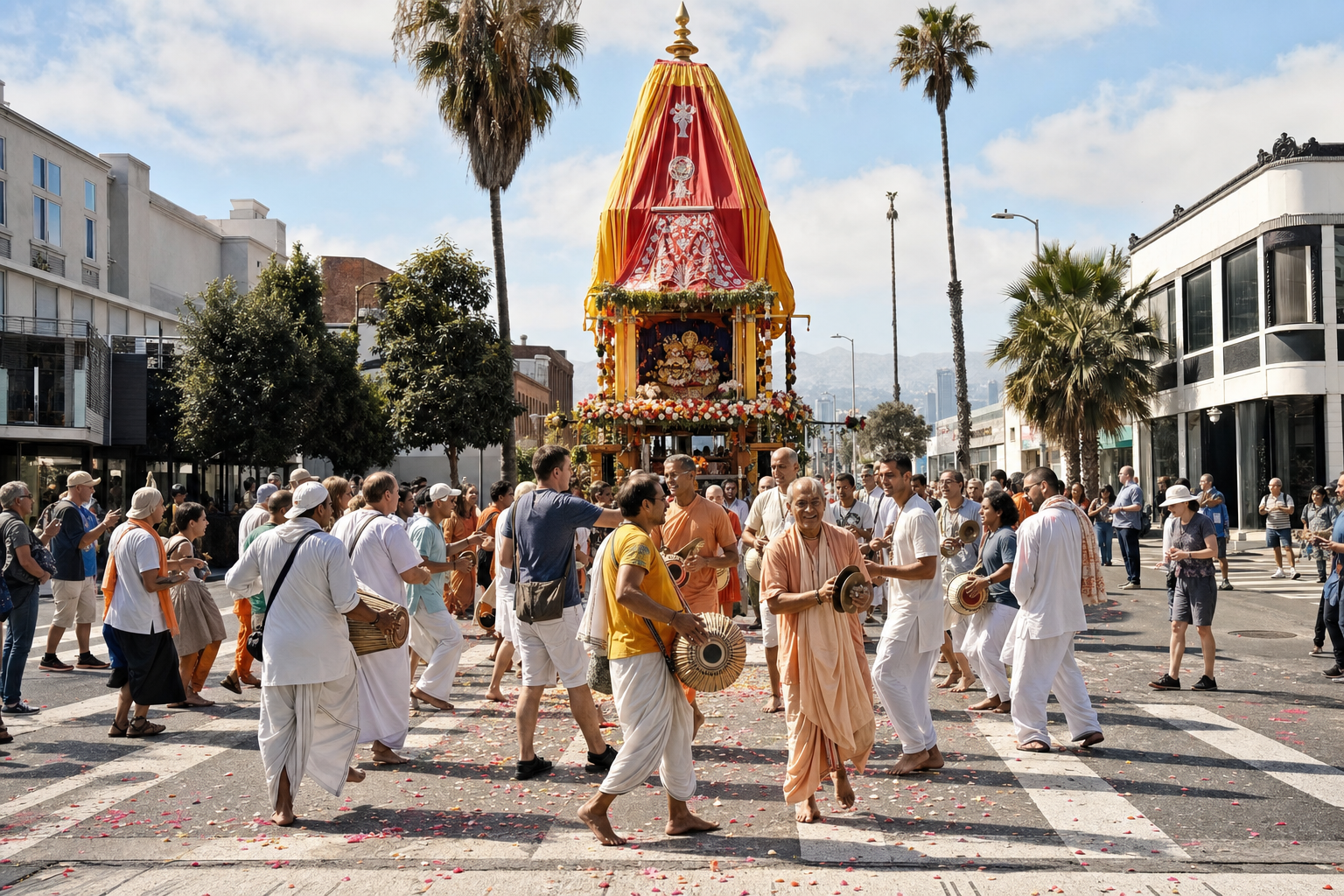
A temple ordinarily asks you to cross a threshold and enter a place already dedicated to worship. A Rathyatra carries the sacred encounter outward. Lord Jagannath becomes visible in an ordinary civic setting, and people who did not begin their day by entering a temple can still encounter the procession.
That movement matters. The chariot is not simply a decorated vehicle, and kirtan is not background music added to make a parade lively. The chariot establishes Lord Jagannath as the center of the procession. Kirtan gives participants a common devotional voice. Walking together turns separate observers into a gathering organized around sacred movement.
In 2026, the streets of Los Angeles and Venice Beach became a setting for pilgrimage and the names of Krishna. This does not mean that every public place permanently becomes a temple. It means that a familiar place can acquire sacred significance through the presence of the deity, collective remembrance and disciplined devotional attention.
If you watch a Rathyatra, train your attention in the right order. First locate Lord Jagannath, the one being honored. Then listen to the kirtan as prayer rather than soundtrack. Notice how the procession gathers people into a shared pace. Only after that should you turn to the costumes, decorations and photographs. The visible beauty becomes more intelligible once you understand what it serves.
How to attend without reducing worship to spectacle
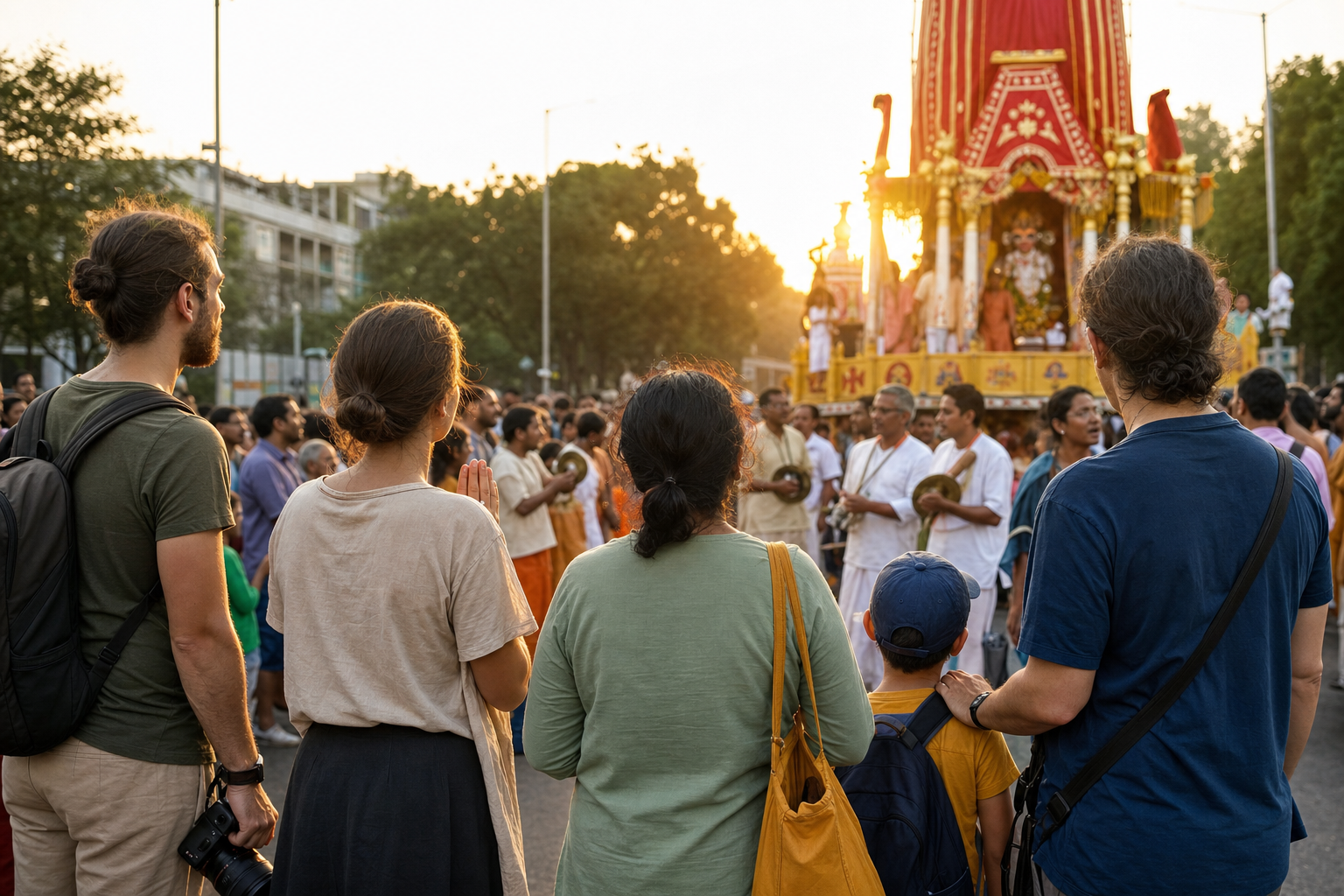
You do not need to arrive as an expert. You do need to arrive with respect. These steps let a newcomer participate without treating devotees, sacred objects or the procession as material for consumption.
- Begin with the right question: who is being honored? Learn to recognize Lord Jagannath as the center of the Rathyatra. That one fact changes how you interpret everything around the chariot.
- Give the kirtan your attention before reaching for your phone. Listen long enough to understand its rhythm and devotional function. If you choose to join, follow the lead of experienced participants instead of turning the chant into a personal performance.
- Keep the procession route clear. Do not obstruct the chariot, step into tightly moving groups for a photograph or touch sacred objects unless someone responsible invites you to do so.
- Photograph with restraint. A wide public scene and a close portrait of someone praying are not the same thing. Ask before taking an identifiable close photograph, especially when a person is absorbed in worship or when children are present.
- Speak with someone who has carried the tradition. Ask when the person first attended, what has remained unchanged and what younger participants should understand. These questions recover memory without forcing anyone to deliver a lecture on demand.
- Accept a modest role if service is openly offered. A small task performed under guidance can teach you more about a living festival than observing its most photogenic moment from the edge.
The aim is not to imitate an insider or conceal that you are new. A healthy public festival makes room for respectful newcomers. Your responsibility is to let its devotional grammar guide your behavior.
What the golden anniversary asks of the community now
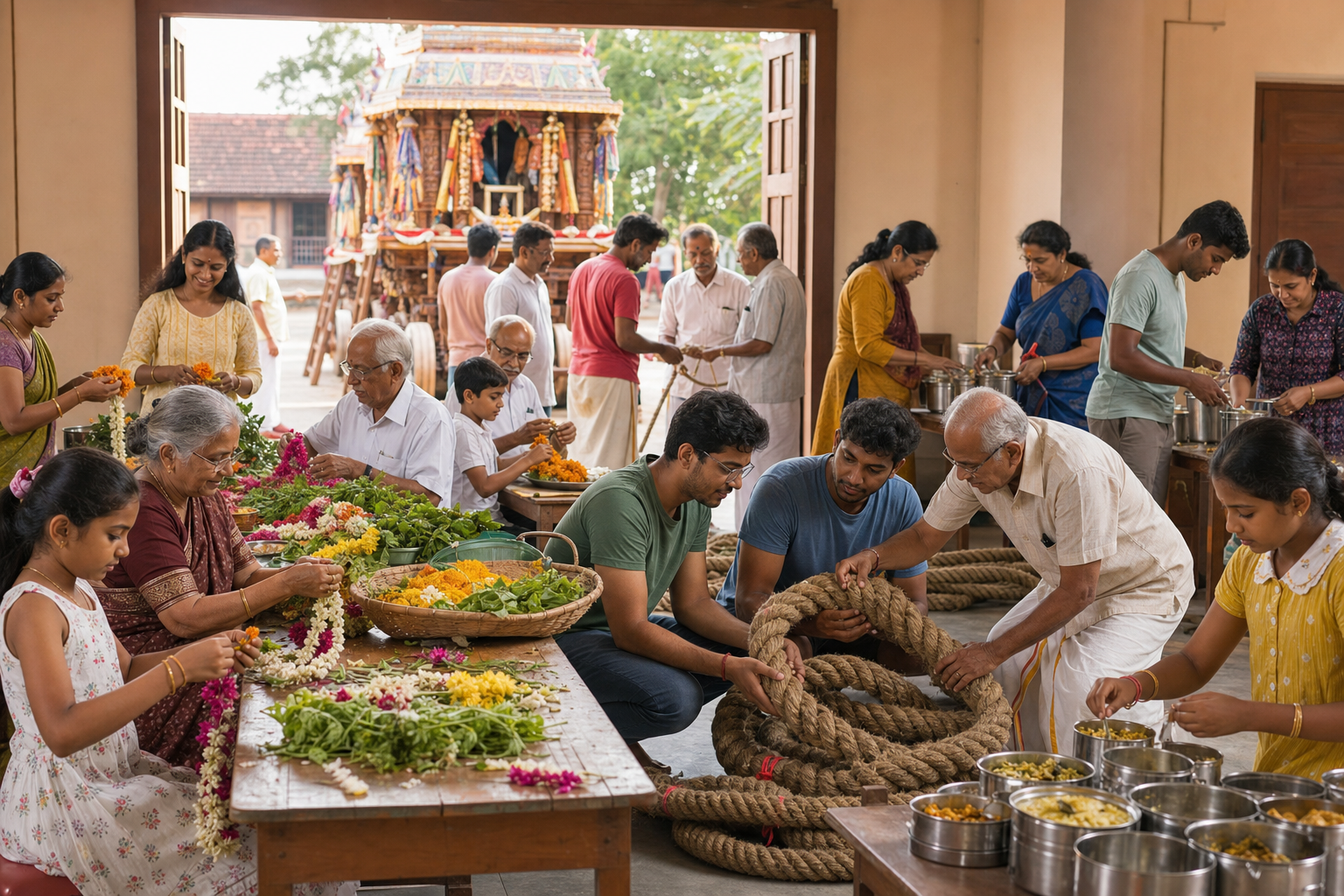
A golden jubilee can become a backward-looking celebration of survival. It is more useful when treated as a point of responsibility. The presence of participants with decades of involvement creates an opportunity to preserve memory while the people who carry it can still explain what mattered.
Communities marking such a milestone can begin with short, focused oral histories. Ask each long-time participant three things: the year or period of the first Rathyatra they remember, one responsibility they learned to carry, and one devotional element that must not be lost. Keep the questions consistent so the answers can be compared and passed to younger participants.
Theology also needs to remain visible beside logistics. A newcomer should be able to discover whom the procession honors, what kirtan is doing and why devotees walk with the chariot. Clear announcements, concise printed explanations and prepared community members can provide that orientation without interrupting worship.
Younger participants need meaningful work, not only a place in an anniversary photograph. Pairing a new participant with someone experienced allows practical knowledge and devotional purpose to travel together. The goal is not to reproduce every past arrangement. It is to transmit the discipline that kept Lord Jagannath, kirtan and service at the center while the festival grew.
This is also how you can recognize Bharat’s influence without reducing it to slogans. A Dharmic tradition has real reach when people carry it voluntarily, organize their lives around it and make it intelligible in a new setting without emptying it of worship. Los Angeles does not need to resemble a city in Bharat for devotion to Lord Jagannath to be genuine there. The surroundings can change while the sacred center remains clear.
The next test is therefore not whether a future celebration can produce an even larger spectacle. It is whether newcomers know what they are seeing, whether experienced devotees can hand forward what they have learned, and whether public welcome continues to serve devotion rather than displace it.
Key takeaways
- The fiftieth Los Angeles Rathyatra matters because it represents five decades of renewed devotional practice, not merely the age of an event.
- The 2026 gathering joined thousands in kirtan and procession, with devotees from around the world and long-time participants returning for the milestone.
- Read the celebration as worship first: Lord Jagannath is the center, the chariot carries the sacred encounter into public space, and kirtan gives the gathering its devotional voice.
- If you attend, listen before recording, follow participants’ cues, keep the route clear, seek consent for close photographs and learn from someone who carries the festival’s memory.
- The work after the anniversary is to preserve oral histories, explain the meaning of the practices, give younger people real responsibility and keep public welcome anchored in devotion.
When a Rathyatra next comes within your reach, do not remain at the edge only long enough to collect an image. Identify Lord Jagannath, give the kirtan your attention, speak with someone who carries the memory, and make one respectful act of participation. That is how a public celebration remains a living vehicle of Dharma, and how a fiftieth anniversary becomes a foundation rather than a finish line.
References
