
If you are deciding whether to seek Vaikunta Dwaram darshan at Tirumala, settle two questions before arranging the journey: what the doorway means and what the day will require of you. Without the first, the pilgrimage can become a long queue for rare access. Without the second, logistics can bury the vrata.
Approach Vaikuntha Ekadashi as a disciplined act of surrender with darshan at its centre, not as a special entrance that mechanically dispenses liberation. That distinction will help you preserve the purpose of the day whether you worship at Tirumala, visit another Vishnu temple, or observe at home.
The doorway is a spiritual claim, not a shortcut
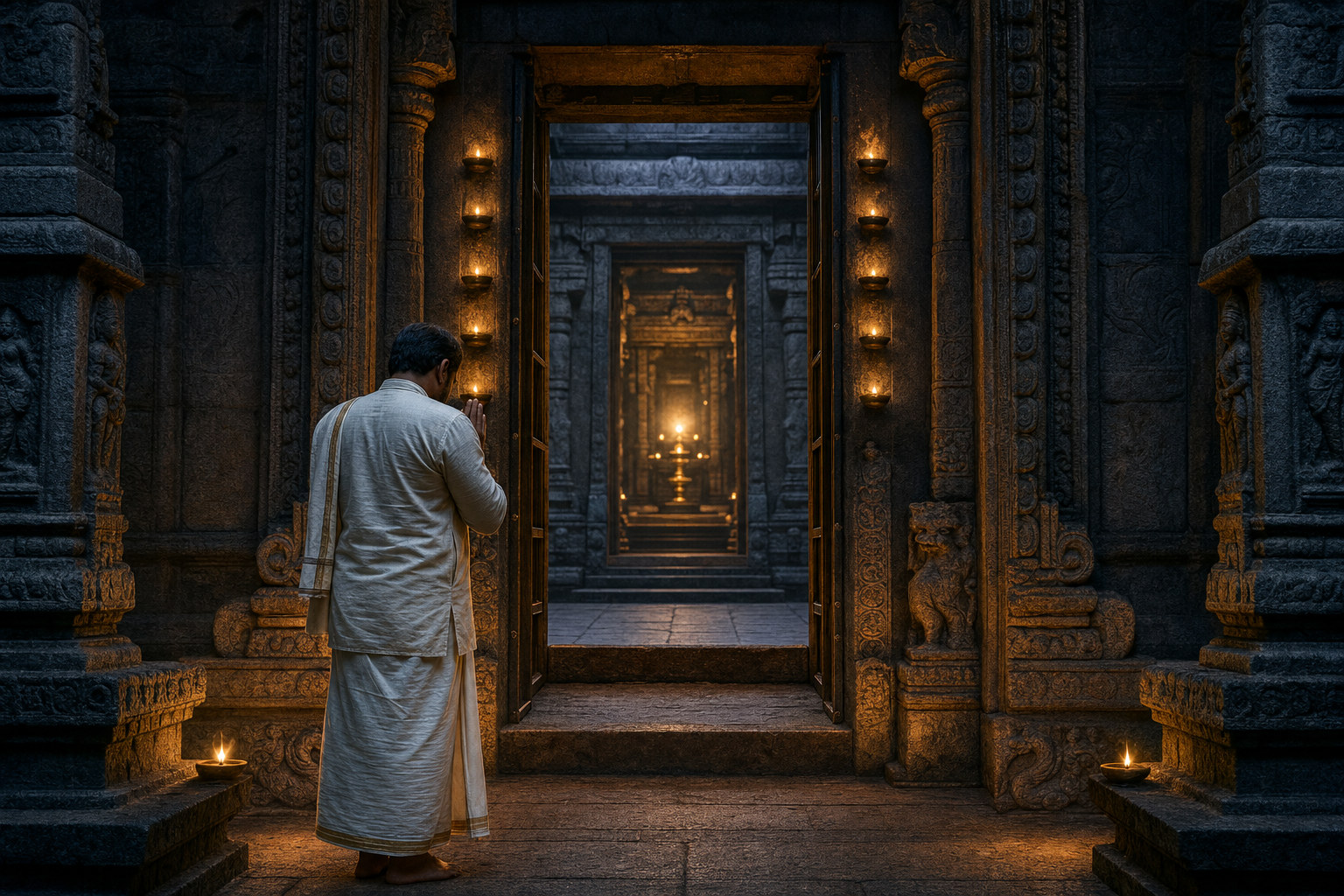
Vaikuntha is understood in Vaishnava traditions as the divine abode of Lord Vishnu, while dwaram means a gate or doorway. On Vaikuntha Ekadashi, the ceremonial opening of that doorway embodies the availability of divine grace and the devotee’s movement from limitation toward refuge in Vishnu. The threshold represents inner awakening and the aspiration for moksha; its theological meaning is larger than the physical act of walking through a door.
This emphasis distinguishes Vaikuntha Ekadashi among the approximately twenty-five Ekadashi observances in a lunar year. Every Ekadashi can support purification, self-restraint and devotion. Vaikuntha Ekadashi concentrates those disciplines into the image of entering Vaikuntha: effort brings you to the threshold, while grace makes deliverance possible.
A useful distinction is often missed here. The Padma Purana narrative involving the asura Muran supplies a broader background for Ekadashi and its call to vigilance over disorderly impulses. It should not reduce Vaikuntha Ekadashi to the commemoration of a battle. This day’s distinctive focus is the open gateway, refuge in Vishnu and a decisive reorientation toward liberation.
Nor should the crossing be treated as spiritual magic. The public rite assumes the inner work of a vrata: fasting or another suitable restraint, mantra-japa, wakeful remembrance, charity and disciplined conduct. If you enter the queue with entitlement and leave it with the same impatience, your body may have crossed the threshold while your habits did not.
Before the observance, name the movement you actually want to make: from distraction to remembrance, anger to restraint, or self-concern to seva. Carry one such sankalpa into darshan. That turns the doorway from an object you have come to see into a commitment you are prepared to live.
What the Tirupati observance looks like in practice
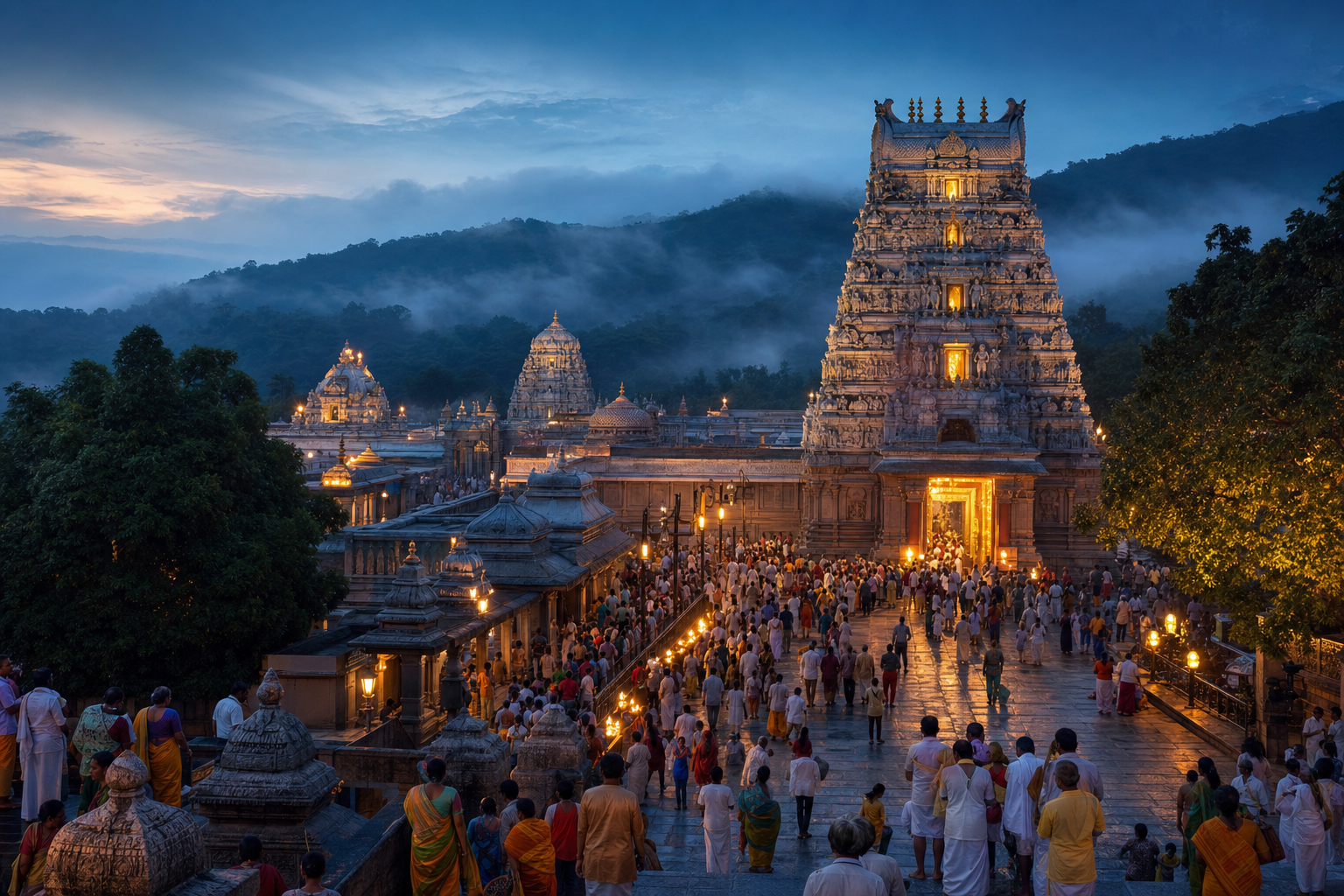
People commonly speak of celebrating at Tirupati, but the principal doorway observance associated with Sri Venkateswara takes place at Tirumala. The special Vaikunta Dwaram is ceremonially opened, traditionally at dawn, and devotees pass through it in an organised procession. TTD-administered temples in Tirupati and the surrounding region may also hold festival observances and make additional arrangements for worshippers.
You will encounter both Vaikuntha and Vaikunta in English usage. You may also hear Mukkoti Ekadashi in Telugu-speaking regions. These names point to the same festival context rather than separate Ekadashis. In Tamil temple traditions, the opening is often called Sorgavasal Thirappu, while the ceremonial passage at Srirangam is known as the Paramapada Vaasal.
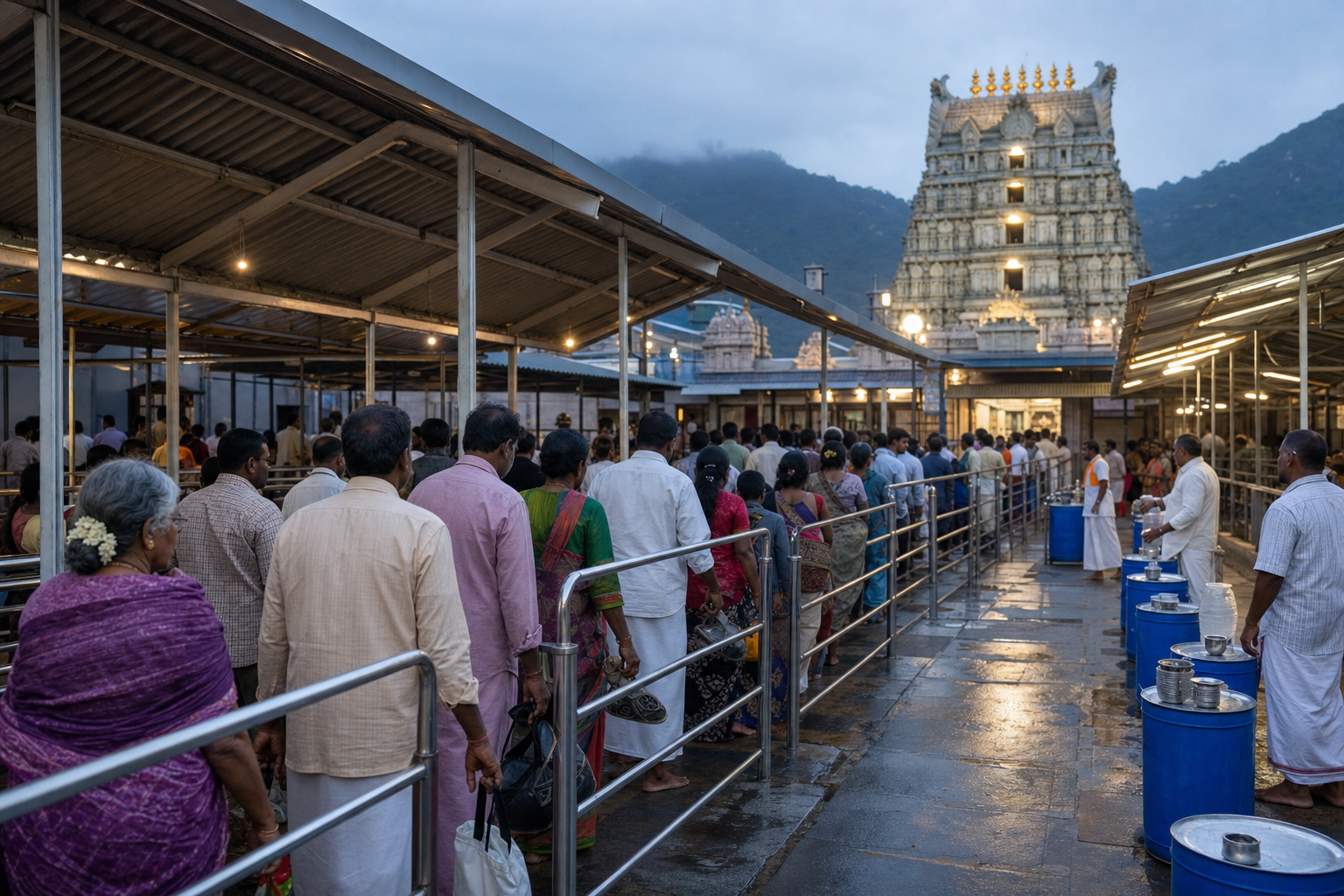
The scale at TTD temples can be immense. One set of festival preparations called for 10 tons of traditional flowers and 1 lakh cut flowers, together with special queue systems, protective sheds and rangoli. Those numbers are not a timeless specification for every year. They are a practical indication of the footfall and coordination that a major Vaikuntha Ekadashi observance can demand.
The flowers and rangoli create a devotional setting, but the queue infrastructure matters just as much. Orderly movement allows families, elders and first-time pilgrims to approach darshan with dignity. Your conduct is part of that arrangement: keep your place, follow instructions, avoid pressing others and make room for anyone who plainly needs assistance. In a crowded pilgrimage, consideration for the next devotee is seva rather than mere etiquette.
Separate the spiritual observance from the access plan. A festival being celebrated does not by itself guarantee that every visitor can use a particular entrance at a preferred time. Before travelling, confirm the exact temple, lunar observance date, current TTD access procedure, entry conditions and queue instructions through current official directions. Do not build a journey around an old schedule or a forwarded message; operational arrangements can differ from one observance to another.
How to prepare for darshan without losing the vrata
The strongest preparation joins practical planning to a devotional rule. Use this sequence rather than treating the journey, fast and darshan as unrelated tasks.
- Choose the form of your vrata. Follow your sampradaya, family practice and genuine physical capacity. Ekadashi fasting is an instrument of attention and restraint, not a contest in deprivation. If restricting food could interfere with a health condition or medication, obtain qualified clinical guidance and adopt a form of restraint your health safely permits.
- Give remembrance a definite place. Set aside time for mantra-japa, Vishnu Sahasranama or scriptural listening. If you undertake jagarana, let the wakefulness be used for prayer rather than ordinary entertainment, and do it only if your health and responsibilities permit.
- Verify access before committing to travel. Check the date with a trusted panchanga and consult current TTD directions for the temple and darshan arrangement you intend to use. Transport to Tirupati, ascent to Tirumala, accommodation and access to the ceremonial route are separate planning questions.
- Prepare your household for the queue. Decide in advance how children and elders will be supported. Keep the group together, carry only what current temple rules allow and make sure everyone understands that waiting is part of the pilgrimage rather than an interruption to it.
- Use the waiting period as practice. Repeat the divine name, recite quietly or remain attentive. Guard against arguments over position, speed or privilege. The queue is where the vrata’s promise of self-restraint is tested most concretely.
- Enter with one clear sankalpa. Darshan can become hurried when crowds are moving. Instead of trying to remember a long list of requests, hold one prayerful intention connected to dharma, surrender or correction of conduct.
- Carry the crossing into the next action. Complete the fast according to your tradition with suitable sattvic food, and connect the observance to charity or seva. Choose one disciplined change you can continue after the festival rather than allowing the experience to end at the temple exit.
This approach also protects you from a common disappointment. You may not receive a long or quiet moment before the deity. The crowds may move quickly, and the physical experience may not match an imagined scene. A prepared sankalpa, steady remembrance and considerate conduct keep the pilgrimage meaningful even when the moment of darshan is brief.
A complete observance is possible without entering Tirumala
If travel, health, caregiving duties or access arrangements prevent you from reaching Tirumala, do not treat the day as spiritually lost. The doorway’s deepest meaning is an inward passage supported by devotion. Temple participation gives that truth a powerful public form, but sincere observance is also possible at home or at a nearby Vishnu temple.
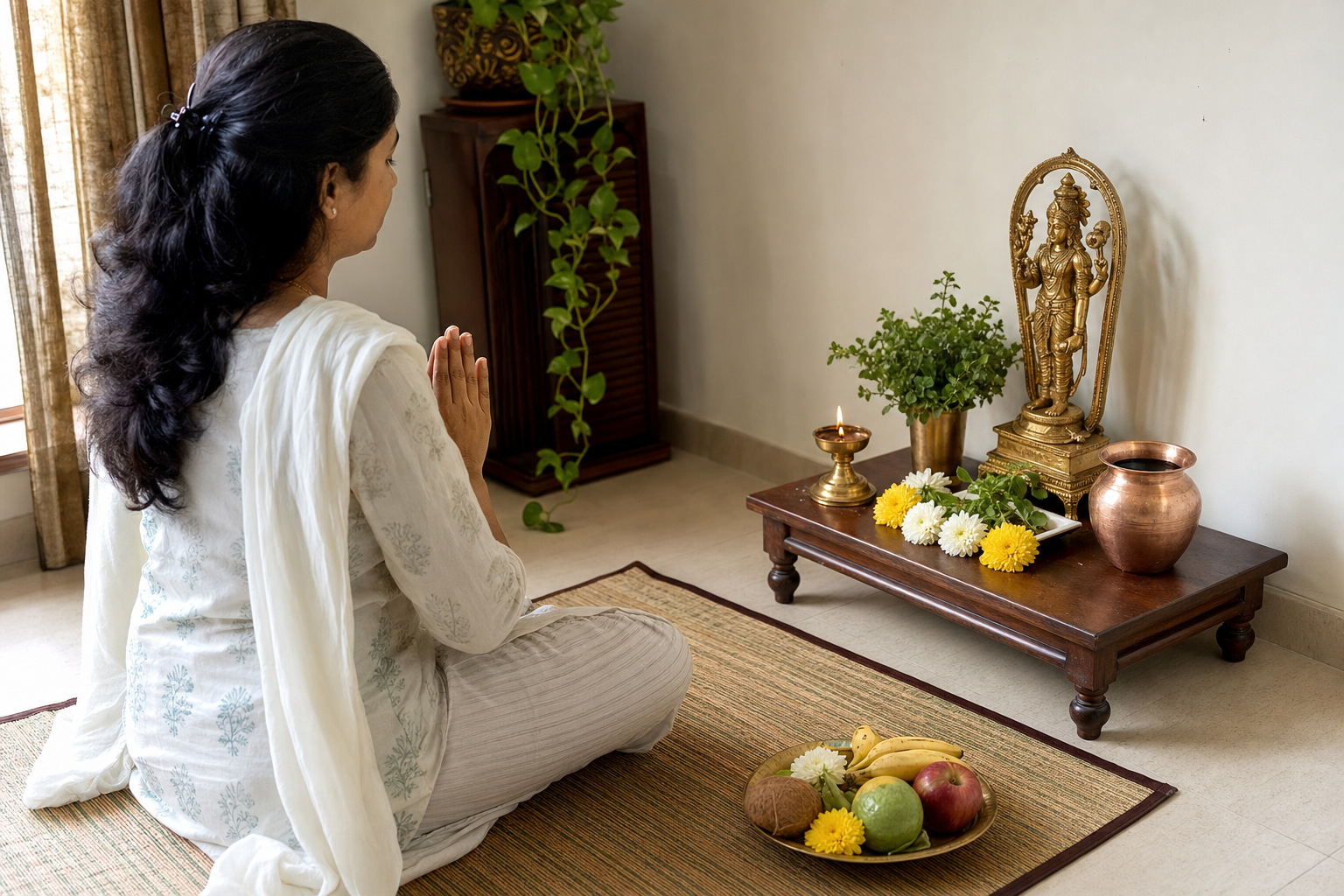
- Clean and prepare a simple place of worship, light a lamp and offer tulasi leaves according to your family tradition.
- Make a realistic vrata sankalpa before the day begins, specifying the restraint, prayer and service you will undertake.
- Recite Vishnu Sahasranama, perform mantra-japa or listen attentively to sacred narration instead of leaving the day to routine distractions.
- Set aside something for charity or perform a concrete act of service. Outward generosity prevents austerity from becoming preoccupation with the self.
- Invite children and elders to participate through a lamp offering, a short recitation or scriptural listening without assuming that everyone should undertake the same food austerity.
- When the vrata concludes according to your tradition, prepare simple sattvic food and discuss the conduct your household wants to carry forward.
The form is distinctly Vaishnava: the open gate expresses refuge in Vishnu and the hope of Vaikuntha. Its ethical rhythm nevertheless participates in a wider Dharmic pattern. Buddhist uposatha, Jain vrata and upavasa, and Sikh simran and seva are not interchangeable doctrines, but each shows how disciplined remembrance can shape compassionate conduct. Respecting both the shared ethic and the theological differences gives the comparison its integrity.
This is also why a household observance should produce more than a special menu. If fasting makes you harsher with the people around you, or temple ambition makes you disregard another pilgrim, the means have displaced the end. Restraint should clarify attention; remembrance should deepen humility; grace should become visible as compassion.
Key takeaways for choosing how you will observe
- Choose Tirumala for the public threshold experience if passing through Vaikunta Dwaram is central to your sankalpa and you are prepared for managed access, substantial crowds and a potentially brief darshan.
- Do not mistake the doorway for an automatic guarantee of moksha. The crossing expresses surrender and grace; fasting, remembrance, self-restraint and ethical conduct give the symbol personal substance.
- Confirm operational details separately. The Ekadashi date, travel plan, temple location, queue procedure and eligibility for a particular route are different facts and should each be checked through current official directions.
- Adapt austerity safely. Follow your tradition, but do not ignore a health condition or disrupt essential medication in pursuit of a stricter fast.
- Observe fully wherever you are. A lamp, tulasi offering, Vishnu Sahasranama, japa, charity and a sincere sankalpa can make home worship disciplined and complete.
Decide now what you intend to cross away from, not only which doorway you hope to enter. Then make the travel plan, vrata and act of seva serve that one movement. The most faithful continuation of Vaikuntha Ekadashi is a change in conduct that remains visible after the festival crowd has dispersed.
References
- DharmaRenaissance Blog — Vaikunta Ekadashi Unveiled: The Sacred Gateway of Grace That Sets It Apart
- DharmaRenaissance Blog — Tirupati TTD’s Grand Vaikuntha Ekadashi Prep: Devotee-Friendly Queues and 10 Tons of Flowers
