
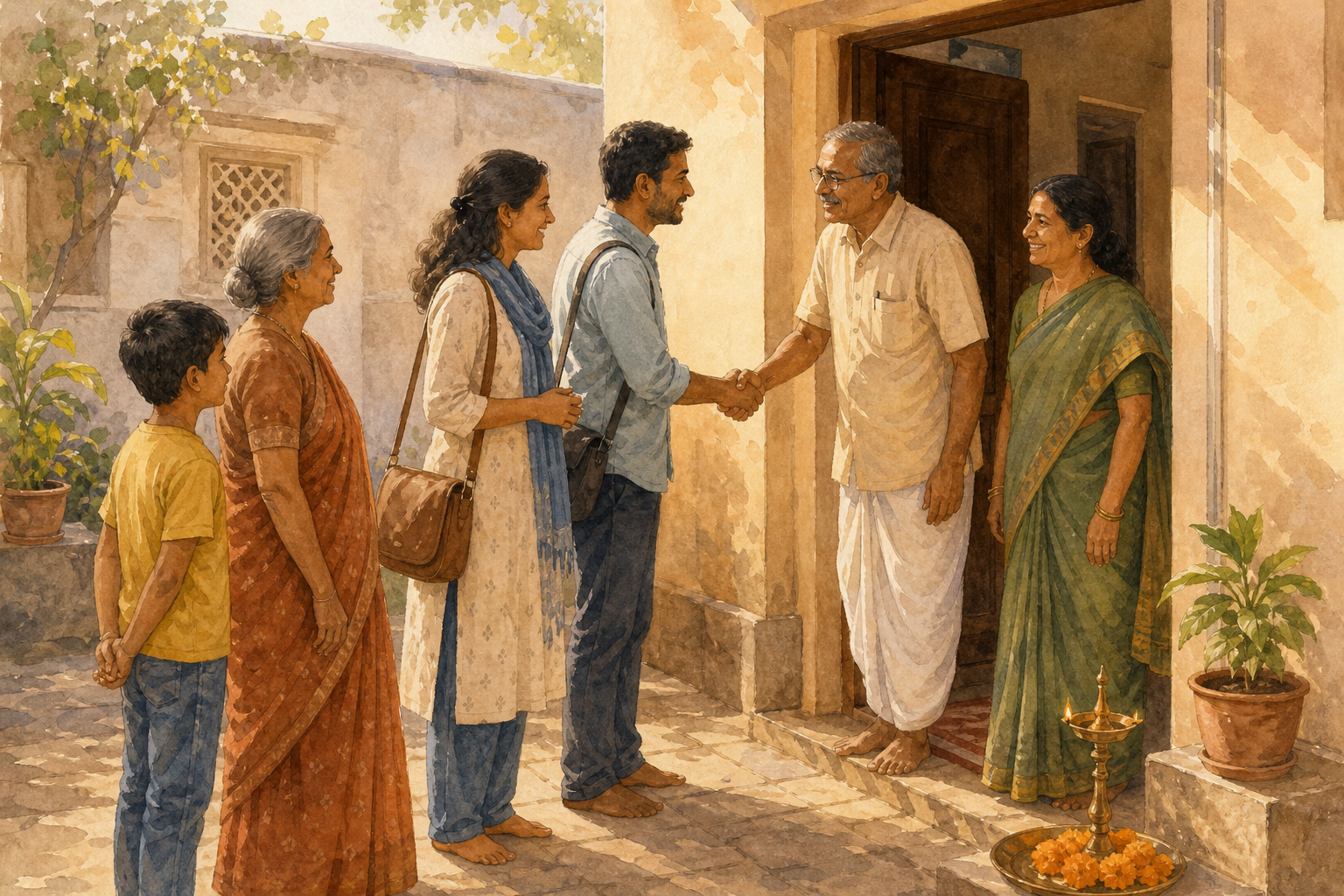
If you support ghar wapsi and saw the news from Solapur, the most important question is not whether the ceremony looked successful. It is whether the people returning to Hindu Dharma could exercise conscience freely and whether Hindu society is prepared to receive them after the public attention ends.
That makes a homecoming a test of conduct as much as conviction. You can judge it by four practical standards: accuracy about what happened, respect for personal agency, protection of privacy, and a credible path into ordinary community life.
Keep the Solapur claim within its real limits
At a Sanatan Ghar Wapsi Utsav in Solapur, five people were reported to have re-entered the Hindu faith. The gathering was presented as marking National Purification Day. Those are the central public facts.
They do not establish five complete spiritual histories. The participants’ previous affiliations, individual reasons, family circumstances, length of separation from Hindu practice, and understanding of the ceremony are not established by the information available here. You should not fill those gaps with assumptions, however plausible they may sound.
One local event also cannot prove a national trend. Five reported homecomings in one city tell you that this gathering occurred; they do not reveal how common such returns are elsewhere or why different people make them. If you share the Solapur development, use the exact count, place and event description. Do not turn it into a mass movement, a demographic conclusion or evidence about motives without additional, verifiable information.
This restraint serves Hindu interests. Cultural advocacy becomes easier to dismiss when it inflates a limited fact. Precision allows the real significance of the event to stand without decoration.
Put the returning person’s agency ahead of the spectacle

Ghar wapsi means homecoming. Its moral force rests on return by choice, not victory over a person. A ceremony therefore deserves respect only when participation is voluntary and the person remains free to decide how publicly that choice will be described.
If you help organize such an event, ask about each form of consent separately. Agreement to participate is not automatically agreement to publish a full name, show a face, record a ritual, circulate a video or request a personal testimony. Before anything becomes public, confirm what may be shared, on which channels and with which identifying details. Provide a private way for the participant to withdraw permission before publication.
Do not script a dramatic account or require denunciation of a former religious community as the price of welcome. A person may understand the return through ancestry, family memory, spiritual conviction, cultural belonging or several of these at once. Let that person choose the language. When no direct account is available, say less.
The same discipline should govern claims about voluntariness. Do not declare that pressure was present without evidence, but do not treat the event label as proof that pressure was absent. Make free choice the standard, establish it through careful conduct, and avoid claiming more than the participants themselves have chosen to confirm.
Make homecoming livable after the ceremony
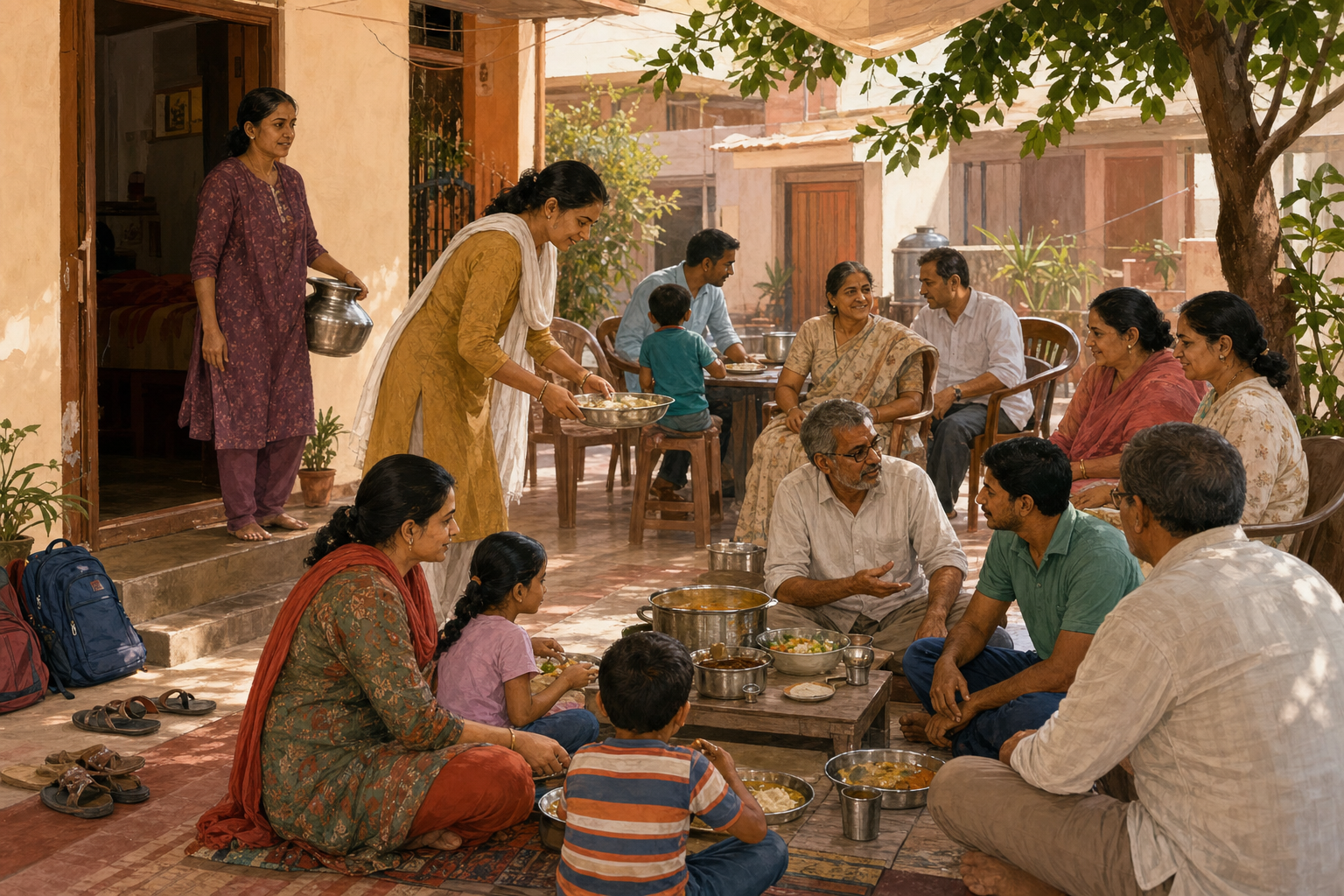
A public ritual can mark a beginning, but it cannot supply an entire religious life. The person may still need a trusted contact, a welcoming place of worship, introductions to local families, guidance about daily practice and room to ask elementary questions without embarrassment.
Hindu Dharma is not a standardized package. Sampradayas, family customs, local deities and forms of worship differ. A responsible host asks what the returning person already remembers and which tradition he or she wishes to follow. It does not impose every possible observance at once or present one local custom as the only authentic Hindu practice.
Practical welcome can be quiet. Invite the person to ordinary puja, festivals, study, seva and shared meals. Introduce a dependable elder or family who can answer questions. Keep in contact after the event is no longer news. Most importantly, do not turn the returnee into a permanent exhibit who must repeatedly perform gratitude or recount private pain.
Belonging also fails when social barriers replace religious ones. Caste assumptions, suspicion about family background or demands for political loyalty should not become hidden entrance tests. If a community celebrates a person’s return on a stage but keeps that person at a distance in daily life, it has offered publicity rather than homecoming.
Separate spiritual, social, public and administrative questions
Confusion begins when a ceremony is expected to settle every part of a person’s identity. A spiritual commitment, community acceptance, public disclosure and administrative classification answer different questions. Handle each on its own terms.
| Dimension | Question to resolve | Responsible next action |
|---|---|---|
| Spiritual | How does the person understand the return and wish to practise? | Connect the person with a suitable temple, teacher or trusted practitioner without forcing a sectarian choice. |
| Social | Who will make ordinary community belonging possible? | Arrange continuing contact, invitations and opportunities for seva beyond the ceremony. |
| Public | Which identity details may be disclosed? | Obtain specific permission for names, images, recordings and testimony before publication. |
| Administrative | Does the person expect any official record or status to change? | Make no promises. Consult the relevant local authority or a qualified legal professional before submitting forms or relying on legal consequences. |
The administrative distinction matters because an organizer should not give casual legal assurances. If documents, declarations or official classifications are involved, the safe course is to verify the current requirements for that individual’s circumstances with someone qualified to advise locally. A religious ceremony should never be presented as a substitute for that verification.
Use the language of purification without diminishing human dignity

The Solapur gathering’s association with National Purification Day calls for careful language. Purification can describe an effort to repair what organizers regard as estrangement from an inherited tradition. It must not imply that a human being is dirty, lesser or without dignity before participating.
If you host or describe a similar program, explain what the term means in that setting. Keep the focus on restoration of relationship, practice and memory. Avoid language that humiliates another religious population or treats the returning person as contaminated. Such rhetoric shifts attention away from conscience and gives opponents an easy reason to dismiss the homecoming itself.
A pro-Hindu account does not need hostility to be firm. It can defend the freedom to return, welcome recovery of ancestral practice and insist on the participant’s dignity at the same time. Those commitments reinforce one another.
Key takeaways
- The defensible public claim is specific: five people were reported to have re-entered Hindu faith at a Sanatan Ghar Wapsi Utsav in Solapur.
- Do not infer the participants’ former affiliations, motives or family histories without direct evidence.
- Treat participation, identification, photography, recording and personal testimony as separate consent decisions.
- Plan for temple access, trusted relationships, ordinary invitations and continuing support after the ceremony.
- Keep spiritual return separate from any administrative or legal question, and obtain qualified local guidance where official consequences are expected.
- Describe homecoming precisely and confidently without inflating one event into a national trend or demeaning another community.
If you are helping with a future homecoming, begin before the stage is built. Ask the person what return means, what must remain private, which form of Hindu practice feels authentic, and who will remain available afterward. Solapur’s deeper test is not how often its count is repeated, but whether Hindu society can make every welcome truthful, free and durable.
References
