

If your child says that a driver, attendant, teacher or another trusted adult touched, threatened or frightened them, do not begin by testing the story. Your first tasks are to make the child safe, listen without leading, and bring in qualified authorities quickly.
A reported allegation concerning a six-year-old girl and a school-van driver in Goa has brought an ordinary parental fear into sharp focus: children often travel in systems built on trust but weak on verification. The answer is neither silence nor instant public judgment. It is a child-centred response under the Protection of Children from Sexual Offences (POCSO) framework, followed by a serious audit of how adults gain access to children.
Protect the child before you probe the account

A disclosure can be brief, indirect or incomplete. A young child may describe an action without understanding its significance, withdraw part of the account, or use words that adults find ambiguous. That uncertainty is a reason to involve trained professionals, not a reason to conduct a family interrogation.
- End access immediately. Keep the child away from the person they have identified. Arrange different transport, pickup or supervision. If the person may have access to other children, tell the responsible institution and authorities promptly.
- Respond without shock or blame. Useful sentences are simple: “I am glad you told me,” “You are not in trouble,” and “This is not your fault.” Do not ask why the child did not speak earlier.
- Ask only what safety requires. Establish whether the child is safe now, whether the person is nearby or likely to return, and whether urgent medical help is needed. Let trained investigators gather a fuller account.
- Do not introduce details. Avoid questions such as “Did the driver do this in the van?” A neutral invitation such as “Tell me what happened” is less likely to shape the child’s words.
- Promise help, not secrecy. Explain that you will tell only the people needed to keep the child safe. A promise to tell nobody can prevent you from obtaining protection or care.
- Make a restrained record. After the conversation, note when and where the disclosure occurred, the child’s words as accurately as you remember them, visible immediate concerns, and the people you contacted. Do not coach the child to repeat a polished version.
If there is immediate danger or an urgent medical concern, contact emergency, police and qualified medical services without delay. Do not postpone necessary care while trying to collect perfect evidence. Ask the relevant professionals how physical items, digital messages, transport records or other possible evidence should be preserved.
If you have a concern but no disclosure, do not press the child through repeated or suggestive questions. Use a calm, neutral check-in, document what caused the concern, and seek guidance from police, child-protection services or a qualified child mental-health professional.
Make the POCSO response child-friendly and traceable

Invoking POCSO cannot be reduced to adding a legal label to a complaint. The response must protect the child from further access, place fact-finding with the proper authorities, connect the family with care, and prevent the child from being made to narrate the experience unnecessarily to multiple adults.
| Workstream | Immediate purpose | What the family should request |
|---|---|---|
| Protection | Prevent further contact or retaliation | A safe transport alternative, controlled access and a named person responsible for the child’s immediate safety |
| Investigation | Place fact-finding with trained authorities | Prompt contact with police or child-protection authorities and preservation of route, staff, attendance, complaint and GPS records |
| Care | Address the child’s physical and emotional needs | Access to qualified medical care and child-appropriate counselling without pressure to produce a particular account |
| Communication | Keep action coordinated and accountable | One family liaison, written acknowledgements, dated updates and strict control of identifying information |
Keep your own dated contact log. Record whom you notified, what records you asked the school to retain, what immediate protection was promised, and when the next update is due. This is not a substitute for an official record. It prevents important commitments from disappearing into informal phone calls.
A school’s protective action and a finding of guilt are not the same thing. Temporarily preventing unsupervised access protects children while the allegation is examined; it does not settle the criminal question. Due process requires impartial fact-finding, but due process does not require leaving a potential access risk unchanged.
The school should not run a substitute criminal investigation or ask the family to resolve the matter privately. Reporting, medical and evidentiary decisions can affect a case, so rely on police, child-protection, medical and legal professionals for case-specific direction.
Audit the route, not only the driver’s papers
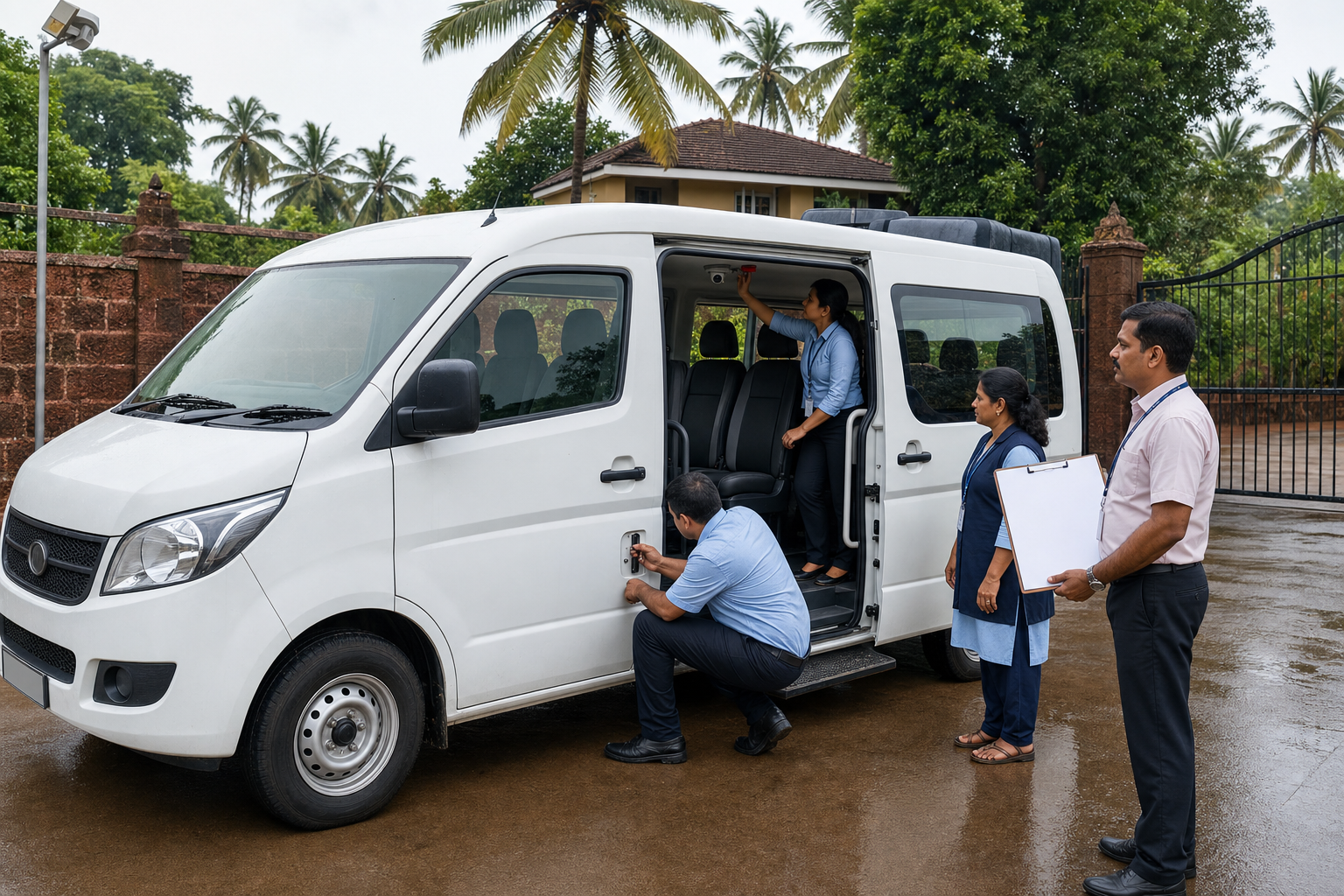
Background verification matters, but a file checked at hiring cannot supervise a route months later. The practical risk lies in access: who is alone with a child, when supervision drops, whether an unexplained stop is noticed, and whether a complaint reaches someone able to act.
Ask your school or transport contractor to show you the system, not merely assure you that children are safe. A credible transport audit should cover:
- Verification and re-verification: documented identity and background checks for drivers and attendants before duty begins, followed by a defined periodic review rather than a one-time exercise.
- Named supervision: a rostered attendant and a backup arrangement. A route should not quietly continue with its supervision missing.
- Pickup and handover control: current child rosters, authorized pickup details, recorded boarding and drop-off, and a clear procedure when the expected adult is absent.
- Route accountability: GPS logs, scheduled routes, records of deviations or unplanned stops, and a named person who actually reviews exceptions. GPS data is an audit trail, not protection by itself.
- A usable complaint channel: a clearly published contact for parents, staff and children, plus an escalation path when the first recipient fails to respond or is involved in the concern.
- Scenario-based sensitization: periodic training for drivers, attendants, teachers and administrators on boundary violations, disclosures, immediate protection, record preservation and escalation.
- Independent inspection: periodic third-party checks of vehicles, records, staffing and compliance, with corrective actions assigned to named officials.
Three follow-up questions expose the difference between a policy and a functioning safeguard: Who checks compliance? What record proves the check occurred? What happens on the same day when the safeguard fails? If nobody owns those answers, the policy is decorative.
Parents should also examine small transitions. Does the attendant leave before the final child is handed over? Can a substitute driver begin work without parents being told? Who notices if GPS data disappears? Does a child have to complain through the same transport hierarchy that employs the adult concerned? These are the gaps an audit must close.
Public pressure must protect the child, not consume the case

Ranragini’s intervention in Ponda sought prompt investigation, survivor care and coordinated administrative action. Civic pressure can be useful when it asks the district administration, police, education authorities and child-protection services to perform their distinct duties on a clear timeline.
Public anger becomes harmful when it reveals the child’s identity, circulates unverified details, pressures the child to appear publicly, declares guilt before investigation, or converts an individual allegation into hostility toward an entire religious or social community. None of those actions improves evidence, care or transport safety.
- Keep the survivor’s name, image, school details, route and family identifiers out of public messages.
- Use “alleged” until the legal process establishes facts, while still demanding immediate protective measures.
- Ask for concrete institutional actions: preservation of records, a safe alternative route, access to care, a transport audit and coordination among responsible agencies.
- Seek dated acknowledgements and progress updates without demanding sensitive investigative details that should remain confidential.
- Reject communal speculation. An accused person’s name or presumed identity is not evidence against a community.
A Dharmic response joins compassion with disciplined truthfulness. Hindu, Buddhist, Jain and Sikh traditions express their moral vocabularies differently, but protection of vulnerable life, restraint, service, dignity and justice are recognizable obligations across them. The child must never be turned into a slogan or an instrument of hatred.
That restraint is not passivity. It means directing moral energy toward the places where it can protect children: competent investigation, qualified care, institutional transparency and removal of foreseeable access risks.
Key takeaways
- Your first response to a disclosure is safety and calm listening, not interrogation.
- Contact police, child-protection and qualified medical professionals promptly; do not rely on a school committee to determine the legal response.
- Ask the school to preserve transport, staffing, attendance, complaint and GPS records before routine deletion or alteration can complicate fact-finding.
- Separate immediate protective restrictions from a final judgment of guilt. Child safety and due process can operate together.
- Audit supervision, handovers, route exceptions and complaint escalation, not just the driver’s hiring documents.
- Keep public advocacy factual, survivor-centred and free of communal blame.
Before the next school run, ask for the transport-safety protocol, identify the child-safety contact, confirm who supervises your child’s route, and write down the escalation path. If the school cannot provide those four things, request them in writing with other parents. A safeguard becomes real only when a named person owns it and a record shows that it worked.
References
