
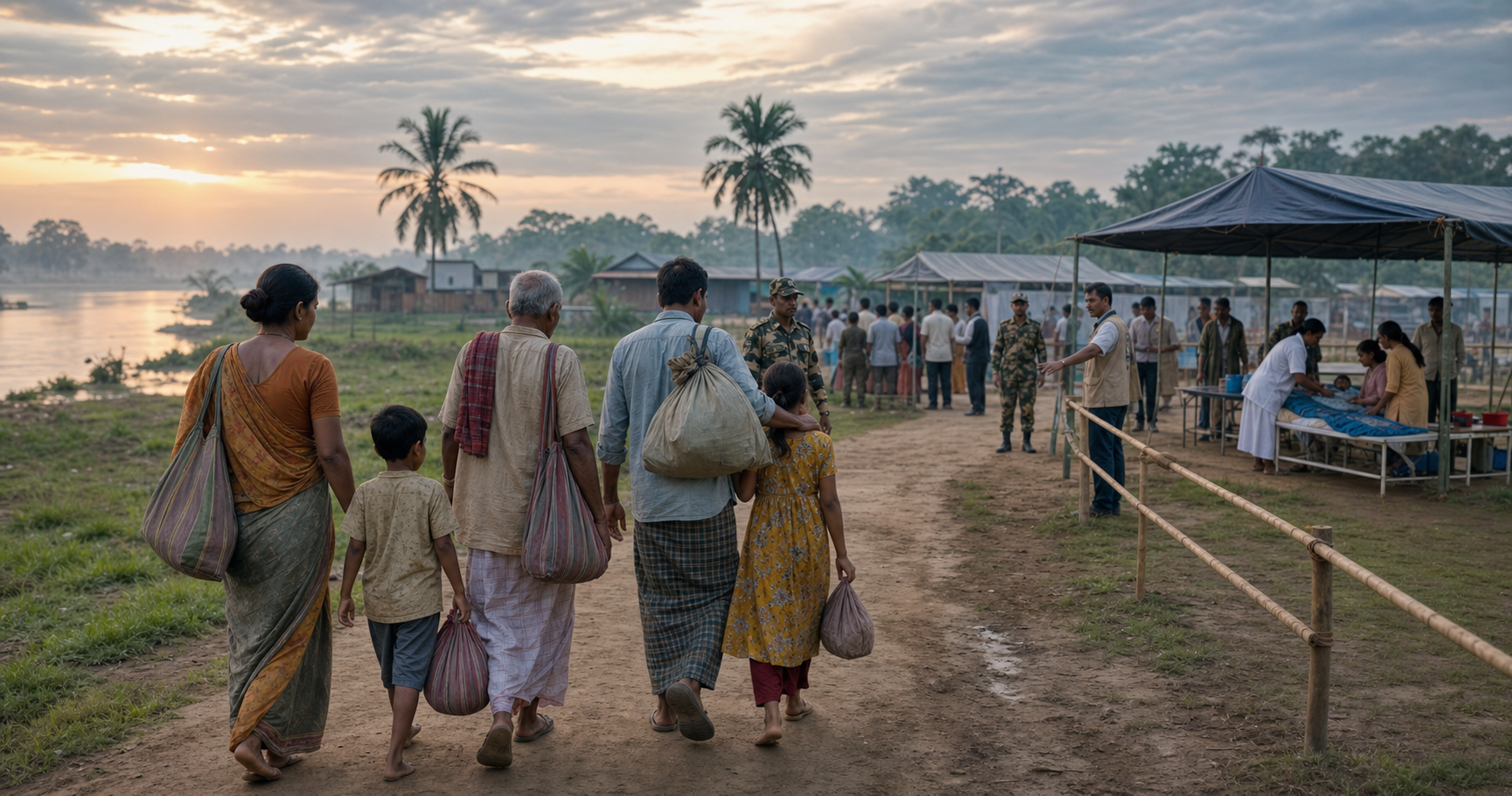
If you are watching the danger facing Bangladesh’s Hindus and asking whether India should simply open the border, the urgency behind that question is understandable. But an unregulated crossing can expose frightened families to brokers, trafficking, separation, and legal limbo precisely when they are least able to protect themselves.
The safer answer is an announced, time-bound humanitarian passage system: clear eligibility, designated entry points, lawful status, security screening, emergency reception, and family reunification. It must move quickly enough to protect people at credible risk while remaining orderly enough to prevent exploitation.
Key takeaways
- Ask for formal temporary protection and designated humanitarian entry points, not a vague promise to open the border.
- Treat passage as one continuous process covering referral, safe movement, screening, shelter, documentation, and follow-up.
- Keep families together wherever possible and give priority attention to children, elders, people needing medical care, and separated relatives.
- Use official or accredited channels. Do not trust brokers, forwarded route instructions, or anonymous promises of guaranteed entry.
- Pair refuge with sustained demands for minority protection, rule of law, and accountability inside Bangladesh.
- Reject retaliation and collective blame. They endanger innocent people, obscure individual responsibility, and weaken the case for principled protection.
Protected passage is different from an open border
Community representatives have appealed for safe entry into India amid reports of rising violence against religious minorities. Families appearing in circulating community accounts describe fear, sleepless nights, and hurried contingency planning. Those accounts justify serious preparedness, but every forwarded claim should not automatically be treated as independently verified.
That distinction matters. Exaggeration can damage credibility, while waiting for perfect information can leave endangered people without an escape route. A responsible system verifies individual cases without dismissing the wider warning signs.
An open-border slogan answers only one question: whether a person can cross a boundary. A humanitarian corridor must answer several more: Who qualifies? Where may the person present themselves? How is approval confirmed? Who protects the journey? What screening occurs? What legal document is issued? Where will the family sleep that night? How can separated relatives find one another? What happens when temporary protection expires?
A humanitarian visa is one possible legal mechanism. A controlled corridor is the physical and administrative route through which approved or reviewable cases move. Temporary reception facilities provide immediate care after arrival. These measures can work together, but the labels mean little unless authorities publish the operating details.
Protected passage also does not mean automatic admission for every applicant. India can conduct identity and security checks while giving vulnerable people notice of the process, a fair opportunity to provide information, and a documented decision. Transparent screening is more secure than forcing desperate families into irregular movement that leaves the state with less visibility.
A workable corridor has five linked stages

The common failure in emergency movement is the handoff. Transport without reception leaves people stranded. Registration without legal status creates uncertainty. Shelter without documentation makes later reunification harder. The entire route therefore has to be designed as one chain.
- Publish the trigger and eligibility rules. Authorities should state what kinds of protection claims may be considered, who can refer a case, which identity or family documents are useful, and what review is available when papers have been lost or cannot safely be obtained. Urgent medical needs, children, elders, and separated households require an identified triage process rather than an informal appeal for special treatment.
- Create a private referral and confirmation channel. Applicants need a way to confirm that an instruction is genuine before approaching the border. Coordination with Bangladesh authorities, state administrations, accredited relief bodies, and appropriate international partners can reduce dangerous crowding and make it harder for traffickers to impersonate officials. Routes and passenger identities should not be broadcast publicly.
- Combine security screening with documented registration. Identity checks, security review, and medical triage should occur through an orderly process that protects privacy. Each household should receive written or otherwise verifiable confirmation that registration occurred, together with a case reference and an explanation of the next step. A person sent for additional review should not simply disappear into an administrative gap.
- Prepare reception before announcing movement. Border preparedness in Assam, Tripura, and West Bengal can include medical screening, temporary shelter, documentation assistance, and reunification services. Capacity must be matched to the number of people officials are prepared to receive. Otherwise, an announcement intended to reassure families can produce unsafe congestion and a new humanitarian problem at the entry point.
- Issue a clear temporary status and next-decision path. Every admitted person should be told how long the initial protection lasts, what rights and conditions apply, where to report a change in family circumstances, and how renewal or review works. Temporary protection must lead to a lawful next decision. Unresolved cases need review rather than pressure to return merely because an administrative period has ended.
Family unity should run through all five stages. Record relationships at the first official contact, use the same household identifier throughout the process, and avoid separating relatives merely because they need different forms of screening or care. When separation is unavoidable, the family should know which authority holds each case and how reunification will be pursued.
Independent monitoring is equally important. Government must retain responsibility, while accredited organizations can assist with shelter, health referrals, interpretation, documentation, and reunification. Monitoring should detect duplicate records, unauthorized fees, coercive recruitment, missing family members, and attempts to divert aid. That is how data collection serves protection rather than becoming paperwork for its own sake.
Families and helpers need a no-rumour protocol
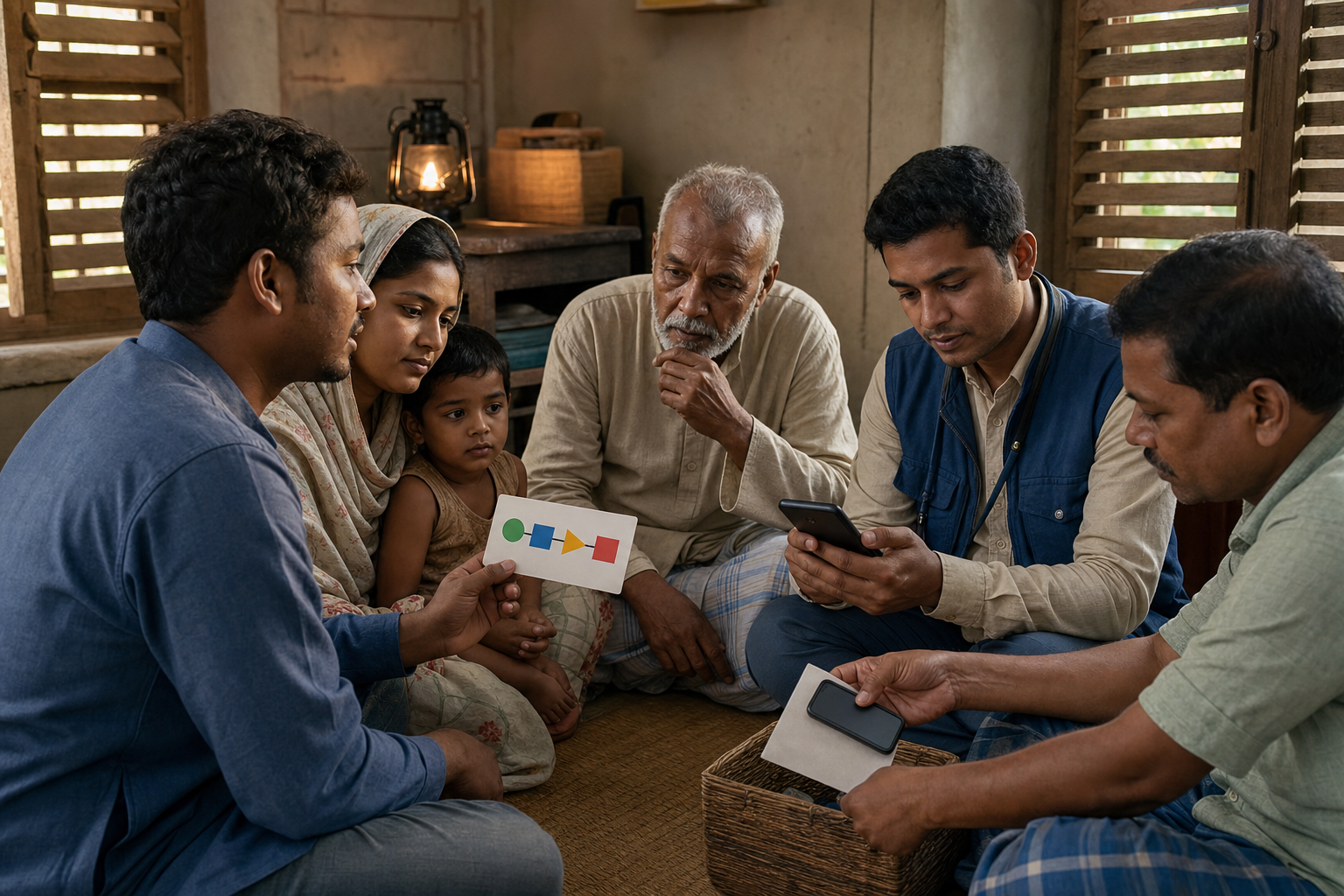
Do not assume that a corridor, visa window, or entry point is operating unless an official notice identifies it. A message carrying a government logo, a familiar name, or a claim of political access is not proof. No private intermediary can safely guarantee admission into a process whose decision belongs to public authorities.
If you or your relatives may be at risk in Bangladesh
- Verify before moving. Confirm any instruction through an official contact or an accredited organization known to the family. Do not approach a border point solely because a forwarded message gives a time or route.
- Protect essential information. If it is safe to do so, keep secure physical and digital copies of identity records, family relationships, essential medical information, and trusted contacts. Do not retain or carry material that would create a greater danger if a device or bag were searched.
- Agree on a family contact method. Choose a trusted contact outside the immediate area, decide how each person will check in, and make sure children and elders have the contact information in a form they can use without relying on one person’s phone.
- List urgent needs plainly. Record essential medicines, mobility assistance, pregnancy or acute medical needs, and the location of separated dependants. Give this information privately to legitimate responders instead of posting it on social media.
- Preserve evidence only when safe. Dates, locations, messages, and images may help a later protection review or accountability process. Safety comes first: do not film an attacker, expose a witness, or publish a victim’s identity when doing so could provoke further harm.
An online checklist cannot determine whether leaving home, contacting local authorities, or travelling toward a border is safe in a particular neighbourhood. Make that decision with trustworthy people who understand the immediate conditions. Preparation should increase your options; it should not become an instruction to begin a dangerous journey.
If you are helping from India
- Separate direct confirmation from forwarding. Mark information as received directly from the affected family, confirmed by a trusted organization, or merely forwarded. Do not turn the third category into a public claim.
- Collect the minimum necessary information. A case referral may need names, relationships, private contact details, location, immediate risk, and medical needs. Obtain consent where possible, restrict access, and do not circulate identity documents through open messaging groups.
- Never promise passage. You can help a family prepare documents, find an accredited contact, or understand an announced procedure. You cannot guarantee a visa, crossing, or security decision.
- Support reception rather than frontier crowds. Community organizations can prepare temporary accommodation, food, interpretation, document assistance, medical referrals, and reunification support. Uncoordinated convoys or gatherings at the border can expose families and interfere with official movement.
- Check relief bodies before donating. Ask who is accountable for the funds, where assistance will be delivered, how recipients are verified, how personal data is protected, and whether the organization coordinates with public authorities. Urgency does not remove the need for basic safeguards.
- Protect dignity in public appeals. Do not publish a vulnerable family’s faces, documents, telephone numbers, location, or travel plans to make a campaign more persuasive. Tell the public what kind of help is needed without turning endangered people into identifiable content.
Compassion and security belong in the same plan
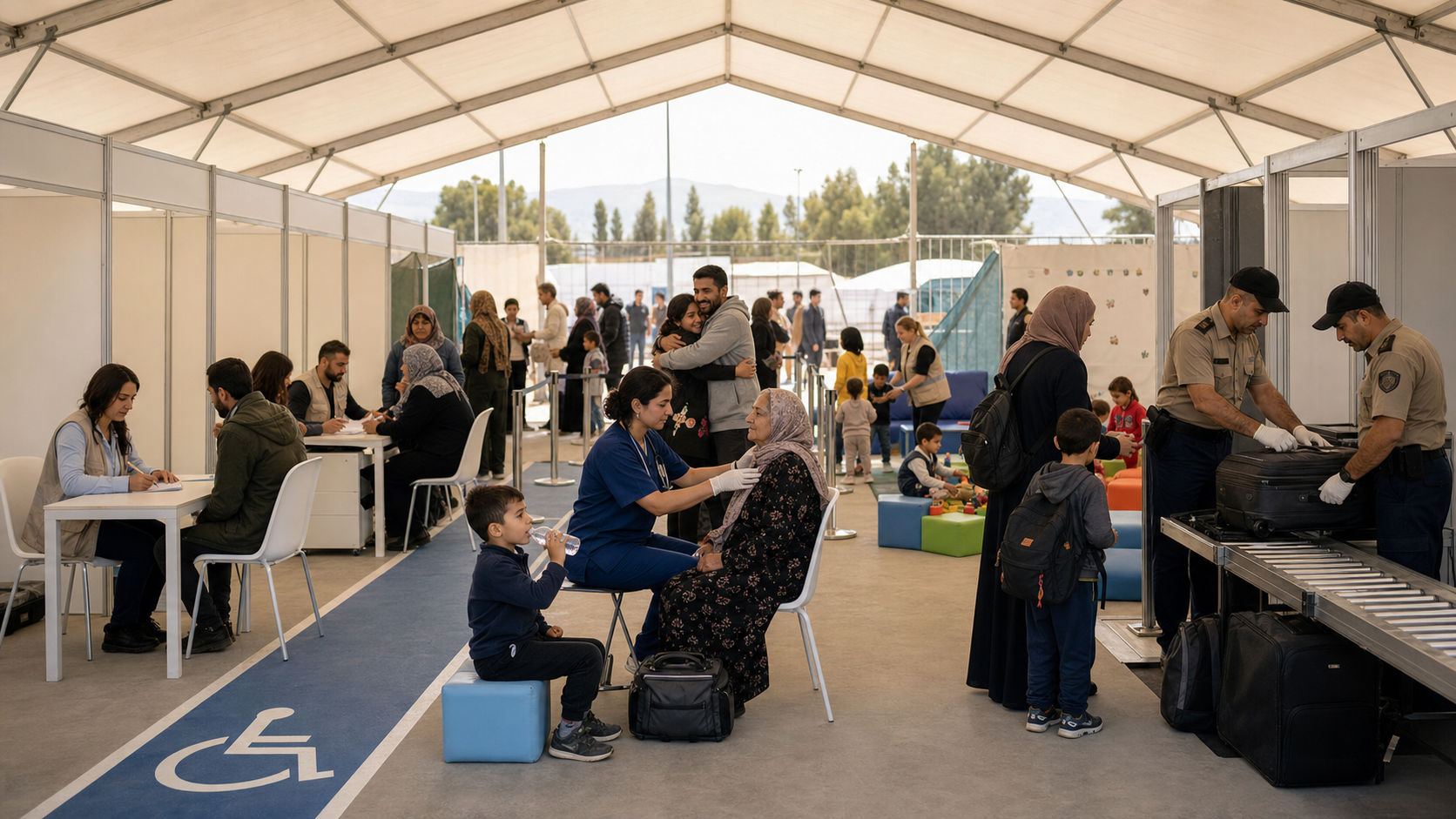
Humanitarian duty and border security are often presented as opposing choices. In this situation, a formal route can strengthen both. Registration gives authorities better visibility. Designated entry points make screening manageable. Accredited transport and reception reduce opportunities for traffickers. Written criteria reduce arbitrary decisions and help the public distinguish a real programme from a rumour.
Security review must still be individual and evidence-based. Treating every frightened applicant as a threat is not a screening system; it is collective suspicion. At the same time, compassion cannot mean abandoning checks that protect refugees, receiving communities, and the integrity of the programme. Due process is the bridge between those obligations.
Emergency refuge also cannot replace Bangladesh’s responsibility to protect its own citizens. The durable objective remains rule of law, protection of religious minorities, and accountability for violence, consistent with constitutional guarantees and international norms. India can prepare humanitarian relief while pressing for protection inside Bangladesh and coordinating measures that reduce further displacement.
A Dharmic response should be recognizable by its discipline. Ahimsa is not passive indifference to an endangered neighbour. It requires active protection without revenge, collective blame, or incitement against an entire population or faith. Hindu, Buddhist, Jain, and Sikh communities can cooperate on food, shelter, medical assistance, documentation, and family support while insisting that responsibility for violence remains individual and accountable.
Turn public concern into six answerable demands
- Will the Indian Government publish eligibility and review rules for temporary protection or humanitarian visas?
- Which official contact and designated entry points will families use to verify instructions?
- What reception capacity is being prepared in Assam, Tripura, and West Bengal for shelter, medical screening, documentation, and interpretation?
- How will household records and reunification procedures prevent children, elders, and other relatives from being lost between agencies?
- How will civil-society partners be accredited, personal data protected, unauthorized fees prevented, and trafficking concerns reported?
- What parallel diplomatic and legal steps will support minority protection and accountability inside Bangladesh?
A useful public demand is specific enough to audit. Calls to save threatened Hindus express the moral emergency; requests for published criteria, authorized entry points, prepared shelters, protected records, and regular monitoring make a response implementable.
When you write to an elected representative, organize through a temple or community body, speak publicly, or decide where to donate, use those concrete questions. That is how solidarity becomes safer passage instead of a dangerous promise.
References
