
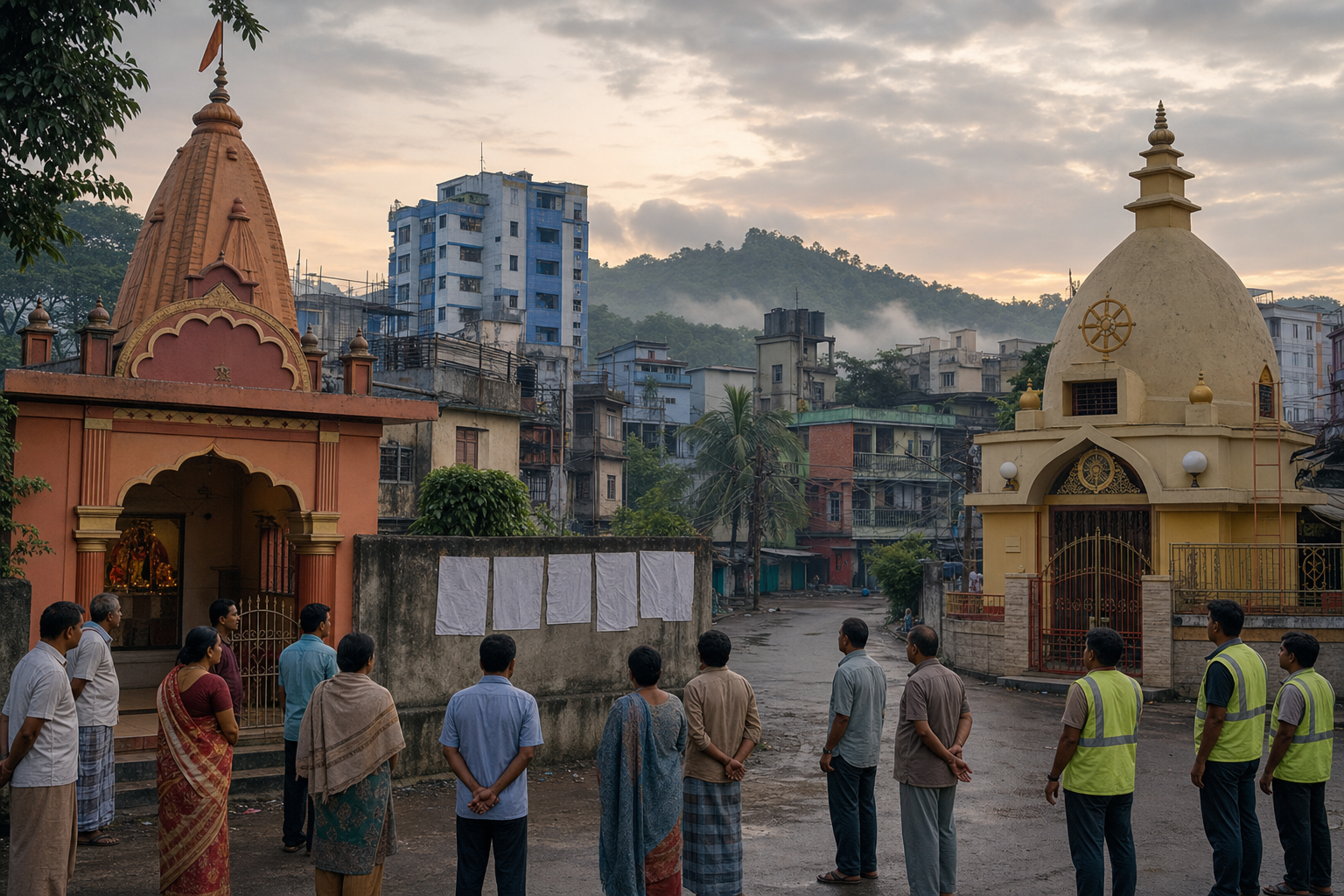
If you have family in Chattogram, help manage a temple or vihara, or are deciding whether to share an alarming message, your question is practical: how seriously should you take the threat, and what can you do without making vulnerable people less safe?
The reported appearance of posters threatening the massacre of two lakh, or 200,000, Hindus and Buddhists ahead of February elections is serious on its face. Yet the available information does not establish who placed the posters, how extensive the campaign was, or whether the perpetrators had the capacity to carry out the threat. The responsible position is neither dismissal nor panic: treat the message as explicit incitement requiring urgent investigation, preventive protection, and disciplined public communication.
Separate the documented threat from the conclusions it cannot prove

Precision matters because both exaggeration and minimization can endanger the people being threatened. The narrow factual baseline is that posters carrying a mass-killing threat against Hindu and Buddhist communities were reportedly displayed in Chattogram. The perpetrators, their intentions beyond intimidation, and any operational plan remain unestablished.
That uncertainty does not make the posters harmless. Public threats can frighten families, intimidate minority voters, make worshippers avoid temples and viharas, and teach bystanders to regard violent language as ordinary political speech. Those consequences begin before anyone attempts physical violence.
The phrase genocide fears describes the gravity of the fear generated by the threat; it is not, by itself, proof that a genocidal campaign is underway. You do not need to overstate the evidence to justify action. An explicit threat to kill a religious population is already sufficient reason to preserve evidence, identify those responsible, assess risks to named communities, and provide protection.
The electoral setting raises the stakes. Political tension during election periods in Bangladesh has previously spilled into communal targeting. A threatening poster can therefore function as more than offensive propaganda: it can test whether authorities will enforce the law impartially and whether minority citizens can participate in public life without fear.
When you describe the incident, use language that keeps these distinctions intact: reported posters carried an explicit mass-killing threat against Hindus and Buddhists; responsibility and operational capability have not yet been publicly established. That formulation conveys urgency without converting an allegation into a confirmed plot.
If you are nearby, use a safety-first reporting chain
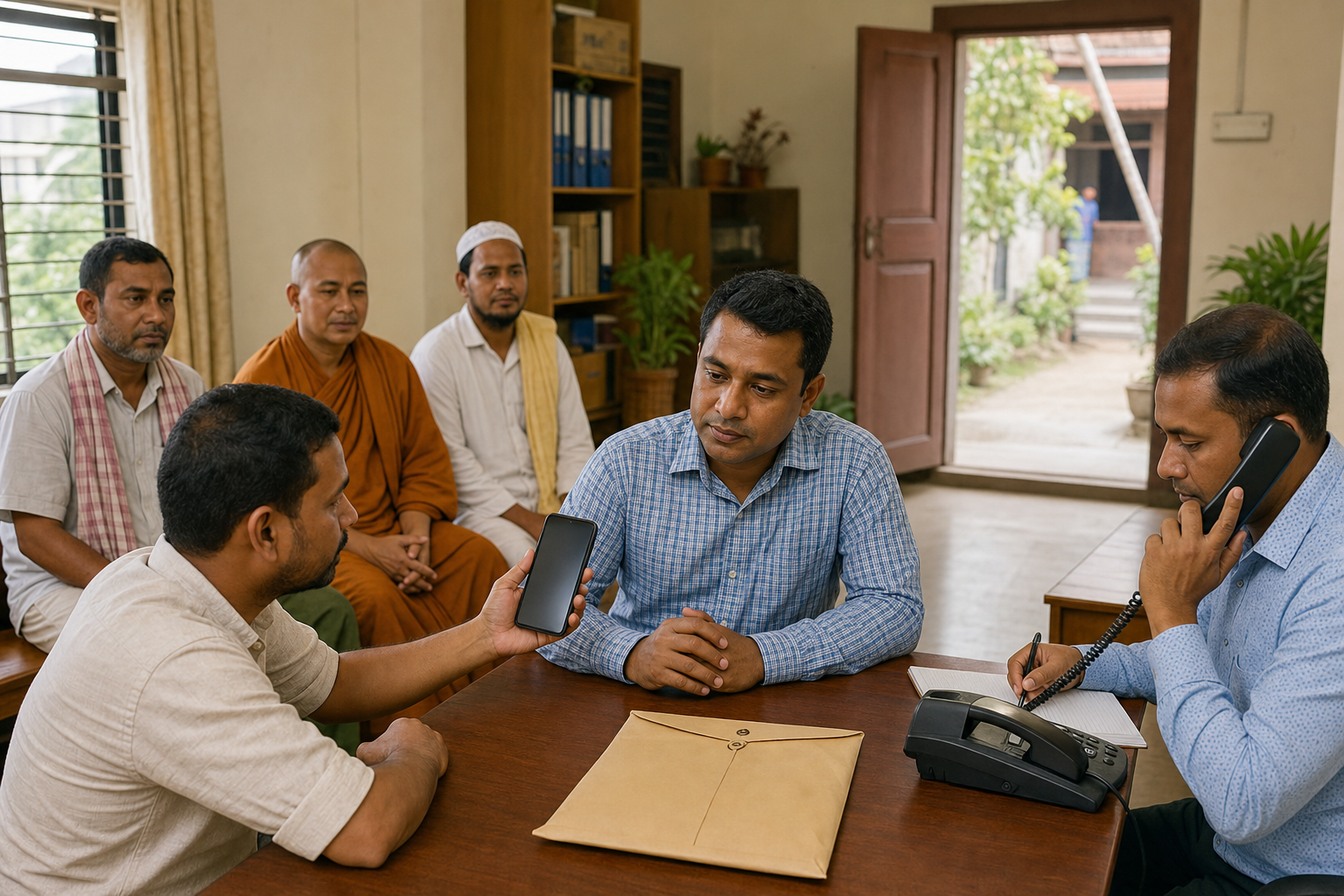
A resident, worship committee, or local volunteer should not treat evidence collection as a confrontation. Personal safety comes first, and investigation belongs to competent authorities. Use the following sequence if you encounter threatening material or receive a credible location-specific report.
- Leave immediate danger before documenting anything. Do not approach a gathering, confront suspected perpetrators, or remain exposed merely to obtain a better photograph. If the threat names a person, address, worship site, or time, contact law enforcement or emergency services and move to a safer place.
- Preserve what can be recorded safely. If conditions allow, take one image showing the words clearly and another showing the surrounding location. Note the place and time, retain the original file, and avoid touching or removing the material yourself. A forwarded or cropped image may help alert people, but it is weaker evidence than an original image tied to a specific location.
- Report through accountable channels. Send the information to law enforcement and a trusted community or human-rights contact. Record when the report was made, which office received it, and any reference number or acknowledgement. This makes follow-up possible when public attention moves elsewhere.
- Activate a private community check-in. Temple and vihara committees should identify one contact for authorities, check on elderly or isolated members, and agree on how urgent notices will be distributed. Keep sensitive routines, travel plans, and security gaps out of public group messages.
- Label information before forwarding it. Distinguish among confirmed information from a named authority, a report from an identifiable witness or organisation, and an unverified social-media claim. Preserve links, dates, and screenshots, but do not publicly accuse named individuals without a verified basis.
If a message is directed at a particular family or address, do not assume that a general public statement will protect them. That situation warrants an immediate report and a specific safety assessment. Public advocacy can support the response, but it cannot replace local protection.
Repeatedly circulating the most inflammatory image can also serve the intimidator’s purpose. Share evidence with people who can act on it. When broader publication is necessary, remove unrelated personal details and state clearly what has and has not been verified.
Judge the official response by actions you can verify
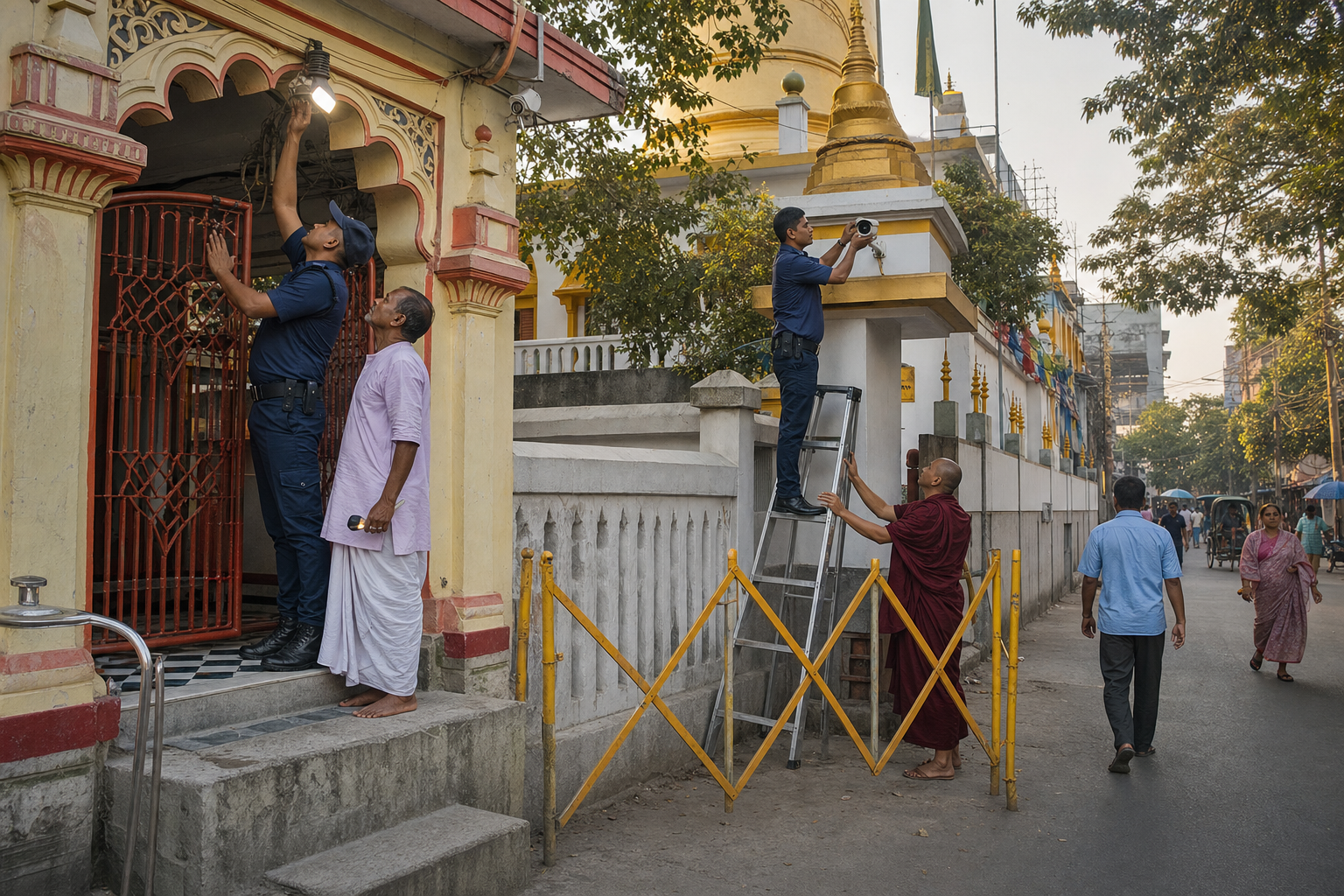
A vague appeal for calm is not an adequate response to a specific mass-killing threat. Calm becomes credible when the public can see that evidence is being preserved, threatening material is being removed, vulnerable places are being protected, and the investigation is advancing without political favour.
- Document first, then remove. Authorities should record the location and content of threatening materials before removing them promptly. Residents should not be expected to leave intimidation on display, but careless removal can also erase useful information.
- Open a transparent investigation. Officials should state whether a case has been opened, where additional evidence can be submitted, and which agency is responsible for follow-up. Transparency does not require exposing witnesses or publishing sensitive investigative details.
- Protect likely targets before an attack occurs. Preventive security should cover at-risk Hindu and Buddhist neighbourhoods, temples, viharas, and community centres. Local leaders need a named official contact and a clear way to request a rapid response when circumstances change.
- Apply the law to conduct, not community identity. Responsibility belongs to the people who created, placed, financed, or knowingly amplified the threat. Investigation under applicable laws against incitement must not become collective punishment or selective enforcement.
- Communicate consistently and without partisanship. Political leaders and law-enforcement officials should condemn the threat explicitly, distinguish confirmed facts from rumours, and explain what protective measures have begun. Contradictory messaging creates the information vacuum in which panic and communal accusations spread.
You can test the response with a short set of questions. Has an investigation been formally opened? Were the materials documented and removed? Is there a reporting channel for residents? Have temples, viharas, community centres, and exposed neighbourhoods received preventive protection? Will authorities publish a further status update? These questions are more useful than asking whether officials have issued another general reassurance.
Nonpartisan policing is especially important in an election setting. Minority protection must not depend on a community’s political alignment or on which party controls a particular area. Equal protection is both a security requirement and a test of electoral integrity.
Dharmic solidarity must protect people without inviting retaliation

Ahimsa is not passive acceptance of intimidation. In public life, it requires disciplined action that protects life, refuses dehumanisation, and pursues accountability without transferring guilt to an entire religious community. Compassion has practical content here: check on vulnerable families, defend access to sacred places, preserve truthful evidence, and insist that the law act before violence occurs.
Hindus, Buddhists, Jains, and Sikhs share Dharmic traditions that place moral weight on non-harm, compassion, and plural paths. Those values should produce visible solidarity with the threatened Hindu and Buddhist communities. They should also rule out revenge slogans, collective accusations, and calls for unofficial punishment.
- Hindu and Buddhist organisations can maintain private welfare checks and issue joint, factual requests for investigation and protection.
- Interfaith leaders can condemn the threat together and affirm the safety and citizenship of Hindu, Buddhist, Muslim, Christian, and other communities.
- Diaspora supporters can circulate verified appeals, ask public authorities and human-rights bodies for documented follow-up, and avoid presenting an unverified rumour as an established event.
- Community volunteers can support access to worship and help vulnerable residents when requested, while leaving policing and confrontation to lawful authorities.
- Public advocates can keep attention on the perpetrators and institutional response instead of turning the crisis into hostility toward ordinary neighbours.
Defending everyone under the same rule of law does not dilute a pro-Hindu or pro-Dharma position. It strengthens it. The immediate duty is to protect the communities explicitly threatened; the larger duty is to prevent sectarian intimidation from becoming an accepted method of political action.
Retaliatory language fails both tests. It can expose already vulnerable families to further danger, obscure individual responsibility, and fracture the wider coalition needed to demand effective protection. A united Hindu-Buddhist response, supported by principled neighbours of every faith, denies the intimidators the communal rupture they are trying to create.
Key takeaways for the next update you receive
- The reported posters contain an explicit threat against 200,000 Hindus and Buddhists, but the available information does not establish the perpetrators or prove an operational mass-violence plan.
- The threat is actionable even without proof of an imminent attack because public incitement can intimidate voters, normalise hatred, and place worship sites and neighbourhoods under fear.
- Residents should prioritise safety, preserve location-specific evidence only when safe, report it through accountable channels, and label unverified information clearly.
- Authorities should be judged by a transparent investigation, prompt removal after documentation, nonpartisan enforcement, and visible preventive protection for at-risk communities and sacred places.
- A Dharmic response combines firm solidarity with ahimsa: protect threatened people, demand lawful accountability, and reject retaliation or collective blame.
The next meaningful development should be more than another photograph of threatening words. It should tell you whether an investigation has opened, whether communities have received protection, and whether officials will report progress publicly.
Until those answers are available, verify before amplifying, report before debating, and put the safety of Hindu and Buddhist families ahead of political theatre. Then keep asking for a documented, impartial response. That is how justified concern becomes practical protection.
References
