

You may be trying to hold two loyalties at once: to be unmistakably Hindu, Buddhist, Jain, or Sikh, and to stand beside other Dharmic communities without suspicion. The tension begins when unity is presented as dilution, or when conviction is treated as permission to dismiss another path.
You don’t have to choose between identity and solidarity. Spiritual pluralism asks you to practise your own tradition seriously, understand neighbouring traditions accurately, and cooperate wherever dharma requires truth, compassion, protection, or service. That is a demanding form of unity, but it is also one you can live.
Make unity a covenant of conduct, not a merger of beliefs
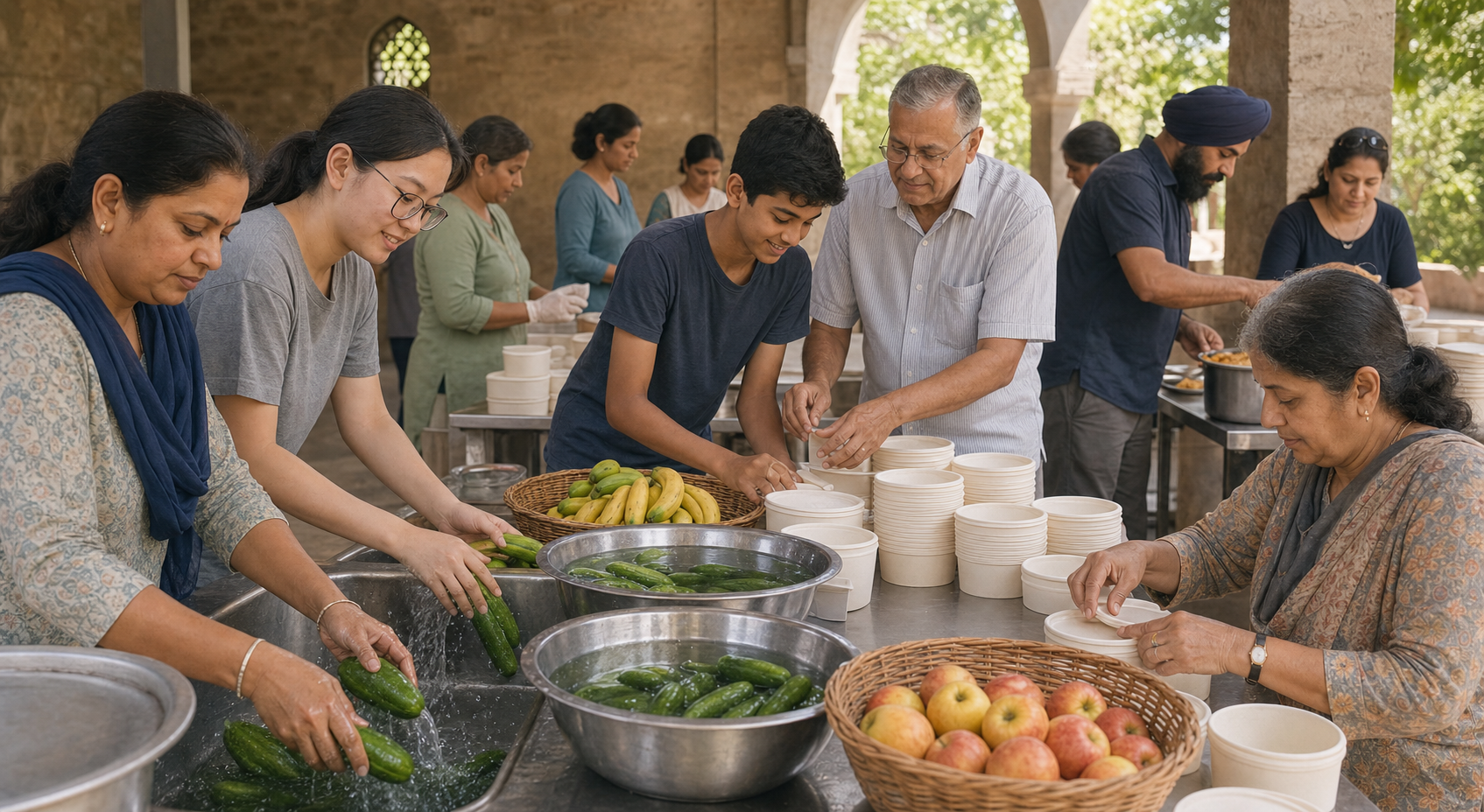
Dharmic unity does not mean that every doctrine, deity, scripture, discipline, or account of liberation is interchangeable. It does not require a Jain to become a Vedantin, a Buddhist to adopt a Hindu theology, a Sikh to surrender the distinct discipline of the Panth, or a Hindu to conceal a chosen relationship with the Divine. If unity depends on pretending these distinctions do not exist, it will fail as soon as a serious question is asked.
A sturdier agreement begins with conduct. Different communities can disagree about ultimate reality while accepting obligations toward one another. Those obligations can be stated plainly:
- Truth without caricature: describe another tradition in terms its practitioners would recognize before criticizing it.
- Devotion without domination: honour your path without demanding that another community become a lesser version of yours.
- Protection without hatred: defend people facing intimidation or injustice without turning righteous action into collective contempt.
- Service without a sectarian scorecard: help because suffering calls for a response, not because assistance can be used to advertise superiority.
- Accountability without selective standards: challenge prejudice in your own community as readily as you identify it elsewhere.
This covenant is practical because it does not ask everyone to settle metaphysical questions before working together. It asks whether your speech, institutions, and public behaviour reflect the virtues you already claim.
Let each tradition contribute in its own spiritual grammar

Shared Dharmic values do not always arise from identical teachings. Similar ethical outcomes may be cultivated through different concepts and disciplines. Treat those differences as resources for cooperation, not obstacles to be edited out.
- Hindu traditions: Karma Yoga, Bhakti, Jnana, and Raja Yoga address different temperaments and capacities, while Ishta affirms that a seeker may approach the Divine through a personally fitting form. This teaches a community to make room for sincere difference without giving up disciplined practice.
- Buddhist traditions: mindfulness helps you notice anger before it governs action, karuna directs attention toward suffering, and upaya recognizes that helpful teaching must meet people according to their circumstances. In a conflict, this contribution is the capacity to act firmly without feeding hatred.
- Jain traditions: ahimsa makes restraint an ethical discipline rather than mere passivity. Anekantavada reminds you that a complex reality may exceed any single, limited statement about it. This does not make every claim equally correct; it requires humility about the completeness of your own viewpoint.
- Sikh tradition: Nam-simran joins remembrance to an inwardly ordered life, while seva turns devotion outward. At late seventeenth-century Anandpur Sahib, the Khalsa ideal joined disciplined devotion, moral clarity, service, and responsibility. The line associated with Guru Gobind Singh, “Khalsa mero roop hai khaas,” can be received as a summons to fearlessness, compassion, and integrity, not as permission for sectarian arrogance.
Use these concepts as questions rather than labels. When a community faces hostility, ask what courageous protection requires. When speech becomes cruel, ask what ahimsa and karuna demand. When one faction claims complete possession of truth, ask what anekantavada reveals about limited perspective. When dialogue produces kind words but no help, ask where seva and Karma Yoga should begin.
This approach also prevents appropriation. You need not pull every term out of its home tradition and blend them into a generic spirituality. Let Sikhs explain seva, Jains explain anekantavada, Buddhists explain upaya, and Hindus explain Ishta in their own voices. Unity grows through attentive encounter, not through taking ownership of one another’s vocabulary.
Practise pluralism where genuine disagreement begins
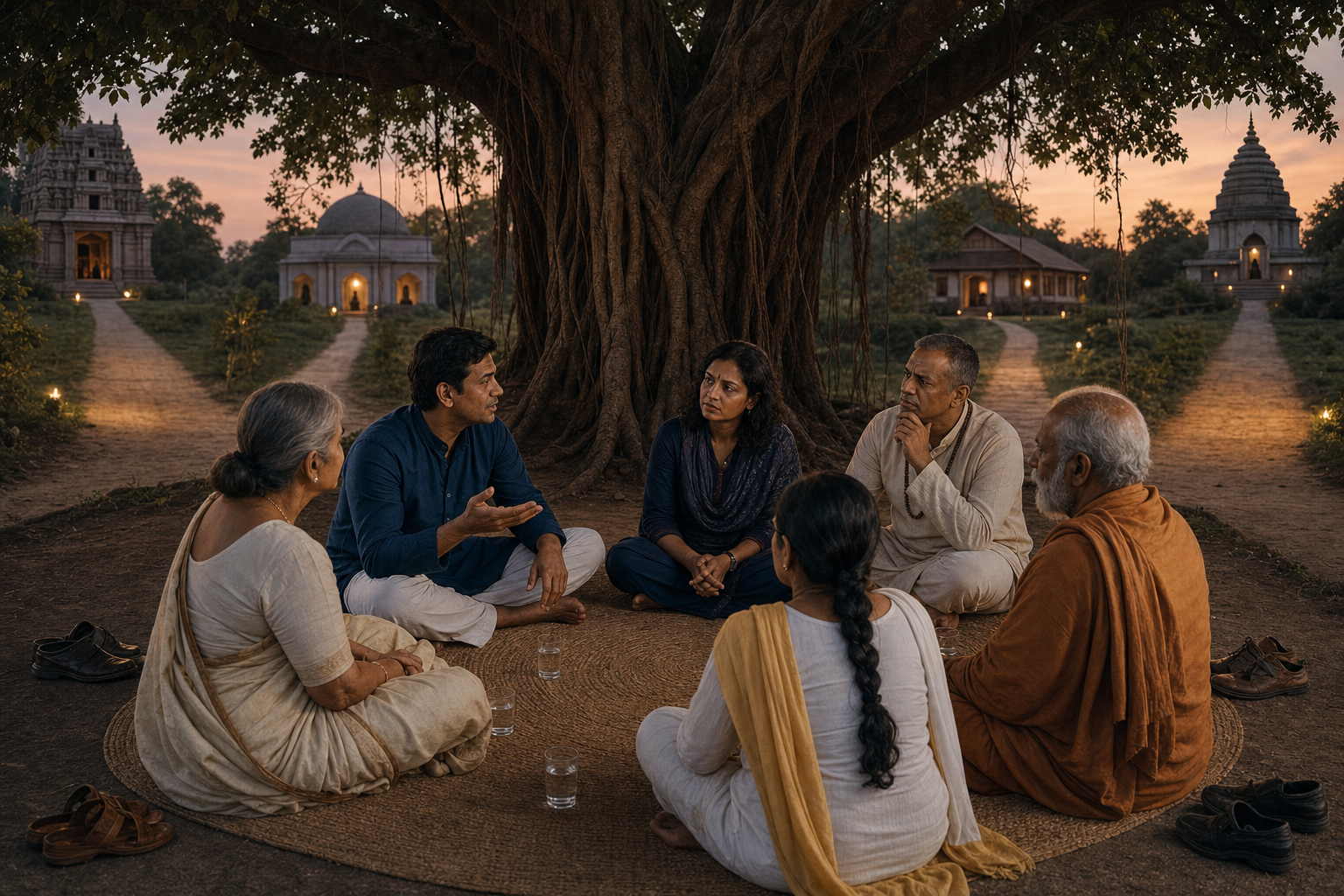
It is easy to celebrate diversity while everyone stays with safe subjects. Spiritual pluralism becomes meaningful when two traditions make claims that cannot simply be combined. At that point, three common responses weaken trust.
- Flattening: saying “all paths are the same” avoids the work of learning what each path actually teaches.
- Scorekeeping: turning every encounter into a contest encourages selective history, exaggerated claims, and defensive listening.
- Silence disguised as harmony: refusing to name a real disagreement allows resentment to remain while denying people the language to address it.
You can disagree more honestly by using a simple sequence:
- Locate your claim. Say, “In my tradition, this is understood as…” That is clearer than presenting a school-specific interpretation as the uncontested view of every Dharmic path.
- Reflect before replying. Ask the other person to correct your account of their position. Do not proceed until they can recognize what you have described.
- Name the boundary. Say exactly what you cannot affirm. A precise disagreement is less dangerous than a vague judgment about an entire community.
- Preserve dignity. Rejecting a doctrine is not the same as denying the intelligence, sincerity, or civic equality of the person who accepts it.
- Return to responsibility. Identify what both sides can still protect, repair, learn, or serve together.
For example, “I don’t share that account of liberation, but I want to understand why it guides your practice” keeps the disagreement visible without making humiliation the price of candour. Likewise, “We interpret this differently, but neither of us should tolerate harassment of the other’s place of worship” converts pluralism into a public obligation.
Dialogue is not a duty to remain in an abusive exchange. If someone is mocking sacred practices, pressuring participants to renounce their identity, or treating another community’s pain as debating material, correct the conduct before continuing the theology. Pluralism protects conscience; it does not reward contempt.
Turn shared values into habits people can verify

A unity statement can sound impressive and change nothing. Trust grows when people can point to repeated conduct: who showed up, who listened, who accepted responsibility, and who served when there was no publicity to gain.
Begin close to home. In family life, courage may mean telling the truth without using honesty as an excuse for cruelty. At work, it may mean refusing a convenient falsehood or protecting a colleague who cannot safely challenge an abuse of power. In civic life, it may mean applying the same standard of fairness to your own group that you demand from others. These are ordinary tests of whether spiritual identity has become ethical character.
For a temple, gurdwara, vihara, Jain centre, student group, or cultural association, build a shared initiative around a concrete need rather than an abstract celebration of harmony:
- Name one local need. Food support, tutoring, elder assistance, neighbourhood care, or crisis relief gives cooperation a visible purpose.
- Invite communities as partners. Ask what each can responsibly contribute instead of designing the entire activity and requesting ceremonial participation afterward.
- Keep worship honest. Do not manufacture a blended ritual that participants cannot sincerely perform. A host can explain its practice, guests can observe respectfully, and space can be made for silence or distinct prayers without forcing theological agreement.
- Assign work by capacity. Give people real responsibilities for logistics, communication, delivery, and follow-through. Symbolic representation without shared authority produces photographs, not trust.
- Agree on public language. Describe the need, the work, and the participating communities accurately. Avoid claims that the event proves all traditions are identical.
- Review the conduct. Ask who was overlooked, whether anyone’s practice was misrepresented, what promise remains unfinished, and whether the partnership should continue.
The same discipline improves a study circle. Choose one ethical question, invite each participant to present how their own tradition approaches it, and reserve time for clarification before debate. End by asking what practice the discussion should change. If no one can name a different action, the gathering may have produced information without transformation.
Measure success by durable relationships and completed responsibilities. Did participants contact one another after the event? Could each community describe the others more accurately? Was the person receiving help treated with dignity? Did the group keep its commitments after attention moved elsewhere? These questions expose the difference between pluralism as presentation and pluralism as dharma.
Key takeaways
- Dharmic unity does not require doctrinal sameness. It requires truthful representation, mutual dignity, principled protection, and dependable service.
- Shared values can arise through distinct disciplines: Ishta, Yoga, mindfulness, karuna, upaya, ahimsa, anekantavada, Nam-simran, seva, and the Khalsa ideal should remain rooted in their own traditions.
- Pluralism is tested by real disagreement. State your position precisely, let the other person correct your account of theirs, and separate doctrinal rejection from personal contempt.
- Do not confuse silence with harmony. Address mockery, coercion, and misrepresentation before asking people to continue a spiritual conversation.
- Build trust through a concrete project with shared responsibility, honest ritual boundaries, accurate public language, and follow-through that can be verified.
Choose one neighbouring Dharmic community whose practices you know mostly from outsiders. Learn how its own practitioners name a central discipline. Then open one honest conversation and propose one modest act of service with shared responsibility. Keep your convictions intact, and make your conduct worthy of them.
References
- DharmaRenaissance Blog – Khalsa Mero Roop Hai Khaas: A Powerful Call to Courage, Love, and Truth in Dharmic Unity
- DharmaRenaissance Blog – Beyond Religion: How Sanatana Dharma Champions Spiritual Freedom and Unity in Diversity
