
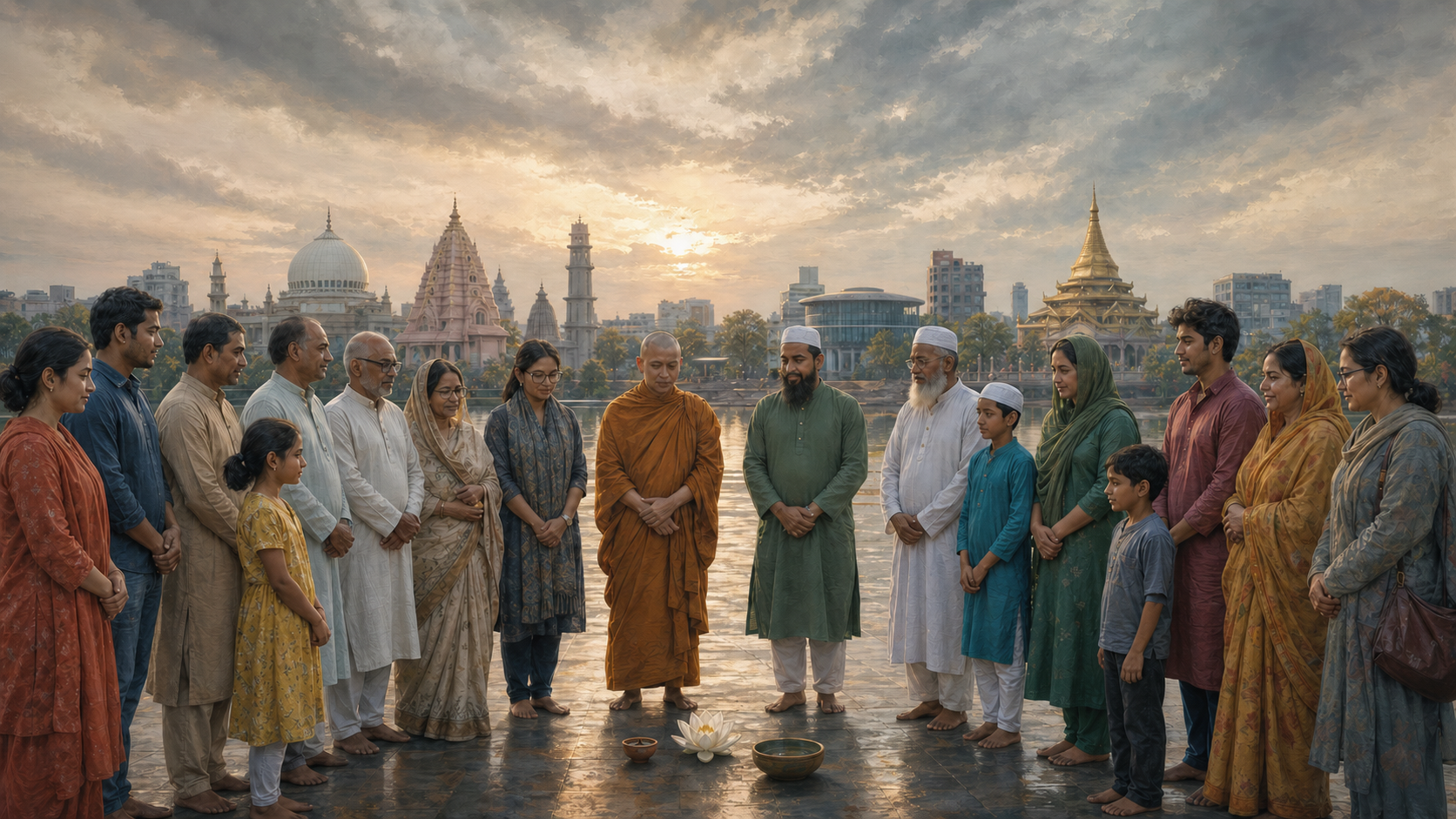
If you are trying to defend Hindus and Buddhists in Bangladesh without treating every Bangladeshi as an adversary, begin with a distinction that public debate often loses: accountability must follow responsibility. You can oppose exclusion, demand protection and organize firmly without assigning collective guilt.
That discipline matters when different controversies start feeding the same anger. Concern has sharpened around reports that Bangladesh’s proposed 2026 holiday list omits Saraswati Puja, Buddha Purnima, Janmashtami and Durgashtami. In India, a separate dispute followed Kolkata Knight Riders signing Bangladeshi cricketer Mustafizur Rahman for IPL 2026, with Haridwar saints opposing his inclusion and warning of protests. Both situations can test religious inclusion, but they do not have the same decision-maker, remedy or target.
Put responsibility where it actually belongs
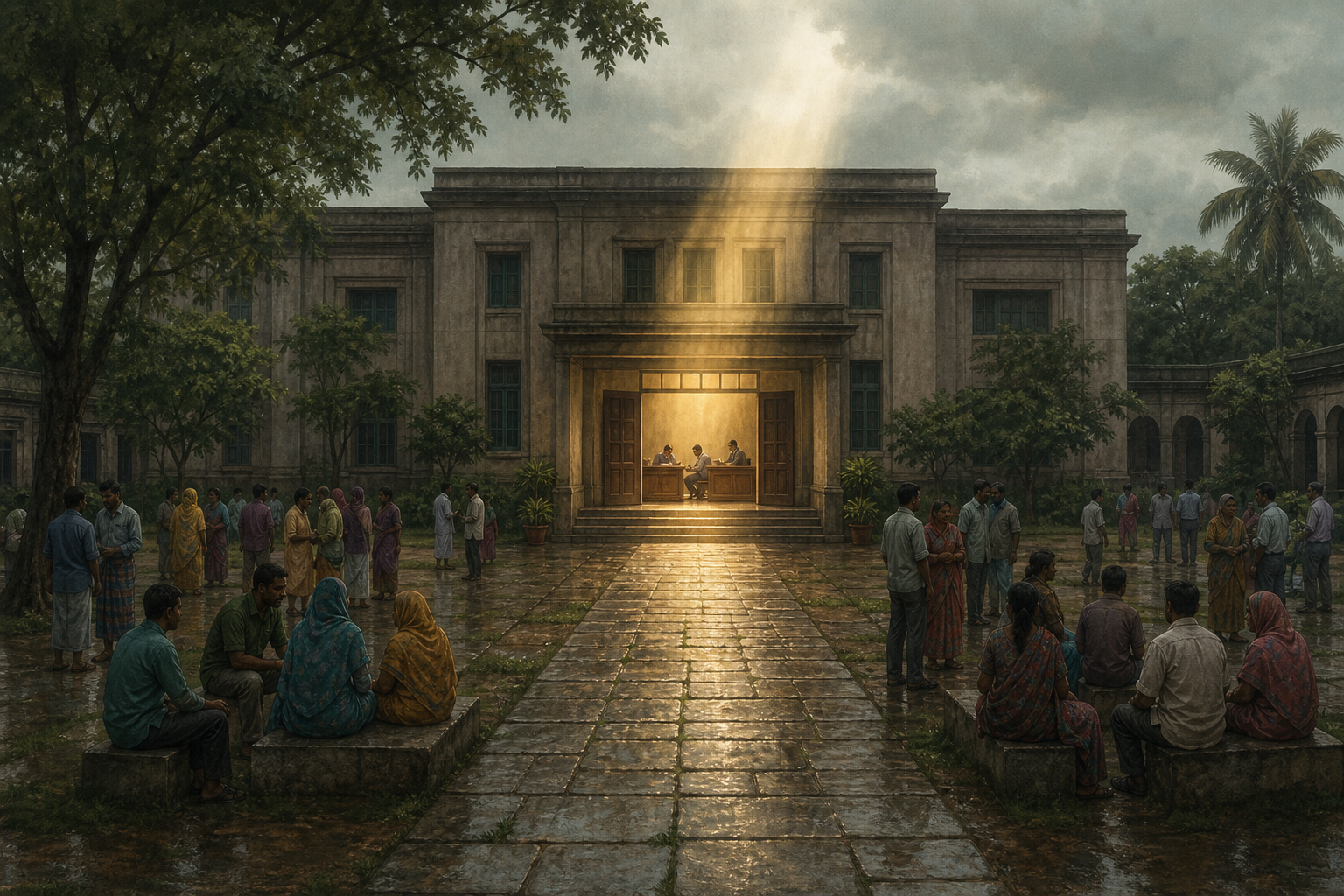
A public holiday calendar is an administrative decision. A cricket contract is a franchise decision operating within the rules of a sporting institution. Intimidation or violence is the responsibility of those who commit, encourage or fail to prevent it. The word “Bangladesh” may appear in every discussion, but it does not turn these separate responsibilities into one undifferentiated grievance.
Before you share a claim, sign a campaign or join a protest, write down three things:
- The precise action: Was a festival omitted from a proposed calendar, was a final notification issued, was a player selected, or was a threat made?
- The responsible actor: Is the decision controlled by a government office, an employer, an educational institution, the BCCI, an IPL franchise, a venue operator or an identifiable offender?
- The remedy: Are you asking for a corrected calendar, floating religious leave, security for worshippers, transparent selection criteria, a code of conduct or action against a particular violation?
This simple test prevents a common failure. When the grievance names an entire nationality but the remedy can be granted only by a specific institution, the campaign is aimed too broadly. Broad anger may attract attention, but it gives the responsible authority room to disappear into the crowd.
Precision also protects credibility. The holiday issue concerns a reported proposal, so describe it that way until an official notification settles the status. Ask for the notification, the complete calendar and the criteria used. Saying that four observances were reportedly omitted is accurate to the available information; declaring that Bangladesh has permanently abolished them would go further than the known facts.
Make religious recognition a concrete civic demand
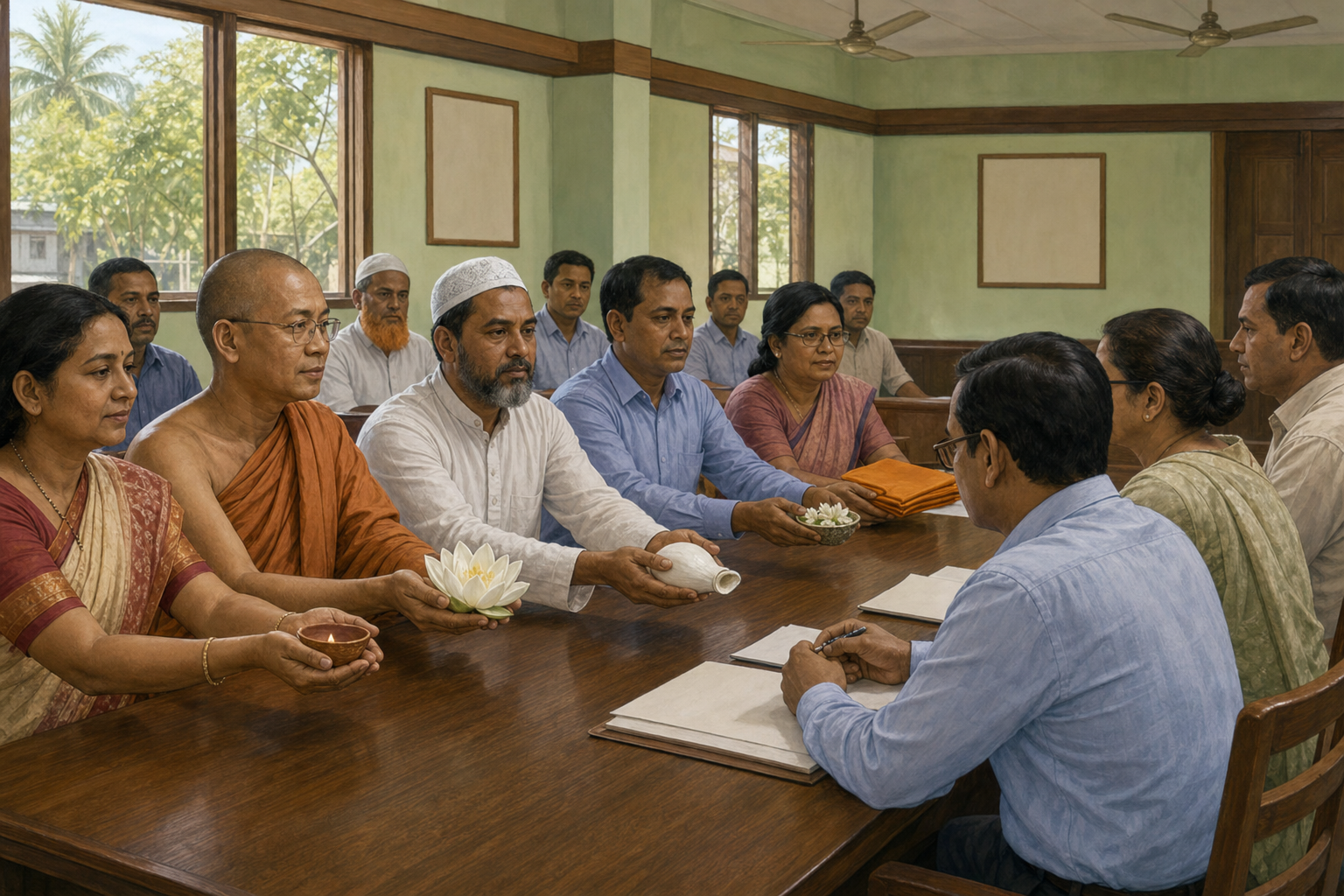
A religious holiday is not merely a decorative entry on a calendar. It determines whether a student can attend a puja without missing an examination, whether an employee can join family worship without sacrificing ordinary leave, and whether grandparents and children can participate together. Public recognition also tells a minority community that its sacred time belongs within the country’s shared civic life.
The reported omissions concern observances with distinct meanings: Saraswati Puja centers learning and the arts; Buddha Purnima, also known as Vesak, commemorates the Buddha’s life and teachings; Janmashtami marks the birth of Sri Krishna; and Durgashtami stands at the heart of the Durga Puja season. A useful representation should name each observance rather than referring vaguely to “minority festivals.” Specific names make it harder for an authority to answer with a general assurance while leaving the actual calendar unchanged.
There are three workable policy requests, but they do not deliver exactly the same result:
- Restore the observances to the public holiday calendar. This is the clearest answer when the objective is both practical access and equal public recognition.
- Provide protected floating leave for major religious observances. This can help individual students and employees, although it does not give a festival the same public visibility as a common holiday.
- Adopt a transparent multi-faith holiday framework. Published criteria, consultation with affected communities and advance planning for examinations and essential services can make inclusion predictable rather than dependent on repeated controversy.
Do not let administrative feasibility become a slogan on either side. Ask what would happen to examination dates, attendance rules, essential services and employee leave. Then propose the adjustment you want. A demand becomes stronger when it shows how observance can be accommodated without pretending that schools, hospitals and other necessary services have no operational needs.
Frame the request around equal civic belonging, Bangladesh’s commitments to equality and secular principles, and the practical ability to worship. This is more durable than asking for a favor from the majority. A favor can be withdrawn when the political mood changes; an intelligible rule can be applied across administrations and communities.
Security belongs in the same request when devotees face a credible risk of intimidation. Recognition on paper is incomplete if families cannot safely reach a temple, vihara, pandal or cultural program. Ask the relevant authorities and organizers for clear responsibility, communication channels and arrangements suited to the event. If danger is immediate, personal safety and contact with responsible local authorities come before ceremonial continuity.
Do not turn a cricket player into a substitute government

Cricket carries national feeling far beyond the boundary rope. That is why a franchise decision can become a proxy battle over minority safety, cross-border conduct and national self-respect. Yet a player is not automatically responsible for every act or policy associated with the country on his passport.
Before supporting an exclusion campaign, ask what standard is being proposed:
- Is the objection based on documented conduct by the individual player?
- Is it a demand for a general eligibility rule applying consistently to every franchise and nationality?
- Is it intended as pressure over a government decision outside the player’s control?
- What action could the BCCI or franchise take that would actually answer the stated grievance?
- Would the same standard be accepted when applied to an Indian athlete working abroad?
If the concern is individual conduct, name the conduct and provide evidence. If the concern is institutional policy, address the institution and seek a transparent rule. If the concern is minority protection in Bangladesh, say so openly and identify the diplomatic, administrative or civic response being requested. Nationality alone should not be used as a shortcut for evidence.
The BCCI and IPL franchises can be asked for concrete safeguards: an explanation of selection criteria, clear expectations for player and team conduct, fan codes, a channel for community representations and plans for the safety of players and spectators. None of those measures requires you to dismiss the concerns expressed by religious leaders. They require the concern to be translated into something an institution can answer.
Peaceful protest remains a legitimate civic method. Threats, harassment and attempts to frighten ordinary spectators change the object of the action: instead of holding a decision-maker accountable, they create new people who need protection. Keep demonstrations lawful, keep access and safety in view, and appoint representatives who can state the demand without communal abuse.
Cricket can still become part of the repair. Youth clinics, educational programs and cultural exchanges can create sustained contact across communities. Such initiatives work best after the grievance has been acknowledged and a responsible institution has engaged with it. Fellowship should not be used to silence a demand for equality, just as a demand for equality should not require hostility toward every possible bridge.
Let ahimsa govern the method, not erase the grievance
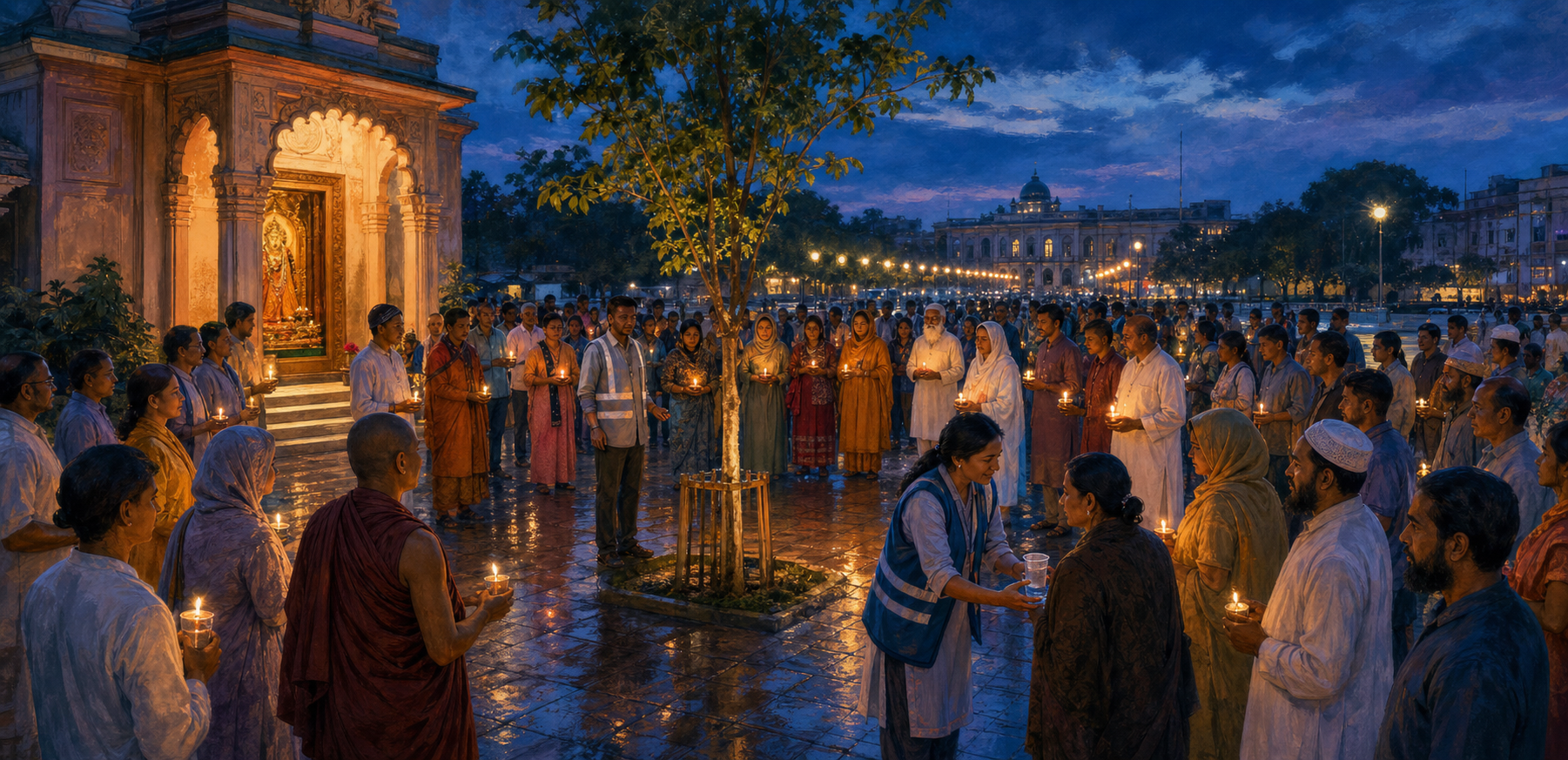
Ahimsa does not require an excluded community to become quiet. In public life, it governs the means by which a community resists: truthful claims, proportionate action, refusal of collective punishment and protection of people who are not responsible for the disputed decision.
Compassion without accountability can become passivity. Accountability without compassion can become indiscriminate anger. A Dharmic response needs both firmness and restraint, especially when Hindu, Buddhist, Jain and Sikh communities are called to stand together. The communities directly affected by a decision should lead the factual case; allied communities can reinforce the principle that no tradition’s sacred observances should be pushed out of civic visibility.
Use this sequence when organizing a response:
- Verify the status. Obtain the exact notification, calendar, franchise announcement or public statement when it is available. Separate confirmed wording from reported claims and commentary.
- Define one primary remedy. Lead with the outcome you most need, such as restoring named festivals to the calendar. Put acceptable alternatives, such as floating leave, after the primary request rather than mixing every possible demand together.
- Build a fact-based representation. Name the affected observances, explain the practical burden on students, workers and families, and identify the authority empowered to change the decision.
- Consult without surrendering clarity. Include Hindu and Buddhist representatives directly affected by the reported omissions, seek solidarity from other Dharmic communities, and invite administrators to address implementation details in writing.
- Separate safety from symbolism. For worship and sporting events, identify who is responsible for venue access, crowd conduct and communication if a risk emerges. Do not assume that a holiday entry or a slogan by itself keeps people safe.
- Publish the response and the next checkpoint. Tell supporters what the authority answered, what remains unresolved and what peaceful step follows. This reduces rumor and prevents every silence from being interpreted as proof of the worst claim.
The language of your appeal matters. “Publish the official criteria and restore equal accommodation” points to an accountable process. “Keep Bangladeshis out” assigns a state-level grievance to individuals who may have had no role in it. The first formulation can build a coalition around fairness. The second risks making nationality the offense.
Vasudhaiva Kutumbakam, the vision of the world as one family, is not a request to ignore injury within the family. It is a refusal to abandon either truth or human dignity while addressing it. Minority protection and non-hostility are therefore not competing goals. Each keeps the other from becoming distorted.
Key takeaways
- Treat the proposed holiday list, an IPL selection and threats against communities as separate decisions with separate responsible actors.
- Describe the 2026 holiday omissions as reported until an official notification confirms their final status.
- Ask for a specific remedy: restoration of named holidays, protected floating leave or a transparent multi-faith calendar framework.
- Judge a player by documented conduct and a franchise by a consistent rule, not by collective assumptions attached to nationality.
- Use ahimsa as disciplined action: verify, specify, consult, protect and report back without threats or communal abuse.
Your next step can be modest and decisive. Find the exact status of the holiday calendar or sporting decision you are concerned about, choose the authority that can change it, and send one precise request with one primary remedy. That is how legitimate Dharmic concern becomes effective cultural advocacy rather than another cycle of accusation.
References
- Hindu Jagruti Samiti – Haridwar Saints Call for Unity in IPL 2026: Calm, Dialogue over Bangladesh Player Row
- Hindu Jagruti Samiti – Bangladesh 2026 Holiday List Drops Dharmic Festivals: A Call for Inclusion and Harmony
