
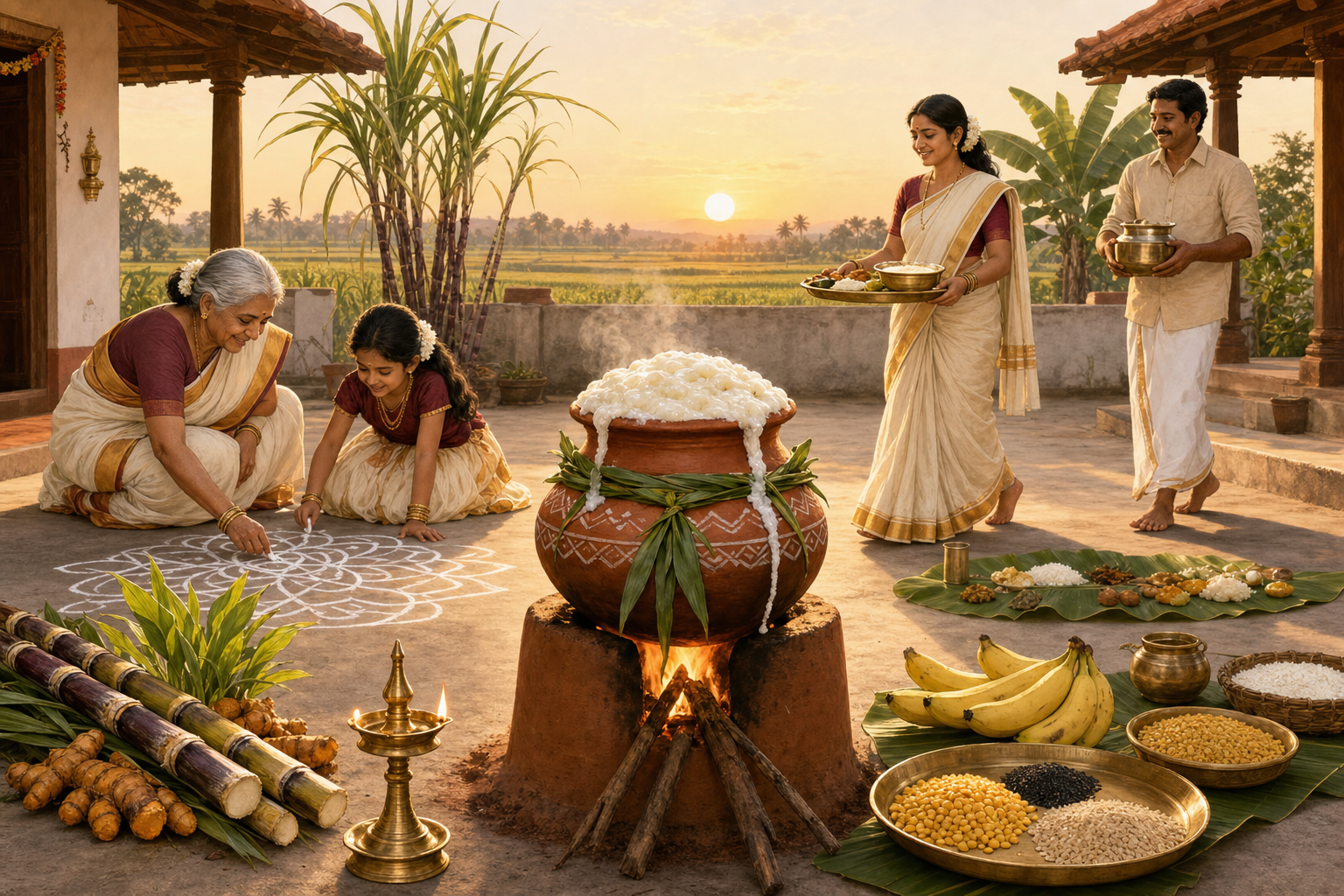
By the time Sankranthi arrives, celebration can feel like another demanding list: clean the house, arrange the puja, cook several dishes, visit relatives and keep every regional custom intact. If you want the festival to leave your family genuinely refreshed, don’t add a separate “wellness routine.” Use the traditional sequence already built into the season.
That sequence moves from release to reverence, nourishment, movement and sharing. Its practices are modest, but they reinforce one another: a clearer home reduces friction, morning observance steadies attention, seasonal food satisfies without requiring extravagance, and community participation prevents renewal from becoming a private self-improvement project. Your aim is not perfect performance. It is to finish the festival with less clutter, less waste, a comfortably fed household and at least one strengthened relationship.
Begin with Bhogi: remove stagnation without creating waste
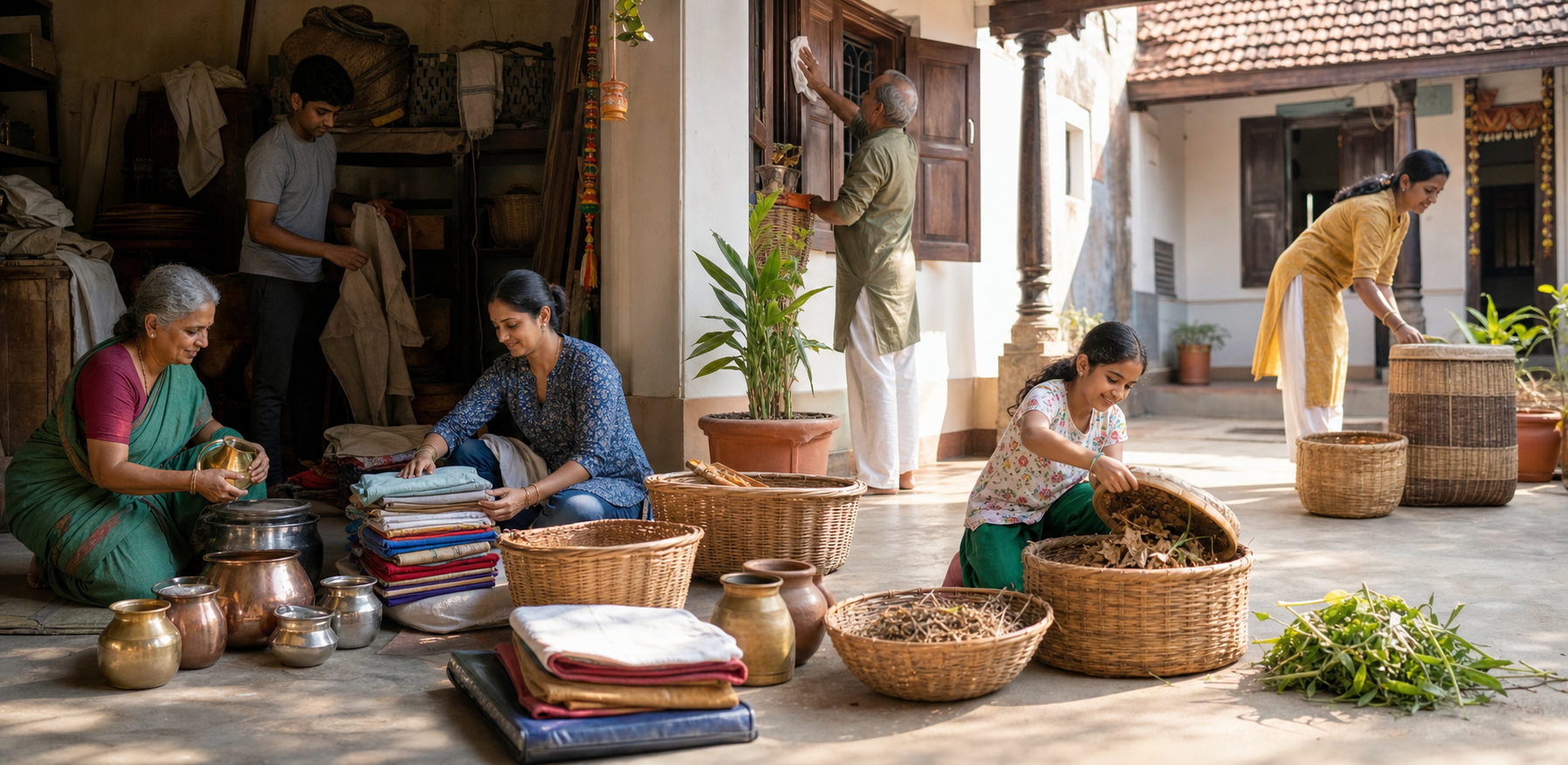
Bhogi opens the four-day Sankranthi season in Andhra Pradesh, Tamil Nadu and Karnataka; in Tamil Nadu it is also known as Bhogi Pongal. Its most useful lesson is that renewal begins before anything new is acquired. Homes are cleaned, thresholds are decorated, devotional spaces are prepared and the community gathers around Bhogi Mantalu. These customs turn household order into a deliberate transition, rather than treating cleaning as an unpleasant chore attached to the festival.
Choose one defined area if the entire house is unrealistic: the entrance, kitchen, puja room or family sitting space. Handle every object in that area through four decisions:
- Keep and place: If it is useful, return it to a clear, permanent location.
- Repair: If it can serve again, record the repair and set it aside rather than letting it drift back into storage.
- Pass on: If it is usable but no longer needed, donate or share it responsibly.
- Dispose safely: Recycle or discard what is genuinely unusable. Do not turn household rubbish into a ceremonial offering.
The last distinction matters. Bhogi Mantalu traditionally symbolize the release of what is worn out, but a sacred fire is not permission to burn plastic, synthetic fabric, painted material or mixed waste. Those materials worsen air quality and turn a rite of purification into pollution. If your family maintains a bonfire, use only locally permitted, appropriate material; keep it outdoors, controlled and supervised, with a safe way to extinguish it. A lamp or a small symbolic offering is the better choice when a bonfire cannot be conducted safely.
After clearing the threshold, draw a kolam, muggu or rangoli. Rice-flour designs carry a particularly graceful ecological meaning because the decoration can also feed small creatures. Mango-leaf toranas, turmeric and flowers can mark the entrance without disposable synthetic ornament. In parts of Andhra Pradesh and Telangana, gobbemmalu – sacred cow-dung forms placed on the muggu – become a focus for songs and prayers for well-being. These are regional inheritances, not requirements every Hindu household must imitate. Follow your family’s sampradaya instead of assembling customs from several regions merely for display.
Complete the outer cleaning with one inner decision. Name a habit, resentment or avoidable obligation that has made the household heavier. Then give release a visible form: apologize, cancel the needless commitment, repair the relationship or remove the recurring source of disorder. Symbolism becomes renewal only when something changes after the fire goes out.
Use the morning observance to steady the body and attention
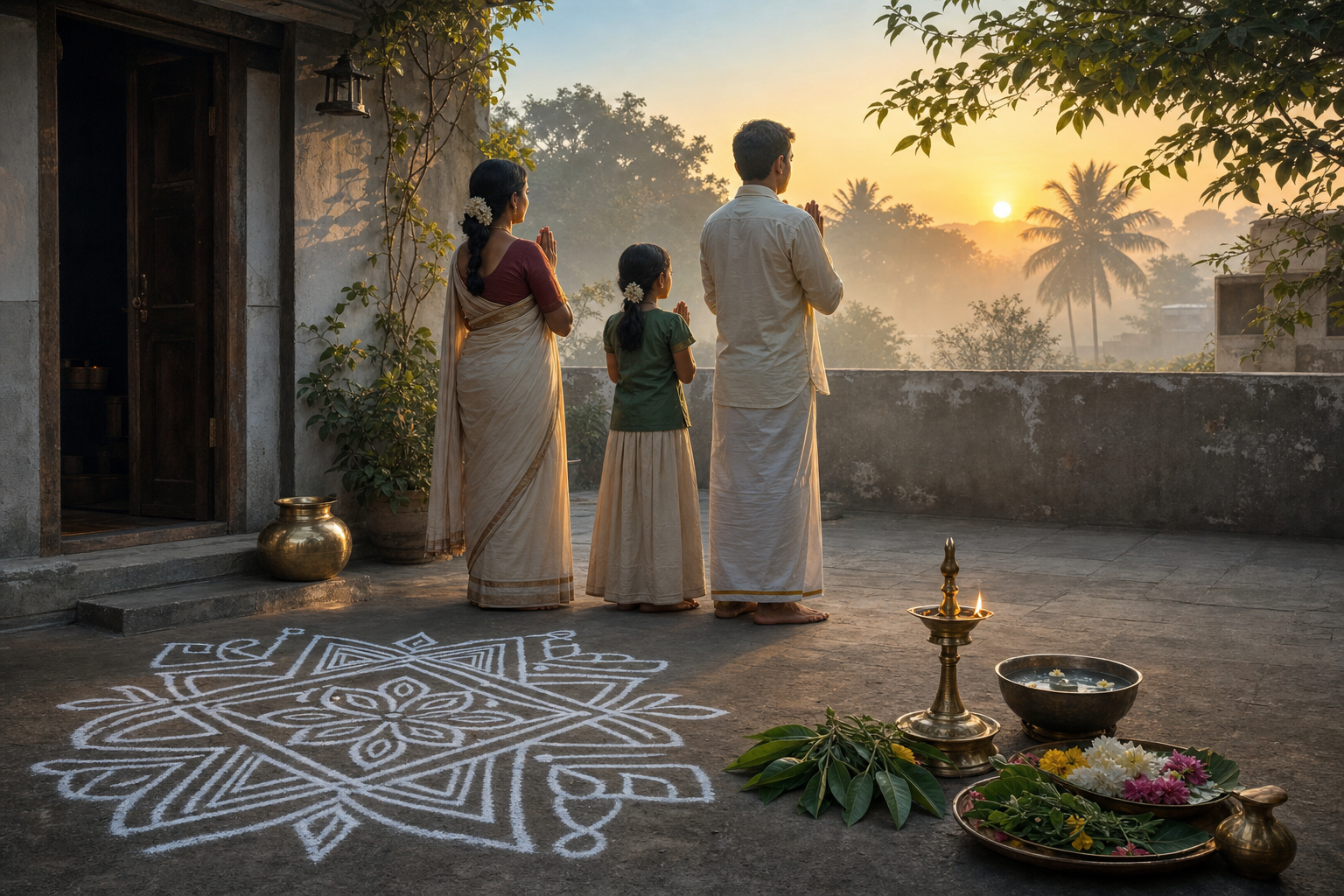
Makar Sankranthi marks the traditional transition associated with Uttarayana, the Sun’s northward journey. Across regional celebrations such as Pongal, Lohri, Magh Bihu and Uttarayan, the morning directs attention toward Surya, the harvest and the natural conditions that sustain life. That orientation is more important than turning sunlight, bathing or food into exaggerated medical claims.
A workable morning rhythm is simple:
- Bathe in water that is safe and comfortable for you.
- Light a lamp and arrange the altar with the offerings your household uses, which may include turmeric, kumkum, rice, sesame, sugarcane, flowers or a kalasha.
- Offer prayer, arati and naivedyam before sharing prasadam.
- Step outdoors for gentle morning daylight and a little comfortable movement.
- Name what you are grateful to receive from the land, animals, farmers, artisans, cooks and family members.
Winter daylight can help align the body’s daily rhythm, while time outdoors creates an easy opportunity to move after slower winter weeks. You do not need to stare at the Sun or endure harsh conditions to honor Surya. Direct staring can injure the eyes. Let the practice be reverent and comfortable: offer namaskara or arghya, look toward the brightening sky without fixing your eyes on the solar disc, and walk or stretch within your ability.
Seasonal bathing, including Magh snan in some communities, is often understood as cleansing and renewal. Brief cold-water exposure may feel invigorating, but it is optional and should never become an endurance test. Use comfortably warm water if cold exposure makes you dizzy, breathless, numb or otherwise unwell. If a health condition makes abrupt temperature exposure a concern, follow your clinician’s advice rather than treating ritual intensity as a measure of devotion. The wellness value lies in a safe morning rhythm, not in pushing the body past its limits.
Bhogi Puja can be equally restrained. A lamp, clean altar, seasonal offering and sincere prayer are sufficient. Where it belongs to family practice, Om Agnaye Namah honors Agni and Om Indraya Namah accompanies gratitude for the elemental conditions of rain and abundance. A household with established ritual instructions should follow its elders, priest or acharya; a newcomer need not improvise elaborate rites to make the morning meaningful.
Build the meal around nourishment, not a sugar showcase
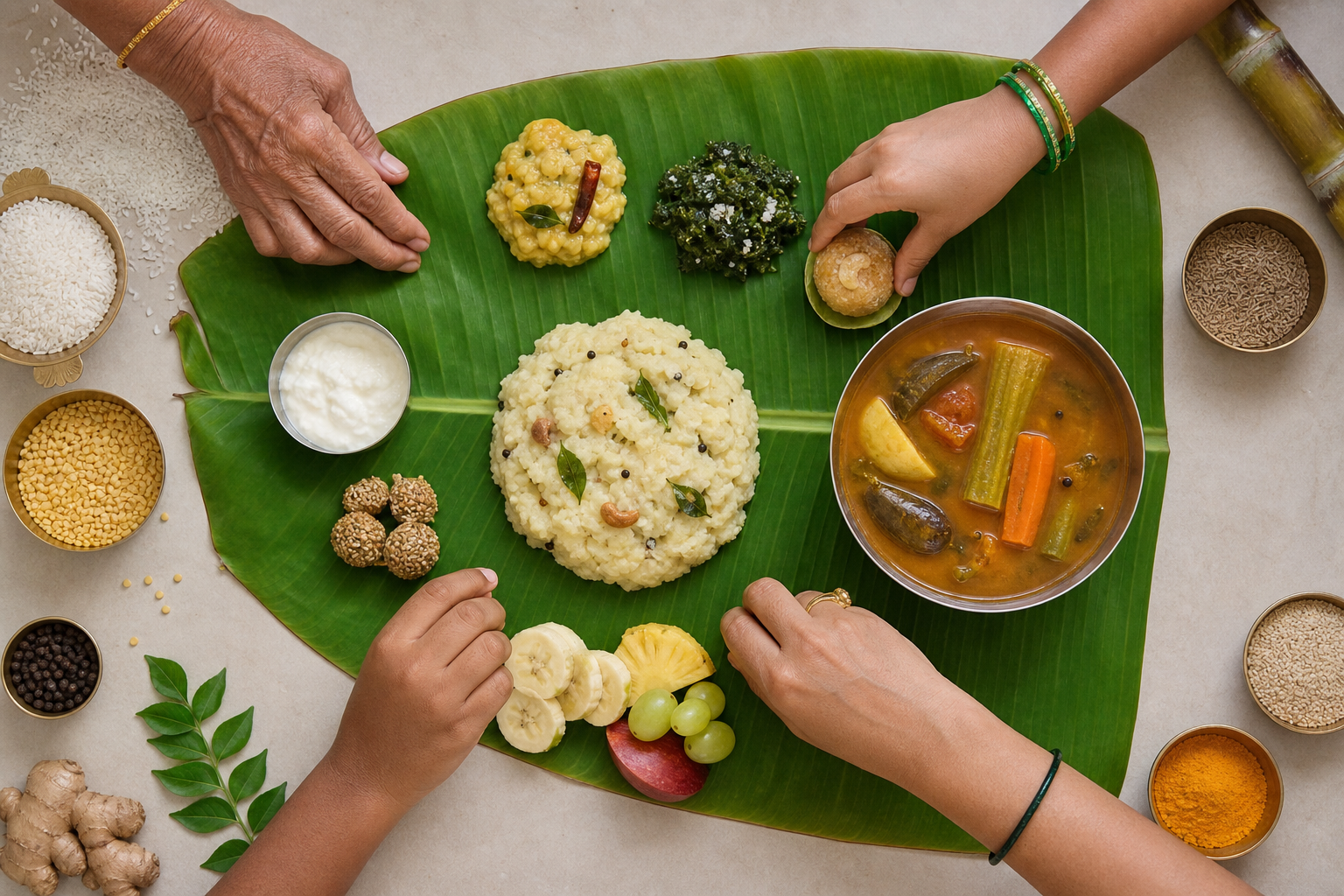
The customary Pongal combination of newly harvested rice, moong dal and ghee offers a sensible center for the festival meal. Rice supplies readily available energy. Moong contributes protein and is traditionally regarded as relatively light and easy to digest. Ghee adds satiety and helps with the absorption of fat-soluble nutrients. Cumin, black pepper and ginger bring warming, carminative qualities valued in Ayurvedic cooking.
That does not make one recipe ideal for every body, nor does it require you to eat beyond comfort. Let the rice-and-moong preparation anchor the meal, then add the seasonal foods your household tolerates. A practical arrangement is:
- Main dish: Rice and moong Pongal with a moderate amount of ghee, tempered according to family custom with cumin, pepper and ginger.
- Seasonal fruit: Regi pandu, also called jujube or Indian date, which provides vitamin C, fiber and polyphenols.
- Festival sweet: A modest portion made with sesame and jaggery rather than an unrestricted tray eaten throughout the day.
- Optional seasonal accompaniment: Sugarcane or hygienically prepared fresh sugarcane juice.
- Shared serving: Prasadam offered with care, then distributed so that receiving and giving remain part of the meal.
Sesame is especially suited to the winter character of the festival. It is warming in Ayurvedic understanding and supplies minerals including calcium and iron. Jaggery contributes sweetness and trace minerals, but traditional does not mean unlimited. Jaggery is still a concentrated sweetener. If you manage diabetes or another condition affected by sugar intake, keep to the portions and treatment plan recommended for you; til-gud, sweet Pongal and sugarcane juice are festival foods, not substitutes for medical care.
The same realism applies to ghee and spices. Use enough to make the dish satisfying, not enough to force a health claim onto every spoonful. Adjust pepper and ginger for children, elders or anyone who finds them uncomfortable. Avoid sesame where there is an allergy, and adapt the texture and size of fruit or sweets for anyone who may have difficulty chewing or swallowing. The traditional ingredients work as a coherent winter meal when portion, hygiene and individual needs remain visible.
Abundance is best expressed through quality and sharing. Choose fresh seasonal produce, locally milled grain where available and ingredients you can trace and store safely. Cook enough to feed guests or support seva, but do not confuse excess leftovers with prosperity. The harvest is honored when food is respected from preparation through distribution.
Make well-being communal, active and governed by ahimsa
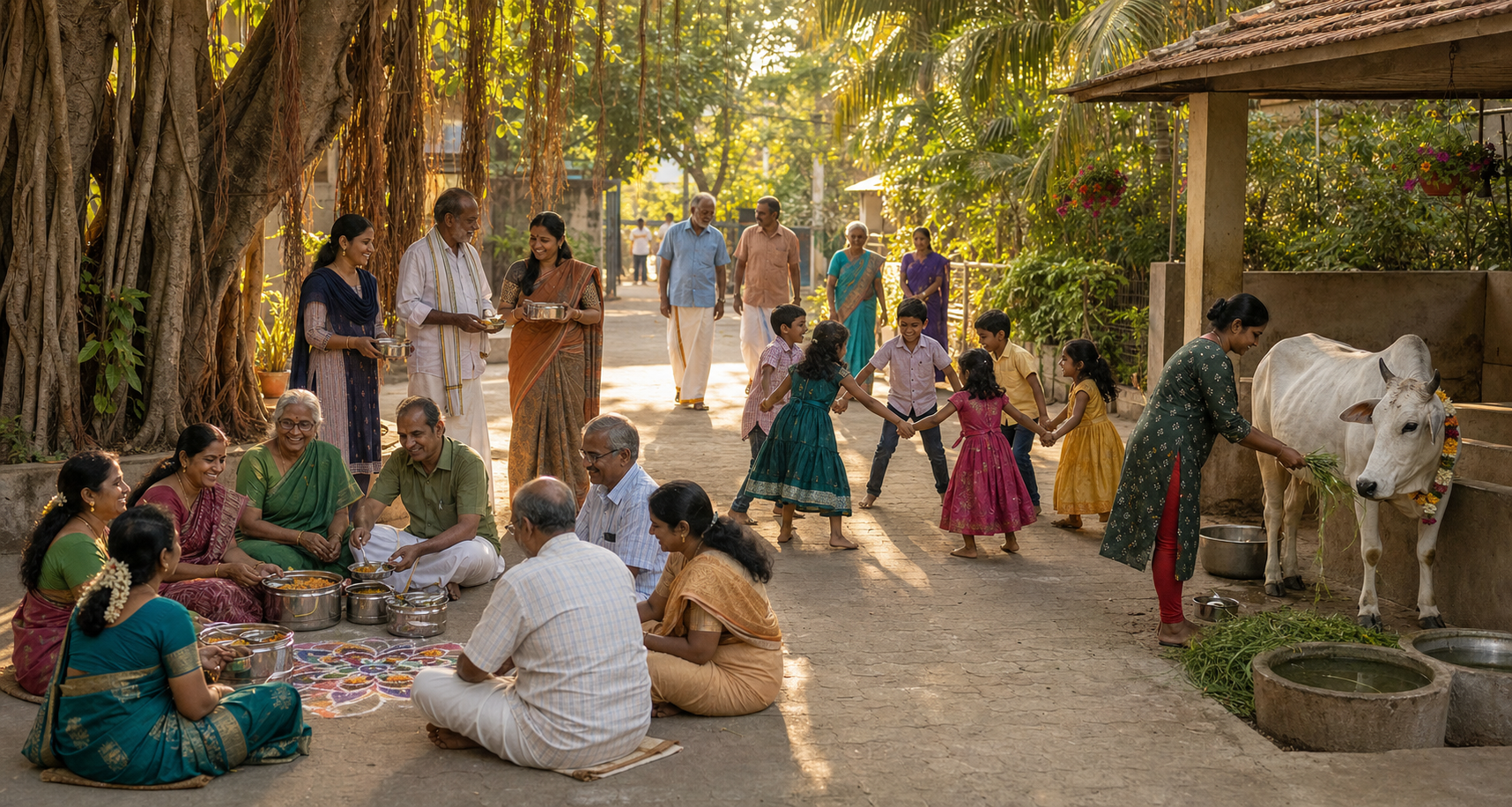
Sankranthi and Pongal resist the modern idea that wellness is something you purchase and perform alone. Community cooking, visits to elders, exchanging ellu-bella or til-gud, devotional singing and charity place well-being inside relationships. None of these acts is a treatment for mental illness, but social connection, gratitude and meaningful participation can support emotional health and reduce the isolation that often accompanies a difficult season.
Give every household member a real role. A child can help place flowers. A teenager can draw the muggu, assist an elder or manage reusable serving ware. An adult who does not cook can distribute prasadam, clean afterward or deliver food. An elder can teach the family name of a dish, mantra or local custom. Participation preserves memory more effectively than asking one exhausted person to produce a flawless festival for passive spectators.
Bhogi pallu offers a good example. In parts of Andhra Pradesh and Telangana, children receive blessings as regi pandu, flowers and coins are showered over them. The emotional center is the community’s wish for the child’s health, growth and protection. Keep that center while adapting the mechanics to the child’s age: supervise closely, keep coins out of the mouth and prepare any edible item in a safe size and clean condition.
Kite flying during Uttarayan turns celebration into light movement. Handling the line engages the hands and eyes, while looking upward and changing posture brings the shoulders and neck out of the fixed positions common during a sedentary winter day. Its benefit disappears if competition overrides safety. Use an open, permitted space away from traffic, electrical lines and exposed roof edges. Choose eco-conscious kites and safer natural fibers, avoid dangerous abrasive string, supervise children and remain attentive to other people and animals sharing the sky and ground.
Apply the same dharmic test to the entire celebration: does the custom express gratitude without transferring harm elsewhere? Plastic in a bonfire, hazardous kite line, wasted food and disposable decoration contradict the renewal they are meant to represent. Ahimsa does not reduce festivity. It gives festivity moral coherence.
The shared language of gratitude, restraint, ethical living and seva also resonates across Hindu, Buddhist, Jain and Sikh communities, even though their observances, teachings and regional calendars must not be flattened into one interchangeable ritual. Unity is found in the values we practice together, not in pretending every tradition has the same form.
Key takeaways: a workable festival rhythm
If time, health or distance makes a full celebration impossible, keep the sequence and reduce the scale. A half-day household observance can still carry the heart of Sankranthi and Pongal:
- Release: Clear one defined part of the home. Repair, donate or dispose responsibly rather than burning mixed household waste.
- Revere: Bathe comfortably, light a lamp, make a seasonal offering and spend a few quiet moments in gratitude to Surya, nature and those who produced the food.
- Nourish: Cook a simple rice-and-moong Pongal, add seasonal fruit and treat sesame-jaggery sweets as prasadam rather than an unlimited snack.
- Move safely: Step into morning daylight, walk, stretch or fly a kite in a safe setting suited to your ability.
- Connect: Invite someone to eat, visit an elder, bless a child, share prasadam or direct part of the harvest meal toward seva.
- Continue: Before the day ends, choose one act of renewal to repeat after the decorations come down.
Use that final choice to test whether the festival changed anything: keep the entrance clear, share one meal regularly, spend more mornings outdoors, repair a strained relationship or stop sending usable objects into waste. Choose one act of release, one form of nourishment and one act of seva that your household can sustain. Then Sankranthi is not a brief escape from ordinary life; it becomes a wiser way to re-enter it.
References
- DharmaRenaissance Blog – Makar Sankranthi & Pongal: Powerful, Science-Aligned Health Benefits of Tradition
- DharmaRenaissance Blog – Bhogi Pongal Rituals and Bhogi Mantalu: Customs, Puja Steps, and the Joy of Renewal
