
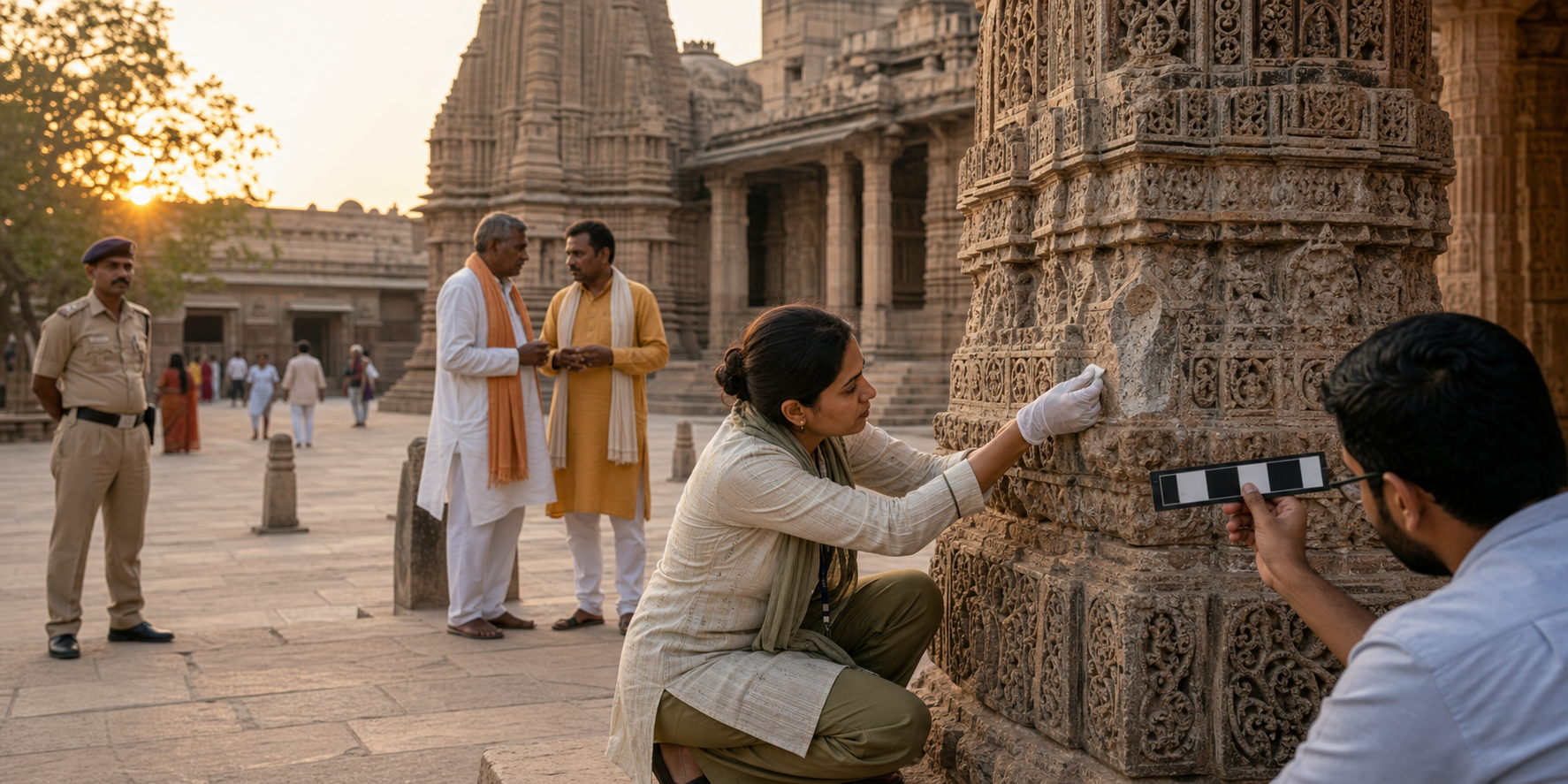
If you have just seen a temple defaced, a sacred image damaged, or a revered figure publicly insulted, your first instinct may be to answer immediately. That is also the moment when an incident can be made worse by an unsafe crowd, an exaggerated claim, or a post that spreads the insult farther than the original act.
Your first obligation is not to win the next hour online. It is to protect people, preserve the facts, secure the affected object or place, and create a lawful path from grievance to repair. Done well, that response protects both Dharmic dignity and civic order.
Protect three things, not only the visible object
A damaged banner and a damaged temple are not equivalent objects, but both can carry public memory. The mistake is to treat protection as a purely physical task. Every heritage incident affects three connected layers:
- The object or place: the murti, shrine, manuscript, inscription, banner, memorial, procession route, or other material expression at risk.
- The truthful record: what happened, what existed before it happened, why it matters, and what remains uncertain.
- The civic environment: whether people can seek accountability without intimidation, collective blame, retaliatory damage, or disorder.
Somnath makes this distinction unusually clear. Its importance does not rest on the survival of one unchanged structure. At Prabhas Patan, continuity was carried through rebuilding, worship, sacred geography, artisan knowledge, community care, and the modern reconstruction associated with Sardar Patel and K.M. Munshi. Protecting that inheritance therefore means more than maintaining stone. It means preserving the conditions under which memory and practice can continue.
Public symbols deserve the same careful distinction. In Kumbhoj, an alleged desecration of a Chhatrapati Shivaji Maharaj banner led to a police case and public demands for accountability. A banner is replaceable as material. The reverence attached to Shivaji Maharaj, and the public trust disturbed by a deliberate insult, cannot be repaired merely by printing another one.
Before acting, ask four questions: What exactly has been harmed? What can be verified now? Which authority has jurisdiction? What would meaningful repair require? Those questions keep a response tied to the real injury instead of allowing anger to define the facts.
Use a disciplined first-response protocol
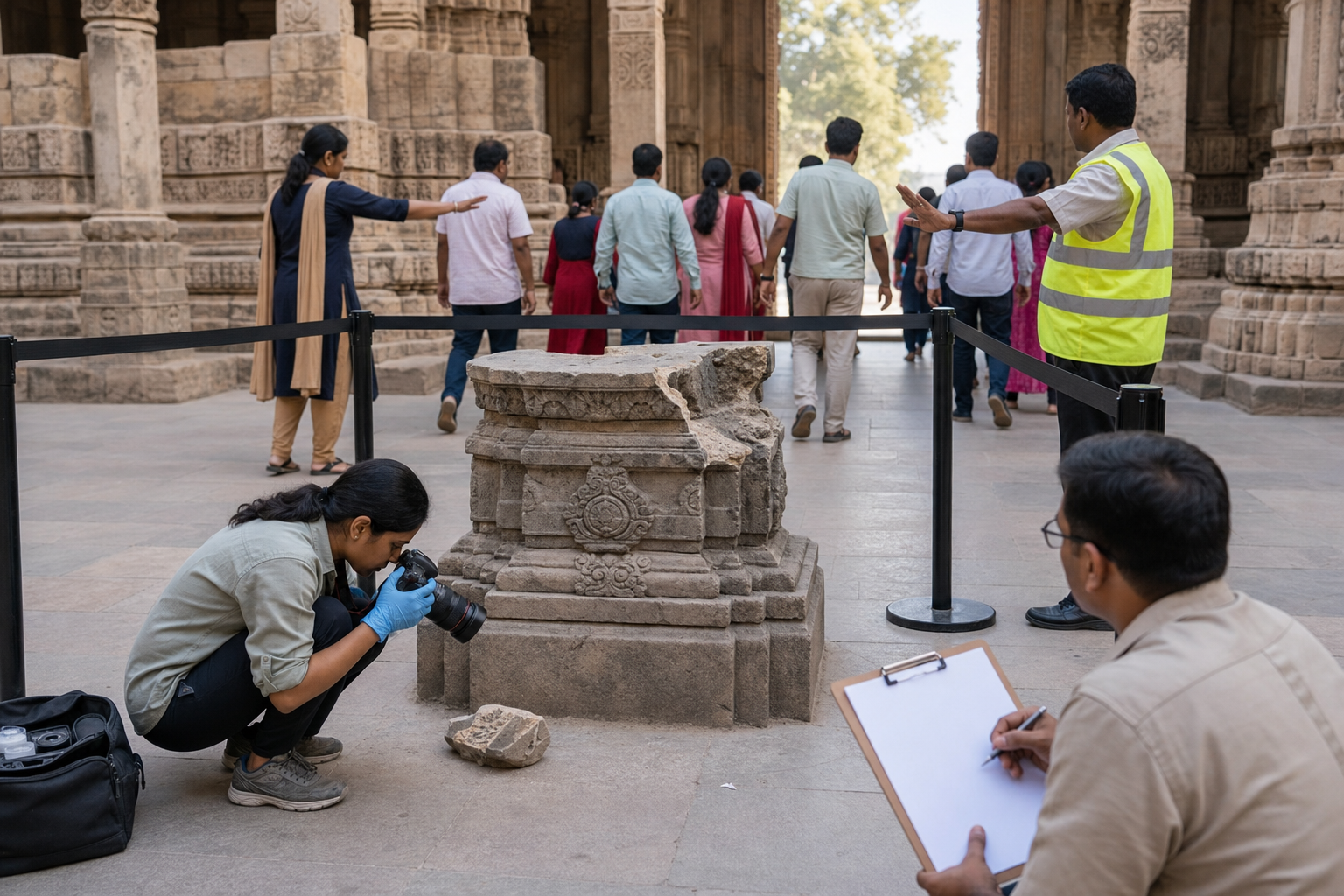
The early response should be simple enough to follow under pressure. A temple committee, cultural association, neighbourhood group, or event organiser can adopt the following protocol before an incident occurs.
- Put safety first. If damage is still occurring or a confrontation is forming, keep your distance and contact site security, the police, or the responsible local authority. Do not physically intervene merely to obtain footage. An injury or retaliatory clash will not protect the heritage at issue.
- Preserve the scene. Do not clean, move, repaint, replace, or ceremonially handle the affected object until the lawful authority and the custodian have documented it, unless immediate safety requires otherwise. Premature restoration can destroy useful evidence and obscure the extent of the harm.
- Capture context as well as detail. From a safe and lawful position, retain the original photograph or recording, a wider view that establishes the location, a closer view of the damage, and a written note identifying when and by whom the record was made. Keep the original file untouched and use a copy for publication.
- Separate fact from report. Maintain three labels in your notes: verified directly, reported by an identified person, and unverified. Do not turn an assumption about motive, identity, or sequence into a statement of fact.
- Notify the proper channels. Report the matter to the temple trust, monument custodian, event organiser, municipal authority, police, or digital platform as applicable. Use written communication where possible and retain any acknowledgement or case number that is issued.
- Create one incident log. Record the location, affected object, time discovered, condition observed, people notified, evidence retained, public statements made, and subsequent actions. One controlled log is more reliable than fragments spread across several messaging groups.
- Publish a narrow holding statement. State only that an incident has been reported, the relevant authority has been informed, facts are being verified, and people should avoid rumours or confrontation. Correct the statement promptly if verified information changes.
Do not circulate a suspect’s name, religion, caste, or organisation merely because it appears in a forwarded message. Accountability must attach to a proven act by an individual, not to a population. Never direct a crowd toward an unverified location or person. If you are considering a complaint, prosecution, or public naming, obtain advice from a qualified local legal professional; the existence of a grievance does not by itself establish which law applies.
Build the archive before the next dispute

A crisis cannot produce centuries of context on demand. If a site or symbol matters to your community, document it while conditions are calm. The archive need not begin as an expensive institution. It does need a stable structure, clear labels, and responsible custody.
A practical heritage archive can begin with seven folders:
- Identity and significance: the accepted name, location, tradition, associated deity or personality, present custodian, and a concise explanation of why the subject matters.
- Physical condition: dated photographs, plans, inscriptions, materials, repairs, alterations, and conservation concerns.
- Chronology: securely dated events first, disputed dates clearly marked, and gaps left visible rather than filled with guesswork.
- Historical evidence: copies or citations for inscriptions, chronicles, archaeological records, official documents, and relevant scholarly work.
- Living continuity: worship, festivals, aarti, pilgrimage, artisan practices, community service, and oral testimony. Label testimony as testimony rather than silently converting memory into a proven date.
- Official and incident records: permissions, trust resolutions, conservation reports, complaints, acknowledgements, repair decisions, and completed incident logs.
- Public education: verified timelines, exhibition text, lesson material, translations, visitor guidance, and versions suitable for community distribution.
Give each item a unique identifier, date of record, creator or collector, source type, short description, location, and usage permission. Retain an untouched master, make a separate working copy, and keep a backup under different custody. A collection that only one person can locate is not yet a community archive.
Different kinds of historical evidence answer different questions. Epigraphy, chronicles, and archaeology can strengthen the account of Somnath, but they should not be flattened into one undifferentiated proof. An inscription is a text situated in a place; a chronicle carries the standpoint of its writer; archaeological context concerns material remains and their relationships. None should be forced to say more than it can establish.
The same discipline applies to the phrase unbroken faith. In the Somnath context, the defensible meaning is not that every structure or political condition remained untouched. It is that reverence, rebuilding, sacred association, and communal custodianship continued through disruption. That distinction makes the 1026-2026 remembrance of resilience more credible, not less. Honest memory can acknowledge rupture without surrendering continuity.
Turn reverence into a standing civic system
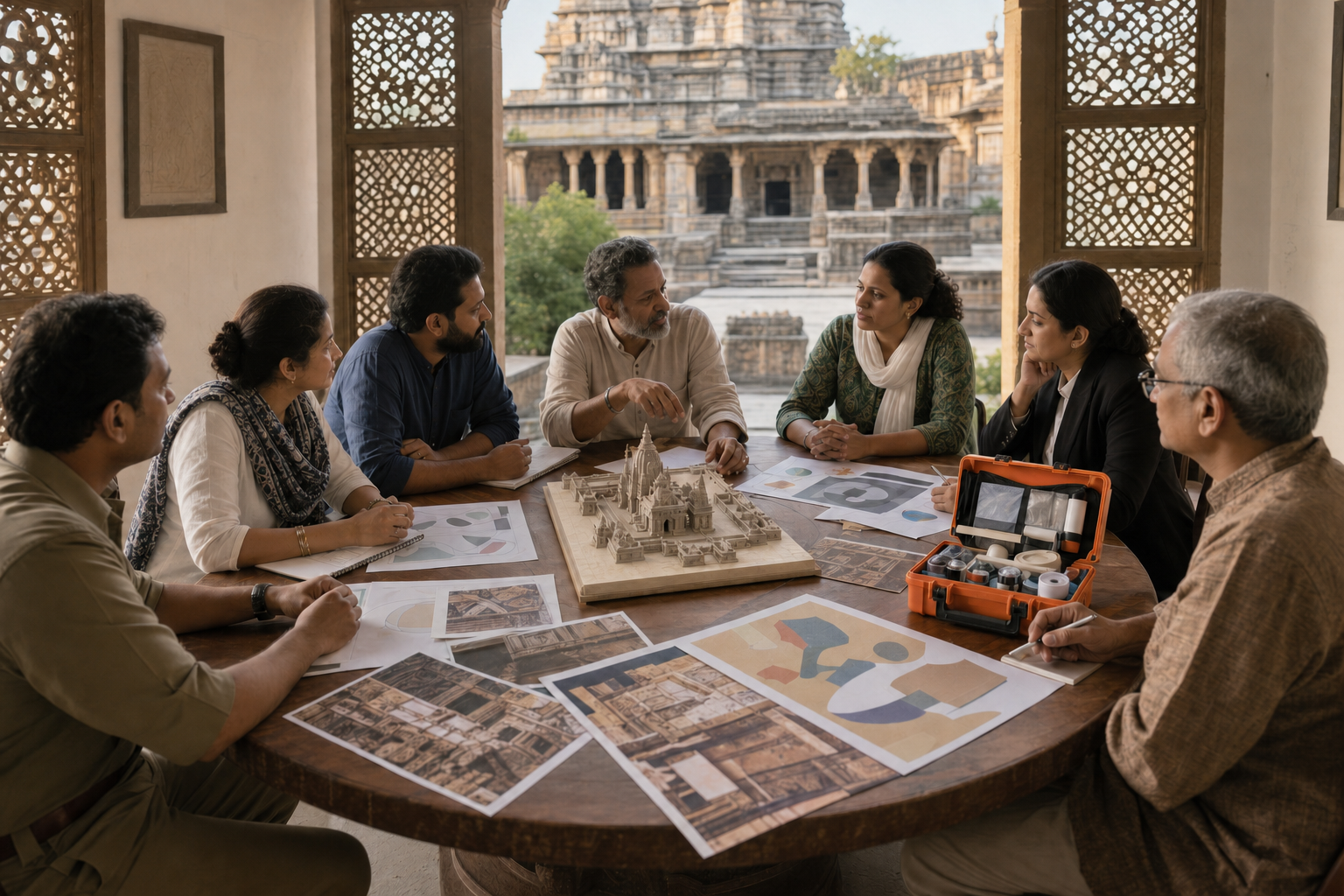
Respect that depends entirely on spontaneous outrage is fragile. Durable protection assigns responsibility before damage occurs. Every significant site, memorial, festival, or recurring public display should have a named steward, a documentation practice, a reporting channel, and an agreed method for communicating with the public.
Write a one-page protection charter
The charter should answer questions that otherwise cause confusion during an incident:
- What object, place, practice, or body of memory is being protected?
- Why does it matter, and which claims about it are securely documented?
- Who has authority to inspect, move, repair, replace, or speak for it?
- Which custodian, police unit, municipal office, or other institution receives a report?
- Who preserves original evidence and maintains the incident log?
- What information may be published, and what must remain restricted for safety, privacy, or an active investigation?
- Which conservation standard or competent specialist will govern repair?
- How will the community review the response after a festival, procession, repair project, or incident?
The physical plan should match the kind of heritage involved. A major temple on a sensitive coastline needs more than guards: architecture, pilgrim management, documentation, conservation science, youth education, and coastal ecology all affect long-term survival. A public banner needs clear permission, responsible installation, routine inspection, a replacement protocol, and a record of who authorised its display. A historical exhibition needs citations, version control, and a process for correcting errors without quietly rewriting the past.
Education should explain both the particular tradition and the shared civic ethic. Somnath is a Shaiva tirtha; that identity should not be diluted into generic spirituality. At the same time, ahimsa, karuna, seva, and satya offer a vocabulary of responsibility across Hindu, Buddhist, Jain, and Sikh traditions. Use those values as practical tests: Does this response avoid unnecessary harm? Does it serve the affected community? Is it truthful about uncertainty? Does it preserve dignity without denying anyone else’s?
Shared values do not erase theological or historical differences. They provide a civic discipline through which distinct communities can protect inheritance without demanding sameness.
Demand accountability without surrendering due process
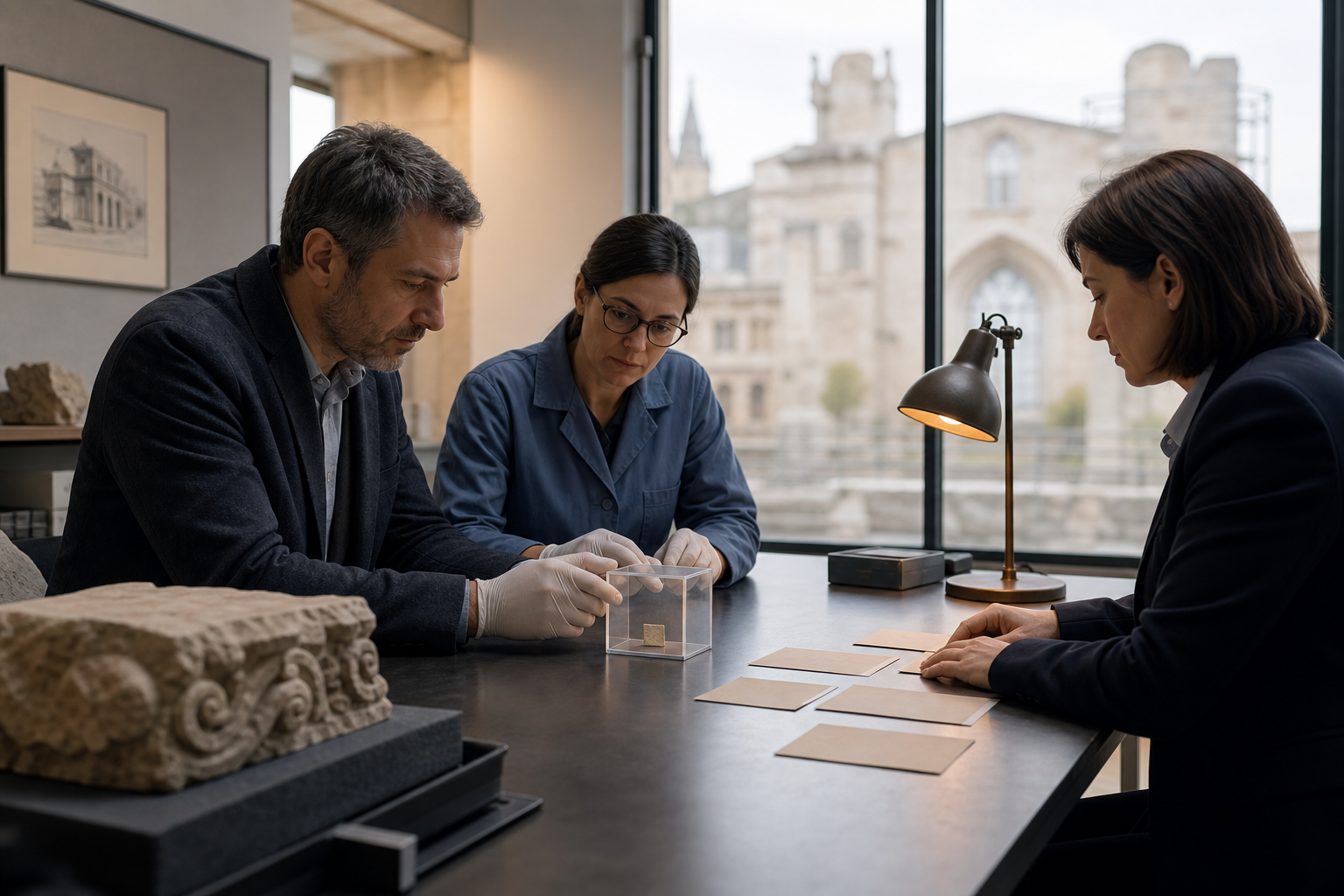
Restraint does not mean indifference. A lawful complaint, a demand for repair, a peaceful representation to authorities, and a carefully supported proposal for legal reform can all be appropriate. The standard is disciplined accountability: precise about the accused act, individual in its focus, proportionate in the remedy sought, and open to adjudication by the proper institutions.
Some groups responding to the Kumbhoj controversy urged lawmakers to consider penalties reaching ten years of rigorous imprisonment for egregious malicious acts against revered national icons. That is a policy demand, not an established conclusion about what every act warrants. Severity alone does not create a sound protection system.
Before supporting any new penalty, ask:
- Is the prohibited conduct defined clearly enough to distinguish physical desecration, deliberate provocation, criticism, error, satire, and legitimate historical inquiry?
- What evidence would establish the act and any required malicious intent?
- Does the proposal keep culpability individual rather than extending suspicion to a religious or social group?
- Is the punishment proportionate to the harm and consistent with constitutional safeguards?
- Will the measure improve reporting, investigation, repair, and prevention, or does it offer severity without administrative capacity?
Freedom of expression and public order must be considered together, but they are not resolved by slogans. Protecting memory cannot become permission to punish disagreement. Nor does invoking expression answer physical damage or every deliberately inflammatory act. The facts, the applicable law, and the evidence have to be examined through due process. Investigating and adjudicating authorities, not a social-media crowd, determine legal guilt.
Public communication should be equally disciplined. Use four sentences: identify the verified event; explain the cultural value affected; state the specific action requested from the competent authority; and reject rumours, retaliation, and collective blame. Do not reproduce insulting words or imagery when a neutral description will document the grievance. Preserve the original privately if it is needed as evidence, while using a redacted copy for public explanation where appropriate.
Chhatrapati Shivaji Maharaj is revered for courage, justice, and ethical governance. A response made in his name should therefore display those qualities. Peaceful petitions, evidence-based adjudication, civic education, responsive grievance mechanisms, and measured public discourse protect his public memory more faithfully than indiscriminate accusation does.
Key takeaways
- Protect the object, the historical record, and civic peace as three parts of the same duty.
- Secure people and original evidence before cleaning, repairing, naming suspects, or posting claims.
- Label verified facts, attributed reports, and unresolved interpretations separately.
- Give every important site or symbol a named steward, an archive, a reporting route, and a public-communication rule.
- Seek individual, lawful, and proportionate accountability while rejecting collective blame.
- Measure a Dharmic response by satya, seva, karuna, and ahimsa as well as by the demand for justice.
Choose one temple, memorial, manuscript collection, festival, or public symbol in your own community this week. Open its archive, write its one-page protection charter, and record two official contacts who can act when something goes wrong. Public memory becomes resilient when responsibility has a name before the crisis arrives.
References
- Struggle for Hindu Existence – Somnath Swabhiman Parv: A Millennium of Resilience, Memory, and Dharmic Unity (1026-2026)
- Hindu Jagruti Samiti – Kumbhoj FIR Sparks Outcry: Tougher Penalties Urged After Chhatrapati Shivaji Banner Desecration
