

If you are arranging January around vrata, puja, temple visits or family commitments, three observance windows deserve space on your calendar now: the Dwadashi-to-Trayodashi transition on January 15, Gupt Navratri from January 19 to 27, and Varuna Shashti on January 24.
The dates give you the outline, but they do not finish the planning. A tithi can begin or end during a civil day, and the applicable time can shift with location and Panchang method. Use the monthly outline below to reserve your time; use a trusted city-specific Panchang to decide the final ritual window.
Put the month on one page before choosing a muhurta
Start with the observances that affect your household, then work backward. This keeps a nine-day vrata from appearing as an unexpected demand in the middle of the month and prevents you from treating a tithi transition as though it occurs at midnight.
| Date or period | Panchang anchor | What to decide in advance |
|---|---|---|
| Thursday, January 15 | Krishna Paksha Dwadashi continues until 8:09 PM, followed by Trayodashi | Confirm the transition for your city. Keep the Dwadashi observance steady, and check whether your local tradition identifies a suitable evening Pradosha window. |
| January 19–27 | Magha Gupt Navratri during Shukla Paksha | Choose the form of vrata, a sustainable daily practice, the place for the kalash or lamp, and any temple or family participation before the first day. |
| January 24 | Varuna Shashti on Magha Shukla Shashti | Prepare the customary offerings used in your family, confirm the Shashti tithi locally, and pair prayer for water and rain with one practical act of water care. |
January 24 falls within the January 19–27 Gupt Navratri period. If your family observes both, you do not need to build two competing schedules. Keep the Navratri discipline as the daily foundation and give the Shashti observance a distinct period for Varuna worship. Your family tradition or temple calendar should settle any ritual details that differ by sampradaya or region.
Use the Panchang as a sequence, not a date label
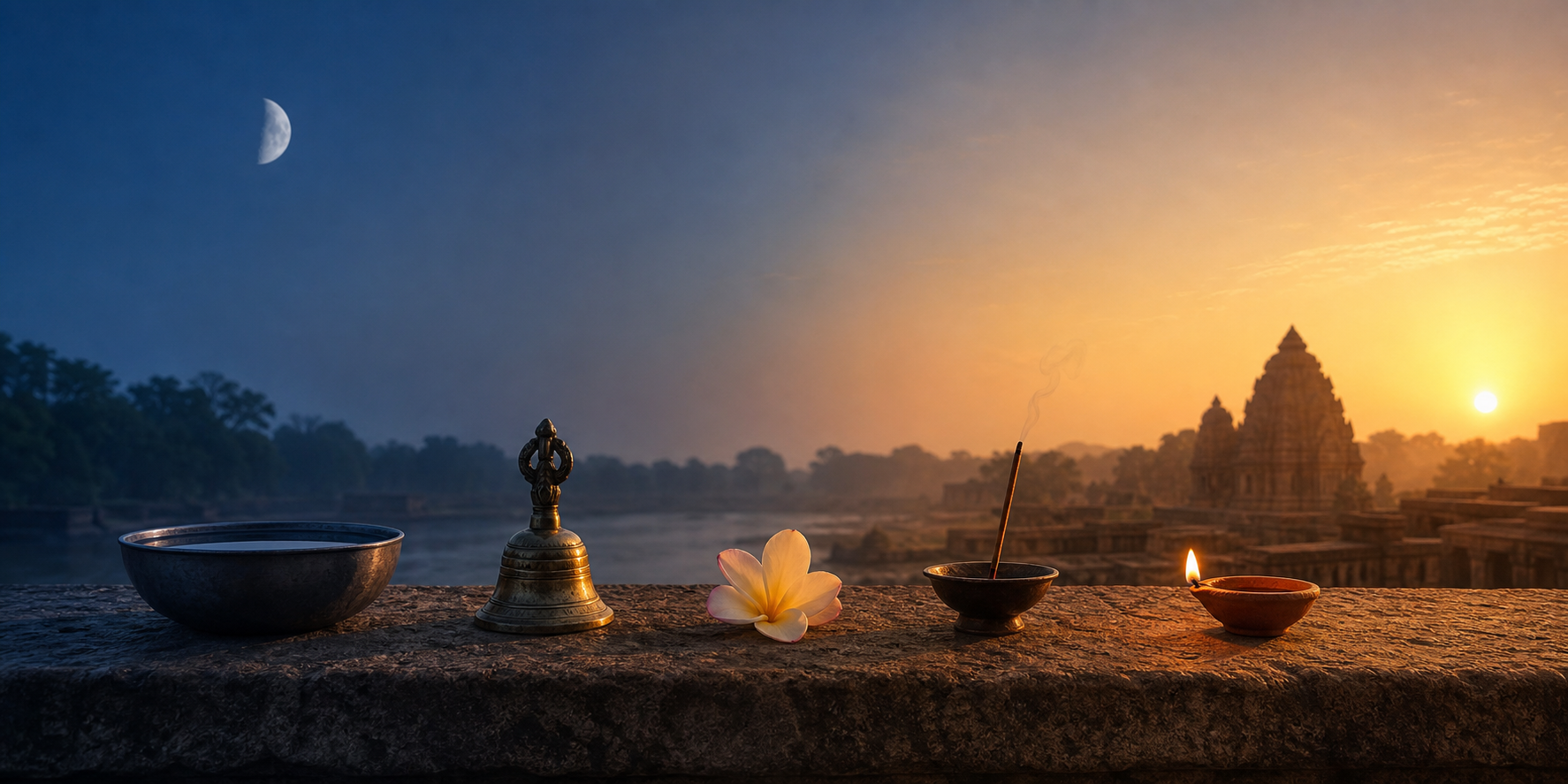
The civil date tells you when to keep time free. The Panchang tells you what is occurring within that date. Tithi, paksha, nakshatra, the Moon’s rashi and local muhurta calculations answer different questions; a festival name copied into a digital calendar cannot replace them.
January 15 makes the distinction concrete. The day begins under Krishna Paksha Dwadashi and moves into Trayodashi after the stated transition. Dwadashi is commonly approached through steadiness, reflection and the proper continuation of vrata. Trayodashi may bring an evening Pradosha observance in communities that follow it. The change in tithi therefore matters more than the fact that both occur on the same Thursday.
Do not assume that 8:09 PM is a universal clock time for every place. Sunrise, latitude and longitude, time zone, and the computational rules of a regional Panchang can affect the displayed boundaries and muhurtas. If you live outside Bharat, copying a time from an Indian calendar can place your practice in the wrong local window.
Use this five-part check whenever a January observance depends on tithi:
- Set the location first. Select your actual city or the nearest available city in the same time zone. Do this before reading any tithi ending time.
- Confirm the tithi at local sunrise. Then note whether it changes later that morning, afternoon or evening. Record both the tithi and its ending time.
- Check the rule for the observance. Some practices follow the tithi present at sunrise; others depend on an evening period or another ritual condition. Use the rule followed by your temple, family or sampradaya.
- Read nakshatra and Moon rashi only where relevant. They can refine sankalpa, travel or personal ritual planning, but they should not be guessed when the local entries are unavailable.
- Verify before announcing a group time. If relatives, a satsang or a temple group will join you, compare the city Panchang with the temple noticeboard or the guidance of the officiating priest.
This approach also prevents a common planning error: searching for one universal shubh muhurta for the entire day. Muhurta is local. Reserve a broad period first, then narrow it only after you have the relevant Panchang entry.
Make Gupt Navratri sustainable for all nine days
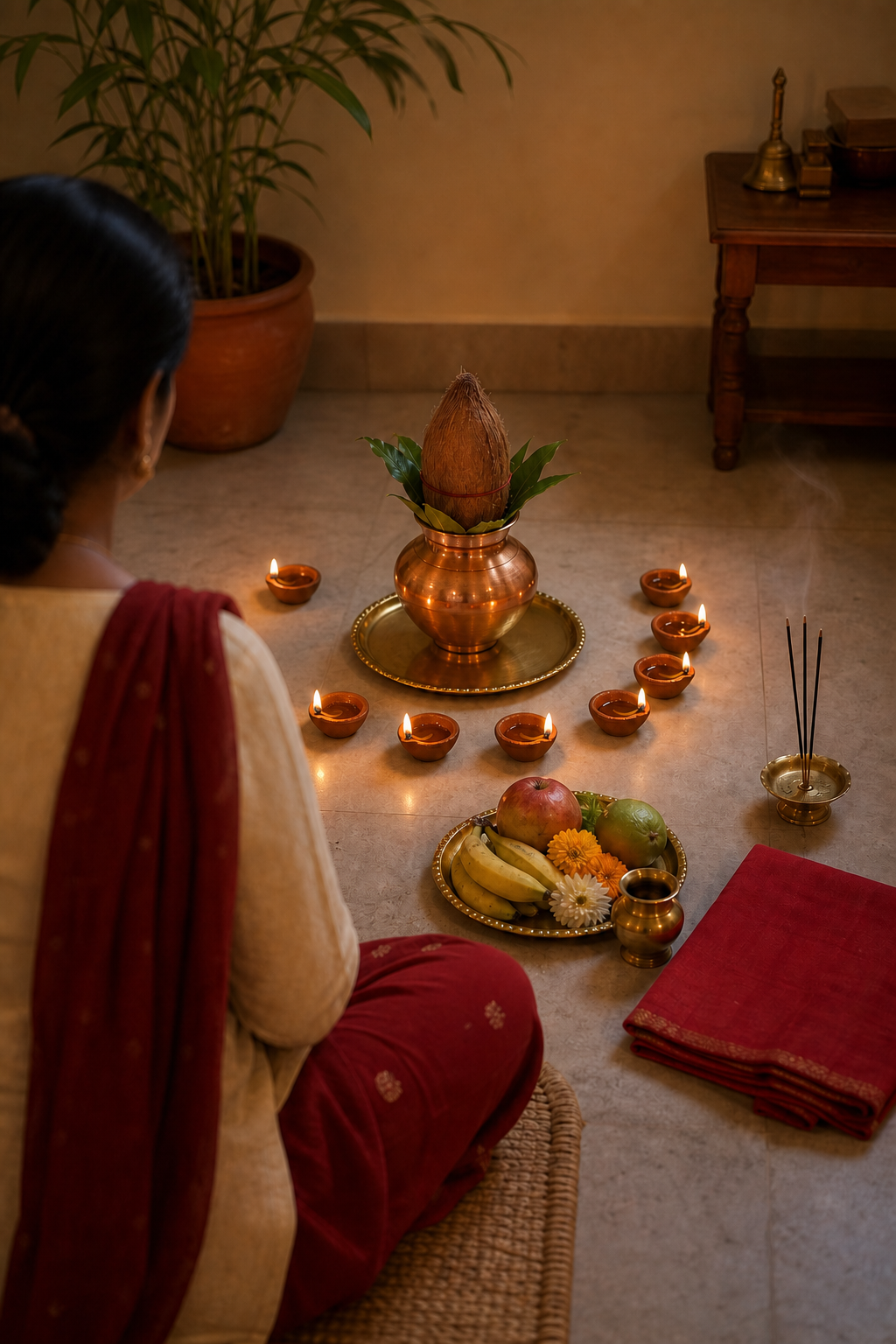
Magha Gupt Navratri begins on January 19 and concludes on January 27. Its inward-facing character makes consistency more important than display. You are building nine connected days of attention, restraint and Devi upasana, not nine unrelated special events.
Set the vrata before the first morning
Decide what you will actually maintain before January 19. A clear, modest sankalpa is more useful than an elaborate plan that collapses after two days.
- Choose one principal recitation. Common choices include Durga Saptashati, also known as Devi Mahatmyam, or Lalita Sahasranama. Follow the text, pronunciation practice and recitation pattern accepted in your tradition.
- Fix one repeatable worship time. A lamp and prayer at the same morning or evening time can give the vrata a stable centre. Check the local Panchang when a particular daily tithi or upasana window matters.
- Choose the form of fasting in advance. It should suit your health, responsibilities and family tradition. Do not intensify food restriction merely to imitate someone else’s vrata; when fasting is unsuitable, retain the discipline through sattvic food, prayer, restraint and seva.
- Prepare the worship space. Arrange the kalash, lamp, flowers, incense, texts and other customary materials before the opening day so that missing supplies do not consume the time reserved for sadhana.
- Mark the conclusion. Households commonly begin with Ghatasthapana or Kalash Sthapana on Pratipada and conclude with special prayer or a homa on Navami. Confirm both timings locally before committing guests or a priest.
Give each day the same dependable shape
A simple rhythm makes the observance compatible with work, school and caregiving:
- Morning: bathe, light the lamp, make the day’s sankalpa and complete the chosen prayer or recitation before ordinary distractions take over.
- During the day: carry the vrata into conduct through restraint, non-harm, careful speech, gratitude and a practical act of seva. The discipline should be visible in behaviour even when the worship itself remains private.
- Evening: return to the lamp, offer a brief prayer, and notice whether you kept the sankalpa. If the day became crowded, resume the established rhythm instead of abandoning the remaining nights.
Many devotees use the familiar Navratri sequence of Shailaputri, Brahmacharini, Chandraghanta, Kushmanda, Skandamata, Katyayani, Kalaratri, Mahagauri and Siddhidatri as nine successive forms of the Divine Mother. Treat that sequence as a framework only if it belongs to the practice you follow; Gupt Navratri customs are not identical in every region or lineage.
The central test is straightforward: can you preserve reverence and attention from the first day through the ninth? If not, reduce the volume of your plan before the vrata begins, not halfway through it.
Let Varuna Shashti join worship to water responsibility
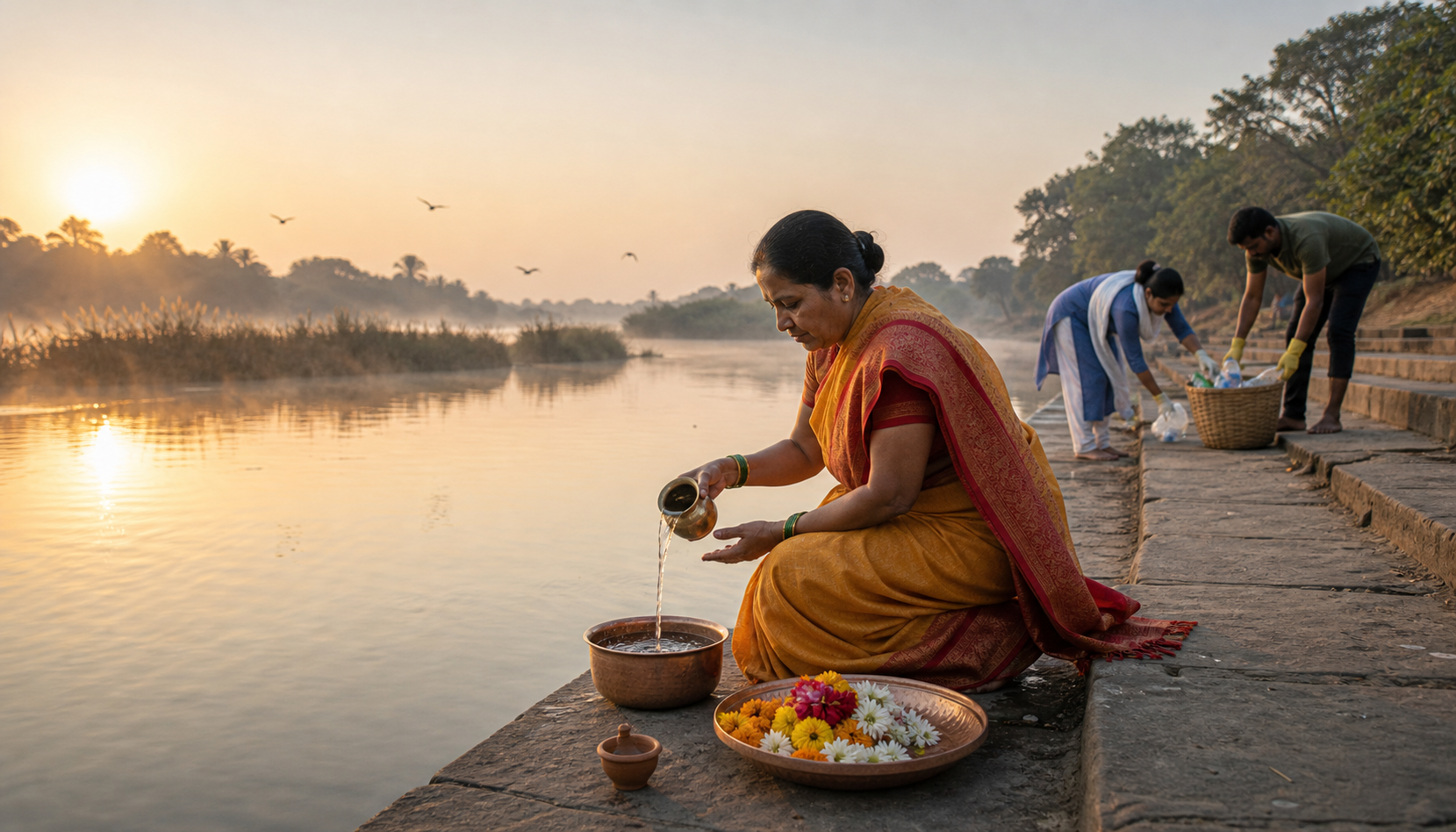
Varuna Shashti falls on January 24, aligned with Magha Shukla Shashti. The observance has particular visibility in Andhra Pradesh, Karnataka and Tamil Nadu, where prayer to Varuna Dev is closely connected with rain, agriculture, ecological balance and communal well-being.
Begin by checking the Shashti tithi window for your location. Then follow the ritual vocabulary of your household or temple. Customary elements include red flowers, chandan, dhoopa, deepa and naivedya, along with hymns and prayers for timely rain. If you do not know the appropriate Vedic recitation, do not improvise one; use a prayer you have been taught or participate with a temple that can guide the worship.
You can structure the day in four movements:
- Remember dependence. Bring to mind the water that sustains your household, food, farms, rivers and the wider community.
- Offer worship. Make the customary offerings with attention rather than treating water merely as a commodity requested for human use.
- Pray beyond the household. Include cultivators, communities facing uncertain rainfall, rivers, animals and the well-being of all beings in the sankalpa.
- Take one measurable responsibility. Repair a known leak, stop a recurring form of household water waste, or teach children why wasting clean water contradicts the gratitude expressed in the puja.
The last step is not a substitute for ritual, nor should it be presented as an invented requirement of the vrata. It is a way to keep devotional gratitude from ending when the lamp is extinguished. Reverence for water and the natural elements also offers a point of ethical kinship across Hindu, Buddhist, Jain and Sikh communities, while the Varuna Shashti ritual itself remains distinctly Hindu.
Key takeaways
- Reserve January 15 for the Dwadashi-to-Trayodashi transition, but verify the 8:09 PM boundary and any Pradosha observance with a local Panchang.
- Prepare Gupt Navratri before January 19 by choosing one sustainable recitation, one daily worship time and a form of vrata appropriate to your health and tradition.
- Keep January 19–27 connected through a repeatable daily rhythm rather than attempting a different elaborate programme every day.
- On January 24, incorporate Varuna Shashti into the continuing Navratri discipline without erasing its separate focus on water, rain and ecological responsibility.
- Use civil dates to reserve time; use local tithi, sunrise and tradition-specific rules to determine when the observance is actually performed.
Put the three observance windows into your calendar now. Then, before January begins, obtain the Panchang for the city where you will actually worship and write the confirmed local timings beside each entry. That small act turns a list of sacred dates into a practice your household can follow with clarity.
References
- DharmaRenaissance Blog — Essential Guide to January 15, 2026 Panchang: Dwadashi to Trayodashi, Tithi, Rashi
- DharmaRenaissance Blog — Gupt Navratri 2026 (Magha): Sacred January Dates, Rituals, and Spiritual Insights
- DharmaRenaissance Blog — Varuna Shashti 2026 Guide: Date, Rituals, and Significance of Invoking the Rain God
